
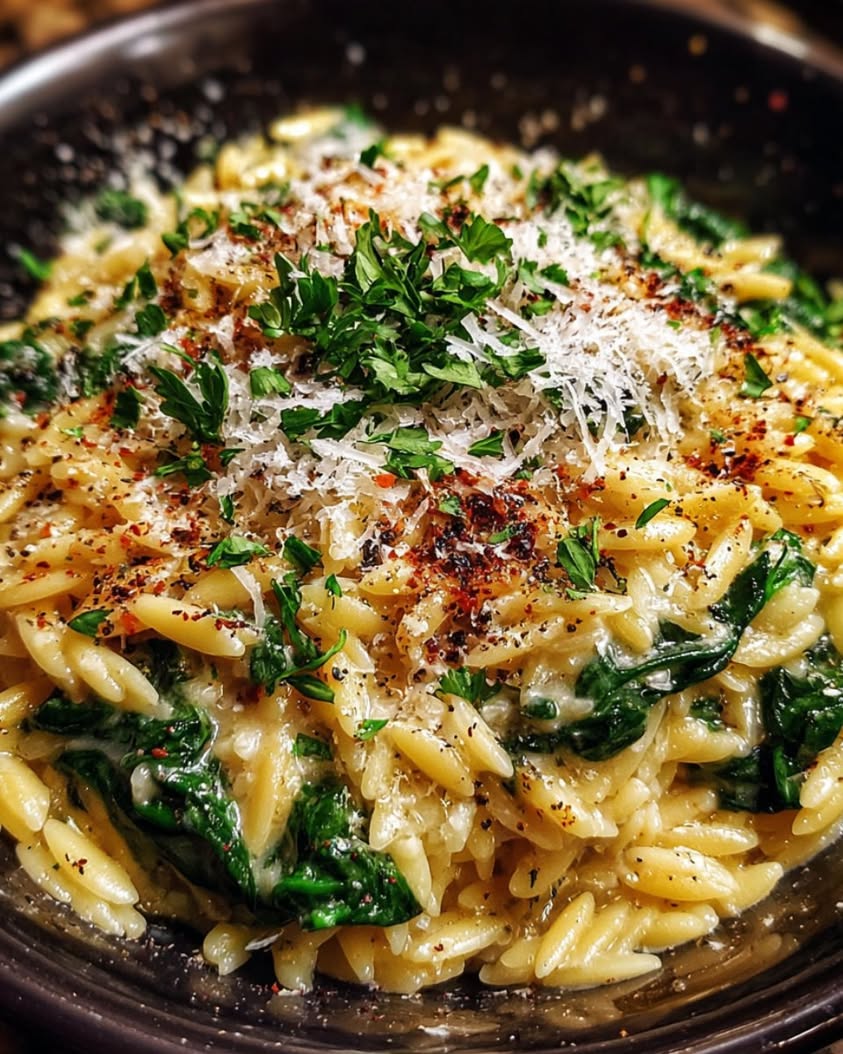
Parmesan Spinach Orzo: Creamy, Cheesy Orzo with Fresh Spinach
Imagine a bowl of pure comfort that comes together in the time it takes to watch a sitcom. This Parmesan spinach orzo is exactly that. It delivers a creamy, cheesy orzo with fresh spinach that feels indulgent yet remains deceptively simple. The beauty lies in its one-pot nature, meaning you get maximum flavor with minimal cleanup. Consequently, this dish is perfect for busy weeknights when you crave something satisfying without a lengthy cooking process.
The star of this show is the orzo pasta, which cooks directly in a savory broth, absorbing all that delicious flavor. As it simmers, the pasta releases its starches, naturally creating a luxuriously creamy sauce without needing heavy cream. Fresh spinach wilts into the mix at the end, adding a vibrant pop of color and a nutritious boost. Finally, a generous heap of Parmesan cheese is stirred in, melting into a silky, umami-rich coating that brings everything together. This Parmesan spinach orzo is a true testament to how a few quality ingredients can create magic.
Moreover, this recipe is incredibly versatile. You can serve it as a hearty main course for a vegetarian dinner or as a stellar side dish alongside grilled chicken or fish. Its creamy texture and rich flavor profile make it a crowd-pleaser for both adults and kids. Essentially, this creamy, cheesy orzo with fresh spinach is about to become your new go-to recipe for effortless, delicious meals.
Quick Recipe Highlights
- Flavor Profile: This dish boasts a deeply savory and umami-rich taste from the Parmesan cheese and garlic, balanced by the subtle, earthy notes of fresh spinach. The broth-infused orzo provides a wonderful savory base that makes every bite incredibly satisfying.
- Texture: You get perfectly tender orzo pasta coated in a luxuriously creamy and velvety sauce. The fresh spinach adds a slight texture contrast as it wilts down, becoming soft but not mushy, creating a delightful mouthfeel.
- Aroma: As it cooks, your kitchen will fill with the irresistible scent of sautéed garlic and onion, followed by the comforting aroma of simmering broth and finally, the nutty, salty fragrance of freshly grated Parmesan cheese.
- Visual Appeal: The presentation is stunning with vibrant green spinach ribbons swirling through the pale yellow orzo, all coated in a creamy sauce. A final sprinkle of extra Parmesan and black pepper makes it look restaurant-worthy.
- Skill Level Needed: This is a beginner-friendly recipe requiring only basic skills like chopping, sautéing, and simmering. If you can boil water and stir a pot, you can absolutely master this creamy, cheesy orzo with fresh spinach.
- Special Equipment: You need just one large skillet or saucepan with a lid. A box grater for fresh Parmesan is highly recommended over pre-grated cheese for the best melting texture and flavor.
Recipe Overview
- Difficulty Level: We rate this Parmesan spinach orzo as “Easy” because it follows a straightforward, linear process with no advanced techniques. The steps are simple: sauté aromatics, toast the orzo, add liquid and simmer, then finish with spinach and cheese. There is no tricky timing or precision required, making it very forgiving for novice cooks.
- Category: This dish brilliantly straddles categories. It is a complete vegetarian main course, a substantial side dish, and a brilliant example of one-pot comfort food. Its flexibility is one of its greatest strengths for meal planning.
- Cuisine: While orzo is a pasta shape of Italian origin, this preparation is a modern, Americanized comfort food classic. It draws inspiration from Italian risotto and pasta al limone but simplifies the technique significantly for home cooks.
- Cost: This is a very budget-friendly meal. Orzo and spinach are inexpensive staples, and using vegetable broth keeps costs down. Parmesan is the splurge item, but a little goes a long way in flavor. Overall, you can feed a family for just a few dollars.
- Season: This creamy, cheesy orzo with fresh spinach is truly a year-round winner. It provides warmth and comfort in fall and winter, yet the bright green spinach and light feel make it suitable for spring and summer evenings as well.
- Occasion: Perfect for busy weeknight dinners, casual potlucks, or a quick lunch. It’s also elegant enough for a simple date night at home when paired with a salad and a glass of wine.
Why You’ll Love This Recipe
First and foremost, the taste and texture are utterly irresistible. This creamy, cheesy orzo with fresh spinach delivers a restaurant-quality experience from your own kitchen. Each forkful combines the satisfying chew of al dente pasta with a sauce that is rich and velvety without being overly heavy. The Parmesan cheese melts into a glossy, umami-packed coating, while the spinach adds a fresh, slightly mineral note that cuts through the richness. It is a harmonious blend of comfort and sophistication that will have everyone asking for seconds.
Furthermore, the convenience factor is unbeatable. As a one-pot wonder, this Parmesan spinach orzo minimizes both active cooking time and cleanup. You simply build layers of flavor in a single skillet. From start to finish, you are looking at about 20 minutes, making it faster than most delivery options. This efficiency is a game-changer for tired weeknights when you want a wholesome, homemade meal without the hassle.
From a nutritional standpoint, this dish offers more than just empty carbs. Fresh spinach is a powerhouse, packed with vitamins A, C, and K, as well as iron and fiber. Using a whole grain orzo option can boost the fiber content even further. The Parmesan cheese provides protein and calcium. Therefore, you are serving a meal that nourishes the body while delighting the palate, a combination that is often hard to find in quick recipes.
For entertaining, this Parmesan spinach orzo is a secret weapon. It scales up beautifully for a crowd and can be kept warm on the stove. Its visually appealing, vibrant green color makes it look special on a buffet table. Moreover, it is a universally appealing dish that caters to vegetarians and pleases meat-eaters alike, simplifying your menu planning for gatherings.
Finally, its cost-effectiveness and accessibility are major wins. The ingredient list is short and consists of pantry staples or items easily found at any grocery store. You do not need expensive or exotic components to create something truly delicious. This accessibility ensures that this creamy, cheesy orzo with fresh spinach can become a regular, budget-friendly star in your meal rotation.
Historical Background and Cultural Significance
Orzo, which means “barley” in Italian, is a rice-shaped pasta that has been a staple in Mediterranean and Middle Eastern cuisines for centuries. Its origin is often traced to Italy, where it is used in soups and salads. However, similar small pasta shapes exist in Greek cuisine (kritharaki) and across the region. The concept of cooking pasta in a minimal amount of liquid until creamy, as done with this Parmesan spinach orzo, borrows directly from the Italian risotto technique, showcasing how culinary methods cross traditional ingredient boundaries.
Culturally, dishes like this represent the evolution of home cooking towards efficiency without sacrificing soul. The one-pot meal is a global tradition, but its modern popularity speaks to our desire for simplicity. This Parmesan spinach orzo fits into a contemporary American cooking tradition that values speed, minimal cleanup, and the ability to pack vegetables into familiar, comforting formats. It is a dish born of practicality that has earned a place at the table through sheer deliciousness.
The recipe has evolved significantly from its possible origins. Traditional Italian pasta e spinaci might use a larger pasta shape and a simpler tomato or garlic-oil sauce. The addition of Parmesan cheese to create a creamy sauce is a more Americanized twist, leveraging the beloved flavors of fettuccine Alfredo. This evolution shows how recipes adapt to local tastes and ingredient availability, becoming new classics in their own right.
Regional variations of this concept abound. In Greece, you might find kritharaki baked with tomatoes and feta cheese. In the American South, a similar idea could involve sharp cheddar and collard greens. This particular version, with its focus on Parmesan and fresh spinach, sits comfortably in a modern, fusion-style comfort food category. It demonstrates how a simple base of pasta and greens can be a canvas for endless cultural interpretation.
Ingredient Deep Dive
Orzo Pasta: Orzo is a form of short-cut pasta, typically made from semolina flour, shaped to resemble a large grain of rice. Historically, this shape was ideal for thickening soups and stews across Mediterranean cultures. Nutritionally, standard orzo provides carbohydrates for energy; opting for a whole wheat version increases fiber and protein. When selecting orzo, look for a reputable brand to ensure it holds its shape during cooking. You can substitute it with other small pasta like ditalini, or for a gluten-free version, use a rice-shaped gluten-free pasta or even actual arborio rice, adjusting liquid accordingly.
Fresh Spinach: Spinach has a storied history, believed to have originated in ancient Persia before spreading to China and Europe. It gained Western popularity in the 16th century. This leafy green is a nutritional superstar, loaded with iron, calcium, and vitamins A, C, and K. For this recipe, select bunches with vibrant, dark green leaves, avoiding any that are yellowed or slimy. Store it loosely wrapped in a paper towel in the refrigerator’s crisper drawer. If fresh is unavailable, you can use frozen chopped spinach that has been thoroughly thawed and squeezed dry.
Parmesan Cheese: Authentic Parmigiano-Reggiano is a hard, granular cheese with a history dating back to the Middle Ages in the Italian regions of Parma and Reggio Emilia. It is a protected designation of origin (PDO) product. Nutritionally, it is rich in protein, calcium, and phosphorus. The key tip is to always buy a block and grate it yourself. Pre-grated cheese contains anti-caking agents that prevent it from melting smoothly into a creamy sauce. Store Parmesan wrapped in parchment paper in the fridge. For a dairy-free version, a high-quality nutritional yeast can provide a similar umami flavor, though the texture will differ.
Vegetable Broth: Broth forms the flavorful cooking liquid for the orzo. Using a high-quality, low-sodium vegetable broth is crucial as it seasons the entire dish. You can certainly use homemade broth for the best flavor. Alternatively, chicken broth works well if you do not need the dish to be vegetarian. As a substitution, you can use water combined with a robust vegetable bouillon paste or cube. The broth not only cooks the pasta but also becomes the base of the creamy sauce, so its quality directly impacts the final result.
Common Mistakes to Avoid
- Using Pre-Grated Parmesan: This is the most common pitfall. Pre-grated cheese contains cellulose to prevent clumping, which creates a grainy, non-melty sauce. Always grate a block of Parmesan fresh for a silky, smooth result in your creamy, cheesy orzo.
- Not Toasting the Orzo: Skipping the step of sautéing the dry orzo in butter or oil for a minute misses a key opportunity. Toasting enhances the nutty flavor of the pasta and helps the grains stay separate, preventing a gummy final texture.
- Overcooking the Spinach: Adding the spinach too early or cooking it for too long will cause it to lose its vibrant color and turn into a dull, mushy puree. Stir it in at the very end, just until wilted, to preserve its freshness and texture.
- Insufficient Liquid: If you do not use enough broth, the orzo will not cook through and will burn on the bottom of the pan. Conversely, too much liquid will make the dish soupy. Follow the ratio in the recipe closely for perfect results.
- Stirring Too Frequently: While you do not need to stir constantly like a risotto, leaving the orzo completely unattended can cause sticking. Stir occasionally, especially towards the end of cooking, to ensure even absorption and prevent a crust from forming.
- Adding Cheese Over High Heat: Adding the grated Parmesan while the skillet is still on high heat can cause the cheese to seize and become stringy or oily. Always remove the pan from the heat or turn it to low before stirring in the cheese.
- Using a Skillet That’s Too Small: The orzo and spinach need room to cook evenly. Using a small pan will lead to overcrowding, uneven cooking, and spillovers. A large, deep skillet or a Dutch oven is the ideal vessel.
- Forgetting to Season in Layers: Seasoning only at the end results in a bland dish. Remember to season your aromatics as you sauté them, and taste the broth before adding it. The final dish will then be perfectly seasoned throughout.
Essential Techniques
Sautéing Aromatics: This foundational technique involves cooking diced onion and minced garlic in butter or oil over medium heat until soft and fragrant. The goal is to gently coax out their natural sugars without browning them, which can introduce a bitter note. This step builds the first layer of flavor for the entire dish. Master it by ensuring your pan is properly preheated and by stirring frequently. The visual cue for success is translucent, soft onions that smell sweet and aromatic.
Toasting the Orzo: After adding the dry orzo to the pan with the aromatics, you will cook it for about a minute, stirring constantly. This technique lightly toasts the pasta, enhancing its nutty flavor and creating a protective coating on each grain. Consequently, this helps the orzo maintain a slight bite and prevents it from becoming mushy as it absorbs the broth. The key visual cue is that the orzo will become slightly more opaque and may emit a warm, toasty scent.
The Simmer and Absorption Method: This is the heart of the recipe. You add the broth all at once, bring it to a boil, then reduce to a simmer and cover the pan. The orzo cooks by absorbing the liquid, similar to rice. This technique is important because it allows the pasta to release its starches into the limited liquid, naturally creating a creamy sauce. The common pitfall is lifting the lid too often, which releases steam and can extend cooking time. Success is achieved when the liquid is fully absorbed and the orzo is tender.
Wilting the Spinach: This final technique involves turning off the heat and adding the fresh spinach to the hot orzo, then covering the pan for a minute or two. The residual heat gently wilts the spinach without direct cooking. This is important to preserve the spinach’s bright green color, fresh flavor, and nutrient content. The visual cue is perfectly wilted, vibrant green leaves that are soft but not collapsed into a dark green mass.
Pro Tips for Perfect Parmesan Spinach Orzo
Use a microplane for the Parmesan. Grating your Parmesan on the fine holes of a box grater works, but a microplane creates an ultra-fine, fluffy grate that will melt into the sauce almost instantly, creating an unbelievably smooth and creamy texture.
Reserve a little broth. Before you add all the broth, set aside about a quarter cup. If your orzo seems dry after adding the cheese, you can stir in this reserved liquid to loosen the sauce to your perfect consistency.
Finish with a squeeze of lemon. A small squeeze of fresh lemon juice added with the spinach will brighten the entire dish, cutting through the richness of the cheese and making the flavors pop without making it taste lemony.
Let it rest off the heat. After adding the cheese and spinach, cover the pot and let it sit off the heat for 2-3 minutes. This allows the flavors to meld together and the sauce to thicken slightly to a perfect, creamy consistency.
Brown your butter first. For a deeper, nuttier flavor, cook your butter until it turns a light golden brown and smells nutty before adding the onion and garlic. This simple step adds a incredible layer of complexity to your creamy, cheesy orzo.
Add a pinch of nutmeg. A tiny pinch of freshly grated nutmeg added with the spinach is a classic Italian pairing that enhances the earthy flavor of the greens and complements the Parmesan cheese beautifully.
Variations and Adaptations
For regional variations, consider a Greek-inspired version by swapping Parmesan for crumbled feta and adding kalamata olives and oregano. A Southern twist could use sharp white cheddar and chopped collard greens. For an Italian-American flair, stir in sun-dried tomatoes and a handful of chopped fresh basil at the end.
Seasonal adaptations are easy. In spring, add fresh peas and asparagus tips with the spinach. For summer, incorporate roasted corn and cherry tomatoes. In fall, mix in roasted butternut squash cubes and sage. For winter, add sautéed mushrooms for a deeper, earthier flavor profile.
Dietary modifications are straightforward. Make it gluten-free by using a certified gluten-free orzo or rice-shaped pasta. For a vegan Parmesan spinach orzo, use nutritional yeast and a vegan Parmesan alternative, and ensure your broth is vegan. To add protein, stir in a can of drained white beans or chickpeas with the spinach.
Flavor variations can take this dish in many directions. Add heat with red pepper flakes when sautéing the garlic. For a smoky note, use a smoked Parmesan or add a dash of smoked paprika. Incorporate fresh herbs like dill, thyme, or tarragon for a different aromatic profile.
Texture modifications can cater to different preferences. For a creamier sauce, stir in a tablespoon of cream cheese or mascarpone with the Parmesan. For a richer mouthfeel, finish the dish with a pat of cold butter stirred in off the heat. To add crunch, top with toasted pine nuts or breadcrumbs before serving.
Presentation alternatives include serving the orzo in individual ramekins for a more formal feel, or stuffing it into hollowed-out tomatoes or bell peppers and baking until golden. You can also press it into a greased dish, top with extra cheese, and broil for a crispy, baked pasta top.
Serving and Presentation Guide
Plating techniques matter for visual appeal. Use a warm, shallow bowl rather than a deep plate. Spoon the Parmesan spinach orzo into the center, then use the back of your spoon to create a slight swirl or well in the middle. This technique adds dimension and makes the dish look more intentional and elegant.
Garnishing is the final touch. Always finish with a fresh grating of Parmesan cheese and a crack of black pepper. For color and freshness, a small sprinkle of chopped fresh parsley, chives, or basil adds a bright green contrast. A light drizzle of high-quality extra virgin olive oil adds shine and richness.
Traditional accompaniments are simple. A crisp green salad with a lemony vinaigrette is the perfect counterpoint to the rich, creamy orzo. Crusty bread or garlic bread is ideal for soaking up every last bit of the delicious sauce. For a more substantial meal, grilled or roasted chicken, shrimp, or salmon pair beautifully.
Modern serving suggestions include turning it into a brunch item by topping it with a poached or fried egg. You can also serve it in smaller portions as part of a tapas or sharing-style meal alongside other Mediterranean dishes like olives, marinated vegetables, and grilled halloumi.
Temperature considerations are key. This dish is best served immediately while it is hot and the sauce is at its creamiest. However, it also holds its texture well at room temperature, making it suitable for buffets or picnics. Avoid letting it sit out for more than two hours for food safety.
Portion control tips are helpful as this is a rich dish. As a main course, plan for about 1 to 1.5 cups per person. As a side dish, a 3/4 cup serving is usually sufficient. Remember, it is very satisfying, so a little goes a long way, especially when paired with other items.
Wine and Beverage Pairing
For wine pairings, you want something that can cut through the richness of the cheese and complement the earthy spinach. A crisp, high-acid white wine like a Pinot Grigio or Sauvignon Blanc works wonderfully. Alternatively, a light-bodied red with low tannins, such as a Pinot Noir or a Chianti, can also be an excellent match, especially if you add mushrooms or tomatoes to the dish.
Non-alcoholic alternatives should provide a similar balancing act. Sparkling water with a squeeze of lemon or lime cleanses the palate between bites. An herbal iced tea, like mint or lemon verbena, offers a refreshing contrast. For a richer option, a creamy, non-dairy milk like oat milk can complement the dish’s texture.
Coffee and tea pairings are less common but can work. A medium-roast coffee with low acidity would not clash with the creamy flavors. For tea, a light green tea or a floral white tea would be delicate enough not to overpower the subtle notes of the Parmesan and spinach.
Temperature considerations are straightforward. White wines and non-alcoholic sparklers should be served well-chilled. Red wines should be served slightly below room temperature. Your non-alcoholic teas can be served either iced or hot, depending on the season and your preference.
Serving suggestions include always offering water alongside any other beverage to keep palates refreshed. If serving wine, pour a modest glass to start, as the rich food will slow consumption. For a dinner party, offering both a white and a red option caters to all guest preferences beautifully.
Storage and Shelf Life
Storage methods are simple but important. Allow the Parmesan spinach orzo to cool completely to room temperature before storing. Do not leave it out for more than two hours. Transfer it to an airtight container. You can store the entire batch together or divide it into single-serving containers for easy grab-and-go lunches.
Temperature requirements are strict for food safety. The orzo must be refrigerated at 40°F (4°C) or below. It should not be stored on the refrigerator door where temperatures fluctuate. Properly stored, it will keep for 3 to 4 days in the refrigerator.
Container recommendations include glass containers with tight-sealing lids, which are best for preventing odor transfer and for reheating. Alternatively, BPA-free plastic containers are fine for short-term storage. Avoid storing in the cooking skillet, as the metal can impart off-flavors over time.
Signs of spoilage are easy to spot. Look for an off or sour smell, a significant change in texture (excessively mushy or slimy), or the presence of mold. If you see any of these signs, discard the entire batch immediately. Do not taste-test questionable food.
Reheating instructions are crucial for restoring creaminess. The best method is on the stovetop. Add the leftover orzo to a skillet with a splash of broth, milk, or water. Heat over medium-low, stirring frequently, until warmed through. You can also use a microwave: place in a microwave-safe dish, add a tablespoon of liquid, cover loosely, and heat in 30-second intervals, stirring in between.
Freezing guidelines are possible but with a caveat. The texture of the pasta and spinach will become softer upon thawing. To freeze, cool completely, portion into freezer-safe bags or containers, and remove as much air as possible. It will keep for up to 2 months. Thaw overnight in the refrigerator before reheating with added liquid.
Make Ahead Strategies
A prep timeline can streamline your cooking. You can dice the onion and mince the garlic up to two days in advance, storing them in separate airtight containers in the fridge. Grate the Parmesan cheese a day ahead and keep it refrigerated. Wash and dry the spinach the night before. These small steps cut your active prep time down to almost nothing.
Storage between steps is safe if done correctly. Pre-chopped vegetables should be kept cold until use. Pre-grated cheese should be sealed tightly to prevent drying. Having everything measured and ready to go (mise en place) before you turn on the stove is the ultimate make-ahead strategy for flawless execution.
Quality impact assessment is important. The dish is truly best served fresh, as the spinach’s color and texture are at their peak. However, making the base (orzo cooked in broth) up to an hour ahead works well. Simply leave out the spinach and cheese. Keep the base warm on the lowest possible heat, then stir in the spinach and cheese just before serving to restore the perfect fresh, creamy texture.
Assembly tips for partial make-ahead include cooking the orzo completely with the broth, then spreading it on a baking sheet to cool quickly. Once cool, store it without the spinach and cheese. When ready to serve, reheat the base with a little extra broth, then proceed with the spinach and cheese steps. This preserves the vibrant green color best.
Reheating guidelines for a fully made-ahead dish require extra moisture. The pasta will continue to absorb liquid as it sits. When reheating, whether on the stovetop or microwave, always add a splash of broth, water, or milk to loosen the sauce and restore its creamy consistency. Stir gently but thoroughly.
Fresh element additions are non-negotiable for the best result. Even if you make the orzo base ahead, always add the fresh spinach and grated Parmesan at the last moment. This ensures the spinach is bright and the cheese melts into a smooth sauce, giving you that just-made quality every time.
Scaling Instructions
Halving the recipe is straightforward for smaller households. Simply divide all ingredient quantities by two. Use a medium-sized skillet to ensure the orzo still has room to cook properly. The cooking time may be slightly reduced by a minute or two, so start checking for doneness around the 10-minute mark after simmering begins.
Doubling or tripling the recipe for a crowd requires a few adjustments. Double or triple all ingredients proportionally. You must use a much larger pot, such as a Dutch oven, to prevent overcrowding. The total simmering time may increase by a few minutes because of the larger volume. Stir more frequently to ensure even heat distribution and to prevent sticking on the bottom of the pot.
Equipment adjustments are necessary when scaling. A standard 10-inch skillet works for the base recipe. For a double batch, a 5-quart Dutch oven is ideal. For a triple batch, you may need a large soup pot. Ensure your chosen pot has a tight-fitting lid to trap steam effectively during the simmering stage.
Timing modifications are minimal but present. While prep time scales linearly, the active cooking time for sautéing the aromatics and toasting the orzo will be slightly longer due to the increased volume. The simmering time may extend by 2-5 minutes for larger batches, as it takes longer for the center of the pot to come to a boil and for the liquid to absorb fully.
Storage considerations change with scale. A large batch means more leftovers. Plan your storage containers in advance. Consider portioning the scaled-up recipe into multiple smaller containers for easier refrigeration and reheating. Remember, the shelf life remains 3-4 days regardless of batch size.
Nutritional Deep Dive
A macro breakdown for a serving of this Parmesan spinach orzo shows a balance of carbohydrates, protein, and fat. The orzo provides complex carbs for sustained energy. The Parmesan cheese and any added butter or oil contribute healthy fats and protein. The fresh spinach adds minimal calories but significant micronutrients and fiber, making this a balanced meal that satisfies without being overly heavy.
The micronutrient analysis is impressive, primarily due to the spinach. You get a substantial amount of Vitamin A for eye health, Vitamin K for bone and blood health, and folate. The Parmesan cheese is an excellent source of calcium and phosphorus, crucial for strong bones. Using a whole grain orzo further boosts the B-vitamin and mineral content.
Health benefits extend beyond basic nutrition. The combination of fiber from the spinach and complex carbs from the pasta provides steady energy release. The calcium supports bone density. The antioxidants in spinach, like lutein, support eye and brain health. This dish is a great example of comfort food that also fuels your body well.
Dietary considerations are manageable. The recipe is naturally vegetarian. For those monitoring sodium, use a low-sodium broth and be mindful of the salt content in the Parmesan cheese. The dish contains gluten (from semolina orzo) and dairy, which are the primary allergens to note.
Portion analysis is key for mindful eating. A standard serving as a main course is quite filling due to the density of the pasta and richness of the sauce. Paying attention to your hunger cues is important; you may be satisfied with a slightly smaller portion than you initially serve, especially when paired with a large salad.
Weight management tips include being mindful of added fats. You can reduce the butter or oil by half without major flavor loss. Increasing the ratio of spinach to orzo boosts volume and nutrients without adding many calories. Using a measured amount of cheese ensures you get the flavor without overdoing it.
Dietary Adaptations
For a gluten-free version, simply substitute the regular orzo with a certified gluten-free orzo pasta or a rice-shaped gluten-free pasta. Be sure to check that your vegetable broth is also certified gluten-free, as some brands may contain gluten-based additives.
A dairy-free or vegan Parmesan spinach orzo is achievable. Replace the butter with olive oil. For the cheese, use a combination of nutritional yeast for the cheesy flavor and a vegan Parmesan alternative. A tablespoon of white miso paste can also add depth and umami. Ensure your vegetable broth is vegan.
For a low-carb adaptation, the base recipe is not suitable due to the pasta. However, you can replace the orzo with cauliflower rice. Sauté the cauliflower rice briefly, then add a reduced amount of broth and simmer until tender. Proceed with the spinach and a high-fat, low-carb cheese like Pecorino Romano.
A keto version follows the low-carb principle but focuses on high fat. Use cauliflower rice and increase the fat content by using more butter or olive oil. Incorporate full-fat coconut milk instead of some broth for extra creaminess, and use a hard, aged cheese that is lower in carbs.
For a Paleo adaptation, which excludes grains and dairy, use cauliflower rice as the base. Replace the butter with ghee or avocado oil. Omit the cheese entirely and instead add richness with coconut cream and flavor with nutritional yeast or a sprinkle of mushroom powder for umami.
A Low-FODMAP version requires specific swaps. Use garlic-infused oil instead of sautéing fresh garlic (discard the garlic solids). Ensure the onion is omitted or use only the green tops of scallions. Use a lactose-free hard cheese like aged Parmesan, which is naturally very low in lactose.
Troubleshooting Guide
If your orzo is too dry or gummy, you likely had an incorrect liquid-to-pasta ratio or overcooked it. For dry orzo, stir in a splash of warm broth or milk off the heat to loosen it. For gummy orzo, it’s often due to overcooking; next time, check for doneness a minute or two earlier and ensure you use the exact amount of liquid specified.
If the flavor is bland, you likely under-seasoned. Remember to season in layers: salt the onions as they sauté, and ensure your broth is well-seasoned. To fix a finished bland dish, stir in an extra pinch of salt, a squeeze of lemon juice, or a dash of white wine vinegar to brighten it. Freshly cracked black pepper also adds dimension.
If the cheese becomes stringy or oily, you added it while the pot was too hot. Remove the pan from the heat entirely before stirring in the grated Parmesan. If it’s already stringy, try stirring in a tablespoon of cream or broth to help re-emulsify the sauce. The result may not be perfectly smooth, but it will still taste good.
For equipment challenges like a thin-bottomed pan that causes burning, reduce the heat to medium-low once you add the broth. Stir more frequently, especially as the liquid absorbs. If you suspect burning, immediately remove the pot from the heat and transfer the unburnt top portion to a new pan with a little extra broth to finish cooking.
If you need an ingredient substitution mid-recipe, don’t panic. No fresh spinach? Use frozen (thawed and squeezed). No vegetable broth? Use water and a bouillon cube or paste. No fresh Parmesan? While not ideal, a high-quality pre-grated Parm can work in a pinch, or substitute with another hard cheese like Pecorino Romano or Asiago.
Timing concerns often arise when cooking for a group. If you need to hold the dish, cook the orzo in the broth until just shy of al dente, then remove from heat before adding spinach and cheese. It will continue to cook slightly. When ready to serve, reheat gently, then stir in the spinach and cheese. This prevents mushiness.
Recipe Success Stories
Community feedback on this Parmesan spinach orzo has been overwhelmingly positive. Many readers report it has become a weekly staple in their homes. One common theme is how it wins over picky eaters, especially children who are hesitant about greens. The creamy, cheesy sauce makes the spinach irresistible, and parents love the hidden vegetable boost. Several have mentioned it’s their go-to potluck dish because it always disappears quickly and garners recipe requests.
Variation successes are fun to hear about. One reader added cooked Italian sausage for a heartier meal and loved the result. Another used kale instead of spinach and added a splash of heavy cream for extra decadence. A creative cook used sun-dried tomato orzo for an even more vibrant color and flavor. These adaptations show the recipe’s fantastic flexibility and how it inspires home cooks to make it their own.
Adaptation stories for dietary needs are particularly rewarding. A reader with a dairy intolerance used vegan Parmesan and said it was a family favorite. Another, following a gluten-free diet, used brown rice orzo and was thrilled to find a creamy pasta dish she could enjoy. These stories highlight how a simple recipe can be inclusive and bring joy to various dietary lifestyles.
Reader suggestions have also improved the recipe. One suggested adding a pinch of red pepper flakes with
Print
Parmesan Spinach Orzo
Description
A creamy, comforting one-pot pasta dish with tender orzo, fresh spinach, and rich Parmesan cheese, perfect for a quick weeknight dinner.
Ingredients
For the Crust:
- 1 cup orzo pasta
- 2 tablespoons olive oil
- 3 cloves garlic, minced
- 4 cups fresh spinach
- 2 cups vegetable broth
- 1/2 cup heavy cream
- 1 cup grated Parmesan cheese
- Salt and black pepper to taste
- 1/4 teaspoon red pepper flakes (optional)
Instructions
1. Prepare the Crust:
- Heat olive oil in a large skillet over medium heat. Add garlic and sauté for 1 minute until fragrant.
- Add orzo to the skillet and toast for 2-3 minutes, stirring frequently, until lightly golden.
- Pour in vegetable broth and bring to a simmer. Cook for 8-10 minutes, stirring occasionally, until orzo is tender and liquid is absorbed.
- Stir in fresh spinach and cook for 2-3 minutes until wilted.
- Reduce heat to low, add heavy cream and Parmesan cheese, stirring until creamy and well combined. Season with salt, pepper, and red pepper flakes if using. Serve immediately.
Notes
You can customize the seasonings to taste.

I’m Shaykee—born in Morocco, seasoned across continents. From airplane galleys to home kitchens, I share the flavors and stories that shaped my journey.