
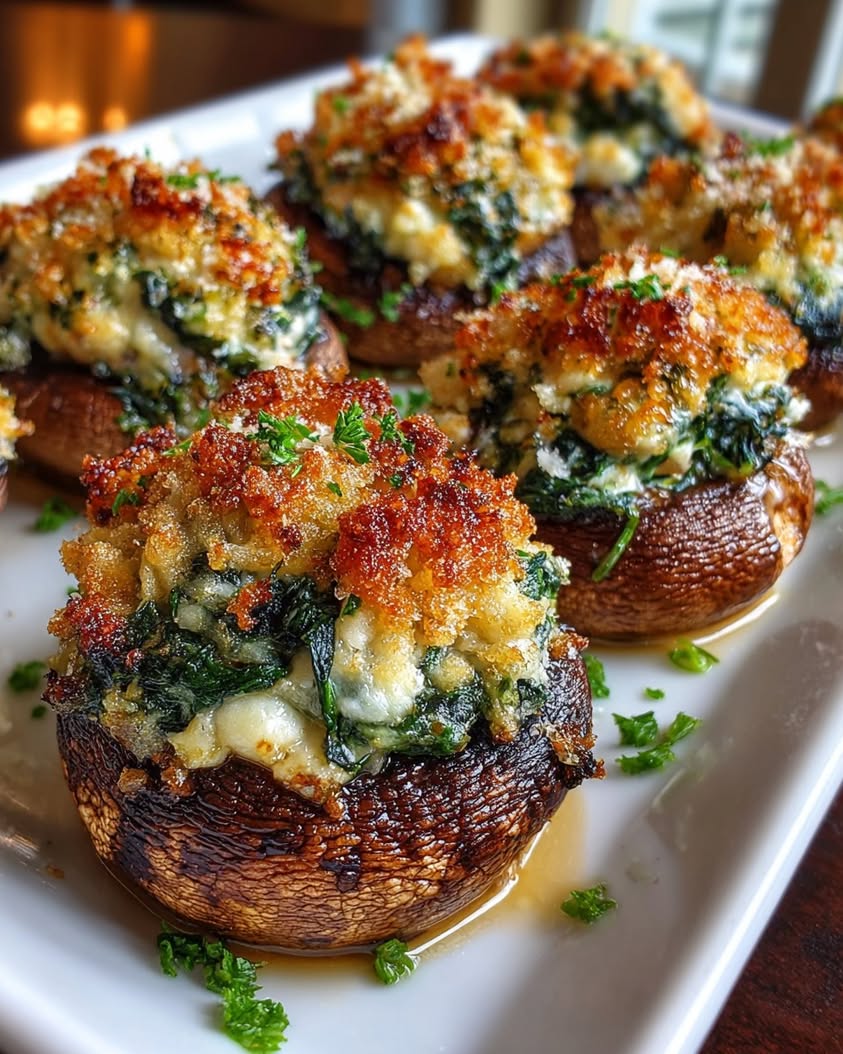
Creamy Spinach & Parmesan Stuffed Mushrooms: An Elegant Appetizer for Any Occasion
Imagine a warm, savory bite that melts in your mouth, bursting with the earthy flavor of mushrooms, the creamy richness of cheese, and the fresh, vibrant taste of spinach. This recipe for creamy spinach and Parmesan stuffed mushrooms delivers exactly that experience. Moreover, it transforms simple ingredients into an elegant appetizer that looks and tastes like it came from a gourmet kitchen. Consequently, these little morsels are guaranteed to disappear quickly from any platter.
These stuffed mushrooms are the ultimate crowd-pleaser for good reason. They perfectly balance textures and flavors, offering a satisfying contrast between the tender, meaty mushroom cap and the luxuriously creamy, cheesy filling. Importantly, this recipe is incredibly versatile, fitting seamlessly into everything from a casual game day spread to the most formal holiday dinner party. Ultimately, mastering this dish means you always have a reliable, impressive appetizer in your culinary repertoire.
Quick Recipe Highlights
- Flavor Profile: These stuffed mushrooms offer a savory, umami-rich experience. The earthiness of the mushrooms pairs beautifully with the creamy, tangy Parmesan and the subtle, fresh notes of spinach and garlic. Additionally, a hint of onion and herbs creates a perfectly balanced bite.
- Texture: You get a wonderful contrast in every bite. The baked mushroom cap becomes tender and juicy, while the filling is luxuriously creamy and slightly cheesy. Furthermore, the golden-brown, bubbly cheese topping adds a delightful textural finish.
- Aroma: As these bake, your kitchen will fill with an irresistible fragrance. The aroma of roasting mushrooms and garlic mingles with the nutty scent of melting Parmesan and the savory notes of herbs. It’s a scent that promises deliciousness.
- Visual Appeal: These appetizers are beautiful on a platter. The golden-brown, cheesy tops peek out from the dark, glossy mushroom caps, often with little flecks of green spinach visible. They look rustic, elegant, and incredibly appetizing.
- Skill Level Needed: This is a beginner-friendly recipe. The techniques are straightforward, involving basic chopping, mixing, and baking. Therefore, even novice cooks can achieve fantastic results with minimal stress.
- Special Equipment: You need only basic kitchen tools. A baking sheet, a mixing bowl, a spoon, and a knife are sufficient. However, using a small cookie scoop can make filling the mushrooms much quicker and neater.
Recipe Overview
- Difficulty Level: We rate this recipe as easy because it uses simple techniques accessible to all skill levels. The most complex step is properly preparing the mushroom caps, which is straightforward. Additionally, the filling comes together in one bowl with minimal fuss, making the entire process stress-free.
- Category: This dish falls squarely into the appetizer or hors d’oeuvre category. It is designed to be a finger food served before a meal. That said, you can easily serve a larger portion as a delightful vegetarian side dish alongside a main course like steak or roast chicken.
- Cuisine: While stuffed mushrooms appear in many culinary traditions, this version with spinach and Parmesan leans into Italian-American flavors. The use of garlic, Parmesan, and herbs like oregano is classic to that style. It’s a familiar, comforting flavor profile that appeals to a wide audience.
- Cost: This is a very cost-effective appetizer. Mushrooms, spinach, and cream cheese are relatively inexpensive, especially when considering the yield. Parmesan is the priciest ingredient, but a little goes a long way. Overall, you can feed a crowd for a fraction of the cost of store-bought appetizers.
- Season: These are truly a year-round recipe. They are perfect for holiday gatherings in the fall and winter, offering warm, comforting flavors. Conversely, they also work wonderfully for spring brunches or summer barbecues as a savory, satisfying bite.
- Occasion: Their versatility is a key strength. They are ideal for cocktail parties, potlucks, holiday feasts (especially Christmas and Thanksgiving), game day spreads, or even as a fancy snack for a quiet night in. They elevate any event effortlessly.
Why You’ll Love This Recipe
First and foremost, the taste and texture are simply unbeatable. Each bite delivers a complex symphony of flavors: the deep, earthy umami of the mushroom, the rich creaminess of the cheese filling, and the bright, fresh pop of spinach. The garlic and herbs tie everything together, creating a savory experience that is both comforting and sophisticated. Furthermore, the contrast between the juicy mushroom and the creamy, baked filling is deeply satisfying, making it hard to eat just one.
From a practical standpoint, the convenience of this recipe is a major win. The preparation is simple and doesn’t require any special skills or equipment. You can assemble the stuffed mushrooms ahead of time and simply pop them in the oven when guests arrive, filling your home with an inviting aroma. Moreover, cleanup is minimal, especially if you line your baking sheet with parchment paper. This allows you to spend more time with your guests and less time stuck in the kitchen.
Nutritionally, these stuffed mushrooms offer several advantages. Mushrooms are a great low-calorie source of B vitamins and antioxidants. Spinach packs a powerful punch of iron, vitamins A, C, and K. By using a combination of cream cheese and Parmesan, you get rich flavor without needing to overload on cheese. Importantly, this recipe is naturally low-carb and gluten-free, making it suitable for various dietary preferences. It’s a appetizer you can feel good about serving.
The social and entertaining value of this dish is immense. A platter of warm, cheesy stuffed mushrooms encourages conversation and mingling. They are easy to eat with one hand, leaving the other free for a drink. They look abundant and generous, creating a sense of hospitality. Because they are universally loved, they act as a fantastic icebreaker, guaranteeing compliments for the host. In short, they are a tool for creating a warm, welcoming atmosphere.
Finally, the cost-effectiveness and accessibility of the ingredients cannot be overstated. You can find everything you need at any standard grocery store. The recipe is forgiving, allowing for substitutions based on what you have on hand. Compared to ordering catering or buying pre-made frozen appetizers, making these from scratch saves significant money while delivering far superior flavor and quality. It’s a smart choice for your wallet and your taste buds.
Historical Background and Cultural Significance
The concept of stuffing vegetables and fungi is ancient, spanning countless cultures. Specifically, the practice of stuffing mushrooms likely has roots in European cuisines, where foraged wild mushrooms were a common and valuable food source. Cooks would have looked for ways to extend and enhance these finds, leading to the creation of filled dishes. The mushroom cap, with its natural bowl-like shape, presented a perfect edible vessel for savory mixtures, making it a logical and resourceful culinary development.
In terms of cultural importance, stuffed mushrooms became a staple of American entertaining in the mid-20th century. They symbolized a certain kind of sophisticated, yet approachable, home cooking popularized by cookbooks and magazines of the era. The combination of cream cheese, garlic, and breadcrumbs was a classic filling. Our version, featuring spinach and Parmesan, reflects a slightly more modern twist, incorporating ingredients that grew in popularity as American palates became more adventurous and health-conscious.
The evolution of the stuffed mushroom recipe is a story of adaptation. The earliest versions were likely simple, using bread, herbs, and perhaps some meat. The post-war abundance introduced cream cheese as a popular binding agent, creating a richer, more decadent appetizer. Later, as fresh produce became more available year-round, additions like spinach, artichokes, and sun-dried tomatoes became common. The move towards gluten-free and low-carb eating has also influenced modern recipes, often omitting breadcrumbs in favor of more cheese or nut-based fillings.
Regional variations of stuffed mushrooms are fascinating. In Italy, you might find “funghi ripieni” stuffed with sausage, breadcrumbs, and Pecorino Romano. Greek versions often include feta cheese, oregano, and lemon. In the American South, a stuffing with crab meat and Cajun seasoning is a beloved classic. Our creamy spinach and Parmesan version sits comfortably within the Italian-American tradition, a cuisine known for its hearty, flavorful, and crowd-pleasing dishes that have become a integral part of American food culture.
Ingredient Deep Dive
Let’s start with the star: cremini or button mushrooms. These common varieties are perfect for stuffing due to their sturdy structure and mild, earthy flavor. Cremini mushrooms, often called “baby bellas,” are slightly more robust and flavorful than white buttons. Nutritionally, they are low in calories but rich in B vitamins, selenium, and antioxidants that support immune health. When selecting them, choose mushrooms that are firm, with closed gills and a smooth, dry surface. Avoid any that are slimy or shriveled. Store them in a paper bag in the refrigerator; plastic traps moisture and accelerates spoilage.
Fresh spinach is the vibrant green heart of the filling. This leafy green is a nutritional powerhouse, loaded with iron, calcium, and vitamins A, C, and K. Historically, spinach has been cultivated for centuries across Asia and the Middle East before becoming a global staple. For this recipe, you’ll wilt it down, which concentrates its flavor and removes excess water that could make the filling soggy. Always buy crisp, dark green leaves without yellowing. You can substitute frozen chopped spinach that has been thoroughly thawed and squeezed dry; this is actually a great time-saver and ensures no extra moisture.
Parmesan cheese is the flavor king here. Authentic Parmigiano-Reggiano, with its granular texture and complex, nutty, salty taste, elevates the dish immensely. It’s a hard cheese with a long aging process, traditionally from Italy. It adds umami depth that powdered substitutes simply cannot match. Alongside it, cream cheese provides the essential creamy base that binds the filling. Its mild tang and rich texture create a luxurious mouthfeel. Use full-fat cream cheese for the best consistency and flavor. For storage, keep cream cheese refrigerated and Parmesan tightly wrapped to prevent it from drying out.
The aromatics—garlic and onion—form the flavor foundation. Garlic, with its pungent, spicy-sweet notes when cooked, is non-negotiable. Freshly minced garlic will always provide a brighter flavor than pre-minced jarred versions. Onion adds a subtle sweetness and depth. You can use yellow onion for potency or shallot for a more delicate touch. These ingredients have been used medicinally and culinarily for thousands of years. To prepare, ensure they are finely minced so they distribute evenly and cook through without burning. Their role is to perfume the entire filling with a savory base note.
Finally, the seasoning blend ties it all together. Dried oregano offers a classic, earthy herbal note synonymous with Italian cooking. Salt and black pepper are essential for balancing and enhancing all the other flavors. A pinch of red pepper flakes can add a welcome hint of heat. The quality of your dried herbs matters; if they are older than a year, their flavor will be diminished. For a fresh twist, you could add chopped fresh parsley or thyme to the filling. These seasonings work synergistically to create a harmonious and memorable taste profile.
Common Mistakes to Avoid
- Not Removing the Mushroom Stems Properly: Simply pulling the stem out can tear the cap and create a hole in the bottom. Instead, use a small spoon or paring knife to gently twist and scoop out the stem, creating a neat, deep cavity for maximum filling.
- Skipping the Mushroom Roasting Step: Placing raw, filled mushrooms directly on a baking sheet often leads to a puddle of liquid. Pre-baking the caps for 5-7 minutes draws out excess moisture, preventing a soggy final result and allowing the filling to crisp nicely.
- Not Squeezing the Spinach Dry: Whether using fresh wilted or frozen thawed spinach, removing every bit of excess water is critical. Wet spinach will make the filling loose and watery. Take the time to squeeze it thoroughly in a clean kitchen towel or paper towels.
- Overfilling the Mushroom Caps: It’s tempting to heap the filling high, but overfilled mushrooms are messy to eat and the filling can spill out and burn on the pan. Aim for a generous mound that sits neatly within the cavity without overflowing.
- Using Cold Cream Cheese: Trying to mix rock-hard cream cheese from the fridge is difficult and leads to a lumpy filling. Let the cream cheese soften at room temperature for 30-60 minutes. This ensures it blends smoothly with the other ingredients.
- Baking on the Wrong Surface: Placing mushrooms directly on a bare baking sheet can cause sticking and messy cleanup. Always use a parchment paper-lined or lightly greased sheet. For extra crispness, you can use a wire rack set on the baking sheet.
- Underseasoning the Filling: The mushrooms and spinach are mild, so the filling needs adequate seasoning. Taste the mixture before stuffing. Remember, it should taste a bit bold on its own, as the flavor will mellow slightly when baked with the mushroom.
- Overbaking: The goal is a hot, melted filling and a tender mushroom cap. Baking too long will shrivel the mushrooms and can cause the cheese to separate or become greasy. Look for the filling to be set and lightly golden on top.
Essential Techniques
Preparing the mushroom caps is the first crucial technique. Why is it important? A clean, deep cavity holds more filling and ensures each bite has the perfect ratio. To master it, hold a mushroom in one hand. With a small spoon (a 1/4 teaspoon measure works perfectly), gently but firmly press the stem and rotate to loosen it, then scoop out the surrounding gills to deepen the well. The common pitfall is being too aggressive and breaking through the bottom. A visual cue for success is a uniform, cup-like cap with intact walls and base.
Wiltling and drying the spinach is a non-negotiable step for texture. This technique is vital because it removes water that would otherwise steam out during baking, creating a soggy filling. To master it, cook fresh spinach in a pan over medium heat just until it collapses, or microwave it in a covered bowl for a minute. Then, transfer the hot spinach to a clean kitchen towel, let it cool slightly, and wring it out forcefully until no more liquid drips. The pitfall is impatience. The success cue is a small, dry, compact ball of spinach that easily crumbles into the filling.
Creating a cohesive filling relies on proper mixing technique. The goal is a uniform mixture where every ingredient is evenly distributed, ensuring consistent flavor in every mushroom. Start with fully softened cream cheese. Add the Parmesan, seasonings, and aromatics, mixing until combined. Then, fold in the crumbled, dried spinach gently but thoroughly. A common mistake is overmixing, which can make the cream cheese gummy. Use a spatula and a folding motion. The visual cue is a homogenous, creamy mixture with flecks of green and no visible streaks of plain cream cheese.
The two-stage baking method is the secret to perfect texture. First, baking the empty caps (often called “blind baking”) evaporates surface moisture and starts the cooking process, preventing a steamed, rubbery texture. Then, filling and baking a second time allows the filling to heat through, melt, and develop a beautiful golden top. The pitfall is skipping the first bake. The success cues are: after the first bake, the caps look slightly shrunken and there is liquid on the pan; after the second bake, the filling is bubbly and lightly browned.
Pro Tips for Perfect Creamy Spinach and Parmesan Stuffed Mushrooms
Select mushrooms that are similar in size. This ensures they bake evenly and present beautifully on the platter. Look for caps that are about 1.5 to 2 inches in diameter with a deep, cup-like shape.
For an extra flavor boost, finely chop the removed mushroom stems and sauté them with the onion and garlic. This adds a deeper mushroom essence to the filling and reduces waste.
Let the filled mushrooms sit at room temperature for 10-15 minutes before baking. This takes the chill off the filling, promoting more even and quicker cooking in the oven.
If your filling seems too soft after mixing, refrigerate it for 15-20 minutes. This firms up the cream cheese, making the stuffing process cleaner and easier, especially on a warm day.
For a gorgeous golden-brown top, finish the mushrooms under the broiler for the last 1-2 minutes of baking. Watch them closely, as they can burn quickly under intense direct heat.
Add a textural contrast by sprinkling a little extra grated Parmesan or a mix of Parmesan and panko breadcrumbs on top just before baking. This creates a delightful crispy crust.
For easy cleanup and to prevent sticking, always line your baking sheet with parchment paper. Silicone baking mats are another excellent, reusable option.
Allow the baked stuffed mushrooms to rest for 5 minutes after removing them from the oven. This lets the filling set slightly, making them easier to pick up and preventing burned mouths.
Variations and Adaptations
For regional variations, look to different culinary traditions. A Greek-inspired version could use feta cheese, dill, and lemon zest. A French twist might incorporate Boursin cheese and fresh tarragon. For a taste of the American South, add finely chopped cooked bacon or andouille sausage and a dash of Cajun seasoning. An Italian classic would include Italian sausage, mozzarella, and marinara for a “pizza mushroom” effect.
Seasonal adaptations are simple and fun. In the spring, add fresh chopped herbs like chives and parsley. For summer, incorporate finely chopped sun-dried tomatoes or roasted red peppers. In the fall, mix in a tablespoon of pureed roasted butternut squash or sage. During the winter holidays, a pinch of nutmeg in the filling adds a warm, festive note.
Dietary modifications are straightforward. For a gluten-free version, ensure your Parmesan is gluten-free and omit or use gluten-free breadcrumbs if adding a topping. To make it keto or ultra-low-carb, use full-fat ingredients and consider adding a tablespoon of almond flour to the filling to absorb moisture. For a dairy-free adaptation, use a plant-based cream cheese and a vegan Parmesan alternative, though the flavor profile will shift.
Flavor variations can personalize the dish immensely. Add heat with minced jalapeño or a dash of hot sauce to the filling. For a smoky note, use smoked paprika or a bit of grated smoked Gouda. For a richer, more complex cheese flavor, substitute half the Parmesan with finely grated Asiago or Romano cheese. Incorporate different herbs like thyme, basil, or rosemary based on your preference.
Texture modifications can cater to different tastes. For a crunchier filling, add finely chopped water chestnuts or walnuts. For a meatier texture, mix in cooked and crumbled breakfast sausage or Italian sausage. To make the filling even creamier, add an extra tablespoon of sour cream or Greek yogurt to the cheese mixture.
Presentation alternatives can elevate the dish. Instead of a large platter, serve individual mushrooms on small spoons or Asian soup spoons as a passed appetizer. For a family-style side, bake them in a gratin dish, packing them tightly together. You can also make a “deconstructed” version by chopping the mushroom caps, mixing them into the filling, and baking it all in a small dish as a dip.
Serving and Presentation Guide
Plating techniques matter for visual impact. Arrange the warm stuffed mushrooms on a simple, contrasting platter—a dark slate board or a white ceramic plate works beautifully. Cluster them together rather than spacing them out, which looks more abundant and inviting. Place a small bowl of marinara or ranch dipping sauce in the center if desired. For a rustic feel, use a wooden serving board and garnish with fresh herb sprigs.
Garnishing adds the final professional touch. A light sprinkle of chopped fresh parsley, chives, or microgreens right before serving adds a pop of color and fresh flavor. A very light dusting of paprika or smoked paprika over the platter adds visual warmth. For a festive touch during the holidays, garnish with tiny rosemary sprigs. The key is to keep garnishes edible and complementary to the flavors.
Traditional accompaniments for stuffed mushrooms are other classic appetizers. They pair wonderfully with a charcuterie board, a variety of olives, and other finger foods like meatballs or bruschetta. For beverage pairings, see the dedicated section below. In terms of a full meal, they are the perfect starter before pasta dishes, grilled meats, or roasted chicken.
Modern serving suggestions include incorporating them into a larger grazing table or “appetizer dinner.” They can be part of a vegetarian spread with hummus, roasted vegetables, and stuffed dates. For a fun twist, serve them alongside a shot of tomato bisque for a “mushroom and soup” shooter combination. They also make an excellent addition to a brunch buffet alongside quiche and fruit salad.
Temperature considerations are critical. Stuffed mushrooms are best served warm, when the cheese is creamy and the aromas are most pronounced. If serving on a buffet, keep them on a warming tray or in a low oven (200°F) covered loosely with foil. Avoid letting them sit at room temperature for more than two hours for food safety. They can be reheated successfully, but the texture of the mushroom cap will soften further.
Portion control tips are helpful for planning. The standard estimate is 2-3 pieces per person as part of a varied appetizer spread. If they are the only appetizer, plan for 4-5 per guest. For a cocktail party with many small bites, 1-2 per person is sufficient. Remember, it’s always better to have a few extras, as these are notoriously popular and disappear quickly.
Wine and Beverage Pairing
Wine pairings should complement the creamy, savory, and earthy notes of the dish. A crisp, unoaked white wine like Sauvignon Blanc or Pinot Grigio cuts through the richness beautifully with its acidity. For a more robust pairing, a light-bodied red with low tannins, such as a Pinot Noir or Beaujolais, works wonderfully without overpowering the mushrooms. Sparkling wines like Prosecco or Champagne are always a celebratory choice; their bubbles cleanse the palate between each rich, cheesy bite.
Non-alcoholic alternatives can be just as sophisticated. A sparkling water with a twist of lemon or lime provides a refreshing palate cleanser. For something more crafted, try a virgin Bloody Mary or a cucumber-mint spritzer. Flavored iced teas, like a peach black tea or a citrusy green tea, also pair nicely. The goal is to offer a beverage with some acidity or effervescence to balance the dish’s creaminess.
Coffee and tea pairings are less common but can work in certain settings. If serving these at a brunch, a medium-roast coffee with low acidity won’t clash with the savory flavors. For tea, an earthy green tea like Genmaicha (with roasted rice) can mirror the umami of the mushrooms, or a simple Earl Grey with its citrus notes can provide a pleasant contrast.
Temperature considerations are key for all beverages. White wines, sparkling wines, and non-alcoholic spritzers should be served well-chilled. Light reds like Pinot Noir are best served slightly cooler than room temperature, around 55-60°F. Iced beverages should be cold but not diluted; use large ice cubes to prevent watering down. The contrast between a cool drink and a warm appetizer is part of the enjoyable experience.
Serving suggestions include offering a variety. For a party, set up a small beverage station with a white wine, a red wine, and a signature non-alcoholic option. Clearly label each choice. Provide appropriate glassware: white wine glasses for whites and sparklings, wider bowls for reds, and highball glasses for spritzers. This attention to detail makes the entire serving experience feel cohesive and thoughtful.
Storage and Shelf Life
Storage methods for leftovers are simple but important. Allow the stuffed mushrooms to cool completely to room temperature after baking. Do not leave them out for more than two hours. Transfer them to a shallow, airtight container. You can layer them between sheets of parchment paper to prevent sticking. Store them in the refrigerator. Do not store them while still warm, as condensation will promote sogginess and bacterial growth.
Temperature requirements are strict for food safety. The stuffed mushrooms must be kept refrigerated at 40°F or below. They are a dairy-based product and can spoil if left in the “danger zone” (40°F – 140°F) for too long. If transporting them, use an insulated cooler with ice packs. When reheating, ensure they reach an internal temperature of 165°F to eliminate any potential bacteria.
Container recommendations focus on maintaining texture. A shallow glass or plastic container with a tight-fitting lid is ideal. Avoid deep containers where the mushrooms will be piled high, as the weight can crush them. If you have many, use multiple containers. For very short-term storage (a few hours), you can cover the platter tightly with plastic wrap and refrigerate.
Signs of spoilage are easy to spot. Discard the mushrooms if you notice an off or sour smell, a slimy texture on the mushroom caps or filling, or any visible mold growth. The filling may also separate and become watery. When in doubt, it is always safer to throw it out, especially with dairy products.
Reheating instructions are crucial for restoring quality. The best method is in a conventional oven or toaster oven preheated to 350°F. Place the mushrooms on a parchment-lined sheet and heat for 8-12 minutes, until warmed through. The microwave is faster but will make the mushroom caps rubbery and the filling may separate. If using a microwave, heat in short 15-second bursts and place on a paper towel to absorb moisture.
Freezing guidelines are possible but with caveats. The texture of the mushroom caps will become mushy upon thawing due to their high water content. If you must freeze, assemble and bake as directed, cool completely, then freeze in a single layer on a baking sheet before transferring to a freezer bag. Reheat from frozen in a 375°F oven for 15-20 minutes. Expect a significant change in the mushroom’s texture, though the flavor will remain good.
Make Ahead Strategies
You can implement a prep timeline spanning 1-2 days. Day 1: Clean the mushrooms, remove stems, and pre-bake the caps. Let them cool, then store them in an airtight container in the fridge. Separately, cook the spinach, squeeze it dry, and prepare the filling mixture. Store the filling in a separate container. Day of Serving: Stuff the cold caps with the cold filling, arrange on a sheet, and bake. This breaks the work into manageable stages.
Storage between steps is key to maintaining quality. The pre-baked, empty mushroom caps can be refrigerated for up to 24 hours. The prepared filling can be stored in an airtight container for 1-2 days. Keep both components cold. Do not store raw, filled mushrooms for more than a few hours before baking, as the salt in the filling will draw moisture out of the caps, making them watery.
Assessing the quality impact of make-ahead steps is important. Pre-baking the caps actually improves the final texture by removing moisture upfront. Preparing the filling ahead allows the flavors to meld, often enhancing the taste. The only minor downside is that the filled mushrooms might take 2-3 minutes longer to bake straight from the fridge. Overall, making ahead significantly improves the process for entertaining.
Assembly tips for the day-of are simple. If the filling is very cold and firm, let it sit at room temperature for 10-15 minutes to become spreadable. Use a small spoon or a piping bag without a tip to neatly fill each cap. If you assembled them cold, you can let the tray sit on the counter for 15 minutes before baking to take the chill off for more even cooking.
Reheating guidelines for fully made-ahead mushrooms are similar to leftovers. If you baked them completely ahead of time, cool, store, and reheat in a 350°F oven for best results. For the freshest taste and texture, the optimal make-ahead strategy is to prepare the components separately and assemble and bake just before serving.
Adding fresh elements after baking can brighten up make-ahead dishes. If you prepared everything in advance, garnish with a sprinkle of fresh herbs or a drizzle of high-quality olive oil after reheating. This adds a burst of fresh flavor and aroma that makes the dish taste newly made.
Scaling Instructions
Halving the recipe is straightforward for smaller gatherings. Simply divide all ingredient quantities by two. Use a standard 8×8 baking sheet or quarter sheet pan. The prep and cook times will remain roughly the same, though the initial mushroom roasting might take 1-2 minutes less since the pan is less crowded. Keep an eye on them during the final bake, as a smaller batch may cook a minute or two faster.
Doubling or tripling the recipe for a large crowd is easy. Multiply all ingredients consistently. You will need multiple baking sheets. Oven space is the main constraint; bake one sheet at a time on the middle rack for even cooking, or use convection bake if your oven has it, rotating sheets halfway through. The initial roasting step is even more crucial here to manage the significant moisture from a large batch of mushrooms.
Equipment adjustments are necessary when scaling. For a double batch, you’ll likely need two large baking sheets. Consider using a larger mixing bowl for the filling. If tripling, you may want to mix the filling in batches to ensure even incorporation. For very large quantities, a stand mixer with the paddle attachment can quickly combine the filling ingredients.
Timing modifications are minimal but present. When baking multiple sheets, add 2-3 minutes to the total bake time. The oven temperature drops each time you open the door to rotate pans. Stagger putting sheets in the oven by 5 minutes if baking concurrently on different racks to allow for rotation. The filling and stuffing process will, of course, take proportionally longer with more mushrooms.
Storage considerations change with scale. A large batch of leftovers will take up more fridge space. Use several shallow containers instead of one deep one. When reheating a large amount, spread them out on multiple sheets to ensure they reheat evenly and get crispy rather than steam. Planning your storage space before you start cooking is a wise step.
Nutritional Deep Dive
A macro breakdown per mushroom (approximate) is revealing. Each piece contains roughly 45-55 calories, with about 3.5g of fat (from the cheese and mushroom), 2g of carbohydrates (primarily from the vegetable fiber), and 2g of protein. The majority of the calories come from the healthy fats in the dairy, which aid in the absorption of the fat-soluble vitamins (A, D, E, K) present in the spinach and cheese.
The micronutrient analysis is impressive for an appetizer. Mushrooms provide B vitamins like riboflavin and niacin, crucial for energy metabolism. Spinach is loaded with vitamin K for bone health, vitamin A for vision, and folate. Parmesan cheese contributes calcium and phosphorus for strong bones and teeth. Garlic offers allicin, a compound with noted antioxidant properties. Together, they make this a nutrient-dense choice.
Specific health benefits are worth noting. The combination is anti-inflammatory due to antioxidants in the mushrooms and spinach. The high fiber content from the vegetables supports digestive health. The protein and fat provide satiety, helping to prevent overeating. Furthermore, being low in carbohydrates, it has a minimal impact on blood sugar levels, making it a good option for those managing insulin sensitivity.
Dietary considerations are largely positive. The recipe is naturally gluten-free and vegetarian. It is low-carb and can fit into ketogenic diets when consumed in appropriate portions. For those on a low-FODMAP diet, garlic and onion may be triggers, but you can use garlic-infused oil and the green tops of scallions instead. It is not suitable for vegans or those with dairy allergies without significant modification.
Portion analysis shows its flexibility as an appetizer. Consuming 2-3 pieces adds a reasonable 100-150 calories to your intake while providing valuable nutrients and satisfaction. Compared to many fried or pastry-wrapped appetizers, this is a lighter, more wholesome choice. It allows you to enjoy a flavorful start to a meal without derailing your nutritional goals for the day.
Weight management tips relate to its profile. Because it is high in protein and fat and low in carbs, it can help control hunger. The key is to be mindful of portion size, as it is easy to consume many due to their deliciousness. Pairing them with a large salad or vegetable crudité can create a more balanced snack that promotes fullness with fewer calories from the richer stuffed mushrooms.
Dietary Adaptations
For a gluten-free version, this recipe is already nearly perfect. Simply ensure that your Parmesan cheese is certified gluten-free, as some pre-grated brands use anti-caking agents containing wheat. If you choose to add a breadcrumb topping, use certified gluten-free panko or breadcrumbs. All other core ingredients are naturally gluten-free.
A dairy-free adaptation requires substitutions for both cheeses. Use a high-quality, firm plant-based cream cheese alternative. For the Parmesan, use a store-bought vegan Parmesan or make your own from blended nuts (like almonds or cashews), nutritional yeast, and salt. The flavor will be different but still savory and delicious. Be aware that plant-based cream cheeses vary in meltability, so the texture may be less creamy.
Creating a vegan version builds on the dairy-free changes. Use the dairy-free cheese substitutes mentioned above. Also, ensure you are using a vegan-friendly cream cheese (many are). The rest of the ingredients—mushrooms, spinach, garlic, onion, herbs—are already plant-based. This adaptation makes the dish suitable for a completely plant-based diet while retaining its elegant appeal.
For a strict keto adaptation, confirm the carb counts. Mushrooms, spinach, onion, and garlic all contain some carbs. To minimize, you can reduce or omit the
Print
Stuffed Mushrooms with Spinach and Parmesan
Description
Savory mushroom caps filled with a creamy spinach, garlic, and Parmesan mixture, baked until golden and bubbly—a perfect appetizer or side dish.
Ingredients
For the Crust:
- 20 large white mushrooms, stems removed and chopped
- 2 tablespoons olive oil
- 1 small onion, finely chopped
- 3 cloves garlic, minced
- 4 cups fresh spinach, chopped
- 1/2 cup cream cheese, softened
- 1/2 cup grated Parmesan cheese
- 1/4 cup breadcrumbs
- 1 teaspoon dried oregano
- Salt and black pepper to taste
- Fresh parsley for garnish
Instructions
1. Prepare the Crust:
- Preheat oven to 375°F (190°C). Lightly grease a baking sheet.
- Heat olive oil in a skillet over medium heat. Sauté onion and garlic until softened, about 3 minutes.
- Add chopped mushroom stems and spinach to the skillet. Cook until spinach wilts and liquid evaporates, about 5 minutes. Remove from heat and let cool slightly.
- In a bowl, mix the spinach mixture with cream cheese, Parmesan, breadcrumbs, oregano, salt, and pepper until well combined.
- Spoon the filling into each mushroom cap, mounding slightly. Arrange on the prepared baking sheet.
- Bake for 20-25 minutes, until mushrooms are tender and tops are golden. Garnish with parsley before serving.
Notes
You can customize the seasonings to taste.

I’m Shaykee—born in Morocco, seasoned across continents. From airplane galleys to home kitchens, I share the flavors and stories that shaped my journey.