
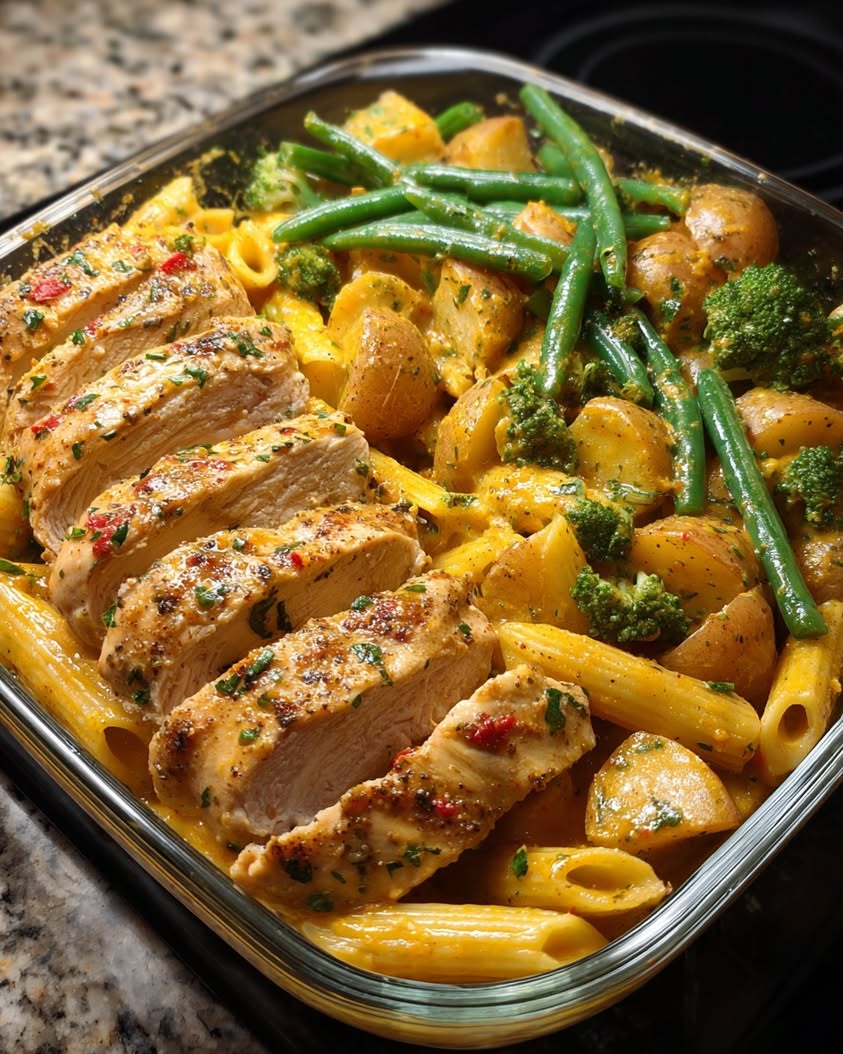
Creamy One-Pan Chicken Pasta with Potatoes, Green Beans & Broccoli: Your New Favorite Weeknight Savior
Imagine a steaming skillet arriving at your dinner table, filled to the brim with tender chicken, hearty pasta, and a rainbow of fresh vegetables, all luxuriously coated in a velvety, savory sauce. This creamy one-pan chicken pasta loaded with veggies! An easy, comforting dinner ready in 30 minutes. Perfect for busy weeknights. It is the ultimate solution for those evenings when you crave a wholesome, satisfying meal but have zero energy for a sink full of dishes. Furthermore, the entire dish comes together in a single pan, meaning you get maximum flavor with minimal cleanup. The aroma alone, a blend of garlic, herbs, and simmering cream, will have your family gathering in the kitchen long before the timer dings.
This recipe masterfully combines protein, starch, and vegetables into one harmonious dish. Consequently, it delivers on every front: nutrition, flavor, and convenience. The creamy sauce, created right in the pan, clings to every piece of pasta and vegetable, ensuring each bite is rich and flavorful. Ultimately, this creamy one-pan chicken pasta is more than just a meal; it is a reliable weeknight strategy for delicious, stress-free dining. It transforms simple, accessible ingredients into a comforting feast that feels both indulgent and nourishing.
Quick Recipe Highlights
- Flavor Profile: This dish offers a deeply savory and comforting taste. The chicken provides a rich, umami base, while the garlic and herbs add aromatic complexity. Meanwhile, the creamy sauce brings a smooth, decadent note that balances the earthy vegetables perfectly.
- Texture: You will experience a wonderful contrast of textures. The pasta is perfectly al dente, the potatoes are tender and creamy, and the green beans and broccoli offer a satisfying, slight crunch. Consequently, every mouthful is interesting and delightful.
- Aroma: As the dish cooks, your kitchen will fill with the irresistible scent of sautéing garlic and onion, followed by the savory notes of browning chicken and the fresh, herbal fragrance of thyme. Finally, the creamy sauce melds all these aromas into one comforting bouquet.
- Visual Appeal: This pasta is a feast for the eyes with its vibrant color palette. The green broccoli and beans pop against the golden chicken and creamy white sauce, while the pasta and potatoes provide a neutral canvas. Therefore, it looks as impressive as it tastes.
- Skill Level Needed: This is a beginner-friendly recipe designed for success. The steps are sequential and simple, involving basic techniques like chopping, sautéing, and simmering. As a result, even novice cooks can achieve a restaurant-quality result with confidence.
- Special Equipment: You need only one large, deep skillet or braiser with a lid. A good chef’s knife and cutting board for prep are essential. Otherwise, no special tools are required, making this recipe highly accessible for any home kitchen.
Recipe Overview
- Difficulty Level: We rate this recipe as “Easy” because it uses straightforward techniques accessible to all cooks. The process is linear with minimal multitasking. Additionally, the one-pan method eliminates complex timing and juggling multiple pots. Ultimately, the margin for error is small, and the visual cues are clear, guiding you to a perfect result every time.
- Category: This dish falls squarely into the main course category for dinner. It is a complete meal featuring protein, carbohydrates, and vegetables. Moreover, it fits beautifully into family dinner, weeknight meal, and comfort food rotations. It is substantial enough to stand alone without needing sides.
- Cuisine: While not tied to a specific traditional cuisine, this recipe draws inspiration from American comfort food and rustic Italian cooking. The use of pasta, cream, and herbs is reminiscent of Italian influences, while the inclusion of potatoes and mixed veggies speaks to a hearty, all-in-one American meal. It is a modern fusion designed for home cooking.
- Cost: This is a budget-friendly meal. Chicken thighs are often more economical than breasts, and pasta is an inexpensive staple. The vegetables are common and affordable, especially in season. Overall, you can feed a family of four a restaurant-quality meal for a fraction of the cost of takeout.
- Season: This creamy one-pan chicken pasta is truly a year-round dish. It provides warmth and comfort in fall and winter. Conversely, with its bright green veggies, it also feels fresh and appropriate for spring and summer evenings, especially when you want a satisfying meal without heating the kitchen for hours.
- Occasion: It is the quintessential weeknight dinner hero. Furthermore, it is excellent for casual weekend family meals. It is also a great option for feeding a crowd or for meal prep, as it scales easily and reheats beautifully. It is versatile enough for any informal gathering.
Why You’ll Love This Recipe
First and foremost, the taste and texture combination is utterly irresistible. The savory, tender chicken pairs perfectly with the creamy, herb-infused sauce. Each forkful delivers the soft bite of pasta, the comforting starchiness of potato, and the fresh crunch of green vegetables. This symphony of flavors and textures creates a deeply satisfying eating experience that comforts and delights with every single bite. It is the kind of meal that makes everyone at the table ask for seconds.
Secondly, the convenience factor is a game-changer. This creamy one-pan chicken pasta loaded with veggies! An easy, comforting dinner ready in 30 minutes. Perfect for busy weeknights. The “one-pan” promise is real, meaning you will spend more time enjoying your meal and less time scrubbing pots. The prep is simple, and the cooking process is largely hands-off once everything is simmering. Consequently, you can easily manage this recipe while helping with homework, tidying up, or simply relaxing for a moment after a long day.
From a nutritional standpoint, this dish is a well-rounded winner. It packs lean protein from the chicken, complex carbohydrates from the pasta and potatoes, and a generous serving of fiber and vitamins from three different vegetables. You are essentially getting an entire balanced plate from a single skillet. This makes it an excellent choice for families seeking to incorporate more veggies into their diets in a delicious, non-intimidating way.
Socially, this recipe is a fantastic entertainer. It is humble yet impressive, making it perfect for casual dinners with friends. You can prepare it largely ahead of time and simply finish it on the stove when guests arrive. The communal nature of a one-pan meal encourages sharing and conversation. It is approachable comfort food that makes everyone feel welcome and well-fed, fostering a warm and inviting atmosphere.
Finally, its cost-effectiveness and accessibility cannot be overstated. The ingredients are pantry staples and common grocery items, not exotic or expensive. You can often make this meal with items already on hand. Compared to ordering pizza or going out, this homemade creamy one-pan chicken pasta delivers superior flavor, better nutrition, and significant savings. It empowers you to create a restaurant-quality dining experience in your own kitchen on a sensible budget.
Historical Background and Cultural Significance
The concept of a one-pan meal is ancient, rooted in the practical need for efficient cooking over open hearths. Every culture has its version, from Spanish paella to French pot-au-feu. This particular recipe, a creamy one-pan chicken pasta, is a modern American invention that reflects contemporary desires for convenience and flavor. It synthesizes the Italian love for pasta with the American penchant for hearty, all-in-one casseroles and skillet dinners. It is a dish born from the need for quick, delicious solutions in the fast-paced modern kitchen.
Culturally, it signifies a shift towards simpler, more streamlined home cooking. In an era of complex food trends, this dish represents a return to comforting, reliable basics. It honors the tradition of the family dinner by removing the barriers of time and complicated technique. The act of gathering around a single, hearty skillet is inherently communal, echoing older traditions of sharing a central pot. It is food designed for connection, not just consumption.
The evolution of this recipe is directly tied to the popularity of the “one-pot pasta” phenomenon that gained traction online and in cookbooks over the last decade. Chefs and home cooks experimented with cooking pasta directly in its sauce, leading to starchy, cohesive dishes. This creamy one-pan chicken pasta builds on that concept by adding protein and robust vegetables, transforming it from a simple pasta dish into a complete meal. It is an evolution driven by practicality and the pursuit of maximum flavor with minimal effort.
Regional variations are endless, which speaks to the recipe’s adaptability. In the American South, you might find a version with a Cajun spice blend and andouille sausage. A Midwestern take could incorporate cream of mushroom soup. An Italian-inspired variation might use pancetta, white wine, and Parmesan Reggiano. The core formula remains: protein + starch + vegetables + creamy sauce, all in one vessel. This flexibility allows the dish to absorb local flavors and ingredients, making it a true global citizen in the world of weeknight cooking.
Ingredient Deep Dive
Chicken thighs are the ideal protein for this creamy one-pan chicken pasta. Historically, thighs were considered a less desirable cut, but modern appreciation for flavor and moisture has elevated their status. Nutritionally, they offer more iron and zinc than white meat and remain juicy during the simmering process. When selecting, look for thighs with minimal excess fat and a pink, fresh color. For storage, keep them in the coldest part of your fridge and use within 1-2 days, or freeze for longer. If you must substitute, chicken breasts will work but require careful timing to avoid dryness, or try turkey cutlets for a leaner option.
Pasta, specifically the short shape used here, is a cornerstone of the dish. Culturally, pasta’s history spans millennia, originating in ancient civilizations. In this recipe, it serves as the starchy backbone that thickens the sauce and provides substance. Opt for a quality brand of durum wheat semolina pasta for the best texture and flavor. It should be stored in a cool, dry pantry. While the recipe calls for a specific shape, you can substitute with any short pasta like penne, fusilli, or shells. The key is to choose a shape that will capture the creamy sauce in its nooks and crannies.
Potatoes add heartiness and help thicken the sauce naturally. They have a rich global history as a sustenance food. In this dish, they contribute complex carbohydrates, vitamin C, and potassium. Select firm, smooth potatoes without sprouts or green tinges. Yukon Golds are perfect for their buttery texture and thin skin. Store them in a cool, dark, well-ventilated place, not in the refrigerator. For a substitution, sweet potatoes would offer a vitamin-A rich twist, or you could use turnips for a lower-carb version, though the cooking time may vary slightly.
Green beans and broccoli bring essential color, texture, and nutrition. Broccoli, descended from wild cabbage, is a nutritional powerhouse packed with vitamins C, K, and fiber. Green beans add crisp-tenderness and a vibrant green hue. Choose bright green, firm broccoli florets and crisp, snap-able green beans. Store both in the crisper drawer of your refrigerator. For substitutions, asparagus spears or snap peas would work beautifully for the green beans, while cauliflower florets could replace broccoli for a different flavor profile. The goal is to include fresh, quick-cooking vegetables for balance.
Common Mistakes to Avoid
- Overcrowding the Pan When Browning Chicken: If you add all the chicken at once, it will steam instead of sear. Consequently, you miss out on the flavorful fond (browned bits) that forms the sauce’s base. Always work in batches if necessary to ensure each piece has space.
- Not Sautéing the Aromatics Enough: Rushing the garlic and onion means they won’t soften and sweeten properly, leaving a harsh, raw flavor in your final dish. Cook them until fragrant and translucent to build a deep flavor foundation.
- Adding the Vegetables in the Wrong Order: Potatoes need more time to cook than broccoli. Adding all veggies simultaneously will result in mushy broccoli and undercooked potatoes. Follow the recipe sequence for perfectly cooked vegetables.
- Using the Wrong Pan Size: A skillet that is too small will lead to uneven cooking and messy boil-overs. A pan that is too large will cause the sauce to reduce too quickly. Use a large, deep skillet or braiser as specified.
- Neglecting to Stir Occasionally: While the dish simmers, the pasta and potatoes can stick to the bottom. Stirring occasionally prevents burning and ensures even cooking and sauce distribution throughout the pan.
- Overcooking the Pasta: Since the pasta cooks in the sauce, it continues to absorb liquid even off the heat. Therefore, you should aim for an al dente texture while it is still on the stove to avoid a mushy final product.
- Skipping the Rest Time: Letting the dish sit for a few minutes after cooking allows the sauce to thicken slightly and the flavors to meld further. Serving it immediately can make it seem a bit soupy.
- Using Pre-Shredded Cheese: Pre-shredded cheese contains anti-caking agents that can make your sauce grainy and prevent it from melting smoothly. Always grate your cheese fresh from a block for the creamiest result.
Essential Techniques
Properly Browning the Chicken is the first critical step for building flavor. This technique, known as the Maillard reaction, creates hundreds of new flavor compounds on the surface of the meat. To master it, ensure your pan is hot and the chicken is patted very dry. Do not move the pieces for the first few minutes, allowing a golden crust to form. A common pitfall is flipping too soon. Wait until the chicken releases easily from the pan. The visual cue for success is a deep, golden-brown sear on each piece, not a pale gray steam.
Building the Creamy Sauce in the same pan is what makes this dish magical. After removing the chicken, you use the remaining fond and fat to cook the aromatics, deglaze with broth, and create the sauce base. The key is to scrape up all the browned bits with your wooden spoon as you add the liquid. This incorporates immense flavor. The common mistake is rushing this step or using too high a heat, which can cause the dairy to separate. Success is indicated by a smooth, homogenous sauce that coats the back of a spoon before you add the pasta and vegetables.
Simmering to Cook the Pasta and Vegetables is a gentle, combined cooking method. Unlike boiling pasta in a vast amount of water, here it cooks in a measured amount of flavorful liquid it absorbs. The technique requires maintaining a consistent, gentle bubble. A rolling boil will break down the vegetables too quickly and evaporate the sauce. Covering the pan partway is crucial to trap steam for cooking the potatoes while allowing some reduction. The visual cue for doneness is pasta that is al dente and potatoes that are easily pierced with a fork, with the sauce thickened to a creamy consistency.
Pro Tips for Perfect Creamy One-Pan Chicken Pasta
For the deepest flavor, season your chicken generously with salt and pepper at least 15 minutes before cooking. This allows the seasoning to penetrate the meat.
Use a combination of broth and water for the cooking liquid. The broth adds savory depth, while the plain water prevents the overall dish from becoming too salty.
Cut your potatoes into uniform, small cubes to ensure they cook at the same rate as the pasta. Inconsistent sizes lead to some pieces being hard while others are mushy.
Resist the urge to add more liquid than the recipe calls for. The vegetables and pasta will release water as they cook, and the sauce will thicken upon standing.
Finish the dish with a squeeze of fresh lemon juice or a sprinkle of lemon zest. The bright acidity cuts through the richness of the cream and elevates all the other flavors.
Let the skillet rest off the heat, covered, for 5 minutes before serving. This allows the pasta to fully absorb the sauce and the flavors to marry perfectly.
Garnish with fresh herbs like chopped parsley or chives just before serving. This adds a pop of color and a layer of fresh, aromatic flavor.
For a richer sauce, stir in a tablespoon of cream cheese or mascarpone at the very end of cooking. It will melt seamlessly for an extra velvety texture.
Variations and Adaptations
For regional variations, consider a Southwest twist by using corn, black beans, diced tomatoes with green chiles, and a sprinkle of cumin and chili powder. An Italian-inspired version could feature sun-dried tomatoes, spinach, and a finish of fresh basil and grated Parmesan. A French-style adaptation might include leeks, herbes de Provence, and a splash of white wine for deglazing. These changes transport the basic formula to different culinary landscapes while maintaining the convenient one-pan structure.
Seasonal adaptations keep the recipe exciting year-round. In spring, use fresh peas, asparagus, and tender new potatoes. Summer calls for zucchini, yellow squash, and cherry tomatoes. For autumn, incorporate cubed butternut squash and kale. Winter versions can include mushrooms and hearty greens like Swiss chard. Swapping vegetables based on what is fresh and local not only improves flavor but also supports seasonal eating patterns.
Dietary modifications are straightforward. For a gluten-free creamy one-pan chicken pasta, use your favorite gluten-free pasta blend and ensure your broth is certified GF. To make it dairy-free, substitute the cream with full-fat canned coconut milk and use a dairy-free cream cheese alternative. For a lower-carb option, replace the pasta with cauliflower florets and the potatoes with radishes or turnips, extending the cook time slightly for the vegetables to soften.
Serving and Presentation Guide
Plating this dish is wonderfully simple due to its all-in-one nature. For a family-style presentation, bring the entire skillet to the table on a trivet. This creates a warm, communal feeling. For individual plates, use a large spoon or pasta server to ensure each portion gets a good mix of chicken, pasta, and vegetables. Lift and twist as you serve to create an appealing mound. Avoid simply scooping, as this can make the dish look messy. Instead, aim for a rustic but intentional presentation.
Garnishing is the final touch that elevates the visual appeal. A sprinkle of freshly chopped parsley, chives, or dill adds a vibrant green contrast. A light dusting of paprika or cracked black pepper provides color and spice specks. For a touch of luxury, a few shavings of Parmesan cheese or a drizzle of high-quality olive oil just before serving adds shine and richness. Place the garnish centrally or sprinkle it evenly over the top for a professional finish.
Wine and Beverage Pairing
When selecting a wine for this rich, creamy dish, you want something that can cut through the fat and complement the savory notes. A crisp, unoaked Chardonnay is an excellent choice. Its bright acidity cleanses the palate, while its subtle apple and citrus notes contrast the creamy sauce beautifully. Alternatively, a Pinot Gris or a dry Riesling would also work well. For red wine lovers, a light-bodied, low-tannin red like a Pinot Noir can be delightful if served slightly chilled. It offers red fruit flavors that won’t overpower the chicken and herbs.
For non-alcoholic pairings, consider beverages with balancing acidity or herbal notes. Sparkling water with a squeeze of lemon or lime is always refreshing. An iced herbal tea, like lemon verbena or mint, complements the dish’s flavors without sweetness. For a creamier option, a chilled glass of buttermilk or a savory lassi can be a surprising and delightful match. The key is to avoid overly sweet drinks, which will clash with the savory profile of the pasta.
Storage and Shelf Life
Proper storage is key to enjoying leftovers. Allow the creamy one-pan chicken pasta to cool completely before transferring it to an airtight container. It will keep in the refrigerator for 3 to 4 days. The pasta will continue to absorb sauce, so it may thicken significantly. When reheating, add a small splash of broth, milk, or water to loosen the sauce to your desired consistency. Reheat gently on the stovetop over medium-low heat, stirring frequently, or in the microwave in 60-second intervals, stirring between each.
For freezing, this dish can be frozen for up to 2 months. However, note that the texture of the potatoes and pasta may become slightly softer upon thawing. Portion the cooled pasta into freezer-safe bags or containers. Thaw overnight in the refrigerator before reheating. Cream-based sauces can sometimes separate when frozen and reheated. To mitigate this, reheat slowly and stir vigorously, or add a fresh splash of cream while reheating to re-emulsify the sauce.
Make Ahead Strategies
You can significantly speed up your weeknight cooking by prepping components ahead. Chop all vegetables (potatoes, broccoli, green beans, onion, garlic) and store them separately in airtight containers in the refrigerator for up to 2 days. You can also cut the chicken into pieces and season it, storing it in a sealed bag or container. When ready to cook, everything is ready to go. This reduces active prep time to just heating the pan, allowing you to get this creamy one-pan chicken pasta loaded with veggies on the table in record time.
For a full make-ahead meal, prepare the entire recipe through the simmering step, but stop just before the pasta is fully al dente. Cool the mixture quickly and refrigerate. The pasta will continue to absorb liquid. When ready to serve, reheat the skillet over medium heat, adding a bit more broth or water to achieve the right saucy consistency. Gently warm it through until the pasta and vegetables are heated and tender. Finish with fresh herbs and cheese. This method preserves flavor beautifully and is perfect for planned leftovers or easy entertaining.
Scaling Instructions
This recipe is incredibly easy to scale for different group sizes. To halve it, simply divide all ingredient quantities by two. Use a medium-sized skillet to ensure the liquid reduces properly. The cook time may be slightly shorter, so start checking for doneness a few minutes early. For doubling or tripling, multiply the ingredients accordingly. Crucially, you will need a very large pan or may need to cook in two separate batches for the initial browning step to avoid overcrowding. You can then combine everything in a large Dutch oven or stockpot for the simmering stage.
Nutritional Deep Dive
This creamy one-pan chicken pasta provides a balanced macronutrient profile. The chicken offers high-quality protein essential for muscle repair and satiety. The pasta and potatoes supply complex carbohydrates, which are the body’s primary energy source. The vegetables contribute dietary fiber, which aids digestion and promotes a feeling of fullness. The cream and cheese add fats necessary for nutrient absorption and flavor. As a complete meal, it helps regulate blood sugar by combining these macros, preventing the energy spikes and crashes associated with carbohydrate-only meals.
Micronutrient-wise, this dish is a powerhouse. Broccoli is rich in vitamins C and K, folate, and potassium. Green beans provide vitamin K, vitamin C, and manganese. Potatoes offer more potassium than a banana, along with vitamin C and B6. Chicken adds iron, zinc, and B vitamins. Together, they support immune function, bone health, energy metabolism, and overall cellular function. It is a nutrient-dense meal that delivers substantial vitamins and minerals alongside its comforting flavors.
Dietary Adaptations
For a gluten-free version, substitute the regular pasta with a high-quality gluten-free pasta made from brown rice, quinoa, or a blend. Be sure to use a gluten-free chicken broth as well. Stir gently when cooking, as some GF pastas can be more fragile. For a dairy-free creamy one-pan chicken pasta, replace the heavy cream with full-fat canned coconut milk. Use a dairy-free cream cheese alternative or a slurry of cornstarch and broth to achieve thickness. Nutritional yeast can be added at the end for a cheesy flavor without dairy.
To create a vegan adaptation, replace the chicken with hearty vegetables like mushrooms, eggplant, or chickpeas. Use vegetable broth and full-fat coconut milk for the creamy base. A tablespoon of white miso paste stirred in at the end will add a deep, savory umami flavor reminiscent of chicken. For a low-carb or keto version, omit the pasta and potatoes entirely. Increase the chicken quantity and use low-carb vegetables like cauliflower florets, zucchini noodles added at the very end, and extra broccoli.
Troubleshooting Guide
If your sauce is too thin, the most likely cause is not enough reduction. Simply continue to simmer the dish uncovered, stirring frequently, until the excess liquid evaporates and the sauce thickens. Conversely, if the sauce is too thick or the pasta seems dry, add additional warm broth or water, a quarter cup at a time, stirring until you reach the desired consistency. Remember, the pasta will absorb liquid as it sits, so it is better to err on the side of slightly saucier when you finish cooking.
If your vegetables are unevenly cooked, you may have cut them to inconsistent sizes. For future attempts, take care to cube potatoes uniformly and cut broccoli florets to a similar size. If you encounter this issue during cooking, you can remove the already-tender pieces with a slotted spoon, continue cooking the harder pieces, and then return everything to the pan to warm through. If the chicken is tough, it was likely overcooked during the initial browning or the final simmer. Next time, reduce the simmer time slightly and ensure you are using the recommended cut, as thighs are more forgiving than breasts.
Frequently Asked Questions
Can I use chicken breasts instead of thighs? Yes, you can. However, chicken breasts cook faster and are less forgiving. Therefore, reduce the initial browning time by a minute or two per side and consider adding them back to the pan later in the simmering process to prevent them from becoming dry and overcooked.
What type of pasta works best? Short, sturdy shapes are ideal. Penne, rigatoni, fusilli, or farfalle hold the creamy sauce well and withstand the simmering process without falling apart. Avoid long, thin pasta like spaghetti or angel hair, as they will become clumpy and difficult to manage in the one-pan format.
Can I make this recipe ahead of time? Absolutely. You can prep all ingredients ahead or even cook the entire dish until just before the pasta is al dente. Cool and refrigerate. When ready, reheat with a splash of liquid to loosen the sauce and finish cooking the pasta through.
My sauce seems to be separating. What did I do wrong? Sauce separation usually occurs from overheating the dairy. Cream can curdle if boiled too vigorously. Always maintain a gentle simmer after adding the cream. If it does separate, remove from heat and whisk vigorously. Sometimes adding a bit more cold cream and whisking can bring it back together.
Is it possible to make this dish less rich? Certainly. You can substitute half-and-half or whole milk for the heavy cream, though the sauce will be thinner. Alternatively, use a lower amount of cream and thicken the sauce at the end with a slurry of cornstarch and water. You can also reduce the amount of cheese.
What can I use if I don’t have fresh thyme? Dried thyme is a fine substitute. Use one-third the amount of dried herb as you would fresh, as dried herbs are more concentrated. So, if the recipe calls for 1 tablespoon fresh, use 1 teaspoon dried. Rub the dried thyme between your fingers before adding to release its oils.
Can I add other vegetables? Definitely. This recipe is very adaptable. Mushrooms, bell peppers, spinach, kale, or peas would all be wonderful additions. Just consider their cooking times. Add quick-cooking veggies like spinach at the very end, while harder vegetables like carrots should go in with the potatoes.
How do I know when the pasta is done? Taste it. The pasta should be tender but still have a slight bite (al dente). Remember it will continue to soften in the residual heat after you turn off the stove, so it is better to err on the side of slightly firmer when you pull it off the heat.
Additional Resources
If you loved this creamy one-pan chicken pasta, explore other one-pan wonders on our site. We have recipes for One-Pan Lemon Herb Salmon with Asparagus, a hearty One-Pan Sausage and Rice, and a vegetarian One-Pan Mediterranean Quinoa Bake. Each follows the same principle of minimal cleanup and maximum flavor, giving you a whole arsenal of easy dinner solutions. Mastering the one-pan technique opens up a world of efficient and delicious cooking.
To build your foundational skills, check out our detailed guides on “How to Properly Brown Meat for Maximum Flavor” and “Mastering Pan Sauces.” Understanding these core techniques will improve not just this recipe but countless others. We also have seasonal ingredient guides to help you choose the best produce for your adaptations. For equipment, a recommendation for a high-quality, oven-safe stainless steel or enameled cast iron skillet is a worthy investment for any home cook who values one-pan meals.
PrintCreamy One-Pan Chicken Pasta with Potatoes, Green Beans & Broccoli
Description
A hearty and comforting one-pan meal featuring tender chicken, pasta, and fresh vegetables in a creamy sauce, perfect for a quick weeknight dinner.
Ingredients
For the Crust:
- 1 lb boneless, skinless chicken breasts, cubed
- 8 oz pasta (such as penne or fusilli)
- 2 medium potatoes, diced
- 1 cup green beans, trimmed and halved
- 1 cup broccoli florets
- 1 onion, chopped
- 2 cloves garlic, minced
- 2 cups chicken broth
- 1 cup heavy cream
- 2 tbsp olive oil
- 1 tsp dried thyme
- Salt and pepper to taste
- Grated Parmesan cheese for serving
Instructions
1. Prepare the Crust:
- Heat olive oil in a large skillet or pan over medium-high heat. Add chicken cubes and cook until browned, about 5-7 minutes. Remove and set aside.
- In the same pan, add onion and garlic, sauté until fragrant, about 2 minutes. Add potatoes, green beans, and broccoli, stirring to combine.
- Pour in chicken broth and bring to a simmer. Add pasta, dried thyme, salt, and pepper. Cover and cook for 10-12 minutes, stirring occasionally, until pasta and vegetables are tender.
- Stir in the cooked chicken and heavy cream. Simmer uncovered for 3-5 minutes until sauce thickens slightly.
- Serve hot, topped with grated Parmesan cheese.
Notes
You can customize the seasonings to taste.

I’m Shaykee—born in Morocco, seasoned across continents. From airplane galleys to home kitchens, I share the flavors and stories that shaped my journey.