
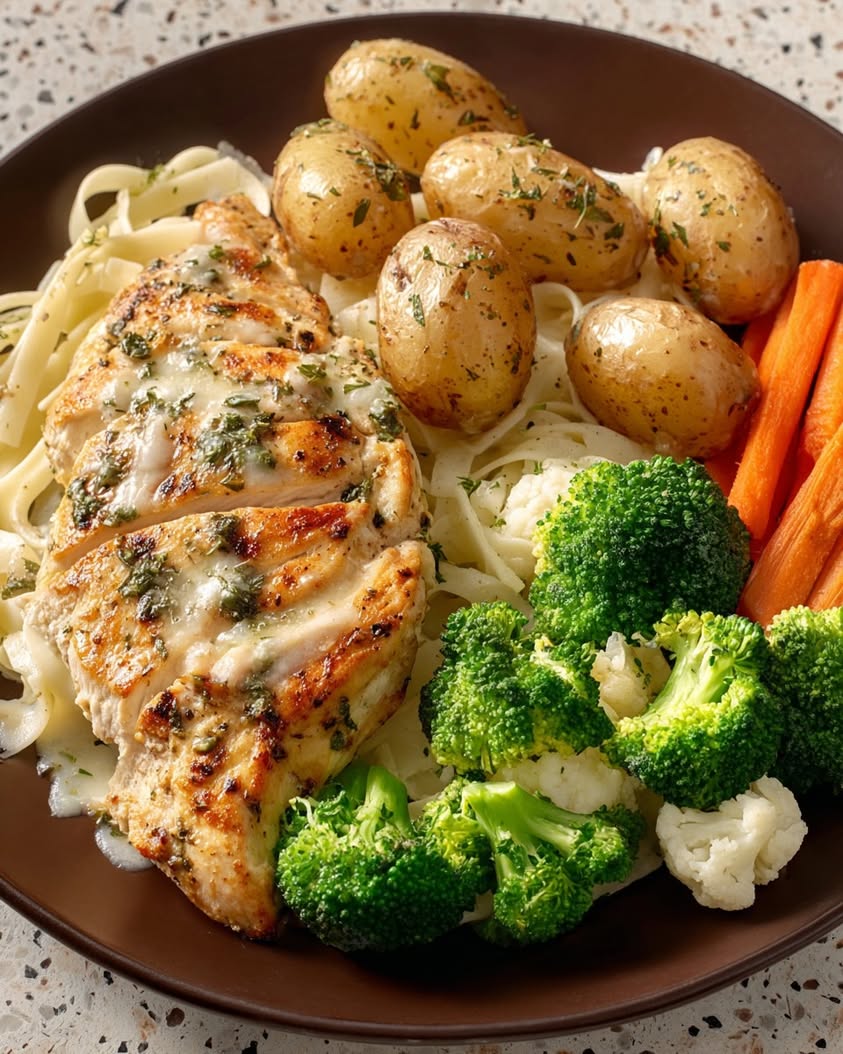
Grilled Chicken Bowl with Crispy Herb Potatoes, Noodles & Fresh Veggies: A Delicious, Protein-Packed Meal
Imagine a dinner that brings together smoky, juicy grilled chicken, crispy herb-roasted potatoes, tender noodles, and a rainbow of fresh, vibrant vegetables. This grilled chicken bowl is exactly that kind of meal. It is a masterful combination of textures and flavors designed to satisfy your hunger and delight your taste buds. Furthermore, it is a versatile canvas that you can adapt based on what you have in your kitchen. Ultimately, this recipe delivers a restaurant-quality experience without the hassle or the high price tag.
This grilled chicken bowl is more than just a meal; it is a complete nutritional powerhouse packed with lean protein, complex carbohydrates, and essential vitamins. Each component is cooked to perfection, ensuring that every bite offers a harmonious blend of savory, herby, and fresh notes. The beauty of this dish lies in its balance. For instance, the hearty potatoes and noodles provide comforting sustenance, while the crisp vegetables add a refreshing lightness. Consequently, you get a dinner that feels indulgent yet is incredibly wholesome and easy to prepare.
Whether you are looking for a reliable weeknight dinner solution or an impressive dish for casual entertaining, this grilled chicken bowl fits the bill perfectly. It is a fantastic option for meal prep, as the components store and reheat beautifully. Moreover, the assembly process is fun and interactive, allowing everyone to customize their own bowl to their liking. From the first sizzle of the chicken on the grill to the final sprinkle of fresh herbs, this recipe is a joyful cooking experience that results in a truly delicious and protein-packed meal.
Quick Recipe Highlights
- Flavor Profile: This grilled chicken bowl offers a robust and satisfying taste experience. The chicken is marinated in savory, smoky spices, while the potatoes are roasted with aromatic herbs like rosemary and thyme. Additionally, the fresh veggies provide a clean, crisp counterpoint, and a simple lemon vinaigrette or yogurt sauce can tie all the flavors together beautifully.
- Texture: Texture is a star in this dish, creating a delightful mouthfeel. You get the satisfying crispness of the herb-roasted potatoes against the tender, juicy bite of the grilled chicken. Meanwhile, the noodles offer a soft, comforting base, and the raw or lightly cooked vegetables contribute a refreshing crunch. This combination ensures every forkful is interesting and enjoyable.
- Aroma: The cooking process fills your kitchen with an irresistible fragrance. Initially, the scent of garlic and herbs from the marinating chicken wafts through the air. Then, as the potatoes roast, the earthy aroma of rosemary and the warmth of paprika become prominent. Finally, the smoky notes from the grill complete the sensory journey, promising a delicious meal ahead.
- Visual Appeal: This bowl is a feast for the eyes with its vibrant color palette. The golden-brown chicken and crispy potatoes contrast with the bright greens of broccoli, the reds of cherry tomatoes, and the orange of carrots. When arranged in a bowl, the components create a stunning, Instagram-worthy presentation that is as beautiful as it is tasty.
- Skill Level Needed: This recipe is perfect for cooks of all levels, especially beginners. The techniques involved—chopping, marinating, roasting, and grilling or pan-searing—are fundamental. Importantly, the steps are straightforward and forgiving. With clear instructions, even a novice can achieve a fantastic result and gain confidence in the kitchen.
- Special Equipment: You need only basic kitchen tools. A good baking sheet is essential for roasting the potatoes, and a grill pan, outdoor grill, or simple skillet will work for the chicken. Additionally, a pot for boiling noodles and a few mixing bowls are all you require. No fancy or single-use gadgets are necessary.
Recipe Overview
- Difficulty Level: We rate this grilled chicken bowl as “Easy” for several compelling reasons. First, the preparation involves simple chopping and mixing, not intricate knife work or complex procedures. Second, the cooking methods are standard roasting and grilling, which are very approachable. Finally, the components cook independently, so you can manage your time without stress. Overall, it is a hard recipe to mess up, making it ideal for a stress-free dinner.
- Category: This dish comfortably fits into multiple meal categories, showcasing its versatility. Primarily, it is a hearty and complete main course for lunch or dinner. It also excels as a meal prep staple, as the components hold up well for several days. Furthermore, you can serve it as a substantial salad or a balanced bowl meal, catering to modern eating trends.
- Cuisine: This grilled chicken bowl is a modern, fusion-inspired creation rather than a dish from a single traditional cuisine. It draws inspiration from American comfort food (herb potatoes), Asian noodle bowls, and Mediterranean grilling techniques. The focus is on fresh, high-quality ingredients combined in a healthy, globally-informed way. Consequently, it appeals to a wide range of palates.
- Cost: This recipe is remarkably cost-effective, especially when you consider the yield. Chicken thighs or breasts are an affordable protein source, and potatoes and noodles are pantry staples. Seasonal vegetables keep the cost down, and the herbs and spices are used in small amounts. You can easily feed a family of four a restaurant-quality meal for a fraction of the price.
- Season: This grilled chicken bowl is truly a year-round favorite. In warmer months, you can grill the chicken outdoors and use the freshest summer produce like zucchini and tomatoes. During cooler seasons, roasting the potatoes and chicken indoors brings cozy warmth, and you can incorporate heartier veggies like broccoli and carrots. It is endlessly adaptable to what is fresh and available.
- Occasion: It is perfect for countless occasions. It is a reliable weeknight workhorse for busy families. Simultaneously, it is impressive enough for casual weekend dinners with friends, where you can set up a “bowl bar” for customization. It is also an excellent choice for healthy meal prep to power you through the week.
Why You’ll Love This Recipe
First and foremost, the taste and texture appeal of this grilled chicken bowl is undeniable. You experience a symphony in every bite: the savory, umami-rich flavor of perfectly grilled chicken, the earthy, crispy potatoes fragrant with herbs, the soft comfort of noodles, and the bright, clean snap of fresh vegetables. This combination is deeply satisfying and never boring. Moreover, you can adjust the seasoning or add a favorite sauce to make it your own, ensuring it hits all your personal flavor preferences.
From a convenience standpoint, this recipe is a dream. The preparation is simple and mostly involves hands-off cooking time. While the potatoes roast and the chicken grills, you can easily prepare the other components or clean up. Additionally, it is a fantastic meal prep champion. You can cook a large batch on Sunday and assemble quick, healthy lunches or dinners all week long. Ultimately, it saves you time, money, and the daily stress of figuring out what to eat.
Nutritionally, this grilled chicken bowl is a balanced powerhouse. The chicken provides high-quality, lean protein essential for muscle repair and satiety. The potatoes and noodles offer energizing complex carbohydrates. Furthermore, the array of vegetables delivers a wide spectrum of vitamins, minerals, and fiber. This balance helps regulate blood sugar, keeps you full for hours, and supports overall health. You are nourishing your body with every delicious forkful.
For social and entertaining value, this dish is a winner. It is inherently customizable, making it perfect for groups with different dietary tastes or preferences. You can set out all the components in separate bowls and let guests build their own masterpieces. This interactive style of eating is fun, engaging, and takes the pressure off the host. It is a surefire way to please a crowd without slaving over a complicated menu.
Finally, the cost-effectiveness and accessibility of this grilled chicken bowl cannot be overstated. It utilizes affordable, readily available ingredients that you can find at any grocery store. You can easily swap in seasonal vegetables on sale or use different cuts of chicken. There is no need for expensive specialty items. This recipe proves that eating well does not have to be expensive or complicated, making healthy, flavorful eating accessible to everyone.
Historical Background and Cultural Significance
The concept of the “bowl meal” has deep and diverse roots across many cultures, though this specific grilled chicken bowl is a modern fusion creation. Historically, cultures around the world have enjoyed meals composed of a grain, a protein, and vegetables served together in a vessel. For example, in Asia, rice or noodle bowls with meat and vegetables are culinary cornerstones. Similarly, Mediterranean diets often feature grilled meats with salads and grains on a single plate. This recipe taps into that universal, practical approach to eating.
Culturally, the bowl signifies nourishment, balance, and simplicity. It represents a shift away from compartmentalized, multi-course meals toward a more holistic and often healthier way of eating. The rise of the modern “power bowl” or “Buddha bowl” in Western cuisine over the last decade reflects a growing desire for meals that are visually appealing, nutritionally complete, and convenient. This grilled chicken bowl fits squarely into that contemporary food movement, prioritizing whole ingredients and customizable nutrition.
The evolution of this recipe is a story of global ingredient exchange and home cooking innovation. The technique of grilling chicken is ancient and widespread. The European tradition of roasting potatoes with herbs is classic. Combining these with noodles, which have origins in Asia, and a variety of global vegetables showcases how modern home cooks freely blend culinary traditions. This evolution is driven by the availability of diverse ingredients and the shared human love for combining tasty, satisfying elements in one dish.
Regional variations of this concept are endless, which is part of its enduring appeal. In the American South, you might find a version with Cajun-spiced chicken and black-eyed peas. A California-inspired bowl could feature avocado and a citrus salsa. An Asian-inspired variation might use a soy-ginger marinade and quick-pickled vegetables. The basic formula—protein + starch + veggies + sauce—is a global template. Consequently, this grilled chicken bowl is not just a recipe; it is an invitation to explore flavors from your own heritage or culinary curiosity.
Ingredient Deep Dive
Let us start with the star: the chicken. Chicken is a globally cherished protein source, valued for its mild flavor and versatility. Nutritionally, it is an excellent source of lean protein, B vitamins (especially niacin and B6), and minerals like selenium and phosphorus. These nutrients support metabolism, immune function, and muscle health. For this recipe, choose boneless, skinless chicken breasts for a leaner option, or thighs for more flavor and juiciness. Store raw chicken in the coldest part of your refrigerator and use within 1-2 days, or freeze for longer storage. For a substitution, try turkey cutlets, firm tofu, or even chickpeas for a plant-based version.
Next, consider the potatoes. Potatoes have a rich history, originating in the Andes and becoming a world staple. They are often unfairly maligned but are actually nutrient-dense, providing vitamin C, potassium, and fiber, especially with the skin on. For crispy herb potatoes, starchy varieties like Russets or Yukon Golds are perfect. Their high starch content creates a fluffy interior and crispy exterior when roasted. Store potatoes in a cool, dark, well-ventilated place—not in the refrigerator. Sweet potatoes make a wonderful, vitamin-A-rich substitution, though cooking times may vary slightly.
The noodles provide the comforting base. Egg noodles, rice noodles, or whole-wheat pasta all work beautifully. Noodles, in various forms, have been a dietary staple in Asia for thousands of years and later adopted worldwide. They are a great source of carbohydrates for energy. Opt for whole-grain versions to increase fiber and nutrients. To prevent sticking, cook them in plenty of salted water and rinse only if using them cold in a salad. For a gluten-free bowl, use rice noodles or chickpea pasta. Store dried noodles in your pantry indefinitely; cook fresh noodles according to package directions.
Finally, the fresh vegetables are the key to color, crunch, and nutrition. Broccoli, carrots, and bell peppers are classic choices. Broccoli is a cruciferous vegetable packed with vitamins C and K, fiber, and compounds linked to health benefits. Carrots are famous for their beta-carotene, which converts to vitamin A for eye health. Bell peppers, especially red ones, are extremely high in vitamin C. Select vegetables that are firm, brightly colored, and free of soft spots. Store most veggies in the high-humidity drawer of your refrigerator. The beauty here is flexibility: use zucchini, snap peas, corn, or spinach based on season and preference.
Common Mistakes to Avoid
- Overcrowding the Pan with Potatoes: This is the number one reason for soggy potatoes. If the potato pieces are too close together, they steam instead of roast. Always spread them in a single layer with space between them. Using two baking sheets is better than cramming them onto one.
- Underseasoning the Chicken: Chicken needs ample seasoning to be flavorful, both inside and out. Do not just sprinkle salt on the surface. Season it generously at least 15 minutes before cooking, or marinate it for deeper flavor penetration. The seasoning should be assertive.
- Boiling the Noodles to Mush: Overcooked noodles become gummy and unpleasant. Always cook noodles al dente, meaning they are tender but still have a slight bite. They will soften slightly when combined with other ingredients. Follow package times and taste-test a minute early.
- Cutting Vegetables Inconsistently: If your vegetable pieces are all different sizes, they will cook unevenly. Some will be raw, others mushy. Take time to cut potatoes, carrots, and other hard veggies into uniform pieces for consistent roasting.
- Not Preheating the Oven or Grill: Starting with a cold cooking surface guarantees poor results. Potatoes need a hot oven to crisp up immediately. Chicken needs a hot grill to get good sear marks and to prevent sticking. Always preheat your equipment thoroughly.
- Skipping the Resting Time for Chicken: Cutting into grilled chicken immediately causes all the precious juices to run out, leaving it dry. Always let the chicken rest for 5-10 minutes after cooking. This allows the fibers to relax and reabsorb the juices.
- Using Wet Vegetables on the Roasting Pan: If you wash your potatoes or veggies and do not dry them thoroughly, the excess water will create steam, hindering crisping. Pat all vegetables bone-dry with a clean kitchen towel before tossing them with oil.
- Neglecting to Taste as You Go: Do not assume the seasoning is perfect. Taste your roasted potatoes when they come out of the oven. Taste a piece of chicken. Adjust with a pinch more salt, a squeeze of lemon, or a crack of black pepper before assembling the bowls.
Essential Techniques
Marinating the Chicken: Marinating is crucial for infusing flavor and tenderizing the meat. The acid (like lemon juice or vinegar) in a marinade helps break down surface proteins, while oil carries fat-soluble flavors and herbs. To master it, combine your marinade ingredients in a zip-top bag or shallow dish, add the chicken, and ensure it is fully coated. Do not marinate for too long with strong acids, as it can make the texture mushy; 30 minutes to 2 hours is usually sufficient for chicken. A common pitfall is using too little marinade or not massaging it into the meat. Success is visible when the chicken is evenly coated and has taken on the color of your spices.
Roasting for Crispy Potatoes: The goal is a crispy exterior and fluffy interior. The key steps are drying the potatoes, coating them evenly in oil, and giving them space on a hot pan. Oil conducts heat and promotes browning and crisping. Tossing the potatoes halfway through cooking ensures all sides get exposed to the hot pan surface. A common mistake is stirring too frequently, which prevents a crust from forming. You will know you have succeeded when the potatoes are golden brown, make a tapping sound when stirred, and are tender when pierced with a fork.
Grilling or Pan-Searing Chicken: This technique creates flavorful browning via the Maillard reaction. Start with dry chicken patted with a paper towel; wet meat steams. Preheat your grill pan or skillet until it is very hot. Place the chicken down and do not move it for several minutes to allow a sear to form. The chicken will naturally release from the surface when it is ready to flip. A common pitfall is flipping too early, which tears the meat and leaves it stuck. Visual cues for success are deep golden-brown grill marks or crust and an internal temperature of 165°F.
Blanching Vegetables (Optional): Blanching involves briefly boiling vegetables and then shocking them in ice water. This technique preserves vibrant color, slightly softens texture, and makes them perfect for a cold bowl. It is important because it halts the cooking process instantly, locking in nutrients and freshness. To master it, have a bowl of ice water ready before you start. Boil the veggies for just 1-2 minutes until bright, then plunge them in the ice bath. The pitfall is overcooking, which leads to dull, mushy vegetables. Success is bright green, crisp-tender broccoli or snap peas.
Pro Tips for Perfect Grilled Chicken Bowl
First, use an instant-read thermometer for the chicken. This is the single best way to guarantee juicy, perfectly cooked meat every time. Remove the chicken from the heat when it reaches 160-162°F; the residual heat will carry it to the safe 165°F as it rests.
Second, parboil your potatoes before roasting. For extra-crispy outsides and fluffy insides, boil chopped potatoes in salted water for 5-8 minutes until just tender on the outside. Drain well, roughen them up in the colander to create a starchy surface, then toss with oil and roast.
Third, season each component individually. Do not rely on a single sauce at the end. Salt and pepper the potatoes, season the chicken marinade well, and even lightly salt your fresh veggies. This builds layers of flavor throughout the entire dish.
Fourth, reserve a bit of starchy pasta water. Before draining your noodles, save about a quarter cup of the cloudy cooking water. If your bowl seems dry when assembling, a splash of this water mixed with a sauce or lemon juice helps everything cling together beautifully.
Fifth, get creative with your sauce. A simple drizzle of good olive oil and lemon juice works, but a creamy yogurt-dill sauce, a spicy sriracha mayo, or a tahini-lemon dressing can elevate your grilled chicken bowl to new heights.
Sixth, add fresh herbs at the very end. Stirring chopped parsley, dill, cilantro, or basil into the bowl just before serving adds a burst of fresh aroma and flavor that cooked herbs cannot provide.
Variations and Adaptations
For regional variations, let your taste buds travel. Create a Mexican-inspired bowl by using chili powder and cumin on the chicken, adding black beans and corn, and topping with avocado and a lime crema. For an Asian twist, marinate the chicken in soy sauce, ginger, and garlic, use rice noodles, and add quick-pickled cucumbers and carrots with a sesame-ginger dressing.
Seasonal adaptations are easy and rewarding. In summer, grill zucchini and eggplant alongside the chicken and use fresh cherry tomatoes. In fall, roast sweet potatoes and Brussels sprouts with the herbs. Winter calls for heartier roasted root vegetables like parsnips and turnips. Spring is perfect for asparagus and fresh peas.
Dietary modifications are straightforward. For a gluten-free grilled chicken bowl, use tamari instead of soy sauce and ensure your noodles are rice-based or legume-based. For dairy-free, avoid yogurt-based sauces and use vinaigrettes or avocado-based dressings. To make it low-carb or keto, simply omit the noodles and increase the volume of non-starchy vegetables like broccoli, cauliflower, and leafy greens.
Flavor variations can change the entire profile. Use smoked paprika and garlic powder for a smoky bowl. Try a Mediterranean blend with oregano, lemon, and olives. For something spicy, coat the chicken in a harissa or gochujang paste before grilling. The base recipe is a perfect canvas for your favorite spice blends.
Texture modifications can cater to personal preference. If you love crunch, add toasted nuts or seeds like sunflower or pepitas. For a creamier element, include slices of avocado or a dollop of hummus. If you prefer everything tender, you can roast all the vegetables together until soft.
Presentation alternatives can make the meal feel new. Instead of a bowl, serve the components as a large, family-style platter. Alternatively, roll the ingredients in a large tortilla or lettuce wrap for a handheld version. You can even deconstruct it into a chopped salad by dicing everything smaller and tossing it together.
Serving and Presentation Guide
Plating techniques matter for visual appeal. Start by placing your base—noodles or greens—in the bowl first to create a foundation. Then, arrange the other components in distinct sections or piles around the bowl, rather than mixing everything together haphazardly. This “deconstructed” look is attractive and allows the eater to appreciate each ingredient. Alternatively, for a more blended experience, you can toss everything together in a large serving bowl before portioning.
Garnishing ideas add the final touch of freshness and color. A sprinkle of chopped green onions, fresh parsley, cilantro, or dill works wonders. A wedge of lemon on the side invites a bright squeeze. For extra texture and flavor, add a tablespoon of toasted sesame seeds, chopped nuts, or crumbled feta or goat cheese.
Traditional accompaniments might include a simple side of crusty bread to soak up any juices or a light soup. However, this grilled chicken bowl is designed to be a complete meal on its own. You generally do not need additional sides, making service incredibly easy.
Modern serving suggestions embrace customization. Set up a “bowl bar” with all the components in separate containers: grilled chicken (sliced), roasted potatoes, noodles, various veggies, sauces, and garnishes. Let everyone build their own perfect combination. This is especially fun for gatherings and ensures everyone gets exactly what they want.
Temperature considerations are important for the best experience. Ideally, serve the grilled chicken and potatoes warm or at room temperature. The fresh veggies can be cold or at room temp. If you have a warm component like noodles, make sure they are not piping hot when combined with cold raw veggies, as it can wilt them. Letting everything come to a similar lukewarm temperature is often perfect.
Portion control is built into this dish, but you can easily adjust. A good rule is to aim for a palm-sized portion of protein, a fist-sized portion of starchy carbs (potatoes/noodles), and two fist-sized portions of vegetables. Using a standard-sized bowl naturally helps with portion sizes, making this a great tool for mindful eating.
Wine and Beverage Pairing
Wine pairings for this grilled chicken bowl should complement its savory and herbal notes without overpowering the fresh vegetables. A crisp, unoaked Chardonnay or a Sauvignon Blanc with its herbal and citrus notes pairs beautifully. If you prefer red wine, a light-bodied Pinot Noir with its red fruit flavors and earthy undertones is an excellent choice, as it will not clash with the chicken or herbs. Rosé is another versatile option, especially a dry Provençal style, which bridges the gap between white and red and matches the dish’s freshness.
Non-alcoholic alternatives can be just as sophisticated. Sparkling water with a squeeze of lemon or lime and a few fresh herbs (like mint or basil) is refreshing and cleansing. Iced herbal tea, such as lemon verbena or peach ginger, complements the meal’s flavors. For a more substantial drink, a virgin mojito or a cucumber-mint cooler would be delightful.
While not traditional, coffee or tea pairings can work if served after the meal. A light, floral tea like jasmine green tea can be a soothing finish. A medium-roast coffee with low acidity would also be a fine end to the meal, though it is less of a direct pairing and more of a post-dinner ritual.
Temperature considerations are key for beverages. White wines, rosés, and non-alcoholic sparklers should be served well-chilled. Red wines like Pinot Noir should be served slightly cool, at cellar temperature (around 55°F), not room temperature. Iced teas and coolers should be cold but not so icy that they dull your taste buds.
Serving suggestions include offering a couple of options to guests. You might put out a pitcher of infused water and have a bottle of white wine available. Always ensure water is on the table, as it is the ultimate palate cleanser and helps with hydration, especially if the dish is lightly seasoned or spicy.
Storage and Shelf Life
Storage methods are critical for maintaining quality. Store each component separately in airtight containers in the refrigerator. This prevents the potatoes from getting soggy from vegetable moisture and keeps the chicken from drying out. Assembled bowls with sauce will become soggy if stored for more than a few hours, so keep components apart until ready to eat.
Temperature requirements are straightforward: the refrigerator should be at or below 40°F. Do not leave the cooked components at room temperature for more than two hours. If you are packing a lunch, include an ice pack in your bag to keep the food at a safe temperature until consumption.
Container recommendations include glass meal prep containers with compartments, which are ideal for keeping ingredients separate. Alternatively, use small containers or bags for each item. For the dressing or sauce, use a very small, leak-proof container so you can add it just before eating.
Signs of spoilage include an off or sour smell, a slimy texture on the chicken or vegetables, or visible mold. Cooked chicken should be consumed within 3-4 days. Potatoes and noodles are best within 4-5 days. Fresh, raw cut vegetables may last 2-3 days before losing crispness.
Reheating instructions vary by component. Reheat chicken and potatoes in a toaster oven, air fryer, or conventional oven at 350°F until warmed through to preserve texture. You can use a microwave, but it may soften the potatoes. Noodles can be reheated with a splash of water in the microwave. It is best to add fresh, cold veggies after reheating the warm components.
Freezing guidelines: You can freeze the grilled chicken (sliced or whole) and the cooked noodles for up to 3 months. Potatoes do not freeze well after roasting, as they become grainy and watery upon thawing. Blanched vegetables can be frozen, but their texture will be softer. Thaw frozen components in the refrigerator overnight before reheating.
Make Ahead Strategies
Prep timeline can turn this into a quick weeknight assembly. The day before, you can marinate the chicken, chop all the vegetables, and even cook the noodles (toss with a little oil to prevent sticking). You can also mix the dry spices for the potatoes. On cooking day, simply roast, grill, and assemble.
Storage between steps is simple. Keep the marinated chicken in a sealed container in the fridge. Store chopped vegetables in separate bags or containers with a paper towel to absorb excess moisture. Cooked noodles should be stored in an airtight container, tossed with a tiny bit of oil.
Quality impact assessment is positive for most components. Marinating chicken overnight only improves flavor. Pre-chopped vegetables are fine, though some (like potatoes) may brown if cut too far in advance; keep them in water. Cooked noodles may dry out slightly but revive with a splash of water when reheating.
Assembly tips for make-ahead: If preparing full bowls for grab-and-go lunches, place the sauce at the bottom of the container. Then add a layer of noodles or hearty veggies, followed by potatoes and chicken, with the most delicate fresh veggies (like leafy greens or tomatoes) at the very top. This minimizes sogginess.
Reheating guidelines for pre-assembled bowls: Remove any delicate raw veggies and sauce. Reheat the chicken, potatoes, and noodles separately, then add back the cold elements. If you must microwave a full bowl, do so at a lower power setting and cover with a damp paper towel to prevent excessive drying.
Fresh element additions are the secret to a make-ahead meal that tastes just-made. Pack a small container with fresh herbs, a lemon wedge, or crunchy toppings like nuts or seeds. Add these after reheating the main components to restore brightness and texture.
Scaling Instructions
Halving the recipe is simple for smaller households. Simply divide all ingredient quantities by two. Use a smaller baking sheet for the potatoes to ensure they are not crowded. Cooking times may be slightly shorter, so start checking for doneness 5-10 minutes earlier than the original recipe suggests.
Doubling or tripling the recipe is excellent for meal prep or feeding a crowd. Multiply all ingredients accordingly. You will likely need to roast the potatoes in multiple batches or on multiple oven racks (rotating the sheets halfway through) to ensure proper crisping. For the chicken, you may need to grill in batches to avoid steaming.
Equipment adjustments are necessary when scaling. For larger batches, ensure you have enough baking sheets, mixing bowls, and grill space. Consider using a large roasting pan for the potatoes if doubling. For a big crowd, cooking the noodles in a large stockpot is more efficient than in several smaller pots.
Timing modifications become important with scale. While prep time increases linearly, cooking time may not. A double batch of potatoes might take slightly longer to roast because the oven is more crowded. However, the chicken will still grill in the same per-batch time. Plan your workflow so components finish around the same time.
Storage considerations change with volume. If you make a large batch for meal prep, ensure you have enough airtight containers. Label them with the date. Remember that food safety guidelines still apply; do not store large, hot quantities of food in a single container, as it will cool too slowly. Divide into smaller, shallow containers for rapid cooling.
Nutritional Deep Dive
Macro breakdown of this grilled chicken bowl is well-balanced. A typical serving provides approximately 35-40 grams of high-quality protein from the chicken, essential for muscle synthesis and satiety. The complex carbohydrates from potatoes and noodles offer around 45-55 grams, supplying sustained energy. Healthy fats, primarily from the olive oil used in roasting and any sauces, contribute about 15-20 grams, supporting nutrient absorption and hormone health. This balance helps maintain stable blood sugar levels.
Micronutrient analysis reveals a wealth of vitamins and minerals. The chicken provides B vitamins, particularly B6 and niacin, crucial for energy metabolism. Potatoes are a surprising source of vitamin C and potassium, which supports heart health. The colorful vegetables deliver vitamins A (from carrots), C (from bell peppers and broccoli), K (from broccoli), and various antioxidants. Together, they cover a significant portion of your daily micronutrient needs.
Health benefits are extensive. The high protein and fiber content promotes fullness, aiding in weight management. The antioxidants from the vegetables combat oxidative stress and reduce inflammation. The potassium helps regulate blood pressure. Furthermore, the meal’s balance supports stable energy, avoiding the crashes associated with high-sugar, processed meals. It is a dietary pattern linked to long-term health and wellness.
Dietary considerations are easily addressed. This dish is naturally dairy-free if you avoid cheese-based garnishes. It can be made gluten-free with appropriate noodle choices. For low-sodium diets, you can control the salt added during cooking. The presence of whole-food ingredients makes it suitable for clean-eating approaches.
Portion analysis shows that a standard bowl is satisfying without being excessive. Using the “plate method” as a guide, half the bowl is filled with non-starchy vegetables, a quarter with lean protein, and a quarter with starchy carbohydrates. This visual guide helps create a nutritionally optimal meal every time, even without measuring.
Weight management tips include being mindful of the oil used for roasting and the portion of starchy components. You can increase the volume of non-starchy vegetables to bulk up the bowl for fewer calories. Using a lean chicken breast and a vinegar-based dressing instead of a creamy one can also reduce the overall calorie density while maintaining flavor.
Dietary Adaptations
For a gluten-free grilled chicken bowl, the adaptation is simple. Ensure your soy sauce or any marinade ingredient is gluten-free (use tamari or coconut aminos). Choose noodles made from rice, quinoa, corn, or legumes like chickpeas or lentils. Double-check that any pre-made spice blends are certified gluten-free. All other core ingredients are naturally gluten-free.
For a dairy-free version, this recipe is already nearly compliant. Simply avoid any dairy-based garnishes like feta cheese or yogurt-based sauces. Instead, use vinaigrettes, tahini sauce, or avocado-based dressings for creaminess. Check labels on any pre-made broths or marinades for hidden dairy derivatives like whey or casein.
Creating a vegan grilled chicken bowl requires a protein swap. Replace the chicken with marinated and grilled extra-firm tofu, tempeh, or seitan. For a whole-food option, use seasoned and roasted chickpeas or lentils. Ensure your noodles are egg-free if necessary, and use vegetable broth for any cooking liquid. The potatoes and vegetables remain the same.
For a low-carb or keto adaptation, omit the potatoes and noodles entirely. Increase the portion of non-starchy vegetables like broccoli, cauliflower, zucchini, bell peppers, and leafy greens. You can also add a small portion of keto-friendly carbs like a few roasted radishes or turnips. Ensure any sauces are sugar-free.
For a Paleo version, focus on whole, unprocessed foods. Use sweet potatoes instead of white potatoes, and replace noodles with spiralized vegetables like zucchini or sweet potato noodles (zoodles). Ensure the chicken is free of additives, and use compliant oils like avocado or olive oil. Avoid legumes, dairy, and grains.
For a Low-FODMAP adaptation, carefully select vegetables. Use carrots, bell peppers (
Print
Grilled Chicken Bowl with Herb Potatoes, Noodles and Veggies
Description
A hearty and healthy bowl featuring tender grilled chicken, crispy herb-roasted potatoes, soft noodles, and fresh steamed vegetables, all tossed in a light lemon-herb dressing.
Ingredients
For the Crust:
- 2 boneless, skinless chicken breasts
- 1 lb baby potatoes, halved
- 8 oz egg noodles
- 2 cups broccoli florets
- 1 cup sliced carrots
- 3 tbsp olive oil
- 2 tsp dried Italian herbs
- 1 lemon, juiced and zested
- 2 cloves garlic, minced
- Salt and black pepper to taste
- Fresh parsley for garnish
Instructions
1. Prepare the Crust:
- Preheat oven to 400°F. Toss potatoes with 1 tbsp olive oil, Italian herbs, salt, and pepper. Roast for 25-30 minutes until golden and crispy.
- Cook egg noodles according to package instructions. Drain and set aside.
- Season chicken breasts with salt and pepper. Grill over medium-high heat for 6-7 minutes per side until cooked through. Let rest, then slice.
- Steam broccoli and carrots for 5-7 minutes until tender-crisp.
- Whisk remaining olive oil, lemon juice, lemon zest, and minced garlic to make a dressing. Toss noodles with half the dressing.
- Assemble bowls: divide noodles, potatoes, chicken, and veggies. Drizzle with remaining dressing and garnish with parsley.
Notes
You can customize the seasonings to taste.

I’m Shaykee—born in Morocco, seasoned across continents. From airplane galleys to home kitchens, I share the flavors and stories that shaped my journey.