
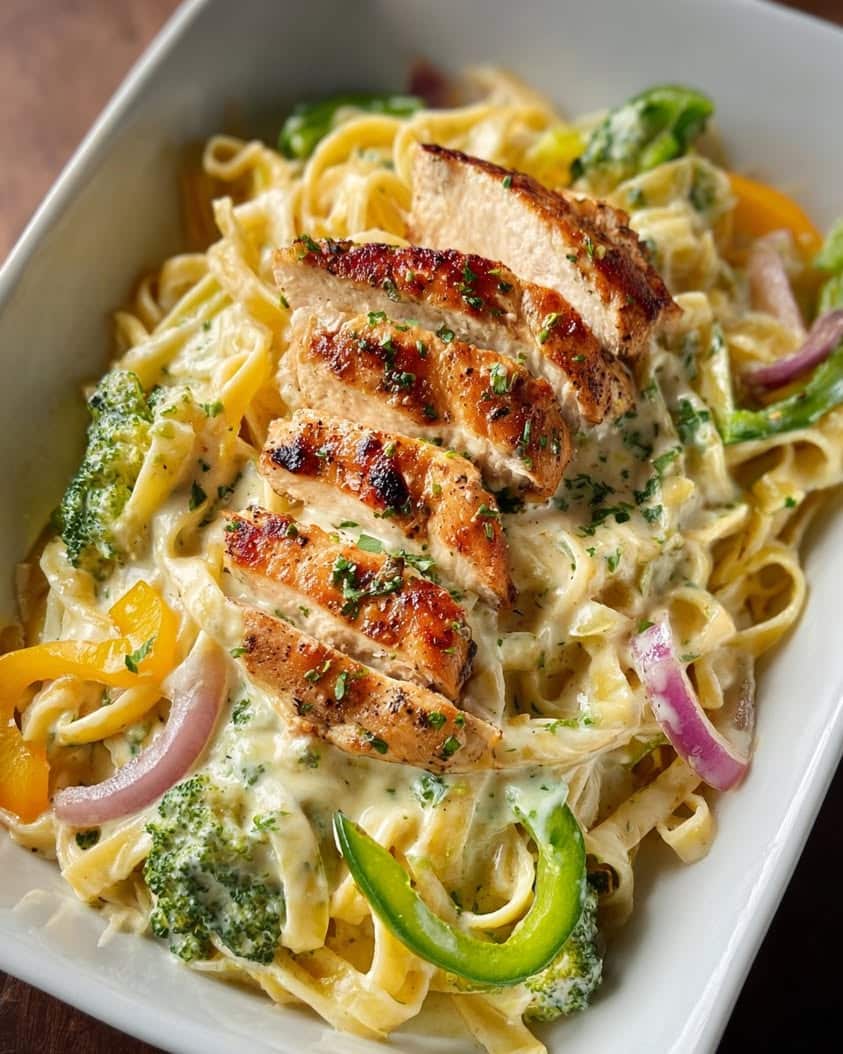
Creamy Chicken Fettuccine Alfredo with Veggies: A Luxuriously Easy Weeknight Feast
Imagine a dish that feels like a decadent restaurant splurge but comes together in your own kitchen with minimal fuss. This creamy chicken fettuccine Alfredo with veggies is exactly that kind of magic. It transforms simple ingredients into a luxurious, comforting meal that will have everyone asking for seconds. The silky, Parmesan-laden sauce clings perfectly to every strand of fettuccine, while tender chicken and crisp-tender vegetables add wonderful texture and freshness. Ultimately, it’s the ultimate solution for busy nights when you crave something truly special.
This recipe masterfully balances richness with a touch of lightness, thanks to the colorful mix of broccoli and red bell pepper. The aroma alone, as garlic sizzles in butter and cream simmers, is enough to gather the whole family in the kitchen. Unlike many heavy pasta dishes, this version feels complete and balanced, making it a reliable favorite for both casual dinners and impromptu gatherings. Furthermore, it’s incredibly adaptable, allowing you to use seasonal vegetables or whatever protein you have on hand. Let’s dive into how you can create this beloved classic with a nutritious, veggie-packed twist.
Quick Recipe Highlights
- Flavor Profile: This dish delivers a classic, indulgent Alfredo taste with deep, savory notes from garlic and Parmesan cheese. The sautéed chicken adds a savory, umami depth, while the fresh vegetables introduce a slight sweetness and peppery note that cuts through the richness beautifully.
- Texture: You get a delightful contrast in every bite. The fettuccine is perfectly al dente and coated in a luxuriously smooth and creamy sauce. Meanwhile, the chicken is juicy and tender, and the broccoli and bell peppers retain a satisfying, crisp-tender crunch.
- Aroma: The cooking process fills your kitchen with an irresistible fragrance. First, you’ll smell the nutty scent of butter and pungent garlic sautéing. Then, as the sauce reduces, the rich, dairy-forward aroma of cream and the sharp, salty scent of melting Parmesan cheese take over.
- Visual Appeal: This is a gorgeous plate of food. The creamy white sauce provides a stunning backdrop for the vibrant green broccoli florets and bright red bell pepper strips. Finally, a sprinkle of fresh parsley and extra Parmesan adds the perfect finishing touch of color and texture.
- Skill Level Needed: This is a fantastic recipe for cooks of all levels. It requires basic techniques like boiling pasta, sautéing chicken and vegetables, and making a simple pan sauce. Therefore, even beginner cooks can achieve impressive, restaurant-quality results with careful attention to timing.
- Special Equipment: You only need standard kitchen tools. A large pot for boiling pasta, a large skillet or sauté pan for the sauce and protein, and basic utensils like a wooden spoon, tongs, and a chef’s knife are perfectly sufficient. A box grater for fresh Parmesan is highly recommended.
Recipe Overview
- Difficulty Level: We rate this recipe as “Easy” because it uses straightforward techniques and common ingredients. The steps are sequential and logical, primarily involving sautéing and simmering. Consequently, there’s little room for major error if you follow the instructions, making it a very approachable weeknight meal.
- Category: This dish falls squarely into the categories of Main Course and Pasta Dinner. It’s a complete, protein-rich meal that needs only perhaps a simple side salad or some crusty bread to round it out. Additionally, it’s a prime example of comfort food and family-friendly cooking.
- Cuisine: This is a dish rooted in Italian-American cuisine. While traditional Italian Alfredo (Fettuccine all’Alfredo) is often simpler, typically just pasta, butter, and Parmigiano-Reggiano, the creamy version with chicken and vegetables is a beloved adaptation popularized in the United States. It represents a fusion of Italian technique with American preferences for hearty, one-pan meals.
- Cost: This is a very cost-effective meal, especially when feeding a family. Ingredients like chicken breast, broccoli, and pasta are budget-friendly staples. The most significant cost comes from the dairy (heavy cream and Parmesan cheese), but a little goes a long way in creating a luxurious sauce. Overall, it’s far cheaper than ordering similar dishes at a restaurant.
- Season: This creamy chicken fettuccine Alfredo with veggies is truly a year-round dish. It provides cozy, hearty comfort in the fall and winter. Conversely, with its bright, fresh vegetables, it also feels light and appropriate for spring and summer evenings, especially when served with a crisp white wine.
- Occasion: It’s incredibly versatile for different events. Primarily, it’s a perfect weeknight dinner solution for the family. Moreover, it’s impressive enough for a casual date night at home or for feeding a small group of friends. It’s a crowd-pleaser that feels special without requiring hours of preparation.
Why You’ll Love This Recipe
First and foremost, the taste and texture are utterly irresistible. This creamy chicken fettuccine Alfredo with veggies delivers that iconic, comforting flavor of rich Parmesan and garlic, perfectly balanced by sweet peppers and fresh broccoli. Each forkful offers a symphony of creamy, chewy, tender, and crisp elements. The sauce is velvety and clings to the pasta without being gloppy or greasy. Ultimately, it satisfies that deep craving for decadent Italian food while still feeling like a complete, well-rounded meal on a single plate.
From a convenience standpoint, this recipe is a weeknight hero. It comes together in about thirty-five minutes, using mostly pantry staples and fresh ingredients you can find at any grocery store. The process is largely contained to one main cooking pan for the sauce and protein, minimizing cleanup. Additionally, the steps are simple and sequential, allowing you to multitask efficiently, like boiling the pasta while the chicken cooks. Therefore, you can get a spectacular dinner on the table with minimal stress and maximum flavor.
Nutritionally, this version offers clear advantages over traditional Alfredo. By incorporating a generous amount of broccoli and bell pepper, you add essential vitamins, fiber, and antioxidants to the dish. The vegetables provide volume and nutrients, allowing you to feel satisfied with a reasonable portion of the richer components. Using chicken breast adds lean protein, making the meal more sustaining. While still indulgent, this veggie-packed approach creates a better balance, transforming a sometimes-heavy pasta dish into a more wholesome dinner option.
For social and entertaining value, this dish is a proven winner. It’s universally appealing to both adults and children, making it a safe bet for family gatherings or feeding picky eaters. The presentation is beautiful and looks like you spent far more time than you actually did. You can easily double the recipe in a large pot or Dutch oven to feed a crowd. Serving this creamy chicken fettuccine Alfredo with veggies immediately sparks conversation and compliments, establishing you as a host who knows how to deliver incredible comfort food.
Finally, its cost-effectiveness and accessibility are major benefits. Creating this restaurant-quality meal at home costs a fraction of what you’d pay dining out. Ingredients like fettuccine, chicken, and broccoli are affordable and readily available. You have full control over the quality, opting for organic vegetables or free-range chicken if you prefer. Moreover, the recipe is highly adaptable based on what’s in your fridge; you can swap in different veggies or use a different pasta shape. This flexibility makes it a reliable, go-to recipe that fits any budget.
Historical Background and Cultural Significance
The story of Fettuccine Alfredo begins not with a complex cream sauce, but with simplicity. In early 20th-century Rome, restaurateur Alfredo Di Lelio created a dish to help his wife, Ines, regain her appetite after childbirth. His creation was “Fettuccine al Triplo Burro” – fettuccine tossed tableside with copious amounts of high-quality butter and freshly grated Parmigiano-Reggiano. The emulsification of the starchy pasta water with the butter and cheese created a surprisingly creamy, luxurious sauce without any cream. This simple dish became the star of his restaurant, Alfredo alla Scrofa.
Its journey to international fame, however, is an American tale. In the 1920s, Hollywood silent film stars Mary Pickford and Douglas Fairbanks dined at Alfredo’s during their honeymoon. They were so enamored with the dish that they brought the concept back to the United States. American chefs and home cooks, accustomed to richer, cream-based sauces, began adapting the recipe. They added heavy cream to stabilize the sauce and make it more forgiving to prepare, and incorporated proteins like chicken. Thus, “Fettuccine Alfredo” evolved into the creamy, hearty pasta dish we know today, a staple of Italian-American cuisine.
The evolution of the recipe reflects cultural adaptation. The original Roman version highlights the quality of just three ingredients: pasta, butter, and cheese. The Americanized version prioritizes abundance, creaminess, and the inclusion of a protein to make it a centerpiece meal. The addition of vegetables, as in our creamy chicken fettuccine Alfredo with veggies, is a more modern twist, responding to contemporary desires for meals that are both indulgent and incorporate visible, nutritious elements. This evolution shows how recipes migrate and transform to suit new tastes and lifestyles.
Regional variations abound even within the United States. In some areas, you might find Alfredo sauce made with a roux (butter and flour) for thickness. Others might use half-and-half instead of heavy cream. The choice of add-ins varies widely: shrimp, peas, mushrooms, or sun-dried tomatoes are all popular. Our version with broccoli and bell pepper is a particularly family-friendly and colorful adaptation. This versatility is key to the dish’s enduring popularity; it serves as a delicious, creamy canvas for countless personal and regional interpretations, securing its place as a beloved comfort food classic.
Ingredient Deep Dive
Fettuccine Pasta: This long, flat ribbon pasta is the classic vehicle for Alfredo sauce. Its broad surface area provides plenty of space for the creamy sauce to cling to, ensuring every bite is coated. Originating from the Roman and Tuscan regions of Italy, its name comes from the Italian word “fettuccia,” meaning “little ribbon.” When selecting, opt for a high-quality brand made from durum wheat semolina for the best al dente texture that holds up to the rich sauce. You can store dried pasta in a cool, dry pantry almost indefinitely. For a twist, you can substitute with tagliatelle, pappardelle, or even linguine.
Chicken Breast: Boneless, skinless chicken breast is the lean protein star of this dish. It’s a blank canvas that readily absorbs the flavors of garlic, salt, and pepper. To ensure juicy, tender chicken, avoid overcooking; cook just until the internal temperature reaches 165°F. For the best texture, pat the cubes dry before seasoning and sautéing to promote browning. You can substitute with chicken thighs for a richer, more forgiving cut, or with shrimp for a quicker-cooking seafood variation. Always store raw chicken in the coldest part of your refrigerator and use within 1-2 days, or freeze for longer storage.
Heavy Cream: This is the foundation of the luxurious, velvety sauce. Heavy cream (also called heavy whipping cream) has a high butterfat content (36% or more), which allows it to be simmered and reduced without curdling, creating a stable, thick sauce. Its rich flavor is irreplaceable in traditional Alfredo. For best results, use fresh, cold cream and add it to the pan off the direct heat of browning to prevent scorching. While you can substitute with half-and-half for a lighter version, the sauce will be noticeably thinner. Always check the expiration date and store dairy in the back of the refrigerator where it’s coldest.
Parmesan Cheese: Freshly grated Parmigiano-Reggiano or a high-quality domestic Parmesan is non-negotiable for authentic flavor. This hard, aged cheese adds a salty, nutty, umami depth that defines the sauce. Pre-grated cheese often contains anti-caking agents like cellulose, which can prevent it from melting smoothly into a silky sauce. Grating it yourself ensures a perfect melt. Store a block of Parmesan wrapped in parchment paper and then in a loose plastic bag in the refrigerator. For substitutions, Pecorino Romano offers a sharper, saltier punch, while Asiago can provide a slightly milder, nuttier flavor.
Broccoli & Red Bell Pepper: These vegetables add crucial color, texture, nutrition, and a hint of sweetness. Broccoli, part of the cruciferous family, is packed with vitamins C and K, fiber, and antioxidants. The red bell pepper is rich in vitamin A and C. Cutting them into uniform, bite-sized pieces ensures even cooking. For the best flavor and crunch, sauté them just until they are bright in color and tender-crisp. You can easily swap in other veggies like asparagus, peas, mushrooms, or spinach based on season or preference. Store fresh vegetables in the crisper drawer of your refrigerator.
Common Mistakes to Avoid
- Using Pre-Grated Parmesan Cheese: This is perhaps the most common pitfall. Pre-grated cheese contains additives that prevent clumping, which also prevent it from melting into a smooth, creamy sauce. Instead, it can become grainy or oily. Always take the extra minute to grate a block of high-quality Parmesan cheese yourself for the silkiest results.
- Overcooking the Chicken: Chicken breast cooks quickly and can become dry and tough if left in the pan too long. Cook the cubed chicken just until it’s no longer pink in the center and reaches 165°F internally. Remove it from the pan promptly once done, as it will continue to cook slightly from residual heat.
- Adding Cold Cream to a Scorching Hot Pan: If you pour cold heavy cream directly into a very hot pan after browning the chicken, it can shock the dairy and cause it to separate or scorch. To prevent this, let the pan cool for a minute off the heat, or add the cream and then return the pan to a lower, gentler heat.
- Boiling the Sauce Vigorously: Once the cream is added, the sauce should simmer gently. A rolling boil can cause the cream to break, the sauce to become oily, and the cheese to seize up into clumps. Maintain a low, steady simmer to gently reduce the cream and melt the cheese smoothly.
- Overcooking the Pasta: Mushy pasta ruins the texture of the entire dish. Cook the fettuccine to al dente according to package directions, as it will continue to cook slightly when tossed with the hot sauce. Furthermore, reserving some starchy pasta water is crucial for adjusting the sauce consistency at the end.
- Skipping the Pasta Water: The starchy water left from boiling the pasta is liquid gold. It helps loosen the sauce to the perfect creamy consistency and helps it adhere to the noodles. Before draining your pasta, always scoop out at least one cup of this water. You may only need a few tablespoons, but it’s essential for finishing the dish.
- Crowding the Pan When Sautéing Chicken: If you add all the chicken cubes at once to a pan that’s too small, they will steam instead of sauté. This prevents the flavorful browning (the Maillard reaction) that adds depth to the dish. Cook the chicken in batches if necessary to ensure each piece has contact with the hot pan surface.
- Not Seasoning in Layers: Seasoning only at the end results in a bland dish. Remember to season the chicken before cooking, taste and season the sauce as it simmers, and do a final seasoning adjustment after combining everything. Parmesan is salty, so be cautious with added salt until you’ve tasted the final combined dish.
Essential Techniques
Sautéing Chicken to Perfection: This technique is crucial for developing flavor and ensuring juicy meat. Pat the chicken cubes completely dry with paper towels; moisture is the enemy of browning. Heat your oil or butter until it shimmers before adding the chicken in a single, uncrowded layer. Let it sear undisturbed for a minute or two to develop a golden-brown crust, then toss to cook through. The visual cue for success is golden-brown edges and an internal temperature of 165°F. The common pitfall is moving the chicken too soon, which tears the surface and releases juices that cause steaming.
Creating a Simple Pan Sauce: After sautéing the chicken and vegetables, you build the sauce directly in the same pan. This utilizes the flavorful browned bits (fond) left behind. After adding garlic, you deglaze the pan with a bit of broth or wine (or simply proceed with cream), scraping up the fond. Then, you add the cream and simmer to reduce and concentrate the flavors. The importance lies in building layers of flavor in one vessel. Master it by controlling the heat to a gentle simmer after adding the cream. The success cue is a sauce that coats the back of a spoon and has reduced by about one-third.
Emulsifying Cheese into the Sauce: This is the step that transforms cream and cheese into a velvety, unified sauce. Remove the pan from direct heat before adding the grated Parmesan. Stir constantly and vigorously as the cheese melts. The residual heat should be enough to melt it smoothly. Adding cheese to a boiling sauce will cause the proteins to clump and the fats to separate, resulting in a grainy, oily texture. The technique’s importance is absolute for the signature creamy texture. The visual cue is a smooth, homogenous sauce with no visible granules of cheese.
Finishing Pasta “Alla Risottata”: This Italian technique involves finishing the pasta by tossing it in the sauce with a splash of starchy cooking water. Don’t just pour sauce over drained pasta in a bowl. Instead, add the al dente pasta directly to the skillet with the sauce. Add a few tablespoons of reserved pasta water and toss continuously over low heat for a minute. The starch in the water helps the sauce cling to and lightly glaze each strand of pasta, creating a cohesive dish. The success cue is pasta that is evenly coated and suspended in a creamy sauce, not sitting in a pool of liquid.
Pro Tips for Perfect Creamy Chicken Fettuccine Alfredo with Veggies
First, always grate your Parmesan cheese from a block just before using it. This guarantees a smooth, lump-free melt into your creamy sauce, unlike pre-grated varieties that can turn grainy.
Let your heavy cream come to room temperature for about 15 minutes before starting. Adding cold cream to a hot pan can sometimes cause it to curdle or separate slightly.
Undercook your pasta by one minute according to the package directions. The pasta will finish cooking in the hot sauce, absorbing flavor and reaching perfect al dente texture without becoming mushy.
Reserve more pasta water than you think you’ll need—at least one full cup. You can always add it back to the pot gradually to achieve the ideal creamy consistency for your sauce.
Use a microplane zester for your garlic instead of mincing it. This creates a fine paste that disperses more evenly throughout the sauce, offering a subtle garlic flavor without any harsh chunks.
For an extra layer of flavor, deglaze the pan with a splash of dry white wine or chicken broth after sautéing the chicken and before adding the cream. Scrape up all the browned bits for a flavor boost.
Finish the dish with a final drizzle of high-quality extra virgin olive oil or a small pat of cold butter off the heat. This adds a beautiful sheen and rounds out the flavors of the sauce.
If your sauce seems too thin after combining, let it simmer for an extra minute or two to reduce further. Conversely, if it’s too thick, simply loosen it with more reserved pasta water, one tablespoon at a time.
Variations and Adaptations
Regional Variations: Explore different takes on this classic. For a Roman touch, omit the cream and use only butter, pasta water, and a generous amount of Pecorino Romano. A Tuscan variation might include sun-dried tomatoes and spinach. For a Cajun twist, season the chicken with blackened seasoning and add sliced andouille sausage along with the bell peppers.
Seasonal Adaptations: Make the most of fresh produce throughout the year. In spring, use asparagus tips and fresh peas. Summer calls for zucchini, yellow squash, and cherry tomatoes. In autumn, incorporate roasted butternut squash cubes and sage. For winter, try mushrooms and kale for a hearty, earthy flavor profile.
Dietary Modifications: This recipe is wonderfully adaptable. For a gluten-free version, use your favorite gluten-free fettuccine. To make it dairy-free, use a plant-based cream alternative (like cashew or oat cream) and a vegan Parmesan substitute. For a keto or low-carb option, serve the chicken, veggies, and sauce over zucchini noodles or shirataki noodles.
Flavor Variations: Infuse the cream with different herbs for a unique twist. Add a sprig of fresh rosemary or thyme while the cream simmers, then remove it before adding the cheese. For a smoky note, add a pinch of smoked paprika or a few strips of cooked, crumbled bacon as a garnish.
Texture Modifications: Play with textures to keep the dish interesting. Add toasted pine nuts or walnuts for crunch. Mix in a handful of baby spinach at the very end until just wilted for a silky green element. For a richer sauce, stir in a tablespoon of cream cheese along with the Parmesan.
Presentation Alternatives: Serve family-style in a large, warm serving bowl for a casual feel. For individual plating, use tongs to twirl the pasta into a nest in the center of each bowl, arranging the chicken and veggies artfully on top. Serve in a hollowed-out roasted pepper or a baked pasta shell for a dramatic effect.
Serving and Presentation Guide
Plating Techniques: For an elegant presentation, use a pair of tongs or a pasta fork to twirl a portion of fettuccine into a tight nest in the center of a warm, shallow bowl. Artfully arrange the chicken cubes and colorful vegetables around and on top of the pasta nest. This method showcases all the components beautifully and makes the dish look restaurant-quality.
Garnishing Ideas: A simple garnish elevates the visual appeal instantly. A final sprinkle of freshly grated Parmesan cheese is essential. Then, add a flourish of finely chopped fresh parsley or basil for a pop of green color. A light grating of lemon zest adds brightness, and a crack of black pepper provides visual contrast and flavor.
Traditional Accompaniments: In Italian-American restaurants, this dish is often served with a side of warm, crusty bread like garlic bread or a breadstick to soak up every last bit of the creamy sauce. A simple, crisp green salad with a tangy vinaigrette (like a Caesar or garden salad) provides the perfect refreshing counterpoint to the rich pasta.
Modern Serving Suggestions: For a contemporary twist, serve smaller portions as a primo (first course) before a lighter main like grilled fish or chicken. Alternatively, serve it in a small cast-iron skillet for a rustic, shareable presentation. Pair it with a side of roasted cherry tomatoes or a lemony arugula salad for a modern, balanced plate.
Temperature Considerations: Creamy chicken fettuccine Alfredo with veggies is best served immediately, piping hot. Warm your serving bowls by rinsing them with hot water and drying them just before plating. The sauce will thicken as it cools, so prompt serving ensures the ideal creamy, flowing consistency. If the dish sits, you can loosen it with a tiny splash of warm milk or cream.
Portion Control Tips: While it’s tempting to heap the plate, a standard serving is about one-quarter of the recipe (roughly 1.5 to 2 cups). Using a smaller plate can make the portion look more generous. Remember, the dish is rich and satisfying, so a moderate portion alongside a large salad is often more than enough to feel fully satisfied.
Wine and Beverage Pairing
Wine Pairings: The rich, creamy sauce and savory chicken call for wines with good acidity to cut through the fat. A classic Italian white like Pinot Grigio or Vermentino is perfect, offering crisp citrus notes. Alternatively, a lightly oaked Chardonnay with hints of butter and vanilla complements the sauce’s richness beautifully. For red wine lovers, a light-bodied, low-tannin red like a Pinot Noir can work well if served slightly chilled.
Non-Alcoholic Alternatives: Sparkling water with a squeeze of lemon or lime provides a clean, palate-cleansing effervescence. For a more complex option, try a tart cherry juice spritzer or a ginger beer. Iced herbal tea, such as mint or lemon verbena, offers a refreshing and aromatic counterpoint to the creamy, garlicky flavors of the dish.
Coffee/Tea Pairings: After the meal, a cup of espresso or a strong Italian roast coffee can help cut through the richness and aid digestion. For tea, consider a peppermint tea, which is known for its digestive properties, or a light, floral white tea that won’t overpower the lingering savory notes of the Parmesan and garlic.
Temperature Considerations: White wines should be served well-chilled, between 45-50°F. If opting for a light red like Pinot Noir, serve it slightly cooler than room temperature, around 55°F, to keep it refreshing. Non-alcoholic sparkling drinks should be ice-cold. Coffee and tea, of course, should be served hot to provide a comforting end to the meal.
Serving Suggestions: Always serve wine in appropriate glassware to enhance the experience. Pour water throughout the meal to keep palates refreshed. If serving multiple beverages, offer the wine during the main course and transition to coffee or tea with or after dessert, if you’re serving one.
Storage and Shelf Life
Storage Methods: Allow any leftovers to cool completely to room temperature before storing, but do not leave them out for more than two hours. Transfer the creamy chicken fettuccine Alfredo with veggies to an airtight container. For best results, store the pasta and sauce together; separating components is not practical for this combined dish.
Temperature Requirements: Refrigerate leftovers promptly. The dish must be stored at a consistent refrigerator temperature of 40°F or below. Do not store it in the refrigerator door, as temperatures fluctuate there. Properly stored, leftovers will keep for 3-4 days.
Container Recommendations: Use shallow, airtight containers rather than deep ones. This allows the pasta to cool more quickly and evenly, reducing the risk of bacterial growth. Glass containers are ideal as they don’t retain odors and allow you to see the contents.
Signs of Spoilage: Before reheating, always inspect leftovers. Discard the pasta if you notice an off or sour smell, significant discoloration (especially a grayish tint to the sauce), or visible mold. If the sauce has separated irreversibly into a greasy pool with solid chunks, it’s best to err on the side of caution and discard it.
Reheating Instructions: Reheating is crucial for both safety and texture. The best method is on the stovetop. Add the leftovers to a skillet with a couple tablespoons of milk, cream, or broth. Gently reheat over low heat, stirring frequently, until steaming hot throughout. Avoid the microwave if possible, as it can make the pasta rubbery and cause the sauce to separate. If using a microwave, do so in short bursts, stirring between each, and add a splash of liquid.
Freezing Guidelines: Freezing is not highly recommended for cream-based pasta dishes, as the sauce can separate and become grainy upon thawing. The pasta also tends to become mushy. If you must freeze, do so for no longer than one month. Thaw overnight in the refrigerator and reheat gently on the stovetop with added liquid, knowing the texture will not be as good as fresh.
Make Ahead Strategies
Prep Timeline: You can prep several components 1-2 days in advance to speed up dinner time. Cube and season the chicken, storing it in a sealed container in the fridge. Wash and cut the broccoli and bell peppers, storing them in a separate airtight container. Grate the Parmesan cheese and store it in the fridge. Measure out your cream and other dry seasonings.
Storage Between Steps: Keep all prepped ingredients in their own sealed containers in the refrigerator. Keep dairy products cold until the moment you’re ready to cook. Do not cook the pasta ahead of time, as it will become sticky and gummy. The magic of this dish relies on finishing the pasta in the fresh sauce.
Quality Impact Assessment: Prepping vegetables and protein ahead has minimal impact on final quality. However, grating cheese ahead is fine, but for absolute best meltability, grating just before use is superior. The actual cooking of the sauce and final assembly should be done just before serving for the optimal creamy texture and flavor.
Assembly Tips: When ready to cook, simply pull your prepped ingredients from the fridge. Start your pasta water boiling, then begin sautéing the chicken. The process will flow very quickly since all the chopping and measuring is done. This strategy can cut your active cooking time on the day of serving by at least 10-15 minutes.
Reheating Guidelines: This strategy is for prepping components, not assembling the full dish ahead. If you have fully cooked leftovers, follow the stovetop reheating instructions above. Do not fully cook the dish with the intention of reheating it later, as the pasta will overcook and the sauce may break.
Fresh Element Additions: Even with prepped ingredients, always finish with fresh elements. Use fresh garlic (minced or grated just before cooking) for the brightest flavor. Garnish with freshly chopped parsley and a final grating of Parmesan from any remaining cheese block just before serving to maximize aroma and taste.
Scaling Instructions
Halving the Recipe: To serve two, simply divide all ingredient quantities by two. Use a medium skillet instead of a large one. Cooking times will be slightly shorter for the chicken and vegetables, so keep a close eye on them. You will need less pasta water to reserve—about 1/2 cup should suffice. This is an excellent option for a romantic dinner for two.
Doubling or Tripling: For a crowd, multiply all ingredients consistently. You will need a very large pot or Dutch oven, or you may need to cook the chicken in more batches to avoid steaming. Use a pot large enough to eventually hold all the pasta and sauce for the final toss. Be sure to reserve at least 2 cups of pasta water when doubling, as you’ll need it to adjust the consistency of the larger volume of sauce.
Equipment Adjustments: Scaling up requires larger equipment. A 6-8 quart Dutch oven is ideal for doubling. Ensure you have a colander large enough to drain the increased pasta quantity. You may also need a larger skillet for the initial chicken sauté or be prepared to cook in more batches. Having a second pair of tongs or a large serving spoon for tossing is helpful.
Timing Modifications: When doubling, the time to bring the large volume of sauce to a simmer and reduce it will increase slightly. The time to cook the chicken in batches will also add to the total prep time. Plan for an additional 10-15 minutes of active cooking time when doubling the recipe. Start the pasta water early, as a large volume of water takes longer to boil.
Storage Considerations: If you have scaled up and have leftovers, store them in multiple smaller, shallow containers rather than one enormous one. This allows for faster, more even cooling and safer refrigeration. It also makes reheating individual portions easier later on.
Nutritional Deep Dive
Macro Breakdown: A serving of this creamy chicken fettuccine Alfredo with veggies provides a balance of macronutrients. The pasta and vegetables are primary sources of carbohydrates for energy. The chicken breast offers high-quality, lean protein essential for muscle repair and satiety. The heavy cream and Parmesan cheese contribute healthy fats, which are necessary for nutrient absorption and creating the luxurious mouthfeel. This combination makes the dish satisfying and energy-sustaining.
Micronutrient Analysis: This dish is a good source of several key vitamins and minerals. Broccoli and red bell pepper are packed with Vitamin C, Vitamin A (from beta-carotene), and Vitamin K. The dairy components provide calcium and phosphorus for bone health. Chicken adds B vitamins, particularly niacin and B6, which are crucial for metabolism. Using whole, fresh ingredients maximizes the micronutrient profile compared to processed alternatives.
Health Benefits: The inclusion of vegetables boosts the fiber content, aiding digestion and promoting gut health. The lean protein from chicken supports muscle maintenance and helps keep you full longer. The calcium from dairy supports bone density. The antioxidants in the colorful vegetables, like vitamin C and carotenoids, help combat oxidative stress in the body. When enjoyed as part of a balanced diet, this meal contributes valuable nutrients.
Dietary Considerations: This is not a low-calorie or low-fat dish due to the cream and cheese. Individuals monitoring saturated fat intake should be mindful of portion size. The recipe contains gluten from the wheat pasta and dairy from the cream and cheese, so it is not suitable for those with celiac disease or lactose intolerance without modifications. It is, however, nut-free and egg-free as written.

I’m Shaykee—born in Morocco, seasoned across continents. From airplane galleys to home kitchens, I share the flavors and stories that shaped my journey.