
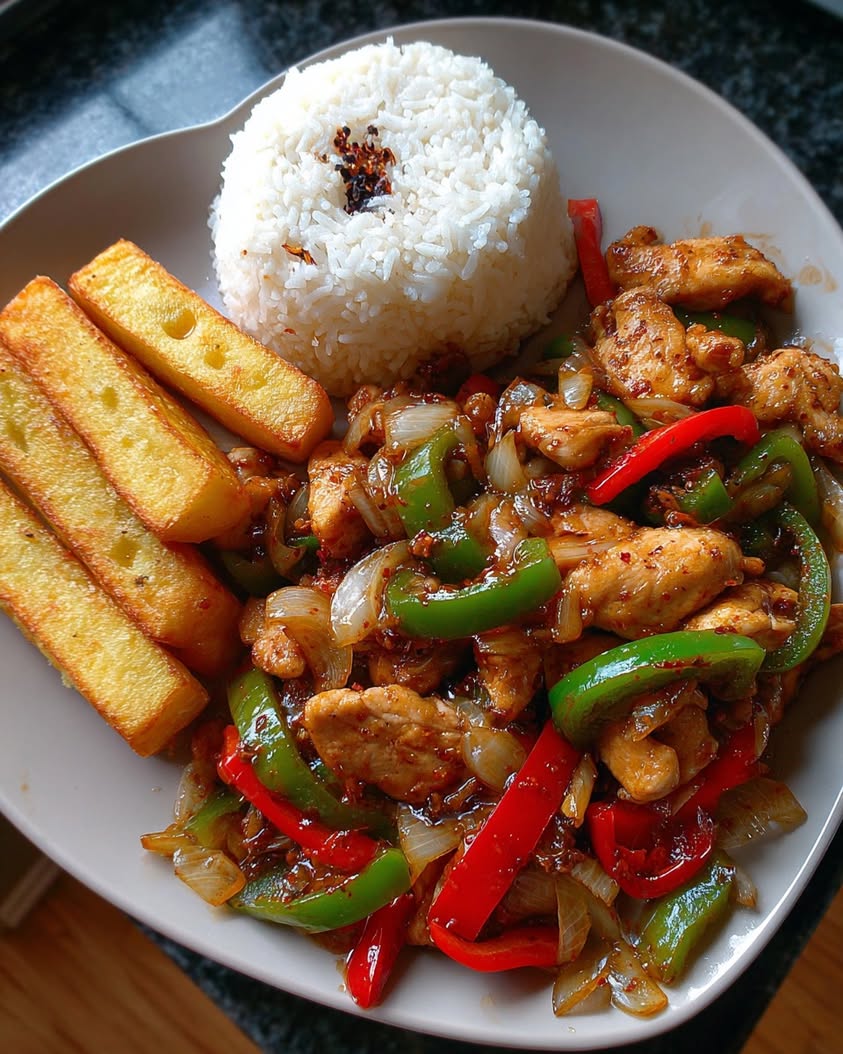
Spicy Garlic Chicken Stir-Fry with Peppers, Rice & Crispy Potato Wedges: A Bold, Easy Dinner Packed with Flavor!
Imagine a dinner plate that delivers a complete sensory experience. This Spicy Garlic Chicken Stir-Fry with Peppers, Rice & Crispy Potato Wedges is exactly that kind of meal. It masterfully combines the sizzling, aromatic punch of a classic stir-fry with the comforting, crispy satisfaction of oven-baked potatoes. Consequently, you get a restaurant-quality dinner that comes together in your own kitchen with surprisingly simple steps. This recipe is a true weeknight hero, designed to bring bold flavors and satisfying textures to your table without demanding hours of your time.
The magic of this dish lies in its beautiful contrasts. Tender, juicy chicken strips soak up a fiery, garlicky sauce while vibrant bell peppers add a sweet crunch. Simultaneously, fluffy white rice acts as the perfect canvas to soak up every last drop of that incredible sauce. Meanwhile, golden-brown potato wedges provide a delightful, crispy counterpoint to the saucy stir-fry. Ultimately, this meal is a celebration of texture and taste, proving that an easy dinner can also be an incredibly exciting and memorable one.
This Spicy Garlic Chicken Stir-Fry with Peppers, Rice & Crispy Potato Wedges is more than just a meal; it’s a solution for busy evenings. It cleverly utilizes multitasking by having the potatoes roast in the oven while you prepare the stir-fry components on the stovetop. Therefore, everything finishes at roughly the same time, resulting in a hot, fresh, and perfectly coordinated plate. Whether you’re feeding a hungry family or impressing last-minute guests, this recipe promises a deliciously balanced and visually stunning result every single time.
Quick Recipe Highlights
- Flavor Profile: This dish offers a bold and complex taste. It starts with the deep, savory umami of soy sauce and oyster sauce, then builds heat with chili garlic sauce or sriracha. Fresh garlic and ginger provide an aromatic foundation, while a touch of sweetness from the peppers and a hint of acidity balance the entire profile perfectly.
- Texture: You’ll experience a wonderful symphony of textures in every bite. The chicken should be tender and succulent, while the bell peppers retain a slight, refreshing crunch. The rice is soft and fluffy, and the potato wedges deliver an irresistible crispy exterior with a fluffy, tender interior. This combination ensures the meal is never monotonous.
- Aroma: As soon as the garlic and ginger hit the hot oil, your kitchen will fill with an unmistakably inviting fragrance. The scent of toasting spices and searing meat follows, creating a mouthwatering aroma that builds anticipation. Finally, the fresh, grassy note of sliced green onions sprinkled on top adds the final aromatic touch.
- Visual Appeal: This plate is a feast for the eyes with its vibrant color contrast. You have the golden-brown of the crispy potatoes, the white fluffy rice, the rich brown sauce coating the chicken, and the brilliant red and green of the fresh peppers. A garnish of green onions and sesame seeds adds the perfect finishing touch for a professional look.
- Skill Level Needed: This is a fantastic recipe for cooks of all levels. It requires basic knife skills for chopping and fundamental techniques like stir-frying and roasting. The process is straightforward and well-explained, making it an excellent choice for beginners looking to build confidence. Meanwhile, more experienced cooks can appreciate the efficient timing and flavor-balancing act.
- Special Equipment: You’ll need a few standard kitchen tools. A large baking sheet is essential for the potato wedges, and a large skillet or wok is crucial for the stir-fry to ensure everything cooks quickly and evenly. Other than that, basic items like a sharp knife, cutting board, and mixing bowls are all you need to create this impressive meal.
Recipe Overview
- Difficulty Level: We rate this Spicy Garlic Chicken Stir-Fry recipe as “Easy.” The steps are logical and sequential, with no advanced techniques required. The primary skills involved are simple vegetable chopping, marinating chicken, and managing two cooking elements simultaneously. With clear instructions, even a first-time stir-fry cook can achieve excellent results. The key is organization, which we guide you through step-by-step.
- Category: This recipe comfortably fits into several popular meal categories. It’s a quintessential weeknight dinner, designed for speed and satisfaction. It also serves as a fantastic comfort food dish, offering hearty and familiar elements. Furthermore, with its balanced components, it can be considered a complete meal prep option for lunches throughout the week.
- Cuisine: The dish draws primary inspiration from Chinese-American stir-fry traditions, known for quick cooking and bold, savory sauces. However, the inclusion of oven-roasted potato wedges adds a Western comfort food twist. This fusion creates a uniquely satisfying hybrid meal that takes the best elements from different culinary styles to create something new and delicious for your dinner table.
- Cost: This is a very cost-effective meal to prepare. Chicken thighs or breasts, potatoes, rice, and bell peppers are all budget-friendly, readily available ingredients. The sauce components, like soy sauce and chili garlic sauce, are pantry staples with a long shelf life. Overall, you can feed a family of four a restaurant-quality meal for a fraction of the cost of takeout.
- Season: This dish is truly a year-round favorite. In colder months, the hearty potatoes and warm, spicy sauce provide deep comfort. During warmer seasons, the bright, crisp peppers and lighter cooking method keep it feeling fresh and appropriate. It’s a versatile recipe that adapts to your pantry, allowing for seasonal vegetable swaps as desired.
- Occasion: Perfect for casual weeknight family dinners, it’s also substantial enough for casual weekend entertaining. The colorful, shareable presentation makes it great for informal gatherings. It’s not overly fussy, so it’s ideal for a relaxing meal at home after a long day. Ultimately, it suits any occasion where delicious, satisfying food is the main goal.
Why You’ll Love This Spicy Garlic Chicken Stir-Fry Recipe
First and foremost, the taste and texture appeal is absolutely undeniable. Each component of this Spicy Garlic Chicken Stir-Fry with Peppers, Rice & Crispy Potato Wedges plays a specific role in creating a harmonious bite. The spicy, savory sauce clings to the tender chicken, while the crisp-tender peppers add a burst of freshness. Then, the fluffy rice soaks up the extra sauce, and the crispy potato wedge offers a satisfying crunch. This combination ensures every forkful is interesting and delicious, preventing any hint of boredom. You get the comfort of carbs, the protein punch of chicken, and the healthful vibrancy of vegetables all in one expertly balanced plate.
Furthermore, the convenience and preparation benefits are a major win for any home cook. This recipe is designed with efficiency in mind. By starting the potato wedges in the oven first, you create a built-in timer for your prep work. While they roast, you can calmly chop vegetables, marinate the chicken, and measure sauce ingredients without rushing. This parallel cooking process is the secret to getting a multi-component dinner on the table in about an hour. It teaches valuable kitchen management skills and proves that impressive meals don’t require chaotic, last-minute scrambling.
Additionally, the nutritional advantages of this meal are worth celebrating. You are in control of the ingredients, meaning you can adjust the sodium, sugar, and oil to your preference. Chicken provides lean protein, bell peppers are loaded with vitamins A and C, and potatoes offer potassium and fiber, especially if you leave the skins on. Using brown rice instead of white increases the fiber content even more. This homemade version is undoubtedly healthier than its takeout counterpart, as it avoids excessive oil, MSG, and hidden sugars often found in restaurant stir-fries.
Moreover, the social and entertaining value of this dish is high. The vibrant, colorful platter is naturally shareable and inviting. Serving this Spicy Garlic Chicken Stir-Fry family-style encourages conversation and interaction as everyone helps themselves. It’s a meal that feels special and thoughtfully prepared, making guests feel welcomed and cared for. The customizable spice level also means you can cater to different palates, allowing everyone to enjoy the meal according to their own heat preference. It’s a fantastic way to bring people together over fantastic food.
Finally, the cost-effectiveness and accessibility of the ingredients make this a repeatable favorite. All components are readily available at any standard grocery store, with no exotic or expensive items required. Chicken, potatoes, rice, and peppers are some of the most affordable staples you can buy. Consequently, you can prepare a meal that feels luxurious and indulgent without straining your food budget. Learning to make a stir-fry sauce from pantry staples also saves you money in the long run, as a single bottle of store-bought sauce often costs more than the combined ingredients for a homemade version that tastes infinitely better.
Historical Background and Cultural Significance
The story of the stir-fry is deeply rooted in Chinese culinary history, stretching back over a thousand years. This cooking technique evolved primarily as a solution to conserve scarce resources like fuel and food. By cutting ingredients into small, uniform pieces and cooking them rapidly over intense heat in a vessel called a wok, cooks could prepare meals quickly using less firewood. This method also preserved the natural color, texture, and nutrients of the ingredients far better than slower cooking methods. The stir-fry was born from necessity, but its brilliance ensured it became a cornerstone of a cuisine celebrated worldwide.
Culturally, stir-frying represents more than just a cooking method; it embodies principles of balance and harmony central to Chinese philosophy. A proper stir-fry balances flavors (salty, sweet, sour, bitter, umami), textures (tender, crisp, soft), and colors. The dish we feature today, a Spicy Garlic Chicken Stir-Fry, follows this tradition while incorporating elements from other culinary paths. The addition of potato wedges, for instance, is not traditional in East Asian stir-fry meals but reflects a Western desire for hearty, starchy sides. This fusion creates a meal that speaks to a modern, globalized kitchen where traditions blend to create new family favorites.
The evolution of the recipe, particularly in Western kitchens, is fascinating. As stir-fries gained international popularity, home cooks adapted them to local ingredients and tastes. The classic combination of chicken, garlic, and peppers became a staple in countless households because it is universally appealing and adaptable. The use of chili garlic sauce or sriracha adds a modern, spicy kick that caters to contemporary palates favoring bolder heat. Meanwhile, serving it with rice remains the traditional and practical choice, as rice is the perfect neutral base to accompany and extend the flavorful sauce.
Regarding regional variations, the core concept of a spicy garlic chicken dish appears in many forms across Asia. In Sichuan cuisine, you might find a similar profile with the addition of mouth-numbing Sichuan peppercorns. In Thailand, the flavors would lean toward a sweeter, fish-sauce-based profile with fresh Thai chilies. Our version is a streamlined, accessible interpretation that focuses on delivering maximum flavor with minimum fuss. It honors the spirit of the stir-fry—quick, flavorful, and adaptable—while embracing the comfort-food appeal of crispy roasted potatoes, making it a uniquely satisfying hybrid for today’s diverse dinner tables.
Ingredient Deep Dive
Chicken Thighs: We recommend boneless, skinless chicken thighs for this Spicy Garlic Chicken Stir-Fry for their superior flavor and juiciness. Thighs have a higher fat content than breasts, which means they stay tender and moist even during the high-heat stir-frying process and are more forgiving if slightly overcooked. Historically, dark meat poultry was often more accessible, and its rich flavor stands up beautifully to bold sauces. Nutritionally, they provide high-quality protein, iron, and zinc. For the best results, look for thighs with minimal visible fat and cut them into uniform strips against the grain. Chicken breasts can be substituted for a leaner option, but take care not to overcook them.
Bell Peppers: Bell peppers, specifically red and green, add crucial color, sweetness, and crunch. Originally from Central and South America, they were spread across the globe by Spanish and Portuguese traders. Their mild sweetness perfectly balances the spicy, salty sauce. They are an excellent source of vitamins A and C, powerful antioxidants. Choose peppers that feel heavy for their size with smooth, taut skin and no soft spots. Store them unwashed in your refrigerator’s crisper drawer. For a different flavor profile, you could use poblano peppers for a milder taste or add a sliced jalapeño for extra heat.
Potatoes: The crispy potato wedge component brings a comforting, Western-style carbohydrate to the plate. Potatoes have a global history, originating in the Andes and becoming a world staple. Russet or Yukon Gold potatoes are ideal for wedges due to their starch content, which creates a fluffy interior and crispy exterior when roasted. They provide vitamin C, potassium, and vitamin B6. Select firm potatoes without sprouts or green tinges. Store them in a cool, dark, well-ventilated place—not the refrigerator. For a twist, try sweet potato wedges for a vitamin-A boost and a sweeter flavor contrast.
Garlic & Ginger: This aromatic duo is the non-negotiable soul of the stir-fry sauce. Garlic, with its ancient origins in Central Asia, and ginger, native to Southeast Asia, have been used for millennia for both culinary and medicinal purposes. They create the foundational “pungent” note in the flavor profile. Garlic offers allicin, a compound with potential health benefits, while ginger is renowned for its anti-inflammatory properties. Always use fresh cloves and ginger root for the brightest flavor. Look for firm, plump garlic heads and ginger roots with smooth skin. Store garlic in a cool, dark place and ginger in the refrigerator, either loosely wrapped or in a resealable bag.
Soy Sauce & Oyster Sauce: These two sauces form the savory, umami-rich base. Soy sauce, a fermented product of soybeans and wheat, is a cornerstone of East Asian cuisine. Oyster sauce, made from oyster extracts, adds a deep, savory-sweet complexity. Together, they provide saltiness and richness without needing additional salt. For a gluten-free version, use tamari instead of soy sauce. For a vegetarian or vegan adaptation, substitute the oyster sauce with a vegetarian “oyster” sauce made from mushrooms. Both bottled sauces should be stored in a cool pantry after opening.
Common Mistakes to Avoid
- Crowding the Pan: Adding all the chicken to the skillet at once is a critical error. The pieces will steam instead of sear, resulting in pale, boiled-tasting meat with no flavorful browning. Always cook in batches to ensure each piece has contact with the hot surface.
- Overcooking the Vegetables: Bell peppers should retain a slight crunch. If you add them too early or cook them for too long, they become mushy and lose their vibrant color and fresh sweetness. Stir-fry them just until they are bright and tender-crisp.
- Using Cold Potatoes: Placing cold, parboiled potato wedges on a baking sheet will cool the pan and result in soggy, uneven cooking. Ensure your baking sheet is preheated in the oven and the potatoes are patted very dry before tossing with oil.
- Neglecting to Prep Before Cooking: Stir-frying is a fast process. If you start heating your pan before all your ingredients are chopped, measured, and within arm’s reach (a practice called “mise en place”), you will likely burn something while scrambling to prepare the next component.
- Incorrect Sauce Consistency: A watery sauce will make the entire dish soggy. The cornstarch slurry is essential for creating a glossy sauce that clings to the chicken and peppers. Make sure to stir the slurry again right before adding it, as cornstarch settles quickly.
- Not Tasting as You Go: Spice and salt levels are personal. Failing to taste the sauce before adding it to the stir-fry, or at the very end, can lead to a dish that is too salty, too sweet, or not spicy enough. Adjust seasonings carefully before serving.
- Using a Small Skillet: A small pan increases the chance of crowding and steaming the ingredients. A large skillet or wok provides ample surface area for proper searing and allows you to toss the ingredients effectively.
- Skipping the Marinate Time: While you can cook the chicken immediately, even a 15-minute marinade makes a significant difference. It allows the flavors to penetrate the surface of the meat, resulting in chicken that is flavorful throughout, not just on the outside.
Essential Techniques
Stir-Frying: This high-heat, quick-cooking technique is the heart of the dish. It’s important because it sears ingredients quickly, locking in juices and creating complex flavors through the Maillard reaction (browning). To master it, ensure your pan is very hot before adding oil, and then add ingredients in the correct sequence—meat first, then harder vegetables. Constantly toss or stir the ingredients to ensure even exposure to heat and prevent burning. The common pitfall is adding too much at once, which lowers the pan temperature and causes steaming. Visual success is marked by lightly charred, caramelized edges on the chicken and vegetables.
Creating a Cornstarch Slurry: This mixture of cold liquid and cornstarch is crucial for achieving a restaurant-quality sauce that thickens clearly and evenly. It’s important because adding dry cornstarch directly to a hot liquid will cause it to clump instantly. To master it, always use a cold liquid (like water or broth) to dissolve the cornstarch into a smooth paste before stirring it into the simmering sauce. A common mistake is using hot liquid or not stirring the slurry again right before use. Success is visible when the sauce transforms from thin and watery to glossy and thick enough to coat the back of a spoon within a minute of boiling.
Roasting Potato Wedges: Proper roasting transforms humble potatoes into crispy, golden wedges. The technique is important for developing texture: high heat creates a crispy exterior while the interior becomes fluffy. To master it, parboil the wedges first to start the cooking process inside, then rough up the edges to create more surface area for crisping. Toss them thoroughly with oil and space them evenly on a preheated baking sheet so they roast instead of steam. The main pitfall is overcrowding the pan. Visual cues for success are a deep golden-brown color and a fork-tender interior.
Pro Tips for Perfect Spicy Garlic Chicken Stir-Fry
First, for the crispiest potato wedges, soak the cut potatoes in cold water for 30 minutes before parboiling. This step removes excess surface starch, which is the secret to achieving maximum crispiness in the oven. Secondly, always pat your marinated chicken thighs very dry with paper towels before adding them to the hot oil. Any excess marinade will burn in the pan rather than allowing the meat itself to sear properly. Third, to infuse even more flavor, try adding a teaspoon of toasted sesame oil to the vegetable oil when you stir-fry the garlic and ginger.
Fourth, if you want a sauce with more body and sheen, use chicken broth instead of water in your cornstarch slurry. The broth adds another layer of savory flavor to the final dish. Fifth, keep your cooked potato wedges crispy by placing them on a wire rack set over a baking sheet in a warm oven while you finish the stir-fry. This allows air to circulate and prevents the bottom from getting soggy. Sixth, for a fresher, brighter finish, stir in half of your sliced green onions during the last minute of cooking and use the other half as a garnish on the finished plate.
Seventh, if you’re sensitive to spice, remove the seeds and ribs from your chili garlic sauce or use a milder alternative like gochujang. You can always add more heat at the end, but you can’t take it away. Eighth, to make cleanup easier and ensure even cooking, line your baking sheet for the potatoes with parchment paper or a silicone baking mat. This prevents sticking and promotes even browning on all sides of the wedges.
Variations and Adaptations
For regional variations, you can take this Spicy Garlic Chicken Stir-Fry in countless directions. A Thai-inspired version would use fish sauce instead of oyster sauce, add a spoonful of brown sugar, and finish with fresh Thai basil and lime juice. A Korean twist might involve using gochujang (fermented chili paste) for the heat and adding julienned carrots and onions. For a more Chinese-restaurant-style feel, you could add broccoli florets, water chestnuts for crunch, and a splash of rice vinegar for brightness.
Seasonal adaptations are simple and rewarding. In spring, add asparagus spears or sugar snap peas along with the peppers. Summer calls for zucchini, yellow squash, or fresh corn kernels. In autumn, try swapping the peppers for sliced Brussels sprouts or cubed butternut squash (roast the squash separately). For winter, hearty mushrooms like shiitake or cremini make a wonderful addition, absorbing the spicy garlic sauce beautifully.
Dietary modifications are straightforward. For a gluten-free meal, ensure you use tamari instead of soy sauce and a certified gluten-free oyster sauce alternative. To make it dairy-free, the recipe is naturally so already. For a vegan adaptation, replace the chicken with extra-firm tofu or a plant-based chicken alternative, and use a mushroom-based vegetarian “oyster” sauce. For a low-carb or keto version, simply omit the rice and potatoes, serve the stir-fry over cauliflower rice, and ensure your sauces are sugar-free.
Flavor variations can cater to any palate. For a sweeter profile, add a tablespoon of honey or maple syrup to the sauce. For a tangier kick, a teaspoon of rice vinegar or lime juice at the end works wonders. For a smoky element, a dash of smoked paprika in the potato seasoning or a few drops of liquid smoke in the marinade can add depth. For an herbal note, stir in fresh cilantro or basil just before serving.
Serving and Presentation Guide
Plating this meal beautifully enhances the dining experience. For a family-style presentation, spoon the fluffy rice onto a large, warm platter. Create a well in the center and pour the Spicy Garlic Chicken Stir-Fry over it, allowing the sauce to pool into the rice. Arrange the crispy potato wedges around the perimeter of the platter or in a separate bowl to maintain their crunch. This method is inviting and allows everyone to serve themselves.
For individual plating, start with a bed of rice slightly off-center on a warm plate. Artfully spoon the chicken and pepper stir-fry over one portion of the rice, letting some sauce drizzle onto the plate. Lean 3-4 potato wedges against the stir-fry for height and texture contrast. This restaurant-style plating makes each serving feel special and considered.
Garnishing is the final touch that adds freshness and visual pop. A generous sprinkle of thinly sliced green onions (both green and white parts) adds color and a mild onion flavor. A teaspoon of toasted white or black sesame seeds provides a nutty taste and attractive speckling. For a vibrant finish, a few small, fresh cilantro leaves or a very light drizzle of chili oil can be stunning. Remember, garnishes should be edible and complement the dish’s flavors.
Wine and Beverage Pairing
Choosing the right wine can elevate your Spicy Garlic Chicken Stir-Fry dinner. The dish’s bold garlic, spice, and umami flavors need a wine that can stand up to them without clashing. An off-dry Riesling or Gewürztraminer is a classic and excellent choice. Their slight sweetness beautifully counterbalances the heat and spice, while their aromatic profile complements the ginger and garlic. Alternatively, a fruity, low-tannin red like a Beaujolais or a Zinfandel can work well, as their berry notes and soft structure won’t fight with the dish’s complexity.
For non-alcoholic alternatives, consider drinks that cool the palate. A sparkling water with a squeeze of lime or a splash of cranberry juice is refreshing and cleansing. Iced green tea or jasmine tea, either sweetened or unsweetened, pairs wonderfully with the Asian-inspired flavors. A creamy, cold lassi (a yogurt-based drink) is a traditional pairing for spicy food, as the dairy helps neutralize capsaicin, the compound that creates the burning sensation.
Serving suggestions are simple but impactful. Serve white wines well-chilled, around 45-50°F. Red wines should be served slightly cooler than room temperature, around 55-60°F, especially for fruit-forward styles. For non-alcoholic options, ensure they are very cold to provide maximum refreshment against the spice. Always offer beverages in clear glasses to appreciate their color, and consider having a chilled carafe of water on the table as an essential palate cleanser throughout the meal.
Storage and Shelf Life
Proper storage is key to enjoying leftovers of this Spicy Garlic Chicken Stir-Fry. Allow all components to cool completely to room temperature before storing, but do not leave them out for more than two hours to prevent bacterial growth. Store the stir-fry, rice, and potato wedges in separate airtight containers in the refrigerator. This prevents the potatoes from becoming soggy and the rice from absorbing all the sauce. Properly stored, the stir-fry and rice will keep for 3-4 days. The potato wedges are best eaten within 2 days for optimal texture.
Reheating requires different approaches for each component. Reheat the stir-fry and rice in the microwave with a splash of water, covered, stirring occasionally until hot. For best results, re-crisp the potato wedges in an air fryer or a conventional oven preheated to 400°F for 5-10 minutes. This will restore much of their original crispy texture. Avoid reheating the potatoes in the microwave, as they will become soft and chewy.
Freezing is possible but with caveats. The chicken stir-fry (without the potatoes) can be frozen for up to 2 months. However, the bell peppers will lose their crisp texture and become softer upon thawing. Rice freezes well. Portion the cooled stir-fry and rice into freezer-safe bags or containers. Thaw overnight in the refrigerator before reheating. We do not recommend freezing the potato wedges, as their texture deteriorates significantly and they become mealy and unpleasant after thawing and reheating.
Make Ahead Strategies
You can significantly streamline your dinner preparation with smart make-ahead steps. The day before, you can cut the potato wedges and store them submerged in cold water in the refrigerator. This actually improves crispiness. You can also chop the bell peppers and store them in a sealed container. Furthermore, you can mix the entire stir-fry sauce (soy, oyster, chili, etc.) in a jar and keep it refrigerated. You can even marinate the chicken overnight for deeper flavor penetration.
On the day of cooking, your prep will be minimal. Drain and pat the potatoes dry, then proceed with parboiling and roasting. Your vegetables are already chopped, and your sauce is pre-mixed. The only remaining task is to cook the rice and execute the quick stir-fry. This strategy is perfect for busy weeknights or when you have guests, as it reduces active cooking time and stress, allowing you to enjoy the process and your company.
For the best quality, add fresh elements at the end. If you pre-chopped ginger and garlic, that’s fine, but for the absolute brightest flavor, mince them fresh just before cooking. Always garnish with freshly sliced green onions and sesame seeds just before serving. This ensures the meal has vibrant, fresh notes that can be lost if prepared too far in advance. The make-ahead components are the foundation, while the final touches guarantee a restaurant-fresh result.
Scaling Instructions
Scaling this Spicy Garlic Chicken Stir-Fry recipe up or down is straightforward if you follow a few guidelines. For halving the recipe to serve two, simply divide all ingredient quantities by two. Use a medium skillet for the stir-fry to maintain the correct pan-to-food ratio for proper searing. The potato wedges can still be roasted on a standard baking sheet; just spread them in a single layer. Cooking times may be slightly shorter, so keep a close eye on both the potatoes and the chicken to avoid overcooking.
Doubling or tripling the recipe for a crowd requires some adjustments. Use two large skillets or cook the stir-fry in three separate batches to avoid overcrowding. For the potatoes, you will need two baking sheets, preferably placed on separate oven racks. Rotate the sheets and swap their positions halfway through cooking to ensure even browning. You may need to increase the oven temperature by 25°F if cooking multiple sheets to compensate for the added moisture and crowding.
The most critical consideration when scaling is timing. The stir-fry process will take longer because you are cooking more batches. Plan accordingly and keep finished batches warm in a low oven (around 200°F) on a sheet pan, loosely covered with foil. For large gatherings, consider preparing components like the sauce and chopped vegetables a day ahead. Remember, the joy of a stir-fry is its freshness, so try to time it so the final batch is finished just as you are ready to serve.
Nutritional Deep Dive
This Spicy Garlic Chicken Stir-Fry with Peppers, Rice & Crispy Potato Wedges offers a balanced macronutrient profile. A typical serving provides a substantial amount of complex carbohydrates from the rice and potatoes, which fuel your body and brain. The chicken delivers high-quality, complete protein essential for muscle repair and satiety. The fats come primarily from the cooking oil and the natural fats in chicken thighs, contributing to hormone health and nutrient absorption. The bell peppers add minimal calories but significant micronutrients and fiber.
Micronutrient analysis reveals a wealth of vitamins and minerals. Bell peppers are exceptionally high in vitamins A and C, powerful antioxidants that support immune function and skin health. Potatoes provide more potassium than a banana, aiding in blood pressure regulation, along with vitamin B6 and vitamin C. Garlic contains allicin, a compound studied for its potential cardiovascular benefits. Ginger offers gingerol, known for its anti-inflammatory and digestive properties. Together, the ingredients create a meal that is as nourishing as it is delicious.
For dietary considerations, this meal is naturally dairy-free. To make it gluten-free, use tamari and a certified gluten-free oyster sauce substitute. For lower sodium, use reduced-sodium soy sauce and limit added salt. For a higher fiber version, use brown rice instead of white and leave the skins on the potatoes. For weight management, be mindful of portion sizes, particularly for the rice and oil-roasted potatoes. Using an oil spray for the potatoes and measuring cooking oil for the stir-fry can help control overall calorie intake without sacrificing flavor.
Dietary Adaptations
Gluten-Free: This adaptation is very simple. Replace regular soy sauce with tamari (which is typically gluten-free, but always check the label) or a certified gluten-free soy sauce. Also, ensure your oyster sauce is a gluten-free version, often made with mushrooms instead of wheat. All other core ingredients—chicken, vegetables, potatoes, rice—are naturally gluten-free. Double-check any pre-made chili garlic sauce for hidden gluten-containing additives.
Dairy-Free: The recipe is naturally dairy-free as written. No butter, milk, cheese, or cream is used in the standard preparation. Simply ensure that any store-bought sauces or spice blends you use do not contain dairy-derived ingredients like whey or casein, which is uncommon for these Asian-style sauces but always good to verify.
Vegan/Vegetarian: Replace the chicken with a plant-based protein like extra-firm tofu (pressed and cubed), tempeh, or a store-bought vegan chicken alternative. Use a vegetarian “oyster” sauce made from mushrooms instead of the traditional oyster-based sauce. For the stir-fry, use vegetable broth in the sauce slurry instead of water for more depth. The potato wedges and rice remain perfectly vegan as is.
Low-Carb/Keto: Omit the rice and potatoes entirely. Serve the Spicy Garlic Chicken Stir-Fry over cauliflower rice. To thicken the sauce without cornstarch (which is high in carbs), use a small amount of xanthan gum or glucomannan powder, or simply reduce the sauce until it naturally thickens. Ensure your oyster and chili sauces are sugar-free, as many contain added sugars.
Paleo: Use coconut aminos instead of soy sauce, and omit the oyster sauce or find a paleo-compliant alternative. Thicken the sauce with arrowroot powder instead of cornstarch. Serve the stir-fry over cauliflower rice instead of white rice. The potato wedges are generally not considered paleo, so you could replace them with roasted sweet potato wedges or simply omit them.
Troubleshooting Guide
Sauce is Too Thin/Watery: If your sauce hasn’t thickened, you likely didn’t use enough cornstarch or the slurry wasn’t properly incorporated. Solution: Mix another small slurry (1 tsp cornstarch with 1 tbsp cold water) and stir it into the simmering sauce. Bring it back to a boil for 1-2 minutes. Alternatively, simply simmer the stir-fry uncovered for a few extra minutes to allow excess liquid to evaporate and concentrate the flavors.
Sauce is Too Thick/Gloppy: If your sauce becomes overly thick and pasty, you added too much cornstarch slurry or cooked it for too long. Solution: Immediately stir in a splash of water, chicken broth, or even a bit of rice vinegar to thin it to the desired consistency. Add liquid gradually, a tablespoon at a time, until it reaches a glossy, coating texture.
Potato Wedges Are Soggy: Soggy wedges are usually caused by overcrowding the pan, not preheating the baking sheet, or not drying the potatoes thoroughly after parboiling. Solution: For future batches, ensure you space them out. For salvage, spread the cooked wedges on a fresh baking sheet and broil them for 2-3 minutes, watching closely, to re-crisp
Print
Spicy Garlic Chicken Stir-Fry with Peppers, Rice & Crispy Potato Wedges
Description
A bold and flavorful one-pan meal featuring tender chicken stir-fried with colorful bell peppers in a spicy garlic sauce, served alongside fluffy rice and crispy baked potato wedges.
Ingredients
For the Crust:
- 1 lb boneless, skinless chicken breast, cut into bite-sized pieces
- 2 large russet potatoes, cut into wedges
- 2 tablespoons olive oil, divided
- 1 teaspoon paprika
- 1/2 teaspoon garlic powder
- Salt and black pepper to taste
- 1 red bell pepper, sliced
- 1 green bell pepper, sliced
- 1 yellow bell pepper, sliced
- 4 cloves garlic, minced
- 1 tablespoon soy sauce
- 1 tablespoon sriracha sauce
- 1 teaspoon honey
- 1/2 teaspoon red pepper flakes
- 2 green onions, chopped
- 2 cups cooked white rice, for serving
Instructions
1. Prepare the Crust:
- Preheat oven to 425°F (220°C). Toss potato wedges with 1 tablespoon olive oil, paprika, garlic powder, salt, and black pepper. Arrange on a baking sheet and bake for 25-30 minutes until crispy and golden.
- While potatoes bake, heat remaining 1 tablespoon olive oil in a large skillet or wok over medium-high heat. Add chicken pieces and cook for 5-7 minutes until browned and cooked through. Remove chicken and set aside.
- In the same skillet, add bell peppers and stir-fry for 3-4 minutes until slightly tender. Add minced garlic and cook for 1 minute until fragrant.
- Return chicken to skillet. Stir in soy sauce, sriracha, honey, and red pepper flakes. Cook for 2-3 minutes until sauce thickens and coats the chicken and peppers.
- Serve the spicy garlic chicken stir-fry over cooked rice, topped with chopped green onions, alongside the crispy potato wedges.
Notes
You can customize the seasonings to taste.

I’m Shaykee—born in Morocco, seasoned across continents. From airplane galleys to home kitchens, I share the flavors and stories that shaped my journey.