
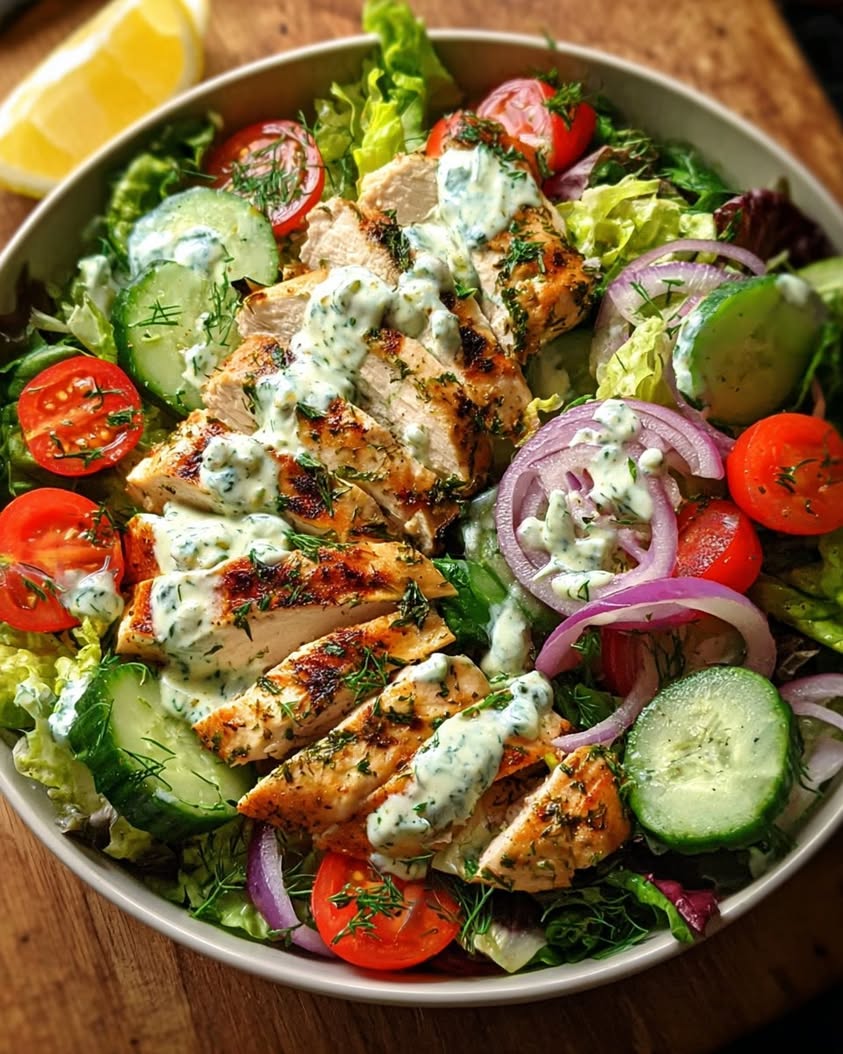
Grilled Chicken Salad with Creamy Herb Dressing: A Fresh, Healthy & Satisfying Meal
Imagine a plate filled with vibrant, crisp greens, topped with perfectly charred, juicy grilled chicken, and finished with a lusciously creamy herb dressing. This grilled chicken salad recipe is not just another meal; it is a celebration of fresh ingredients and bold flavors that come together in perfect harmony. Moreover, it delivers a deeply satisfying experience that fuels your body without weighing you down. Ultimately, this dish proves that healthy eating can be incredibly delicious and utterly crave-worthy.
This particular grilled chicken salad recipe stands out because it balances simplicity with gourmet taste. The star is undoubtedly the creamy herb dressing, which transforms ordinary ingredients into something extraordinary. Fresh herbs like dill and parsley mingle with tangy Greek yogurt and a hint of garlic, creating a sauce that is both light and indulgent. Consequently, every bite offers a refreshing contrast between the warm, smoky chicken and the cool, crisp vegetables. This meal is a fantastic solution for busy weeknights, elegant lunches, or even casual weekend gatherings.
Beyond its fantastic taste, this salad is a nutritional powerhouse. Packed with lean protein from the chicken and a rainbow of vitamins from the fresh vegetables, it supports your health goals effortlessly. The creamy herb dressing, made with wholesome ingredients, adds flavor without excessive calories. Therefore, you can enjoy a meal that feels decadent while still aligning with a balanced lifestyle. This grilled chicken salad is the ultimate proof that you do not have to sacrifice flavor for nutrition.
Quick Recipe Highlights
- Flavor Profile: This salad delivers a masterful balance of smoky, savory, and fresh notes. The grilled chicken brings a deep, charred umami flavor, while the creamy herb dressing introduces a bright, tangy, and aromatic element. Finally, the fresh vegetables add a clean, sweet crunch that ties everything together.
- Texture: You will experience a delightful play of textures in every forkful. Expect tender, juicy chicken against a backdrop of crisp romaine and crunchy cucumber. Additionally, the creamy dressing coats everything smoothly, while cherry tomatoes offer a gentle burst.
- Aroma: The scent of herbs and garlic from the dressing is immediately inviting. As the chicken grills, it releases a smoky, savory aroma that builds anticipation. When combined, these scents create a mouthwatering preview of the fresh, healthy meal to come.
- Visual Appeal: This salad is a feast for the eyes with its vibrant color palette. The green herbs and lettuce, red tomatoes, and golden-brown chicken create a stunning contrast on the plate. Presentation is key, making it look as good as it tastes.
- Skill Level Needed: This is an accessible recipe for cooks of all levels. Basic grilling or pan-searing skills are required for the chicken. Meanwhile, the dressing simply involves mixing ingredients. No advanced techniques are necessary for success.
- Special Equipment: A grill, grill pan, or simple stovetop skillet is essential for cooking the chicken. Other than that, you only need basic kitchen tools: a mixing bowl, whisk, knife, and cutting board. No fancy gadgets are required.
Recipe Overview
- Difficulty Level: We classify this grilled chicken salad recipe as easy. The steps are straightforward, involving basic prep work and simple cooking methods. There is no complex knife work or intricate timing to manage. Even a beginner can achieve excellent results by following the clear instructions.
- Category: This dish fits perfectly into several meal categories. It is a stellar main course salad for lunch or dinner. Furthermore, it works wonderfully as a high-protein meal prep option. You can also serve it as a substantial side dish at a summer barbecue or potluck.
- Cuisine: While salads are universal, this recipe draws inspiration from contemporary American wellness cuisine. It emphasizes fresh, whole ingredients and lean protein. The creamy herb dressing has hints of Mediterranean influence with its use of yogurt and fresh herbs, making it a modern, fusion-style dish.
- Cost: This is a very cost-effective meal to prepare. Chicken breasts and fresh vegetables are generally affordable, especially in season. Ingredients for the homemade dressing are pantry staples or low-cost dairy. Overall, you get a restaurant-quality meal for a fraction of the price.
- Season: This salad shines brightest in the spring and summer months. This is when fresh herbs and crisp vegetables are at their peak flavor and most affordable. However, it is a versatile recipe you can enjoy year-round by utilizing greenhouse greens and seasonal produce.
- Occasion: It is suitable for almost any occasion. Prepare it for a quick and healthy family dinner on a Tuesday night. Alternatively, plate it elegantly for a weekend lunch with friends. It is also an ideal packed lunch for work or school.
Why You’ll Love This Recipe
First and foremost, the taste and texture of this grilled chicken salad are utterly irresistible. The combination of smoky, perfectly seasoned chicken with the cool, crisp vegetables is a classic for a reason. The creamy herb dressing acts as the unifying element, adding a burst of flavor that makes each component sing. You get a satisfying contrast in every bite, from the tender protein to the crunchy veggies and the smooth, tangy sauce. This is not a boring diet food; it is a genuinely crave-worthy meal that will have you looking forward to lunch or dinner.
From a convenience standpoint, this recipe is a true winner. The total active time is around thirty-five minutes, with much of that being hands-off cooking time for the chicken. You can easily prepare the dressing and chop the vegetables while the chicken rests or cooks. Consequently, you get a from-scratch, healthy meal on the table faster than you could get delivery. Additionally, the components store well, making it a fantastic make-ahead option for weekly meal prep. Simply store the dressing separately and assemble when ready to eat for the freshest experience.
Nutritionally, this grilled chicken salad is a powerhouse that supports your wellness goals. Chicken breast is an excellent source of lean protein, which helps build muscle, keeps you full, and stabilizes energy levels. The array of vegetables provides essential vitamins, minerals, and fiber for digestive health. By making the creamy herb dressing with Greek yogurt, you add a probiotic boost and more protein without the heavy fats of a mayo-based dressing. This meal is naturally balanced, offering a great mix of macros to fuel your body properly.
For social and entertaining value, this salad is incredibly versatile. It scales up beautifully to feed a crowd at a picnic or barbecue. You can present it as a stunning composed salad on a large platter or let guests build their own bowls. The bright, fresh flavors are universally appealing, and it accommodates various dietary preferences with simple tweaks. Serving a meal that is both impressive and healthy makes you a thoughtful host. Your guests will appreciate the delicious food that also makes them feel good.
Finally, the cost-effectiveness and accessibility of this recipe cannot be overstated. You likely have many of the dressing ingredients like yogurt, lemon, and garlic already in your kitchen. Chicken and vegetables are staple grocery items available everywhere. By preparing this at home, you save significant money compared to ordering a similar salad at a restaurant or cafe. You also have complete control over ingredient quality, opting for organic produce or locally-sourced chicken if you choose. This grilled chicken salad delivers gourmet flavor on a very sensible budget.
Historical Background and Cultural Significance
The concept of combining cooked meat with fresh greens has ancient roots across many cultures. For instance, the Romans enjoyed dishes with salted meats and bitter herbs dressed with vinegar and oil. However, the modern main-course salad, particularly featuring grilled chicken, is a distinctly late-20th-century innovation. It emerged powerfully alongside the fitness and wellness movements of the 1980s and 1990s. As people became more health-conscious, they sought restaurant meals that were light yet satisfying. The grilled chicken salad answered that call perfectly, appearing on menus from casual cafes to upscale bistros.
Culturally, the grilled chicken salad represents a shift towards mindful eating without sacrifice. It embodies the American ideal of customization and abundance, often served as a massive bowl packed with diverse ingredients. This salad moved from being a mere side dish to the center of the plate, reflecting a broader trend of vegetable-forward dining. It became a symbol of a balanced, active lifestyle. Consequently, you can find countless variations in every region, each incorporating local produce and flavors, from Cobb salads in California to Southern versions with pecans and peaches.
The evolution of the recipe is closely tied to changes in dietary guidelines and culinary trends. Early versions often relied on heavy, mayonnaise-based dressings and fried chicken strips. Over time, as nutritional science emphasized lean protein and healthy fats, the grilled chicken salad adapted. Grilling replaced frying, and dressings lightened up with vinaigrettes or yogurt-based sauces like the creamy herb dressing in this recipe. The inclusion of superfoods like kale, quinoa, and avocado in modern iterations shows its continuous evolution to meet contemporary health trends.
Regional variations of the grilled chicken salad are a testament to its adaptability. In the Southwest, you might find it with black beans, corn, and a chipotle-lime dressing. A Mediterranean version features olives, feta cheese, and a lemon-oregano vinaigrette. Asian-inspired takes include sesame-glazed chicken, mandarin oranges, and a ginger-soy dressing. This global journey highlights how a simple concept becomes a canvas for local flavors. Our version with a creamy herb dressing leans into a fresh, garden-inspired profile that is versatile enough to pair with any cultural twist you desire.
Ingredient Deep Dive
Starting with the chicken breast, this lean cut is the protein cornerstone of our grilled chicken salad. Chicken has been a dietary staple worldwide for centuries, prized for its versatility and mild flavor. Nutritionally, it is an excellent source of complete protein, niacin, selenium, and vitamin B6, supporting metabolism and immune function. For the best results, select plump, evenly-sized breasts and pound them to a uniform thickness for even cooking. Store raw chicken in the coldest part of your refrigerator and use within 1-2 days. For a substitution, boneless skinless chicken thighs offer more fat and flavor, or you can use grilled tofu or chickpeas for a plant-based option.
Greek yogurt forms the base of our creamy herb dressing, a healthier alternative to mayonnaise or sour cream. Yogurt’s history dates back thousands of years to Neolithic times, with Greek yogurt being a strained, thicker version. It provides a significant protein boost, along with probiotics for gut health and calcium for bones. Choose plain, unsweetened Greek yogurt with at least 2% fat for the creamiest texture and best flavor. Store it tightly sealed in the refrigerator. If you need a substitute, sour cream, mayonnaise, or even blended cottage cheese can work, though the nutritional profile will change.
Fresh herbs like dill and parsley are the soul of the dressing. Herbs have been used medicinally and culinarily since ancient Egypt and Rome. They are micronutrient powerhouses; for example, parsley is rich in vitamins K, C, and A, while dill offers antioxidants. Select bunches with vibrant, perky leaves and no signs of wilting or yellowing. Store them stem-down in a glass of water in the fridge, loosely covered with a bag. If fresh herbs are unavailable, you can use dried, but remember the ratio is typically one-third dried to fresh, as dried herbs are more potent.
Romaine lettuce provides the crisp, refreshing base for our salad. Lettuce was first cultivated by the ancient Egyptians, who turned a weed into a valued food crop. Romaine is particularly nutritious, offering vitamins A, K, and folate, along with a high water content for hydration. Look for heads with crisp, firm leaves and no brown spots. Store it unwashed in a plastic bag in the crisper drawer. Butter lettuce, kale, or mixed spring greens can be used as alternatives, each offering a different texture and nutrient profile to your grilled chicken salad.
Common Mistakes to Avoid
- Overcooking the Chicken: This is the most common pitfall. Overcooked chicken becomes dry, tough, and chewy, ruining the texture of your salad. Always use a meat thermometer and pull the chicken off the heat at 165°F internally, as it will continue to cook while resting.
- Not Resting the Chicken: Slicing grilled chicken immediately causes all the precious juices to run out onto the cutting board. You must let it rest for at least 5-10 minutes after cooking. This allows the fibers to reabsorb the juices, ensuring every bite is moist and flavorful.
- Using a Dull Knife to Chop Herbs: A dull knife bruises and crushes delicate herbs like parsley and dill, causing them to blacken and release bitter flavors. Always use a sharp chef’s knife for a clean cut. This preserves their bright color and fresh taste in the creamy dressing.
- Skipping the Lemon Zest: The recipe calls for both lemon juice and zest. The zest contains potent aromatic oils that provide a huge burst of citrus fragrance and flavor that the juice alone cannot match. Neglecting it results in a flatter, less vibrant dressing.
- Dressing the Salad Too Early: Pouring the creamy herb dressing over the greens long before serving causes wilting and sogginess. The acid and moisture break down the cell structure of the lettuce. Always dress the salad just moments before you are ready to eat for maximum crunch.
- Not Seasoning in Layers: Seasoning only at the end leads to bland food. You should season the chicken before grilling, season the vegetables lightly, and season the dressing to taste. Building layers of seasoning at each stage creates a deeply flavorful grilled chicken salad from the inside out.
- Using Watery Vegetables: Adding wet ingredients like freshly washed but not dried lettuce or cucumbers with high water content will dilute your dressing and make the salad soggy. Always use a salad spinner or clean kitchen towels to thoroughly dry all vegetables before assembling.
- Ignoring Vegetable Size Consistency: Chopping vegetables into uneven pieces leads to inconsistent bites and awkward eating. Aim for uniform sizes, especially for harder veggies like cucumber and onion. This ensures every forkful has a balanced mix of flavors and textures.
Essential Techniques
Pounding chicken breasts to an even thickness is a non-negotiable technique for perfect grilling. Why is it important? Chicken breasts are naturally uneven, with a thick end and a thin tail. Without pounding, the thin part will be dry and overcooked long before the thick center is done. To master it, place the breast between two sheets of plastic wrap or in a zip-top bag. Then, using a meat mallet, rolling pin, or even a heavy skillet, gently pound from the center outward until the breast is uniformly about ¾-inch thick. The common pitfall is pounding too aggressively and tearing the meat. A visual cue for success is a breast that looks like a neat, even cutlet.
Creating a proper sear on the chicken is what delivers that signature grilled flavor and appealing color. This technique, known as the Maillard reaction, creates complex savory flavors and aromas. To achieve it, ensure your grill or pan is very hot before adding the oiled chicken. Do not move the chicken for the first few minutes; let it develop a golden-brown crust. A common mistake is crowding the pan, which steams the meat instead of searing it. The visual cue is a release; when the chicken has properly seared, it will naturally release from the grill grates or pan without sticking. If you have to tug, it is not ready.
Emulsifying the creamy herb dressing is key to a smooth, cohesive sauce. This process binds the watery lemon juice with the thick Greek yogurt and oil. To do it, start by whisking the yogurt until smooth. Then, add the lemon juice and mustard, whisking vigorously to combine. Finally, drizzle in the olive oil slowly while continuously whisking. This gradual incorporation encourages the fat molecules to suspend in the liquid. The pitfall is adding the oil all at once, which can cause separation. Success is a dressing that is uniformly creamy, slightly thickened, and clings beautifully to the back of a spoon.
Pro Tips for Perfect Grilled Chicken Salad
First, brine your chicken breasts for 30 minutes in a simple saltwater solution. This step guarantees incredibly juicy and seasoned meat, even if you accidentally overcook it slightly. Simply dissolve a tablespoon of salt in two cups of cold water, submerge the chicken, and refrigerate.
Second, let all your salad components come to room temperature before assembling. Ice-cold vegetables can mute flavors, and cold chicken will cause the dressing to seize up. Allowing a brief 10-minute tempering time ensures the flavors are vibrant and the textures are ideal.
Third, toast any nuts or seeds you plan to add, like sunflower seeds or almonds. Toasting in a dry pan for a few minutes unlocks their natural oils and adds a deeper, nutty crunch that contrasts wonderfully with the creamy dressing and fresh vegetables.
Fourth, use the residual heat from the grill or pan to warm your serving plates slightly. A warm plate will keep the grilled chicken at an optimal temperature longer once served, preventing it from cooling down too quickly against the cold salad greens.
Fifth, reserve a few whole herb leaves for garnish. After chopping herbs for the dressing, keep some pretty sprigs of dill or parsley to scatter over the top of the plated salad. This elevates the presentation and gives a fresh aromatic hint as you begin to eat.
Sixth, season your salad greens. A very light sprinkle of flaky sea salt over the assembled greens just before adding the dressing can make a world of difference. It seasons the lettuce itself, preventing it from being a bland vehicle for the other ingredients.
Variations and Adaptations
For regional variations, consider the flavors you love. A Southwest version could include black beans, corn, avocado, and a dressing with lime and cilantro. A Mediterranean twist might feature kalamata olives, crumbled feta, red onion, and a oregano-infused vinaigrette. An Asian-inspired adaptation could use a sesame-ginger dressing, mandarin oranges, and sliced almonds. The basic framework of the grilled chicken salad is wonderfully adaptable to any cuisine.
Seasonal adaptations keep this recipe exciting all year. In spring, add shaved asparagus and fresh peas. Summer is perfect for sweet corn and cherry tomatoes. For fall, incorporate roasted sweet potato cubes and dried cranberries. In winter, use hearty kale as the base and add roasted Brussels sprouts. Let the produce guide your creativity.
Dietary modifications are straightforward. For gluten-free, ensure your mustard and other condiments are certified GF. For dairy-free, substitute the Greek yogurt in the dressing with a vegan yogurt or a tahini-lemon base. To make it vegan, replace the chicken with grilled portobello mushrooms or marinated chickpeas. For a keto or low-carb version, increase the fat in the dressing with avocado oil mayo and reduce or omit higher-carb veggies like tomatoes.
Flavor variations can come from the marinade or the dressing. Marinate the chicken in Italian dressing, teriyaki sauce, or a spicy buffalo sauce before grilling. Change the profile of the creamy dressing by swapping dill for basil, adding a chipotle pepper, or mixing in a tablespoon of pesto. A spoonful of honey or maple syrup can add a touch of sweetness to balance acidity.
Texture modifications can cater to personal preference. For more crunch, add toasted nuts, seeds, or crispy chickpeas. For creaminess, include avocado slices or crumbled goat cheese. To make it more substantial, add a layer of cooked quinoa, farro, or couscous at the bottom of the bowl. These additions transform the salad into a even more satisfying meal.
Presentation alternatives change the dining experience. Instead of a tossed salad, serve it as a composed salad with each ingredient arranged neatly on a platter. For individual servings, use wide, shallow bowls. For a deconstructed version, serve the grilled chicken sliced on a board with bowls of dressing, greens, and toppings for a DIY salad bar at home.
Serving and Presentation Guide
Plating techniques matter for visual appeal. For a family-style meal, use a large, wide platter or a shallow salad bowl. Start with a bed of the crisp greens. Then, artfully arrange the sliced grilled chicken on top. Scatter the remaining vegetables around and over the chicken. Finally, drizzle the creamy herb dressing over everything just before serving. This method showcases all the beautiful ingredients.
Garnishing is the final touch that makes the dish look professional. Beyond extra herbs, consider a sprinkle of cracked black pepper, a light dusting of paprika, or a few edible flowers. If you added nuts, a few placed strategically on top highlight the crunch. A final tiny drizzle of extra virgin olive oil around the edge of the plate adds a chef’s touch.
Traditional accompaniments for a main-course salad like this are often light. A crusty whole-grain baguette or warm focaccia is perfect for soaking up any extra dressing. For a more complete meal, a simple cup of soup, like tomato basil or chicken vegetable, pairs wonderfully. These sides complement without competing with the fresh flavors of the salad.
Modern serving suggestions embrace customization. Set up a salad bar station where guests can build their own bowls. Offer small bowls of extra toppings like shredded cheese, different seeds, or crispy onions. This interactive approach is great for gatherings and allows everyone to tailor their grilled chicken salad to their exact preferences.
Temperature considerations are crucial for the best experience. The grilled chicken should be warm or at room temperature, not piping hot or fridge-cold. The vegetables and greens should be crisp and cool. The dressing can be served cold or at room temperature. This contrast between the warm chicken and cool greens is part of the salad’s magic.
Portion control tips are helpful for meal planning. A standard serving is one average-sized chicken breast per person over a generous two cups of vegetables. If you are serving this as part of a larger spread with multiple sides, you can reduce the chicken to half a breast per person. Listening to hunger cues is always best, as this salad is filling but not heavy.
Wine and Beverage Pairing
Wine pairings for this grilled chicken salad should complement its fresh, herbal, and creamy elements. A crisp, unoaked white wine is an excellent choice. Sauvignon Blanc, with its notes of citrus and fresh-cut grass, mirrors the lemon and herbs in the dressing beautifully. A dry Riesling or a Pinot Gris also works well, offering acidity to cut through the creaminess without overpowering the delicate chicken. For red wine lovers, a light-bodied, chilled Pinot Noir can be delightful, especially if the salad includes earthier elements like mushrooms.
Non-alcoholic alternatives can be just as sophisticated. A sparkling water with a squeeze of lemon or lime and a few cucumber slices is refreshing and hydrating. For something more complex, try an herbal iced tea, like mint or lemon verbena. A virgin mojito, with muddled mint and lime, echoes the fresh herb theme of the salad perfectly. These options are delightful for all ages and occasions.
While not a classic coffee dish, iced coffee or cold brew can be a surprising and pleasant pairing, especially for a lunch salad. The bitterness of the coffee can contrast nicely with the creamy, tangy dressing. For tea, a green tea or a light herbal tea served iced would be complementary. The key is to avoid overly sweet or heavy beverages that would clash with the salad’s clean profile.
Temperature considerations for beverages are straightforward. White wines and non-alcoholic sparklers should be well-chilled. Red wine, if chosen, should be lightly chilled to about 55°F. Iced teas and coffees should be cold but not diluted with too much ice. Serving drinks at their ideal temperature ensures they refresh the palate between bites of the flavorful grilled chicken salad.
Serving suggestions include offering a couple of options to guests. Place a bottle of chilled Sauvignon Blanc and a pitcher of sparkling cucumber-lemon water on the table. Use clear glassware to showcase the beautiful colors of the drinks. Always provide plenty of ice and fresh garnishes, like lemon wheels or herb sprigs, so guests can customize their beverage to their taste.
Storage and Shelf Life
Proper storage methods are essential for food safety and quality. Store all components of the grilled chicken salad separately for best results. Place the cooled, sliced chicken in an airtight container. Keep the washed and dried greens in a separate container lined with a paper towel. Store the chopped vegetables together in another container. The creamy herb dressing should be in a sealed jar or bottle. This prevents cross-contamination and sogginess.
Temperature requirements are non-negotiable. All components must be refrigerated at 40°F or below. Do not leave the assembled salad or any of its perishable parts at room temperature for more than two hours. If the outdoor temperature is above 90°F, that window reduces to one hour. Always err on the side of caution with poultry and dairy-based dressings.
Container recommendations focus on airtightness. Glass containers with locking lids are ideal as they do not absorb odors and keep food fresher longer. For the dressing, a small mason jar is perfect for shaking and storing. If using plastic, ensure it is BPA-free and designed for food storage. The goal is to minimize air exposure to prevent oxidation and spoilage.
Signs of spoilage include an off smell, especially a sour or unpleasant odor from the chicken or dressing. Visual cues are slimy texture on the chicken or greens, or significant discoloration. If the dressing separates irreversibly or develops mold, discard it immediately. When in doubt, throw it out. It is not worth the risk of foodborne illness.
Reheating instructions apply only to the chicken. To reheat, place the slices in a skillet over medium-low heat with a splash of water or broth to prevent drying out. You can also microwave it in 30-second intervals until just warmed through. Do not reheat the salad greens or vegetables, as they will become limp and unappetizing. Always reheat chicken to 165°F internally.
Freezing guidelines are limited for this recipe. You can freeze the cooked, cooled grilled chicken for up to 3 months in a freezer-safe bag. The dressing does not freeze well, as the yogurt will separate and become grainy upon thawing. The fresh vegetables should never be frozen for salad use. For best quality, this is a meal best enjoyed fresh or refrigerated for a few days.
Make Ahead Strategies
A smart prep timeline can have dinner ready in minutes. The day before, or in the morning, prepare the creamy herb dressing and store it in the fridge. Chop all your sturdy vegetables (like cucumber, onion) and store them in a container. Wash and thoroughly dry your greens, then store them in a salad spinner or container with a towel. You can even cook and slice the chicken a day ahead. This leaves only assembly for mealtime.
Storage between steps is key to maintaining quality. Keep the dressing and any wet ingredients completely separate from the dry greens and vegetables. If pre-cooking chicken, let it cool completely before slicing and storing to prevent condensation from making it soggy. Layer your vegetable container with the wettest items (like tomatoes) on top of drier ones to prevent sogginess from traveling.
Assessing the quality impact of make-ahead steps is important. The dressing often tastes better after a few hours, as the flavors meld. Pre-chopped vegetables may lose a slight bit of crispness but are generally fine for a day. Pre-cooked chicken, if stored properly, retains good quality. The greens are the most sensitive; they must be absolutely dry before storage to prevent wilting. Following these tips ensures your prepped components are still excellent.
Assembly tips for make-ahead meals are simple. If packing for lunch, use a multi-compartment container or a large jar. Place the dressing at the bottom, followed by hard vegetables, then chicken, with the greens sealed at the top. When ready to eat, shake or mix everything together. This keeps the greens crisp until the last moment. For home serving, simply pull all your prepped containers from the fridge and combine on a platter.
Scaling Instructions
Halving the recipe is straightforward for smaller households. Use one large chicken breast, half the amount of all vegetables, and simply prepare half the dressing recipe. Cooking time for the chicken may reduce slightly due to less pan crowding, so keep a close eye on it. All other techniques remain the same. This is a perfect way to avoid leftovers if desired.
Doubling or tripling the recipe for a crowd requires some forethought. Use multiple pans or cook the chicken in batches to avoid steaming. You may need to prepare the dressing in two separate batches to ensure proper emulsification, as whisking a very large volume can be difficult. For the salad base, consider using an extra-large bowl or multiple serving platters. Taste the dressing after scaling, as you may need to adjust seasoning slightly.
Equipment adjustments are necessary when scaling up. For a double batch, your standard skillet might be sufficient if you cook the chicken in two batches. For tripling or more, using an outdoor grill or a very large griddle pan is more efficient. Ensure you have a large enough bowl for tossing the salad or plan to mix in a very clean sink or a large, food-safe tub for a big party.
Timing modifications are minimal when scaling. The prep time will increase linearly as you chop more vegetables. The cook time for the chicken may increase if you are cooking in batches, as you need to account for the time between batches. However, the actual grilling time per batch remains the same. Start your prep earlier to accommodate the increased volume.
Nutritional Deep Dive
The macro breakdown of this grilled chicken salad is well-balanced. A typical serving provides approximately 35-40 grams of high-quality protein from the chicken and Greek yogurt, supporting muscle repair and satiety. The carbohydrates, around 15-20 grams, come primarily from the vegetables, offering fiber and essential micronutrients. The fats, approximately 15-20 grams, are largely unsaturated from the olive oil and the natural fats in the yogurt, promoting heart health. This balance makes it an ideal meal for sustained energy.
A micronutrient analysis reveals a wealth of vitamins and minerals. Romaine lettuce and parsley are excellent sources of Vitamin K, crucial for bone health and blood clotting. Tomatoes and lemon juice provide a hefty dose of Vitamin C, an antioxidant that supports immune function. Chicken is rich in B vitamins, particularly B6 and niacin, which aid in energy metabolism. The colorful vegetables also contribute a range of phytonutrients with anti-inflammatory properties.
The health benefits of regularly consuming meals like this are significant. The high protein and fiber content promote feelings of fullness, which can aid in weight management. The lean protein supports muscle maintenance, especially important as we age. The healthy fats support brain function and hormone production. Furthermore, the array of vegetables contributes to gut health, reduced inflammation, and a lower risk of chronic diseases. This is truly a meal that nourishes the body comprehensively.
Dietary Adaptations
For a gluten-free adaptation, this grilled chicken salad recipe is naturally compliant. Simply double-check that your Dijon mustard and any other packaged ingredients are certified gluten-free, as some may contain trace amounts from additives or vinegar sources. All whole foods used—chicken, vegetables, yogurt, herbs, oil, lemon—are inherently gluten-free. This makes it a safe and delicious option for those with celiac disease or gluten sensitivity.
A dairy-free version focuses on modifying the creamy herb dressing. Replace the Greek yogurt with a plain, unsweetened dairy-free yogurt made from coconut, almond, or soy. Alternatively, use a base of soaked and blended cashews with lemon juice and water to create a rich, creamy consistency. Ensure the mustard you use does not contain dairy-derived ingredients. The rest of the salad remains unchanged, offering a perfect dairy-free meal.
To create a vegan grilled chicken salad, replace the chicken with a plant-based protein. Excellent options include marinated and grilled extra-firm tofu, tempeh, or a can of rinsed and seasoned chickpeas. For the dressing, use a vegan yogurt or the cashew cream base mentioned above. You can also add more substantial vegetables like roasted cauliflower or lentils to increase the heartiness of the salad. The result is a completely plant-based, protein-packed meal.
For a low-carb or keto adaptation, focus on increasing fats and reducing carbs. Use full-fat Greek yogurt or mayonnaise for the dressing. Increase the amount of olive oil or add avocado oil. Reduce or omit higher-carb vegetables like tomatoes and onions, and focus on greens, cucumber, and perhaps some bell peppers. You can also add high-fat toppings like avocado, olives, and a sprinkle of cheese. This keeps the net carbs low while maintaining flavor and satisfaction.
Troubleshooting Guide
If your chicken is dry, the primary culprit is overcooking. Next time, use a meat thermometer and remove it at 160°F, as carryover cooking will bring it to 165°F. For the current batch, try slicing it thinly and mixing it thoroughly with the creamy dressing; the moisture from the sauce can help mitigate dryness. Consider serving it chopped over the salad rather than in slices to blend textures better.
If the dressing is too thin, it likely needs better emulsification or less liquid. To fix it, whisk in an additional tablespoon of Greek yogurt or a teaspoon of Dijon mustard to help bind it. Alternatively, you can slowly drizzle in a bit more olive oil while whisking vigorously. If it’s too thick, simply whisk in a teaspoon of water or lemon juice at a time until it reaches a pourable consistency.
If the salad becomes soggy quickly, you are likely dressing it too early or not drying your vegetables enough. For future attempts, be militant about using a salad spinner for greens and patting cucumbers dry. Always dress the salad seconds before serving. If you have leftovers, store them without dressing, and the vegetables may regain some crispness in the fridge.
If the flavors taste bland, you probably under-seasoned at multiple stages. Do not just add salt at the end. Next time, season the chicken generously before grilling, salt your vegetables lightly, and taste and adjust the dressing aggressively with salt, pepper, and acid. For the current batch, try sprinkling the assembled salad with a flaky salt and a fresh squeeze of lemon juice to wake up the flavors.
Frequently Asked Questions
Can I use chicken A fresh and healthy salad featuring tender grilled chicken and a creamy herb dressing, perfect for a satisfying meal. You can customize the seasonings to taste.
PrintGrilled Chicken Salad with Creamy Herb Dressing
Description
Ingredients
For the Crust:
Instructions
1. Prepare the Crust:
Notes

I’m Shaykee—born in Morocco, seasoned across continents. From airplane galleys to home kitchens, I share the flavors and stories that shaped my journey.