
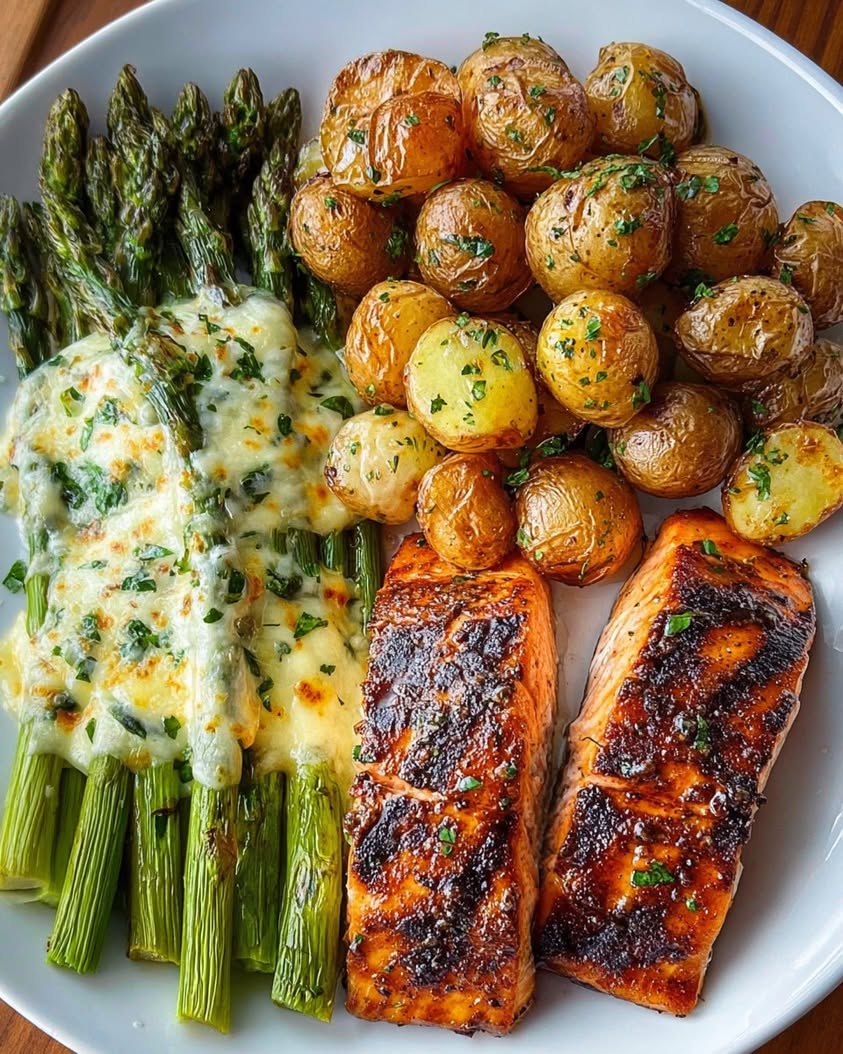
Garlic Butter Salmon with Crispy Baby Potatoes & Cheesy Asparagus: A Complete, Restaurant-Worthy Meal Ready in 30 Minutes!
Imagine a dinner that feels like a special occasion but fits perfectly into your busiest weeknight. This Garlic Butter Salmon with Crispy Baby Potatoes & Cheesy Asparagus is exactly that kind of magic. This recipe delivers a complete, restaurant-worthy meal on a single sheet pan, meaning minimal cleanup and maximum flavor. Moreover, the combination of flaky, buttery fish, golden potatoes, and tender-crisp asparagus creates a symphony of textures and tastes that will impress everyone at your table.
The secret lies in the simple, high-quality ingredients and a smart cooking method. For instance, the salmon bakes in a luxurious garlic butter sauce that soaks into the flesh, while the potatoes roast to a perfect crisp. Simultaneously, the asparagus gets a delightful blanket of melted cheese. Consequently, you get a balanced plate of protein, starch, and vegetables without juggling multiple pans. Ultimately, this dish proves that healthy meals can be incredibly indulgent and satisfying.
Furthermore, this recipe is a fantastic solution for anyone seeking easy dinner recipes that don’t compromise on quality. The aroma of garlic and herbs filling your kitchen is simply irresistible. Whether you’re cooking for a family dinner or hosting a few friends, this meal is a guaranteed crowd-pleaser. Let’s dive into how you can create this stunning salmon dinner in just about half an hour.
Quick Recipe Highlights
- Flavor Profile: This dish features a rich, savory core from the garlic butter sauce, which is beautifully balanced by the natural sweetness of the salmon and the earthy notes of roasted asparagus. Additionally, a hint of lemon and fresh herbs adds a bright, finishing touch that cuts through the richness.
- Texture: You’ll experience a wonderful contrast: the salmon is tender and flaky, the baby potatoes are crispy on the outside and creamy within, and the asparagus offers a satisfying snap. The melted cheese, meanwhile, provides a gooey, luxurious element that ties everything together.
- Aroma: As it cooks, the kitchen fills with the irresistible scent of roasting garlic and butter, mingled with the savory smell of Parmesan cheese and the fresh, green aroma of asparagus. This fragrant promise makes the wait for this healthy meal absolutely delightful.
- Visual Appeal: The presentation is stunning, with vibrant pink salmon, golden-brown potatoes, and bright green asparagus spears topped with bubbly, golden cheese. It’s a colorful, elegant plate that looks far more complex than it actually is to prepare.
- Skill Level Needed: This is a beginner-friendly recipe perfect for weeknight dinner success. The techniques are straightforward: chopping, seasoning, and roasting. If you can use a knife and an oven, you can absolutely master this complete meal.
- Special Equipment: You only need a large sheet pan, some parchment paper for easy cleanup, and basic kitchen tools like a knife, cutting board, and mixing bowl. No fancy gadgets or appliances are required for this easy dinner recipe.
Recipe Overview
- Difficulty Level: We rate this recipe as “Easy” because it uses fundamental cooking techniques like roasting and requires no advanced skills. The steps are sequential and logical, and the oven does most of the work. Even a novice cook can achieve impressive results by simply following the timing guide.
- Category: This dish falls squarely into the main course category, providing a full, balanced dinner. It’s also an excellent candidate for healthy meals and special occasion dinners due to its elegant presentation and nutrient-dense profile.
- Cuisine: While not tied to one specific tradition, this recipe draws inspiration from contemporary American bistro cuisine and French culinary techniques, particularly the use of compound butter (garlic herb butter) to enhance the protein. It’s a modern, fusion-style weeknight dinner.
- Cost: This is a moderately priced meal. Salmon is the primary cost, but using baby potatoes and asparagus in season helps manage the budget. Compared to ordering a similar dish at a restaurant, cooking this garlic butter salmon at home offers significant savings and superior quality.
- Season: This recipe is fantastic year-round but truly shines in spring when asparagus is at its peak. However, it’s a versatile salmon dinner that brings a sense of freshness and lightness to the table in any season, making it a reliable go-to.
- Occasion: Perfect for busy weeknight dinner rotations, casual weekend family meals, or even a simple yet impressive dinner party. Its all-in-one nature makes it ideal for times when you want to enjoy the company of your guests rather than be stuck in the kitchen.
Why You’ll Love This Recipe
First and foremost, the taste and texture are absolutely divine. Each component complements the others perfectly. The salmon is incredibly moist and infused with the savory garlic butter, while the potatoes provide a hearty, crispy counterpoint. Furthermore, the cheesy asparagus adds a creamy, salty element that completes every bite. This harmonious combination ensures that your palate is engaged from start to finish, making it a truly satisfying salmon dinner.
Secondly, the convenience factor is unbeatable. As a complete sheet pan meal, preparation and cleanup are a breeze. You simply chop, season, and arrange everything on one pan. Consequently, you free up time and avoid a sink full of dishes. This efficiency makes it one of the ultimate easy dinner recipes for stressful evenings when you need a nourishing meal without the hassle.
From a nutritional standpoint, this meal is a powerhouse. Salmon is loaded with omega-3 fatty acids and high-quality protein. Asparagus provides fiber, folate, and vitamins A, C, and K. Meanwhile, potatoes offer energy-sustaining complex carbohydrates. Together, they create a balanced plate that supports overall health, proving that healthy meals can also be deeply flavorful and comforting.
For entertaining, this dish offers tremendous social value. It looks elaborate and tastes luxurious, impressing guests with minimal visible effort on your part. You can easily scale the recipe up for a crowd by using multiple sheet pans. Therefore, you get to spend more time with your friends and family, which is the true goal of any gathering centered around good food.
Finally, this recipe is cost-effective and accessible. While salmon can be a premium ingredient, creating this restaurant-worthy meal at home costs a fraction of what you’d pay dining out. Additionally, the other ingredients are pantry staples or affordable fresh produce. This accessibility means you can enjoy a special, healthy meal regularly without breaking your weekly food budget.
Historical Background and Cultural Significance
The concept of roasting salmon is ancient, with roots in the cooking traditions of coastal communities worldwide, particularly among Indigenous peoples of the Pacific Northwest for whom salmon is a cultural cornerstone. However, the specific preparation of garlic butter salmon is a more modern invention, reflecting 20th-century American tastes that favored rich, savory sauces and convenient cooking methods. This recipe represents a fusion of that classic protein with contemporary weeknight dinner needs.
Culturally, salmon holds significant importance as a celebrated and nutritious food source. In many cultures, it symbolizes abundance, wisdom, and renewal. The addition of garlic and butter, staples in European and particularly French cuisine, elevates the fish from a simple grilled protein to a more decadent dish. This combination speaks to a globalized palate that appreciates both simplicity and indulgence in healthy meals.
The evolution of this recipe is tied directly to the popularity of sheet pan cooking. Over the last decade, the demand for easy dinner recipes that minimize cleanup has soared. Cooks and food bloggers began experimenting with cooking complete meals on a single pan. The garlic butter salmon dinner, paired with hearty potatoes and quick-cooking vegetables like asparagus, emerged as a perfect candidate for this efficient, flavorful method.
Regional variations of this concept abound. For example, in the Mediterranean, you might find salmon with olives, tomatoes, and oregano. In Asia, a version with soy, ginger, and sesame could be popular. Our version with garlic, butter, and Parmesan leans into comforting, familiar flavors that have broad appeal. This adaptability shows how a foundational recipe can be a canvas for personal and regional tastes, making it a versatile star for any weeknight dinner.
Ingredient Deep Dive
Salmon Fillets: Salmon is a fatty fish rich in omega-3 fatty acids EPA and DHA, which are crucial for heart and brain health. It’s also an excellent source of high-quality protein and vitamin D. When selecting salmon, look for firm, bright flesh with a pleasant sea breeze aroma; avoid any fillets with a strong fishy smell. For best results, choose skin-on fillets of even thickness to ensure uniform cooking. You can use Atlantic or Sockeye salmon here. If substituting, other oily fish like arctic char or steelhead trout work well.
Baby Potatoes: These small potatoes are simply young versions of larger varieties, harvested early for their tender skin and creamy texture. They are a good source of vitamin C, potassium, and fiber, especially when the skin is left on. Their small size means they cook quickly and evenly. Choose potatoes that are firm, smooth, and free of sprouts or green spots. Store them in a cool, dark, well-ventilated place—not in the refrigerator. For a variation, you can use fingerling potatoes or halved Yukon Golds.
Asparagus: A spring vegetable symbolizing renewal, asparagus has been prized since ancient Roman times. It is low in calories but high in fiber, folate, and vitamins A, C, E, and K. Select spears with tight, closed tips and smooth, vibrant green stalks. The ends should look freshly cut, not woody or dried out. Store asparagus upright in a jar with an inch of water in the refrigerator, loosely covered with a bag. For a twist, broccolini or green beans make suitable substitutes.
Garlic & Butter: This dynamic duo forms the soul of the sauce. Garlic contains allicin, a compound with noted anti-inflammatory properties. Butter adds richness and helps carry the garlic flavor into the salmon. Use fresh garlic for the brightest taste and real, unsalted butter to control the dish’s sodium level. For storage, keep butter wrapped in the fridge and garlic in a cool, dark pantry. To make this a dairy-free healthy meal, you could substitute a high-quality olive oil or a plant-based butter alternative.
Parmesan Cheese: This hard, aged Italian cheese adds a salty, nutty, umami punch that enhances the asparagus immensely. It provides calcium and protein. For the best flavor, buy a block of Parmigiano-Reggiano and grate it yourself; pre-grated cheese often contains anti-caking agents that can affect meltability. Store leftover cheese tightly wrapped in the refrigerator. If you need a substitute, Pecorino Romano offers a sharper taste, while a nutritional yeast blend can create a dairy-free version.
Common Mistakes to Avoid
- Crowding the Sheet Pan: Overloading the pan is a common error. If the potatoes and asparagus are piled on top of each other, they will steam instead of roast. Consequently, you’ll miss out on the essential crispy texture. Always use a large enough pan and arrange ingredients in a single layer.
- Underseasoning the Potatoes: Potatoes need generous seasoning to taste great. Simply tossing them with oil is not enough. Be sure to coat them thoroughly with salt, pepper, and any dried herbs before roasting. This step builds foundational flavor for your entire meal.
- Using Thin Asparagus Spears: While thin asparagus cooks quickly, it can overcook and become mushy in the time it takes the potatoes to crisp up. Opt for medium-thick spears; they are more robust and will maintain a perfect tender-crisp texture alongside the other components.
- Not Patting the Salmon Dry: Placing damp salmon on the pan can cause it to stick and prevent beautiful browning. Always use a paper towel to pat the fillets completely dry before seasoning and adding the garlic butter. This ensures a better sear and more appealing presentation.
- Overcooking the Salmon: Salmon continues to cook from residual heat after being removed from the oven. The goal is flaky, moist flesh. Therefore, remove it when it is just opaque in the center and flakes easily with a fork. Overcooked salmon becomes dry and chalky.
- Adding Cheese Too Early: Sprinkling Parmesan on the asparagus at the beginning of cooking will cause it to burn. Instead, add the cheese during the last few minutes of roasting. This allows it to melt and bubble into a golden topping without turning bitter or black.
- Using Cold Butter: For the garlic butter sauce, you need softened butter to easily mix with the garlic and herbs. Using cold, hard butter will make it impossible to create a smooth paste that can be dolloped evenly over the salmon fillets.
- Skipping the Lemon Wedges: The fresh lemon juice squeezed over the finished dish is not just a garnish; it’s a crucial flavor component. The acidity cuts through the richness of the butter and cheese, brightening all the flavors. Never serve this garlic butter salmon without it.
Essential Techniques
Even Roasting: Achieving even roasting is critical for a successful sheet pan meal. The technique involves cutting the potatoes to a uniform size so they cook at the same rate. Furthermore, positioning the ingredients according to their cooking times—potatoes first, then salmon and asparagus—ensures everything finishes perfectly together. The common pitfall is adding everything at once, which leads to some elements being over or underdone. Visual cues for success are golden-brown, crispy potatoes and tender, bright green asparagus.
Creating a Compound Butter: This technique simply involves mixing softened butter with flavorings like minced garlic and herbs. It’s important because it allows the flavors to penetrate the salmon deeply as it melts during cooking. To master it, ensure your butter is truly softened at room temperature for easy mixing. A common mistake is using melted butter, which will just run off the fish. The visual cue is a smooth, spreadable paste that holds the shape of the garlic and herbs.
Knowing Salmon Doneness: Properly cooked salmon is the hallmark of a great salmon dinner. The technique is to look for visual and textural clues rather than relying solely on time. The fish should turn from translucent pink to opaque and should flake easily when gently pressed with a fork at its thickest part. It will continue to cook slightly after removal from the oven (carryover cooking). The common pitfall is waiting for it to be completely firm, which results in dryness. The goal is moist, flaky perfection.
Pro Tips for Perfect Garlic Butter Salmon
Bring your salmon to room temperature for about 15 minutes before cooking. This simple step helps it cook more evenly from edge to center, preventing a overcooked exterior and a cold, undercooked middle.
For extra crispy potatoes, toss them in a tablespoon of cornstarch along with the oil and seasonings. The cornstarch creates a delightfully crunchy exterior on the potatoes as they roast.
If your asparagus spears vary greatly in thickness, use the “snap” method. Hold each spear at both ends and bend; it will naturally break at the point where the tough woody part meets the tender stalk.
To infuse even more flavor, add a sprig of fresh thyme or rosemary to the sheet pan among the potatoes while they roast. The heat will release the herb’s essential oils into the air and onto the food.
For a beautiful, restaurant-style finish, garnish the entire plated dish with a sprinkle of finely chopped fresh parsley or chives and a light drizzle of high-quality extra virgin olive oil just before serving.
If you love a crispy salmon skin, start the fillets skin-side down in a hot oven-safe skillet on the stovetop for 2-3 minutes until the skin crisps, then transfer the entire skillet to the oven to finish cooking with the other components.
Use an instant-read thermometer for foolproof salmon. Insert it into the thickest part of the fillet; it should read between 125°F and 130°F for medium-rare, or 135°F to 140°F for medium, when you take it out of the oven.
Variations and Adaptations
Regional Variations: Give this easy dinner recipe a Mediterranean twist by replacing the garlic butter with a mixture of olive oil, lemon zest, oregano, and kalamata olives. For an Asian-inspired version, use a glaze of soy sauce, ginger, honey, and sesame oil on the salmon, and toss the vegetables in sesame seeds before roasting.
Seasonal Adaptations: While asparagus is a spring favorite, you can adapt this healthy meal for any season. In summer, use zucchini and cherry tomatoes. In fall, swap in halved Brussels sprouts and cubed butternut squash. In winter, try broccoli florets and carrot coins, adjusting roasting times as needed for denser vegetables.
Dietary Modifications: For a dairy-free garlic butter salmon, use a plant-based butter and omit the Parmesan or use a dairy-free alternative. To make it Whole30 or Paleo, use ghee instead of butter and skip the cheese. The recipe is naturally gluten-free, making it accessible for many dietary needs.
Flavor Variations: Experiment with different herbs in the butter. Dill is a classic pairing with salmon, while tarragon offers a lovely anise note. For a spicy kick, add a pinch of red pepper flakes or a dash of smoked paprika to the butter mixture.
Texture Modifications: If you prefer softer potatoes, you can parboil them for 5-7 minutes before tossing with oil and roasting. For an even crispier potato, use duck fat or bacon fat instead of olive oil. To keep the asparagus very crisp-tender, add it during the last 8-10 minutes of cooking only.
Presentation Alternatives: Instead of serving everything mixed on a platter, plate each component separately for a more formal look. Alternatively, flake the salmon and serve it over a bed of the crispy potatoes and asparagus for a deconstructed, rustic presentation. You can also serve the garlic butter sauce on the side in a small pitcher for dipping.
Serving and Presentation Guide
For a family-style presentation, transfer the entire contents of the sheet pan to a large, warm platter. Arrange the salmon fillets in the center, surround them with the crispy potatoes, and lay the cheesy asparagus spears alongside. Drizzle any remaining garlic butter juices from the pan over the top. This inviting method encourages sharing and makes for a beautiful, abundant centerpiece on the dinner table.
Garnishing is key to elevating this weeknight dinner. Beyond lemon wedges, consider a final flourish of freshly chopped soft herbs like parsley, dill, or chives. A light sprinkle of flaky sea salt, such as Maldon, over the salmon just before serving adds both texture and a burst of salinity. A few microgreens or edible flowers can transform it into a special occasion dish.
Traditional accompaniments for a salmon dinner are often light and simple. A crisp green salad with a lemony vinaigrette balances the richness perfectly. Alternatively, a crusty baguette is wonderful for soaking up the delicious garlic butter sauce left on the plate. For a more modern take, consider serving it with a side of cauliflower puree or a quinoa salad.
Temperature considerations are crucial for enjoyment. Serve this meal immediately after it comes out of the oven. The salmon is at its most tender and flaky when hot, the cheese on the asparagus is delightfully gooey, and the potatoes are at their peak crispness. Use warmed plates to ensure the food stays hot as you sit down to eat.
Portion control is naturally built into this recipe, with one salmon fillet and a share of potatoes and asparagus per person. For lighter appetites or as part of a larger spread, you can easily cut the salmon fillets in half after cooking. Conversely, for heartier appetites, simply add more potatoes to the sheet pan during the initial roasting phase.
Wine and Beverage Pairing
When selecting a wine for this garlic butter salmon, you want something that complements the richness of the butter and the oiliness of the fish without overpowering it. A classic choice is a crisp, unoaked Chardonnay; its acidity cuts through the fat while its subtle fruit notes harmonize with the dish. Alternatively, a Pinot Noir with its lighter body and red fruit character can be a stunning pairing, especially if you enjoy red wine with your salmon dinner.
For non-alcoholic alternatives, sparkling water with a squeeze of lemon or lime is always refreshing. An herbal iced tea, such as mint or lemon verbena, offers a sophisticated and palate-cleansing option. For something more unique, try a ginger beer or a non-alcoholic sparkling cider, which provide sweetness and effervescence to balance the savory, garlicky notes of the meal.
While not typical for dinner, coffee or tea can pair nicely if served after the meal. A light roast coffee or a green tea would be excellent choices to finish the evening. Their cleansing properties help reset the palate. The key is to serve these beverages at their proper temperatures—hot coffee and tea, chilled non-alcoholic drinks—to provide a pleasing contrast to the warm, savory dinner.
Storage and Shelf Life
Store any leftovers in an airtight container in the refrigerator for up to 2 days. It’s best to separate the components if possible, as the asparagus can become soggy from the salmon’s moisture. The garlic butter salmon and potatoes reheat reasonably well, though the salmon’s texture will be less flaky than when freshly cooked.
For reheating, use a gentle method to prevent the salmon from drying out. The oven is ideal: place leftovers on a foil-lined baking sheet, cover loosely with foil, and warm at 275°F until just heated through, about 10-15 minutes. You can also use the microwave at 50% power in short bursts, but this risks making the salmon rubbery and the potatoes chewy.
Freezing is not recommended for the complete assembled dish. However, you can freeze uncooked, seasoned salmon fillets individually wrapped in plastic and then foil. The cooked potatoes and asparagus do not freeze well, as they become mushy and lose their texture upon thawing. For best quality, enjoy this healthy meal fresh.
Signs of spoilage include a sour or strong fishy odor from the salmon, a slimy texture on any component, or visible mold. When in doubt, it’s safest to discard the leftovers. Proper storage is key to maintaining both safety and the quality of your easy dinner recipe leftovers.
Make Ahead Strategies
You can significantly speed up your weeknight dinner prep with a few make-ahead steps. The day before, wash and halve the baby potatoes. Store them submerged in cold water in the refrigerator to prevent browning. Similarly, wash and trim the asparagus, then wrap the ends in a damp paper towel and store in a produce bag. You can also mince the garlic and mix it with softened butter, then shape it into a log on plastic wrap, roll it up, and chill. This compound butter log can be sliced and placed directly on the salmon when ready to cook.
On cooking day, simply drain and dry the potatoes, pat the asparagus dry, and you’re ready to assemble. The quality impact is minimal; in fact, the potatoes may get even crispier since drying them thoroughly is easier after a water bath. The key is ensuring all vegetables are completely dry before tossing with oil and roasting to achieve that perfect texture.
For assembly, follow the recipe as written, using your pre-prepped ingredients. The only element that should always be added fresh is the Parmesan cheese on the asparagus, as pre-topping it will make it soggy. Reheating a fully assembled, cooked dish is not ideal, so the best strategy is prepping components ahead and cooking them fresh for the best texture and flavor in your salmon dinner.
Scaling Instructions
Halving this recipe for two people is straightforward. Use a standard quarter sheet pan or a smaller baking dish. Keep an eye on cooking times, as a less crowded pan may cause the potatoes to cook slightly faster. All other techniques remain the same. This scaling makes for a perfect, intimate weeknight dinner for two.
Doubling or tripling the recipe for a crowd requires planning. You will need multiple sheet pans and to rotate them in the oven halfway through cooking for even browning. You may also need to cook in batches, starting the potatoes for all batches first, then adding the salmon and asparagus to each pan in succession. Consider using convection bake if your oven has it, as it promotes better air circulation for crisping when the oven is full.
Equipment adjustments are minimal. Ensure you have enough large sheet pans and oven space. If oven space is limited, you can roast the potatoes in advance and keep them warm, then cook the salmon and asparagus on a fresh pan. While not ideal, this staggered approach still results in a delicious healthy meal for a group.
Nutritional Deep Dive
This meal offers a well-rounded macronutrient profile. A serving provides high-quality protein from the salmon (approximately 25-30 grams), complex carbohydrates and fiber from the potatoes and asparagus, and healthy fats from the salmon, olive oil, and butter. These fats include monounsaturated and the valuable omega-3s, which support cardiovascular and cognitive health.
Micronutrient analysis reveals a wealth of vitamins and minerals. Salmon is an excellent source of Vitamin B12, selenium, and potassium. Asparagus contributes folate, Vitamins A, C, and K. Potatoes provide Vitamin C and potassium. Together, they create a nutrient-dense plate that supports energy metabolism, immune function, and bone health, making it a genuinely healthy meal choice.
For dietary considerations, this recipe is naturally gluten-free. Those monitoring sodium can reduce or omit added salt, relying on the Parmesan for seasoning. Individuals on a low-carb or keto diet can enjoy the salmon and asparagus but may want to substitute the potatoes with roasted radishes or cauliflower. The flexibility of this garlic butter salmon dinner allows it to fit into various eating patterns.
Dietary Adaptations
Gluten-Free: This recipe is naturally gluten-free as written. Simply ensure that any packaged ingredients, like certain spice blends or pre-grated cheese, are certified gluten-free if you have celiac disease or a severe sensitivity.
Dairy-Free: Create a delicious dairy-free version by substituting the butter with a high-quality vegan butter or extra virgin olive oil. Omit the Parmesan cheese or use a dairy-free Parmesan alternative made from nuts or nutritional yeast.
Vegan: For a plant-based take, replace the salmon with thick slices of extra-firm tofu or a large portobello mushroom cap. Use vegan butter and cheese. Marinate the tofu or mushroom in a mixture of soy sauce, olive oil, and smoked paprika before roasting to add depth of flavor.
Low-Carb/Keto: Omit the potatoes. Increase the asparagus portion and add another low-carb vegetable like halved Brussels sprouts or broccoli. Ensure the garlic butter uses real butter and that any pre-grated cheese is free of starchy fillers.
Paleo: Use ghee or avocado oil instead of butter, and omit the dairy-based Parmesan cheese. The potatoes are a gray area in Paleo; for strict adherence, substitute with roasted sweet potatoes or other root vegetables like parsnips or carrots.
Low-FODMAP: Garlic is high in FODMAPs. Replace the fresh garlic in the butter with a garlic-infused olive oil, which captures the flavor without the problematic compounds. Use only the green parts of the asparagus, as the white ends can be higher in FODMAPs.
Troubleshooting Guide
Potatoes Not Crispy: If your potatoes are soft, the pan was likely too crowded, or the oven temperature was too low. For a solution, spread them in a single layer with space between each piece. Next time, ensure your oven is fully preheated and consider using the convection setting if available. You can also broil them for the last 2-3 minutes, watching carefully to avoid burning.
Salmon Sticking to the Pan: This usually happens if the salmon skin or flesh was damp or if the pan wasn’t properly lined. Always pat salmon dry thoroughly. Furthermore, use parchment paper or a silicone baking mat for guaranteed non-stick results. If it does stick, let the pan cool slightly, then gently slide a thin spatula underneath to release it.
Asparagus is Mushy: Overcooking is the culprit. Asparagus cooks quickly. If using thin spears, add them during the last 8-10 minutes of cooking only. For thicker spears, 12-15 minutes is sufficient. Remember, it will continue to soften from residual heat after being removed from the oven, so err on the side of slightly underdone.
Garlic Butter Burning: If the minced garlic in the butter topping burns and turns bitter, it means the oven heat was too high or the garlic pieces were too small. Try mincing the garlic slightly larger, or switch to thinly sliced garlic cloves which are less prone to burning. You can also tent the salmon loosely with foil for the first half of cooking.
Uneven Cooking: This occurs when ingredients are different sizes or the oven has hot spots. Cut potatoes uniformly. Rotate the sheet pan front-to-back halfway through the cooking time. If your salmon fillets vary in thickness, place the thicker ones in the cooler spots of your oven (often the front) and the thinner ones in the back where it’s usually hotter.
Recipe Success Stories
Community feedback on this garlic butter salmon recipe has been overwhelmingly positive. Many home cooks report that it has become a permanent fixture in their weeknight dinner rotation because of its reliability and crowd-pleasing nature. One reader mentioned, “My kids, who usually turn their noses up at fish, asked for seconds!” This kind of feedback highlights how the approachable flavors can win over even the pickiest eaters.
Variation successes are frequently shared. A reader from the Pacific Northwest tried the recipe with fresh wild-caught sockeye salmon and added a sprinkle of fresh dill, calling it “the best home-cooked meal of the summer.” Another successfully adapted it for a dairy-free guest by using olive oil and omitting the cheese, proving the recipe’s core is robust enough for modification while still delivering a fantastic healthy meal.
Photography tips from enthusiasts often focus on natural light. They recommend plating the meal on a neutral-colored plate or a wooden board to let the vibrant colors of the salmon, green asparagus, and golden potatoes pop. A simple garnish of lemon wedges and fresh herbs right before snapping the picture makes the dish look fresh, inviting, and perfectly suited for sharing on social media with tags like #EasyDinnerRecipes.
Frequently Asked Questions
Q: Can I use frozen salmon for this recipe?
A: Yes, you can, but for the best texture, thaw it completely in the refrigerator overnight first. Crucially, pat it very dry with paper towels to remove all excess moisture before seasoning. Using frozen-then-thawed salmon may result in slightly more water releasing during cooking, but it will still be delicious.
Q: What can I use instead of baby potatoes?
A: Fingerling potatoes are an excellent direct substitute. Alternatively, you can use larger Yukon Gold or red potatoes cut into 1-inch cubes. Just ensure the pieces are uniform in size so they roast evenly. Sweet potato cubes also work for a different flavor profile, though they may cook faster.
Q: My asparagus is very thin. How do I adjust the time?
A: If using pencil-thin asparagus, add it to the sheet pan during the last 8-10 minutes of cooking only. Adding it at the same time as the salmon will cause it to overcook and become limp. The goal is to retain a pleasant snap in this healthy meal component.
Q: Can I make the garlic butter ahead of time?
A: Absolutely. Mix softened butter with minced garlic and herbs, then roll it into a log in plastic wrap. Refrigerate for up to 5 days or freeze for a month. Simply slice off discs of the compound butter and place them on the salmon fillets when you’re ready to cook this easy dinner recipe.
Q: Is it necessary to use skin-on salmon?
A: Not necessary, but recommended. The skin helps protect the delicate flesh from direct heat and keeps it incredibly moist. It also becomes deliciously crispy if you start it in a hot pan. If you use skinless fillets, reduce the cook time by 2-3 minutes as they may cook slightly faster.
Q: How do I know when the salmon is done without cutting into it?
A: The best method is to use an instant-read thermometer. Insert it into the thickest part of the fillet; 125°F-130°F for medium-rare or 135°F-140°F for medium is perfect. Visually, the flesh will turn from translucent to opaque and will flake easily
Print
Garlic Butter Salmon with Crispy Baby Potatoes & Cheesy Asparagus
Description
A restaurant-quality meal featuring flaky salmon in a rich garlic butter sauce, served alongside crispy roasted baby potatoes and tender asparagus topped with melted cheese.
Ingredients
For the Crust:
- 4 salmon fillets (6 oz each)
- 1 lb baby potatoes, halved
- 1 bunch asparagus, trimmed
- 4 tbsp unsalted butter, melted
- 4 cloves garlic, minced
- 1 tbsp fresh lemon juice
- 1/2 cup shredded Parmesan cheese
- 2 tbsp olive oil
- 1 tsp paprika
- Salt and black pepper to taste
- Fresh parsley, chopped (for garnish)
Instructions
1. Prepare the Crust:
- Preheat oven to 400°F (200°C). Toss halved baby potatoes with 1 tbsp olive oil, paprika, salt, and pepper. Spread on a baking sheet and roast for 20 minutes.
- In a small bowl, mix melted butter, minced garlic, lemon juice, salt, and pepper. Place salmon fillets on a separate baking sheet, skin-side down, and brush generously with the garlic butter mixture.
- After 20 minutes, remove potatoes from oven. Push potatoes to one side of the sheet. Add asparagus to the other side, drizzle with remaining olive oil, and season with salt and pepper. Return to oven for 5 minutes.
- Remove baking sheet again. Sprinkle Parmesan cheese over the asparagus. Place salmon in the oven on a separate rack. Bake everything for 10-12 minutes, until salmon is cooked through and asparagus is tender.
- Serve salmon alongside potatoes and asparagus. Garnish with fresh parsley and drizzle with any remaining garlic butter from the salmon tray.
Notes
You can customize the seasonings to taste.

I’m Shaykee—born in Morocco, seasoned across continents. From airplane galleys to home kitchens, I share the flavors and stories that shaped my journey.