
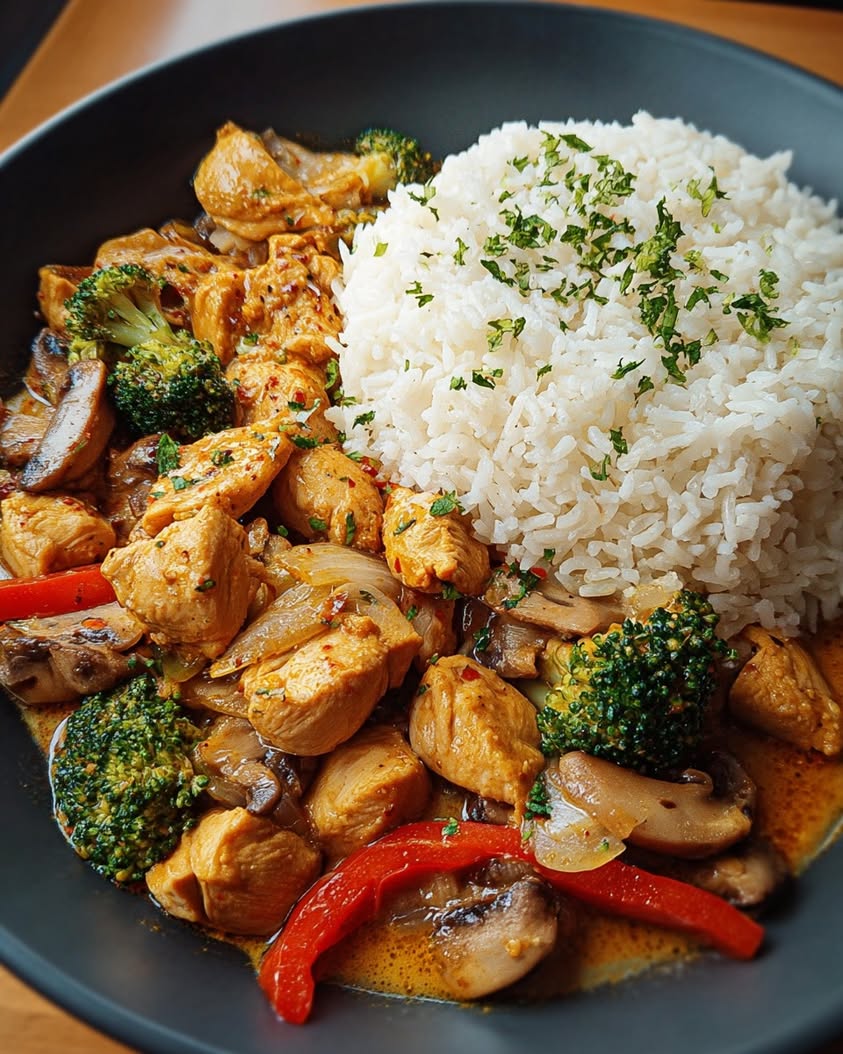
Chicken & Veggie Curry Bowl with Fragrant Rice: A Quick, Flavorful One-Bowl Meal
Imagine a steaming bowl filled with tender chicken and earthy mushrooms, all swimming in a luxuriously creamy coconut curry sauce. This delightful concoction is spooned over a bed of perfectly fragrant rice, creating a symphony of textures and aromas that will make your kitchen smell incredible. Ultimately, this chicken & veggie curry bowl is the ultimate comfort food with a healthy twist, offering a complete and satisfying meal in a single dish.
Furthermore, this recipe is designed for busy weeknights when you crave something deeply flavorful but don’t have hours to spend cooking. The process is straightforward, relying on building layers of flavor with aromatic ingredients like ginger, garlic, and curry powder. As a result, you get a restaurant-quality dinner that feels special, yet is incredibly achievable for home cooks of any skill level. This creamy coconut curry with chicken & mushrooms over fragrant rice is a guaranteed crowd-pleaser.
Additionally, the beauty of this chicken & veggie curry bowl lies in its versatility. You can easily adapt the vegetables based on what’s in season or hiding in your fridge. Similarly, the level of spice is completely customizable to suit your palate. Consequently, this recipe becomes a reliable template for endless delicious variations, ensuring it earns a permanent spot in your weekly meal rotation. It’s a quick, flavorful one-bowl meal that truly delivers on both comfort and nutrition.
Quick Recipe Highlights
- Flavor Profile: This dish boasts a complex and warming flavor profile. The creamy coconut milk base is rich and slightly sweet, perfectly balancing the earthy depth of mushrooms and the warm, aromatic spices of the curry blend. A hint of acidity from the tomatoes or a squeeze of lime at the end brightens the entire dish.
- Texture: You will enjoy a wonderful contrast of textures in every bite. The chicken is succulent and tender, while the mushrooms offer a satisfying, meaty chew. The creamy curry sauce clings to each component, and the fluffy, separate grains of fragrant rice provide the perfect base to soak it all up.
- Aroma: The cooking process fills your kitchen with an irresistible fragrance. Toasting the curry powder unlocks its essential oils, releasing warm, spicy notes. Then, the scent of sautéing garlic and ginger blends with the creamy, tropical aroma of coconut milk, creating an olfactory promise of the delicious meal to come.
- Visual Appeal: This curry bowl is a feast for the eyes with its vibrant colors. The golden-yellow curry sauce is studded with chunks of white chicken, brown mushrooms, and green herbs. Served over white rice and garnished with fresh cilantro or green onions, it presents a beautiful and appetizing plate.
- Skill Level Needed: This is a fantastic recipe for beginners and seasoned cooks alike. The techniques involved—sautéing, simmering, and cooking rice—are fundamental. Therefore, with clear instructions and a bit of attention to timing, anyone can achieve excellent results with this easy dinner.
- Special Equipment: No special equipment is required. You will need a large skillet or Dutch oven with a lid for the curry and a medium saucepan with a lid for the fragrant rice. A good chef’s knife and cutting board for prep are the only other essentials.
Recipe Overview
- Difficulty Level: We classify this chicken & veggie curry bowl as an easy recipe. The steps are sequential and logical, primarily involving chopping, sautéing, and simmering. There are no advanced techniques like braising or requiring precise temperatures. However, managing two pots simultaneously for the curry and rice requires basic multitasking, which is why it’s perfect for building confidence in the kitchen.
- Category: This dish firmly sits in the main course category, providing a complete protein, vegetable, and starch all in one. It’s substantial enough for dinner but also makes excellent leftovers for lunch. Additionally, it can be considered a great meal prep option, as the flavors often improve after a day in the refrigerator.
- Cuisine: This recipe is inspired by the broad and diverse traditions of South Asian and Southeast Asian cuisines, where coconut-based curries are a staple. It uses a Western-friendly curry powder blend for accessibility, making it a fusion dish that introduces global flavors in a very approachable way for a quick, flavorful one-bowl meal.
- Cost: This is a very cost-effective meal. Chicken thighs are typically an affordable cut, and mushrooms and onions are inexpensive vegetables. Coconut milk and curry powder are pantry investments that last for multiple recipes. Overall, you can feed a family of four a restaurant-quality meal for a fraction of the cost of dining out.
- Season: This creamy coconut curry is truly a dish for all seasons. It provides warmth and comfort during chilly fall and winter months. Conversely, the bright, aromatic qualities are also delightful in spring and summer, especially when served with a crisp, cool side salad. It’s a year-round winner.
- Occasion: Perfect for casual weeknight family dinners, this recipe is also impressive enough for hosting friends. It’s easy to scale up for a crowd and can be mostly prepared ahead of time. Simply put, it’s suitable for any occasion where you want to serve a delicious, hearty, and visually appealing meal.
Why You’ll Love This Recipe
First and foremost, the taste and texture of this chicken & veggie curry bowl are utterly irresistible. The combination of creamy, spicy, savory, and slightly sweet flavors is deeply satisfying. Each component plays a role: the tender chicken, the umami-rich mushrooms, the fragrant rice, and the luxurious sauce create a harmonious bite. Ultimately, it’s the kind of meal that makes you look forward to dinner all afternoon, knowing a bowl of comforting deliciousness awaits.
From a convenience standpoint, this recipe is a lifesaver on busy evenings. The prep work is minimal, and the active cooking time is manageable. Moreover, you can cook the rice and curry concurrently, getting dinner on the table in under 45 minutes. This efficiency makes it an ideal easy dinner solution. Consequently, you can enjoy a homemade, healthy meal without the stress of complicated techniques or a mountain of dishes to wash afterward.
Nutritionally, this creamy coconut curry with chicken & mushrooms is a well-balanced choice. Chicken provides lean protein, while mushrooms offer fiber, B vitamins, and antioxidants. Coconut milk contains healthy fats, and using light coconut milk is a simple swap to reduce calories if desired. Served with rice, it provides sustained energy. Therefore, this dish proves that healthy eats can also be incredibly flavorful and indulgent-tasting.
For social and entertaining value, this curry bowl is a fantastic option. It’s naturally a communal, shareable dish. You can set up a “bowl bar” with the curry, rice, and various toppings like chopped nuts, extra herbs, lime wedges, and chili flakes, allowing guests to customize their own. This interactive element makes dinner fun and engaging. As a result, it takes the pressure off the host and ensures everyone gets exactly what they love.
Finally, the cost-effectiveness and accessibility of this recipe cannot be overstated. The ingredients are common and affordable, available at most standard grocery stores. You likely have many of the spices and aromatics already in your pantry. By cooking this at home, you save significant money compared to ordering takeout curry. In essence, this chicken & veggie curry bowl delivers maximum flavor and satisfaction for a minimal investment, making it a smart choice for any household budget.
Historical Background and Cultural Significance
The concept of a curry is ancient and complex, with roots stretching across the Indian subcontinent and Southeast Asia. Historically, the word “curry” is believed to be an anglicization of the Tamil word “kari,” meaning sauce or relish. These dishes were built on a foundation of locally available spices, chilies, and cooking mediums like coconut milk or yogurt. The practice of combining meat or vegetables with a spiced sauce served over a grain like rice is a culinary tradition thousands of years old, designed to create nourishing, flavorful, and efficient meals.
Culturally, curry dishes hold immense significance. They are often central to family gatherings, festivals, and daily nourishment. The specific blend of spices can denote a family’s heritage, a particular region, or even a special occasion. In many cultures, the knowledge of making a perfect curry is passed down through generations. Thus, while this particular chicken & veggie curry bowl is a modern, accessible interpretation, it connects to a rich global tapestry of food tradition centered around spiced, saucy dishes served with rice.
The evolution of the recipe, particularly the use of “curry powder,” is an interesting story of cultural exchange. Traditional Indian cooking typically uses whole or freshly ground spices blended for each dish. The pre-mixed curry powder was largely created by British colonial traders who sought to replicate the flavors of Indian cuisine back home. This powder simplified the process for Western kitchens. Consequently, dishes like this one, using curry powder, represent a fusion that has become beloved in its own right, offering a gateway to global flavors.
Regional variations of coconut-based curries are vast. In Thailand, a similar dish might use a paste of fresh lemongrass, galangal, and kaffir lime leaves. In South India, a coconut curry might feature mustard seeds, curry leaves, and a different spice profile. The Japanese have their own mild curry roux. This recipe, with its curry powder and creamy coconut milk, is a versatile and approachable version that invites experimentation. You can easily tweak the spices or add different vegetables to make it your own, continuing the timeless evolution of the curry bowl.
Ingredient Deep Dive
Chicken thighs are the ideal protein for this creamy coconut curry. Compared to chicken breasts, thighs have more fat, which translates to juicier, more flavorful meat that stays tender during simmering. Culturally, using the whole animal and valuing richer cuts like thighs is a practice in many traditional cuisines. Nutritionally, they provide high-quality protein, iron, and zinc. For selection, choose boneless, skinless thighs for ease. Store them in the coldest part of your refrigerator and use within 1-2 days, or freeze for longer storage. For a substitution, chicken breasts can be used but require careful timing to avoid dryness, or you can use firm tofu or chickpeas for a vegetarian version.
Mushrooms bring a deep, savory umami flavor to this chicken & veggie curry bowl. Historically, mushrooms have been foraged and valued across cultures for their unique taste and purported health benefits. They act as a flavor amplifier, making the entire dish taste richer and more complex. Nutritionally, they are low in calories, provide B vitamins, selenium, and are a source of fiber. When selecting, look for mushrooms that are firm, dry, and without slimy spots. Store them in a paper bag in the refrigerator. Avoid washing until ready to use. If cremini mushrooms aren’t available, white button mushrooms work fine, or for a more intense flavor, try shiitake mushrooms.
Coconut milk is the heart of the sauce, creating the luxurious, creamy base. Derived from the flesh of mature coconuts, it’s a staple in tropical cuisines worldwide. It provides richness without dairy, making the curry naturally lactose-free. The fat in coconut milk helps carry the fat-soluble flavors of the spices throughout the dish. For selection, use canned, unsweetened coconut milk for cooking. Shake the can well before opening. Light coconut milk can be substituted to reduce calories and fat, though the sauce will be less rich. Store any leftover canned milk in an airtight container in the fridge for a few days.
Curry powder is the essential spice blend that defines the flavor profile. As mentioned, it’s a Western adaptation of complex Indian spice mixtures (masalas). A typical blend includes turmeric, coriander, cumin, fenugreek, and chili powder. Turmeric gives the curry its iconic golden color. To maximize flavor, toast the curry powder briefly in the pan with the onions. This simple step awakens the essential oils in the spices. Store curry powder in a cool, dark place to maintain potency. For a substitution, you can use a specific garam masala or make your own blend, but standard curry powder is perfectly designed for this accessible, easy dinner recipe.
Fragrant rice, such as jasmine or basmati, is the perfect companion. These long-grain rices are prized for their aromatic quality, which comes from a natural compound called 2-acetyl-1-pyrroline. The scent is floral and nutty, complementing the spices in the curry beautifully. Culturally, these rices are central to meals across South and Southeast Asia. The key to perfect rice is rinsing it until the water runs clear to remove excess starch, then using the absorption method with a tight-fitting lid. For a substitution, brown jasmine rice adds more fiber but requires a longer cook time and more water. You can also use cauliflower rice for a low-carb option.
Common Mistakes to Avoid
- Not Toasting the Spices: Adding curry powder directly to the liquid is a missed opportunity. Briefly toasting it in the oil with the aromatics (like onions) unlocks volatile oils and deepens the flavor dramatically, taking your curry from flat to fantastic.
- Overcrowding the Pan When Browning Chicken: If you add all the chicken at once, the pan temperature drops, and the meat steams instead of sears. Cook in batches to ensure each piece gets proper color, which builds a fond (browned bits) on the pan for more flavor.
- Using Sweetened Coconut Milk: Always check the label for “unsweetened.” Sweetened coconut milk is for desserts and will make your savory curry taste unpleasantly sweet and unbalanced. This is a critical distinction for achieving the right flavor profile.
- Neglecting to Rinse the Rice: Skipping the rinse leaves excess surface starch on the grains. Consequently, the cooked rice can be gummy and clumpy instead of light, separate, and fragrant. Rinsing is a simple step with a big impact on texture.
- Boiling the Curry After Adding Coconut Milk: A vigorous boil can cause the coconut milk to separate or “break,” making the sauce look oily and grainy. After adding it, reduce the heat to a gentle simmer to maintain its creamy, emulsified texture.
- Underseasoning: Curry powders vary in salt content. Always taste and adjust seasoning at the end with salt and perhaps a squeeze of lime juice or a pinch of sugar. Building layers of seasoning is key to a well-rounded dish.
- Using Old, Stale Spices: Spices lose potency over time. If your curry powder has been in the pantry for years, it will taste dusty and weak. For the best flavor in your quick, flavorful one-bowl meal, use fresh, high-quality spices.
- Cutting Vegetables and Protein Inconsistently: Chopping the chicken, mushrooms, and onions into uniform sizes ensures they cook evenly. You want everything to be done at the same time, without some pieces being overcooked while others are still raw.
- Forgetting to Let the Curry Rest: Like many stews, the flavors in this creamy coconut curry meld and improve if allowed to sit off the heat for 5-10 minutes before serving. This short rest allows the sauce to thicken slightly and the flavors to harmonize.
Essential Techniques
The Sauté and Bloom Technique is fundamental. You begin by sautéing onions until soft, then add the curry powder directly to the pan. This process, called “blooming,” toasts the spices in the fat. This step is crucial because heat activates the essential oils and compounds in the spices, releasing their full aromatic potential and flavor into the oil, which then carries it throughout the entire dish. The visual cue for success is when the spices become fragrant—you’ll smell a warm, toasty aroma—usually within 30-60 seconds. Be careful not to burn them, as this will make the spices bitter.
Mastering the Simmer is key for the perfect sauce texture. After adding the coconut milk and broth, you bring the mixture to a very gentle simmer, not a rolling boil. Simmering allows the flavors to meld together slowly and the sauce to reduce and thicken slightly. A vigorous boil can cause the coconut milk to separate, breaking the emulsion and resulting in a greasy, curdled-looking sauce. The visual cue is small, lazy bubbles breaking the surface occasionally. Maintaining this gentle heat ensures your creamy coconut curry with chicken & mushrooms stays luxuriously smooth and cohesive.
Cooking Perfect Fragrant Rice requires the absorption method. After rinsing the rice, you combine it with a precise amount of water or broth in a pot, bring it to a boil, then immediately reduce the heat to the lowest setting and cover it tightly. The rice then cooks by absorbing all the liquid. The critical technique here is to not peek! Lifting the lid releases steam and disrupts the cooking process. After the recommended time, remove it from heat and let it steam, covered, for 5-10 minutes. Finally, fluff with a fork for light, separate grains that are the ideal base for your curry bowl.
Pro Tips for Perfect Chicken & Veggie Curry Bowl
For deeper flavor, marinate the chicken thighs in a tablespoon of the curry powder with a little oil and salt for 30 minutes before cooking. This allows the spices to penetrate the meat.
Add a tablespoon of tomato paste when sautéing the onions. Cooking it for a minute caramelizes it slightly and adds a layer of sweet acidity that balances the coconut milk beautifully.
For a richer sauce, use full-fat coconut milk. The fat content carries flavor and creates a more luxurious mouthfeel compared to light versions.
Finish the curry with a splash of fresh lime juice or a bit of fish sauce just before serving. This brightens all the flavors and adds a necessary top note of acidity.
If your curry is too thin, create a quick slurry by mixing a teaspoon of cornstarch with a tablespoon of cold water. Stir this into the simmering curry and cook for a minute until thickened.
Toast whole spices like cumin seeds or mustard seeds in the oil before adding the onions for an extra layer of authentic, complex aroma in your easy dinner.
Garnish generously! Fresh cilantro, sliced green onions, a sprinkle of red pepper flakes, or chopped roasted peanuts add color, texture, and fresh flavor contrasts.
Let the cooked rice rest, covered and off the heat, for at least 5 minutes after cooking. Then, fluff it with a fork to separate the grains without making them mushy.
Variations and Adaptations
For regional variations, explore different curry pastes. Substitute the curry powder with 2-3 tablespoons of Thai red or green curry paste for a Southeast Asian twist, using fish sauce and lime juice for seasoning. For a Japanese-style curry, use a block of Japanese curry roux instead of powder, simmering until dissolved for a thicker, sweeter sauce.
Seasonal adaptations are simple. In summer, add quick-cooking vegetables like zucchini, bell peppers, or green beans at the end. In winter, incorporate heartier veggies like sweet potatoes, cauliflower, or carrots, adding them earlier to ensure they become tender. This flexibility makes the chicken & veggie curry bowl a year-round staple.
Dietary modifications are straightforward. For a gluten-free version, ensure your curry powder and broth are certified gluten-free. For a dairy-free meal, it’s naturally so thanks to coconut milk. For a vegan curry bowl, replace the chicken with chickpeas, lentils, or extra-firm tofu, and use vegetable broth. The creamy coconut curry base is incredibly versatile.
Experiment with flavor variations by adding a spoonful of peanut butter for a satay-style sauce, or a dash of cinnamon or star anise for warmth. For a creamier texture, stir in a spoonful of Greek yogurt or coconut cream at the very end, off the heat. These small tweaks can create a completely new dish from the same basic template.
Serving and Presentation Guide
Plating is key for visual appeal. For a restaurant-style presentation, use a shallow bowl. Place a mound of fragrant rice slightly off-center. Ladle the creamy coconut curry with chicken & mushrooms next to the rice, allowing some sauce to pool around it. This method keeps the rice from getting soggy too quickly and creates a beautiful two-toned plate.
Garnishing adds the final touch. A generous sprinkle of fresh chopped cilantro or Thai basil provides color and a fresh aroma. Thinly sliced red chili or a sprinkle of red pepper flakes add a pop of color and heat. A wedge of lime on the side allows guests to add brightness to their taste. For crunch, top with roasted peanuts or cashews.
Traditional accompaniments might include a simple cucumber salad with rice vinegar, a tangy mango chutney, or plain yogurt (raita) to cool the palate. For a modern, complete meal, serve with a side of steamed greens like spinach or bok choy. These sides complement the rich curry and add nutritional balance to your healthy eats.
Wine and Beverage Pairing
For wine pairings, opt for whites with a touch of sweetness or aromatic intensity to stand up to the spices. An off-dry Riesling or Gewürztraminer is classic, as their slight sweetness cools the heat and complements the coconut. A rich, oaky Chardonnay can also pair well with the creamy texture. If you prefer red, choose a light, low-tannin option like a Beaujolais or Pinot Noir served slightly chilled.
Non-alcoholic alternatives are fantastic with curry. A slightly sweet and creamy lassi (a yogurt-based drink) is traditional and soothing. Sparkling water with a squeeze of lime cleanses the palate. Iced herbal teas, like lemongrass or mint, are also refreshing choices that won’t compete with the complex flavors of your chicken & veggie curry bowl.
Storage and Shelf Life
Store leftover curry and rice separately in airtight containers in the refrigerator. The curry will keep for 3-4 days, and the rice for 2-3 days. The flavors often improve on the second day. For freezing, the curry (without potatoes if used) freezes well for up to 3 months. Thaw overnight in the refrigerator. Rice does not freeze well as it becomes grainy; it’s best made fresh or stored in the fridge for short periods.
Reheat the curry gently in a saucepan over medium-low heat, stirring occasionally. If it has thickened too much, add a splash of water or broth. Reheat rice by sprinkling it with a few drops of water and microwaving it covered, or steaming it in a colander over simmering water. Always ensure leftovers are piping hot throughout before serving.
Make Ahead Strategies
You can significantly speed up dinner by prepping components ahead. Chop the chicken, onions, and mushrooms, storing them separately in containers in the fridge for up to 24 hours. Measure out your spices and have the coconut milk and broth ready. The curry itself can be fully cooked 1-2 days in advance; in fact, the flavors deepen. Simply reheat gently before serving. Cook the rice fresh for the best texture, as it doesn’t hold up as well overnight.
Scaling Instructions
This recipe scales beautifully. To double or triple it, use a larger pot or Dutch oven to accommodate the volume. The cooking times for the curry will remain similar, though it may take slightly longer to come to a simmer. Ensure you brown the chicken in batches even when scaling up to avoid steaming. For the rice, use a pot large enough so the rice is no more than 1.5 inches deep for even cooking. When halving the recipe, use a medium skillet and a small saucepan for the rice, and keep a close eye on cooking times as they may reduce slightly.
Nutritional Deep Dive
This chicken & veggie curry bowl provides a balanced mix of macronutrients. The chicken offers high-quality protein for muscle repair and satiety. Coconut milk contributes healthy fats, which aid in nutrient absorption and provide sustained energy. The rice and vegetables supply complex carbohydrates for fuel. Micronutrient-wise, you get iron and zinc from the chicken, B vitamins from mushrooms, and anti-inflammatory compounds from spices like turmeric. Using light coconut milk and increasing the vegetable-to-rice ratio are easy ways to adjust the calorie profile for weight management while still enjoying a flavorful, satisfying meal.
Dietary Adaptations
For a gluten-free version, confirm your curry powder and broth are certified gluten-free—many are naturally so, but always check labels. For Paleo or Whole30, use sweet potato “rice” or cauliflower rice instead of grains, and ensure your coconut milk and broth contain no additives or sugars. For a Keto adaptation, significantly reduce or omit the onion, use a higher ratio of meat and mushrooms, and serve over cauliflower rice. For a Low-FODMAP version, use only the green parts of green onions instead of regular onions, and ensure the curry powder doesn’t contain garlic powder (or use a garlic-infused oil).
Troubleshooting Guide
If your curry sauce is too thin, let it simmer uncovered for a few extra minutes to reduce and concentrate. Alternatively, create a cornstarch slurry (1 tsp cornstarch + 1 tbsp cold water) and stir it into the simmering sauce until thickened. If it’s too thick, simply stir in a little extra broth, water, or coconut milk until it reaches your desired consistency. The key is to adjust gradually.
If the curry tastes bland, you likely need more salt. Season in stages, tasting as you go. Also, a squeeze of fresh lime juice can brighten and elevate all the other flavors. If it lacks depth, a teaspoon of fish sauce or soy sauce can add savory umami. Remember, spices fade over time, so using fresh curry powder is essential for a vibrant, quick, flavorful one-bowl meal.
If your rice is gummy, you may have used too much water or not rinsed it sufficiently. Next time, rinse until the water runs clear and measure the water precisely. If it’s crunchy or undercooked, add a few tablespoons of hot water, cover, and continue cooking on very low heat for another 5-10 minutes. Letting it steam off the heat is also a critical step for perfect texture.
Recipe Success Stories
Readers love how adaptable this recipe is. One home cook reported substituting the chicken with chickpeas and adding spinach for a fantastic vegan dinner that her whole family enjoyed. Another found that doubling the recipe provided perfect meals for a week of stress-free lunches, noting the curry tasted even better on day three. Many appreciate that it’s a “one-pot wonder” (plus a pot for rice) that minimizes cleanup, making it a true winner for busy weeknights. The common thread in feedback is how the recipe delivers impressive, restaurant-style flavor with simple, accessible ingredients and clear instructions.
Frequently Asked Questions
Can I use chicken breasts instead of thighs? Yes, you can. However, chicken breasts are leaner and can dry out more easily. Cut them into bite-sized pieces and reduce the simmering time by a few minutes, just until cooked through, to keep them tender.
What can I use if I don’t have coconut milk? For a different but still creamy result, you can use heavy cream or half-and-half, though the flavor profile will change. For a dairy-free alternative, cashew cream (blended soaked cashews with water) works well.
How can I make this spicier? Add a diced fresh chili (like a serrano or Thai bird’s eye chili) when sautéing the onions, or increase the amount of curry powder if it’s a spicy blend. You can also stir in red pepper flakes or a dash of cayenne pepper.
Is this curry freezer-friendly? Absolutely. The curry (without rice) freezes very well for up to 3 months. Cool it completely, then store in a freezer-safe container. Thaw in the refrigerator overnight before reheating gently on the stovetop.
Can I make this in a slow cooker? Yes. Brown the chicken and sauté the onions/spices first for best flavor, then transfer everything except the coconut milk to the slow cooker. Cook on low for 6-7 hours or high for 3-4. Stir in the coconut milk in the last 30 minutes.
My sauce separated, what happened? This usually occurs if the curry boils vigorously after adding the coconut milk. Coconut milk can “break” under high heat. Always simmer gently after adding it. If it separates, you can try whisking vigorously or blending briefly with an immersion blender to re-emulsify.
What type of rice is best? Fragrant long-grain rices like Jasmine or Basmati are ideal. They cook up fluffy and separate, and their natural aroma complements the curry spices perfectly. Be sure to rinse them well before cooking.
Can I add other vegetables? Definitely. This is a great way to clean out the fridge. Bell peppers, spinach, peas, carrots, or green beans are all excellent additions. Add harder veggies earlier to soften, and delicate greens at the very end.
Additional Resources
If you loved this creamy coconut curry with chicken & mushrooms, explore other global bowl recipes on our site, like a Thai Basil Chicken Bowl or a Moroccan Chickpea Stew. For mastering foundational techniques, check out our guides on “How to Cook Perfect Rice Every Time” and “The Art of Building Flavor with Spices.” To dive deeper into ingredients, read our features on “The Health Benefits of Turmeric” and “A Guide to Different Mushroom Varieties.” For equipment, a heavy-bottomed Dutch oven is ideal for even heating and simmering curries. Finally, browse our seasonal collections for inspiration on adapting this versatile chicken & veggie curry bowl throughout the year.
PrintChicken & Veggie Curry Bowl with Fragrant Rice
Description
A flavorful and comforting bowl featuring tender chicken, sautéed vegetables, and a rich curry sauce served over fragrant jasmine rice.
Ingredients
For the Crust:
- 1 lb boneless, skinless chicken breasts, cubed
- 1 cup jasmine rice, uncooked
- 1 onion, diced
- 2 carrots, sliced
- 1 bell pepper, sliced
- 8 oz mushrooms, sliced
- 2 cloves garlic, minced
- 1 tbsp ginger, grated
- 2 tbsp curry powder
- 1 can (14 oz) coconut milk
- 1 cup chicken broth
- 2 tbsp vegetable oil
- Salt and pepper to taste
- Fresh cilantro for garnish
Instructions
1. Prepare the Crust:
- Cook the jasmine rice according to package instructions and set aside.
- Heat oil in a large skillet over medium heat. Add chicken, season with salt and pepper, and cook until browned, about 5-7 minutes. Remove and set aside.
- In the same skillet, add onion, carrots, bell pepper, and mushrooms. Sauté until softened, about 5 minutes. Stir in garlic and ginger and cook for 1 minute.
- Sprinkle curry powder over the vegetables and stir to coat. Pour in coconut milk and chicken broth, bring to a simmer.
- Return chicken to the skillet and simmer for 10-15 minutes until sauce thickens and chicken is cooked through.
- Serve the curry over the fragrant rice, garnished with fresh cilantro.
Notes
You can customize the seasonings to taste.

I’m Shaykee—born in Morocco, seasoned across continents. From airplane galleys to home kitchens, I share the flavors and stories that shaped my journey.