
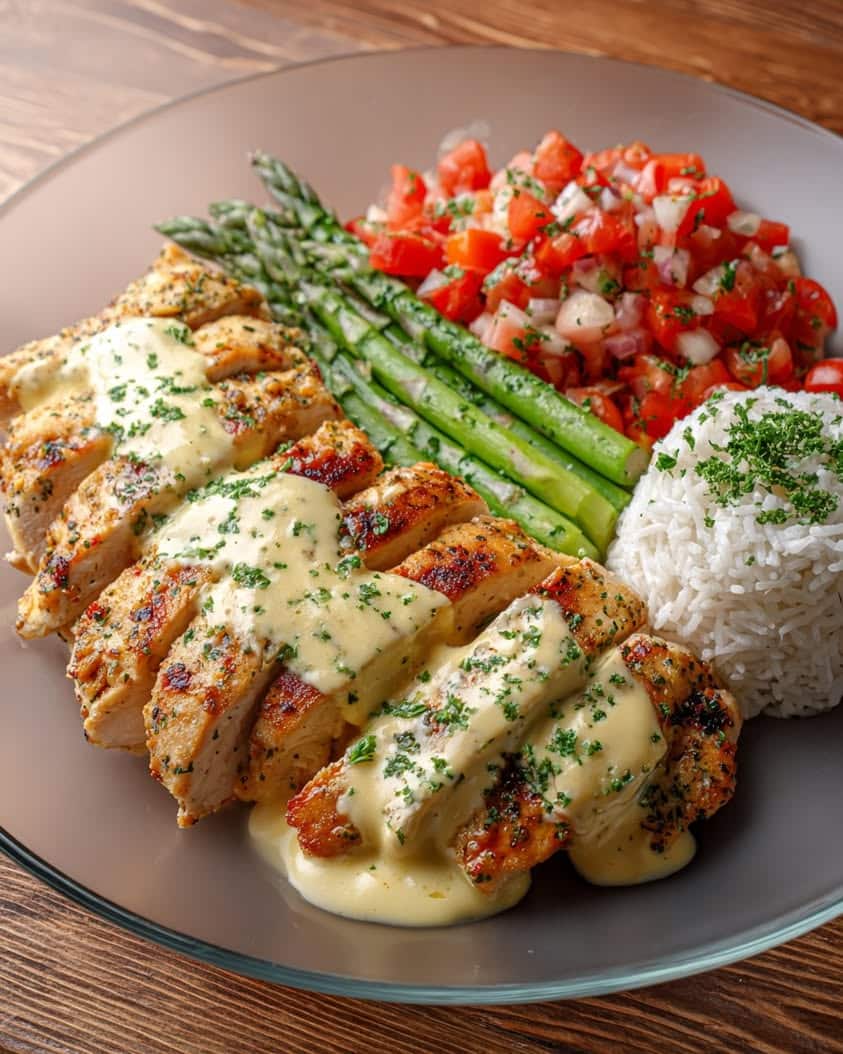
Lemon-Herb Chicken Plate with Garlic Cream Sauce, Rice, and Veggies: A Restaurant-Quality Dinner in 30 Minutes
Imagine a dinner plate that looks and tastes like it came from a high-end bistro, yet you can create it in your own kitchen with minimal fuss. This Lemon-Herb Chicken Plate with Garlic Cream Sauce, Rice, and Veggies is exactly that kind of magic. It transforms simple, wholesome ingredients into an elegant, complete meal that will impress your family and satisfy your craving for something truly special. Moreover, the process is straightforward, making it perfect for both busy weeknights and leisurely weekend dinners where you want to feel like a gourmet chef.
The star of this dish is undoubtedly the perfectly seared chicken, infused with the bright, sunny flavors of lemon and aromatic herbs. Each tender bite is then draped in a luxuriously creamy garlic sauce that is surprisingly light yet deeply flavorful. Served alongside fluffy rice and crisp-tender vegetables, every component on the plate works in harmony. Consequently, you get a beautiful balance of protein, starch, and greens in a single, stunning presentation. This recipe proves that you do not need complicated techniques or rare ingredients to achieve a dinner that feels like a celebration.
Ultimately, this Lemon-Herb Chicken Plate is more than just a meal; it is a experience. The aroma of garlic and herbs sautéing will fill your kitchen with an irresistible fragrance, promising a delicious reward. The visual appeal of the golden chicken, vibrant green veggies, and creamy white sauce is guaranteed to earn compliments. Best of all, the entire dish comes together in about 40 minutes, proving that impressive cooking does not require hours of labor. This recipe is your ticket to a reliable, show-stopping dinner that everyone will request again and again.
Quick Recipe Highlights
- Flavor Profile: This dish masterfully balances bright, zesty lemon and fresh herbs against a rich, savory garlic cream sauce. The result is a complex taste that is both refreshing and deeply satisfying, with no single flavor overpowering the others.
- Texture: You will enjoy a wonderful contrast of textures: juicy, seared chicken with a slight crust, creamy and velvety sauce, fluffy rice, and crisp-tender vegetables that provide a refreshing crunch in every forkful.
- Aroma: As it cooks, the kitchen fills with the mouthwatering scents of sautéing garlic, fragrant herbs like thyme and parsley, and the bright, citrusy notes of fresh lemon zest. This aromatic promise is a key part of the dining experience.
- Visual Appeal: The plate boasts a professional, colorful presentation with golden-brown chicken, a pale, creamy sauce, white rice, and vibrant green vegetables. It is a feast for the eyes before the first bite is even taken.
- Skill Level Needed: This is an accessible recipe for most home cooks. It requires basic skills like pan-searing, making a simple pan sauce, and multitasking to cook rice and veggies simultaneously. With clear instructions, even beginners can achieve great results.
- Special Equipment: You only need standard kitchen tools: a large skillet (preferably stainless steel or cast iron for a good sear), a saucepan for rice, a small pot for steaming veggies, and basic utensils like tongs, a whisk, and a zester.
Recipe Overview
- Difficulty Level: We rate this Lemon-Herb Chicken Plate as “Easy.” The steps are sequential and logical, involving fundamental techniques rather than advanced culinary skills. While there is some multitasking involved, the timeline is forgiving and each component is simple to prepare on its own. Success relies more on organization and timing than on complex knife work or precise temperatures.
- Category: This recipe falls squarely into the main course category, specifically as a hearty dinner entrée. It is a complete, balanced plate featuring a lean protein, a complex carbohydrate, and vegetables. Additionally, it can be considered a “one-pan meal” variation since the sauce is built in the same pan used to cook the chicken, maximizing flavor and minimizing cleanup.
- Cuisine: The dish draws inspiration from modern American bistro cuisine and French cooking techniques, particularly the method of creating a pan sauce (deglazing with broth and finishing with cream). The use of lemon and herbs is reminiscent of Mediterranean flavors, making it a versatile, fusion-style recipe that feels both familiar and elegantly foreign.
- Cost: This is a very cost-effective meal, especially when compared to dining out. Chicken breasts, rice, and frozen vegetables are budget-friendly staples. The fresh herbs, lemon, and cream are the only “splurge” items, but they are used efficiently to create maximum impact. Overall, you can expect to feed four people a restaurant-quality meal for a fraction of the price.
- Season: While delicious year-round, this Lemon-Herb Chicken Plate truly shines in the spring and summer. The bright, citrusy notes of lemon and the fresh herbs complement the season’s produce perfectly. Conversely, it also serves as a wonderful way to bring a burst of freshness to the darker, colder winter months, acting as a culinary reminder of warmer days.
- Occasion: This dish is incredibly versatile for different occasions. It is quick enough for a stress-free Tuesday family dinner, yet elegant enough for date night at home or when hosting casual friends. The beautiful plating makes it suitable for a dinner party, as it looks like you spent far more time and effort than you actually did.
Why You’ll Love This Recipe
First and foremost, the taste and texture of this Lemon-Herb Chicken Plate are simply outstanding. The chicken is succulent and infused with herbaceous flavor, while the garlic cream sauce is the stuff of dreams—rich without being heavy, and packed with savory depth. Each component complements the others, creating a symphony of flavors in your mouth. The contrast between the creamy sauce, fluffy rice, and crisp vegetables ensures that every bite is interesting and satisfying. Ultimately, this dish delivers a restaurant-quality experience that will make you feel proud of your cooking abilities.
From a convenience standpoint, this recipe is a weeknight hero. With a total time of around 40 minutes and most of the action happening in one main skillet, it streamlines the cooking process beautifully. The steps are clearly laid out and easy to follow, making the cooking flow smoothly. Furthermore, the ingredients are common and easy to find at any grocery store. You will not need to make a special trip for obscure items. This accessibility, combined with the relatively quick cook time, makes it a perfect solution for those evenings when you want a fantastic meal without the hassle.
Nutritionally, this plate offers a well-rounded balance. Chicken breast provides a excellent source of lean protein to keep you full and support muscle health. The rice serves as a comforting source of carbohydrates for energy, while the vegetables deliver essential vitamins, minerals, and fiber. By making the cream sauce yourself, you control the ingredients, avoiding the excessive sodium and preservatives often found in pre-made sauces. You can easily adjust the recipe to use low-sodium broth or a lighter cream alternative to fit your dietary goals without sacrificing the luxurious feel.
For entertaining, this Lemon-Herb Chicken Plate is an undeniable winner. It is impressive enough to serve to guests, making you look like a culinary star. The fact that much of the prep can be done ahead of time means you can spend more time with your company and less time stressed in the kitchen. Plating individual dishes creates a personalized, upscale dining experience. Your guests will be delighted by the beautiful presentation and complex flavors, likely asking you for the recipe before the night is over.
Finally, this recipe is incredibly cost-effective. As mentioned, the core ingredients are affordable staples. A single chicken breast, when sliced and served with the rice and veggies, comfortably feeds one person, making the protein stretch further. Compared to the cost of a similar meal at a casual dining restaurant, you save a significant amount of money. Investing in a few fresh herbs and a lemon elevates the entire dish economically. This recipe proves that eating well does not have to mean spending a lot, making it a valuable addition to your regular meal rotation.
Historical Background and Cultural Significance
The concept of pairing poultry with citrus and herbs has ancient roots, particularly around the Mediterranean basin. Historically, lemons were prized not only for their flavor but also for their preservative qualities. Cooks would use lemon juice and fragrant herbs to marinate and tenderize meats, especially chicken, before cooking over open flames. This practice was common in regions from Italy to Greece and into the Middle East. The combination was a practical way to add brightness and combat the richness of the meat, creating a balanced flavor profile that has stood the test of centuries.
Culturally, a dish centered around a pan-seared protein with a sauce built from the fond (the browned bits left in the pan) is a cornerstone of French cuisine. This technique, known as “deglazing,” forms the foundation for countless classic sauces. The American adaptation, often seen in “chicken in cream sauce” recipes, simplifies these French principles for the home cook. Our Lemon-Herb Chicken Plate with Garlic Cream Sauce sits at this delicious intersection. It borrows the sophisticated technique of pan sauce creation while incorporating the bright, accessible flavors of lemon and garden herbs that appeal to a wide audience.
The evolution of this specific recipe mirrors the trend in modern home cooking towards “complete plate” meals. Instead of serving separate, complicated side dishes, contemporary recipes often integrate starch and vegetable components directly into the narrative of the main protein. This approach saves time, reduces dishwashing, and ensures cohesive flavors. The addition of rice and steamed veggies directly on the plate with the sauced chicken is a reflection of this practical, health-conscious, and aesthetically driven evolution in how we conceptualize a balanced dinner at home.
Regional variations of this concept are endless. In the American South, you might find a similar dish using buttermilk and pan gravy. In Italy, “Pollo al Limone” focuses on a lighter sauce of lemon juice, white wine, and butter. A Greek version might include oregano and olives. Our recipe acts as a versatile template. By understanding the core techniques—searing, deglazing, reducing, and finishing with cream—you can adapt the flavors to match any regional cuisine you desire. This adaptability is a key part of its enduring popularity and significance in home kitchens worldwide.
Ingredient Deep Dive
Chicken Breasts: The chicken breast is a lean, versatile canvas that has become a staple of healthy eating in many cultures. Nutritionally, it is an excellent source of high-quality protein and essential B vitamins, particularly niacin and B6, which are crucial for energy metabolism. When selecting chicken breasts, look for plump, pinkish flesh with no gray spots or strong odors. For the most tender result, choose breasts of similar size and thickness to ensure even cooking. You can also lightly pound the thicker ends to create a uniform thickness. Store raw chicken in the coldest part of your refrigerator and use within 1-2 days, or freeze for longer storage. For a substitution, boneless, skinless chicken thighs offer more fat and a richer, more forgiving flavor.
Fresh Lemon: The lemon is a culinary treasure with a history spanning from ancient Asia to the Mediterranean. Its juice and zest provide the critical acidic component that brightens the entire dish, cutting through the richness of the cream sauce. Lemons are packed with vitamin C and antioxidants. When choosing a lemon, pick one that feels heavy for its size with a bright, glossy yellow skin; this indicates juiciness. Avoid any with soft spots or dull, wrinkled skin. To maximize juice yield, roll the lemon firmly on the counter before cutting and juicing. The zest, containing potent aromatic oils, should be grated only the yellow outer layer, avoiding the bitter white pith. In a pinch, bottled lemon juice can work for the liquid, but fresh zest is irreplaceable for aroma.
Heavy Cream: Heavy cream, or heavy whipping cream, is the dairy product that gives the sauce its luxurious, velvety body and rich mouthfeel. It contains a high butterfat content (usually 36% or more), which allows it to be heated and reduced without curdling easily, unlike milk or half-and-half. From a culinary perspective, it adds a decadent richness that balances the sharpness of the garlic and lemon. For the best results, use fresh, cold heavy cream. If you need a substitute, full-fat coconut cream can provide a similar richness for a dairy-free version, though it will impart a coconut flavor. For a lighter sauce, half-and-half can be used, but you must be very careful not to overheat it, as it can separate more easily.
Fresh Herbs (Thyme & Parsley): Fresh thyme and parsley are not mere garnishes; they are fundamental flavor agents. Thyme, with its earthy, slightly minty and lemony notes, is a classic pairing with chicken and cream sauces. Parsley, particularly flat-leaf (Italian) parsley, adds a fresh, clean, slightly peppery finish. Historically, herbs were used for both flavor and medicinal purposes. Nutritionally, they are powerhouses of vitamins K, C, and A, and various antioxidants. Always choose herbs that look vibrant and perky, not wilted or slimy. To store, wrap them in a slightly damp paper towel and place in a resealable bag in the refrigerator. If you must substitute dried herbs, use about one-third the amount, but be aware that the flavor will be more muted and less bright.
Garlic: Garlic is arguably the soul of this sauce, providing a pungent, savory depth that forms the flavor foundation. Cultivated for thousands of years, it has been valued across cultures for both its culinary and purported health properties. It contains allicin, a compound with antioxidant and anti-inflammatory effects. For the best flavor, use fresh garlic cloves. Look for firm, plump heads with tight, papery skin. Avoid any with green sprouts or soft spots. To prepare, crush the clove with the flat side of a knife to easily remove the peel, then mince finely for even distribution. Do not substitute garlic powder in the sauce; it will not provide the same aromatic complexity or texture. The key is to sauté it just until fragrant to unlock its sweetness without letting it burn and turn bitter.
Common Mistakes to Avoid
- Overcrowding the Pan: Adding all the chicken breasts to the skillet at once is a critical error. Consequently, the chicken will steam instead of sear, resulting in pale, rubbery meat without the flavorful golden-brown crust. Always cook in batches if your pan is not large enough to give each piece ample space.
- Moving the Chicken Too Soon: As soon as the chicken hits the hot pan, resist the urge to poke or move it. Let it sear undisturbed for the recommended time to allow a proper crust to form. If you try to lift it and it sticks, it is not ready; the crust will release naturally when it is properly seared.
- Burning the Garlic: Adding minced garlic to extremely hot oil will cause it to burn in seconds, creating a bitter flavor that will ruin your entire sauce. Always reduce the heat to medium before adding the garlic, and stir constantly just until it becomes fragrant, which usually takes only about 30 seconds.
- Adding Cold Cream to a Scorching Pan: Pouring cold heavy cream directly into a very hot pan can sometimes cause it to separate or curdle. To prevent this, ensure you have reduced the heat to low or medium-low after deglazing with broth before slowly whisking in the cream.
- Overcooking the Chicken: Chicken breasts cook quickly and continue to carryover cook after being removed from the pan. Using a meat thermometer is the best way to avoid dry, tough chicken. Remove the breasts from the pan when they reach 160-165°F internally; they will rise to a safe 165°F while resting.
- Neglecting to Season in Layers: Seasoning only at the end results in a bland dish. Remember to season the chicken generously with salt and pepper before searing, and then taste and adjust the seasoning of the sauce again after it has reduced and thickened.
- Skipping the Deglazing Step: After removing the chicken, those browned bits (fond) stuck to the pan are pure flavor gold. Do not skip adding the chicken broth and vigorously scraping the pan to dissolve them. This step is what builds the deep, savory base for your cream sauce.
- Over-thickening the Sauce: The sauce will continue to thicken slightly as it cools on the plate. If you reduce it too much in the pan, it may become pasty or too thick to coat the chicken nicely. Aim for a consistency that lightly coats the back of a spoon.
- Using Pre-Minced Garlic in a Jar: While convenient, jarred pre-minced garlic often has a harsh, acidic flavor and lacks the aromatic punch of fresh garlic. For a sauce where garlic is a star, taking the minute to mince fresh cloves makes a monumental difference in flavor.
- Not Letting the Chicken Rest: Slicing into the chicken immediately after cooking causes all the precious juices to run out onto the cutting board, leaving the meat dry. Always let the chicken rest for at least 5-10 minutes before slicing to allow the juices to redistribute throughout the meat.
Essential Techniques
Pan Searing: Pan searing is the technique of cooking protein over high heat to create a flavorful, caramelized crust. This process, known as the Maillard reaction, develops complex savory flavors and an appealing color that you cannot achieve through boiling or steaming. To master it, ensure your pan is properly preheated before adding oil, and then add your seasoned, dry chicken. Do not move the chicken until it naturally releases from the pan. A common pitfall is a pan that is not hot enough, leading to steaming. Visual cues for success include a uniform, golden-brown crust and the chicken releasing easily when you try to lift it with tongs.
Deglazing: Deglazing is the act of adding a liquid (like broth or wine) to a hot pan to dissolve the flavorful browned bits left after searing. This technique is crucial for building a sauce with deep, layered flavor. After removing the chicken, reduce the heat to medium, add your liquid, and use a wooden spoon or whisk to vigorously scrape the bottom of the pan. The key is to work quickly while the pan is still hot to loosen all the fond. A common mistake is using too little liquid or not scraping thoroughly, leaving flavor behind. Success is visible when the liquid becomes a darker color and all the browned bits are incorporated.
Reducing a Sauce: Reduction is the process of simmering a sauce to evaporate water, thereby concentrating its flavors and thickening its consistency. After adding the cream to your deglazed pan, you will simmer the sauce gently. This step allows the flavors of garlic, herbs, and lemon to meld while the sauce thickens to a coatable consistency. The pitfall here is boiling too vigorously, which can cause the cream to separate or scorch. Instead, maintain a gentle simmer. You will know the sauce is properly reduced when it thickens enough to coat the back of a spoon and leaves a clear trail when you run your finger through it.
Zesting Citrus: Zesting is the act of removing the colorful outer skin of a citrus fruit, avoiding the bitter white pith beneath. The zest contains aromatic oils that carry the true essence of the fruit’s flavor. Use a fine grater (microplane) and gently scrape just the surface of the lemon. Apply light pressure and rotate the fruit. A common mistake is grating too deeply into the white pith, which adds bitterness. For this recipe, zest the lemon before you juice it, as it is much easier to handle a whole fruit. The visual cue is a pile of fine, fragrant, yellow zest with no white specks.
Pro Tips for Perfect Lemon-Herb Chicken Plate
- Bring your chicken breasts to room temperature for about 15 minutes before cooking. This simple step helps them cook more evenly, preventing a scenario where the outside is overcooked while the inside is still raw.
- Pat the chicken breasts completely dry with paper towels before seasoning. Any surface moisture will create steam in the pan, which is the enemy of achieving a perfect, crispy sear.
- Use a mix of olive oil and butter for searing. The oil has a higher smoke point to prevent burning, while the butter adds incredible flavor and aids in browning. Clarified butter (ghee) is also an excellent high-heat option.
- Invest in an instant-read meat thermometer. It is the only foolproof way to know when your chicken is perfectly cooked. Remove it from the pan at 160-165°F, and let carryover cooking do the rest.
- If your sauce seems too thin after adding the cream, let it simmer a bit longer to reduce. If it becomes too thick, simply whisk in a small splash of additional chicken broth to reach your desired consistency.
- For the most vibrant green vegetables, use the “shock” method. After steaming or boiling, immediately plunge them into a bowl of ice water to stop the cooking process, then drain and reheat briefly before serving.
- To infuse even more lemon flavor, add a few strips of lemon zest (peeled with a vegetable peeler) to the sauce while it simmers, then remove them before serving. This provides a subtle, aromatic background note.
- Finish the plated dish with a final sprinkle of fresh chopped parsley and a light drizzle of extra virgin olive oil. This adds a professional touch, a burst of fresh color, and a layer of flavor that makes the dish pop.
Variations and Adaptations
Regional Variations: You can easily transport this dish around the globe with a few ingredient swaps. For a French Provençal twist, use Herbes de Provence and finish the sauce with a touch of Dijon mustard. For an Italian version, use dry white wine instead of broth, add a pinch of red pepper flakes, and finish with fresh basil. A Greek adaptation would include oregano and a handful of chopped Kalamata olives stirred into the sauce at the end.
Seasonal Adaptations: Adapt the vegetable component to what is fresh and in season. In spring, use asparagus spears or fresh peas. Summer calls for zucchini ribbons or cherry tomatoes. For fall, roasted Brussels sprouts or cubed butternut squash are wonderful. In winter, hearty greens like kale or broccolini work perfectly. This keeps the meal feeling fresh and connected to the time of year.
Dietary Modifications: This recipe is highly adaptable for various diets. For a gluten-free version, ensure your chicken broth is certified gluten-free. For dairy-free, use full-fat coconut cream in place of heavy cream and a dairy-free butter alternative. To make it low-carb or keto, serve the chicken and sauce over cauliflower rice and increase the portion of low-carb vegetables like broccoli or green beans.
Flavor Variations: Experiment with different acid sources instead of lemon. Try white wine or a splash of dry vermouth for deglazing. Incorporate other herbs like tarragon (classic with cream sauces), dill, or chives. For a deeper flavor, use a combination of chicken broth and a splash of dry white wine for deglazing. Add a tablespoon of capers at the end for a briny, pop of flavor.
Texture Modifications: If you prefer a smoother sauce, you can blend it briefly with an immersion blender after adding the cream. For a chunkier, more rustic texture, add sautéed mushrooms or sun-dried tomatoes to the sauce. Instead of steamed veggies, try roasting the vegetables to bring out their natural sweetness and add a different textural element of caramelized edges.
Presentation Alternatives: Instead of plating individually, serve the sliced chicken and sauce family-style on a large platter over a bed of rice, surrounded by the vegetables. For a deconstructed look, serve the components in separate sections on a rectangular plate. You can also slice the chicken and fan it out over the rice before draping it with sauce for a more elegant restaurant presentation.
Serving and Presentation Guide
Plating Techniques: Start with a warm, clean dinner plate. Place a neat mound of fluffy white rice slightly off-center. Arrange a portion of the vibrant green vegetables next to the rice. Slice the rested chicken breast on a bias (at an angle) into even, attractive slices and fan them out over the rice and veggies, slightly overlapping. Finally, spoon the warm garlic cream sauce generously over the chicken, allowing some to pool around the base. This method creates height, visual interest, and ensures each component is visible and sauced appropriately.
Garnishing Ideas: Garnishes are the final touch that elevates the dish from homemade to professional. A final sprinkle of freshly chopped flat-leaf parsley adds color and freshness. A few delicate thyme leaves scattered over the top highlight the herbal notes. A very light grating of lemon zest right over the plated dish adds a burst of aroma. A tiny drizzle of high-quality extra virgin olive oil around the rim of the plate adds sheen and flavor. A single, thin lemon wheel placed on the side of the plate is a classic, simple garnish.
Traditional Accompaniments: While this is a complete plate, a simple side salad is a perfect traditional accompaniment. A light mix of greens with a simple vinaigrette provides a crisp, acidic counterpoint to the rich, creamy sauce. A crusty baguette or warm dinner rolls are also excellent for sopping up any extra sauce left on the plate. For a more substantial meal, a starter like a simple soup or a charcuterie board can precede the main course.
Modern Serving Suggestions: For a modern, family-style approach, serve the sliced chicken and sauce in a shallow bowl or on a platter and let everyone build their own plate. This is great for casual gatherings. You could also serve the components in separate, attractive serving bowls for a buffet-style meal. For a dinner party, consider a pre-plated first course so that the main dish is the undeniable star when it arrives at the table.
Temperature Considerations: Temperature is critical for enjoyment. The chicken, sauce, rice, and vegetables should all be served hot. Warm your plates before plating to keep the food at an ideal temperature longer. If you are preparing components in stages, keep the cooked chicken tented with foil in a warm oven (around 200°F) while you make the sauce and finish the sides. Never pour a hot sauce over cold chicken, as it will cool the sauce too quickly.
Portion Control Tips: This recipe is designed to serve four with good portion sizes. A typical chicken breast half (about 6 oz raw) per person is standard. For larger appetites, you can serve a whole breast. To lighten the meal, you can serve a smaller portion of rice and increase the vegetable ratio. The sauce is rich, so a moderate amount is sufficient to coat everything without drowning the plate. Listening to your guests’ hunger cues can help you adjust portions if serving family-style.
Wine and Beverage Pairing
Wine Pairings: The bright acidity of the lemon and the richness of the cream sauce call for a white wine with good acidity and body to complement both. An unoaked Chardonnay is a classic choice; its crisp apple and citrus notes mirror the lemon, while its body stands up to the cream. A Sauvignon Blanc, particularly from New Zealand, offers vibrant grapefruit and herbaceous flavors that will highlight the dish’s herbal elements. For a more adventurous pairing, a dry Riesling (Kabinett style) provides stunning acidity and stone fruit notes that cut through the richness beautifully. If you prefer red wine, opt for a light-bodied, low-tannin red like Pinot Noir served slightly chilled.
Non-Alcoholic Alternatives: For a sophisticated non-alcoholic pairing, consider a sparkling water infused with cucumber and mint or a few drops of lemon bitters. A high-quality lemonade or limeade (not overly sweet) can be refreshing. Iced herbal teas are also excellent; a lemongrass or mint tea would complement the flavors wonderfully. For a creamier option, a non-alcoholic sparkling cider provides sweetness and effervescence that cleanses the palate between bites of the rich sauce.
Coffee/Tea Pairings: While not a traditional pairing for the meal itself, a post-dinner coffee or tea can be lovely. A light roast coffee with citrusy notes would be a harmonious follow-up. For tea, consider an Earl Grey, whose bergamot oil shares citrus characteristics with the lemon in the dish, creating a thematic connection. A soothing chamomile or peppermint tea would also be a gentle, digestif-style finish to the meal.
Temperature Considerations: White wines should be served well-chilled, between 45-50°F. This cool temperature enhances their acidity and refreshment factor, which is crucial for balancing the creamy sauce. Non-alcoholic sparkling drinks should also be served cold. If serving a lightly chilled red wine like Pinot Noir, aim for a cellar temperature of around 55°F. Always ensure your beverages are at their ideal serving temperature before the meal begins to maximize the pairing experience.
Serving Suggestions: Pour wine into appropriate glassware to allow the aromas to develop. For water or non-alcoholic options, use attractive glasses with ice and garnishes like citrus wheels or herb sprigs to make them feel special. Consider offering both still and sparkling water options. When hosting, it is thoughtful to have both alcoholic and non-alcoholic pairings available so all guests can enjoy a complementary beverage with their Lemon-Herb Chicken Plate.
Storage and Shelf Life
Storage Methods: Store all components separately for best results. Place sliced or whole chicken in an airtight container. Store the garlic cream sauce in its own container. Keep cooked rice and vegetables in separate containers as well. This prevents the rice from becoming soggy and the vegetables from losing their texture. Allow all components to cool to room temperature before sealing and refrigerating; however, do not leave them out for more than two hours to avoid bacterial growth.
Temperature Requirements: All leftovers must be stored in the refrigerator at 40°F or below. Use your refrigerator’s main compartment, not the door, for the most consistent temperature. Properly stored, the cooked chicken and sauce will last for 3-4 days. Cooked rice should be consumed within 3-4 days due to the risk of Bacillus cereus spores, which can survive cooking. Vegetables are best eaten within 2-3 days for optimal texture and flavor.
Container Recommendations: Use glass or BPA-free plastic containers with tight-fitting lids. For the sauce, a mason jar or a small bowl covered tightly with plastic wrap works well. For the chicken, you can store it whole or sliced. If storing sliced chicken with some sauce, ensure the sauce covers the meat to help prevent drying out. Clearly label containers with the date to track freshness.
Signs of Spoilage: Before consuming leftovers, always check for signs of spoilage. Discard any food with an off or sour smell, especially the cream sauce. Look for visible mold, which can appear as fuzzy spots. If the sauce has separated irreversibly or the chicken has a slimy texture, it is no longer safe to eat. When in doubt, follow the golden rule: when in doubt, throw it out.
Reheating Instructions: Reheat components gently to preserve quality. For the chicken and sauce, place them in a saucepan over low heat, stirring frequently, until warmed through. Add a splash of broth or water if the sauce has thickened too much. You can also reheat them together in the microwave in 30-second intervals, stirring in between. Reheat rice with a sprinkle of water and cover it to steam. Vegetables are best reheated quickly in a skillet or the microwave to retain their crispness. Ensure all leftovers reach an internal temperature of 165°F when reheating.
Freezing Guidelines: This dish can be frozen, but with some texture compromises. The chicken and sauce freeze best. Place cooled portions in a freezer-safe container or bag, removing as much air as possible. Thaw overnight in the refrigerator before reheating gently. Note that the cream sauce may separate slightly upon thawing and reheating; a vigorous whisking during reheating can often re-emulsify it. Cooked rice and vegetables do not freeze well, as they become mushy and watery upon thawing, so it is best to make those fresh when you plan to eat the frozen chicken and sauce.
Make Ahead Strategies
Prep Timeline: You can prepare several components 1-2 days in advance to streamline your cooking process. The day before, you can trim and pound the chicken breasts, then store them wrapped in the refrigerator. You can mince the garlic, chop the herbs, and zest and juice the lemon, storing each in small separate containers. You can also measure out your broth and cream. This “mise en place” approach turns active cooking time into a simple assembly and execution process.
Storage Between Steps: Store prepped ingredients properly to maintain freshness. Keep raw chicken on a plate on the bottom shelf of the refrigerator to prevent cross-contamination. Store minced garlic in a small airtight container; it may intensify in flavor, which is fine for this recipe. Keep lemon juice and zest separate, as the juice can break down the zest. Fresh herbs can be wrapped in a damp paper towel and placed in a bag. Having everything ready means you can cook the entire dish in about 20 minutes when it is time to eat.
Quality Impact Assessment: Prepping ahead has minimal negative impact on this recipe. In fact, letting the seasoned chicken sit in the refrigerator for a few hours can allow the salt to penetrate slightly, enhancing flavor and tenderness. The garlic may become more pungent, but since it is cooked, this is not a problem. The only component that should absolutely be done fresh is the final assembly of the sauce and the cooking of the vegetables, as their textures are most susceptible to degradation.
Assembly Tips: When ready to cook, follow the recipe steps sequentially. Because your ingredients are prepped, you can focus on the cooking techniques—getting a perfect sear on the chicken, properly deglazing the pan, and reducing
Print
Lemon-Herb Chicken Plate with Garlic Cream Sauce, Rice, and Veggies
Description
A vibrant and flavorful one-plate meal featuring tender lemon-herb chicken, fluffy rice, crisp veggies, and a rich garlic cream sauce.
Ingredients
For the Crust:
- 4 boneless, skinless chicken breasts
- 2 lemons (juice and zest)
- 2 tbsp fresh herbs (such as rosemary, thyme, or parsley), chopped
- 1 cup long-grain white rice
- 2 cups mixed vegetables (such as broccoli florets and sliced bell peppers)
- 4 cloves garlic, minced
- 1 cup heavy cream
- 2 tbsp olive oil
- Salt and black pepper to taste
Instructions
1. Prepare the Crust:
- Season chicken breasts with lemon zest, chopped herbs, salt, and pepper. Heat olive oil in a large skillet over medium-high heat and cook chicken for 6-7 minutes per side until golden and cooked through. Remove and set aside.
- In the same skillet, add minced garlic and sauté for 1 minute until fragrant. Pour in heavy cream, bring to a simmer, and cook for 3-4 minutes until slightly thickened. Stir in lemon juice and season with salt and pepper.
- Meanwhile, cook rice according to package instructions. Steam or sauté mixed vegetables until tender-crisp. Serve chicken over rice with veggies on the side, drizzled with garlic cream sauce.
Notes
You can customize the seasonings to taste.

I’m Shaykee—born in Morocco, seasoned across continents. From airplane galleys to home kitchens, I share the flavors and stories that shaped my journey.