
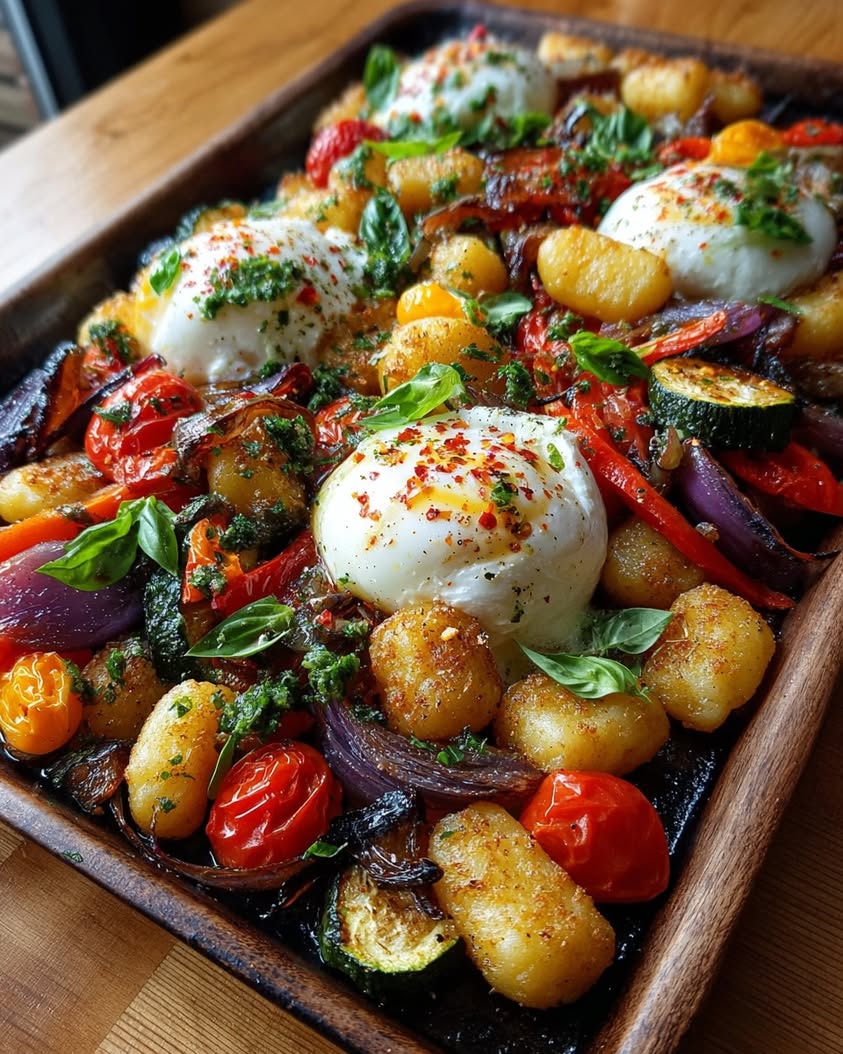
Golden Sheet-Pan Gnocchi with Caramelized Veggies, Burrata & Chili Honey: A One-Pan Wonder
Imagine a single sheet pan transforming into a complete, restaurant-quality dinner. This golden sheet-pan gnocchi with caramelized veggies, burrata, and chili honey is exactly that kind of magic. It delivers crispy, golden-brown potato pillows alongside deeply caramelized vegetables, all finished with the luxurious creaminess of burrata and a sweet-spicy honey drizzle. Consequently, this dish is a symphony of textures and flavors that feels indulgent yet is deceptively simple to prepare.
Furthermore, this recipe is a perfect solution for busy weeknights or effortless entertaining. The entire meal cooks together on one pan, minimizing cleanup and maximizing flavor. The high heat of the oven works its magic, creating crispy gnocchi and tender, sweet veggies without constant stirring. Ultimately, you get a stunning, colorful dish that is as beautiful on the table as it is delicious in every bite.
Quick Recipe Highlights
- Flavor Profile: This dish masterfully balances savory, sweet, and spicy notes. The caramelized vegetables offer a deep, natural sweetness that contrasts beautifully with the savory, crispy gnocchi. Meanwhile, the chili honey introduces a gentle heat that lingers pleasantly, and the burrata adds a rich, milky creaminess that ties everything together.
- Texture: You experience a wonderful contrast in every forkful. The exterior of the gnocchi becomes delightfully crispy and golden, while the inside stays soft and pillowy. Additionally, the vegetables soften and caramelize, offering a tender bite, and the creamy burrata provides a luxurious, smooth counterpoint to all the crisp elements.
- Aroma: As this sheet-pan dinner roasts, your kitchen will fill with an irresistible fragrance. The scent of roasting garlic and onions melds with the earthy herbs and the subtle sweetness of caramelizing vegetables. Finally, the warm chili honey adds a final aromatic kick that makes the dish impossible to resist.
- Visual Appeal: This meal is a feast for the eyes with its vibrant colors. The golden-brown gnocchi and caramelized veggies create a warm, inviting base. Then, the stark white, creamy burrata ball placed in the center acts as a beautiful focal point, especially once drizzled with the glossy, amber-colored chili honey.
- Skill Level Needed: This is an ideal recipe for cooks of all levels. It requires only basic knife skills for chopping vegetables and simple assembly. The oven does most of the work, so there’s no need for advanced techniques, making it a fantastic entry into more impressive-looking meals.
- Special Equipment: You truly only need one essential tool: a large, rimmed sheet pan. A good quality pan ensures even heating and prevents any juices from spilling. Otherwise, standard kitchen tools like a cutting board, knife, and a small bowl for mixing the honey are all that’s required.
Recipe Overview
- Difficulty Level: We rate this recipe as easy because it involves straightforward preparation and hands-off cooking. The steps are simple: chop vegetables, toss everything with oil and seasonings, and roast. There is no fussy technique or precise timing required, making it very forgiving for beginner cooks and a reliable staple for experienced ones.
- Category: This dish fits perfectly into several categories. It is a fantastic vegetarian main course, a hearty side dish, or a shareable appetizer for a gathering. Moreover, it belongs to the beloved category of sheet-pan dinners, which are celebrated for their simplicity and minimal cleanup.
- Cuisine: While gnocchi originates from Italian cuisine, this preparation is a modern, fusion-style approach. The use of sheet-pan roasting is a contemporary, global cooking method, and the addition of chili honey introduces a touch of sweet heat found in various culinary traditions. Ultimately, it’s a delicious blend of Italian inspiration and modern convenience cooking.
- Cost: This is a reasonably affordable meal, especially considering its impressive presentation. Store-bought gnocchi and seasonal vegetables like bell peppers and zucchini are budget-friendly. While burrata is a splurge ingredient, a little goes a long way in terms of impact, and you can substitute with fresh mozzarella to lower the cost further.
- Season: This recipe is wonderfully adaptable year-round. However, it shines brightest in late summer and early fall when bell peppers, zucchini, and cherry tomatoes are at their peak sweetness and most affordable. During winter, you can easily swap in hardier vegetables like Brussels sprouts, sweet potatoes, and cauliflower.
- Occasion: It is perfect for a variety of occasions. Serve it as a quick and satisfying weeknight family dinner, or double the recipe for a casual dinner party where guests will be wowed. It’s also an excellent meal for date night at home, feeling special without requiring hours in the kitchen.
Why You’ll Love This Recipe
First and foremost, the taste and texture combination is absolutely irresistible. Each component brings something unique to the plate. You get the satisfying crunch of the roasted gnocchi, the melt-in-your-mouth sweetness of the caramelized veggies, the rich, cool burst of the burrata, and the exciting zip of the chili honey. Consequently, every single bite is a complex and delightful experience that keeps you coming back for more. This dish proves that simple ingredients can create extraordinary flavor when treated properly.
From a practical standpoint, the convenience factor is a major win. As a true one-pan meal, it dramatically reduces both active cooking time and post-dinner cleanup. You simply toss everything on a sheet pan and let the oven work its magic. This makes it an ideal solution for busy evenings when you want a wholesome, home-cooked meal without the hassle of multiple pots and pans. Furthermore, the hands-off cooking time allows you to prepare a side salad, set the table, or simply relax.
Nutritionally, this meal offers a good balance. The vegetables provide essential vitamins, minerals, and fiber, while the gnocchi offers carbohydrates for energy. Using olive oil promotes heart-healthy fats. To make it even more nutritious, you can seek out whole-wheat or cauliflower gnocchi. Additionally, because you control the amount of oil and salt, this dish can easily fit into a balanced eating plan, unlike many restaurant versions which can be heavy.
For social and entertaining value, this recipe is a true gem. It looks incredibly impressive and colorful when brought to the table, sparking conversation and admiration. Because it’s largely prepared ahead of time in the oven, you can spend more time with your guests instead of being stuck at the stove. It’s also easy to scale up for a crowd by using two sheet pans, making it a stress-free option for hosting.
Finally, it is cost-effective and accessible. The base ingredients are pantry staples and affordable produce. While burrata feels luxurious, it is often available at most grocery stores now. If needed, you can use a ball of fresh mozzarella with equally delicious results. This accessibility means you can enjoy a restaurant-quality meal at a fraction of the price, anytime the craving strikes.
Historical Background and Cultural Significance
Gnocchi, the star of this dish, boasts a long and humble history in Italian cuisine. These small dumplings likely originated as a practical way to use up leftover bread or potatoes. The word “gnocchi” itself may derive from “nocca,” meaning knuckle, or “nocco,” a knot in wood, both referencing their classic shape. Traditionally, they were a peasant food, providing a filling and inexpensive source of sustenance. Over centuries, they evolved into a beloved staple found throughout Italy, with each region developing its own variations, from the potato-based gnocchi of the north to the semolina-based versions of the south.
The cultural significance of gnocchi is deeply woven into Italian family life and tradition. In many parts of Italy, it is customary to eat gnocchi on Thursdays, a tradition said to bring good fortune. They are often the centerpiece of Sunday family dinners and festive celebrations. The act of making gnocchi by hand is a cherished skill passed down through generations, symbolizing care, family, and the heart of the home kitchen. While our sheet-pan version uses store-bought gnocchi for convenience, it honors the spirit of this comforting, communal food.
The evolution of this specific recipe is a testament to modern cooking trends. The sheet-pan dinner phenomenon revolutionized home cooking by offering a streamlined, efficient method for creating complete meals. Combining this technique with Italian gnocchi is a natural and innovative fusion. The addition of burrata, a relatively modern cheese invention from the 20th century in Puglia, and the use of chili-infused honey, which draws from global condiment traditions, creates a contemporary dish that respects its roots while embracing new flavors and methods.
Regional variations of similar concepts abound. In Italy, you might find “gnocchi alla Romana,” baked with cheese and butter, which shares the baked, comforting essence. Our recipe’s use of roasted vegetables aligns with the Mediterranean emphasis on fresh, seasonal produce. The chili honey drizzle could be seen as a nod to the Italian “agrodolce” (sour-sweet) flavor profile, but with a New World twist using chili peppers. This global fusion is what makes modern home cooking so exciting and accessible.
Ingredient Deep Dive
Potato Gnocchi: Store-bought potato gnocchi are the ultimate shortcut for this recipe. Traditionally, gnocchi are made from riced potatoes, flour, and sometimes egg, resulting in their characteristic tender, pillowy texture. When roasted, they undergo a magical transformation, developing a crispy, golden exterior that contrasts with the soft interior. For the best results, look for gnocchi in the refrigerated section of the grocery store, as they often have a better texture than shelf-stable versions. You can also experiment with whole-wheat, ricotta, or cauliflower gnocchi for dietary variations.
Bell Peppers & Zucchini: These vegetables are chosen for their ability to caramelize beautifully and hold their shape. Bell peppers, native to Central and South America, became a cornerstone of Mediterranean cooking after their introduction to Europe. They are rich in vitamins A and C. Zucchini, a type of summer squash, is low in calories and high in water content, making it roast up tender. Select firm, brightly colored peppers and medium-sized, glossy zucchini for the best flavor and texture. Their natural sugars concentrate and sweeten in the oven’s high heat.
Red Onion: Red onions add a crucial depth of flavor and a pop of color. When roasted, their sharpness mellows into a profound sweetness that complements the other veggies. Onions have been cultivated for thousands of years and are foundational in cuisines worldwide for their ability to build flavor bases. They contain antioxidants and prebiotic fibers. Choose onions that are firm and heavy for their size with dry, papery skins. The wedges will soften and caramelize at the edges, adding a delicious complexity to the pan.
Burrata Cheese: Burrata is the show-stopping finishing touch. Meaning “buttered” in Italian, it originated in the Puglia region. It consists of a delicate mozzarella pouch filled with stracciatella (shredded mozzarella) and cream, creating an incredibly rich, creamy center. It provides a luxurious, cool contrast to the hot, roasted components. Always add burrata at the very end, after cooking, to preserve its delicate texture. If unavailable, a ball of fresh mozzarella or even dollops of ricotta make excellent, though less creamy, substitutes.
Chili Honey: This simple condiment elevates the entire dish. Honey, one of the world’s oldest sweeteners, brings a floral sweetness that balances the savory elements. Infusing it with chili flakes (like red pepper flakes or Calabrian chili) introduces a gentle, warming heat that cuts through the richness. The viscosity of the honey creates a beautiful glossy finish. You can adjust the heat level to your preference. For a different twist, try infusing the honey with fresh herbs like rosemary or thyme before adding the chili.
Common Mistakes to Avoid
- Overcrowding the Pan: This is the most common error. If the pan is too crowded, the vegetables and gnocchi will steam instead of roast, resulting in soggy, pale food. Always use a large enough sheet pan and spread everything in a single, even layer to ensure proper caramelization and crisping.
- Using Frozen Gnocchi Without Thawing: If using frozen gnocchi, thaw them completely and pat them very dry with paper towels before tossing with oil. Adding frozen gnocchi will release too much moisture onto the pan, again leading to steaming and preventing that desirable crispy texture.
- Neglecting to Preheat the Pan (Optional but Helpful): For extra-crispy gnocchi, some cooks swear by placing the empty sheet pan in the oven as it preheats. Carefully add the oiled gnocchi and veggies to the hot pan. This method gives an immediate sear, promoting better browning from the start.
- Cutting Vegetables Inconsistently: Chopping your vegetables into uniform sizes is crucial. If pieces are vastly different, some will burn while others remain undercooked. Aim for similar-sized chunks or slices so everything cooks evenly and is done at the same time.
- Skipping the Toss Halfway Through: Do not just put the pan in the oven and walk away for 30 minutes. Giving everything a good stir or shake halfway through the cooking time is essential. This ensures all sides get exposed to the hot pan surface for even browning and prevents sticking.
- Adding the Burrata Before Baking: Burrata is incredibly delicate and meant to be served cool or room temperature. If you add it to the hot pan before or during baking, it will completely melt into a puddle and lose its signature creamy center. Always add it fresh after the pan comes out of the oven.
- Using Old, Stale Chili Flakes: The flavor of chili flakes diminishes over time. For the best chili honey, use fresh, high-quality red pepper flakes or crushed Calabrian chilies. Their vibrant heat and flavor will infuse the honey much more effectively than spices that have been sitting in your cabinet for years.
- Underseasoning: Vegetables and gnocchi need ample seasoning. Do not be shy with the salt and pepper before roasting. Seasoning in layers—on the vegetables and gnocchi before cooking, and a final flaky salt on the burrata and honey at the end—builds a more complete and delicious flavor profile.
Essential Techniques
Caramelization: This is the chemical process where sugars in food brown, creating deep, complex flavors. For successful caramelization, you need high enough heat (400-425°F is ideal), enough space on the pan for moisture to evaporate, and a bit of fat like olive oil. The vegetables will first soften and release water; then, as that water cooks off, the natural sugars will begin to brown. Patience is key—don’t stir too often. You’re looking for browned, slightly shriveled edges on your veggies, which signal concentrated sweetness.
Sheet Pan Roasting: This technique relies on conductive heat from the hot metal pan and radiant heat from the oven’s air. The rimmed edges contain any juices. The goal is to create a Maillard reaction (browning) on the food’s surface. To master it, always preheat your oven, use a light-colored pan for even heating (dark pans can burn), and arrange food with space between pieces. Rotating the pan halfway through cooking can also combat any hot spots in your oven for more uniform results.
Infusing Honey: This simple technique involves gently warming honey with another ingredient to transfer its flavor. For chili honey, gently warm the honey in a microwave or a small saucepan over low heat just until it becomes fluid. Then, stir in the chili flakes and let it sit. The warmth helps the chili’s capsaicin and flavors bleed into the honey. Do not boil the honey, as high heat can degrade its delicate flavors. Let it infuse while the rest of the dish cooks for maximum flavor.
Pro Tips for Perfect Golden Sheet-Pan Gnocchi
First, for extra-crispy gnocchi, toss them in a tablespoon of cornstarch along with the olive oil. The cornstarch creates an even crispier, more golden exterior that holds up well against the juicy vegetables.
Next, consider roasting your vegetables on parchment paper or a silicone baking mat for easier cleanup. However, for maximum browning, roasting directly on the oiled metal pan is often more effective.
Furthermore, add hearty herbs like rosemary or thyme sprigs to the sheet pan before roasting. They will infuse the oil and vegetables with their fragrance as they cook. Remove the woody stems before serving.
Additionally, if your cherry tomatoes are very juicy, you can add them during the last 10 minutes of cooking. This prevents them from bursting too early and making the pan soggy.
For a more pronounced garlic flavor, add thinly sliced garlic cloves to the pan during the last 5-7 minutes of roasting. This prevents the garlic from burning and becoming bitter.
Finally, let the sheet pan sit for 2-3 minutes after adding the burrata and before drizzling the honey. This allows the cheese to just barely start to soften and melt from the residual heat of the pan, which is perfect.
Variations and Adaptations
For regional variations, take inspiration from different cuisines. Add crumbled Italian sausage for a meaty version. For a Greek twist, use oregano, kalamata olives, and feta cheese instead of burrata. A Mexican-inspired version could include cumin, chili powder, black beans, and a lime crema drizzle.
Seasonal adaptations are simple and recommended. In fall, use cubed butternut squash, Brussels sprouts, and red onion. In winter, try cauliflower florets, sweet potato, and red cabbage. Spring welcomes asparagus, peas, and leeks. The method remains the same; just adjust roasting times for denser vegetables.
Dietary modifications are straightforward. For gluten-free, use certified gluten-free potato gnocchi. For vegan, omit the burrata and use a dollop of vegan ricotta or a drizzle of vegan pesto. For dairy-free, follow the vegan tip or simply finish with extra herbs and chili oil.
Flavor variations can keep this recipe exciting. Toss the gnocchi and veggies with pesto before roasting. Use balsamic glaze instead of chili honey for a tangy-sweet finish. Add a sprinkle of grated Parmesan or pecorino cheese in the last five minutes of baking for a crispy, cheesy crust.
Texture modifications can cater to preferences. For softer gnocchi, reduce the oven temperature slightly and roast for less time. For extra-crispy veggies, place them on the pan first and roast for 10 minutes before adding the gnocchi, which cooks faster.
Presentation alternatives include serving the dish family-style on the sheet pan for a rustic feel, or plating individual portions neatly. You can tear the burrata into pieces and scatter it, or leave it whole as a centerpiece. Fresh microgreens or basil leaves make a beautiful, fresh garnish.
Serving and Presentation Guide
For plating, a large, shallow bowl or pasta plate works beautifully. Use tongs to arrange a base of the roasted gnocchi and vegetables. Gently place the whole burrata ball in the center, or tear it into large pieces and scatter them artfully. Drizzle the chili honey generously over everything, allowing it to pool around the burrata. Finally, finish with a flourish of flaky sea salt, cracked black pepper, and fresh torn basil or parsley leaves. This layered approach ensures every element is visible and inviting.
Garnishing is key to elevating the visual appeal. Beyond fresh herbs, consider adding a sprinkle of toasted pine nuts or walnuts for crunch, or a few shavings of Parmesan cheese for a salty bite. A final drizzle of high-quality extra virgin olive oil adds shine and richness. For color, edible flowers or a few extra red chili flakes make the dish pop. Remember, garnishes should complement the flavors, not overwhelm them.
Traditional accompaniments are simple. A crisp, green salad with a lemony vinaigrette balances the richness of the dish perfectly. Crusty bread is essential for soaking up any delicious juices and melted burrata left on the plate. For a more substantial meal, grilled chicken or shrimp can be served on the side, though the dish is satisfying enough to stand alone.
Modern serving suggestions might include presenting the entire meal on the sheet pan itself for a casual, communal dining experience. Alternatively, serve it as part of a larger spread with antipasti like marinated olives and cured meats. For a brunch twist, top each portion with a softly fried egg, letting the yolk act as an additional sauce.
Temperature considerations are crucial. The roasted components should be served piping hot straight from the oven. The burrata should be at cool room temperature to provide contrast. The chili honey can be slightly warmed so it drizzles easily. Assembling the dish just before serving ensures the gnocchi stay crispy and the burrata maintains its texture.
Portion control is easy with this adaptable recipe. As a main course for four, the recipe as written is perfect. For six people as a side dish or part of a larger buffet, it also works well. If serving heartier appetites, consider adding a protein or simply increasing the amount of gnocchi and vegetables by 50%, using two sheet pans if necessary to avoid overcrowding.
Wine and Beverage Pairing
Wine pairings should complement the dish’s sweet, savory, and creamy elements. A crisp, medium-bodied white wine like Pinot Grigio or Vermentino cuts through the richness beautifully. Alternatively, a light-bodied red with low tannins, such as a chilled Beaujolais or a fruity Pinot Noir, pairs wonderfully with the roasted vegetables and subtle spice. For a more adventurous pairing, try a dry Rosé, which has the acidity to balance the dish and the berry notes to echo the sweet peppers.
Non-alcoholic alternatives are just as important. Sparkling water with a squeeze of lemon or lime cleanses the palate between bites. For something more special, a ginger beer or a homemade basil-lemonade provides a refreshing counterpoint to the savory, spicy notes. Iced herbal tea, like peach or mint, can also be a delightful companion without competing with the food’s flavors.
Coffee and tea pairings are excellent if serving this dish for a late lunch or early dinner. A light roast coffee with bright acidity won’t overwhelm the meal. For tea, consider a green tea like Sencha or a floral white tea. Their subtle flavors complement rather than dominate. Avoid heavy, bitter coffees or overly tannic black teas that might clash with the chili honey’s sweetness.
Temperature considerations for beverages are straightforward. White wines, rosés, and non-alcoholic sparklers should be well-chilled. Light reds can be slightly chilled. Non-alcoholic still drinks are best over ice. Serving drinks at their ideal temperature enhances both the beverage and the dining experience, making each bite and sip more enjoyable.
Serving suggestions include offering a variety of options to suit different preferences. Place a bottle of chilled white wine and a pitcher of infused water on the table. For a casual gathering, a selection of craft beers, like a pale ale or a wheat beer, can also work well with the roasted flavors. The key is to provide drinks that refresh the palate and enhance the communal, comforting nature of the meal.
Storage and Shelf Life
Storage methods for leftovers are simple but important. First, separate any uneaten burrata from the roasted components. Store the gnocchi and vegetable mixture in an airtight container in the refrigerator. Place the burrata in its own separate container, preferably submerged in any leftover whey or brine to maintain moisture. The chili honey can be stored at room temperature in a sealed jar. Proper separation prevents the crispy gnocchi from becoming soggy from the cheese’s moisture.
Temperature requirements are standard for cooked food. The roasted gnocchi and veggies must be refrigerated within two hours of cooking. They will keep for up to 3-4 days. The burrata, if unopened and in its original liquid, can last in the fridge according to its “use-by” date. Once opened, use it within 1-2 days for the best quality and texture. The chili honey is shelf-stable for weeks.
Container recommendations include glass or BPA-free plastic containers with tight-fitting lids for the main components. For the burrata, a small glass jar or container that can be filled with its liquid is ideal. Avoid storing the hot food directly in the container; let it cool to room temperature first to prevent condensation, which can lead to sogginess and bacterial growth.
Signs of spoilage to watch for include an off or sour smell, visible mold (especially on the cheese or vegetables), or a slimy texture on the gnocchi or veggies. If the burrata develops an ammonia-like smell or the texture becomes excessively watery or grainy, it should be discarded. When in doubt, it is always safer to throw the food out.
Reheating instructions are key to restoring texture. To reheat the gnocchi and vegetables, spread them in a single layer on a sheet pan and warm in a 375°F oven for 10-15 minutes, or until hot and re-crisped. The microwave will make them soft and soggy. The burrata should not be reheated; add it fresh to the reheated components. Gently warm the chili honey if it has solidified.
Freezing guidelines are not generally recommended for this specific assembled dish. The vegetables will become mushy upon thawing, and the gnocchi’s texture will suffer. However, you can freeze the uncooked, store-bought gnocchi according to its package directions. The chili honey can be frozen, but it may crystallize. It’s best to enjoy this dish fresh or refrigerate leftovers for short-term consumption.
Make Ahead Strategies
A prep timeline can make weeknight assembly a breeze. The day before, wash and chop all your vegetables. Store them in separate airtight containers or a large zip-top bag in the refrigerator. You can also measure out your spices and make the chili honey ahead of time. Store the honey in a jar at room temperature. This advance work reduces active prep time to just tossing everything with oil and seasoning on the night of cooking.
Storage between steps is straightforward. Keep pre-chopped vegetables chilled. The chili honey can sit out. Do not toss the gnocchi with oil until you are ready to roast, as they can become gummy. Having everything measured and ready in the fridge means you can simply dump, toss, and roast when it’s time to cook, streamlining the entire process.
Quality impact assessment is positive for most make-ahead steps. Pre-chopped vegetables may lose a minimal amount of moisture but will roast just fine. The chili honey’s flavor actually improves as it sits, allowing the chili heat to fully infuse. The only element that must remain completely fresh is the burrata, which should be purchased close to your serving date and kept sealed until the moment of assembly.
Assembly tips for a make-ahead meal are simple. When ready to cook, take your prepped veggies and gnocchi from the fridge. Let them sit at room temperature for about 10-15 minutes to take the chill off, which promotes more even roasting. Toss everything with oil and seasonings on the sheet pan and proceed with the recipe as directed. This small step prevents a cold pan from lowering the oven temperature drastically.
Reheating guidelines for a fully made-ahead dish are not ideal, as the burrata cannot be reheated. Instead, roast the gnocchi and veggies ahead of time and let them cool. Store them separately from the burrata and chili honey. To serve, re-crisp the roasted components in the oven, then top with fresh, cool burrata and drizzle with the honey. This preserves the intended texture contrasts.
Fresh element additions are non-negotiable. The burrata and any fresh herb garnishes (like basil or parsley) must always be added at the very end, just before serving. This ensures the cheese is cool and creamy and the herbs are bright and vibrant, providing the perfect finishing contrast to the warm, roasted base of the dish.
Scaling Instructions
Halving the recipe is easy for smaller households. Use half the amounts of all ingredients. The key is to still use a standard-sized sheet pan to prevent overcrowding, but you can push the smaller quantity of food to one side of the pan to ensure there’s plenty of space for air circulation. Cooking time may be reduced by 5-7 minutes, so start checking for doneness early.
Doubling or tripling the recipe for a crowd requires careful planning. Do not simply double the ingredients on one pan; this will guarantee steaming and soggy results. Instead, use two or three separate sheet pans and roast them on different oven racks. Rotate the pans top-to-bottom and front-to-back halfway through cooking to ensure even browning. You may need to add a few extra minutes to the total cook time.
Equipment adjustments are necessary when scaling. For a double batch, you’ll need two large sheet pans. Ensure your oven can accommodate them with enough space for air to circulate. If oven space is limited, you can roast in batches, keeping the first batch warm in a low oven (around 200°F) while the second cooks. This preserves the crispy texture better than trying to cram everything onto one pan.
Timing modifications are minimal when scaling correctly. If using multiple pans in the oven simultaneously, the cooking time may increase slightly due to the added moisture and reduced air flow. Start checking for doneness at the original recipe time, but be prepared to add 5-10 minutes. The visual cues—golden gnocchi and caramelized veggies—are your best guide, not the clock alone.
Storage considerations for scaled-up recipes are similar. Store any leftovers in separate containers as described earlier. If you’ve made a large batch for meal prep, consider dividing it into single-serving containers before refrigerating. This makes reheating easier and prevents the entire batch from being exposed to air and moisture each time you take some out.
Nutritional Deep Dive
A macro breakdown for a serving will vary but generally provides a balance. The gnocchi contribute carbohydrates for energy. The olive oil and burrata provide fats, including monounsaturated fats from the oil. The vegetables add fiber and a small amount of protein. To increase protein, you could add white beans or chickpeas to the sheet pan. This dish is more energy-dense due to the gnocchi and cheese, so portion awareness is helpful for specific dietary goals.
Micronutrient analysis reveals a wealth of vitamins and minerals. Bell peppers are exceptionally high in Vitamin C and Vitamin A. Zucchini provides potassium and manganese. Red onions offer antioxidants like quercetin. Olive oil contains Vitamin E. While not a significant source of iron or calcium (aside from the cheese), the variety of vegetables ensures a good intake of various phytonutrients that support overall health.
Health benefits stem from its plant-based foundation. The vegetables and olive oil align with heart-healthy Mediterranean diet principles. The fiber from the veggies aids digestion and promotes satiety. The antioxidants in the colorful vegetables combat oxidative stress. Using this dish to increase vegetable intake is a delicious strategy. Choosing whole-food ingredients over processed sauces also reduces sodium and additive intake compared to many convenience meals.
Dietary considerations are important to note. As written, it contains gluten (in standard gnocchi) and dairy (burrata). It is vegetarian. For those monitoring carbohydrates, the gnocchi portion is the primary source. For lower-carb options, consider using a smaller amount of gnocchi and increasing the non-starchy vegetable ratio, or using a cauliflower gnocchi alternative.
Portion analysis shows this recipe comfortably serves four as a main course. A typical serving includes a quarter of the gnocchi, vegetables, a portion of the burrata, and a drizzle of honey. Visually, it should fill a dinner plate. For lighter appetites or as part of a multi-course meal, it could serve five or six. Listening to your hunger cues is the best guide for portion size.
Weight management tips include being mindful of the oil and cheese portions. You can reduce the olive oil by a tablespoon if using a non-stick pan. Opting for part-skim mozzarella instead of burrata lowers the fat content. Increasing the volume of non-starchy vegetables (like adding broccoli or mushrooms) adds bulk and fiber for fewer calories, helping you feel full and satisfied.
Dietary Adaptations
For a gluten-free adaptation, the only critical change is the gnocchi. Seek out certified gluten-free potato gnocchi, which are widely available in the refrigerated or frozen sections of most grocery stores. Ensure all other ingredients, like chili flakes, are certified gluten-free to avoid cross-contamination. The rest of the recipe is naturally gluten-free, making this a simple and effective switch.
A dairy-free version is easily achieved by omitting the burrata. For creaminess, consider adding dollops of vegan ricotta or a cashew-based cream sauce after baking. Alternatively, a drizzle of high-quality extra virgin olive oil or a vegan pesto can provide richness. Check that your store-bought gnocchi does not contain dairy, as some brands might.
For a vegan adaptation, combine the gluten-free and dairy-free tips. Use vegan gnocchi (check for eggs and dairy), omit the burrata, and use a plant-based creamy element. A fantastic finish is a drizzle of tahini sauce mixed with lemon juice and a bit of water to thin it. The chili honey can be made with agave syrup instead of honey to keep it fully plant-based.
A low-carb or keto adaptation requires a significant swap. Replace the potato gnocchi entirely. Use low-carb vegetables like cauliflower florets, broccoli, and bell peppers as the base. For a “gnocchi-like” element, you can make or purchase cauliflower gnocchi, but check the net carbs. Increase the fat by adding more olive oil and using a full-fat cheese
Print
Golden Sheet-Pan Gnocchi with Caramelized Veggies, Burrata & Chili Honey
Description
A vibrant, hands-off sheet-pan dinner featuring crispy gnocchi, sweet caramelized vegetables, creamy burrata, and a spicy-sweet chili honey drizzle.
Ingredients
For the Crust:
- 1 pound shelf-stable potato gnocchi
- 1 medium red onion, sliced into wedges
- 1 large bell pepper (any color), sliced
- 1 pint cherry tomatoes
- 3 tablespoons olive oil
- 1 teaspoon garlic powder
- 1 teaspoon dried oregano
- Salt and black pepper to taste
- 1 ball burrata cheese (about 8 ounces)
- 2 tablespoons honey
- 1/2 teaspoon red pepper flakes
- Fresh basil leaves for garnish
Instructions
1. Prepare the Crust:
- Preheat oven to 425°F (220°C). On a large sheet pan, toss gnocchi, red onion, bell pepper, and cherry tomatoes with olive oil, garlic powder, oregano, salt, and pepper.
- Spread in an even layer and roast for 25-30 minutes, stirring halfway, until gnocchi is golden and veggies are caramelized.
- While roasting, warm honey and red pepper flakes in a small saucepan over low heat for 2-3 minutes, then set aside.
- Remove sheet pan from oven. Tear burrata over the top, drizzle with chili honey, garnish with basil, and serve immediately.
Notes
You can customize the seasonings to taste.

I’m Shaykee—born in Morocco, seasoned across continents. From airplane galleys to home kitchens, I share the flavors and stories that shaped my journey.