
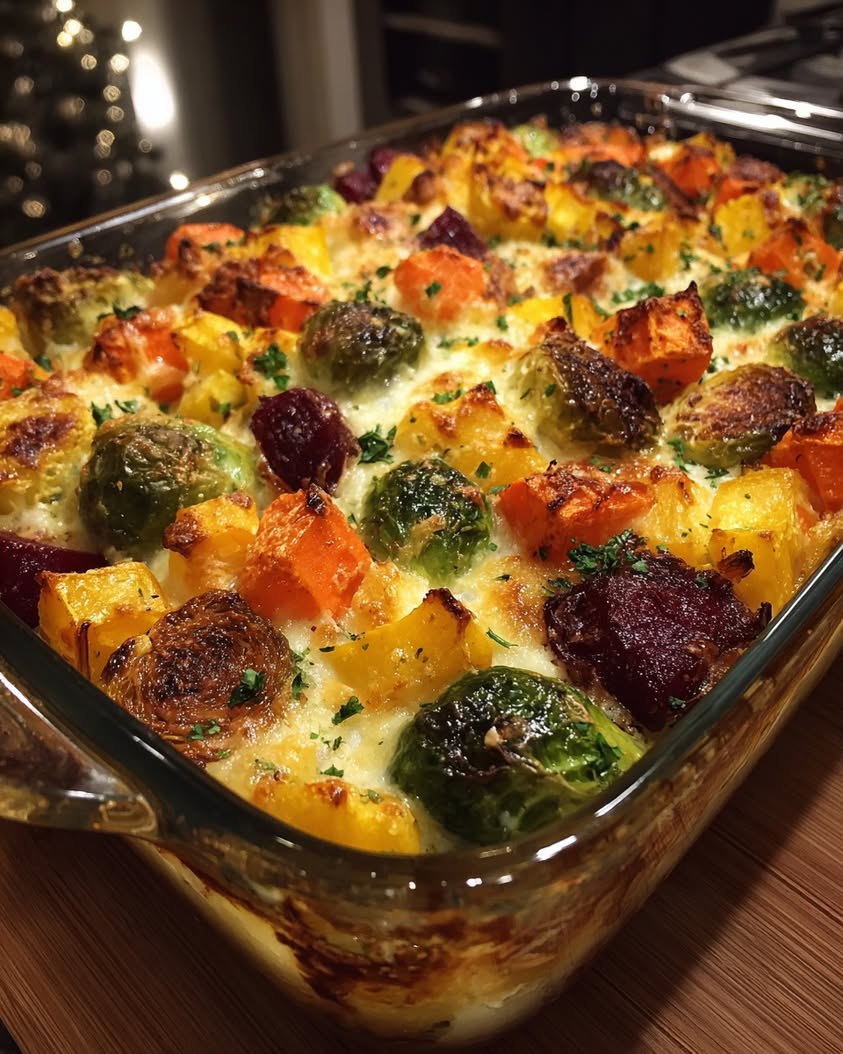
Cheesy Brussels Sprouts, Sweet Potato, Butternut Squash, Carrot & Beet Medley Casserole: The Ultimate Healthy Comfort Food
Imagine a dish that captures the very essence of cozy autumn evenings and nourishing family dinners. This Cheesy Brussels Sprouts, Sweet Potato, Butternut Squash, Carrot & Beet Medley Casserole is precisely that kind of culinary masterpiece. Fundamentally, it transforms humble root vegetables and hearty greens into a stunning, golden-baked centerpiece. The result is a vegetarian casserole that delivers both incredible flavor and impressive visual appeal. Consequently, it bridges the gap between healthy eating and ultimate comfort food in one delicious bake.
The magic of this recipe lies in its harmonious blend of textures and tastes. Sweet potatoes and butternut squash caramelize beautifully, offering a natural sweetness. Simultaneously, earthy beets and carrots provide a robust foundation. Brussels sprouts, however, introduce a delightful, slightly bitter note that perfectly balances the sweetness. Ultimately, a blanket of melted, bubbling cheese ties every component together. This creates a creamy, cheesy veggie casserole that is as satisfying as it is nutritious. Therefore, it is the perfect answer for anyone seeking a wholesome yet indulgent meal.
Furthermore, this dish is a celebration of seasonal produce at its finest. It utilizes the vibrant colors and dense nutrients of fall and winter harvests. Each forkful offers a symphony of flavors, from the deep earthiness of roasted beets to the gentle sweetness of caramelized squash. The process of roasting concentrates these flavors, while the final bake under cheese creates a cohesive, comforting whole. This recipe proves that healthy comfort food does not require compromise. Instead, it showcases how vegetables can be the undeniable star of the show.
Quick Recipe Highlights
- Flavor Profile: This casserole masterfully balances sweet, savory, and earthy notes. The natural sugars in the sweet potato and squash caramelize during roasting, creating a deep sweetness. Conversely, the Brussels sprouts and beets provide a grounding, earthy complexity that is rounded out by the rich, salty creaminess of the cheese.
- Texture: Expect a delightful contrast in every bite. The roasted vegetables become tender and almost creamy inside, while their edges crisp up slightly. The cheese topping forms a golden, bubbly crust that gives way to a gooey, stretchy layer beneath, adding a luxurious mouthfeel to the medley of soft veggies.
- Aroma: As it bakes, your kitchen will fill with an irresistible fragrance. The primary notes are the sweet, nutty scent of roasting root vegetables mingled with the savory, toasty aroma of melting cheese. Hints of caramelization and herbal thyme complete the comforting olfactory experience.
- Visual Appeal: This dish is a feast for the eyes, boasting a stunning color palette. You will see vibrant orange from the squash and sweet potato, deep red from the beets, bright orange from the carrots, and green from the Brussels sprouts, all unified under a golden-brown cheese crust.
- Skill Level Needed: This is an accessible recipe for most home cooks. The techniques involve simple chopping, tossing, and roasting. No advanced culinary skills are required, making it a fantastic project for a beginner looking to create an impressive, healthy comfort food dish.
- Special Equipment: A large baking sheet for roasting and a 9×13 inch casserole dish for baking are essential. Otherwise, you only need basic kitchen tools: a sharp chef’s knife, a sturdy cutting board, a large mixing bowl, and possibly a vegetable peeler for the squash and carrots.
Recipe Overview
- Difficulty Level: We classify this recipe as “Easy” because it involves straightforward, sequential steps. The most demanding task is the vegetable prep, which requires consistent chopping. However, there are no complicated techniques like making a roux or delicate folding. The oven does most of the work, making it a low-stress, high-reward endeavor perfect for a weeknight or weekend.
- Category: This dish fits beautifully into several meal categories. Primarily, it serves as a spectacular vegetarian main course. Alternatively, it can be a hearty side dish for holiday meals or alongside a protein like roasted chicken or turkey. It also qualifies as excellent meal prep for healthy lunches throughout the week.
- Cuisine: While not tied to one specific tradition, this casserole draws inspiration from modern American comfort food and farm-to-table cooking. It emphasizes whole, seasonal vegetables in a format reminiscent of classic baked pasta dishes but with a healthier, vegetable-forward twist. The use of melted cheese as a unifying element is a beloved technique across many Western cuisines.
- Cost: This is a cost-effective meal, especially when vegetables are in season. Root vegetables and Brussels sprouts are typically affordable. The cheese is the primary splurge, but a little goes a long way. Overall, you can feed six people generously for less than the cost of takeout, making this creamy, cheesy veggie casserole a budget-friendly choice.
- Season: This recipe shines brightest in the fall and winter months. During this time, the featured vegetables are at their peak of flavor, sweetness, and affordability. The warm, hearty nature of the bake is ideal for cooler weather. That said, with modern grocery availability, it can certainly be enjoyed year-round as a dose of healthy comfort food.
- Occasion: It is incredibly versatile for different events. Serve it as the centerpiece of a casual family dinner, bring it to a potluck where it will stand out, or include it as a show-stopping side on your Thanksgiving or Christmas table. Its make-ahead potential also makes it perfect for stress-free entertaining.
Why You’ll Love This Recipe
First and foremost, the taste and texture appeal is undeniable. This cheesy bake delivers a sophisticated flavor profile that feels both gourmet and deeply familiar. Each vegetable contributes its unique character, yet they harmonize perfectly under the cheese. The contrast between the tender, sweet interior of the roasted veggies and the crispy, cheesy top is endlessly satisfying. Moreover, the beautiful medley of colors makes it as pleasing to look at as it is to eat. Ultimately, it transforms ingredients you might serve separately into a cohesive, celebratory dish that everyone will crave.
Next, consider the convenience and preparation benefits. While there is some chopping involved, the recipe follows a simple logic: chop, roast, combine, and bake. You can prepare the vegetables ahead of time, streamlining the process even further. The hands-off roasting time allows you to tidy up or prepare other components of your meal. Furthermore, this casserole is a complete meal in one dish, minimizing cleanup. For busy households, this combination of simple steps and minimal active cooking time is a major win, proving that healthy comfort food can be convenient.
From a nutritional standpoint, this dish is a powerhouse. It is packed with vitamins, minerals, and fiber from five different colorful vegetables. Sweet potatoes and butternut squash are rich in Vitamin A and antioxidants. Carrots contribute beta-carotene, while beets offer folate and manganese. Brussels sprouts are a fantastic source of Vitamin K and C. Using cheese adds protein and calcium. Consequently, this creamy, cheesy veggie casserole supports immune function, gut health, and overall vitality, allowing you to indulge in comfort food without nutritional guilt.
The social and entertaining value of this casserole is exceptionally high. It is a visually impressive dish that sparks conversation at any gathering. Because it is vegetarian, it easily accommodates diverse dietary preferences at the table. It travels well for potlucks and can be easily doubled to feed a crowd. Serving a beautiful, homemade bake like this communicates care and effort, making guests feel special. Therefore, it is more than just a meal; it is a centerpiece that brings people together over shared enjoyment of delicious, wholesome food.
Finally, its cost-effectiveness and accessibility are significant advantages. The ingredients are common and easy to find at any grocery store, regardless of the season. Root vegetables offer substantial volume and nutrition for a low cost, making this a budget-friendly way to feed a family. You likely already have the necessary oils and seasonings in your pantry. This accessibility ensures that creating a restaurant-quality, healthy comfort food experience at home is within everyone’s reach, without requiring expensive or exotic ingredients.
Historical Background and Cultural Significance
The concept of a vegetable casserole has deep roots in global culinary traditions, born from the practical need to combine available ingredients into a nourishing, communal dish. While this specific medley is a modern creation, its ancestry lies in peasant cookery across Europe and America. Historically, baked dishes combining garden vegetables with a binding agent like cheese, cream, or breadcrumbs were a method to extend harvests and create filling meals. The casserole format, cooked slowly in a single dish, was both fuel-efficient and convenient for feeding families and large groups, embodying the very essence of traditional comfort food.
Culturally, the casserole holds a significant place, particularly in American Midwestern and Southern cuisine, often associated with potlucks, church suppers, and family reunions. These dishes symbolize community, sharing, and hospitality. The incorporation of cheese as a topping or binder is a relatively modern twist, gaining immense popularity in post-war America with increased cheese production and availability. This cheesy bake evolution transformed simple vegetable dishes into richer, more indulgent fare. Today, a vegetable casserole like this one represents a fusion of that comforting tradition with contemporary nutritional awareness and a focus on plant-based eating.
The recipe has evolved significantly with trends in food culture. Earlier versions might have relied on canned cream soups and frozen vegetable mixes. The modern iteration, however, reflects the farm-to-table and whole-foods movement. It emphasizes fresh, seasonal, and colorful produce roasted to maximize natural flavor instead of relying on processed ingredients. The shift towards highlighting individual vegetable identities within the medley, rather than obscuring them, marks a departure from mid-century casserole conventions. This evolution speaks to a broader desire for food that is both authentically flavorful and consciously prepared.
Regional variations of vegetable bakes are endless. In France, a “gratin” uses similar techniques with cream and cheese. Mediterranean versions might include tomatoes, eggplant, and zucchini with olive oil and herbs. This particular recipe, with its focus on hardy fall and winter vegetables, feels distinctly seasonal and can be adapted based on local harvests. For instance, in some regions, parsnips or turnips might join the medley. The constant is the principle: combining what is abundant and good into a baked, communal dish that celebrates simplicity and nourishment, a testament to the enduring appeal of the creamy, cheesy veggie casserole.
Ingredient Deep Dive
Brussels Sprouts: Once a maligned vegetable, Brussels sprouts have undergone a culinary renaissance thanks to the understanding that roasting (not boiling) unlocks their potential. They are part of the brassica family, related to cabbage and kale. Nutritionally, they are stars, packed with Vitamin K for bone health, Vitamin C for immunity, and fiber. Select firm, bright green sprouts with tight leaves; smaller ones are often sweeter. Store them unwashed in a plastic bag in the refrigerator’s crisper. If you dislike their bitterness, halving and roasting them caramelizes their edges, transforming their flavor entirely.
Sweet Potato: A cornerstone of healthy comfort food, sweet potatoes are native to Central and South America. They are a nutritional powerhouse, offering exceptionally high levels of beta-carotene (which converts to Vitamin A), Vitamin C, and manganese. Their natural sweetness intensifies when roasted. Choose firm potatoes with smooth skin and no soft spots. Unlike butternut squash, you can eat the skin, which adds extra fiber. Store them in a cool, dark, well-ventilated place—not the refrigerator. For a different twist, you could substitute orange-fleshed squash like kabocha, though the texture will be slightly less creamy.
Butternut Squash: This winter squash, with its long neck and bulbous base, is known for its sweet, nutty orange flesh. It is rich in vitamins A and C, potassium, and fiber. Its creamy texture when cooked makes it ideal for purees and roasts. Selecting a heavy squash with a firm, matte skin ensures good flesh inside. A trick for easier peeling: microwave the whole squash for 2-3 minutes to slightly soften the skin. Store whole squash in a cool, dark place for months; once cut, wrap tightly and refrigerate for up to five days. Acorn squash is a fine substitute, though it may be slightly less sweet.
Carrots: Carrots add earthy sweetness and vibrant color. Originally purple and yellow, the orange carrot we know was cultivated in the Netherlands. They are famously rich in beta-carotene and also provide biotin, Vitamin K, and potassium. Look for firm, smooth carrots without cracks; the greens attached, if present, should be bright and fresh. Store them in the refrigerator in a plastic bag with most of the air removed. There is no need to peel them if scrubbed well—the skin holds nutrients. Parsnips can be used as a more peppery substitute in this medley.
Beets: Beets contribute a deep, earthy flavor and stunning crimson hue that can stain other vegetables if not managed. They have been cultivated since ancient times for both their root and greens. They are a unique source of betalains, pigments with antioxidant and anti-inflammatory properties, and are also high in folate and manganese. Choose small to medium beets with smooth skin and vibrant greens (if attached). To minimize staining, you can roast them whole and wrapped in foil, then peel after cooling. Golden beets are a wonderful, non-staining alternative with a milder flavor.
Cheese (Cheddar or Gruyère): Cheese is the unifying element that turns roasted vegetables into a creamy, cheesy veggie casserole. Cheddar offers a sharp, tangy flavor and excellent meltability. Gruyère, a Swiss cheese, provides a more complex, nutty, and slightly sweet taste. Nutritionally, cheese adds protein, calcium, and fat, which helps absorb the fat-soluble vitamins in the vegetables. For best results, always grate your own cheese from a block; pre-shredded cheese contains anti-caking agents that can hinder smooth melting. For a lighter version, a strong, aged cheese allows you to use less while still getting big flavor.
Common Mistakes to Avoid
- Uneven Vegetable Chopping: Cutting vegetables into drastically different sizes is a common error. Consequently, smaller pieces will burn before larger ones cook through. Aim for a uniform ¾-inch to 1-inch dice or chop. This ensures everything roasts evenly and achieves the perfect tender-crisp texture simultaneously.
- Crowding the Roasting Pan: Dumping all the vegetables onto one pan without space is a mistake. They will steam instead of roast, resulting in soggy, pale veggies. Always use a large enough baking sheet and spread the pieces in a single layer. If necessary, use two sheets to give each piece room to caramelize.
- Neglecting to Toss with Oil and Seasoning: Simply drizzling oil over the top of the vegetables in the pan leads to uneven coating. Some pieces will be dry and bland, while others are greasy. Always toss the chopped veggies vigorously in a large bowl with oil, salt, and pepper until every surface is lightly coated.
- Using Pre-Shredded Cheese Exclusively: While convenient, pre-shredded cheese contains cellulose to prevent clumping. This additive can make the cheese melt less smoothly, resulting in a grainy or clumpy texture on your casserole. For the creamiest, most luxurious topping, take the extra minute to grate a block of cheese yourself.
- Skipping the Roasting Step Before Baking: Attempting to bake raw vegetables directly in the casserole dish with cheese will not work. The vegetables will release too much water, creating a soggy bake, and won’t develop the deep, caramelized flavor. Roasting them first is the non-negotiable step that builds the foundational flavor of this healthy comfort food.
- Overloading with Cheese: More cheese is not always better. An excessively thick layer of cheese can create a greasy, heavy barrier that insulates the vegetables, preventing them from finishing properly. A moderate, even layer allows the cheese to brown beautifully while letting steam escape from the veggie medley beneath.
- Not Seasoning in Layers: Seasoning only at the end is insufficient. You must season the vegetables before roasting (layer one) and then check for seasoning again after combining them before the final bake (layer two). This builds a more complex and well-rounded flavor profile throughout the entire dish.
- Using a Glass Dish at Too High a Temperature: If using a glass casserole dish, be aware it retains heat differently than ceramic or metal. Placing a cold glass dish into a very hot oven can cause it to crack. Always ensure your glass dish is rated for the oven temperature specified, and avoid sudden temperature shocks.
Essential Techniques
Uniform Chopping (Mise en Place): This French term, meaning “everything in its place,” is the first critical technique. Uniformly chopped vegetables ensure even cooking. Take the time to cut your sweet potato, squash, carrots, and beets into similarly sized cubes, and halve your Brussels sprouts consistently. This preparation not only guarantees perfect texture but also makes the cooking process predictable and professional. The visual cue for success is a bowl of vegetables where no single piece looks like it will cook significantly faster or slower than its neighbors.
High-Heat Roasting: Roasting at a high temperature (around 400°F or higher) is not arbitrary. This technique is essential for caramelization—the Maillard reaction and caramelization of sugars that create complex, deep flavors and attractive browning. It also quickly evaporates surface moisture, preventing sogginess and concentrating the vegetables’ natural sweetness. The key is to preheat your oven fully so the vegetables start cooking immediately upon entering. You will know you’ve mastered it when the vegetable edges are golden brown and slightly crisp, while the interiors are tender.
The Art of Combining Hot Ingredients: After roasting, combining the hot vegetables in the casserole dish is a specific technique. Gently fold them together to distribute the different types evenly without mashing them. This ensures every serving gets a bit of each vegetable and flavor. If adding any cold ingredients like cream or extra seasoning, adding them to the hot veggies helps them integrate quickly. The goal is a harmonious medley, not a layered lasagna, so thorough but gentle mixing is the skill to practice.
Cheese Topping Application: Applying the cheese topping correctly affects the final texture. Sprinkle the grated cheese evenly over the entire surface. Do not press it down or mix it in. An even layer allows for consistent browning and melting. For an extra-golden top, you can place the dish under the broiler for the final 1-2 minutes, watching it like a hawk to prevent burning. The perfect cheese crust will be uniformly golden, bubbly, and slightly crisp at the very edges.
Pro Tips for Perfect Cheesy Vegetable Medley Casserole
First, roast your beets separately if you wish to keep the other vegetables from turning pink. Simply wrap whole, unpeeled beets in foil and roast them on the oven rack while the other veggies are on the sheet pan. Peel and cube them after roasting, then fold them in. This preserves the vibrant individual colors of your medley.
Second, add a teaspoon of maple syrup or honey to the oil when tossing the sweet potato and squash. This minor addition enhances their natural caramelization, creating deeper, more complex sweetness without making the dish taste sugary. It is a chef’s secret for elevating roasted root vegetables.
Third, introduce fresh herbs for brightness. Toss a tablespoon of chopped fresh thyme or rosemary with the vegetables before roasting. Alternatively, sprinkle fresh parsley or chives over the casserole just before serving. The fresh herbal notes cut through the richness and add a layer of aromatic complexity.
Fourth, consider a crunchy topping for contrast. Before adding the cheese, sprinkle a mixture of panko breadcrumbs tossed with a little melted butter or olive oil over the vegetables. Then add the cheese. This creates a delightful crunchy texture that contrasts beautifully with the tender veggies and gooey cheese.
Fifth, let the casserole rest for 10 minutes after removing it from the oven. This allows the molten cheese to set slightly, making it easier to cut clean servings. It also lets the intense heat dissipate, allowing the flavors to settle and integrate more fully, resulting in a better eating experience.
Sixth, use the right fat. Tossing the vegetables in avocado oil or refined coconut oil is excellent because they have high smoke points, preventing any off-flavors during high-heat roasting. Olive oil works too, but extra virgin olive oil can sometimes smoke at very high temperatures.
Variations and Adaptations
For regional variations, consider a Mediterranean twist by swapping the cheese for crumbled feta and adding kalamata olives and a sprinkle of oregano. A Southwestern version could include chili powder and cumin in the roast, using a Monterey Jack and cheddar cheese blend, and topping with fresh cilantro. These adaptations show how the basic framework of this creamy, cheesy veggie casserole can travel across flavor profiles while maintaining its comforting structure.
Seasonal adaptations are straightforward. In spring, use asparagus, new potatoes, and peas. Summer invites zucchini, bell peppers, and cherry tomatoes, though they may require less roasting time. The fall/winter version featured here is heartiest. The principle remains: choose vegetables that roast well together and have complementary textures. This flexibility makes the recipe a year-round staple in your healthy comfort food repertoire.
Dietary modifications are easily achieved. For a vegan version, use a high-quality vegan cheese shred or a creamy cashew-based sauce. To make it gluten-free, ensure any added breadcrumbs or thickeners are certified GF—the base recipe naturally is. For a lower-carb or keto adaptation, reduce or omit the sweet potato and squash, focusing on Brussels sprouts, cauliflower, and broccoli, and increase the cheese and fat content slightly.
Flavor variations can come from your spice cabinet. Add smoked paprika for a deep, smoky note. Curry powder can transform it into an entirely different, aromatic dish. A dash of cayenne pepper or red pepper flakes will introduce a pleasant heat. Experimenting with different hard cheeses like smoked gouda, fontina, or asiago can also dramatically change the flavor profile of your bake without altering the method.
Texture modifications can cater to personal preference. For a creamier interior, pour a half-cup of heavy cream or a béchamel sauce over the roasted vegetables before adding the cheese. For more chew, add a cup of cooked wild rice or farro to the vegetable mix. For extra protein and substance, fold in a can of drained white beans or chickpeas after roasting.
Presentation alternatives include baking the casserole in individual ramekins for personalized servings, which also reduces baking time. You can also layer the roasted vegetables in a cast-iron skillet for a rustic, serve-at-the-table presentation. For a decorative top, arrange a pattern of vegetable slices (like overlapping sweet potato rounds) on top before adding cheese, creating a stunning visual effect when baked.
Serving and Presentation Guide
Plating techniques matter for turning this family-style bake into a restaurant-worthy dish. Use a large, clean spoon or a pie server to lift out full portions, ensuring you get all the cheesy topping. For individual plates, place a portion slightly off-center and garnish the empty space with a small, fresh herb sprig or a drizzle of high-quality balsamic glaze. Serving on a warm plate helps maintain the ideal temperature of this comforting dish from kitchen to table.
Garnishing ideas are simple but effective. A final flourish of flaky sea salt and cracked black pepper just before serving enhances flavor and looks professional. Fresh, chopped herbs like parsley, chives, or dill add a pop of color and freshness. A light sprinkle of toasted nuts, such as pecans or walnuts, introduces a welcome crunch and nutty flavor that complements the sweet vegetables.
Traditional accompaniments for a hearty vegetarian casserole like this include a simple green salad with a bright, acidic vinaigrette to cut through the richness. A crusty baguette or rolls are perfect for soaking up any delicious, cheesy remnants on the plate. For a heartier meal, consider serving it alongside a bowl of soup, such as a creamy tomato or a rustic lentil soup.
Modern serving suggestions might include pairing it with a grain-based salad like quinoa with lemon and herbs for a complete protein meal. You could also serve smaller portions as a sophisticated side to a simply prepared protein like pan-seared salmon or grilled chicken. For a brunch option, top a serving with a fried or poached egg, letting the runny yolk create a luxurious sauce.
Temperature considerations are crucial. This casserole is best served hot from the oven, when the cheese is at its most stretchy and the vegetables are steaming. However, it is also delicious at room temperature, making it excellent for buffets or picnics. Avoid letting it sit in the “danger zone” (between 40°F and 140°F) for more than two hours to ensure food safety.
Portion control tips are helpful given how delicious this dish is. A standard 9×13 dish cut into 6 portions yields generous servings as a main course. For a side dish or as part of a larger spread, you can easily get 8-10 servings. Using a smaller casserole dish will naturally create thicker, richer portions, while spreading the same amount in a larger dish creates a thinner layer with more crispy topping per bite.
Wine and Beverage Pairing
Wine pairings for this casserole should balance its sweet, earthy, and rich elements. A medium-bodied white wine with good acidity, like a Chardonnay (unoaked or lightly oaked), works beautifully. The acidity cuts through the cheese, while the body matches the weight of the dish. For red wine lovers, a Pinot Noir is an excellent choice. Its bright red fruit flavors and low tannins complement the sweet vegetables without overpowering them, and it pairs wonderfully with the earthy beets and Brussels sprouts.
Non-alcoholic alternatives can be just as thoughtful. A sparkling water with a squeeze of lemon or lime provides cleansing bubbles and acidity. For something more substantial, a tart cherry juice or a non-alcoholic cider mirrors the autumnal flavors. An iced herbal tea, like hibiscus or mint, offers a refreshing contrast. These choices ensure everyone can enjoy a sophisticated beverage pairing with this healthy comfort food.
Coffee and tea pairings are ideal for a brunch or lunch serving. A medium-roast coffee with low acidity won’t clash with the vegetables’ flavors. For tea, consider an earthy Pu-erh or a robust black tea like Assam. Their depth can stand up to the rich cheese and sweet vegetables. Avoid overly floral or citrus-forward teas, as they might create a discordant note with the earthy components of the bake.
Temperature considerations for beverages are standard: serve whites and sparkling wines chilled, reds slightly below room temperature, and non-alcoholic options according to preference, though chilled often works best to contrast the warm, rich casserole. The goal is to use the beverage’s temperature as a refreshing counterpoint to the hot, baked dish, cleansing the palate between bites.
Serving suggestions include always offering water on the table. For a dinner party, you might pre-pour a small tasting of the paired wine for guests to try with their first bite. For non-alcoholic options, consider serving them in elegant glassware to make the experience feel special. The right beverage elevates the meal from simple sustenance to a memorable dining experience centered around your creamy, cheesy veggie casserole.
Storage and Shelf Life
Storage methods are straightforward for this casserole. Allow it to cool completely to room temperature after dinner, but do not leave it out for more than two hours. Transfer leftovers to an airtight container, or cover the baking dish tightly with plastic wrap or aluminum foil. Properly stored in the refrigerator, the casserole will maintain good quality for 3-4 days. The vegetables may soften slightly upon reheating, but the flavors will remain deep and satisfying.
Temperature requirements are critical for safety. The cooked casserole must be refrigerated at 40°F or below. When reheating, ensure the internal temperature reaches 165°F to eliminate any potential bacteria. If you are transporting the dish for a potluck, keep it hot in an insulated carrier or ensure it is chilled and then reheat it thoroughly at the destination. Never let it sit at room temperature for an extended period during transport.
Container recommendations include glass or BPA-free plastic containers with tight-fitting lids. If storing in the original baking dish, a silicone lid that fits over the dish is ideal. For portioning, individual microwave-safe containers make for easy grab-and-go lunches. Avoid storing in metal containers, as the acidity from the vegetables can react with the metal over time, affecting flavor.
Signs of spoilage are similar to most cooked foods. Look for an off or sour smell, visible mold (often fuzzy green, white, or black spots), or a significant change in texture becoming unpleasantly slimy. If you see any of these signs, discard the entire portion immediately. When in doubt, remember the old adage: “When in doubt, throw it out.”
Reheating instructions are key to restoring the dish’s glory. The oven is best: cover with foil and reheat at 350°F for 15-20 minutes, or until hot throughout. For a single serving, the microwave works in a pinch—heat on medium power in 60-second intervals, stirring between, to avoid overheating the cheese into a rubbery texture. Adding a teaspoon of water before microwaving can help create steam and prevent drying out.
Freezing guidelines are possible but with caveats. The casserole can be frozen after baking and cooling, tightly wrapped, for up to 2 months. However, be aware that the texture of the vegetables, particularly those with high water content like squash, may become softer and slightly watery upon thawing and reheating. The cheese may also separate slightly. For best results, thaw overnight in the refrigerator before reheating in the oven.
Make Ahead Strategies
The prep timeline for this dish is very flexible. You can chop all the vegetables 1-2 days in advance. Store them in separate airtight containers or resealable bags in the refrigerator. The Brussels sprouts should be kept dry. This “meal prep” step cuts your active cooking time in half on the day of baking, making this healthy comfort food recipe even more accessible for busy weeknights.
Storage between steps is simple. If you roast the vegetables ahead of time, let them cool completely, then store them combined in a container in the fridge for up to 24 hours. When ready to bake, let them come to room temperature for about 30 minutes before assembling the casserole, or add a few extra minutes to the baking time to account for the chill.
Quality impact assessment is important when making ahead. Pre-chopping vegetables has minimal impact. Pre-roasting and refrigerating may cause a slight loss in the crispness of the roasted edges, but the flavor will still be excellent. Assembling the entire casserole and refrigerating it unbaked is the best make-ahead method for optimal texture, as the final bake will happen from a cold state.
Assembly tips for a make-ahead casserole: After combining the roasted vegetables in the dish, let the mixture cool completely before adding the cheese topping. Cover tightly with plastic wrap and refrigerate for up to 24 hours. When ready to bake, remove the dish from the fridge, let it sit on the counter while the oven preheats (about 20 minutes), then bake as directed, possibly adding 5-10 minutes to the baking time.
Reheating guidelines for a fully baked make-ahead dish: If you bake the casserole completely, cool it, and refrigerate it, reheat covered with foil in a 325°F oven until warmed through (about 20-25 minutes). For the crispiest top, remove the foil for the last 5-10 minutes. This method is perfect for preparing a dish the day before a holiday or dinner party.
Fresh element additions should be considered if making ahead. If you plan to garnish with fresh herbs, add those only after reheating and just before serving to preserve their color and bright flavor. A final drizzle of good olive oil or balsamic glaze should also be applied post-reheat to maintain its shine and potency.
Scaling Instructions
Halving the recipe is simple for smaller households. Use a 8×8 inch or 9×9 inch baking dish. Reduce all ingredient quantities by half. The roasting time may decrease slightly—check the vegetables at the 20-minute mark. The final bake time might also be 5-10 minutes shorter. Keep a close eye on the cheese topping to prevent over-browning. This scaling makes the creamy, cheesy veggie casserole perfect for a couple with planned leftovers for lunch.
Doubling or tripling the recipe is ideal for large gatherings. Double all ingredients. You will need to roast the vegetables in batches to avoid overcrowding—use multiple sheet pans, possibly rotating them in the oven halfway through. For the final bake, you may need two 9×13 dishes, or one very large roasting pan. Increase the final bake time by 10-15 minutes and check for doneness in the center. This scaling turns the dish into a reliable, crowd-pleasing centerpiece.
Equipment adjustments are necessary when scaling. For a doubled recipe, ensure you have a large enough mixing bowl to toss all the vegetables with oil. A commercial-sized half-sheet pan (18×13 inches) can hold a double batch of veggies for roasting if spread carefully. If using multiple pans, position oven racks in the upper and lower thirds and swap the pans halfway through roasting for even cooking.
Timing modifications are intuitive. While prep time increases linearly with the amount of vegetables to chop, roasting and baking times do not double. Roasting time may increase by 25-30% for a double batch if pans are crowded. Baking time for the assembled casserole increases because the depth of the vegetable layer is thicker; it relies on heat penetrating to the center, so add time and check with a knife for tender vegetables.
Storage considerations change with scale. A larger batch means more leftovers. Plan your storage containers accordingly. If making a very large batch for an
Print
Cheesy Brussels Sprouts, Sweet Potato, Butternut Squash, Carrot & Beet Medley Casserole
Description
A hearty, colorful casserole packed with roasted vegetables and melted cheese, perfect for a cozy family dinner.
Ingredients
For the Crust:
- 2 cups Brussels sprouts, halved
- 1 large sweet potato, peeled and cubed
- 2 cups butternut squash, peeled and cubed
- 2 large carrots, peeled and sliced
- 1 medium beet, peeled and cubed
- 1 cup shredded cheddar cheese
- 1/2 cup grated Parmesan cheese
- 1/2 cup heavy cream
- 2 tablespoons olive oil
- 1 teaspoon garlic powder
- 1 teaspoon dried thyme
- Salt and black pepper to taste
Instructions
1. Prepare the Crust:
- Preheat oven to 400°F (200°C). Toss Brussels sprouts, sweet potato, butternut squash, carrots, and beet with olive oil, garlic powder, thyme, salt, and pepper.
- Spread vegetables in a single layer on a baking sheet and roast for 20-25 minutes until tender and slightly caramelized.
- Transfer roasted vegetables to a greased casserole dish. Pour heavy cream evenly over the top, then sprinkle with cheddar and Parmesan cheeses.
- Bake for 10-15 minutes until cheese is melted and bubbly. Let cool for 5 minutes before serving.
Notes
You can customize the seasonings to taste.

I’m Shaykee—born in Morocco, seasoned across continents. From airplane galleys to home kitchens, I share the flavors and stories that shaped my journey.