
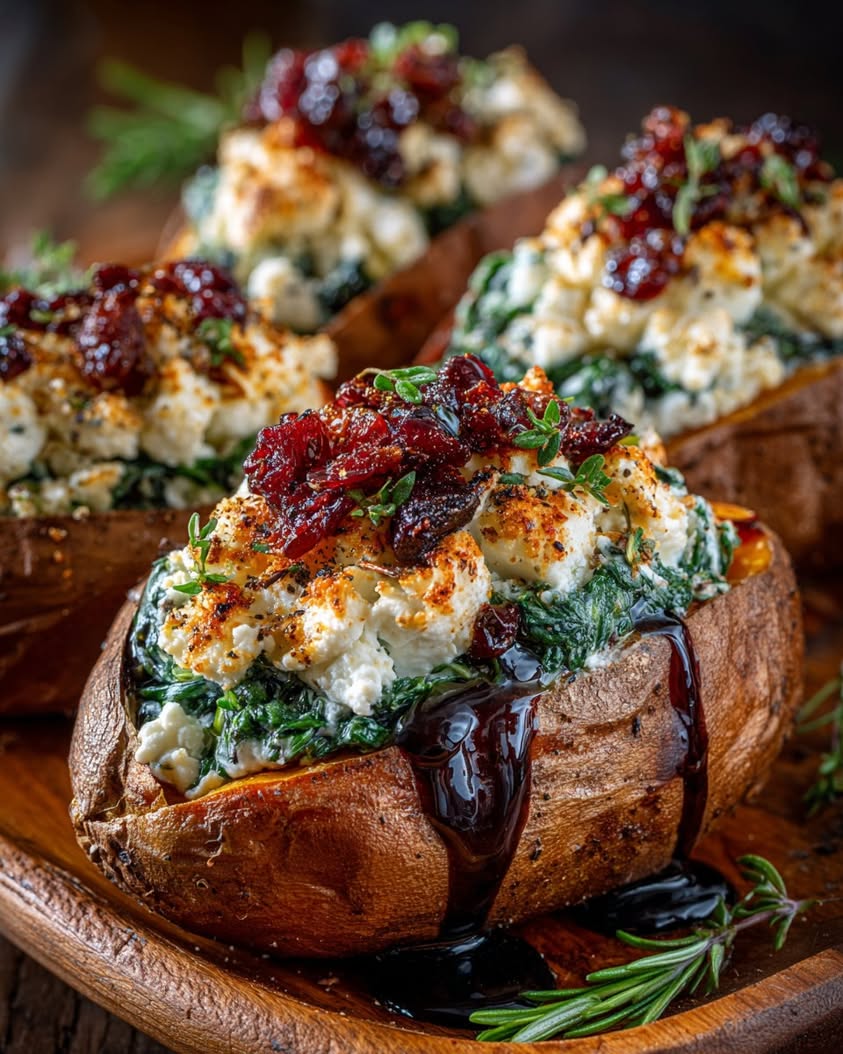
Creamy Ricotta & Spinach Stuffed Sweet Potatoes with Balsamic Cranberry Glaze: A Festive Vegetarian Feast
Imagine a dish that perfectly balances sweet, savory, and tangy notes in one beautiful package. Consequently, these creamy ricotta and spinach stuffed sweet potatoes deliver exactly that experience. Moreover, they are crowned with a glossy balsamic cranberry glaze that elevates the entire meal from simple to spectacular. This recipe transforms humble ingredients into a centerpiece-worthy creation, ideal for both weeknight dinners and holiday gatherings. Ultimately, it proves that vegetarian food can be deeply satisfying, visually stunning, and packed with complex flavors.
The magic of these stuffed sweet potatoes lies in their harmonious contrast. Firstly, the natural sweetness of the roasted potato flesh provides a perfect base. Secondly, a rich and garlicky filling of creamy ricotta and fresh spinach adds a savory, luxurious element. Finally, the sweet-tart balsamic cranberry glaze ties everything together with a burst of festive flavor. This dish is a celebration of texture and taste, offering a creamy interior, a tender potato skin, and a vibrant, glossy sauce. It is a guaranteed crowd-pleaser that will have everyone asking for the recipe.
Quick Recipe Highlights
- Flavor Profile: These creamy ricotta and spinach stuffed sweet potatoes masterfully blend earthy sweetness from the roasted potatoes with the rich, savory notes of garlic and cheese. The sweet-tart balsamic cranberry glaze introduces a sophisticated, tangy finish that cuts through the richness perfectly.
- Texture: You will enjoy a wonderful textural journey, from the soft, fluffy interior of the sweet potato to the creamy, slightly grainy ricotta filling. The glaze adds a luxurious, syrupy mouthfeel, while the optional toasted pecans provide a delightful, crunchy contrast.
- Aroma: While baking, the kitchen fills with the warm, caramelized scent of roasting sweet potatoes and toasted garlic. Subsequently, reducing the balsamic cranberry glaze releases an incredible aroma of sweet berries and tangy vinegar, creating an irresistible festive fragrance.
- Visual Appeal: This dish is a feast for the eyes, featuring vibrant orange potato boats filled with white and green ricotta spinach filling. The deep ruby-red glaze drizzled on top adds a stunning pop of color, making it perfect for holiday tables and social media photos.
- Skill Level Needed: This is an accessible recipe for cooks of all levels. Fundamentally, it requires basic techniques like roasting, sautéing, and making a simple reduction sauce. Therefore, even beginner cooks can achieve impressive, restaurant-quality results with minimal stress.
- Special Equipment: You only need standard kitchen tools: a baking sheet, a medium skillet, and a small saucepan. A fork for testing potato doneness and a spoon for scooping are essential. Meanwhile, a microplane for garlic and a whisk for the glaze are helpful but not strictly necessary.
Recipe Overview
- Difficulty Level: We classify this recipe as easy because it involves straightforward, sequential steps without complicated techniques. The most demanding task is properly roasting the sweet potatoes until tender, which is largely hands-off. Assembling the filling and making the glaze are simple processes that come together quickly while the potatoes bake.
- Category: This versatile dish comfortably fits into multiple meal categories. It serves as a complete and hearty vegetarian main course, a show-stopping side dish for holiday feasts, or even an elegant component of a brunch spread. Its flexibility is one of its greatest strengths for meal planning.
- Cuisine: While not tied to one specific tradition, the dish draws inspiration from modern American and Mediterranean culinary styles. The use of ricotta and spinach nods to Italian flavors, while the sweet potato and cranberry combination feels quintessentially North American, especially during autumn and winter celebrations.
- Cost: This recipe is remarkably cost-effective, utilizing affordable, seasonal produce and pantry staples. Sweet potatoes and fresh spinach are typically inexpensive. Additionally, ricotta cheese is a budget-friendly dairy option. The glaze ingredients—cranberries, balsamic vinegar, and maple syrup—are small quantities that yield big flavor without breaking the bank.
- Season: This recipe shines brightest in the fall and winter months. Sweet potatoes and cranberries are at their peak, making the dish seasonal and flavorful. The warm, comforting nature of the baked stuffed potatoes is perfectly suited for cooler weather, though it can be enjoyed year-round with frozen cranberries.
- Occasion: It is ideal for Thanksgiving, Christmas, or any festive holiday meal as a stunning vegetarian centerpiece. Furthermore, it works beautifully for cozy family dinners, potlucks, or even a special meatless Monday. Its elegant presentation makes it suitable for entertaining guests.
Why You’ll Love This Recipe
First and foremost, the taste and texture appeal is undeniable. Each bite delivers a symphony of flavors: the inherent sweetness of the potato, the savory creaminess of the ricotta and spinach filling, and the bright, tangy punch of the balsamic cranberry glaze. The contrast is both surprising and deeply satisfying. Moreover, the combination of soft, creamy, and slightly crunchy elements keeps your palate engaged from start to finish. This dish proves that healthy, vegetable-forward meals do not have to be bland or boring; they can be the most exciting part of the table.
From a convenience standpoint, this recipe is a dream. While the sweet potatoes roast, you have ample time to prepare the filling and the glaze without rushing. The steps are logical and manageable, leading to a streamlined cooking process. Importantly, the components can be prepared in advance, making final assembly a breeze, especially when hosting. This make-ahead capability transforms it from a complicated project into a stress-free menu item, allowing you to enjoy your own gathering.
Nutritionally, this dish is a powerhouse. Sweet potatoes are loaded with beta-carotene, fiber, and vitamins. Spinach adds iron, folate, and additional fiber. Ricotta provides a good source of protein and calcium. Consequently, you get a well-rounded meal that fuels your body beautifully. The use of maple syrup as a natural sweetener in the glaze is a healthier alternative to refined sugar. This recipe demonstrates how indulgence and nourishment can coexist deliciously on one plate.
For social and entertaining value, this recipe is a true winner. Its visual wow factor immediately draws compliments. As a vegetarian main, it thoughtfully accommodates diverse dietary preferences at the table. Guests will appreciate the care and creativity that went into its preparation. It sparks conversation and often becomes the most talked-about dish of the evening. Serving something this beautiful shows your guests they are worth the extra effort, fostering a warm and memorable dining experience.
Finally, its cost-effectiveness and accessibility cannot be overstated. The ingredients are easy to find at any standard grocery store, with no exotic or expensive items required. Sweet potatoes are a durable, long-lasting vegetable, and frozen cranberries work perfectly when fresh are out of season. This makes it an economical choice for feeding a family or a crowd. You achieve a gourmet-looking result with very humble, affordable components, which is the hallmark of a truly great recipe.
Historical Background and Cultural Significance
The story of the stuffed vegetable is ancient and spans countless cultures. From stuffed grape leaves in the Mediterranean to stuffed peppers in Central Europe, the concept of hollowing out a vegetable and filling it with a savory mixture is a global tradition of resourcefulness and flavor. The sweet potato, native to the Americas, became a staple for Indigenous peoples long before European contact. Its natural sweetness and hearty texture made it a perfect candidate for stuffing, a technique that maximizes satisfaction and minimizes waste.
In the United States, the sweet potato holds deep cultural significance, particularly in Southern cuisine and as a cornerstone of the Thanksgiving feast. Its pairing with cranberries is a relatively modern innovation that plays on classic holiday flavor combinations. The addition of ricotta and spinach introduces an Italian-American influence, reflecting the beautiful fusion that defines contemporary American cooking. This recipe, therefore, sits at a delicious crossroads of tradition and innovation.
The evolution of this specific recipe follows modern culinary trends toward plant-forward eating and visually appealing, restaurant-style plating at home. The balsamic glaze technique, popularized in the late 20th century, adds a chef-inspired touch that elevates home cooking. Combining these elements—the comforting stuffed potato, the trendy glaze, and the focus on vegetarian protein—creates a dish that feels both timeless and of-the-moment. It answers the current demand for meals that are healthy, Instagram-worthy, and deeply flavorful.
Regional variations of stuffed sweet potatoes abound. In the American South, you might find them stuffed with pecans, marshmallows, or a bourbon-infused mixture. In contrast, West Coast versions often feature black beans, avocado, and a lime crema. Our creamy ricotta and spinach stuffed sweet potatoes with a balsamic cranberry glaze borrows from a more Mediterranean palette, showcasing how versatile this vegetable canvas can be. This adaptability is a testament to the sweet potato’s global appeal and its ability to carry a wide range of flavors from different culinary traditions.
Ingredient Deep Dive
Sweet Potatoes: Botanically distinct from yams, sweet potatoes are tuberous root vegetables with a rich history in Central and South America. They are nutritional champions, exceptionally high in beta-carotene (which converts to Vitamin A), Vitamin C, manganese, and fiber. Their natural sugars caramelize during roasting, enhancing their sweetness. For this recipe, choose medium-sized, firm potatoes with smooth, unblemished skin. Avoid any with soft spots or sprouts. Store them in a cool, dark, well-ventilated place—not the refrigerator, as cold temperatures can negatively affect their texture and flavor.
Whole Milk Ricotta Cheese: Ricotta, meaning “recooked” in Italian, is a fresh cheese made from the whey leftover from producing other cheeses. It has a mild, slightly sweet flavor and a creamy, granular texture. For the best results in your stuffed sweet potatoes, seek out whole milk ricotta, which is richer and less watery than part-skim versions. Draining it in a fine-mesh strainer for 15-30 minutes before using can remove excess moisture, ensuring your filling is luxuriously creamy and not runny. Store ricotta in its original container in the coldest part of your refrigerator.
Fresh Spinach: This leafy green is a nutrient-dense powerhouse, providing iron, calcium, magnesium, and vitamins A, C, and K. When cooked, it wilts dramatically, allowing you to incorporate a large volume into the filling, which adds vibrant color and earthiness. For the best flavor and texture, use fresh, crisp spinach leaves. Thoroughly washing and drying them is crucial to prevent a watery filling. Baby spinach is ideal as it is tender and requires minimal stemming. You can substitute frozen chopped spinach that has been thoroughly thawed and squeezed completely dry of all liquid.
Fresh Cranberries: These tart, bright red berries are native to North America and have a long history of use by Indigenous peoples, both as food and medicine. They are packed with vitamin C and unique phytonutrients called proanthocyanidins, known for supporting urinary tract health. When cooked with a sweetener, their intense tartness mellows into a complex, jammy flavor. For the glaze, look for plump, shiny berries that bounce when dropped. Discard any that are shriveled or soft. Fresh cranberries freeze beautifully, so you can buy extra bags in season and use them straight from the freezer for this recipe year-round.
Balsamic Vinegar: True traditional balsamic vinegar (Aceto Balsamico Tradizionale) is an aged, syrupy condiment from Italy, but for cooking, a good-quality, moderately priced balsamic vinegar is perfect. It adds a complex sweetness and acidity that balances the glaze. The reduction process concentrates its flavor and naturally thickens it into a luxurious sauce. Avoid using “balsamic glaze” from a bottle for this step, as it often contains added thickeners and sweeteners. The process of reducing your own vinegar allows you to control the final flavor and consistency perfectly.
Common Mistakes to Avoid
- Undercooking the Sweet Potatoes: The most common error is not roasting the potatoes until they are completely tender all the way to the center. A fork should slide in with absolutely no resistance. If they are undercooked, the flesh will be difficult to scoop and mash, resulting in a lumpy, uneven filling base and a less enjoyable eating experience.
- Overfilling the Potato Skins: It is tempting to pack in as much filling as possible, but overstuffing can lead to spillage in the oven and messy presentation. Furthermore, the filling may not heat through properly in the center. Aim for a generous but neat mound that sits comfortably within the potato shell, allowing for a brief reheating period to warm it through.
- Not Draining the Ricotta: Using ricotta straight from the container can introduce excess moisture into your filling. This moisture can seep out during the final bake, making the filling watery and potentially causing the potato skin to become soggy. Taking a few minutes to drain the ricotta in a sieve ensures a thick, creamy, and stable filling consistency.
- Skipping the Garlic Sauté: Adding raw minced garlic directly to the ricotta mixture can result in a harsh, pungent flavor that overwhelms the other ingredients. Gently sautéing the garlic in olive oil first mellows its bite and infuses the oil with flavor, creating a more rounded, aromatic base for your spinach and ricotta filling.
- Overcooking the Spinach: While you want to wilt the spinach thoroughly, cooking it for too long can make it mushy and cause it to release excessive water into the pan. Cook just until wilted, then immediately transfer it to a colander. Press out any liquid with the back of a spoon to keep your filling from becoming soggy.
- Rushing the Glaze Reduction: The balsamic cranberry glaze needs time to simmer and reduce properly. If you take it off the heat too soon, it will be thin and overly acidic. Conversely, if you cook it too long, it can become overly thick and sticky. The goal is a syrup that coats the back of a spoon and will drizzle beautifully.
- Using Pre-Shredded Parmesan: Pre-shredded cheese often contains anti-caking agents like cellulose, which can prevent it from melting smoothly into the filling. For the best texture and flavor integration, take a moment to freshly grate a block of Parmesan cheese. The difference in creaminess and flavor is significant and well worth the minor extra effort.
- Neglecting to Season in Layers: Seasoning only at the end is a missed opportunity. Remember to season the potato flesh after scooping, season the spinach as it cooks, and season the final ricotta mixture. Building layers of seasoning (salt, pepper, nutmeg) at each stage ensures a deeply flavorful dish from the inside out, not just on the surface.
Essential Techniques
Roasting Sweet Potatoes: Proper roasting is the foundation of this dish. Pricking the potatoes all over with a fork before baking is non-negotiable; it allows steam to escape, preventing them from bursting in your oven. Placing them directly on the oven rack promotes even heat circulation for consistent cooking, though placing them on a foil-lined baking sheet is also fine. The visual cue for doneness is a puckered skin and a very soft feel when gently squeezed (using an oven mitt). A knife or fork should insert into the thickest part with zero resistance.
Wilting Spinach: The goal is to cook the spinach just enough to collapse its volume and soften its texture without making it watery or losing its vibrant green color. Use a large skillet over medium heat with a bit of oil or butter. Add the spinach in batches, stirring constantly. As soon as it is fully wilted—which happens quickly—remove it from the pan. Immediately transfer it to a colander and press out the excess liquid. This step is crucial for a non-watery filling.
Making a Reduction Glaze: A reduction is a simple but essential technique that concentrates flavor and thickens a liquid through evaporation. For the balsamic cranberry glaze, combine the ingredients and bring to a simmer. Maintain a gentle bubble, not a rolling boil, which can cause the sugars to burn. Stir occasionally. The glaze is ready when it has reduced by about half and coats the back of a spoon. It will continue to thicken slightly as it cools. Patience is key; rushing this step with high heat can lead to a bitter, burnt flavor.
Filling and Assembling: After scooping, fluff the sweet potato flesh with a fork before mixing in other ingredients. This creates a light, cohesive base. When combining the ricotta filling, mix gently but thoroughly to distribute the spinach and seasonings evenly without overworking the ricotta, which can make it gummy. Spoon the filling back into the potato skins, mounding it attractively. A final brief bake heats the filling through and can lightly brown the top if you add a sprinkle of cheese.
Pro Tips for Perfect Creamy Ricotta & Spinach Stuffed Sweet Potatoes
For extra creamy potato flesh, after scooping, consider adding a tablespoon of butter or a splash of cream to the warm insides before mixing with the ricotta. This enriches the flavor and creates an even more luxurious texture.
Toast your spices. If using dried herbs or spices like thyme or a pinch of nutmeg in the filling, warm them for 30 seconds in the skillet after cooking the garlic. This quick step awakens their essential oils and dramatically boosts their aromatic contribution to the dish.
Add a textural contrast. Just before serving, sprinkle the stuffed potatoes with toasted chopped pecans, walnuts, or pumpkin seeds. The crunch provides a wonderful counterpoint to the creamy filling and soft potato, elevating the overall eating experience.
Use an ice cream scoop for filling. For neat, uniform mounds of ricotta spinach filling, use a standard ice cream scoop. It makes portioning easy and gives each potato a professional, rounded appearance.
Finish with fresh herbs. A final garnish of chopped fresh parsley, chives, or thyme added after baking introduces a burst of fresh color and a bright flavor note that complements the rich ingredients beautifully.
Let the potatoes rest after roasting. Allow the baked sweet potatoes to cool for 5-10 minutes before handling. They will be easier to split open and scoop without burning your hands, and the flesh will have firmed up slightly for easier mixing.
Customize your glaze. For a deeper flavor, add a sprig of fresh rosemary or a pinch of black pepper to the glaze while it simmers. Remove the rosemary before serving. Alternatively, a small splash of orange juice can add a lovely citrus note.
Check your oven temperature. Oven thermostats can be inaccurate. Use an oven thermometer to ensure your oven is at the correct temperature for roasting. An oven that runs too cool will undercook the potatoes, while one that runs too hot may burn the skins before the interior is tender.
Variations and Adaptations
For regional variations, consider a Southwestern twist by replacing the ricotta with black beans and corn, using chili powder and cumin in the filling, and topping with a lime crema and avocado. Alternatively, a Greek-inspired version could use feta cheese instead of ricotta, add chopped Kalamata olives and oregano to the spinach, and finish with a drizzle of tzatziki instead of the cranberry glaze.
Seasonal adaptations are simple. In spring, use asparagus and peas with lemon zest in the filling and a herb-infused oil. For summer, a filling of corn, cherry tomatoes, and basil with a fresh tomato salsa would be delightful. The cranberry glaze is perfect for fall and winter, but a blueberry or cherry balsamic reduction would work beautifully in the summer months.
Dietary modifications are straightforward. For a vegan version, use a plant-based ricotta alternative, nutritional yeast instead of Parmesan, and ensure your maple syrup is vegan. To make it gluten-free, simply verify that all packaged ingredients (like vinegar) are certified GF—this recipe is naturally gluten-free. For a higher-protein option, mix a beaten egg into the ricotta filling before stuffing to help it set, or add cooked lentils or quinoa to the mixture.
Flavor variations can take this recipe in new directions. Add sun-dried tomatoes and basil for an Italian flair. Incorporate cooked, crumbled vegetarian sausage for a heartier profile. For a hint of warmth, add a pinch of red pepper flakes to the garlic as it sautés. Swapping the Parmesan for sharp cheddar or smoked gouda can completely change the cheese profile.
Texture modifications can cater to personal preference. For a smoother filling, blend the ricotta mixture briefly in a food processor. For more texture, fold in toasted breadcrumbs or panko into the filling itself. Leaving the sweet potato flesh slightly chunkier rather than fully mashed also adds a pleasant, rustic mouthfeel.
Presentation alternatives offer creative freedom. Instead of stuffing the potato skins, you can slice the roasted potatoes into thick rounds, top each round with the ricotta mixture, and drizzle with glaze for elegant canapés. Alternatively, mix all the components together in a baking dish for a deconstructed, casserole-style version that’s perfect for potlucks.
Serving and Presentation Guide
For plating, place each stuffed sweet potato on a warm individual plate or a large serving platter. Use a spoon or squeeze bottle to artfully drizzle the balsamic cranberry glaze over and around the potatoes. Allow some of the vibrant orange potato skin and the green spinach flecks in the white filling to remain visible for a beautiful color contrast. Wipe the edges of the plate clean for a polished, restaurant-quality look.
Garnishing is the final touch that adds freshness and texture. A sprinkle of finely chopped fresh parsley, chives, or thyme adds color and aroma. For crunch, add toasted pecans, walnuts, or pumpkin seeds. A few whole fresh cranberries or a twist of orange zest on the plate can signal the flavors within and enhance the festive appearance.
Traditional accompaniments might include a simple green salad with a light vinaigrette to balance the richness. For a holiday meal, they pair wonderfully with other classic sides like roasted Brussels sprouts, green bean casserole, or a wild rice pilaf. Consider them as a hearty vegetarian main alongside lighter vegetable dishes.
Modern serving suggestions include slicing the stuffed potato in half crosswise for a stunning presentation of the layered interior. Serve them as part of a “bowl” meal over a bed of massaged kale or arugula. For brunch, top with a perfectly poached or fried egg, allowing the yolk to become an additional sauce.
Temperature considerations are important. Serve the stuffed sweet potatoes hot from the final bake, with the glaze warm or at room temperature. The contrast between the hot, creamy filling and the cooler, syrupy glaze is delightful. If preparing components ahead, ensure everything is reheated properly so the dish is served warm throughout.
Portion control is easy with this recipe, as each potato is a natural single serving. For larger appetites or as a main course, one whole potato per person is ideal. As a substantial side dish, you can split one potato between two people, especially if other rich sides are being served. For appetizer portions, use smaller sweet potatoes or cut large stuffed potatoes into thick slices.
Wine and Beverage Pairing
Wine pairings should complement the sweet, savory, and tangy elements. A dry Riesling or Gewürztraminer works beautifully, as their slight sweetness and acidity mirror the sweet potato and cranberry. For red wine lovers, a light-bodied Pinot Noir with its red fruit notes and low tannins won’t overpower the dish. An off-dry rosé is another excellent choice, offering versatility and berry flavors that harmonize with the glaze.
Non-alcoholic alternatives can be just as thoughtful. Sparkling apple cider or a cranberry spritzer (cranberry juice mixed with club soda and a lime wedge) echoes the seasonal flavors. A warm mulled cider with cinnamon and orange would be a cozy companion. For a sophisticated option, try a non-alcoholic sparkling wine or a ginger beer with a squeeze of lime.
Coffee and tea pairings are wonderful for a brunch or lunch serving. A medium-roast coffee with notes of caramel or nut complements the sweet potato’s earthiness. A chai tea latte, with its warm spices like cinnamon and cardamom, would be a luxurious match. For an after-dinner serving, a decaf espresso or a cup of peppermint tea provides a clean, refreshing finish.
Temperature considerations for beverages are straightforward. Generally, serve white wines and sparkling beverages chilled, red wines slightly below room temperature, and warm drinks hot. The goal is to have the beverage temperature provide a pleasant contrast or complement to the warm, baked dish, enhancing the overall dining experience.
Serving suggestions include offering a choice of pairings if you are hosting. Place bottles of suggested wine on the table or have a carafe of a signature non-alcoholic spritzer ready. Always ensure water is readily available to cleanse the palate between bites of the rich, flavorful stuffed potatoes.
Storage and Shelf Life
For storage, allow any leftovers to cool completely to room temperature. Then, transfer the stuffed potatoes to an airtight container. Store the balsamic cranberry glaze separately in a small jar or container. Properly stored, the assembled stuffed potatoes will last in the refrigerator for 3-4 days. The glaze can be refrigerated for up to 2 weeks due to its high acidity and sugar content, which act as natural preservatives.
Temperature requirements are simple: always refrigerate leftovers promptly. Do not leave the stuffed sweet potatoes at room temperature for more than two hours after cooking, as the dairy-based filling is perishable. When reheating, ensure the internal temperature reaches 165°F (74°C) for food safety.
Container recommendations include shallow airtight containers to allow for quick cooling and even reheating. Glass containers are ideal as they do not absorb odors and allow you to see the contents. For the glaze, a small mason jar or squeeze bottle is perfect for easy drizzling upon reheating.
Signs of spoilage to watch for include an off or sour smell, especially from the dairy filling. Visible mold growth, an excessively slimy texture on the potato skin or filling, or a significant change in color are all indicators that the food should be discarded. When in doubt, throw it out.
Reheating instructions are best done in the oven or toaster oven to restore texture. Preheat the oven to 350°F (175°C). Place the stuffed potatoes on a baking sheet, cover loosely with foil to prevent excessive browning, and heat for 15-20 minutes, or until hot throughout. Microwaving is faster but can make the potato skin rubbery and the filling may heat unevenly.
Freezing guidelines are possible but with caveats. You can freeze the baked and stuffed potatoes (without fresh herb garnish) for up to 2 months. Thaw overnight in the refrigerator before reheating. Note that the texture of the potato may become slightly grainy or watery upon thawing, and the spinach may lose some vibrancy. The glaze freezes well in an ice cube tray for easy portioning.
Make Ahead Strategies
Your prep timeline can be spread over two days. On Day 1, roast the sweet potatoes, let them cool, then scoop and mix the flesh with the other filling ingredients. Store the filling mixture and the empty potato skins separately in the refrigerator. Also, prepare the balsamic cranberry glaze and store it in a jar. On Day 2 (day of serving), simply stuff the skins, bake to heat through, warm the glaze, and assemble.
Storage between steps is simple. Once cooled, place the sweet potato flesh mixture in one airtight container and the empty skins in another. The filling may darken slightly from the spinach; this is normal and won’t affect flavor. The glaze can sit at room temperature if used within a few hours, or be refrigerated.
Quality impact assessment shows that make-ahead prep has minimal negative effect. In fact, allowing the flavors in the ricotta spinach filling to meld overnight can enhance the overall taste. The main consideration is the potato skin, which may soften slightly in the fridge. A brief bake without a cover will help re-crisp it slightly before filling.
Assembly tips for the day-of are easy. Bring the filling to room temperature for 20-30 minutes before stuffing to ensure even heating. Fill the cold potato skins generously, place on a baking sheet, and bake until the filling is hot and the top is lightly golden. Reheat the glaze gently in a saucepan or the microwave, adding a teaspoon of water if it has thickened too much.
Reheating guidelines are crucial for food safety and quality. Whether reheating pre-assembled potatoes or baking freshly assembled ones, ensure the internal temperature in the center of the filling reaches 165°F (74°C). Use a food thermometer to check. Cover with foil if the tops are browning too quickly before the center is hot.
Fresh element additions should be saved for after reheating. Add any fresh herb garnishes, a final sprinkle of Parmesan, or toasted nuts after the potatoes come out of the oven. This preserves their texture, color, and fresh flavor. Drizzle with the warm glaze just before serving for the best presentation and mouthfeel.
Scaling Instructions
Halving the recipe is straightforward for a smaller household. Use two medium sweet potatoes. Halve all other ingredient quantities precisely. The cook times will remain the same, as the potatoes roast based on their individual size, not the quantity in the oven. Use a smaller skillet for the spinach and a small saucepan for the glaze. This is a perfect method for a cozy dinner for two.
Doubling or tripling the recipe is ideal for holiday gatherings or meal prep. When roasting a large batch of sweet potatoes, use two baking sheets and rotate them top to bottom halfway through cooking to ensure even roasting. You may need to sauté the spinach in batches to avoid overcrowding the pan. For the glaze, use a wider, heavy-bottomed saucepan to allow for faster, more even reduction when increasing the volume.
Equipment adjustments may be necessary when scaling. For a double batch, ensure your mixing bowl is large enough to comfortably combine all the filling ingredients. You may need to bake the stuffed potatoes in two batches or on two oven racks; if so, rotate the sheets halfway through the final bake. A large, rimmed baking sheet (half-sheet pan) is essential for handling multiple potatoes.
Timing modifications are minimal when scaling up. The initial roasting time for the potatoes does not change. However, the time to prepare the larger volume of filling and glaze will increase linearly. Factor in an extra 10-15 minutes of active prep time when doubling the recipe. The final bake time to heat the stuffed potatoes may need an extra 5 minutes if the oven is very full.
Storage considerations for larger batches are important. If preparing a double batch for later use, consider storing components separately (filling, skins, glaze) rather than pre-assembling all potatoes. This gives you flexibility to reheat only what you need, preserving the quality of the rest. Clearly label containers with contents and the date prepared.
Nutritional Deep Dive
The macro breakdown of one serving is well-balanced. It provides complex carbohydrates from the sweet potato for sustained energy, a moderate amount of protein from the ricotta and Parmesan for satiety and muscle repair, and healthy fats primarily from the olive oil and cheese. The fiber content from the sweet potato and spinach is significant, aiding digestion and promoting a feeling of fullness. This makes it a complete meal that stabilizes blood sugar levels.
Micronutrient analysis reveals a wealth of vitamins and minerals. Sweet potatoes are famously rich in beta-carotene (Vitamin A), crucial for vision and immune function. Spinach contributes iron, folate, and Vitamin K. Ricotta and Parmesan provide calcium and phosphorus for bone health. The cranberries add Vitamin C and unique antioxidants. Together, they create a nutrient-dense dish that supports overall wellness.
Health benefits are numerous. The high fiber and antioxidant content supports heart health and reduces inflammation. The combination of protein and fiber promotes excellent satiety, which can aid in weight management by preventing overeating. The vitamins and minerals support immune function, skin health, and energy production. This dish is a prime example of how delicious food can also be functional medicine for the body.
Dietary considerations are mostly positive. The recipe is naturally gluten-free. It is vegetarian and can be adapted to other dietary needs as outlined. For those monitoring sodium, you can control the amount of added salt and use a lower-sodium Parmesan. For individuals watching saturated fat, part-skim ricotta can be used, though whole milk ricotta provides more satisfaction and better texture.
Portion analysis shows one stuffed sweet potato is a substantial and satisfying single serving. As a main course, it provides a complete meal. If served as a side dish alongside other proteins, a half portion may be sufficient. The calorie and nutrient density is appropriate for an entrée, offering a good balance of energy and nutrition without excessive empty calories.
Weight management tips include being mindful of the amount of cheese and oil used if you are strictly counting calories. You can reduce the olive oil by using a non-stick pan for the spinach. Using part-skim ricotta will lower the fat content slightly. Remember, the high fiber and protein content are your allies for feeling full and satisfied, which is key to sustainable weight management.
Dietary Adaptations
For a gluten-free version, this recipe is naturally compliant as written. Simply double-check that your balsamic vinegar is certified gluten-free, as very rare instances of cross-contamination can occur. All other ingredients—sweet potatoes, ricotta, spinach, cranberries, maple syrup—are inherently gluten-free. This makes it a safe and celebratory option for those with celiac disease or gluten sensitivity.
A dairy-free adaptation requires substitutions for the ricotta and Parmesan. Use a high-quality, firm plant-based ricotta alternative made from almonds, cashews, or soy. For the Parmesan, use a store-bought vegan Parmesan or make your own from nutritional yeast, ground nuts, and salt. Ensure the plant-based ricotta is well-drained, as some varieties can be more watery than dairy ricotta.
To make this recipe vegan, follow the dairy-free adaptations above. Additionally, ensure the maple syrup is vegan (most are, but some processed sugars use bone char). Use a plant-based butter or oil for sautéing the spinach. The rest of the ingredients are
Print
Creamy Ricotta & Spinach Stuffed Sweet Potatoes with Balsamic Cranberry Glaze
Description
A comforting and elegant dish featuring roasted sweet potatoes stuffed with a creamy ricotta and spinach filling, topped with a tangy-sweet balsamic cranberry glaze.
Ingredients
For the Crust:
- 4 medium sweet potatoes
- 1 tablespoon olive oil
- 1 cup fresh spinach, chopped
- 1 cup ricotta cheese
- 1/4 cup grated Parmesan cheese
- 1 clove garlic, minced
- 1/2 teaspoon dried thyme
- Salt and black pepper to taste
- 1/2 cup cranberries
- 1/4 cup balsamic vinegar
- 2 tablespoons honey
- Fresh parsley for garnish
Instructions
1. Prepare the Crust:
- Preheat oven to 400°F (200°C). Scrub sweet potatoes, pierce with a fork, rub with olive oil, and bake for 45-50 minutes until tender.
- While potatoes bake, prepare glaze: In a small saucepan, combine cranberries, balsamic vinegar, and honey. Simmer over medium heat for 10-12 minutes until cranberries burst and sauce thickens. Set aside.
- In a skillet, sauté spinach and garlic over medium heat until wilted, about 3 minutes. Remove from heat and let cool slightly.
- In a bowl, mix ricotta, Parmesan, sautéed spinach, thyme, salt, and pepper until well combined.
- Once sweet potatoes are cooked, slice open lengthwise and fluff flesh with a fork. Divide ricotta mixture evenly among potatoes, stuffing generously.
- Return stuffed potatoes to oven for 5-7 minutes to warm filling. Drizzle with balsamic cranberry glaze and garnish with parsley before serving.
Notes
You can customize the seasonings to taste.

I’m Shaykee—born in Morocco, seasoned across continents. From airplane galleys to home kitchens, I share the flavors and stories that shaped my journey.