
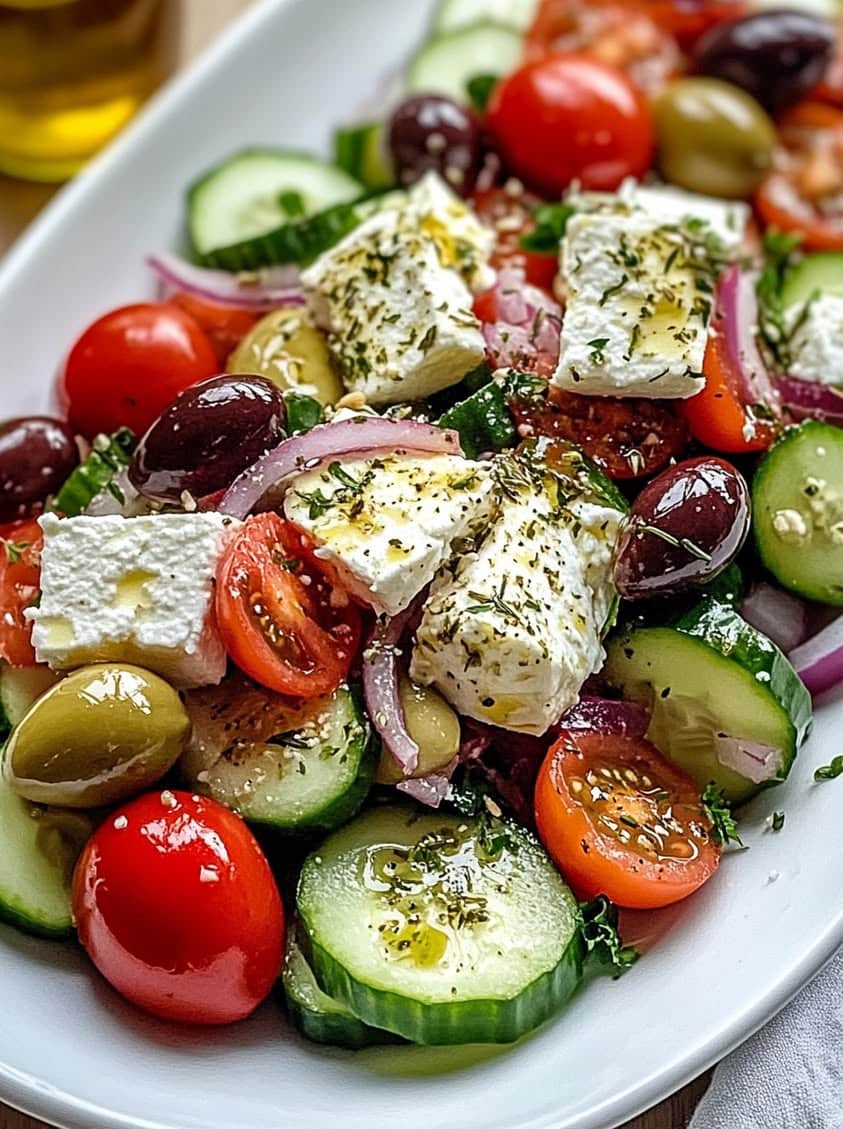
Classic Horiatiki Salad: The Authentic Greek Summer on Your Plate
Imagine the sun-drenched terraces of a Greek island. Consequently, the air smells of salt and wild oregano. Then, a simple, stunning plate arrives. This is the authentic Greek Horiatiki salad, a masterpiece of minimalism. Fundamentally, it celebrates peak-season produce with unwavering confidence. Moreover, this is not the chopped salad you find in many restaurants. Instead, it is a composition of bold, distinct elements. Each ingredient stands proudly on its own.
This recipe delivers the true taste of a Greek salad tradition. For instance, you will use thick slabs of briny feta, not crumbles. Additionally, ripe tomatoes release their juices to form the dressing. Meanwhile, crisp cucumber and sharp red onion provide contrast. Finally, briny Kalamata olives and a generous sprinkle of oregano complete the picture. Ultimately, every bite is a vibrant, textural journey. This dish is the essence of the Mediterranean diet made tangible.
Creating an authentic Horiatiki salad is an act of respect for quality. Therefore, success hinges on sourcing the best ingredients you can find. Specifically, seek out ripe, flavorful tomatoes and authentic Greek feta cheese. The result is a salad that is simultaneously refreshing and satisfying. It is a perfect light lunch, a spectacular side dish, or a shared appetizer. Indeed, it brings the spirit of a Greek summer to your table, no matter the season.
Quick Recipe Highlights
- Flavor Profile: This authentic Greek Horiatiki salad offers a brilliant balance. Firstly, sweet, acidic tomato juice mingles with salty feta and briny olives. Secondly, fresh oregano adds an earthy, aromatic top note. Every flavor component is clear and distinct.
- Texture: The experience is wonderfully varied. For example, you get the juicy burst of tomato, the crisp crunch of cucumber and pepper, and the creamy, firm bite of the feta slab. Meanwhile, the olives provide a dense, meaty chew. There is no sogginess, only freshness.
- Aroma: The scent is instantly evocative of the Greek countryside. Fresh oregano is the star, releasing its fragrance when dried between your fingers. Additionally, the salty tang of the feta and the bright acidity of the tomato complete the aromatic profile. It smells like sunshine and the sea.
- Visual Appeal: Presentation is key. The salad is arranged, not tossed. Consequently, you see vibrant red tomato wedges, green cucumber slices, and purple onion rings. A pristine white slab of feta rests proudly on top, adorned with dark Kalamata olives. It is a rustic, beautiful mosaic on a plate.
- Skill Level Needed: This recipe requires absolutely zero cooking skill. However, it demands good judgment in selecting produce. The technique is about assembly and respect for ingredients. Anyone can make it, but the quality of your components dictates the final result.
- Special Equipment: You need only a sharp knife and a large serving platter. A traditional shallow bowl or plate is ideal for presentation. There is no need for blenders, mixers, or fancy tools. Simplicity is the guiding principle from start to finish.
Recipe Overview
- Difficulty Level: This authentic Greek Horiatiki salad is categorically easy. There is no cooking involved. The challenge, conversely, lies not in technique but in ingredient procurement. You must find ripe, in-season tomatoes and authentic Greek feta. If you have excellent ingredients, you cannot fail. The assembly process takes mere minutes.
- Category: This dish is incredibly versatile. It functions perfectly as a light vegetarian main course, especially in summer. Furthermore, it shines as a substantial side dish alongside grilled meats or fish. Traditionally, it is also a shared appetizer or mezze, meant to be enjoyed communally with bread.
- Cuisine: This is the definitive salad of Greece, specifically known as Horiatiki, meaning “village” or “peasant” salad. It originates from rural Greek cooking, designed to showcase the summer harvest. The cuisine is pure Mediterranean, emphasizing fresh vegetables, olive oil, cheese, and olives. It is a cornerstone of the celebrated Mediterranean diet.
- Cost: The cost is moderate and depends entirely on your ingredients. Imported Greek feta and Kalamata olives will be the priciest items. However, tomatoes, cucumber, and onion are typically inexpensive. Using high-quality extra virgin olive oil is a worthwhile investment that elevates the entire dish. Overall, it delivers exceptional value for the flavor.
- Season: This salad is a quintessential summer dish. It is best when tomatoes and peppers are at their flavorful peak, usually from late spring through early fall. Making it with winter tomatoes defeats its purpose. For the authentic experience, wait for the right produce. That is when the magic happens.
- Occasion: It is ideal for casual outdoor lunches, picnics, and barbecues. Moreover, it is a stunning addition to a mezze spread for entertaining. You can serve it at a formal dinner as a refreshing palate-cleanser. Essentially, its rustic elegance suits almost any gathering, from weeknight dinners to festive parties.
Why You’ll Love This Recipe
You will adore the taste and texture appeal of this authentic Greek Horiatiki salad. Each forkful delivers a symphony of sensations. The juicy, sweet-tart tomatoes provide a liquid base. Then, the crunchy cucumber and bell pepper offer a refreshing contrast. The creamy, salty punch of the feta slab is the undisputed star. Meanwhile, the briny olives and aromatic oregano tie everything together. It is a dish that is far greater than the sum of its parts. Furthermore, the absence of lettuce means every bite is packed with flavor and substance, never filler.
The convenience and preparation benefits are undeniable. This salad comes together in under fifteen minutes with no cooking required. It is the ultimate last-minute dish for unexpected guests or easy weeknights. You simply chop, slice, and arrange. There is no complicated dressing to whisk; the tomato juices and olive oil create it naturally. This simplicity, however, demands you use the best ingredients. Consequently, it teaches you to shop for quality. It is a lesson in how minimal effort with maximal-quality components yields extraordinary results.
Nutritional advantages are a major highlight. This salad is a poster child for the heart-healthy Mediterranean diet. It is packed with vitamins from fresh vegetables and antioxidants from olive oil and oregano. The feta provides protein and calcium, while the olives offer healthy fats. It is naturally low in carbohydrates if you avoid soaking up all the delicious juices with bread. Eating this salad feels nourishing and clean. It is a meal that fuels your body with real, whole foods, leaving you satisfied but not heavy.
The social and entertaining value is immense. This dish is meant to be shared from a central platter, encouraging conversation and interaction. It is a visually stunning centerpiece that sparks immediate compliments. Serving an authentic Greek salad shows thoughtfulness and a commitment to genuine flavors. It pairs effortlessly with a variety of other dishes, making menu planning simple. Whether at a casual backyard grill or a more formal dinner party, it always fits in. It creates a sense of communal dining and Mediterranean leisure.
Cost-effectiveness and accessibility are final key points. While premium ingredients cost more, the recipe uses them efficiently. A single block of feta and a handful of olives go a long way. The vegetable components are generally affordable. You do not need any special equipment or obscure spices. Most importantly, the recipe is accessible to cooks of all levels. It proves that you do not need complex techniques to make unforgettable food. You just need to understand and respect a few magnificent ingredients.
Historical Background and Cultural Significance
The origin story of the Horiatiki salad is rooted in the practical, rural life of Greek villages. “Horiatiki” directly translates to “villager’s” or “peasant’s” salad. It was not created in a restaurant but in home kitchens and fields. Farmers and families would use what was abundantly available in their summer gardens: tomatoes, cucumbers, onions, and peppers. They would add preserved staples like olives and cheese from their own production. The dish was a way to create a refreshing, filling meal without cooking over a hot fire during the scorching summer months. It was sustenance born from the land and the season.
Cultural importance of this salad cannot be overstated. It is a national symbol of Greece and a daily staple during the summer. It represents the Greek philosophy of “philoxenia,” or hospitality, often being one of the first dishes offered to guests. More than just food, it embodies a way of life—slow, communal, and connected to the earth. The act of sharing a platter of Horiatiki, dipping bread into the communal juices, is a social ritual. It is a dish that tells the story of Greek resilience, simplicity, and celebration of the harvest.
The evolution of the recipe is a story of migration and adaptation. As Greek immigrants traveled, they brought their culinary traditions. The “Greek salad” found abroad often mutated to include local ingredients like lettuce, which is never used in the authentic version. This was partly to stretch expensive ingredients and partly to cater to different expectations. However, the core principles remained. In Greece itself, the recipe has stayed remarkably true to its roots. It is a testament to the perfection of its original form that it has resisted major change for generations.
Regional variations within Greece are subtle but present. On some islands, you might find capers added for an extra briny kick. The type of oregano can vary, with wild Greek oregano being the most prized. The variety of tomato used depends on what grows locally. Some regions may use a different local cheese, though feta is the standard. The one unbreakable rule is the absence of lettuce. These small variations celebrate local produce while honoring the fundamental structure of the dish. They show a living tradition that respects its origin but allows for personal and regional expression.
Ingredient Deep Dive
Let us start with the tomatoes. They are the non-negotiable foundation of an authentic Greek Horiatiki salad. Culturally, the tomato’s journey to Greece from the Americas transformed Mediterranean cuisine. Nutritionally, they are rich in lycopene, vitamin C, and potassium. For selection, choose ripe, heavy tomatoes that smell fragrant at the stem end. Heirloom varieties like beefsteak or vine-ripened tomatoes are excellent. Avoid refrigerating them, as cold kills flavor and texture. Store at room temperature until perfectly ripe. If you must substitute, the best option is ripe cherry or grape tomatoes, halved.
Next, examine the feta cheese. Authentic Greek feta is a PDO product, meaning it must be made in Greece from at least 70% sheep’s milk, often blended with goat’s milk. This gives it a specific tangy, salty, and creamy character. It is a significant source of calcium and protein. When selecting, look for “Made in Greece” on the block stored in brine. Avoid pre-crumbled feta, which contains anti-caking agents. The slab should be firm enough to slice but still creamy. Store it submerged in its brine in the refrigerator. For a dairy-free version, a firm, brined almond or tofu-based “feta” can work, though the flavor profile changes.
Consider the Kalamata olives. These dark, almond-shaped olives hail from the region of Kalamata in the Peloponnese. They are protected by a PDO designation as well. They are typically cured in wine vinegar or brine, giving them a rich, fruity, and winy flavor compared to other black olives. They are a good source of monounsaturated fats and vitamin E. Select olives sold from a brine barrel at a deli counter for the best texture and flavor. Pitted olives are convenient but can be mushier. Store them in their liquid in the refrigerator. If substituting, other Greek olives like Halkidiki are acceptable, but avoid canned black olives, which lack the necessary depth.
Finally, the extra virgin olive oil. This is the liquid gold of Greek cuisine. It should be the highest quality you can afford, as its flavor is front and center. Look for cold-pressed, early harvest oil for a peppery, robust finish. Nutritionally, it is packed with heart-healthy monounsaturated fats and antioxidants. It does not just dress the salad; it melds with the tomato juices to create the sauce. Store it in a cool, dark place to prevent rancidity. There is no true substitute for good EVOO, but a mild, high-quality olive oil is better than a poor extra virgin. This ingredient is where you should never compromise.
Common Mistakes to Avoid
- Using unripe or flavorless tomatoes. This is the cardinal sin. The salad’s “dressing” comes from the tomato juices. Without ripe, flavorful tomatoes, you will have a bland, dry salad. Always wait for in-season, fragrant tomatoes.
- Crumbling the feta cheese. Authentic Greek Horiatiki salad features a slab of feta placed on top. Crumbling it causes it to disappear and become soggy. The slab allows you to control the perfect cheesy bite with each forkful.
- Adding lettuce. This is the most common Western adaptation. Lettuce waters down the flavors, wilts quickly, and is not traditional. The salad is meant to be composed of sturdy, flavorful vegetables that hold their own.
- Dicing the vegetables too small. The ingredients should be chunky and substantial. Large wedges of tomato and thick slices of cucumber maintain their texture and provide a satisfying, rustic eat. Fine chopping turns it into a salsa.
- Using pre-mixed, vinegar-based dressing. The only dressing is extra virgin olive oil. The salt draws moisture from the tomatoes and onions to create a natural, flavorful brine. Adding vinegar or lemon juice overpowers this delicate balance.
- Not salting the tomatoes and cucumbers. Sprinkling salt on these vegetables after arranging them is crucial. It seasons them directly and helps draw out their juices to form the base of the dish. Skipping this step results in a bland salad.
- Using low-quality olive oil. Since the oil is not masked by other dressing ingredients, its quality is paramount. A bland or rancid oil will ruin the entire dish. Invest in a good bottle of Greek extra virgin olive oil.
- Forgetting to rub the oregano. Dried Greek oregano should be rubbed between your palms over the salad. This simple action releases its essential oils and maximizes its fragrance. Simply sprinkling it from the jar is less effective.
- Overcrowding the platter. The salad should be arranged in a single layer, not piled high. This allows each ingredient to be seen and accessed easily. It also prevents the vegetables at the bottom from becoming soggy under the weight.
- Serving it ice-cold. While refreshing, the flavors of the tomato and olive oil are muted when too cold. Take the ingredients out of the fridge 15-20 minutes before assembling for the most vibrant taste.
Essential Techniques
The first essential technique is salting for juice. After arranging your tomato and cucumber on the platter, you must generously season them with sea salt. This is not just for flavor. The salt performs osmosis, drawing the natural liquids out of the vegetables. These juices, combined with the olive oil, create the iconic, flavorful pool at the bottom of the platter. This is the salad’s dressing. The key is to do this immediately before adding the oil and serving, so the vegetables retain their crispness while still releasing their liquid. Do not skip this step.
Another critical technique is the slab presentation of the feta. Do not crumble or cube it. Place a whole rectangular slab gently on top of the arranged vegetables. This serves multiple purposes. Visually, it is a stunning centerpiece. Practically, it prevents the cheese from dissolving into the juices and becoming mushy. Diners can then break off a piece of feta with each bite, ensuring the perfect ratio of creamy cheese to vegetable. To master it, use a sharp knife to cut a clean block from a larger piece. The slab should be substantial, about half an inch thick.
Finally, master the oregano rub. Using dried Greek oregano is traditional and preferred for its intense flavor. Do not just shake it from the container. Take a pinch and rub it vigorously between the palms of your hands directly over the salad. The friction and warmth from your hands release the essential oils locked in the dried herb, dramatically intensifying its aroma and flavor. This simple, 3-second action transforms the oregano from a dusty sprinkle into a fragrant, potent seasoning. It is the finishing touch that makes the salad smell authentically Greek.
Pro Tips for Perfect Classic Horiatiki Salad
First, always use a shallow, wide platter instead of a deep bowl. This allows for the beautiful, single-layer arrangement that is characteristic of the dish. It also gives the juices a place to pool without drowning the vegetables.
Second, slice your red onion very thinly. Soak the slices in a bowl of ice water for 10 minutes before assembling. This step tames their raw sharpness and gives them a pleasant crispness, making them more palatable.
Third, use your hands to gently mix the salad at the table just before serving. This lightly coats everything with the juices and oil without bruising the vegetables or disturbing the beautiful presentation too much.
Fourth, serve with thick slices of crusty bread, like sourdough or rustic country loaf. The bread is not just a side; it is an essential tool for “papara” – mopping up every last drop of the incredible tomato-olive oil juice.
Fifth, if your tomatoes are not perfectly ripe, a tiny pinch of sugar sprinkled over them can help balance their acidity. This is a cheat, but it is better than a sour salad. The best solution, however, is to wait for good tomatoes.
Sixth, add the olives whole with their pits. The pits impart a deeper flavor to the surrounding juices. Just remind your guests they are there. Provide a small bowl on the table for the discarded pits.
Seventh, for the ultimate experience, use a flaky sea salt like Maldon for finishing. Its texture and mild flavor provide little bursts of seasoning that are superior to fine table salt.
Eighth, consider adding a few whole pepperoncini peppers on the side. They are not always traditional, but they offer a nice vinegary, spicy kick for those who want it, without affecting the main salad’s balance.
Variations and Adaptations
For regional variations, explore Greek island touches. In Crete, you might find a handful of fresh barley rusks (dakos) underneath the salad to soak up the juices. In the Cyclades, capers are a frequent addition, adding a pungent, salty pop. Some mainland versions include a green pepper instead of, or in addition to, the red. These small changes reflect local pantry staples and preferences, showing the adaptive nature of peasant cooking while staying true to the core formula.
Seasonal adaptations are straightforward but important. In peak summer, use any glorious tomato variety you find. In early fall, incorporate roasted red peppers for sweetness. While not traditional, adding roasted eggplant in late summer can be delicious. The winter is not the season for this salad; it is best to wait. However, using high-quality greenhouse cherry tomatoes can provide a passable version when a craving strikes, though it will lack the depth of a summer tomato.
Dietary modifications are easily managed. For a vegan Greek salad, omit the feta or use a high-quality vegan feta alternative. Be aware that the saltiness will decrease, so you may need to adjust seasoning. For a lower-fat version, reduce the amount of olive oil slightly, but do not eliminate it, as it is essential for flavor and nutrient absorption. For a keto or low-carb adaptation, simply enjoy the salad as-is and avoid the bread for dipping.
Flavor variations can be fun for experimentation. Add a few sprigs of fresh mint or dill for a different herbal note. A light zest of lemon over the top can brighten it, though purists may object. For a richer flavor, add a tablespoon of rinsed, chopped anchovy fillets or a sprinkle of dried mint, which is common in some parts of Greece. These tweaks should be subtle, enhancing rather than overpowering the classic profile.
Texture modifications are generally not recommended, as the specific textures are integral to the experience. However, if you dislike raw onion, you can pickle the slices lightly in red wine vinegar before adding them. If you want more crunch, add some thinly sliced radishes. For a softer texture, you can briefly marinate the cucumber slices in the salt before assembling. These changes move away from tradition but can cater to personal preference.
Presentation alternatives can refresh the look for entertaining. Instead of one large platter, create individual portions on small plates. You can also deconstruct it for a modern twist: serve a tomato “caprese” style with a slab of feta, topped with an olive and a drizzle of oil. For a family-style meal, keep the classic platter presentation, as it encourages sharing and interaction, which is part of the dish’s soul.
Serving and Presentation Guide
Plating techniques are fundamental. Use a large, flat, white or earth-toned platter to make the colors pop. Start by arranging the tomato wedges and cucumber slices in an overlapping circle or casual layer at the bottom. Scatter the pepper strips and onion rings evenly over and around them. This creates a bed. Then, place the majestic slab of feta directly in the center. Arrange the Kalamata olives around the feta and in any gaps. The goal is a composed, artful, yet rustic look where every ingredient is visible and inviting.
Garnishing ideas should be minimal. The final drizzle of extra virgin olive oil is the primary garnish. You can add a final light sprinkle of dried oregano after rubbing it. A very light grind of black pepper is acceptable, though not always traditional. Sometimes, a single fresh oregano sprig placed on the feta adds a touch of green. Avoid parsley or other herbs that are not part of the authentic flavor profile. The beauty is in the simplicity of the ingredients themselves.
Traditional accompaniments are non-negotiable. Crusty, dense bread is mandatory. It is used to scoop up the salad and, most importantly, to soak up the heavenly juices left on the plate. This is considered the best part of the meal. The salad is also often served as part of a mezze spread with other dishes like tzatziki, dolmades, grilled octopus, or souvlaki. A glass of chilled white wine or ouzo with water completes the traditional Greek table setting perfectly.
Modern serving suggestions can include pairing it with grilled proteins like chicken, lamb chops, or whole fish. It can also be served alongside grain bowls with farro or quinoa for a more substantial vegetarian meal. For a lunch, place a portion of the salad next to a scoop of creamy hummus. The key is to let the salad be the bright, acidic, and refreshing counterpoint to richer, warmer dishes. Its versatility is one of its greatest strengths.
Temperature considerations are important. The vegetables should be cool but not ice-cold. Take them out of the refrigerator 15-20 minutes before assembling. The olive oil should be at room temperature. The feta can be cold from the brine, as its cool creaminess is pleasant against the other components. Never serve the salad chilled on a frozen plate, as this numbs the flavors. It is a dish that sings at a cool room temperature.
Portion control tips are simple. As a main course, plan for one large tomato and a quarter of a cucumber per person, plus a substantial piece of feta. As a side dish, you can reduce the amounts by about one-third. Because the salad does not contain leafy greens that wilt, leftovers keep reasonably well for a day, so erring on the side of more is better than less. Remember, people will eat more because it is delicious, especially with the bread for dipping.
Wine and Beverage Pairing
Wine pairings for an authentic Greek Horiatiki salad are a delight. The salad’s high acidity and salty components call for wines with good acidity and mineral character. A classic Greek pairing is a crisp, dry Assyrtiko from Santorini. Its citrus notes and steely minerality cut through the richness of the feta and olive oil beautifully. Other excellent Greek choices include Roditis or a dry Moschofilero. From the wider world, a Sauvignon Blanc from New Zealand, a Vermentino from Italy, or a dry Provençal Rosé all work wonderfully. Avoid oaky or buttery whites, as they will clash with the salad’s freshness.
Non-alcoholic alternatives should also be refreshing and crisp. Sparkling water with a squeeze of lemon or a slice of cucumber is perfect. For something more special, try a homemade oregano-infused lemonade—steep a few sprigs of fresh oregano in simple syrup before mixing with lemon juice and water. Iced herbal teas, like mint or chamomile, are also lovely. The goal is a beverage that cleanses the palate between bites of the salty feta and briny olives, much like the wine does.
Coffee and tea pairings are not typical for the meal itself, as this is a lunch or dinner dish. However, after a meal featuring this salad, a strong Greek coffee or a cup of mint tea would be a traditional and fitting end. The bitter notes of the coffee contrast the lingering salty, oily flavors. The mint tea aids digestion after a meal that, while healthy, can be rich from the olive oil and cheese. These are for the post-meal moment, not during.
Temperature considerations for beverages are straightforward: everything should be well-chilled. White wine and rosé should be served at 45-50°F. Sparkling water and non-alcoholic drinks should be ice-cold. The contrast between the cool, crisp beverage and the cool, vibrant salad is key. Warm drinks would feel out of place against the salad’s refreshing nature. Always have plenty of cold water on the table as well, as the saltiness will make guests thirsty.
Serving suggestions involve simplicity. Pour wine into clear glasses to appreciate its color. Serve water in sturdy tumblers. For non-alcoholic infusions, a glass pitcher shows off the added herbs or fruit. The presentation should be as effortless and inviting as the salad itself. Encourage guests to sip and savor between bites, using the drink as a palate reset to fully appreciate each flavor in the salad anew.
Storage and Shelf Life
Storage methods for leftovers are important. The authentic Greek Horiatiki salad is best eaten immediately. However, if you must store it, carefully transfer any leftovers to a shallow, airtight container. Do not store it in a deep bowl where the vegetables will stew in the juices. It is best to store the vegetable base and the feta slab separately if possible. Place the container in the coldest part of your refrigerator, not in the door.
Temperature requirements are standard refrigerator temperatures, at or below 40°F. The salad should never be left at room temperature for more than two hours, as the cut vegetables and dairy can become a breeding ground for bacteria. When taking it on a picnic, keep the platter in a cooler with ice packs until ready to serve. Remember, the flavors are best at cool room temperature, so pull it from the cooler about 15 minutes before eating.
Container recommendations include glass or BPA-free plastic containers with tight-fitting lids. Shallow containers are vastly superior to deep ones for preventing sogginess. If you have a large portion, consider dividing it into two smaller, shallower containers. For the feta slab, you can store it separately in a small container covered with its brine or a little olive oil to prevent drying out.
Signs of spoilage are usually obvious. Look for a sour or off smell beyond the normal tang of tomato and feta. The vegetables, especially the cucumbers, will become unpleasantly slimy and limp. The tomato juice may become excessively cloudy or bubbly. If the feta develops an unusual color or sticky surface, discard it. When in doubt, throw it out. The shelf life of a dressed salad is very short.
Reheating instructions do not apply, as this is a cold salad. You should never reheat or microwave it. The goal with leftovers is to enjoy them cold from the fridge, though the texture of the cucumber and pepper will be softer. Some people actually enjoy the more marinated flavor of the vegetables on day two.
Freezing guidelines are simple: do not freeze this salad. Freezing will utterly destroy the texture of every single component. The tomatoes and cucumbers will become watery mush upon thawing, and the feta will crumble and become grainy. This is a dish to be enjoyed fresh. If you have a surplus of summer tomatoes, consider making a tomato sauce or freezing them separately for cooking, not for salad.
Make Ahead Strategies
Prep timeline can ease last-minute work. The day before, you can wash and dry all your vegetables. You can slice the cucumbers and store them in a sealed container lined with a paper towel in the fridge. You can slice the onions and keep them in ice water in the fridge. You can cut the bell peppers into strips. Do not cut the tomatoes until the day of serving, as they lose structure and juice. Keep the feta block whole in its brine.
Storage between steps is about maintaining crispness. Keep pre-cut cucumbers and peppers in separate containers. The onion can stay in its water bath. Have your olives drained and ready. Measure out your olive oil and have your salt and oregano handy. This “mise en place” turns the final assembly into a quick, stress-free process of arranging rather than frantic chopping.
Quality impact assessment is crucial. Pre-cutting tomatoes even a few hours ahead will result in significant juice loss and a less flavorful “dressing” in the final salad. Therefore, tomato prep is the absolute last task. Pre-salting vegetables will also draw out too much water, making them limp. The goal of make-ahead is prep, not partial assembly. The final construction should happen within 30 minutes of serving for optimal texture.
Assembly tips for speed involve having your platter ready. Start with the tomato wedges, then cucumber, then pepper and drained onion. Season with salt. Add olives. Place the feta slab. Drizzle generously with oil. Finally, rub the oregano over the top. This order is efficient and logical. If transporting, assemble the vegetable base on the platter, cover loosely with plastic wrap, and carry the feta, oil, and oregano separately to add on-site.
Reheating guidelines are not applicable. For a make-ahead meal, you are aiming for a cool, assembled salad, not a warm one. If you must travel with it fully assembled, keep it level in a cooler and expect some natural mingling of juices, which is actually part of the charm. Just avoid letting it sit in a hot car.
Fresh element additions are the key to a make-ahead plan. The oregano must be added at the last second to preserve its aroma. The final drizzle of oil should also be done just before serving to maintain its fresh, fruity flavor. If you add oil hours ahead, it can start to taste muted. Think of the oil and oregano as the final, live seasoning that awakens the entire dish.
Scaling Instructions
Halving the recipe is straightforward for a smaller household. Use one large tomato, half a cucumber, a quarter of a red onion, half a bell pepper, and a smaller slab of feta. Reduce the olives and oil proportionally. The technique remains identical. Use a smaller platter to maintain the beautiful, composed presentation. The salting step is even more important with fewer vegetables, as you need to ensure enough juice is drawn out to create the dressing pool.
Doubling or tripling the recipe for a crowd works well. The key is to use multiple large platters rather than one enormous, deep bowl. Piling the salad high will crush the bottom layers. Arrange each platter identically. You may need to slice more feta slabs from a larger block. Keep the ratio of oil to vegetables consistent—do not skimp on the oil because you are making more. In fact, you may need a little extra to ensure everything is glossy and coated.
Equipment adjustments when scaling up are minimal. You will need more platters and a larger workspace for chopping. A very sharp chef’s knife is essential for efficiently prepping large volumes of vegetables. Consider using a mandoline for uniformly thin onion slices if doing a large batch. For a huge event, you can prepare the vegetable components in large food-safe tubs and assemble platters just before serving to maintain freshness.
Timing modifications are slight. Prep time will increase linearly with the quantity. Chopping ten tomatoes takes longer than chopping four. Factor this in. However, the assembly time per platter remains about the same. The benefit of scaling this salad is that there is no cooking time to manage, so you can focus entirely on prep and presentation. It is an excellent choice for feeding a large group without kitchen congestion.
Storage considerations for large batches are similar. If you have leftovers from a doubled recipe, store them in several shallow containers rather than one giant one. This cools the food faster and more evenly, which is critical for food safety. Label containers with the date. Remember, the salad’s quality diminishes after day one, so try to scale as accurately as possible for your event.
Nutritional Deep Dive
Macro breakdown of this authentic Greek Horiatiki salad is favorable. A typical serving provides a balance of healthy fats from the olive oil and olives, moderate protein from the feta cheese, and complex carbohydrates from the vegetables. It is relatively low in net carbs, as the vegetables are high in fiber and water. The olive oil contributes the majority of the calories, but these are from monounsaturated fats, which are beneficial for heart health. The salad is not a high-protein meal on its own, which is why it is often served with grilled meat or fish.
Micronutrient analysis reveals a wealth of vitamins and minerals. Tomatoes are rich in vitamin C, potassium, and the antioxidant lycopene. Cucumbers provide vitamin K and hydration. Bell peppers are an excellent source of vitamins A and C. Red
Print
Classic Horiatiki Salad
Description
A traditional Greek salad featuring ripe tomatoes, thick slabs of feta cheese, and briny Kalamata olives, dressed simply with olive oil and oregano for a refreshing and authentic taste.
Ingredients
For the Crust:
- 4 large ripe tomatoes, cut into wedges
- 1 large cucumber, sliced into half-moons
- 1 green bell pepper, sliced
- 1 red onion, thinly sliced
- 200g slab of feta cheese
- 1 cup Kalamata olives
- 2 tablespoons extra virgin olive oil
- 1 teaspoon dried oregano
- Salt and freshly ground black pepper to taste
Instructions
1. Prepare the Crust:
- Wash and prepare all vegetables: cut tomatoes into wedges, slice cucumber and bell pepper, and thinly slice the red onion.
- Arrange the tomato wedges, cucumber slices, bell pepper slices, and red onion in a large salad bowl or platter.
- Place the slab of feta cheese on top of the vegetables and scatter the Kalamata olives around the salad.
- Drizzle the extra virgin olive oil evenly over the salad and sprinkle with dried oregano, salt, and black pepper.
- Gently toss the salad just before serving to combine the flavors while keeping the feta slab intact.
Notes
You can customize the seasonings to taste.

I’m Shaykee—born in Morocco, seasoned across continents. From airplane galleys to home kitchens, I share the flavors and stories that shaped my journey.