
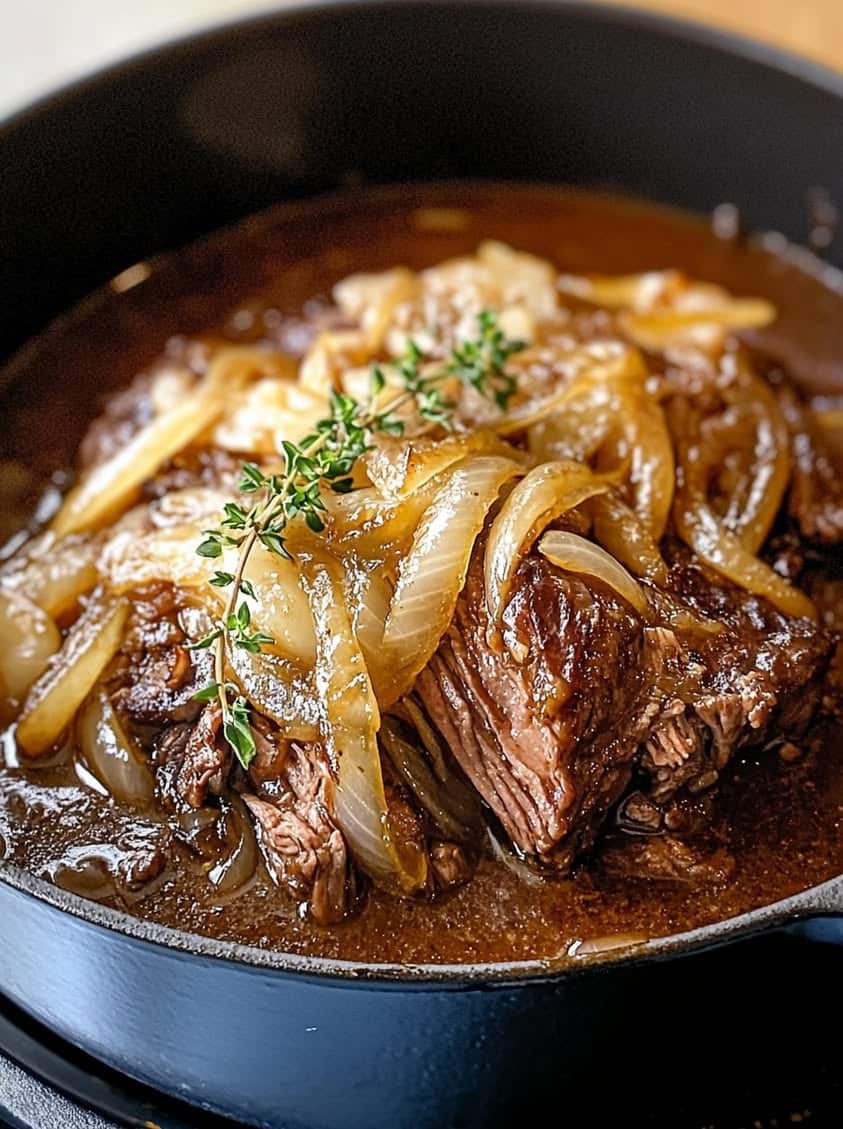
Slow-Braised French Onion Pot Roast: The Ultimate Comfort Food for Family Gatherings
Imagine walking into a home filled with the rich, savory aroma of caramelizing onions and slow-braised beef. This Savory slow-braised pot roast with caramelized French onion flavor is more than just a meal. It is a centerpiece for connection, a dish that promises warmth and comfort from the very first scent. This recipe transforms a humble chuck roast into a succulent masterpiece, perfect for your next family dinner. The process is simple, but the results are extraordinary, creating memories around the table with every tender bite.
This ultimate comforting, make-ahead meal for your next family dinner is designed to bring people together. The magic happens in the oven, where time and low heat work their wonders. You will layer flavors of sweet onions, hearty herbs, and rich broth, all melding together to create a gravy that is pure liquid gold. Ultimately, this dish requires minimal hands-on effort for a maximum payoff in flavor and tenderness. It is the perfect solution for a stress-free gathering where you can enjoy your company instead of being stuck in the kitchen.
Furthermore, the beauty of this pot roast lies in its versatility and forgiving nature. Whether you are cooking for a holiday, a Sunday supper, or a casual get-together, it always impresses. The deep, umami-rich flavors of the French onion-inspired gravy soak into the meat and vegetables, ensuring every component is bursting with taste. This recipe guarantees a fail-proof path to a memorable and delicious family dinner. Let us dive into the details of creating this heartwarming classic.
Quick Recipe Highlights
- Flavor Profile: This dish delivers a profound savory depth from the slow-braised beef, balanced by the sweet, jammy caramelization of onions. Additionally, notes of thyme, garlic, and a splash of red wine create a complex, restaurant-quality sauce that is both rich and comforting.
- Texture: The chuck roast becomes incredibly tender, pulling apart with just a fork, while the onions melt into a silky, luxurious gravy. The carrots and potatoes, cooked in the same pot, absorb all the flavors and become perfectly soft without turning mushy.
- Aroma: As it cooks, your kitchen will fill with an irresistible scent of browning meat, sweet caramelizing onions, and earthy herbs. This aromatic promise is a key part of the experience, building anticipation for the hearty meal to come.
- Visual Appeal: Served on a large platter, the deep brown, glistening roast surrounded by vibrant carrots and golden potatoes makes a stunning presentation. A final garnish of fresh parsley adds a pop of color that highlights the dish’s rustic elegance.
- Skill Level Needed: This is a beginner-friendly recipe that relies more on patience than advanced technique. The most important skills are proper searing of the meat and patient caramelization of the onions, both of which are easy to master with simple guidance.
- Special Equipment: You only need a large, heavy-bottomed Dutch oven or oven-safe pot with a tight-fitting lid. This essential piece of cookware ensures even heat distribution and perfect braising conditions for the ultimate pot roast.
Recipe Overview
- Difficulty Level: We rate this recipe as “Easy” because the techniques are fundamental. The active cooking time is relatively short, and the oven does most of the work. Success hinges on following clear instructions for searing and braising, which are simple steps anyone can learn. Consequently, even novice cooks can achieve spectacular results.
- Category: This dish falls squarely into the category of hearty main courses and classic comfort food. It is a complete one-pot meal featuring protein, vegetables, and starch, making it ideal for a satisfying dinner. Moreover, it is perfect for special occasions and weekly meal prep alike.
- Cuisine: The recipe draws direct inspiration from French culinary traditions, specifically the iconic French onion soup, with its focus on deeply caramelized onions and rich beef broth. However, the pot roast method itself is an American classic, resulting in a beautiful fusion that celebrates slow-cooked, family-style dining.
- Cost: Using an economical cut like chuck roast makes this a very budget-friendly centerpiece. The other ingredients—onions, carrots, potatoes, and pantry staples—are inexpensive and readily available. Therefore, you can feed a crowd a luxurious-tasting meal without a luxurious price tag.
- Season: This is the ultimate cold-weather dish, perfect for fall and winter when hearty, warming meals are most desired. That said, its make-ahead nature also makes it excellent for spring holidays or any time you crave deep, comforting flavors.
- Occasion: This pot roast is tailor-made for family gatherings, holiday feasts, and leisurely Sunday dinners. It is also an exceptional choice for potlucks or anytime you need a reliable, crowd-pleasing recipe that welcomes everyone to the table.
Why You’ll Love This Recipe
First and foremost, the taste and texture of this pot roast are utterly irresistible. The chuck roast, after hours of gentle braising, transforms into strands of melt-in-your-mouth beef that are infused with the essence of caramelized onion and herbs. Every bite offers a symphony of savory, sweet, and umami notes, all coated in a velvety, deeply flavored gravy. This Savory slow-braised pot roast with caramelized French onion flavor satisfies the soul in a way that only true comfort food can. It is a familiar flavor profile elevated to new heights.
Next, consider the incredible convenience this recipe offers. Once you complete the initial searing and sautéing, the oven takes over for the long braise. This hands-off time means you can prepare side dishes, set the table, or simply relax. Additionally, this dish tastes even better the next day, making it the ultimate comforting, make-ahead meal for your next family dinner. You can cook it entirely in advance and simply reheat it, which drastically reduces stress when hosting. The flavors have more time to marry and intensify, guaranteeing a spectacular result.
From a nutritional perspective, this meal is a well-rounded source of sustenance. Chuck roast provides high-quality protein, iron, and B vitamins. The carrots and potatoes add fiber, vitamins A and C, and healthy carbohydrates. Cooking everything in one pot also means all those nutrients mingle in the gravy, ensuring you get the full benefit. While it is a rich dish, you control the portion sizes and can easily balance it with a light salad. Ultimately, it is a wholesome, satisfying meal that fuels the body as well as it comforts the spirit.
The social and entertaining value of this pot roast cannot be overstated. It is a communal dish meant for sharing from a central platter, encouraging conversation and connection. Serving such a impressive, heartwarming meal creates an instant atmosphere of generosity and care. It is a recipe that says “welcome” and “stay awhile,” making it perfect for bringing family and friends together. For this reason, it often becomes a requested tradition for gatherings.
Finally, this recipe is remarkably cost-effective and accessible. A chuck roast is one of the most affordable beef cuts, especially when you consider the high yield it provides. The vegetables are pantry staples, and the herbs and wine can be adjusted based on what you have available. You do not need any special or expensive equipment beyond a sturdy pot. This accessibility means anyone can create a restaurant-worthy family dinner without straining their budget, proving that extraordinary food does not require extraordinary expense.
Historical Background and Cultural Significance
The concept of braising tough cuts of meat is a culinary practice as old as cooking itself, found in cultures worldwide. The French technique of “braiser” involves searing meat and then simmering it slowly in a covered pot with a small amount of liquid. This method was essential for tenderizing less desirable cuts before modern butchery. The American pot roast evolved from these European traditions, becoming a Sunday dinner staple that symbolized resourcefulness and home cooking. Our recipe specifically marries this tradition with the flavors of French onion soup, a Parisian bistro classic known for its rich, oniony broth and gooey cheese topping.
Pot roast holds a significant place in American food culture, often evoking nostalgia for family meals and grandmother’s cooking. It represents a time when cooking was slower and meals were shared events. During the mid-20th century, it became a hallmark of suburban family life, featured in cookbooks and women’s magazines as the ideal one-pot wonder. The dish’s adaptability allowed home cooks to use what they had, making it a symbol of practicality and comfort. Today, it remains a powerful touchstone for tradition and togetherness.
The evolution of this particular recipe showcases how classic dishes adapt and inspire new variations. French onion soup’s popularity in America led creative cooks to apply its signature flavors—caramelized onions, beef broth, thyme, and often a wine or brandy—to other dishes. Applying these flavors to a braised pot roast was a natural and brilliant progression. This fusion creates a dish that feels both familiar and novel, honoring the past while delighting the modern palate. It is a testament to the ongoing dialogue in culinary history.
Regional variations of pot roast abound across the United States and beyond. In the Midwest, it might include cream of mushroom soup. In the South, a tangy barbecue twist is common. Some versions use cola or coffee for depth, while others stick to a simple mirepoix and broth. Our French onion variation leans into a more wine-forward, herbaceous profile, distinguishing it from other versions. Understanding these variations enriches our appreciation for the dish and encourages home cooks to make it their own, continuing the tradition of adaptation and personalization.
Ingredient Deep Dive
Let us start with the star: the chuck roast. This cut comes from the shoulder of the cow, a well-exercised area rich with connective tissue and marbling. During the long, slow braising process, this collagen breaks down into gelatin, which is what gives the meat its legendary tenderness and enriches the gravy. Nutritionally, it is an excellent source of protein, zinc, iron, and B vitamins, particularly B12. When selecting a chuck roast, look for one with good marbling (white fat streaks) throughout the meat, as this ensures flavor and moisture. You can store it in the refrigerator for 2-3 days before cooking or freeze it for several months. For a substitute, consider a beef brisket or bottom round roast, though cooking times may vary slightly.
Onions are the co-star of this dish, providing the foundational caramelized French onion flavor. Yellow onions are ideal for their perfect balance of sweetness and pungency, which intensifies beautifully with slow cooking. Historically, onions have been a culinary staple for thousands of years, valued for their storage longevity and flavor. They are rich in vitamin C, B vitamins, and antioxidants like quercetin. The key to success is patience—allow them to cook slowly until they reach a deep, golden-brown jamminess. This process, called the Maillard reaction, develops complex sugars and savory compounds that form the soul of the sauce. Store onions in a cool, dark, well-ventilated place. There is no true substitute for the depth of caramelized yellow onions, though a mix of shallots and leeks could work in a pinch.
The cooking liquid, typically a combination of beef broth and red wine, is crucial. The broth provides the essential savory base, while the wine adds acidity and fruitiness that brightens the rich flavors. Use a good-quality, low-sodium beef broth to control the salt level. A dry red wine like Cabernet Sauvignon or Merlot works perfectly, but you can substitute with additional broth mixed with a tablespoon of red wine vinegar or even a dark beer for a different nuance. The alcohol cooks off, leaving behind only concentrated flavor. This liquid becomes the braising medium that tenderizes the meat and, later, the incredible gravy you will spoon over everything.
Common Mistakes to Avoid
- Not Searing the Meat Properly: Skipping or rushing the searing step is a major error. Searing creates a flavorful crust via the Maillard reaction, which adds immense depth to the final dish. Make sure your pot is very hot and the meat is patted completely dry before it goes in.
- Overcrowding the Pot When Searing: If you put the roast in a pot that is too small, it will steam instead of sear. You need space for the meat to make direct contact with the hot surface. Use a pot large enough to accommodate the roast without touching the sides too much.
- Caramelizing the Onions Too Quickly: Cooking the onions over high heat will burn them before they sweeten. They need low, slow, patient cooking to properly break down and caramelize. This step can take 20-30 minutes, but it is non-negotiable for the right flavor.
- Using the Wrong Cut of Meat: Lean cuts like sirloin or round steak will become dry and tough during braising. You must use a cut with ample connective tissue, like chuck roast, brisket, or bottom round, which are designed to become tender with long cooking.
- Adding Vegetables Too Early: If you put carrots and potatoes in at the beginning of the 3+ hour braise, they will disintegrate into mush. Add these heartier vegetables during the last 45-60 minutes of cooking so they become tender but still hold their shape.
- Insufficient Braising Liquid: The liquid should come about one-third to halfway up the side of the meat. Too little, and you risk burning; too much, and you dilute the flavors and boil the meat instead of braising it gently.
- Peeking During Braising: Every time you lift the lid, you release valuable heat and steam, which lowers the oven temperature and extends the cooking time. Trust the process and keep the lid on for the duration of the braising time.
- Not Resting the Meat Before Slicing: Cutting into the roast immediately after cooking causes all the precious juices to run out onto the cutting board. Let it rest, tented with foil, for at least 15-20 minutes. This allows the fibers to reabsorb the juices for a moister result.
- Neglecting to Adjust Gravy Seasoning: The gravy will reduce and concentrate during cooking. Always taste and adjust the seasoning with salt and pepper at the very end, after the meat and vegetables are removed. This final touch makes all the difference.
Essential Techniques
Patting the Meat Dry: This simple step is critical for achieving a proper sear. Surface moisture creates steam, which prevents the meat from browning effectively. Use paper towels to thoroughly dry all sides of the chuck roast before seasoning it. This ensures direct contact with the hot oil, leading to that beautiful, flavorful crust that is the foundation of a great braise. The visual cue for success is a deep brown, caramelized surface, not a gray, steamed one.
The Maillard Reaction (Searing & Caramelizing): This is the chemical process responsible for the deep, savory flavors in both the meat and the onions. It occurs when proteins and sugars are exposed to high heat. For the meat, a hot pot and dry surface are key. For the onions, it is low, steady heat and patience. Mastering this technique means understanding that color equals flavor. Do not rush it; allow the natural sugars to develop and brown gradually. The pitfall is using heat that is too high, which leads to burning and bitterness instead of sweet, complex flavor.
Deglazing: After searing the meat and sautéing the onions, you will find delicious browned bits stuck to the bottom of the pot. Deglazing is the act of adding liquid (wine or broth) and using a wooden spoon to scrape these bits loose. This step is essential because those “fond” bits are packed with concentrated flavor. They dissolve into the liquid, forming the base of your gravy. The technique is simple: pour in your liquid over medium heat and scrape vigorously until the bottom of the pot is clean.
Low-and-Slow Braising: This is the heart of the recipe. Braising involves cooking food partially submerged in liquid at a low temperature for a long time. The ideal oven temperature is around 300°F to 325°F. This gentle heat slowly breaks down tough connective tissues without toughening the muscle fibers. The visual cue for doneness is meat that is fork-tender and easily pulls apart. A common mistake is braising at too high a temperature, which causes the meat to become dry and stringy.
Pro Tips for Perfect Slow-Braised French Onion Pot Roast
Use a digital meat thermometer to ensure perfect doneness without guesswork. Aim for an internal temperature of around 200-205°F for pulled-apart tenderness, as chuck roast needs to reach a higher temperature than steaks to break down collagen.
For an even deeper onion flavor, use a combination of yellow onions and one or two thinly sliced shallots. Shallots add a subtle, refined garlicky note that complements the sweetness of the caramelized onions beautifully.
If your gravy is too thin after braising, remove the meat and vegetables, then simmer the liquid on the stovetop until it reduces to your desired consistency. For a thicker gravy, you can make a quick slurry with a tablespoon of cornstarch and two tablespoons of cold water, then whisk it in.
Season in layers. Salt and pepper the meat generously before searing. Then, season the onions with a pinch of salt as they cook to help draw out moisture. Finally, always do a final seasoning of the finished gravy at the end.
Let the fully cooked pot roast rest in its liquid for 10-15 minutes after removing it from the oven. This allows the meat fibers to relax and reabsorb some juices, making it even more succulent when you slice or shred it.
For a glossy, restaurant-style finish to your gravy, whisk in a single tablespoon of cold, unsalted butter after you have removed the pot from the heat. This adds a slight richness and a beautiful sheen.
If you have time, cook the roast a day ahead. The flavor improves immensely overnight, and the fat will solidify on top, making it easy to remove for a cleaner, less greasy gravy when you reheat.
Variations and Adaptations
For regional variations, consider a Mississippi Pot Roast twist by adding a packet of au jus gravy mix, a ranch dressing mix, and a few pepperoncini peppers to the pot. Alternatively, a German-inspired version might include a dark beer like a stout or porter instead of red wine, and a spoonful of whole-grain mustard.
Seasonal adaptations are simple. In spring, add fresh peas and asparagus during the last 5 minutes of cooking. For summer, serve the tender meat shredded on crusty rolls with a lighter gravy for French dip sandwiches. In fall, incorporate chunks of sweet potato or parsnips along with the carrots.
Dietary modifications are straightforward. For a gluten-free version, ensure your beef broth is certified gluten-free and thicken the gravy with cornstarch instead of flour. To make it dairy-free, simply omit the optional butter finish for the gravy—the dish is incredibly rich without it.
Flavor variations can keep this recipe exciting. Add a tablespoon of tomato paste with the onions for a richer, slightly tangy base. A splash of balsamic vinegar at the deglazing stage adds wonderful sweetness and acidity. For an herbal note, a sprig of fresh rosemary alongside the thyme works wonderfully.
For texture modifications, try using pearl onions instead of sliced yellow onions; they hold their shape and offer a sweet pop in each bite. You can also shred the entire roast and mix it back into the gravy for a decadent, spoonable filling for mashed potatoes or pasta.
Presentation alternatives include serving the shredded beef and vegetables over creamy polenta, egg noodles, or a bed of cauliflower mash for a lower-carb option. For individual servings, present the meat and vegetables in shallow bowls with the gravy ladled over the top, garnished with chopped fresh chives.
Serving and Presentation Guide
Traditional plating involves transferring the whole roast to a large, warm platter. Arrange the carrots and potatoes around it, then spoon a generous amount of the onion gravy over the top. Garnish with a handful of freshly chopped parsley or thyme leaves for a vibrant color contrast. This family-style presentation encourages sharing and feels wonderfully generous.
For a more modern, elegant presentation, slice the rested roast against the grain into thick pieces. Fan the slices on one side of individual plates. Neatly stack the carrots and potatoes alongside, then use a spoon to artfully drizzle the gravy around the plate and over the meat. A microgreen garnish adds a professional touch.
Temperature is crucial. Serve the pot roast piping hot. Warm your serving platter or plates beforehand to prevent the food from cooling too quickly. The gravy should be hot enough to slightly steam when poured. If you made the dish ahead, ensure it is reheated gently but thoroughly before serving.
Portion control is easy with this hearty dish. A good rule of thumb is about 6-8 ounces of cooked meat per person, plus a couple of pieces of each vegetable. Remember, the dish is rich, so smaller portions are often satisfying, especially when accompanied by crusty bread for soaking up the gravy.
Wine and Beverage Pairing
Wine pairings should complement the rich, savory, and slightly sweet notes of the dish. A medium-bodied red wine with good acidity is ideal. A classic Cabernet Sauvignon or Merlot from California works beautifully, as their dark fruit flavors stand up to the beef. Alternatively, a French Syrah from the Rhône Valley or a Malbec from Argentina, with their peppery notes, can cut through the richness perfectly.
For non-alcoholic alternatives, consider a rich, tart cherry juice or a sparkling pomegranate beverage. A high-quality, non-alcoholic red wine can also mimic the pairing experience. Another excellent option is a deeply flavored iced tea, such as a black tea with hints of berry or citrus, served unsweetened or lightly sweetened.
While not a traditional pairing, a cup of strong black coffee after the meal can be a delightful complement, as its bitterness contrasts with the savory-sweet flavors of the pot roast. Similarly, an herbal tea like peppermint or ginger can aid digestion after a hearty meal.
Serving temperature matters. Serve red wines slightly below room temperature, around 60-65°F. Non-alcoholic juices and teas are best served chilled. Offer beverages in appropriate glassware to enhance the overall dining experience, making the meal feel even more special.
Storage and Shelf Life
For storage, allow the pot roast to cool completely in its cooking liquid. Transfer the meat, vegetables, and gravy to an airtight container. Properly stored, it will last in the refrigerator for 3-4 days. The flavors will continue to develop, often tasting even better on the second day.
Freezing is an excellent option for longer storage. Portion the cooled roast and gravy into freezer-safe bags or containers, removing as much air as possible. It will keep well for up to 3 months. Thaw overnight in the refrigerator before reheating.
Signs of spoilage include an off or sour smell, a slimy texture on the meat or vegetables, or mold. If the gravy appears fizzy or bubbly at room temperature, it has likely begun to ferment and should be discarded. Always reheat leftovers to an internal temperature of 165°F.
Reheating instructions are simple. For best results, reheat gently on the stovetop over low heat, adding a splash of broth or water if the gravy has thickened too much. You can also reheat covered in an oven at 300°F until warmed through. The microwave can be used for single portions, but heat in short intervals to avoid overcooking the meat.
Make Ahead Strategies
You can implement a full make-ahead strategy with this dish. Complete the entire recipe, including the braising and resting, up to two days before your event. Cool it, cover it, and store it in the refrigerator. The fat will rise and solidify, making it easy to remove for a leaner gravy. This approach not only saves time but intensifies the flavors.
For a partial prep timeline, you can sear the roast and fully caramelize the onions the day before. Store them separately in the refrigerator. The next day, simply deglaze the pot and proceed with adding the liquids and braising. This cuts the active prep time significantly on the day of serving.
When storing between steps, ensure both the seared meat and cooked onions are cooled to room temperature before covering and refrigerating. Place the meat in a container and pour any accumulated juices over it. Store the onions in a separate container. This prevents the meat from steaming in its own heat and becoming soggy.
Reheating guidelines are key for quality. Reheat the refrigerated pot roast gently, either covered in a 300°F oven for about 45-60 minutes or on the stovetop over low heat. If the gravy has separated, a quick whisk will bring it back together. Always taste and adjust seasoning after reheating, as flavors can mellow.
For fresh element additions, consider adding a new garnish just before serving. Sprinkle with freshly chopped parsley, chives, or even a few crispy fried onions for texture. If you cooked the vegetables ahead and they seem soft, you can quickly roast some new carrots and potatoes separately to serve alongside for a fresher contrast.
Scaling Instructions
Halving the recipe is straightforward for smaller families. Use a 2-3 pound chuck roast and halve all other ingredients. Use a smaller Dutch oven or heavy pot. The cooking time may be reduced by about 30-45 minutes, so start checking for fork-tenderness around the 2-hour mark.
Doubling or tripling the recipe for a large crowd is very feasible. You will need a very large roasting pan or two separate Dutch ovens. Brown the meat in batches to avoid overcrowding. The total braising time will remain roughly the same, as the oven’s ambient heat cooks multiple roasts simultaneously. Just ensure there is enough space for heat to circulate if using one large pan.
Equipment adjustments are necessary when scaling. A standard 5-7 quart Dutch oven holds one roast perfectly. For two roasts, you will need a pan with at least an 8-quart capacity. If doubling, consider using your oven’s roasting pan covered tightly with heavy-duty foil if you lack a lid.
Timing modifications are minimal when scaling up or down. The active prep time will increase slightly when browning more meat. However, the passive braising time in the oven remains consistent because the temperature environment is the same. Always use a meat thermometer to check for doneness (200-205°F) rather than relying solely on time.
Nutritional Deep Dive
A typical serving provides a substantial amount of high-quality protein from the beef, essential for muscle repair and satiety. The chuck roast also offers important micronutrients like iron, which helps transport oxygen in the blood, and zinc, which supports immune function. The collagen that breaks down into gelatin during cooking may support joint and gut health.
The vegetables contribute valuable carbohydrates for energy, along with dietary fiber from the carrots and potatoes. This fiber aids digestion and helps create a feeling of fullness. Carrots are an excellent source of beta-carotene (vitamin A), crucial for vision and skin health, while potatoes provide vitamin C and potassium.
Regarding dietary considerations, this dish is naturally gluten-free if you use a certified gluten-free broth. It can be made dairy-free by omitting the optional butter finish. For those monitoring sodium, using a low-sodium broth and salting to taste at the end allows for full control over sodium levels.
For weight management, be mindful of portion size due to the dish’s richness. A balanced plate includes a palm-sized portion of meat, a fist-sized portion of vegetables, and a modest amount of gravy. Pairing it with a large side salad can help increase volume and nutrients without significantly adding calories.
Dietary Adaptations
For a gluten-free adaptation, the recipe is already nearly compliant. Simply ensure your beef broth is certified gluten-free. If you wish to thicken the gravy, use a cornstarch slurry instead of a flour-based roux. Check that any wine used is also gluten-free, as some processing methods may involve wheat.
A dairy-free version is easily achieved. The recipe contains no mandatory dairy. Just skip the optional step of whisking butter into the finished gravy. The dish will still be incredibly rich and flavorful from the rendered beef fat and caramelized onions.
Creating a vegan version requires significant substitution but is possible. Use a large, meaty mushroom cap (like portobello) or a seitan roast as the centerpiece. For the braising liquid, use a robust mushroom or vegetable broth combined with soy sauce or tamari for umami. Caramelize the onions as usual, and consider adding a tablespoon of miso paste for depth.
For a low-carb or keto adaptation, omit the potatoes and carrots. Replace them with low-carb vegetables like radishes, turnips, or chunks of celery root, which will soften nicely during braising. You can also add mushrooms. Thicken the gravy with a xanthan gum slurry (a tiny amount) instead of flour or cornstarch.
A Paleo adaptation follows similar guidelines to gluten-free and dairy-free. Use compliant broth, omit the potatoes (sweet potatoes are a good Paleo-friendly alternative), and thicken the gravy with arrowroot powder instead of cornstarch if needed.
Troubleshooting Guide
If your meat is tough, it likely needs more cooking time. Connective tissue in chuck roast can take several hours to break down fully. Return it to the pot, add a bit more liquid if necessary, and continue braising until it is fork-tender. A meat thermometer should read 200-205°F for perfect shredding texture.
If the gravy is too thin, remove the meat and vegetables and simmer the liquid on the stovetop to reduce and concentrate it. For a quicker fix, make a slurry with one tablespoon of cornstarch and two tablespoons of cold water. Whisk this into the simmering gravy and cook for 1-2 minutes until thickened.
If the gravy is too salty, dilution is the best fix. Add a cup of low-sodium broth or even water, then simmer to combine. Alternatively, stir in a peeled, raw potato chunk and simmer for 15-20 minutes; the potato will absorb some salt. Remove the potato before serving. Adding a touch of acid, like a teaspoon of vinegar, can also help balance the flavor.
If the vegetables are mushy, you added them too early. Next time, add carrots and potatoes during the last 45-60 minutes of braising. For this batch, you can salvage the meal by making a mash with the overcooked vegetables or simply serving the meat and gravy over fresh, separately cooked vegetables or mashed potatoes.
If the dish lacks depth of flavor, it often stems from insufficient searing on the meat or not caramelizing the onions long enough. Next time, take more time with these initial steps. For the current batch, you can boost flavor by stirring a teaspoon of tomato paste, a splash of Worcestershire sauce, or a pinch of smoked paprika into the gravy and simmering for a few minutes.
Recipe Success Stories
Community feedback on this recipe consistently highlights its reliability and crowd-pleasing nature. Many home cooks report that it has become their go-to dish for holidays, impressing even the most discerning relatives. One reader shared that her father, who rarely compliments meals, asked for seconds and the recipe—a true testament to its appeal.
Variation successes are frequently celebrated. A reader from Texas added a couple of chipotle peppers in adobo to the braising liquid for a smoky kick, creating a beloved family hybrid. Another successfully adapted it for a slow cooker, searing the meat on the stove first, then transferring everything to the cooker on low for 8 hours, with fantastic results.
Adaptation stories for dietary needs are inspiring. A home cook with a gluten-free family was thrilled to find a comforting pot roast recipe that required minimal changes. Another, cooking for a diabetic relative, used turnips and daikon radish instead of potatoes and reported that the dish was just as satisfying and enjoyed by all.
Reader suggestions have included adding a parmesan rind to the pot during braising for an extra layer of umami, or finishing the gravy with a splash of balsamic vinegar. Many also recommend serving leftovers on toasted rolls with provolone cheese for an incredible French dip sandwich, extending the meal’s enjoyment.
Frequently Asked Questions
Can I make this in a slow cooker? Absolutely. Follow steps 1-4 to sear the meat and caramelize the onions in a skillet. Transfer everything to your slow cooker, add the liquids and herbs, and cook on LOW for 8-9 hours or on HIGH for 5-6 hours. Add vegetables in the last 2 hours on LOW or 1 hour on HIGH.
What can I use instead of red wine? You can substitute with an equal amount of additional beef broth. For complexity, add a tablespoon of balsamic vinegar or red wine vinegar to the broth. Non-alcoholic red wine or even a dark beer like a stout are also excellent substitutes.
How do I know when the pot roast is done? The roast is done when it is fork-tender and easily pulls apart. A meat thermometer inserted into the thickest part should read between 200°F and 205°F. This higher temperature is necessary to break down the collagen in the chuck roast.
Why is my meat still tough after 3 hours? Chuck roast can vary in thickness and connective tissue content. If it is tough, it simply needs more time. Continue braising, checking every 30
Print
Slow-Braised French Onion Pot Roast for Family Gatherings
Description
A comforting, savory pot roast slow-braised with caramelized onions, herbs, and a rich French onion gravy, perfect for cozy family meals.
Ingredients
For the Crust:
- 3 lbs beef chuck roast
- 4 large yellow onions, thinly sliced
- 4 cloves garlic, minced
- 2 cups beef broth
- 1 cup dry red wine
- 2 tbsp tomato paste
- 2 sprigs fresh thyme
- 2 bay leaves
- 2 tbsp olive oil
- Salt and black pepper to taste
Instructions
1. Prepare the Crust:
- Season the beef chuck roast generously with salt and pepper on all sides.
- Heat olive oil in a large Dutch oven over medium-high heat. Sear the roast until browned on all sides, about 4-5 minutes per side. Remove and set aside.
- In the same pot, add the sliced onions and cook over medium heat, stirring occasionally, until deeply caramelized, about 20-25 minutes. Add garlic and cook for 1 minute until fragrant.
- Stir in tomato paste and cook for 1 minute. Pour in red wine to deglaze, scraping up any browned bits from the bottom. Add beef broth, thyme, and bay leaves.
- Return the seared roast to the pot, nestling it into the onions and liquid. Bring to a simmer, then cover and reduce heat to low. Braise for 3-4 hours, until the meat is fork-tender.
- Remove the roast and let it rest for 10 minutes before slicing. Serve with the onion gravy spooned over the top.
Notes
You can customize the seasonings to taste.

I’m Shaykee—born in Morocco, seasoned across continents. From airplane galleys to home kitchens, I share the flavors and stories that shaped my journey.