
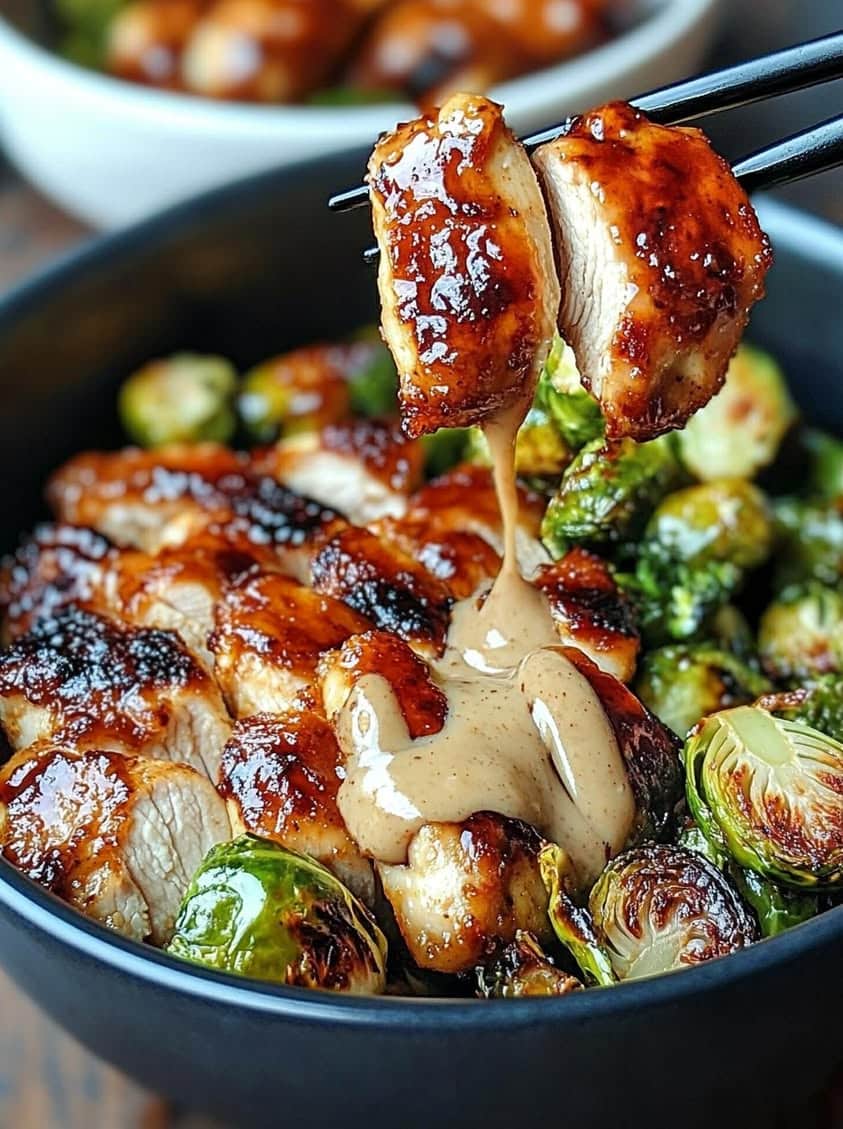
Saucy Teriyaki Chicken Bowl with Caramelized Brussels Sprouts: A Sweet, Salty, and Satisfying Weeknight Wonder
Imagine a dinner that perfectly balances sweet and savory notes with contrasting textures that sing in every bite. This Saucy Teriyaki Chicken Bowl with Caramelized Brussels Sprouts is exactly that kind of magical meal. It transforms simple, wholesome ingredients into a restaurant-worthy experience right on your kitchen table. The star of the show is undoubtedly the glossy, deeply flavored teriyaki sauce clinging to tender pieces of chicken. Meanwhile, the humble Brussels sprout undergoes a stunning transformation, emerging from the oven with crispy, caramelized edges and a tender, almost nutty heart. Served over a bed of fluffy rice, this bowl is a complete, comforting, and incredibly delicious package.
Furthermore, this recipe is a testament to the power of efficient cooking. It delivers maximum flavor without demanding hours of your time. The process is straightforward, involving a few key techniques that yield impressive results. You will sear the chicken to lock in juices, whip up a simple homemade teriyaki glaze, and roast the Brussels sprouts to crispy perfection. Ultimately, all components come together in a harmonious blend that feels both indulgent and nourishing. This dish is the answer to your weeknight dinner dilemmas, offering a reliable path to a meal that everyone at the table will adore.
Additionally, the visual appeal of this teriyaki chicken bowl is undeniable. The deep brown, glossy chicken contrasts beautifully with the vibrant green and charred bits of the roasted sprouts. A final sprinkle of sesame seeds and sliced green onion adds a pop of color and freshness. This is a meal that looks as incredible as it tastes, making it perfect for casual weeknights or even for impressing guests. It is a versatile blueprint that welcomes customization, allowing you to tailor it to your pantry and preferences while always delivering that core satisfaction of a perfectly balanced bowl.
Quick Recipe Highlights
- Flavor Profile: This bowl is a masterclass in balance. The teriyaki sauce delivers a classic sweet and salty punch, enhanced by garlic and ginger. The caramelization on the Brussels sprouts introduces a delightful, slightly bitter complexity that cuts through the richness perfectly.
- Texture: Enjoy a fantastic textural play. You get tender, juicy chicken, fluffy rice, and the star contrast: crispy, almost chip-like outer leaves on the Brussels sprouts with a soft, yielding interior. Every forkful is interesting and satisfying.
- Aroma: As this cooks, your kitchen will fill with an irresistible fragrance. The savory scent of searing chicken mingles with the sweet, gingery aroma of the teriyaki sauce and the deep, roasty notes of caramelizing vegetables. It is the ultimate dinner bell.
- Visual Appeal: The presentation is vibrant and inviting. The glossy, dark teriyaki glaze on the chicken looks luxurious against the white rice and bright green sprouts. Garnishes like sesame seeds and green onions provide the perfect finishing touches for a photo-worthy meal.
- Skill Level Needed: This is a fantastic recipe for cooks of all levels. It requires basic skills like chopping, searing, and making a simple pan sauce. The steps are clear and sequential, making it an excellent confidence-builder for newer cooks and a reliable, quick option for experienced ones.
- Special Equipment: You need only standard kitchen gear: a good skillet or frying pan for the chicken, a baking sheet for roasting the sprouts, and a small saucepan for the sauce. A sharp knife and cutting board are essential for prep. No fancy gadgets are required.
Recipe Overview
- Difficulty Level: We rate this recipe as “Easy.” The techniques involved—searing protein, whisking a sauce, and roasting vegetables—are fundamental. The instructions are linear and forgiving. For instance, even if your Brussels sprouts are not perfectly uniform, they will still caramelize beautifully. The teriyaki sauce is simple to prepare from pantry staples, eliminating the need for a store-bought version. Consequently, this is an accessible dish for a busy Tuesday night.
- Category: This dish fits neatly into several popular categories. Primarily, it is a hearty main course and a complete meal-in-a-bowl. It also qualifies as a quick weeknight dinner and an excellent candidate for weekly meal prep. The components hold up well, making it a practical choice for planning ahead. Additionally, it can be considered a healthy dinner option when prepared with mindful ingredient choices.
- Cuisine: The recipe draws clear inspiration from Japanese-American cuisine, centering on the beloved teriyaki flavor profile. However, the inclusion of roasted Brussels sprouts adds a modern, Western vegetable preparation, creating a delicious fusion. The core technique of making a glossy, reduced sauce is rooted in Japanese culinary tradition, while the bowl-style presentation is a contemporary, global way of serving food.
- Cost: This is a very cost-effective meal to prepare at home. Chicken thighs are typically an affordable protein choice, and Brussels sprouts are a budget-friendly vegetable, especially in season. The sauce ingredients—soy sauce, honey, garlic, ginger—are pantry staples for many. Rice is an inexpensive base. Overall, you can create four generous restaurant-quality servings for a fraction of the cost of takeout.
- Season: While delicious year-round, this recipe truly shines in the fall and winter. Brussels sprouts are at their peak sweetness after a frost, making their caramelized flavor exceptional. The hearty, warming nature of the bowl is perfect for cooler weather. That said, with fresh, crisp sprouts available in most grocery stores now, it makes a satisfying dinner any month.
- Occasion: This teriyaki chicken bowl is incredibly versatile for different occasions. It is a flawless weeknight family dinner, quick enough for busy schedules. Simultaneously, it is impressive enough to serve to guests for a casual weekend meal. The components can also be prepped ahead for easy lunches, making it a fantastic meal prep superstar.
Why You’ll Love This Recipe
First and foremost, the taste and texture combination is utterly addictive. The teriyaki chicken is succulent and coated in a sticky, savory-sweet glaze that has depth from fresh ginger and garlic. Paired with the Brussels sprouts, which transform in the oven into little crispy-edged, tender-centered morsels with a hint of natural sweetness, each bite is a complex delight. The fluffy rice soaks up the extra sauce, ensuring no flavor is left behind. This harmony of flavors—sweet, salty, umami, and a touch of bitter from the caramelization—creates a truly restaurant-quality experience in your own home.
From a convenience standpoint, this recipe is a weeknight hero. It comes together in about forty minutes with mostly hands-off cooking time. While the Brussels sprouts roast, you can prepare the chicken and sauce. The process is efficient and minimizes cleanup. Moreover, the ingredient list is straightforward, with no hard-to-find items. You likely have most components in your pantry already. This accessibility means you can decide to make this delicious dinner without a special trip to the store, which is a huge win on busy evenings.
Nutritionally, this bowl offers a well-rounded plate. Chicken thighs provide high-quality protein and essential nutrients like iron and zinc. Brussels sprouts are a nutritional powerhouse, packed with fiber, vitamins C and K, and antioxidants. Using a homemade teriyaki sauce allows you to control the sodium and sugar levels, unlike many store-bought versions. Serving it over brown rice instead of white would add even more fiber and nutrients. Consequently, this meal feels indulgent but is genuinely nourishing, supporting your health goals without sacrificing satisfaction.
For social and entertaining value, this dish is a crowd-pleaser. It is easy to scale up for a group, and the vibrant, colorful presentation always impresses. You can set up a “bowl bar” with extra toppings like shredded carrots, edamame, or extra green onions, allowing guests to customize their meal. It is a more interactive and interesting option than a standard casserole. The familiar, beloved flavors of teriyaki ensure it will be a hit with both adults and children, making it a perfect choice for family gatherings or casual dinner parties.
Finally, the cost-effectiveness and accessibility of this recipe cannot be overstated. As mentioned, the ingredients are affordable and common. You are creating a meal that would cost significantly more at a restaurant or even as takeout. Learning to make a simple teriyaki sauce from scratch is a valuable kitchen skill that saves money in the long run. This recipe empowers you to create a delicious, healthy, and impressive meal on a budget, proving that eating well does not require expensive ingredients or complicated techniques.
Historical Background and Cultural Significance
The story of teriyaki is a fascinating tale of cultural exchange and adaptation. The word itself comes from Japanese: “teri” meaning luster or shine, and “yaki” meaning to grill or broil. Traditionally, teriyaki in Japan refers to a cooking method where fish or meat is grilled and then brushed with a glaze of soy sauce, mirin, and sugar. This technique creates the characteristic glossy finish. Historically, this method was used for fish like salmon or mackerel. The sweet-salty glaze helped to preserve the fish and added a delicious flavor dimension that became deeply associated with Japanese cuisine.
Teriyaki’s journey to global popularity, however, is largely an American story. Japanese immigrants brought their culinary traditions to Hawaii and the West Coast of the United States in the late 19th and early 20th centuries. In these new environments, the recipe adapted. Chicken and beef became more common proteins than fish, aligning with local tastes and availability. The sauce also evolved, often becoming thicker, sweeter, and more abundant than its traditional counterpart. In Hawaii, the famous “teriyaki burger” and plate lunches cemented teriyaki’s place as a beloved local comfort food, showcasing its incredible versatility.
The evolution of the recipe into a “bowl” format is a more recent development, fitting into the modern trend of grain bowls and meal-in-a-bowl presentations. This format emphasizes balance, nutrition, and visual appeal. Incorporating a vegetable like Brussels sprouts—a Western favorite—into a teriyaki bowl is a perfect example of fusion cuisine. It takes the core flavor principle of teriyaki and applies it to a wider array of ingredients, making it relevant and exciting for contemporary home cooks who value both flavor and vegetable-forward meals.
Regional variations of teriyaki are now endless. In Japan, you might find a more subtle, less sweet glaze on grilled eel (unagi). In American Chinese takeout joints, a thick, cornstarch-thickened version is common. Korean cuisine has a similar concept in “bulgogi” sauce, which shares the sweet-soy base but often includes pear or apple for sweetness. This teriyaki chicken bowl with Brussels sprouts sits within this rich, evolving tradition. It honors the original concept of a glossy, grilled protein with a savory-sweet glaze while freely incorporating global ingredients and presentation styles, demonstrating the dynamic, living nature of food culture.
Ingredient Deep Dive
Chicken Thighs: We recommend boneless, skinless chicken thighs for their superior flavor and juiciness compared to chicken breast. Thighs have a higher fat content, which keeps them moist during the high-heat searing process and prevents them from drying out. Culturally, while chicken teriyaki is an American adaptation, chicken is a globally cherished protein. Nutritionally, thighs provide iron, zinc, and B vitamins. For selection, look for thighs that are pinkish in color with minimal visible fat. You can easily trim any large pieces. For storage, keep them refrigerated and use within 1-2 days of purchase, or freeze for longer storage. A great substitution is chicken breast, but be vigilant not to overcook it.
Brussels Sprouts: Once a maligned vegetable, Brussels sprouts have undergone a culinary renaissance thanks to roasting techniques that unlock their natural sugars. They are part of the brassica family, related to cabbage and broccoli. Historically, they are believed to have been cultivated in ancient Rome and later popularized in Brussels, Belgium. They are packed with nutrients, including vitamins C and K, fiber, and antioxidants. When selecting sprouts, choose firm, bright green heads that feel heavy for their size; smaller sprouts are often sweeter and more tender. Store them unwashed in a plastic bag in the refrigerator’s crisper drawer. For this recipe, halving them is key to creating maximum surface area for caramelization.
Soy Sauce: This fermented soybean sauce is the umami backbone of the teriyaki glaze and a cornerstone of East Asian cuisine. Its history dates back over 2,500 years in China. It is made from soybeans, wheat, salt, and a fermenting culture. Soy sauce adds depth, saltiness, and complexity. For a richer flavor, consider using tamari (which is often gluten-free) or a low-sodium variety to control salt levels. Store soy sauce in a cool, dark place. If you need a gluten-free option, tamari or coconut aminos are excellent substitutes. Do not skip this ingredient, as it is fundamental to the dish’s character.
Honey: Honey provides the essential sweetness in our homemade teriyaki sauce, helping it reduce to a sticky glaze. Historically, honey is one of the world’s oldest sweeteners, used across countless cultures. In this recipe, it balances the saltiness of the soy sauce and contributes to the glossy “teri” finish. Beyond sweetness, honey contains trace enzymes and antioxidants. For a vegan version, you can substitute maple syrup or agave nectar with excellent results. The type of honey influences the flavor; a mild clover honey works perfectly without overpowering the other ingredients.
Fresh Ginger & Garlic: These aromatics are non-negotiable for an authentic, vibrant teriyaki flavor. Ginger, with its spicy, warm notes, and garlic, with its pungent savoriness, form the flavor foundation. Ginger has a long history in Asian medicine and cuisine, prized for its digestive properties and unique taste. Fresh is always best here; the jarred, pre-minced versions lack the same bright, potent kick. Look for firm ginger rhizomes with smooth skin. Store unused ginger in the freezer and grate it frozen as needed. If you are in a true pinch, 1/4 teaspoon of ground ginger can substitute for one teaspoon of fresh, but the flavor profile will be different.
Common Mistakes to Avoid
- Crowding the Pan with Chicken: Adding all the chicken to the skillet at once will cause it to steam instead of sear. You need space for moisture to evaporate so the chicken can develop a beautiful brown crust. Always cook in batches if your pan is not large enough to accommodate all pieces without touching.
- Not Patting the Chicken Dry: Moisture on the surface of the chicken is the enemy of browning. Before seasoning, always use a paper towel to thoroughly pat the chicken pieces dry. This simple step ensures you get a proper sear and not a pale, steamed exterior.
- Overcooking the Brussels Sprouts: While you want them caramelized and tender, roasting them for too long can make them mushy and bitter. Keep an eye on them, especially in the last few minutes. They are done when they are fork-tender and have dark, crispy edges.
- Cutting the Brussels Sprouts Incorrectly: Simply slicing the stem end off can cause leaves to fall off during roasting. Instead, trim the stem and then halve each sprout from top to bottom. This creates a flat surface that caramelizes beautifully and keeps the sprout intact.
- Not Letting the Sauce Reduce Enough: The teriyaki sauce needs time to simmer and thicken. If you add it to the chicken too early, it will be thin and watery. Let it bubble gently until it coats the back of a spoon. This reduction concentrates the flavors and creates the perfect sticky glaze.
- Using Pre-Minced Garlic and Ginger in a Jar: While convenient, these products often contain preservatives and lack the fresh, pungent flavor of the real thing. Taking two minutes to mince fresh garlic and grate fresh ginger makes a monumental difference in the brightness and depth of your sauce.
- Skipping the Cornstarch Slurry: The cornstarch mixed with water is what gives the teriyaki sauce its luxurious, glossy thickness. Adding it at the end and letting it cook for a minute is crucial. Without it, your sauce may remain thin and not cling properly to the chicken.
- Forgetting to Season the Brussels Sprouts: Vegetables need seasoning too! Tossing the halved sprouts with oil, salt, and pepper before roasting is essential for developing their flavor. Do not rely on the teriyaki sauce alone to season the entire bowl.
- Using a Dark-Colored Baking Sheet for the Sprouts: Dark pans absorb more heat and can cause the sprouts to burn on the bottom before they are tender inside. A light-colored aluminum baking sheet is ideal for even roasting and perfect caramelization.
- Not Resting the Chicken: After cooking the chicken, let it rest for a few minutes before slicing or dicing. This allows the juices to redistribute throughout the meat, ensuring every piece is moist and flavorful, not dry.
Essential Techniques
Searing Chicken: Searing is the high-heat process that creates a flavorful brown crust on the surface of the chicken through the Maillard reaction. This reaction between amino acids and sugars generates complex, savory flavors and appealing color. To master it, ensure your pan is very hot before adding the oil, then add the dried chicken in a single layer without crowding. Resist the urge to move the pieces constantly; let them develop a crust for a few minutes before flipping. A common pitfall is a pan that is not hot enough, leading to gray, steamed meat. Success is visually clear: you want deep golden-brown spots on each piece.
Making a Pan Sauce/Glaze: This technique builds layers of flavor directly in the skillet after cooking the chicken. After removing the chicken, you use the fond—the browned bits stuck to the pan—as a flavor base. Deglazing with liquid (like the sauce ingredients) loosens these bits, incorporating their rich taste into the sauce. The key is to simmer the sauce to reduce and concentrate it, then thicken it with a cornstarch slurry. The pitfall is rushing the reduction, resulting in a thin sauce. The visual cue for success is a sauce that thickly coats the back of a spoon and leaves a clear trail when you run your finger through it.
Roasting for Caramelization: Roasting vegetables at a high temperature (400°F or above) drives off moisture and caramelizes their natural sugars. This transforms their flavor from sometimes bitter to sweet and complex. The essential technique here is ensuring the vegetables are dry, evenly coated in oil, and spread in a single layer on the baking sheet. Crowding causes steaming. Tossing them halfway through cooking ensures even browning. The pitfall is under-oiling, which can lead to drying out instead of caramelizing. The visual cue is the development of deep brown, crispy edges and a tender interior when pierced with a fork.
Pro Tips for Perfect Saucy Teriyaki Chicken Bowl
First, for the crispiest Brussels sprouts, preheat your baking sheet in the oven while it comes to temperature. Carefully adding the oiled sprouts to the hot pan gives them an immediate sear, boosting crispiness.
Second, consider marinating the chicken thighs in a couple of tablespoons of the teriyaki sauce for 15-30 minutes before cooking. This adds an extra layer of flavor deep into the meat.
Third, to achieve restaurant-style glossy chicken, add the cooked chicken back to the skillet with the thickened sauce and toss over low heat for a minute. This ensures every nook and cranny is perfectly coated.
Fourth, add a splash of rice vinegar or a squeeze of lime juice to the finished teriyaki sauce. This touch of acidity brightens the entire dish and balances the sweetness beautifully.
Fifth, if your sprouts are very large, consider quartering them instead of halving to ensure they cook through and caramelize evenly in the given roasting time.
Sixth, toast your sesame seeds in a dry pan for a minute until fragrant before sprinkling them on the bowl. This simple step intensifies their nutty flavor dramatically.
Seventh, let the cooked rice sit, covered, for 5-10 minutes after cooking. Then fluff it with a fork. This allows steam to redistribute, making the rice fluffier and less gummy.
Eighth, for meal prep, store the components separately. Combine them only when ready to eat to prevent the rice from becoming soggy and the sprouts from losing their crisp texture.
Variations and Adaptations
For regional variations, consider a Hawaiian twist by adding a few tablespoons of crushed pineapple to the teriyaki sauce. Alternatively, a Korean-inspired version could use gochujang (Korean chili paste) in the glaze for a sweet-spicy kick. In a Japanese-style presentation, you might serve the chicken and sprouts alongside plain rice with the sauce drizzled lightly on top, rather than mixed in.
Seasonal adaptations are easy. In spring, swap Brussels sprouts for asparagus spears or sugar snap peas, roasting them just until tender-crisp. Summer invites the use of zucchini or bell peppers. In winter, hearty vegetables like cubed sweet potato or broccoli florets make excellent substitutes, adjusting roasting times as needed.
Dietary modifications are straightforward. For a gluten-free bowl, use tamari or coconut aminos instead of soy sauce and ensure your other ingredients are certified gluten-free. To make it vegan, substitute the chicken with extra-firm tofu or chickpeas and use maple syrup instead of honey. For a lower-carb option, serve the chicken and sprouts over cauliflower rice or a bed of leafy greens.
Flavor variations can keep this recipe exciting. Add a teaspoon of sriracha to the sauce for heat. Incorporate a tablespoon of smooth peanut butter for a satay-like twist. A dash of toasted sesame oil stirred in at the end adds a deep, nutty aroma. You can also experiment with different sweeteners like brown sugar, maple syrup, or even orange juice for a citrus note.
Texture modifications can cater to personal preference. If you love extra crunch, sprinkle the finished bowl with chopped peanuts or crispy chow mein noodles. For a creamier element, add a drizzle of sriracha mayo or a dollop of plain Greek yogurt on the side. If you prefer softer vegetables, you can sauté the Brussels sprouts in the skillet after the chicken is done, though you will lose the crispy caramelization.
Presentation alternatives are fun for entertaining. Instead of one large bowl, serve the components in separate sections of a bento box. For a handheld option, pile the chicken and sprouts into lettuce cups or warm tortillas. You can also deconstruct it into a salad by placing the sliced teriyaki chicken and roasted sprouts over a bed of mixed greens with a light sesame-ginger vinaigrette.
Serving and Presentation Guide
Plating is key to making this bowl visually stunning. Start with a shallow, wide bowl to showcase all the components. Place a fluffy mound of rice slightly off-center. Artfully arrange the glossy teriyaki chicken pieces over one part of the rice. Then, cluster the caramelized Brussels sprouts in another section, allowing their crispy edges to be visible. This intentional arrangement highlights each element’s unique texture and color.
Garnishing adds the final professional touch. A generous sprinkle of toasted white and black sesame seeds provides color contrast and nutty flavor. Thinly sliced green onions (both green and white parts) add a fresh, sharp bite and vibrant green color. For a pop of red, add a few shreds of pickled ginger or a sprinkle of crushed red pepper flakes. A small lime wedge on the side allows diners to add a bright, acidic note if desired.
Traditional accompaniments might include a simple side of miso soup or a small, crisp cucumber salad (sunomono) to cleanse the palate. In a modern context, edamame sprinkled with sea salt makes a perfect starter or side that complements the Asian flavors. For a more substantial meal, a side of steamed or roasted broccoli would pair beautifully.
Modern serving suggestions embrace flexibility. Set up a “build-your-own-bowl” station with additional toppings like shredded carrots, avocado slices, kimchi, or crispy fried shallots. This interactive approach is great for families and parties. You can also serve the components family-style in separate bowls, allowing everyone to create their perfect ratio.
Temperature considerations are important for the best experience. Serve the bowl immediately after assembling. The chicken and sauce should be hot, the Brussels sprouts warm with a slight crispness, and the rice steaming. If the rice has cooled, a quick reheat with a splash of water in the microwave can revive it. Cold components will make the sauce congeal and lessen the impact.
Portion control is easy with this recipe. A standard serving is roughly one cup of cooked rice, one chicken thigh (sliced), and a heaping half-cup of roasted Brussels sprouts, all generously sauced. For a lighter meal, increase the vegetable portion and slightly decrease the rice. Using a measuring cup to portion the rice can help maintain consistent serving sizes, especially useful for meal prep.
Wine and Beverage Pairing
Wine pairings for this dish should balance its sweet, salty, and umami-rich profile. An off-dry Riesling is a classic and excellent choice. Its slight sweetness mirrors the honey in the sauce, while its acidity cuts through the richness. A Gewürztraminer, with its lychee and spice notes, also complements the ginger in the dish beautifully. For red wine lovers, a light, low-tannin Pinot Noir can work well, as it will not overpower the chicken and can handle the vegetable’s earthy notes. Avoid heavy, oaky reds that will clash with the dish’s sweetness.
Non-alcoholic alternatives are abundant. A crisp, sparkling ginger ale or ginger beer enhances the ginger in the recipe. Iced green tea or jasmine tea provides a refreshing, slightly bitter counterpoint that cleanses the palate. For something more unique, a lychee or passion fruit sparkling water adds a touch of tropical sweetness without being cloying. A simple glass of cold water with a slice of cucumber or lemon is always a perfect, refreshing choice.
While not traditional pairings, certain coffees and teas can work if serving this for lunch. A lightly roasted, bright coffee would be too acidic. Instead, a medium-roast coffee with nutty or chocolatey notes could be pleasant after the meal. For tea, a roasted barley tea (mugicha) or a genmaicha (green tea with roasted brown rice) would be culturally appropriate and delicious, their toasty flavors echoing the caramelized sprouts.
Temperature considerations are straightforward: white and sparkling wines should be well-chilled, while a light red like Pinot Noir is best served slightly below room temperature. Non-alcoholic sparkling drinks should be icy cold. Iced tea is most refreshing when freshly brewed and chilled, not diluted with too much ice.
Serving suggestions include offering a variety of options if you have guests. You might place a bottle of Riesling and a pitcher of iced green tea on the table. Always ensure water glasses are filled. If serving beer, a light lager or pale ale pairs nicely, cutting through the sauce’s richness without competing with its complex flavors.
Storage and Shelf Life
Proper storage methods are crucial for maintaining quality. Store all components separately in airtight containers in the refrigerator. Combine them only when ready to eat. The cooked teriyaki chicken and sauce can be stored together. The roasted Brussels sprouts should be in their own container to preserve their texture. Cooked rice should also be stored alone. This separation prevents the rice from becoming soggy and the sprouts from losing their crispness due to moisture from the sauce.
Temperature requirements are standard for cooked food. All components must be refrigerated at 40°F (4°C) or below within two hours of cooking. Do not leave the assembled bowl at room temperature for extended periods. When reheating, ensure the internal temperature of the chicken reaches 165°F (74°C) for food safety.
Container recommendations include glass meal prep containers with dividers, which are ideal for keeping components separate. For the sauce-heavy chicken, a sealed container is essential to prevent leaks. For the Brussels sprouts, a container that allows a bit of air circulation can help them stay crisper, though they will inevitably soften somewhat upon refrigeration.
Signs of spoilage include an off or sour smell, visible mold (especially on the rice or vegetables), or a slimy texture on the chicken or sprouts. If any component shows these signs, discard it immediately. Cooked rice can harbor Bacillus cereus spores that are not killed by reheating, so be especially cautious with rice older than 4-5 days.
Reheating instructions vary by component. For best results, reheat the chicken and sauce gently in a skillet over medium-low heat with a splash of water to loosen the glaze. Microwave the rice with a damp paper towel over it to add steam. Re-crisp the Brussels sprouts in a toaster oven or air fryer at 375°F for 3-5 minutes, as the microwave will make them soggy.
Freezing guidelines: The teriyaki chicken (with sauce) freezes quite well for up to 3 months. Thaw in the refrigerator overnight before reheating. Brussels sprouts do not freeze well after roasting, as they become mushy and watery upon thawing. Cooked rice can be frozen, but its texture becomes grainier. For best frozen meal prep, freeze only the chicken component and make fresh rice and sprouts when ready to eat.
Make Ahead Strategies
A smart prep timeline can turn this into a 15-minute weeknight meal. The day before, you can chop the Brussels sprouts and store them in a sealed bag or container in the fridge. You can also mince the garlic and grate the ginger, storing them together in a small container. You can even mix the dry sauce ingredients (soy sauce, honey, etc.) in a jar and refrigerate it, adding the cornstarch slurry when you cook. The chicken can be trimmed and cut into pieces the night before as well.
Storage between steps is simple. Keep pre-chopped vegetables in the crisper drawer. Store pre-measured sauce ingredients in the fridge. Keep pre-cut chicken in a sealed container on the bottom shelf of the refrigerator to prevent cross-contamination. Having everything measured and ready is called “mise en place” and turns cooking into a smooth, enjoyable process.
The quality impact of make-ahead steps is minimal if done correctly. Pre-cut Brussels sprouts may dry out slightly at the cut edges, but this can actually promote better caramelization. Fresh ginger and garlic retain their flavor well overnight when stored airtight. The sauce ingredients will meld flavors if mixed ahead, which is a bonus. The key is to keep everything chilled and covered until cooking time.
Assembly tips for make-ahead meals: If preparing full bowls for lunches, use divided containers. Place the rice in one section, the chicken and sauce in another, and the Brussels sprouts in a third. Keep any fresh garnishes like green onions or sesame seeds in a tiny separate baggie to add just before eating to maintain their texture and color.
Reheating guidelines for pre-assembled bowls: If you must store components combined, reheat gently in the microwave, but expect the Brussels sprouts to soften. For a better result, reheat the chicken/rice mixture in the microwave, and then add the cold Brussels sprouts on top—their cool crunch can be a pleasant contrast. Alternatively, re-crisp the sprouts separately in a toaster oven if available.
Fresh element additions are the secret to reviving a make-ahead meal. Even if the main components were prepared ahead, always add a fresh garnish just before serving. A sprinkle of newly sliced green onions, a dash of toasted sesame seeds, or a squeeze of fresh lime juice can make the entire dish taste freshly made, brightening all the flavors.
Scaling Instructions
Halving the recipe is simple for a smaller household. Use one pound of chicken thighs and about half a pound of Brussels sprouts. Halve all sauce ingredients precisely. Cooking times may be slightly shorter, especially for the chicken, as there will be less crowding in the pan. Keep a close eye on the sauce reduction, as a smaller volume will thicken more quickly. The roasting time for the sprouts may be reduced by a few minutes since there are fewer on the tray.
Doubling or tripling the recipe for a crowd requires some adjustments. Use two large skillets or cook the chicken in more batches to avoid steaming. You may need to roast the Brussels sprouts in two batches or on two separate oven racks, rotating the sheets halfway through for even cooking. For the sauce, mix the ingredients in a larger saucepan to allow for proper reduction. Taste and adjust seasoning at the end, as scaling can sometimes mute flavors.
Equipment adjustments are necessary when scaling. For a doubled recipe, you will need a very large skillet or plan to use two. For roasting many sprouts, ensure you have enough baking sheets and oven space. A large Dutch oven can be useful for making a big batch of sauce. Consider using a pot with a wider surface area for sauce reduction to speed up the process.
Timing modifications become important with larger batches. While the hands-on prep time increases linearly, the cooking time may not. For example, roasting two full sheet pans of Brussels sprouts might take a few minutes longer than one. Sauce reduction for a triple batch will take significantly longer. Plan accordingly and start the components that take the longest first, like the sauce and the sprouts.
Storage considerations for scaled-up recipes are crucial. If you are not serving all the food immediately, cool the components rapidly before refrigerating. Spread the roasted Brussels sprouts on a tray to cool quickly instead of leaving them piled in a hot bowl. Divide large batches of chicken and rice into smaller, shallow containers for faster, safer cooling. This prevents the food from staying in the “danger zone” (40°F – 140°F) for too long.
Nutritional Deep Dive
A macro breakdown for one serving (with white rice) provides a balanced profile. You can expect approximately 35-40 grams of protein from the chicken, supporting muscle maintenance. The carbohydrates,
Print
Saucy Teriyaki Chicken Bowl with Caramelized Brussels Sprouts
Description
A savory and sweet bowl featuring tender chicken in homemade teriyaki sauce paired with crispy, caramelized Brussels sprouts over fluffy rice.
Ingredients
For the Crust:
- 1 lb boneless, skinless chicken thighs, cut into bite-sized pieces
- 1 lb Brussels sprouts, trimmed and halved
- 2 cups cooked white or brown rice
- 1/4 cup soy sauce
- 2 tbsp honey
- 1 tbsp rice vinegar
- 1 tsp grated fresh ginger
- 2 cloves garlic, minced
- 1 tbsp sesame oil
- 2 tbsp vegetable oil, divided
- 1 tbsp sesame seeds for garnish
- 2 green onions, sliced for garnish
Instructions
1. Prepare the Crust:
- In a small bowl, whisk together soy sauce, honey, rice vinegar, ginger, and garlic to make the teriyaki sauce. Set aside.
- Heat 1 tbsp vegetable oil in a large skillet over medium-high heat. Add Brussels sprouts, cut-side down, and cook for 5-7 minutes until caramelized and tender. Remove from skillet and set aside.
- In the same skillet, add remaining 1 tbsp vegetable oil. Add chicken pieces and cook for 6-8 minutes until browned and cooked through.
- Pour the teriyaki sauce into the skillet with the chicken. Simmer for 3-4 minutes until the sauce thickens and coats the chicken.
- Divide cooked rice among bowls. Top with teriyaki chicken and caramelized Brussels sprouts. Garnish with sesame seeds and green onions before serving.
Notes
You can customize the seasonings to taste.

I’m Shaykee—born in Morocco, seasoned across continents. From airplane galleys to home kitchens, I share the flavors and stories that shaped my journey.