
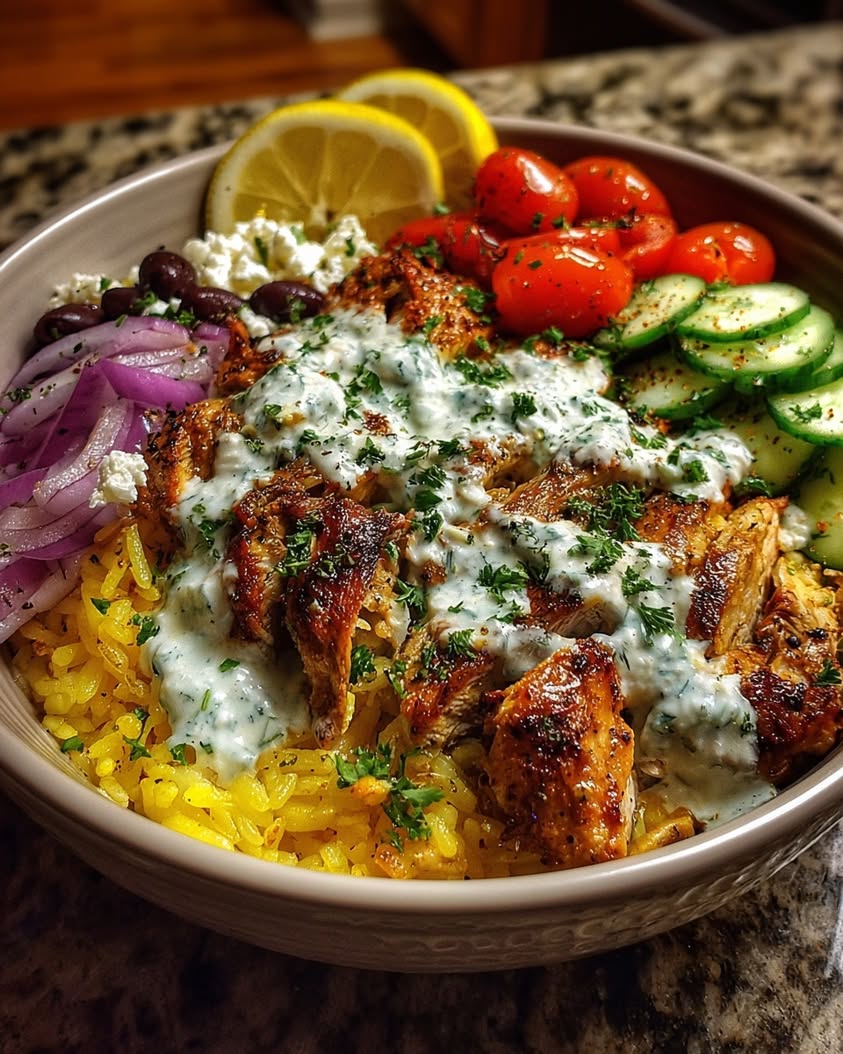
Greek Chicken Gyro Bowls with Garlic Sauce: A Fast, Healthy Dinner Bowl Packed with Flavor!
Imagine a deconstructed gyro, where every vibrant component gets its own spotlight in a nourishing bowl. This Greek chicken gyro bowl recipe delivers exactly that experience. It combines crispy, herb-infused chicken with fluffy rice, crisp vegetables, and a luxuriously creamy garlic sauce. Ultimately, this dish brings the bustling energy of a Greek taverna straight to your kitchen table. Moreover, it comes together in about thirty minutes, making it a perfect solution for busy weeknights.
The magic of these Greek chicken gyro bowls lies in their perfect balance. You get the savory, slightly charred flavor of the chicken, the cool crunch of fresh veggies, and the rich, tangy punch of the garlic sauce. Each bite is a symphony of textures and tastes. Consequently, this meal feels indulgent yet remains incredibly wholesome. It is a fantastic way to enjoy the bold flavors of Mediterranean cuisine in a simple, bowl-based format that everyone loves.
Furthermore, this recipe is incredibly versatile. You can easily customize it based on what you have in your fridge or your dietary preferences. Whether you are meal prepping for the week or serving a casual dinner for friends, these bowls are always a hit. They are visually stunning, packed with nutrition, and bursting with the authentic flavors of lemon, oregano, and garlic. Let us dive into how to create this stunning and satisfying Greek chicken gyro bowl.
Quick Recipe Highlights
- Flavor Profile: These Greek chicken gyro bowls offer a bright and savory taste. The chicken features classic Mediterranean herbs like oregano and thyme, complemented by fresh lemon juice. Additionally, the creamy garlic sauce adds a tangy, rich element that ties everything together beautifully.
- Texture: This dish is a masterclass in contrasting textures. You will enjoy crispy, golden-brown chicken against fluffy rice and crunchy cucumbers. The creamy sauce and juicy tomatoes then add a delightful softness, creating a perfectly balanced mouthfeel in every forkful.
- Aroma: As the chicken cooks, your kitchen will fill with the irresistible scent of sizzling garlic, lemon, and earthy herbs. This aromatic promise is a hallmark of authentic Greek cooking and sets the stage for a truly delicious meal.
- Visual Appeal: The presentation is vibrant and colorful. Think golden chicken, white rice, red tomatoes, green cucumbers, and purple onions, all drizzled with a white garlic sauce. It is a feast for the eyes that is almost too pretty to eat.
- Skill Level Needed: This is a beginner-friendly recipe. It involves simple techniques like marinating, pan-searing, and mixing a sauce. No special skills are required, making it an excellent choice for novice cooks or anyone seeking a straightforward, flavorful dinner.
- Special Equipment: You only need basic kitchen tools. A sharp knife, cutting board, mixing bowls, and a large skillet are essential. A box grater or microplane is helpful for the garlic sauce but not strictly necessary.
Recipe Overview
- Difficulty Level: We rate this Greek chicken gyro bowl recipe as easy. The steps are sequential and simple, involving basic chopping, mixing, and cooking. There is no complex knife work or advanced culinary techniques required. Anyone comfortable following a recipe can achieve fantastic results on their first try.
- Category: This dish falls squarely into the healthy dinner category. It is also perfect for meal prep, as all components store and reheat wonderfully. Furthermore, it works as a satisfying lunch and can even be a hit at casual gatherings or potlucks.
- Cuisine: This recipe is inspired by traditional Greek and broader Mediterranean cuisine. It captures the essential flavors of a classic chicken gyro—lemon, oregano, garlic, and yogurt—but presents them in a modern, deconstructed bowl format. It is a celebration of fresh, bright, and wholesome ingredients.
- Cost: Preparing these Greek chicken gyro bowls is very cost-effective. Chicken thighs or breasts, rice, and vegetables like cucumber and tomato are typically affordable staples. The herb and spice list uses pantry fundamentals. Overall, you can feed a family of four a restaurant-quality meal for a fraction of the price.
- Season: This is truly a year-round recipe. It feels light and refreshing in the spring and summer with its fresh vegetables. Conversely, it provides comforting warmth in the fall and winter. You can easily adapt the vegetable choices based on seasonal availability.
- Occasion: These bowls are incredibly versatile for different occasions. They are a quick weeknight savior, a reliable meal prep option, and a crowd-pleasing dish for informal dinners. Their customizable nature makes them suitable for feeding groups with varied tastes.
Why You’ll Love This Recipe
First and foremost, the taste and texture appeal is undeniable. Each component of these Greek chicken gyro bowls is designed to complement the others. You get the savory, herb-crusted chicken, the neutral base of rice, the cooling fresh veggies, and the tangy sauce. Every single bite delivers a complex and satisfying experience. The harmony of flavors from the lemon-oregano marinade and the creamy garlic yogurt sauce is simply irresistible. It is a familiar flavor profile executed in a fresh, modern way that will have everyone asking for seconds.
Next, consider the sheer convenience and preparation benefits. This entire meal comes together in about thirty-five minutes from start to finish. The marinade requires just a few minutes of mixing, and the chicken cooks quickly in a hot pan. Meanwhile, you can prepare the sauce and chop the vegetables. It is a streamlined process with minimal cleanup. Additionally, the recipe scales beautifully, whether you are cooking for one or for a crowd. The simplicity makes it a go-to recipe for any night of the week.
From a nutritional standpoint, these bowls are a powerhouse. They offer a complete meal with lean protein from the chicken, complex carbohydrates from the rice, and a wealth of vitamins and fiber from the fresh vegetables. The garlic sauce, made with Greek yogurt, adds protein and probiotics without the heaviness of a mayonnaise-based dressing. Consequently, this is a meal that fuels your body and satisfies your cravings without any guilt. It is a perfect example of how healthy eating can be incredibly delicious.
The social and entertaining value of this dish is also high. Serving food in bowls is inherently communal and customizable. You can set up a “gyro bowl bar” with all the components separate, allowing guests to build their perfect creation. This interactive style of eating is fun for family dinners and casual parties alike. The vibrant colors and inviting aromas immediately make people feel welcomed and excited to eat. It is a surefire way to impress without stress.
Finally, the cost-effectiveness and accessibility are major wins. You do not need any expensive or hard-to-find ingredients. Everything required for these Greek chicken gyro bowls is available at any standard grocery store. Using chicken thighs instead of breasts can make it even more budget-friendly. Compared to ordering takeout or dining at a Greek restaurant, making this at home saves a significant amount of money while yielding more food. It is a smart, flavorful, and economical choice for any home cook.
Historical Background and Cultural Significance
The story of the gyro is a fascinating tale of cultural fusion and culinary adaptation. While its exact origin is debated, most food historians agree the modern gyro, as we know it with vertical rotisserie-cooked meat, originated in Greece in the early 20th century. However, its roots go back much further. The concept of seasoned, stacked meat cooked on a vertical spit likely traveled with Greek immigrants from Anatolia and the Middle East, influenced by similar dishes like the Turkish döner kebab and the Arabic shawarma. The name “gyro” itself comes from the Greek word for “turn,” referring to the rotating cooking method.
In Greece, the gyro quickly became a cornerstone of street food culture. It was an affordable, portable, and deeply satisfying meal, typically served wrapped in soft pita bread with tomatoes, onions, and tzatziki sauce. The gyro represented more than just food; it was a symbol of post-war ingenuity and communal eating. It provided a quick lunch for workers and a late-night feast for revelers. The combination of savory meat, cool yogurt sauce, and fresh vegetables became iconic, embodying the bright, fresh flavors of the Mediterranean diet that the world now celebrates.
The evolution of the gyro recipe, particularly its journey to a bowl format, is a testament to modern global food trends. As health-conscious and customization-focused eating grew in popularity, the deconstructed bowl became a menu staple. The Greek chicken gyro bowl is a natural progression. It takes all the beloved elements of the traditional sandwich but presents them in a way that often feels lighter and allows for easier portion control and ingredient modification. This evolution respects the traditional flavors while adapting to contemporary dining preferences.
Regional variations of the gyro and its bowl offspring are plentiful. In Athens, you might find pork as the primary meat, while in other regions, chicken or lamb is preferred. The accompanying sauce might be tzatziki (cucumber-yogurt) or a simpler garlic sauce like the one in this recipe. In the United States, the gyro bowl has embraced further fusion, sometimes incorporating ingredients like quinoa, feta cheese crumbles, or even a spicy harissa drizzle. This adaptability shows the recipe’s enduring appeal and its capacity to absorb local influences while maintaining its delicious core identity.
Ingredient Deep Dive
Let us start with the star: chicken. For authentic Greek chicken gyro bowls, boneless, skinless chicken thighs are ideal. They remain incredibly juicy during high-heat cooking and have a richer flavor that stands up to bold herbs. Thighs are a staple in Mediterranean cooking due to their affordability and reliability. Nutritionally, they provide high-quality protein, iron, and B vitamins. For the best results, pat your chicken dry before marinating to ensure a good sear. If you prefer white meat, chicken breasts work but require careful monitoring to avoid dryness.
The marinade builds the foundational flavor. Extra virgin olive oil is non-negotiable. It carries the fat-soluble flavors of the herbs and helps create a beautiful crust. Fresh lemon juice tenderizes the meat and adds essential brightness. Dried oregano, specifically Greek oregano if you can find it, provides that distinctive earthy, slightly peppery note central to the cuisine. Garlic, minced fresh, infuses the chicken with pungent aroma. Together, these simple ingredients create a marinade that is far greater than the sum of its parts.
For the creamy garlic sauce, Greek yogurt is the hero. Its thick, strained texture creates a luscious, protein-rich base unlike regular yogurt. Culturally, yogurt has been a staple in Eastern Mediterranean and Middle Eastern diets for centuries. It offers probiotics for gut health, calcium, and protein. To make the sauce, you will combine it with freshly grated garlic, a splash of lemon juice, and a pinch of salt. The key is to let the sauce sit for at least ten minutes before serving; this allows the raw garlic flavor to mellow and meld beautifully with the yogurt.
The vegetable components bring freshness, color, and crunch. English or Persian cucumbers are perfect because they have fewer seeds and a sweeter taste. Tomatoes add juicy acidity; Roma or cherry tomatoes are excellent choices. Red onion provides a sharp, peppery bite that cuts through the richness. If raw onion is too strong, you can quickly pickle the slices in a little red wine vinegar and water. Finally, fresh parsley or dill makes a vibrant, herbaceous garnish that elevates the entire dish visually and flavorfully.
Common Mistakes to Avoid
- Do not skip marinating the chicken. Even a short twenty-minute marinade makes a significant difference in flavor penetration and tenderness. Rushing this step results in bland, less juicy chicken for your Greek chicken gyro bowls.
- Avoid overcrowding the skillet when cooking the chicken. If you add too many pieces at once, they will steam instead of sear. Cook in batches if necessary to ensure each piece gets proper contact with the hot pan for a crispy exterior.
- Do not use thin, runny yogurt for the garlic sauce. Authentic Greek yogurt is thick and strained. Using regular yogurt will yield a watery sauce that will not coat the ingredients properly and will make your bowl soggy.
- Neglecting to season each component individually is a common error. Season the chicken marinade well, add a pinch of salt to your vegetables, and taste the garlic sauce for seasoning. Layered seasoning is the secret to a truly flavorful bowl.
- Cutting your vegetables too far in advance can be a problem. Cucumbers and tomatoes can release water and become soggy. For the best texture, chop your fresh veggies just before you are ready to assemble and serve the bowls.
- Using bottled lemon juice instead of fresh is a major flavor compromise. The bright, clean acidity of freshly squeezed lemon juice is irreplaceable in both the marinade and the sauce. Bottled juice often has a stale, metallic aftertaste.
- Do not cook the chicken straight from the fridge. Let it sit at room temperature for about 10-15 minutes after marinating. This helps it cook more evenly, preventing a burnt outside and a cold center.
- Forgetting to let the garlic sauce rest is a missed opportunity. The flavors need time to marry. Letting the sauce sit for at least ten minutes allows the sharp bite of the raw garlic to soften into a more rounded, pervasive flavor.
Essential Techniques
Mastering the quick pan sear is crucial for perfect Greek chicken gyro bowls. Start by patting your marinated chicken completely dry with paper towels. Excess moisture is the enemy of a good sear. Next, heat your skillet over medium-high heat until it is properly hot. You should see a slight shimmer in the oil. Carefully add the chicken in a single layer, listening for that satisfying sizzle. Resist the urge to move or flip it constantly. Let it cook undisturbed for 4-5 minutes to develop a deep golden-brown crust. This technique, known as the Maillard reaction, creates complex savory flavors and an appealing texture you cannot achieve through steaming or boiling.
Creating an emulsified marinade is another key technique. Whisk your olive oil, lemon juice, herbs, and garlic together vigorously until the mixture looks slightly thickened and unified. This emulsion helps the oil-based and water-based ingredients cling to the chicken evenly. If you simply dump everything in a bowl, the oil and lemon juice will separate, leading to uneven flavor distribution. Taking this extra thirty seconds to whisk ensures every bite of chicken is perfectly seasoned. It is a simple step with a major impact on the final taste of your dish.
The art of building a balanced bowl is the final assembly technique. Begin with a base of fluffy rice to catch all the delicious juices. Then, strategically arrange your components in sections or layers. Place the hot, crispy chicken off to one side. Group the cool, crisp vegetables together. Finally, drizzle the creamy garlic sauce generously over everything. This method preserves the individual textures and temperatures until the moment you mix it all together with your fork. A haphazard pile can lead to sogginess, while thoughtful assembly guarantees the ideal eating experience with every contrasting bite.
Pro Tips for Perfect Greek Chicken Gyro Bowls
For maximum flavor, marinate your chicken for up to four hours in the refrigerator. If you are planning ahead, this extended time allows the acids and herbs to penetrate deeply. Do not exceed four hours with the lemon juice, however, as it can start to break down the protein and give the meat a mushy texture.
Use a meat thermometer to guarantee perfectly cooked chicken. The goal is an internal temperature of 165°F (74°C). This removes all guesswork and ensures your chicken is safe to eat while remaining succulent and juicy. Overcooked chicken is the quickest way to ruin your Greek chicken gyro bowls.
After cooking, let the chicken rest for five minutes before slicing. This allows the juices, which have been driven to the center by the heat, to redistribute throughout the meat. Slicing immediately will cause all those flavorful juices to run out onto your cutting board, leaving the chicken dry.
Toast your rice before cooking it. Add a tablespoon of olive oil to your pot, sauté the dry rice grains for a minute until they become slightly opaque, then add your water or broth. This simple step adds a subtle nutty flavor and helps the grains stay separate and fluffy, creating a superior base for your bowl.
If you have time, salt your sliced cucumbers and tomatoes. Place them in a colander, sprinkle with a little salt, and let them drain for ten minutes. This draws out excess water, intensifying their flavor and preventing your bowl from becoming watery. Just pat them dry with a paper towel before assembling.
Add a secret ingredient to your garlic sauce: a tiny pinch of sugar. This is not for sweetness but to balance the acidity of the lemon and the pungency of the garlic. It rounds out the sauce’s flavor profile beautifully, making it more complex and restaurant-quality.
Warm your pita bread if serving on the side. Quickly heat it in a dry skillet for 30 seconds per side or wrap it in foil and warm it in the oven. Warm pita is soft, pliable, and fragrant, providing the perfect vehicle for scooping up every last bit of your Greek chicken gyro bowl.
Variations and Adaptations
For regional variations, explore different proteins. Traditional Greek gyros often feature seasoned pork or lamb. You can easily substitute either in this bowl recipe. For a seafood twist, try large shrimp or chunks of firm white fish like cod, marinated and quickly pan-seared. The cooking times will adjust, but the flavor principles remain the same, anchored by the herbs, lemon, and garlic sauce.
Seasonal adaptations are simple and rewarding. In summer, add grilled zucchini, bell peppers, or eggplant alongside the chicken. In fall, incorporate roasted sweet potatoes or Brussels sprouts for a heartier feel. You can even swap the rice for a warm farro or barley salad. The bowl format is inherently flexible, allowing you to showcase the best produce each season has to offer while maintaining the core Greek flavor profile.
Dietary modifications are straightforward. For a gluten-free Greek chicken gyro bowl, ensure your spices are certified gluten-free and serve the bowl over rice or a quinoa base. For a dairy-free version, substitute the Greek yogurt in the sauce with a thick, plain dairy-free yogurt made from coconut or almonds. To make it low-carb or keto, replace the rice with cauliflower rice and double up on the non-starchy vegetables like cucumbers and tomatoes.
Flavor variations can keep this recipe exciting. Add a spoonful of sun-dried tomato paste to the chicken marinade for a deeper, umami-rich taste. Incorporate a teaspoon of smoked paprika or a pinch of cinnamon for a warm, complex note. For a spicy kick, add a diced jalapeño to the vegetables or a dash of hot sauce or red pepper flakes to the garlic sauce. These small tweaks can create a whole new experience.
Texture modifications are also possible. If you love crunch, add toasted pine nuts or slivered almonds as a garnish. For extra creaminess, crumble some tangy feta cheese over the top. You can also blend a handful of fresh herbs like dill or mint into the garlic sauce for a vibrant green color and an extra layer of freshness that changes the mouthfeel.
Presentation alternatives offer fun ways to serve. Instead of a composed bowl, serve all the components separately as a DIY gyro bowl bar for a party. You can also stuff the mixture into whole wheat pita pockets for a more traditional handheld meal. For a lighter option, serve the chicken and toppings over a bed of crisp romaine lettuce to create a hearty Greek chicken salad.
Serving and Presentation Guide
Plating techniques matter for visual appeal. Start with a wide, shallow bowl to give everything room to shine. Place a generous scoop of fluffy rice slightly off-center. Then, fan out your sliced Greek chicken against one side of the rice. Artfully arrange small piles of the diced cucumbers, tomatoes, and red onions in the remaining space, creating distinct sections of color. This method is not just pretty; it lets each ingredient maintain its integrity until mixed.
Garnishing is the final touch that elevates your Greek chicken gyro bowls from homemade to professional. A generous sprinkle of freshly chopped parsley or dill adds a pop of green and a burst of fresh flavor. A light drizzle of extra virgin olive oil over the entire bowl adds sheen and richness. For a colorful accent, add a few Kalamata olives or a sprinkle of paprika over the chicken or the sauce.
Traditional accompaniments include warm pita bread wedges served on the side for scooping. A small dish of extra garlic sauce for dipping is always welcome. A simple Greek salad on the side, or a bowl of olives and pepperoncini, can round out the meal. These additions stay true to the cuisine’s roots and provide a more complete dining experience.
Modern serving suggestions embrace convenience and customization. Prepare all the components in separate containers for a meal-prep lunch. For a family-style dinner, place large bowls of each component on the table and let everyone build their own masterpiece. You can also serve the bowls with a side of hummus or baba ganoush for an extra dip option, blending Greek and Middle Eastern traditions.
Temperature considerations are key to the perfect bowl. The rice and chicken should be served hot or warm. The fresh vegetables and garlic sauce should be cold or at room temperature. This contrast between hot and cool is part of the magic. Assemble the bowls just before serving to preserve these distinct temperatures and prevent the hot chicken from wilting the crisp veggies.
Portion control is easy with the bowl format. A standard serving is about 4-6 ounces of cooked chicken, ¾ cup of cooked rice, and a heaping cup of mixed vegetables with sauce. The beauty of this recipe is its inherent balance, making it satisfying without being overly heavy. For larger appetites, you can easily increase the chicken or rice portion without disrupting the harmony of the dish.
Wine and Beverage Pairing
Wine pairings for Greek chicken gyro bowls should complement the bright, herbal, and tangy flavors. A crisp, dry white wine like Assyrtiko from Santorini is a classic and perfect choice. Its high acidity and citrus notes mirror the lemon in the dish and cut through the creamy garlic sauce. Alternatively, a Sauvignon Blanc with its grassy, herbal character pairs wonderfully with the oregano and parsley. For red wine lovers, a light-bodied, low-tannin red like a Beaujolais or a Greek Xinomavro can work if served slightly chilled, as they will not overpower the chicken’s delicate seasoning.
Non-alcoholic alternatives are just as important. A sparkling lemonade or limeade echoes the citrus notes beautifully. Iced herbal teas, such as mint or chamomile, provide a refreshing and calming counterpoint to the savory meal. For a more authentic touch, try a glass of chilled ayran, a savory yogurt drink popular in Turkey and Greece. Simply mix cold water, plain yogurt, and a pinch of salt for a tangy, refreshing beverage that complements the meal perfectly.
Coffee and tea pairings work well if serving this for lunch. A medium-roast coffee with low acidity can be a nice finish, especially if you enjoy a cup after your meal. For tea, consider a peppermint or ginger tea, which can aid digestion after a flavorful meal. The key is to choose beverages that are cleansing and not too sweet, as they can clash with the savory and tangy elements of the bowl.
Temperature considerations for beverages are straightforward. White wines and non-alcoholic drinks should be served well-chilled. If you choose a light red, aim for a “cellar temperature” or slightly cooler than room temperature, around 55-60°F. Iced beverages should be cold but not diluted; use large ice cubes or frozen fruit to keep them cool without watering them down as you enjoy your Greek chicken gyro bowls.
Serving suggestions for a complete experience involve setting the scene. Pour wines just before serving to preserve their freshness. Have a pitcher of your chosen non-alcoholic beverage on the table for easy refills. Ultimately, the goal is to choose a drink that refreshes the palate between bites, allowing you to fully appreciate the layered flavors of the chicken, vegetables, and creamy sauce in every mouthful.
Storage and Shelf Life
Storage methods are crucial for maintaining quality. Store all components of your Greek chicken gyro bowls separately in airtight containers in the refrigerator. This prevents the crispy chicken from becoming soggy and the fresh vegetables from getting watery. The garlic sauce can be kept in its own small jar or container. Proper separation is the single most important factor for successful leftovers.
Temperature requirements are standard for cooked foods. All components must be refrigerated at 40°F (4°C) or below within two hours of cooking. Do not leave assembled bowls at room temperature for extended periods. The combination of moist rice, protein, and dairy-based sauce creates an environment where bacteria can grow rapidly if not chilled promptly.
Container recommendations include glass meal prep containers with compartments, which are ideal for keeping ingredients separate. For bulk storage, use separate containers for the chicken, rice, and chopped vegetables. Mason jars work wonderfully for the garlic sauce. Avoid using reactive metal containers for the acidic sauce or marinated chicken, as they can impart off-flavors.
Signs of spoilage to watch for include an off or sour smell from any component, especially the sauce or chicken. Visible mold, significant discoloration, or a slimy texture on the chicken or vegetables are clear indicators the food should be discarded. The garlic sauce may separate slightly when stored; this is normal. Simply stir it vigorously to recombine. If it smells overly fermented or unpleasant, it is best to toss it and make a fresh batch.
Reheating instructions focus on preserving texture. Reheat the chicken and rice separately in the microwave with a splash of water, covered, until steaming hot. Alternatively, reheat the chicken in a skillet over medium heat to recrisp the exterior. The vegetables and garlic sauce should be served cold straight from the fridge. Only assemble your bowl after reheating the hot components to keep the veggies crisp.
Freezing guidelines apply primarily to the cooked chicken and rice. Both freeze well for up to three months. Place them in freezer-safe bags or containers, removing as much air as possible. Thaw overnight in the refrigerator before reheating. Do not freeze the fresh vegetables or the garlic yogurt sauce, as they will become watery and lose their texture upon thawing.
Make Ahead Strategies
A prep timeline makes weeknights effortless. You can marinate the chicken up to 24 hours in advance; this actually improves the flavor. The garlic sauce can be made 2-3 days ahead; its flavor improves as the garlic mellows. Cook the rice 1-2 days in advance. Chop sturdy vegetables like onions a day ahead, but wait to dice cucumbers and tomatoes until the day of serving to prevent sogginess.
Storage between steps is simple with proper planning. Keep the marinated chicken in a sealed container or zip-top bag in the refrigerator. Store the prepared sauce in a jar with a lid. Cooked rice should be cooled completely before being transferred to an airtight container to prevent condensation, which can make it gummy. Label containers with dates to keep track of freshness.
Quality impact assessment is important. Marinating longer than 4 hours with lemon juice can slightly change the chicken’s texture, making it more tender but potentially softer. The garlic sauce will become more potent and flavorful over 24 hours. Pre-cooked rice may dry out slightly; reheating it with a tablespoon of water will restore moisture. Understanding these changes helps you plan the optimal make-ahead schedule.
Assembly tips for grab-and-go meals are key for meal prep. Use divided containers. Place the rice in one section, the cold vegetables in another, and the chicken in a third. Keep the garlic sauce in a small separate container or condiment cup. This method allows you to reheat the chicken and rice without affecting the fresh, cool elements. Assemble just before eating for the best texture.
Reheating guidelines for make-ahead components ensure food safety and quality. Always reheat chicken and rice to an internal temperature of 165°F (74°C). The microwave is convenient; cover the dish with a damp paper towel to add steam and prevent drying out. For the crispiest chicken, use a toaster oven or air fryer to reheat, which will restore some of the exterior texture lost during refrigeration.
Fresh element additions are the final step. Even with extensive prep, always add your fresh herbs (parsley, dill) and a final squeeze of lemon juice right before serving. These bright, volatile elements lose their punch if added too early. This last-minute touch brings the entire make-ahead Greek chicken gyro bowl back to life, making it taste freshly made.
Scaling Instructions
Halving the recipe is straightforward for smaller households. Simply divide all ingredient quantities by two. Use a medium skillet instead of a large one for the chicken. The cooking time may reduce slightly, so rely on a meat thermometer. The garlic sauce recipe halves perfectly; however, grating a single small clove of garlic can be tricky, so you may use a microplane or simply mince it very finely.
Doubling or tripling the recipe for a crowd requires some adjustments. Use multiple skillets or cook the chicken in batches to avoid overcrowding and steaming. You may need to prepare the marinade in a large bowl or even a zip-top bag. For the garlic sauce, a large mixing bowl and a whisk are your best friends. Consider keeping the cooked chicken warm in a low oven (200°F) on a sheet pan while you finish subsequent batches.
Equipment adjustments are necessary when scaling. For large batches, a large roasting pan can be used to marinate the chicken. You might need to cook rice in multiple pots or use a rice cooker with a larger capacity. Having extra mixing bowls and cutting boards on hand streamlines the prep process. Planning your equipment needs in advance prevents bottlenecks during cooking.
Timing modifications become important when cooking larger quantities. While the active prep time may not double, the sequential cooking time will. Start the rice first, as it can hold warm. Then, focus on cooking the chicken in managed batches. Prepare the sauce and chop vegetables while batches of chicken cook. Staggering tasks this way ensures everything is ready at approximately the same time, even for a big group.
Storage considerations for scaled-up recipes are vital. If you have significant leftovers from a doubled batch, remember to cool all components quickly before refrigerating. Spread hot rice and chicken on a sheet pan to cool to room temperature faster before packing into smaller containers. This prevents the growth of harmful bacteria and maintains food safety for your delicious Greek chicken gyro bowls.
Nutritional Deep Dive
The macro breakdown of a typical Greek chicken gyro bowl is well-balanced. A serving provides approximately 35-40 grams of high-quality protein from the chicken and Greek yogurt, essential for muscle repair and satiety. Complex carbohydrates from the rice offer around 45-50 grams, providing sustained energy. Healthy fats, primarily from olive oil, contribute 15-20 grams, supporting nutrient absorption and heart health. This balance makes the bowl a complete meal that fuels your body efficiently without causing energy spikes and crashes.
Micronutrient analysis reveals a wealth of vitamins and minerals. The chicken is rich in B vitamins, particularly B6 and niacin, which support metabolism. Tomatoes and red peppers provide a significant dose of vitamin C and antioxidants like lycopene. Cucumbers offer hydration and vitamin K. Olive oil contributes vitamin E. The garlic in the sauce provides allicin, a compound with noted health benefits. Together, these ingredients create a nutrient-dense meal that supports overall wellness.
Health benefits are numerous when consuming meals like this regularly. The Mediterranean diet pattern, which this bowl exemplifies, is consistently linked to reduced risk of heart disease, improved brain health, and better weight management. The lean protein and fiber promote fullness, aiding in portion control. The healthy fats support cholesterol levels. The antioxidants combat inflammation. This is not just a tasty dinner; it is a positive choice for long-term health.
Dietary considerations are easily addressed. The bowl is naturally high in protein and can be adapted for low-carb diets by substituting cauliflower rice. It is gluten-free as written, provided all spices are certified. For those monitoring sodium, you can control the salt added to the marinade and sauce. The dish is also nut-free, making it safe for most common allergies, which increases its accessibility for family and group dining.
Portion analysis shows this recipe promotes intuitive eating. The bowl format naturally limits portion size through the physical container. A standard serving provides a satisfying volume of food that is visually appealing and nutritionally complete. This can help prevent overeating, as the mind perceives a full bowl as a complete meal, unlike a plate where portions can be less defined.
Weight management tips connected to this recipe include its high protein and fiber content, which increase satiety. The balanced macros help regulate blood sugar, reducing cravings. Preparing it at home allows you to control the amount of oil and salt. Using it as a reliable meal prep option prevents last-minute unhealthy takeout choices. It is a practical, delicious tool in a sustainable healthy eating plan.
Dietary Adaptations
For a gluten-free Greek chicken gyro bowl, the recipe is almost inherently compliant. Simply ensure your dried oregano and any other spices are certified gluten-free, as cross-contamination can occur in processing facilities. Serve the bowl over rice, quinoa, or a certified gluten-free grain. Double-check any pre-made sauces or condiments you might add, like olives, to confirm they contain no gluten-based additives.
A dairy-free adaptation focuses on the garlic sauce. Substitute the Greek yogurt with an equal amount of thick, plain, unsweetened dairy-free yogurt. Coconut yogurt offers a rich texture, while almond or soy-based yogurts are lighter options. You may need to add a teaspoon of lemon
Print
Greek Chicken Gyro Bowles with Garlic Sauce
Description
A fresh and flavorful deconstructed gyro bowl featuring seasoned grilled chicken, crisp vegetables, and a creamy garlic sauce, all served over fluffy rice or greens.
Ingredients
For the Crust:
- 1 lb boneless, skinless chicken thighs, cut into strips
- 2 tbsp olive oil
- 1 tbsp lemon juice
- 2 tsp dried oregano
- 1 tsp garlic powder
- 1 tsp paprika
- Salt and black pepper to taste
- 2 cups cooked rice or mixed greens
- 1 cup cherry tomatoes, halved
- 1 cucumber, diced
- 1/2 red onion, thinly sliced
- 1/2 cup Kalamata olives, pitted
- 4 oz feta cheese, crumbled
- For the garlic sauce: 1/2 cup Greek yogurt, 2 cloves garlic, minced, 1 tbsp lemon juice, 1 tbsp chopped fresh dill, Salt to taste
Instructions
1. Prepare the Crust:
- In a bowl, combine chicken strips with olive oil, lemon juice, oregano, garlic powder, paprika, salt, and pepper. Marinate for at least 15 minutes.
- While chicken marinates, prepare the garlic sauce by mixing Greek yogurt, minced garlic, lemon juice, dill, and salt in a small bowl. Refrigerate until ready to serve.
- Heat a grill or skillet over medium-high heat. Cook chicken for 5-7 minutes per side until fully cooked and slightly charred.
- Assemble bowls by dividing rice or greens among four bowls. Top with cooked chicken, tomatoes, cucumber, red onion, olives, and feta cheese.
- Drizzle each bowl with garlic sauce and serve immediately.
Notes
You can customize the seasonings to taste.

I’m Shaykee—born in Morocco, seasoned across continents. From airplane galleys to home kitchens, I share the flavors and stories that shaped my journey.