
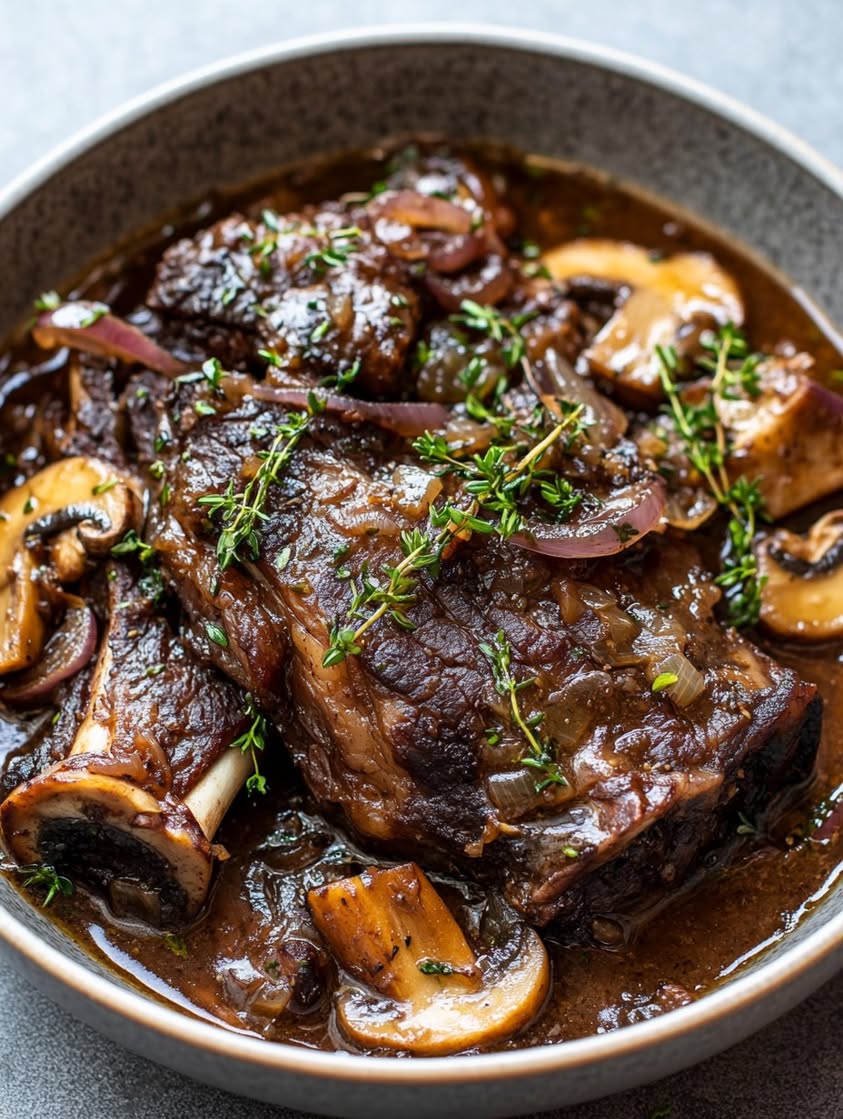
Slow-Braised Beef Shank in Rich Mushroom Sauce with Caramelized Red Onions: The Ultimate Comforting Dinner Recipe
Imagine a dinner so deeply satisfying that it warms you from the inside out. This Slow-Braised Beef Shank in Rich Mushroom Sauce with Caramelized Red Onions delivers exactly that experience. Picture a generous cut of beef shank, cooked low and slow until the meat becomes impossibly tender and falls cleanly away from the bone. Meanwhile, a savory mushroom sauce develops layers of umami flavor on the stovetop, creating the perfect luxurious blanket for the beef. Finally, a crown of sweet, jammy caramelized red onions adds a bright, balancing contrast. This dish is the very definition of hearty comfort food, transforming simple, affordable ingredients into a spectacular meal worthy of a special occasion or a deeply comforting weeknight.
The magic of this recipe lies in its transformative cooking process. Braising, a combination of searing and slow simmering in liquid, breaks down the tough connective tissues in the beef shank, rendering it succulent and gelatinous. Consequently, the rich mushroom sauce, built from a foundation of aromatic vegetables, dried porcini, and red wine, reduces into a velvety, concentrated gravy. Every component works in harmony, resulting in a meal that feels both rustic and elegant. Ultimately, this slow-braised beef shank recipe proves that the most memorable dinners often require patience, but reward you with incredible flavor and texture.
Furthermore, this dish is incredibly versatile. You can serve it over creamy mashed potatoes, buttery polenta, or a bed of egg noodles to soak up every last drop of that incredible sauce. It is a perfect project for a lazy weekend afternoon, filling your home with an irresistible aroma that promises a spectacular meal. Whether you are cooking to impress guests or simply treating your family, this recipe for tender, fall-off-the-bone beef shank in a rich mushroom sauce, topped with sweet caramelized onions, is guaranteed to become a cherished favorite in your culinary repertoire.
Quick Recipe Highlights
- Flavor Profile: This dish boasts a profound savory depth from the braised beef and earthy mushrooms, balanced by the subtle sweetness of caramelized onions and the bright acidity of tomato paste and red wine. Herbs like rosemary and thyme add a fragrant, aromatic backbone that ties everything together beautifully.
- Texture: The beef shank becomes meltingly tender, literally falling off the bone with the gentle pull of a fork. The mushroom sauce is luxuriously thick and velvety, while the caramelized onions provide a soft, jammy contrast that melts in your mouth.
- Aroma: As it cooks, your kitchen will fill with the warm, inviting scents of seared beef, sautéed garlic and onions, woody herbs, and the deep, earthy perfume of mushrooms. It is the quintessential smell of a home-cooked, comforting dinner.
- Visual Appeal: The presentation is stunning, with the large, cross-cut bone in the center of the plate surrounded by dark, glossy sauce and flecks of herbs. The vibrant ruby hue of the caramelized red onions adds a beautiful pop of color against the deep browns of the beef and sauce.
- Skill Level Needed: This recipe is accessible to intermediate home cooks. It requires patience and attention to foundational techniques like proper searing and low-temperature braising, but the steps themselves are straightforward and forgiving.
- Special Equipment: A large, heavy-bottomed Dutch oven or oven-safe pot with a tight-fitting lid is essential for even heat distribution during the long braise. You will also need a fine-mesh sieve for straining the mushroom broth.
Recipe Overview
- Difficulty Level: We rate this recipe as intermediate. While the process is simple, it demands an understanding of key techniques to achieve perfect results. Success hinges on properly searing the beef to develop flavor, patiently caramelizing the onions, and trusting the low-and-slow braise. However, the steps are clearly defined and the cook time is mostly hands-off, making it very manageable for anyone comfortable in the kitchen.
- Category: This is a quintessential main course, perfect for a hearty dinner. It falls squarely into the category of comfort food and slow-cooked meals. Additionally, it can be considered a special occasion dish due to its impressive presentation and rich, complex flavors.
- Cuisine: The recipe draws inspiration from classic European braising traditions, particularly French and Italian cuisines where slow-cooked meats with wine-based sauces are celebrated. The use of dried porcini mushrooms and red wine is a hallmark of rustic Italian cooking, while the technique is universally beloved in French bistros.
- Cost: Beef shank is an incredibly cost-effective cut, often priced much lower than steaks or roasts. The other ingredients—onions, carrots, celery, canned tomatoes—are pantry staples. The dried porcini mushrooms and red wine are the only potential splurges, but they are essential for building the sauce’s deep flavor. Overall, this is a budget-friendly way to create a luxurious-tasting meal.
- Season: This is the ultimate cold-weather dish, ideal for autumn and winter. The long, slow cooking process warms the kitchen and the rich, hearty result is exactly what you crave on a chilly evening. That said, its deliciousness knows no season for true comfort food lovers.
- Occasion: It is perfect for a cozy family Sunday supper, a dinner party where you want to impress without last-minute fuss, or any holiday gathering like a intimate Christmas or New Year’s Eve dinner. The fact that it can be made largely ahead of time makes it a fantastic choice for entertaining.
Why You’ll Love This Recipe
First and foremost, you will adore the unparalleled taste and texture of this slow-braised beef shank. The meat achieves a level of tenderness that is simply unattainable with quicker cooking methods. Each forkful is succulent, flavorful, and coated in a sauce that is the very essence of umami. The caramelized onions cut through the richness with their gentle sweetness, creating a perfect balance in every bite. This symphony of flavors—savory, earthy, sweet, and aromatic—makes for an exceptionally satisfying and memorable eating experience that far surpasses typical weeknight dinners.
Next, consider the convenience and preparation benefits. Although the total cook time is long, the active hands-on time is surprisingly short. You sear, you sauté, you simmer, and then the oven does the heavy lifting. This makes it an ideal recipe for a relaxed weekend cooking project or for prepping ahead for a stress-free dinner party. Moreover, the dish reheats beautifully, often tasting even better the next day as the flavors continue to meld. Consequently, you get a spectacular, restaurant-quality meal with a schedule that works for real life.
From a nutritional standpoint, this braised beef shank offers several advantages. Beef shank is a fantastic source of high-quality protein, iron, zinc, and B vitamins, particularly B12. The slow cooking process also draws minerals from the bone into the sauce. Additionally, the dish is packed with vegetables like onions, carrots, celery, and mushrooms, which provide fiber, vitamins, and antioxidants. Using a whole, unprocessed cut of meat allows you to control the ingredients, avoiding the excessive sodium and preservatives found in many pre-made sauces or meals.
The social and entertaining value of this dish is immense. Presenting a whole, braised beef shank at the table has a dramatic, celebratory feel. It encourages sharing and conversation, making the meal an event in itself. It pairs wonderfully with a variety of sides and wines, allowing you to build a complete menu around it. Serving this to guests communicates care and effort, guaranteeing compliments and requests for the recipe. Ultimately, it is a meal that brings people together around the table.
Finally, this recipe is remarkably cost-effective and accessible. Beef shank is an underutilized, budget-friendly cut that transforms into something luxurious with the right technique. The other ingredients are inexpensive and readily available at any grocery store. You do not need any fancy equipment beyond a sturdy pot. This recipe democratizes gourmet cooking, proving that you do not need expensive ingredients to create a truly extraordinary dinner. It is a testament to the power of technique and patience in the kitchen.
Historical Background and Cultural Significance
The practice of braising tough cuts of meat is as old as cooking itself, born from necessity and resourcefulness. Before modern butchery, every part of the animal was used, and methods were developed to make the toughest, most sinewy pieces palatable. Braising, which involves searing and then simmering in liquid, was the perfect solution. This technique is found in culinary traditions across the globe, from French “daube” and “boeuf bourguignon” to Italian “stracotto” and “osso buco.” Our recipe for slow-braised beef shank sits proudly within this timeless, global tradition of transforming humble ingredients into feast-worthy dishes.
Culturally, dishes centered around braised meats often hold a place of honor. They are frequently associated with family gatherings, Sunday dinners, and festive celebrations. The long, slow cook time traditionally meant the dish was prepared for special occasions when people could gather and wait. In many cultures, a large pot of braised meat simmering on the stove or in the oven symbolizes hospitality, abundance, and the care of the cook. The beef shank, with its prominent marrow bone, is especially significant, as the marrow is considered a prized delicacy in many cuisines.
The evolution of this specific recipe reflects broader culinary trends. The use of dried mushrooms, like porcini, is a classic Italian technique for intensifying flavor without fresh ingredients. Incorporating red wine into the braising liquid is a hallmark of French country cooking. The addition of caramelized onions as a garnish adds a modern touch of sweetness and visual appeal. Therefore, this recipe is a beautiful fusion of old-world techniques designed to maximize flavor from economical ingredients, updated for contemporary tastes and presentation.
Regional variations of braised beef shank are endless. In Italy, “Osso Buco” is made with veal shanks and gremolata. In the American South, smothered beef shanks might include Cajun spices and serve over rice. A Persian “Khoresh” might braise the meat with saffron, dried limes, and herbs. Our version, with its rich mushroom sauce, leans into the earthy, forest flavors celebrated in Central and Eastern European cuisines. Each variation tells a story of local ingredients, climate, and tradition, yet they all share the common goal of creating tender, flavorful meat through the alchemy of slow, moist heat.
Ingredient Deep Dive
Beef Shank (Cross-Cut): The star of the show, beef shank comes from the leg of the cow, a well-exercised muscle full of connective tissue (collagen). This collagen, when braised slowly with moisture, breaks down into gelatin, resulting in that legendary fall-off-the-bone texture and a luxuriously thick sauce. Nutritionally, it is an excellent source of protein, iron, and zinc. When selecting, look for shanks cut about 1.5 to 2 inches thick, with a nice ring of meat surrounding the marrow bone. For storage, keep it refrigerated and use within 2-3 days of purchase, or freeze for longer storage. If unavailable, short ribs or beef chuck roast cut into large chunks are good substitutes, though you will miss the dramatic presentation of the bone.
Dried Porcini Mushrooms: These fungi are flavor powerhouses. Porcini, known as “cèpes” in French, have been foraged and dried for centuries in Europe, prized for their intense, earthy, and nutty aroma. Rehydrating them creates two valuable assets: the softened mushrooms themselves and the deeply flavored soaking liquid, which forms the base of our rich mushroom sauce. They are a good source of B vitamins and antioxidants. Look for whole, large pieces with a strong, pleasant smell. Store them in an airtight container in a cool, dark place. If you cannot find porcini, other dried mushrooms like shiitake or morels can be used, though the flavor profile will shift slightly.
Red Onions for Caramelizing: Red onions are chosen for their higher sugar content and beautiful color, which makes them ideal for caramelizing. The process of slowly cooking them breaks down their sugars, transforming their sharp bite into a mellow, sweet, and jammy condiment. They add vitamins C and B6, along with antioxidants. Select firm, heavy onions with dry, papery skins and no soft spots. Store them in a cool, dark, well-ventilated place. Yellow onions can be substituted, but they will not provide the same vibrant color or slightly milder, sweeter final result.
Dry Red Wine: The wine serves multiple purposes: it deglazes the pot, lifting the flavorful browned bits (fond) after searing the meat, and its acidity helps tenderize the beef while adding complex fruit and tannic notes to the sauce. Choose a wine you would enjoy drinking, such as a Cabernet Sauvignon, Merlot, or Pinot Noir. The alcohol cooks off, leaving behind concentrated flavor. If you prefer not to cook with alcohol, you can substitute with an equal amount of beef broth mixed with a tablespoon of red wine vinegar or balsamic vinegar to mimic the acidity.
Common Mistakes to Avoid
- Not Patting the Beef Dry: Failing to thoroughly pat the beef shanks dry with paper towels before searing is a critical error. Moisture on the surface creates steam, which prevents the Maillard reaction—the chemical process that creates a deep, flavorful brown crust. Always dry your meat well for a perfect sear.
- Crowding the Pot During Searing: If you put all the shanks in the pot at once, they will steam instead of sear. Cook them in batches if necessary to ensure each piece has contact with the hot surface. This builds the foundational flavor for the entire dish.
- Rushing the Onion Caramelization: Cooking the onions over too high a heat will burn them before they properly caramelize. Use medium-low heat and give them a full 20-25 minutes, stirring occasionally. True caramelization is a slow, gentle process that develops deep sweetness.
- Skipping the Straining Step for the Mushroom Liquid: The dried mushroom soaking liquid often contains fine grit from the mushrooms. Pouring it directly into your sauce will add unpleasant sediment. Always strain it through a fine-mesh sieve or cheesecloth.
- Using Boiling Liquid to Braise: After searing and building your sauce, ensure the braising liquid is just simmering, not at a rolling boil, when you add the beef back and transfer to the oven. A violent boil can make the meat tough and stringy.
- Peeking Too Often During Braising: Every time you open the oven or lift the lid, you release valuable heat and steam, disrupting the constant, low-temperature environment needed for perfect braising. Trust the process and only check towards the end of the cook time.
- Not Reducing the Sauce at the End: After removing the beef, the braising liquid will be flavorful but too thin. You must simmer it on the stovetop to reduce and concentrate it into a proper, glossy sauce. This step is non-negotiable for the right texture.
- Carving the Meat Incorrectly: Do not simply hack at the shank. Use a sharp knife to gently separate the meat from the bone, following its natural seams. It should pull away easily. Slicing against the grain ensures the most tender bite.
Essential Techniques
Searing for Flavor: Searing is not about “sealing in juices”; it is about creating flavor through the Maillard reaction. This complex browning process generates hundreds of new flavor compounds, building a savory foundation for your entire dish. To master it, ensure your pot is very hot and your meat is dry. Place the shanks in and do not move them for a few minutes to allow a proper crust to form. The common pitfall is moving the meat too soon—it will stick initially but release naturally when a crust forms. Look for a deep, golden-brown color on all sides.
Low-and-Slow Braising: This is the heart of the recipe. Braising uses moist heat at a low temperature (typically 300°F to 325°F) to gently break down tough connective tissues over several hours. The liquid should come about halfway up the side of the meat, not submerge it completely. This technique is important because it transforms an inexpensive, tough cut into a tender masterpiece. The key to success is maintaining a consistent, low oven temperature and patience. A visual cue for doneness is when the meat pulls back from the bone and a fork inserts and twists with almost no resistance.
Building a Layered Sauce: A great sauce is built in stages. After searing the meat, you sauté aromatic vegetables (the mirepoix of onion, carrot, celery) to soften them and build sweetness. Then, you add tomato paste and cook it until it darkens slightly, which caramelizes its sugars and deepens its flavor. Deglazing with red wine lifts all the flavorful browned bits from the bottom of the pot. Finally, incorporating the strained mushroom liquid and broth creates a complex base that reduces into the final rich mushroom sauce. Each step adds a new layer of depth.
Pro Tips for Perfect Slow-Braised Beef Shank
For the deepest flavor, season your beef shanks generously with salt and pepper at least 45 minutes before you plan to cook them, and let them rest uncovered in the refrigerator. This “dry-brining” helps season the meat throughout and promotes better browning.
When caramelizing your red onions, add a tiny pinch of salt at the beginning. This helps draw out their moisture so they soften and caramelize more efficiently, rather than frying in the oil.
Do not discard the stems of your fresh mushrooms. Simply slice them thinly and sauté them along with the caps. They contain just as much flavor and will soften beautifully during the long cook time.
If your sauce is not thickening enough after reducing, create a “beurre manié.” Mash together equal parts soft butter and flour into a paste, then whisk small bits into the simmering sauce until it reaches your desired consistency.
Let the braised beef shanks rest for a full 10-15 minutes after removing them from the pot and before serving. This allows the juices, which have been driven to the center by the heat, to redistribute throughout the meat, ensuring every slice is moist.
For an extra layer of flavor, add a Parmesan rind to the braising pot along with the liquid. It will melt slowly, adding a subtle, savory umami richness to the sauce without making it cheesy.
To achieve a restaurant-style glossy finish on your sauce, whisk in a tablespoon of cold, unsalted butter off the heat just before serving. This technique, called “monter au beurre,” gives the sauce a beautiful sheen and a velvety mouthfeel.
If you have time, braise the dish a day ahead. Cool it completely, store the meat in the sauce in the refrigerator overnight, and gently reheat the next day. The flavors will meld and intensify dramatically.
Variations and Adaptations
For regional variations, consider a Provençal twist by adding Niçoise olives, orange zest, and herbes de Provence to the braise. Alternatively, for a German-inspired version, use a dark beer instead of red wine and add a spoonful of whole-grain mustard at the end, serving it with spaetzle or potato dumplings.
Seasonal adaptations are easy. In spring, finish the sauce with fresh peas and tarragon. For a summer take, serve the tender beef over a lighter cauliflower puree and garnish with a gremolata of lemon zest, parsley, and mint. In the heart of winter, add root vegetables like parsnips or turnips to the braise during the last hour of cooking.
Dietary modifications are straightforward. For a gluten-free version, simply ensure your broth is certified gluten-free and use cornstarch slurry instead of a flour-based beurre manié to thicken the sauce if needed. To make it dairy-free, omit the final butter swirl and use a splash of olive oil to finish the sauce instead.
Flavor variations can take this recipe in new directions. Add a tablespoon of smoked paprika or a single chipotle pepper in adobo sauce to the vegetables for a smoky, spicy kick. For an Asian-inspired profile, substitute the red wine with Shaoxing wine, use shiitake mushrooms, and add star anise and a piece of ginger to the braise, finishing with soy sauce.
For texture modifications, you can shred the braised meat instead of serving it in slices, mixing it back into the reduced sauce for an incredible ragu to serve over pasta or polenta. Alternatively, for a chunkier sauce, reserve some of the sautéed fresh mushrooms and add them back in at the very end of the reduction.
Presentation alternatives include serving individual smaller shanks (if available) on each plate for a dramatic personal portion. For a more refined look, slice the meat off the bone completely after braising, arrange the slices on a platter, nap with sauce, and place the caramelized onions in a neat line down the center.
Serving and Presentation Guide
Plating techniques matter for this stunning dish. For a family-style presentation, place the whole braised shank(s) on a large, warm platter. Pour a generous amount of the rich mushroom sauce over and around the meat, then artfully drape the caramelized red onions over the top. Scatter with fresh chopped parsley. For individual plates, slice the meat against the grain, fan 2-3 slices on one side of the plate, spoon sauce over, and place a quenelle or small pile of onions beside it.
Garnishing ideas go beyond parsley. A final sprinkle of flaky sea salt like Maldon enhances flavor and texture. Fresh thyme leaves or finely chopped chives add color and a fresh aroma. For a touch of brightness, a very light grating of lemon zest over the finished dish just before serving can work wonders.
Traditional accompaniments are all about soaking up the glorious sauce. Creamy mashed potatoes are the classic choice. Buttery polenta or soft, wide egg noodles like pappardelle are also perfect. For a lighter option, try cauliflower puree or a soft, creamy risotto. A crusty loaf of sourdough or baguette is essential for mopping the plate.
Modern serving suggestions might include pairing it with crispy roasted fingerling potatoes or a celery root and potato gratin. A simple, bright side salad with a sharp vinaigrette (like arugula with shaved fennel and lemon) is crucial to cut the richness of the main dish and complete the meal.
Temperature considerations are key. Serve everything piping hot. Warm your serving platter and dinner plates before plating. The sauce will thicken as it cools, so if you are plating individually, work quickly or keep the sauce warm over a very low heat.
Portion control tips are simple given the richness of the dish. One cross-cut beef shank (about 1.5 lbs) typically serves 2-3 people, as the meat is very rich and is served with substantial sides. When slicing for individual plates, a ½-inch thick slice or two is usually a generous and satisfying portion.
Wine and Beverage Pairing
Wine pairings should complement the dish’s richness and earthy flavors. A medium to full-bodied red wine with good acidity is ideal. A classic Cabernet Sauvignon or Merlot from California or Bordeaux has the structure to stand up to the beef. A Syrah/Shiraz, with its peppery notes, pairs beautifully with the mushrooms. For an exceptional match, try a aged Barolo or Barbaresco from Italy; their earthy, truffly notes and firm tannins are a perfect mirror for the mushroom sauce. Ultimately, ensure the wine is not too high in alcohol, as it can overpower the subtle sweetness of the onions.
Non-alcoholic alternatives can be just as thoughtful. A rich, savory mushroom broth served warm in a mug makes a great pairing. For something with complexity, try a tart cherry juice or a high-quality non-alcoholic red wine blend. Sparkling water with a twist of orange or a dash of bitters can cleanse the palate between bites beautifully.
While not traditional, coffee and tea pairings can work. A cup of strong, black French press coffee after the meal complements the deep, roasted notes in the sauce. For tea, a lightly smoked Lapsang Souchong can echo the earthy mushroom flavors, or a mint tea can provide a refreshing, palate-cleansing finish.
Temperature considerations are standard: serve red wines at a cool room temperature, around 60-65°F. Chilling them slightly below room temp can help balance the warmth of the dish. Non-alcoholic broths should be served hot, while sparkling waters and juices are best well-chilled.
Serving suggestions include decanting your red wine about 30 minutes before serving to allow it to breathe and open up. Always provide a water glass for each guest to sip throughout the meal. If offering multiple beverages, consider serving the non-alcoholic option first or alongside the wine, allowing guests to choose their preferred pairing.
Storage and Shelf Life
For storage methods, allow the braised beef and sauce to cool completely to room temperature before storing. Do not leave it out for more than two hours. Transfer the meat and sauce together into an airtight container. You can store them combined, or separately if you prefer.
Temperature requirements are crucial for safety. The stored dish must be kept in the refrigerator at 40°F or below. You can also freeze it for long-term storage. Never store large, hot portions directly in the fridge, as it can raise the internal temperature of your refrigerator, risking other foods.
Container recommendations include glass or BPA-free plastic containers with tight-fitting lids. For freezing, use heavy-duty freezer bags, pressing out as much air as possible, or freezer-safe containers. Label everything with the date so you can track shelf life easily.
Signs of spoilage include an off or sour smell, a slimy texture on the meat or sauce, or visible mold. If the sauce has separated abnormally and smells questionable, it is best to discard it. When in doubt, always err on the side of caution and throw it out.
Reheating instructions are simple for best results. For refrigerated portions, reheat gently in a covered saucepan over low heat on the stovetop, adding a splash of broth or water if the sauce has thickened too much. You can also reheat in the microwave in 60-second intervals, stirring in between. Always ensure the internal temperature reaches 165°F.
Freezing guidelines: The dish freezes exceptionally well for up to 3 months. Freeze the meat in the sauce for best results, as the sauce protects the meat from freezer burn. Thaw overnight in the refrigerator before reheating gently on the stovetop. The texture may be slightly softer after freezing, but the flavor will remain excellent.
Make Ahead Strategies
For an ideal prep timeline, you can complete nearly the entire recipe up to 2 days in advance. The day before your event, follow all steps through the braising and sauce reduction. Then, instead of serving, let the dish cool, combine the meat and sauce in a storage container, and refrigerate. This extended resting time allows the flavors to marry and deepen profoundly.
Storage between steps is simple. If you need to pause after searing the meat and sautéing the vegetables, you can hold them at room temperature for an hour or so. The strained mushroom liquid can be prepared a day ahead and stored in the fridge. The caramelized onions can also be made a day or two in advance and gently reheated.
The quality impact assessment of making ahead is overwhelmingly positive. Braised dishes are famously better the next day. The fat will rise and solidify on top, which you can easily skim off when cold, resulting in a cleaner, richer sauce. The meat will have reabsorbed some of the sauce, becoming even more flavorful and tender.
Assembly tips for the day of serving are minimal. Gently reheat the beef in its sauce in a covered pot over low heat until warmed through. You may need to add a small amount of broth or water to loosen the sauce. Reheat the caramelized onions separately in a small pan. Prepare your chosen sides fresh.
Reheating guidelines are key to preserving texture. Always reheat slowly and gently. Avoid boiling, as this can make the meat tough. If using the oven, cover the dish with foil and reheat at 300°F until hot. Stir the sauce occasionally to ensure even heating.
Fresh element additions are the final touch. Always prepare any fresh garnishes like chopped parsley or thyme just before serving. If you made the caramelized onions ahead, give them a quick warm-up in a pan. Adding these fresh, bright components at the last minute elevates the dish and makes it taste newly made.
Scaling Instructions
Halving the recipe is straightforward if cooking for fewer people. Use a single large beef shank or two smaller ones. Halve all other ingredients proportionally. Use a smaller Dutch oven or pot to ensure the braising liquid still comes about halfway up the meat. The cook time may be slightly reduced by 30-45 minutes; start checking for tenderness earlier.
Doubling or tripling the recipe for a crowd is very doable. You will need a very large, heavy pot or you may need to use two separate Dutch ovens. Ensure you brown the meat in batches to avoid steaming. The oven braising time will remain roughly the same, as the key factor is the thickness of the individual shanks, not the quantity in the pot. Just make sure your oven racks are positioned to allow for proper heat circulation around the larger pot(s).
Equipment adjustments are necessary when scaling. A standard 5-7 quart Dutch oven can hold about 2-3 shanks comfortably. For more, you will need a larger pot or to divide between two. When doubling, you may also need a larger fine-mesh sieve or to strain the mushroom liquid in batches.
Timing modifications are minimal for scaling up or down. The active prep time will increase linearly with more ingredients (more chopping, more batch searing). However, the passive braising time in the oven should stay consistent, around 2.5 to 3 hours for shanks of the same thickness. Always use a meat thermometer or the fork-tenderness test as your ultimate guide, not just the clock.
Storage considerations change with scale. If you have made a large batch, divide it into smaller, meal-sized portions before refrigerating or freezing. This allows for quicker cooling (important for food safety) and easier reheating later. Label each container with the contents and date clearly.
Nutritional Deep Dive
A macro breakdown for a serving (approximately ¼ of the recipe) is rich in protein and healthy fats from the beef, with moderate carbohydrates primarily from the vegetables and wine reduction. The beef shank provides a significant amount of high-quality, complete protein essential for muscle repair and satiety. The fats are a mix of saturated and monounsaturated, with much of the saturated fat rendering into the sauce, which can be skimmed off if desired. The carbohydrates are complex, coming from the onions, carrots, and mushrooms, providing sustained energy.
The micronutrient analysis is impressive. This dish is an excellent source of heme iron from the beef, which is highly absorbable and crucial for oxygen transport in the blood. It also provides substantial zinc for immune function, B vitamins (especially B12) for energy metabolism, and selenium, an important antioxidant. The vegetables contribute vitamin C from the tomatoes, vitamin A from the carrots, and various phytonutrients and antioxidants from the onions and mushrooms.
Health benefits extend beyond basic nutrition. The collagen and gelatin released from the beef shank during braising are great for joint, skin, and gut health. The dish is inherently whole-food based, free from processed ingredients. The lycopene in the tomato paste becomes more bioavailable when cooked with fat. Furthermore, the meal is very satiating, which can help with portion control and prevent overeating later.
Dietary considerations are important to note. The recipe is naturally gluten-free if you use a gluten-free broth and thicken with cornstarch instead of flour. It is also low in sugar, with the only sugars being natural ones from the vegetables. However, it is not suitable for vegetarians, vegans, or those on a low-purine diet (due to the red meat and mushrooms). The sodium content can be controlled by using low-sodium broth.
Portion analysis shows that a single serving is very satisfying due to its high protein and fat content. A typical plate with a slice of beef shank, sauce, and a standard side like mashed potatoes constitutes a complete, balanced meal. The richness means you are likely to feel full without needing an excessively large volume of food.
Weight management tips include skimming the solidified fat from the top of the cooled sauce before reheating, which can remove a significant amount of calories. Serving the dish with a larger portion of a non-starchy vegetable side (like green beans or a salad) and a smaller portion of a starchy side can also help balance the meal for those watching their carbohydrate intake.
Dietary Adaptations
For a gluten-free adaptation, this recipe is already nearly compliant. Simply ensure your beef broth is certified gluten-free. If you need to thicken the sauce at the end, use a cornstarch slurry (mix 1 tablespoon cornstarch with 2 tablespoons cold water) instead of a flour-based beurre manié. Whisk it into the simmering sauce until thickened.
Creating a dairy-free version is incredibly easy. The recipe contains no mandatory dairy. Simply omit the optional final butter swirl (“monter au beurre”) for finishing the sauce. You can achieve a lovely sheen by finishing with a tablespoon of high-quality extra virgin olive oil instead. All other ingredients are naturally dairy-free.
A vegan adaptation is challenging due to the central role of beef, but a “plant-based braise” concept can work. Substitute the beef shank
Print
Slow-Braised Beef Shank in Rich Mushroom Sauce with Caramelized Red Onions
Description
Tender beef shank braised in a savory mushroom sauce with sweet caramelized red onions, perfect for a comforting meal.
Ingredients
For the Crust:
- 2 lbs beef shank
- 1 large red onion, thinly sliced
- 8 oz cremini mushrooms, sliced
- 4 cloves garlic, minced
- 2 cups beef broth
- 1/2 cup red wine
- 2 tbsp tomato paste
- 2 tbsp olive oil
- 1 tsp dried thyme
- Salt and black pepper to taste
Instructions
1. Prepare the Crust:
- Season beef shank with salt and pepper. Heat olive oil in a large pot and sear shank on all sides until browned, then remove.
- In the same pot, add red onion and cook over medium heat until caramelized, about 10 minutes. Add mushrooms and garlic, cooking until softened.
- Stir in tomato paste, red wine, and beef broth. Return beef shank to the pot, add thyme, and bring to a simmer.
- Cover and braise on low heat for 2.5–3 hours until beef is fork-tender. Serve hot with sauce and onions.
Notes
You can customize the seasonings to taste.

I’m Shaykee—born in Morocco, seasoned across continents. From airplane galleys to home kitchens, I share the flavors and stories that shaped my journey.