
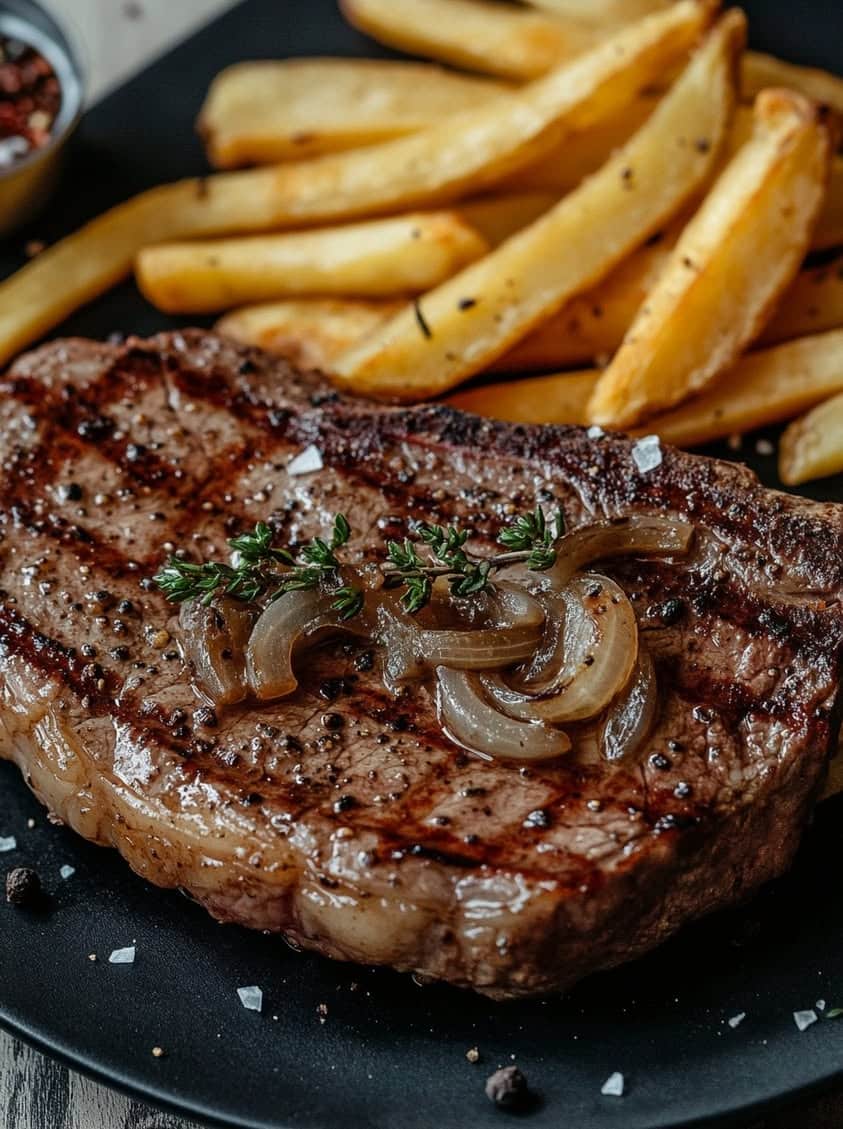
Perfectly Seared Ribeye Steak Topped with Rich French Onions and Served with Crispy Fries: Ultimate Comfort Food Perfection
Imagine a plate that delivers pure, unadulterated satisfaction with every single bite. This recipe for a perfectly seared ribeye steak topped with rich French onions and served with crispy fries is exactly that. It combines the primal appeal of a beautifully cooked steak with the sweet, savory depth of caramelized onions and the irresistible crunch of golden fries. Ultimately, this dish is the definition of comfort food perfection, transforming a simple dinner into a memorable culinary experience.
Furthermore, this meal balances sophisticated technique with approachable execution. The process of creating a dark, flavorful crust on the ribeye, slowly coaxing onions into a jammy, umami-rich topping, and achieving fries with a crisp exterior and fluffy interior is deeply rewarding. Consequently, the final result is a symphony of textures and flavors that feels both indulgent and deeply satisfying. It is a celebration of classic bistro fare that you can master in your own kitchen.
Moreover, the sensory journey this dish provides is unparalleled. You will hear the satisfying sizzle of the steak hitting the hot pan and the gentle bubble of the onions reducing. You will smell the intoxicating aroma of searing beef fat and sweet onions filling your kitchen. Finally, you will taste the contrast between the juicy, medium-rare steak, the silky onions, and the salty, crisp potatoes. This recipe is designed to engage all your senses from start to finish.
Quick Recipe Highlights
- Flavor Profile: This dish offers a masterful balance of bold, beefy flavors from the perfectly seared ribeye steak, complemented by the sweet and deeply savory notes of the rich French onions. The crispy fries add a salty, starchy component that ties everything together, creating a harmonious and complex taste experience.
- Texture: The texture contrast is key to this recipe’s success. You get a satisfyingly crisp, caramelized crust on the steak giving way to a tender, juicy interior. Simultaneously, the French onions are luxuriously soft and jammy, while the fries provide an essential crunchy counterpoint that makes every mouthful exciting.
- Aroma: The cooking process fills your kitchen with an irresistible fragrance. Initially, you get the savory scent of searing beef and rosemary. Then, the sweet, almost nutty aroma of onions slowly caramelizing with thyme and a splash of wine takes over, building anticipation for the delicious meal to come.
- Visual Appeal: This plate is a feast for the eyes with its striking color contrasts. The deep brown sear on the ribeye steak, the golden-brown heap of French onions, and the vibrant yellow of the crispy fries create an inviting and rustic presentation that promises incredible flavor.
- Skill Level Needed: This recipe is ideal for a confident home cook. It requires managing multiple components—searing, caramelizing, and frying—with good timing. However, with clear instructions and a bit of practice, even those newer to cooking can achieve fantastic results and feel like a pro.
- Special Equipment: For best results, you will need a heavy-bottomed skillet (cast iron is perfect) for searing the steak and caramelizing the onions. Additionally, a deep fryer, large pot, or high-walled skillet is necessary for achieving truly crispy fries. A reliable instant-read thermometer is also highly recommended for perfect steak doneness.
Recipe Overview
- Difficulty Level: We rate this recipe as intermediate because it involves coordinating three key elements with precise timing. Successfully searing a steak to develop a crust without overcooking, patiently caramelizing onions to the perfect jammy consistency, and double-frying potatoes for optimal crispiness require focused attention. However, each step is broken down clearly, making the process entirely manageable for a dedicated cook.
- Category: This dish firmly sits in the main course category, designed as a hearty and complete dinner. It is the centerpiece of a meal, offering protein, vegetables (in the form of onions), and starch all on one plate. It is perfect for a date night at home, a celebratory dinner, or when you simply want to treat yourself to an exceptional homemade meal.
- Cuisine: The inspiration is firmly rooted in classic French bistro and American steakhouse traditions. The technique for the rich French onions draws from French onion soup, while the emphasis on a perfectly seared, high-quality ribeye steak is a hallmark of American steakhouse culture. The crispy fries add a universally beloved element, making this a fusion of beloved culinary styles.
- Cost: This is a splurge-worthy meal, with the primary cost driver being the quality of the ribeye steak. Choosing well-marbled, prime or choice-grade beef will yield the best results. The onions, potatoes, and basic pantry ingredients are very affordable. Overall, you are creating a restaurant-quality dish at a fraction of the price you would pay dining out.
- Season: This recipe shines year-round but feels particularly comforting during the cooler fall and winter months. The hearty, rich nature of the perfectly seared ribeye steak and the warm, savory French onions provide a sense of warmth and sustenance. That said, it is equally fantastic for a summer grill night if you choose to cook the steak outdoors.
- Occasion: It is ideal for special occasions like anniversaries, birthdays, or Valentine’s Day when you want to create a romantic, impressive dinner at home. Conversely, it is also perfect for a luxurious weekend treat or for impressing dinner guests with your culinary skills. It is a versatile dish that makes any meal feel like an event.
Why You’ll Love This Recipe
First and foremost, you will adore the incredible taste and texture appeal of this dish. The combination of a juicy, flavorful ribeye steak with a perfect sear, topped with sweet and savory caramelized onions, is a classic for a reason. Each component complements the others flawlessly. The crispy fries are not just a side; they are an integral part of the experience, providing a crunchy vehicle for sopping up the delicious steak juices and onion jam. Every forkful delivers a complex and deeply satisfying mouthfeel that is both luxurious and comforting.
Additionally, this recipe offers significant convenience and preparation benefits despite its impressive presentation. Many of the components can be prepped in advance. You can slice your onions and potatoes ahead of time. Furthermore, the onions can be caramelized slowly ahead of schedule and gently reheated. This allows you to focus on the final sear of the steak and the last fry of the potatoes when your guests arrive or when you are ready to eat. Consequently, you can serve a seemingly complex meal with relative ease and poise.
From a nutritional perspective, this meal provides a substantial amount of high-quality protein from the ribeye steak, which is essential for muscle repair and satiety. Onions, the base of the rich French topping, are packed with antioxidants and prebiotic fibers that support gut health. While indulgent, using good quality fats for cooking and opting for russet potatoes, which offer potassium and vitamin C, adds nutritional value. Balancing this rich meal with a light salad or steamed vegetables on the side can create a more rounded dietary profile.
Moreover, the social and entertaining value of this dish is immense. Serving a perfectly seared ribeye steak topped with rich French onions and crispy fries is a guaranteed crowd-pleaser that sparks conversation and delight. It shows care and effort, making your guests feel truly special. This meal encourages a leisurely, celebratory dining atmosphere. It is the kind of dish people remember and request again, solidifying your reputation as a fantastic host or home cook.
Finally, this recipe is cost-effective and accessible compared to dining out at a high-end steakhouse. You control the quality of every ingredient, from the cut of meat to the type of oil and seasoning. By shopping smartly and preparing everything at home, you achieve a five-star restaurant experience at a fraction of the cost. The techniques learned—perfect searing, caramelization, double-frying—are also invaluable skills that will elevate countless other dishes in your cooking repertoire.
Historical Background and Cultural Significance
The story of this dish begins with its individual components, each with a rich history. The ribeye steak comes from the rib section of the cow, prized for its intense marbling and flavor. In America, the steakhouse culture that elevated cuts like the ribeye took hold in the 19th century, particularly in cities like New York and Chicago. These establishments focused on simple, high-quality preparations—often just salt, pepper, and high heat—to showcase the meat’s natural quality. The concept of a “perfectly seared” crust is a cornerstone of this tradition, locking in juices and creating complex flavor through the Maillard reaction.
Conversely, the rich French onions have a heritage deeply tied to French peasant cuisine. Onions were a staple, affordable vegetable that could be stored for long periods. Slowly cooking them down until caramelized and sweet was a method to develop deep flavor from a humble ingredient. This technique is the soul of French onion soup, a classic dish dating back centuries. Applying this same slow-cooked, wine-kissed onion jam to a steak is a natural fusion, bridging rustic French cooking with hearty American protein.
The evolution of this specific recipe is a modern tale of culinary fusion. While steaks have been served with sauces and toppings for ages, the deliberate pairing of a quickly seared steak with a slowly crafted onion compote reflects contemporary dining preferences that value contrast in texture, temperature, and cooking time. It takes the familiar steakhouse meal and adds a layer of European sophistication and depth. The crispy fries, believed to have origins in either Belgium or France, complete the trifecta, making the plate a globally inspired comfort food icon.
Regarding regional variations, you will find similar ideas across the globe. In Philadelphia, the cheesesteak uses thinly sliced ribeye and fried onions. In Argentina, a steak might be served with chimichurri, a herby sauce, but the principle of a flavorful topping remains. Some modern variations might add melted cheese over the onions, incorporate mushrooms into the mix, or use sweet potato fries for a different twist. The core idea—a high-quality steak enhanced by a savory, aromatic garnish and a satisfying starch—is a universal winner in many culinary traditions.
Ingredient Deep Dive
Starting with the star, the ribeye steak is renowned for its rich flavor and tenderness, thanks to the generous intramuscular fat called marbling. This fat renders during cooking, basting the meat from the inside and creating an incredibly juicy result. When selecting a ribeye, look for a bright red color with fine, white marbling distributed evenly throughout the cut. A thickness of at least 1.5 inches is ideal for achieving a good sear without overcooking the center. For storage, keep it in the coldest part of your refrigerator for up to two days before cooking, or freeze it for longer storage. If needed, a New York strip steak is a good substitution, though it will be slightly leaner.
Yellow onions are the foundation for the rich French onion topping. They are chosen for their perfect balance of sharpness and sugar content, which caramelizes beautifully. Historically, onions have been a culinary staple for thousands of years due to their storage longevity and flavor-building capabilities. Nutritionally, they are a good source of vitamin C, B vitamins, and antioxidants like quercetin. Select firm onions with dry, papery skins and no soft spots. Store them in a cool, dark, well-ventilated place—not in the refrigerator. For a different flavor profile, you can substitute with a mix of yellow and sweet Vidalia onions, especially when in season.
Russet potatoes are the gold standard for crispy fries due to their high starch and low moisture content. This composition allows them to become fluffy on the inside and develop a shatteringly crisp exterior when fried twice. They are a good source of potassium and vitamin C. Choose potatoes that are firm, smooth, and free of sprouts or green tinges. Store them in a cool, dark place away from onions. For a variation, Yukon Gold potatoes can be used for a creamier interior and slightly less crisp fry, while sweet potatoes offer a vibrant, vitamin-A-rich alternative with a different sweetness.
Fresh herbs like thyme and rosemary are non-negotiable for building aromatic depth. Thyme, with its subtle, earthy flavor, is classic in French cooking and pairs perfectly with the slow-cooked onions. Rosemary’s piney, robust character stands up to the bold flavor of the seared steak. Using fresh herbs rather than dried makes a significant difference in this recipe, as their essential oils are more vibrant. To store, wrap them loosely in a damp paper towel and place in a resealable bag in the refrigerator. If you must substitute, use dried herbs but reduce the quantity by two-thirds, as they are more potent.
Common Mistakes to Avoid
- Not Drying the Steak: Patting your ribeye steak completely dry with paper towels before seasoning is crucial. Any surface moisture will create steam in the pan, preventing the formation of a proper, dark sear. A wet steak will boil rather than sear, resulting in a gray, steamed exterior instead of a flavorful crust.
- Using a Cold Pan or Insufficient Heat: Searing requires intense, immediate heat to trigger the Maillard reaction. Adding your steak to a pan that is not properly preheated is a common error. Always preheat your heavy skillet over medium-high to high heat for several minutes until it is very hot before adding the oil and then the steak.
- Overcrowding the Pan: When cooking the steak or frying the potatoes, avoid crowding the pan. Overcrowding lowers the pan’s temperature dramatically, causing food to steam and become soggy instead of searing or crisping. Cook in batches if necessary to ensure each piece has enough space for proper heat circulation.
- Moving the Steak Too Soon: After placing the steak in the hot pan, resist the urge to move or poke it. Let it cook undisturbed for several minutes to allow a crust to form. If you try to lift it and it sticks, it is not ready; the crust will release naturally when it is properly seared.
- Rushing the Onions: Caramelizing onions cannot be hurried over high heat. Cooking them quickly will only fry or burn them, creating a bitter taste. True caramelization requires low, slow cooking—at least 25-30 minutes—to gently break down the sugars and develop a deep, sweet, umami-rich flavor without bitterness.
- Not Double-Frying the Fries: Skipping the double-fry method is the main reason homemade fries turn out soggy. The first fry at a lower temperature cooks the potato through. The second fry at a higher temperature, done just before serving, creates the golden, crispy exterior. This step is essential for perfect texture.
- Slicing the Steak Immediately After Cooking: Cutting into your perfectly seared ribeye steak right out of the pan will cause all the precious juices to run out onto the cutting board. Always let the steak rest on a warm plate for at least 5-10 minutes after cooking. This allows the juices to redistribute throughout the meat, ensuring every bite is juicy.
- Seasoning Too Late: Season your steak generously with kosher salt and pepper at least 40 minutes before cooking, if possible. Salting ahead of time draws out moisture, which is then reabsorbed, seasoning the meat deeply and helping to dry the surface for a better sear. Seasoning just before cooking is better than nothing, but pre-salting is a game-changer.
Essential Techniques
The first essential technique is achieving the perfect sear on your ribeye steak. This process, known as the Maillard reaction, creates hundreds of new flavor compounds and that desirable brown crust. To master it, start with a completely dry steak and a very hot, heavy pan. Add a high-smoke-point oil like avocado or grapeseed oil just before the steak. Lay the steak away from you to avoid oil splatter. Then, do not touch it. Let it cook undisturbed for several minutes until a crust forms and it releases easily from the pan. A common pitfall is flipping too early or moving the steak around. Visual cues for success include a deep brown, caramelized crust and the steak lifting freely from the pan surface when ready to flip.
Next, mastering the slow caramelization for the rich French onions is critical. This technique transforms sharp, pungent onions into a sweet, deeply savory, and jammy condiment. It is important because it builds a foundational layer of umami that elevates the entire dish. To do it correctly, cook sliced onions in butter and oil over medium-low heat. Stir them occasionally, but not constantly. You must be patient, as the process takes 25-40 minutes. The onions will first soften, then turn translucent, then slowly begin to take on a golden color. Adding a pinch of salt early helps draw out moisture. A common mistake is cranking up the heat to speed things up, which leads to burning and bitterness. Success is visual: the onions should be a uniform golden brown, reduced in volume by about two-thirds, and have a soft, melt-in-your-mouth texture.
Finally, the double-fry method for achieving crispy fries is a non-negotiable technique. The first fry, at a lower temperature around 325°F (163°C), cooks the potato strips all the way through without browning them excessively. This step is crucial for creating a fluffy interior. After draining, the par-cooked fries are then fried a second time at a higher temperature, 375°F (190°C), just before serving. This high-heat blast crisps the exterior to a golden brown while keeping the inside light and airy. The key pitfall to avoid is frying all the potatoes at once in a crowded pot, which drops the oil temperature and makes them greasy. Visual success is marked by fries that are golden brown, crisp to the touch, and hollow-sounding when tapped together.
Pro Tips for Perfect Ribeye Steak with French Onions and Fries
Bring your ribeye steak to room temperature for about 30-45 minutes before cooking. A cold steak straight from the fridge will seize up in the hot pan and cook unevenly, leaving you with an overcooked exterior and a cold, undercooked center. This simple step ensures more consistent doneness from edge to edge.
Use an instant-read thermometer to take the guesswork out of cooking your steak. For a perfect medium-rare, aim for an internal temperature of 130-135°F (54-57°C) before resting. Remember, the temperature will continue to rise by about 5 degrees during the resting period, a phenomenon called carryover cooking.
When caramelizing your onions, add a small pinch of sugar about halfway through the process. This is not to make them sweet, but to accelerate the caramelization reaction and help achieve a deeper, more consistent color and flavor, especially if your onions are not particularly sweet to begin with.
For the crispiest fries, soak your cut potato strips in cold water for at least 30 minutes, or up to overnight. This step removes excess surface starch, which prevents the fries from sticking together and promotes maximum crispiness during frying. Be sure to dry them thoroughly with a clean kitchen towel before the first fry.
After searing your steak, add a couple of tablespoons of butter, a garlic clove, and a sprig of rosemary or thyme to the pan. Tilt the pan and baste the steak repeatedly with the foaming butter for the last minute of cooking. This butter-basting technique adds an incredible layer of flavor and richness to the crust.
Season your frying oil. Before adding your potatoes for the final fry, toss a few fresh herb sprigs (like rosemary) or a couple of crushed garlic cloves into the hot oil for 30 seconds, then remove them. This subtly infuses the oil, giving your crispy fries a gourmet, aromatic flavor that pairs beautifully with the steak.
Prepare your components in a strategic order. Start by caramelizing the onions, as they can sit warm on low heat. Then, prep and par-cook your fries. Finally, sear your steak. Just before serving, execute the second fry on the potatoes. This workflow ensures everything comes out hot and at its peak texture simultaneously.
Invest in a good splatter screen for your skillet. Searing a steak and frying potatoes can create a significant amount of hot oil splatter. Using a screen makes the process cleaner, safer, and much less stressful, allowing you to focus on the cooking instead of the cleanup.
Variations and Adaptations
For regional variations, consider a Provençal twist by adding chopped olives and herbes de Provence to the caramelized onions. A Spanish-inspired version could include smoky paprika in the onion mix and serve the steak with patatas bravas instead of classic fries. An American Southwest adaptation might feature onions cooked with diced green chiles and a spice rub on the steak, served with seasoned curly fries.
Seasonal adaptations are easy to implement. In spring, top the steak with a ramp or green garlic confit instead of traditional onions. During summer, cook the ribeye on a charcoal grill for a smoky flavor and serve with a fresh tomato salad on the side. In autumn, add sliced wild mushrooms to the onions as they caramelize for an earthy, seasonal depth.
Dietary modifications are straightforward. For a gluten-free meal, ensure any stock or wine used is certified gluten-free. To make it dairy-free, use olive oil instead of butter for caramelizing the onions and skip the butter-basting step at the end of cooking the steak, using only oil. The core recipe is naturally grain-free.
Flavor variations can personalize the dish. Add a splash of balsamic vinegar or a teaspoon of Dijon mustard to the onions during the last few minutes of cooking for tangy complexity. For a richer, more decadent topping, stir a tablespoon of crumbled blue cheese or grated Gruyère into the hot onions just before serving, allowing it to melt into the mixture.
Texture modifications can cater to different preferences. Instead of fries, serve the steak and onions over a creamy celery root purée or a bed of crispy roasted fingerling potatoes. For a lighter touch, substitute the fries with a stack of crispy roasted potato slices or even a simple arugula salad dressed with lemon to cut the richness.
Presentation alternatives can elevate the dining experience. Slice the rested steak against the grain and fan it out on the plate, draping the onions over the top and stacking the fries neatly alongside. For a more rustic, family-style presentation, serve the whole steak on a wooden board with a bowl of onions and a pile of fries for everyone to share.
Serving and Presentation Guide
Effective plating begins with a warm plate to keep the food at an ideal temperature. Place a small bed of the crispy fries slightly off-center. Next, slice the rested ribeye steak against the grain into half-inch thick strips. Fan the slices attractively next to or partially over the fries. This showcases the beautiful pink interior of the meat. Then, spoon a generous amount of the rich French onions over the top of the steak slices, allowing some to cascade down onto the plate.
Garnishing adds the final touch of freshness and color. A simple sprinkle of flaky sea salt, such as Maldon, over the steak and fries enhances flavor and texture. A few leaves of fresh flat-leaf parsley or chives scattered across the plate provide a vibrant green contrast against the brown and golden hues. For a restaurant-quality finish, you can add a small pat of compound butter, like garlic-herb or blue cheese butter, on top of the hot steak just before the onions.
Traditional accompaniments for this bistro-style meal are simple and elegant. A crisp, green side salad with a sharp vinaigrette is classic, as it cuts through the richness of the steak and onions. Buttered green beans, roasted asparagus, or sautéed spinach also make excellent vegetable sides. A crusty baguette is perfect for mopping up any remaining onion jam and juices left on the plate.
Modern serving suggestions might include deconstructed elements. Serve the crispy fries in a separate cone of parchment paper for a fun, casual feel. Offer the French onions in a small ramekin on the side, allowing each diner to add as much as they like. For a shareable appetizer, consider slicing the steak thinner and serving it on crostini topped with the onions.
Temperature considerations are paramount for enjoyment. The steak should be served warm, not piping hot, after its rest. The French onions should be warm and fluid. Most importantly, the fries must be served immediately after their second fry while they are at their absolute crispiest. Any delay will cause them to soften and lose their essential texture.
Portion control tips are helpful for balance. A standard ribeye steak is often 12-16 ounces, which is perfect for sharing between two people when served with other substantial components like fries and onions. If serving as part of a multi-course meal, a smaller, 8-ounce steak per person is sufficient. Adjust the amount of fries and onions proportionally to create a well-composed plate that is satisfying but not overwhelming.
Wine and Beverage Pairing
Wine pairings for this rich dish should focus on wines with enough structure and flavor to stand up to the bold steak and savory onions. A classic Cabernet Sauvignon from Napa Valley is an excellent choice, as its full body, tannins, and notes of dark fruit complement the fat and char of the ribeye. Alternatively, a Syrah or Shiraz, with its peppery and dark berry characteristics, pairs wonderfully with the caramelized onions. For a French-inspired pairing, a robust red Bordeaux blend or a Côtes du Rhône would be traditional and delightful.
Non-alcoholic alternatives can be just as sophisticated. A rich, non-alcoholic red wine substitute made from dealcoholized wine or grape juice can mimic the pairing experience. Sparkling water with a twist of lemon or lime helps cleanse the palate between bites. For a more complex option, try a tart cherry juice spritzer or a non-alcoholic ginger beer, which can cut through the richness with its spice and effervescence.
While not traditional, certain coffees and teas can make interesting post-meal pairings. A strong, black espresso after the meal can aid digestion and provide a bitter contrast that highlights the meal’s sweetness. A smoky Lapsang Souchong tea could echo any charred notes from the steak’s sear. Generally, these are best enjoyed after the main course rather than during.
Temperature considerations for beverages are simple: red wines should be served slightly below room temperature, around 60-65°F (15-18°C). Chilling them too much will mute their flavors and accentuate tannins unpleasantly. Non-alcoholic sparkling drinks should be well-chilled. Water should always be available on the table, ideally with ice, to refresh the palate.
Serving suggestions include decanting your red wine about 30 minutes before serving to allow it to breathe and soften. Pour wine into large-bowled glasses that allow the aromas to collect. For non-alcoholic options, serve in elegant glassware to make the experience feel just as special. Always ensure each guest has a full water glass throughout the meal to stay hydrated and cleanse their palate.
Storage and Shelf Life
Storage methods for leftovers should be handled with care to preserve quality. Store each component separately in airtight containers in the refrigerator. Place the sliced steak in one container, the French onions in another, and the fries in a third. Do not store them combined, as the moisture from the onions will quickly make the fries and steak crust soggy. Proper separation is key to any successful reheating.
Temperature requirements are standard for cooked food. All leftovers must be refrigerated within two hours of cooking. The ideal refrigerator temperature is at or below 40°F (4°C). You can store cooked steak and onions for up to 3-4 days. Cooked fries are best consumed within 1-2 days, as they lose their crispness quickly even when stored properly.
Container recommendations include shallow containers to allow for rapid cooling. Glass containers with locking lids are ideal as they do not retain odors. For the fries, after they have cooled completely, store them in a paper towel-lined container to absorb any residual moisture and oil, which helps prevent sogginess.
Signs of spoilage to watch for include an off or sour smell, a slimy texture on the steak or onions, or any visible mold. If the fries develop an unpleasant rancid odor from the oil, they should be discarded. When in doubt, it is always safer to throw questionable food away.
Reheating instructions vary by component. Reheat steak slices gently in a warm oven (275°F / 135°C) until just warmed through, or very briefly in a skillet to avoid overcooking. Reheat onions in a small saucepan over low heat with a splash of water or broth to loosen them. The best way to recrisp fries is in an air fryer or a 400°F (200°C) oven until hot and crisp again. Avoid the microwave for all components if possible, as it will make everything soft.
Freezing guidelines: You can freeze the cooked French onions successfully for up to 3 months in a freezer-safe container. The steak can be frozen, but its texture will suffer upon thawing, becoming more dry and mealy. Fries do not freeze well after cooking. It is better to freeze raw, cut, and blanched potato strips before the second fry, then finish frying them directly from frozen when needed.
Make Ahead Strategies
A practical prep timeline can turn this into a stress-free dinner party centerpiece. Up to two days ahead, you can slice your onions and store them in the fridge. One day ahead, fully caramelize the French onions and store them in the refrigerator in an airtight container. On the day of, peel and cut your potatoes, then soak them in cold water in the fridge. About 2 hours before serving, remove the steak from the fridge to come to room temperature and drain/dry your potatoes.
Storage between steps is simple. Keep prepped onions in a sealed container in the fridge. Keep soaked potatoes submerged in water in the fridge. Have your caramelized onions reheated gently on the stove before you start cooking the steak. This gentle rewarming brings them back to a perfect, spoonable consistency.
The quality impact assessment of make-ahead steps is positive. Onions actually benefit from being made ahead, as their flavors meld and deepen overnight. Pre-soaking potatoes improves their final texture. The only component that must be cooked just before serving is the steak and the final fry of the potatoes to ensure optimal texture and temperature.
Assembly tips for a streamlined service: Have your warm plates ready. Execute the second fry on the potatoes and keep them warm in a single layer on a baking sheet in a low oven. Sear your steak. While the steak rests, quickly re-garnish the fries with salt and herbs. Slice the steak, plate the fries, add the steak, and top with the hot onions. This sequence ensures everything arrives at the table perfectly.
Reheating guidelines for pre-made components are covered above, but the key is gentle heat. For the onions, low and slow with a liquid addition. For any par-cooked fries, a high-heat oven or air fryer is essential to restore crispness. The steak should be the absolute last thing you reheat, and very gently, to preserve its doneness.
Fresh element additions are crucial even when prepping ahead. Always add a final garnish of fresh herbs just before serving. If you made a compound butter, add it cold to the hot steak. A final sprinkle of flaky salt on the plated dish just before it leaves the kitchen will make all the difference in elevating the prepped components to a fresh, vibrant meal.
Scaling Instructions
Halving the recipe is straightforward for a single serving. Use one smaller ribeye steak (8-10 oz), one medium onion, and one large russet potato. The cooking times will remain largely the same, though the onion volume will reduce faster. Use the same size skillet for searing the steak to ensure proper heat retention; a crowded pan is bad, but an oversized pan for a small steak can lead to burning butter and oil.
Doubling or tripling the recipe for a crowd requires planning. You will need multiple skillets or to cook the steaks in batches, keeping them warm on a wire rack set over a baking sheet in a low oven (200°F / 95°C) while you finish the others. For the onions, use a large Dutch oven to accommodate the increased volume. For the fries, you must fry in small batches to maintain oil temperature; par-cook all batches first, then do the final high-temperature fry in batches just before serving.
Equipment adjustments are necessary when scaling. For larger groups, consider using a large electric griddle to sear multiple steaks at once. A deep fryer or a very large, heavy pot is essential for frying larger quantities of potatoes efficiently. Ensure you have enough sheet pans and wire racks for holding cooked components warm without them steaming each other.
Timing modifications become critical. When cooking multiple steaks, the pan temperature will drop with each addition. Allow the pan to reheat fully between batches. The caramelization time for a larger volume of onions will increase slightly. The most important timing rule is to coordinate your final fry of the potatoes to be the very last step before serving, as they lose crispness quickly.
Storage considerations for scaled-up recipes are similar. Store any massive batch of leftover components separately. Be mindful that a large pot of hot caramelized onions will take a long time to cool to a safe refrigeration temperature; consider dividing them into several shallow containers to speed up the cooling process and prevent bacterial growth.
Nutritional Deep Dive
A macro breakdown for one serving (assuming half a 16-oz ribeye, half the onions, and a portion of fries) is substantial. You can expect a high protein content from the steak, roughly 50-60 grams. Fat content will also be significant, coming from the marbling in the ribeye, cooking fats, and the oil used for frying, potentially totaling 40-50 grams. Carbohydrates will primarily come from the onions and potatoes, likely around 45-60 grams, mostly complex carbs and fiber from the potatoes and the onions.
The micronutrient analysis reveals several benefits. Ribeye steak is an excellent source of heme iron, which is easily absorbed by the body, as well as zinc, selenium, and B vitamins, particularly B12. Onions provide vitamin C, folate, and the antioxidant quercetin. Potatoes offer a
Print
Perfectly Seared Ribeye Steak with French Onions and Crispy Fries
Description
A hearty and indulgent dish featuring a juicy, seared ribeye steak topped with caramelized French onions and served alongside golden, crispy fries for the ultimate comfort meal.
Ingredients
For the Crust:
- 2 ribeye steaks (1.5 inches thick)
- 2 large yellow onions, thinly sliced
- 4 large russet potatoes, cut into fries
- 3 tablespoons unsalted butter
- 2 tablespoons olive oil
- 1 tablespoon fresh thyme leaves
- 1/2 cup beef broth
- Salt and black pepper to taste
- Vegetable oil for frying
Instructions
1. Prepare the Crust:
- Preheat oven to 400°F (200°C). Toss potato fries with 1 tablespoon olive oil, salt, and pepper, then spread on a baking sheet. Bake for 25-30 minutes until crispy, flipping halfway.
- While fries bake, heat 1 tablespoon olive oil and 1 tablespoon butter in a skillet over medium heat. Add onions and thyme, cooking for 15-20 minutes until caramelized. Stir in beef broth and simmer until reduced. Set aside.
- Pat steaks dry and season generously with salt and pepper. Heat a cast-iron skillet over high heat with remaining butter. Sear steaks for 4-5 minutes per side for medium-rare. Let rest for 5 minutes before topping with onions. Serve with fries.
Notes
You can customize the seasonings to taste.

I’m Shaykee—born in Morocco, seasoned across continents. From airplane galleys to home kitchens, I share the flavors and stories that shaped my journey.