
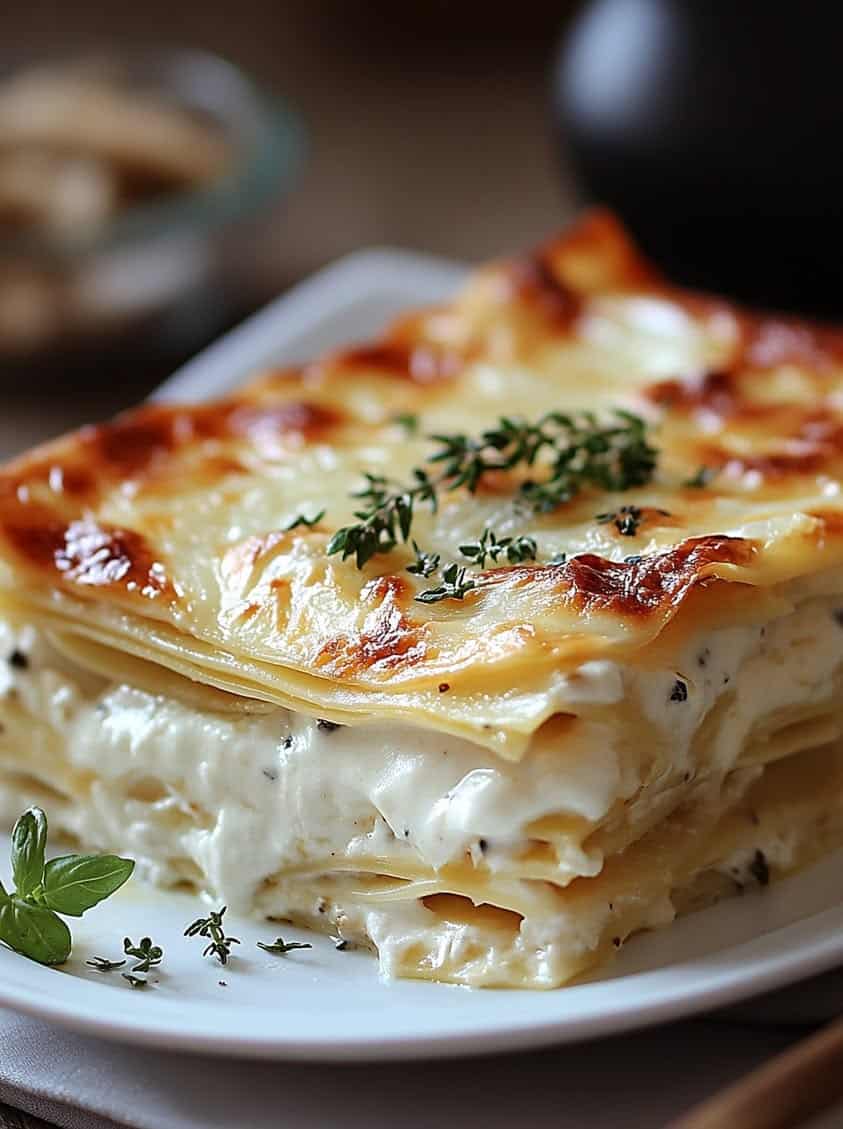
Silky White Sauce Chicken Lasagna with Golden Baked Layers: A Rich, Comforting Twist on a Classic Family Favorite
Imagine cutting into a perfect square of lasagna where the layers hold their shape yet yield effortlessly to your fork. This silky white sauce chicken lasagna delivers exactly that experience, offering a luxurious departure from the traditional red sauce version. The creamy béchamel sauce, rich with nutmeg and Parmesan, envelops tender shredded chicken and spinach, creating a sophisticated flavor profile that feels both comforting and elegant. Consequently, every bite is a harmonious blend of textures and tastes, making it an unforgettable centerpiece for any dinner table.
Furthermore, this recipe transforms simple ingredients into a show-stopping meal that will have your family asking for seconds. The golden, bubbly cheese topping provides a satisfying crunch that gives way to the creamy interior, a contrast that defines the perfect baked pasta dish. Whether you are hosting a special gathering or simply craving a hearty weekend meal, this white sauce chicken lasagna promises to satisfy. Ultimately, it is a labor of love that rewards you with incredible flavor and the proud satisfaction of creating something truly special from scratch.
Additionally, the beauty of this dish lies in its versatility and make-ahead potential. You can assemble the lasagna hours before baking, allowing the flavors to meld beautifully. The aroma that fills your kitchen as it bakes is simply irresistible, a promise of the creamy, cheesy delight to come. This recipe proves that with a bit of patience and technique, you can master a classic Italian-inspired comfort food with a delicious twist. Therefore, gather your ingredients and prepare to bake a pan of pure, golden-topped joy.
Quick Recipe Highlights
- Flavor Profile: This creamy white sauce chicken lasagna features a deeply savory base from the garlic and onion-sautéed chicken, beautifully balanced by the subtle warmth of nutmeg in the béchamel. The Parmesan and mozzarella cheeses add a salty, umami richness that permeates every layer, creating a complex yet comforting taste.
- Texture: Expect a luxurious contrast between the silky, velvety white sauce and the tender, shredded chicken. The oven-ready lasagna noodles soften to a perfect al dente bite, while the top layer of cheese bakes into a glorious, golden-brown crust that provides a delightful crunch.
- Aroma: As it bakes, the lasagna releases an intoxicating scent of toasted cheese, browning butter, and herbs. The nutmeg and garlic become more pronounced, mingling with the savory notes of cooked chicken to create a mouthwatering fragrance that announces dinner is ready.
- Visual Appeal: The presentation is stunning, with clearly defined, creamy white and green layers visible from the side. The crowning glory is a perfectly even, deep golden cheese crust that bubbles enticingly, promising a rich and satisfying meal beneath.
- Skill Level Needed: This recipe is ideal for a confident home cook comfortable with multitasking. You will need to manage preparing a roux-based sauce, cooking chicken, and assembling layers simultaneously. However, clear instructions make the process approachable for anyone ready to level up their kitchen skills.
- Special Equipment: A large, deep 9×13 inch baking dish is essential. Additionally, a sturdy whisk for the béchamel sauce and a good box grater for fresh Parmesan cheese will make your prep work smoother and more efficient.
Recipe Overview
- Difficulty Level: We classify this creamy white sauce chicken lasagna as intermediate due to the technique required for the béchamel sauce, which demands constant attention to prevent lumps. Moreover, the assembly process involves coordinating multiple components, but each step is straightforward and builds foundational cooking skills that are incredibly rewarding.
- Category: This dish proudly sits in the center of the comfort food universe, specifically under the umbrella of hearty baked pasta dinners. It is substantial enough to be a standalone main course but also fits beautifully into a larger feast for holidays or celebratory family meals.
- Cuisine: While lasagna is rooted in Italian cuisine, this white sauce version, often called “Lasagna Bianca,” is a celebrated variation found in many regions of Italy. The use of béchamel instead of tomato sauce offers a richer, more northern Italian influence, creating a elegant and creamy pasta bake.
- Cost: This recipe is moderately priced, utilizing affordable staples like chicken, milk, and flour. The primary cost drivers are the cheeses and fresh spinach. Fortunately, you can often find these ingredients on sale, and the final yield of eight generous servings makes it a cost-effective choice for feeding a crowd.
- Season: This creamy white sauce chicken lasagna is truly a year-round champion. It provides cozy warmth during fall and winter, yet its lighter profile compared to meat-heavy red sauce lasagnas makes it suitable for spring gatherings and even summer dinners when served with a crisp salad.
- Occasion: It is perfect for Sunday family dinners, potlucks where you want to impress, holiday gatherings like Christmas Eve, or any time you need a reliable, crowd-pleasing casserole. This dish transports easily and reheats beautifully, making it a fantastic choice for taking to friends or new parents.
Why You’ll Love This Recipe
First and foremost, the taste and texture of this creamy white sauce chicken lasagna are utterly divine. The silky béchamel sauce, infused with a hint of nutmeg, coats every component in a luxurious blanket, ensuring no bite is dry. The shredded chicken remains juicy and flavorful, while the layers of pasta provide the perfect structural base. Furthermore, the contrast between the creamy interior and the crispy, golden cheese topping creates a sensory experience that is deeply satisfying and keeps you coming back for more. Each forkful is a perfect balance of rich, savory, and comforting elements that define the ultimate homemade meal.
From a convenience standpoint, this recipe offers significant preparation benefits. Although it requires some time, many steps can be done in advance. You can cook the chicken and prepare the béchamel sauce a day ahead, streamlining the assembly process on the day you plan to bake. Additionally, the assembled but unbaked lasagna can be refrigerated for several hours or even frozen, transforming it into the ultimate convenient freezer meal for busy weeknights. Consequently, you get the impressive result of a from-scratch dinner with the practical flexibility that modern life demands.
Nutritionally, this creamy white sauce chicken lasagna provides a well-rounded meal. The chicken offers a lean source of protein, while the spinach adds vital nutrients like iron, vitamins A and C, and fiber. Using milk as the base for the sauce contributes calcium and vitamin D. Of course, it is a rich dish, but by controlling portion size and pairing it with a light vegetable side, you can enjoy it as part of a balanced diet. Ultimately, it is a more nutrient-dense option than many processed or restaurant versions, giving you control over the quality of every ingredient.
Regarding social value, this dish is a proven crowd-pleaser and conversation starter. Bringing a pan of this golden, bubbly lasagna to a gathering guarantees compliments and requests for the recipe. It serves a large group effortlessly, eliminating the need to cook multiple main courses. Moreover, the process of making it can be a fun family activity, with tasks like grating cheese, layering noodles, and sprinkling the final layer of mozzarella. It creates not just a meal, but a shared experience and a delicious centerpiece for your table.
Finally, this recipe is cost-effective and accessible. It uses pantry staples and transforms economical chicken into a spectacular feast. Compared to ordering similar dishes at a restaurant or buying premium frozen versions, making this creamy white sauce chicken lasagna at home saves money and yields far superior flavor and quality. You likely have many of the core ingredients already, making it an accessible project without a special grocery trip. Therefore, it represents the perfect intersection of gourmet taste and practical, home-cooked economics.
Historical Background and Cultural Significance
The story of lasagna stretches back centuries, with roots in ancient Greece. The word “lasagna” itself is thought to derive from the Greek “lasanon,” meaning a cooking pot. Romans later adopted the word as “lasanum” to refer to the pot, and eventually, the food cooked within it took on the name. However, the modern form of layered pasta we recognize today began to take shape in the Middle Ages in the city of Naples. Initially, these early versions were simpler, often featuring layered pasta, cheese, and spices, and were a food of celebration and wealth due to the cost of ingredients like wheat and cheese.
Culturally, lasagna holds immense importance in Italy, particularly as a Sunday and holiday dish meant to bring families together. In many regions, the specific type of lasagna served signals the occasion. For instance, in Emilia-Romagna, the birthplace of many pasta classics, a rich meat ragù lasagna is traditional. Conversely, the creamy white sauce version, known as “Lasagna Bianca,” has its own strong cultural foothold, especially in Northern Italy. This variation highlights the regional culinary divide between tomato-based sauces of the south and the butter, cream, and white wine-based sauces of the north, showcasing the diversity within Italian cuisine.
The evolution of the recipe into this creamy white sauce chicken lasagna reflects both tradition and adaptation. The classic béchamel sauce is a French contribution that was seamlessly integrated into northern Italian cooking. Adding chicken and spinach represents a modern twist, moving beyond traditional ground meats to create a lighter, yet still luxurious, filling. This evolution speaks to the dynamic nature of food, where classic techniques meet contemporary tastes and available ingredients. Today, this version has become a staple in its own right, beloved for its elegant flavor profile and comforting texture.
Regional variations of white sauce lasagna are abundant. In some areas, mushrooms or ham replace the chicken. In others, seafood like salmon or scallops is used for a luxurious twist. Some versions incorporate greens like kale or Swiss chard instead of spinach. The common thread is the silky béchamel that binds the layers. This particular recipe, with its tender chicken and vibrant spinach, represents a popular and accessible modern interpretation that honors the dish’s layered pasta heritage while embracing versatile, flavorful fillings. It is a testament to how a classic format can endlessly inspire new creations.
Ingredient Deep Dive
Starting with the chicken, we recommend using boneless, skinless chicken breasts or thighs for this creamy white sauce chicken lasagna. Thighs will yield a slightly more flavorful and moist result due to their higher fat content. Chicken is an excellent source of lean protein and B vitamins. To prepare, you can poach, bake, or sauté the chicken until cooked through, then shred it finely. For the best flavor, season the cooking water or pan well with salt, garlic, and herbs. If you need a shortcut, a store-bought rotisserie chicken works perfectly, saving significant prep time. Always store raw chicken in the coldest part of your refrigerator and use it within two days.
The heart of this dish is the béchamel sauce, a classic French “mother sauce” made from butter, flour, and milk. The butter and flour cook together to form a roux, which thickens the milk into a velvety, lump-free sauce. Using whole milk is crucial for the richest texture and flavor. The nutmeg is non-negotiable; it adds a warm, aromatic depth that defines a proper béchamel. For a truly exceptional sauce, consider infusing the milk first by warming it with a bay leaf, onion halves, and a few peppercorns, then straining it before use. This extra step adds a subtle layer of flavor that elevates the entire creamy white sauce chicken lasagna.
Fresh spinach adds color, texture, and a nutritional boost. It is packed with iron, calcium, and vitamins A and K. When cooked, it wilts dramatically, so using a full pound ensures you still get noticeable green layers. Always wash fresh spinach thoroughly to remove grit. You can wilt it quickly in the same pan used for the onion, which also helps absorb any remaining flavors. For a time-saving alternative, you can use frozen chopped spinach. Just be sure to thaw it completely and squeeze out every bit of excess water in a clean kitchen towel to prevent a soggy lasagna.
The cheese selection is paramount for achieving that iconic golden, bubbly top and rich interior. Freshly grated mozzarella melts beautifully and creates the perfect stretchy, golden crust. Pre-shredded cheese contains anti-caking agents that can hinder melting and create a greasy texture. For the béchamel and filling, use freshly grated Parmesan cheese, preferably Parmigiano-Reggiano for its superior nutty, salty flavor. This cheese dissolves into the sauce, amplifying its umami character. Store hard cheeses like Parmesan wrapped in parchment paper inside a sealed bag in the refrigerator. The combination of these two cheeses is what makes the flavor of this creamy white sauce chicken lasagna so complex and satisfying.
Common Mistakes to Avoid
- Using a Thin Sauce: A runny béchamel will make your lasagna watery and cause the layers to slide apart. Ensure you cook the roux for a full minute to eliminate the raw flour taste and allow the sauce to thicken sufficiently to coat the back of a spoon before removing it from the heat.
- Not Seasoning Each Layer: Bland lasagna often results from under-seasoning. Remember to season the chicken filling well and taste your béchamel sauce before assembling. The pasta and cheeses will absorb seasoning, so be generous but balanced with salt and pepper throughout the process.
- Overcooking the Pasta: If using traditional noodles that require boiling, cook them only until very al dente, as they will continue to absorb liquid and soften in the oven. For no-boil noodles, ensure there is enough sauce surrounding them to hydrate properly during baking.
- Skipping the Nutmeg: This spice is the secret weapon in béchamel. It adds a warm, aromatic note that cuts through the richness. Using freshly grated nutmeg makes a noticeable difference compared to pre-ground, offering a brighter, more complex flavor.
- Using Cold Ingredients: Adding cold milk to a hot roux is a common cause of lumps. Always warm your milk slightly before incorporating it. Similarly, bringing your shredded chicken to room temperature before assembly helps the lasagna bake more evenly.
- Overfilling the Baking Dish: Leave at least a half-inch of space at the top of your dish to allow for bubbling and expansion. Overfilling can lead to messy, dangerous spills in your oven as the cheese and sauce bubble over the sides.
- Cutting Too Soon: The most heartbreaking mistake is slicing into your beautiful creamy white sauce chicken lasagna before it has set. Let it rest for at least 15-20 minutes after baking. This allows the layers to firm up, ensuring clean, picture-perfect slices that hold their shape on the plate.
- Not Browning the Top: A pale top lacks visual appeal and texture. For a deep golden crust, bake on the middle rack and, if needed, broil for the last 1-2 minutes, watching constantly to prevent burning. The perfect color signals a delicious, crispy cheese layer.
Essential Techniques
Mastering the béchamel sauce is the most critical technique for this creamy white sauce chicken lasagna. Start by melting butter over medium heat, then whisk in the flour to create a smooth paste, or roux. Cook this for about a minute to remove the raw flour taste. Next, gradually add warm milk while whisking constantly. This gradual addition prevents lumps from forming. Continue to cook and whisk until the sauce thickens enough to coat the back of a spoon. Finally, season with salt, pepper, and nutmeg. The common pitfall is adding cold milk too quickly, which shocks the roux and creates a grainy texture. Success is a velvety, lump-free sauce that is thick but still pourable.
Proper layering is what gives lasagna its structural integrity and even distribution of flavor. Begin with a thin layer of béchamel sauce on the bottom of the dish to prevent the noodles from sticking. Then, follow a consistent order: noodles, chicken-spinach mixture, béchamel, and Parmesan. Repeat, finishing with a layer of noodles, the remaining béchamel, and a generous topping of mozzarella. Press down gently on each layer as you go to eliminate air pockets, which can cause uneven cooking. The key is to distribute the fillings evenly, especially at the edges, to ensure every slice is perfect. This methodical approach guarantees that beautiful, distinct layering in the final product.
Achieving the perfect golden, bubbly cheese crust requires attention to baking and broiling. Bake the lasagna covered with foil for the first portion of cooking; this steams the noodles and allows the center to heat through without over-browning the top. For the final stage, remove the foil to let the top dry out and begin to color. If the cheese isn’t as deep gold as you’d like, use the broiler. Move the oven rack to the upper-middle position and broil for 1-3 minutes, watching it like a hawk. The visual cue for success is an evenly browned top with active, slow-moving bubbles. This technique transforms a simple melted cheese layer into the crowning glory of your creamy white sauce chicken lasagna.
Pro Tips for Perfect Silky White Sauce Chicken Lasagna
First, infuse your milk for the béchamel by gently heating it with a bay leaf, a few slices of onion, and a clove of garlic. Let it steep off the heat for 10 minutes, then strain it out. This simple step adds a subtle, savory depth to your white sauce that store-bought versions can never match.
For incredibly tender chicken, poach your breasts or thighs in well-seasoned broth or water with herbs. Once cooked, let the chicken cool in its liquid before shredding; this keeps it moist and flavorful. Using this method ensures your chicken filling won’t be dry in the final baked dish.
Always use fresh mozzarella that you grate yourself. Pre-shredded cheese contains cellulose or potato starch to prevent clumping, which can make your topping grainy and prevent it from melting into a smooth, golden sheet. The extra minute of grating is worth the superior texture.
Let your assembled lasagna rest at room temperature for 20-30 minutes before baking. This takes the chill off and promotes more even cooking from edge to center. Consequently, you avoid a cold middle and overcooked edges.
If using no-boil noodles, add a little extra sauce or a splash of water around the edges of the pan before the final cheese layer. The noodles need ample moisture to hydrate properly and become tender without soaking up all the sauce from your filling.
For clean, restaurant-quality slices, use a sharp chef’s knife and a flat, square-edged spatula. Wipe the knife clean between cuts. Additionally, letting the lasagna rest a full 20 minutes after baking is non-negotiable for layers that hold their shape.
Consider adding a layer of thinly sliced prosciutto or ham between the chicken and spinach for an extra layer of salty, savory flavor. This small addition introduces a wonderful complexity that elevates the entire dish.
Finally, don’t be afraid to taste your béchamel sauce aggressively before assembling. It should be well-seasoned on its own, as it will be diluted by the other layers. Proper seasoning at this stage is the secret to a lasagna that’s flavorful in every single bite.
Variations and Adaptations
For regional variations, look to different parts of Italy and beyond. A Tuscan-inspired version might incorporate sautéed wild mushrooms and fontina cheese. A coastal adaptation could feature shrimp and scallops with a touch of lemon zest in the béchamel. For a truly decadent twist, adopt a French influence by adding gruyère cheese to the sauce and topping, creating a flavor reminiscent of a croque monsieur in lasagna form. These variations honor the format while exploring new culinary territories.
Seasonal adaptations keep this dish exciting year-round. In spring, use fresh peas and asparagus tips. During summer, incorporate roasted zucchini and yellow squash. For a hearty winter version, swap spinach for sautéed kale or chard and add roasted butternut squash cubes. These modifications not only add color but also align your creamy white sauce chicken lasagna with the freshest, most flavorful produce available each season.
Dietary modifications are straightforward. For a gluten-free version, use your favorite gluten-free lasagna noodles and ensure your flour blend contains xanthan gum, or use a cornstarch slurry to thicken the béchamel. To make it dairy-free, use plant-based butter, unsweetened almond or oat milk, and vegan mozzarella and Parmesan cheeses. For a keto or low-carb adaptation, replace the noodles with thin slices of zucchini or eggplant, pressing them dry thoroughly before layering.
Flavor variations can personalize the dish to your taste. Add a pinch of red pepper flakes to the béchamel for a subtle heat. Stir a tablespoon of pesto into the chicken mixture for a herby, garlicky punch. For a richer sauce, substitute half a cup of the milk with heavy cream. You can also replace the nutmeg with a pinch of ground white pepper for a different kind of warmth. These small tweaks allow you to make the recipe uniquely yours.
Texture modifications can cater to different preferences. For a chunkier filling, dice the chicken instead of shredding it. To add a crunchy element, mix toasted pine nuts or walnuts into the spinach layer. If you prefer an ultra-smooth sauce, blend the béchamel with an immersion blender after cooking. For a more rustic feel, use fresh lasagna sheets instead of the dried, boxed variety.
Presentation alternatives can turn this family meal into a dinner party showstopper. Instead of a large pan, assemble individual portions in small oven-safe dishes or mason jars for a personalized touch. You can also create a “lasagna roll-up” variation by spreading the filling on cooked noodles, rolling them up, placing them seam-side down in a dish, covering with sauce and cheese, and baking. This method offers elegant, pre-portioned servings.
Serving and Presentation Guide
Plating this creamy white sauce chicken lasagna beautifully enhances the dining experience. Use a sharp, flat spatula to lift a clean square from the pan, wiping the edge of the spatula against the side of the baking dish to keep edges neat. Place the slice slightly off-center on a warm plate. If the layers have slumped, you can gently press the sides of the slice with the flat of your knife to straighten them before transferring. This attention to detail makes the home-cooked dish look professionally presented.
Garnishing adds a final touch of color and freshness. A simple sprinkle of chopped fresh parsley or basil provides a vibrant green contrast against the white and gold of the lasagna. For a more elegant garnish, a few microgreens or a drizzle of high-quality extra virgin olive oil or truffle oil around the plate works wonderfully. A light dusting of freshly grated Parmesan just before serving adds texture and reinforces the cheesy flavor. Avoid heavy garnishes that can overwhelm the delicate flavors.
Traditional accompaniments are often simple, allowing the lasagna to shine. A crisp, green salad with a bright vinaigrette (like lemon or white balsamic) cuts through the richness. Garlic bread or warm, crusty Italian bread is perfect for soaking up any extra sauce. For a vegetable side, roasted asparagus, broccoli, or a medley of seasonal vegetables provide a healthy and flavorful balance. These sides complete the meal without competing with the main attraction.
Modern serving suggestions might include deconstructed elements. Serve a slice alongside a small arugula salad dressed with lemon and shaved Parmesan. Alternatively, offer a selection of infused oils or flavored salts for guests to customize their bite. For a family-style presentation, place the baking dish directly on the table with a beautiful serving utensil, allowing everyone to admire the golden top before diving in. This creates a warm, communal dining atmosphere.
Temperature considerations are crucial. The lasagna should be served hot, but not scalding, straight from its resting period. Warm your serving plates slightly to keep the food hot longer at the table. If you have leftovers, ensure they are reheated thoroughly until bubbling at the edges to restore the creamy texture of the sauce. Serving it at the right temperature ensures the cheese is perfectly gooey and the flavors are at their peak.
Portion control is easily managed with this hearty dish. A single 3×4 inch square is typically a satisfying serving for most adults, given its richness. For a lighter meal or as part of a multi-course dinner, you can cut smaller rectangles. When serving a crowd, consider pre-plating a few slices to control portions and streamline service, leaving the rest in the baking dish covered with foil to retain heat for seconds.
Wine and Beverage Pairing
Wine pairings for this creamy white sauce chicken lasagna should complement its richness without overpowering the delicate flavors. A white wine with good acidity, like a Pinot Grigio or Sauvignon Blanc, cuts through the creamy béchamel beautifully. For a more robust pairing, a medium-bodied Chardonnay with notes of oak and butter mirrors the sauce’s characteristics. If you prefer red wine, opt for a lighter, low-tannin red such as a Pinot Noir or Barbera, which won’t clash with the dairy. The key is to choose wines that refresh the palate between bites of this rich, comforting dish.
Non-alcoholic alternatives can be just as sophisticated. Sparkling water with a twist of lemon or lime provides a crisp, cleansing effervescence. For a more flavorful option, a virgin basil lemonade or a cucumber-mint cooler offers herbal notes that pair wonderfully with the lasagna. Iced tea, either unsweetened or lightly sweetened, is another classic choice that works well. These beverages provide the necessary palate-cleansing effect without alcohol.
Coffee and tea pairings are excellent for a cozy dinner. After the meal, a cup of espresso or a dark roast coffee can help digest the rich meal. For tea, consider a black tea like Earl Grey, whose bergamot notes are lovely, or a peppermint tea for its soothing and digestive properties. Serving these warm beverages after the main course extends the comforting experience of the meal.
Temperature considerations for beverages are important. White wines should be served well-chilled, between 45-50°F. Light reds like Pinot Noir are best served slightly cooler than room temperature, around 55°F. Non-alcoholic sparkling drinks should be ice-cold. Conversely, post-dinner coffee and tea should be served piping hot. Proper serving temperatures ensure each beverage tastes its best and performs its role in the pairing.
Serving suggestions include offering a choice to guests. You might set out a bottle of white and a bottle of light red wine. Always provide a carafe of cold water on the table as well. For non-drinkers, have a pitcher of a crafted non-alcoholic beverage ready. This thoughtful preparation ensures everyone has a delicious drink to enjoy with their slice of creamy white sauce chicken lasagna, making the meal complete and inclusive.
Storage and Shelf Life
Proper storage methods are key to enjoying leftovers. Once cooled completely to room temperature, cover the baking dish tightly with plastic wrap or aluminum foil, or transfer individual portions to airtight containers. You must never leave the lasagna at room temperature for more than two hours to prevent bacterial growth. For best quality, refrigerate within one hour of it coming out of the oven. This practice keeps your creamy white sauce chicken lasagna safe and tasty for later.
Temperature requirements are strict for dairy-based dishes. Always store leftovers in the refrigerator at 40°F or below. You can keep baked lasagna in the fridge for 3-4 days. If you need to store it longer, freezing is the best option. The cold environment of the refrigerator slows spoilage but does not stop it, so adhere to the 4-day rule for optimal flavor and food safety.
Container recommendations depend on the amount. For a large leftover portion, storing it right in the original baking dish is fine if covered extremely well. For smaller portions, shallow airtight containers are ideal because they allow for quick and even cooling and reheating. Glass containers with locking lids are excellent as they don’t absorb odors and are microwave-safe. Avoid storing in deep containers where the center may stay warm too long, creating a condensation issue.
Signs of spoilage are important to recognize. Discard the lasagna if you notice an off or sour smell, significant discoloration (like dark grey or green spots), or visible mold. If the texture becomes excessively watery or slimy, it is a sign of bacterial growth. When in doubt, remember the old adage: when in doubt, throw it out. It is not worth the risk with a dairy-heavy dish like this.
Reheating instructions are crucial for restoring texture. For best results, reheat individual portions in the oven at 350°F, covered with foil, until heated through (about 20 minutes). You can also use the microwave: place a slice on a microwave-safe plate, cover with a damp paper towel to retain moisture, and heat in 60-second intervals until hot. Adding a splash of milk or water before reheating can help revive the creaminess of the sauce.
Freezing guidelines allow for long-term storage. Cool the baked lasagna completely. Wrap the entire dish or individual portions tightly in plastic wrap, then in a layer of heavy-duty aluminum foil. Label with the date. Frozen lasagna will maintain best quality for 2-3 months. To reheat from frozen, thaw in the refrigerator overnight and then bake covered at 375°F until bubbly and hot in the center, usually 45-60 minutes.
Make Ahead Strategies
An efficient prep timeline can turn this project into a stress-free meal. You can cook and shred the chicken up to 2 days in advance; store it in an airtight container in the fridge. The béchamel sauce can also be made 1-2 days ahead; press plastic wrap directly onto the surface to prevent a skin from forming and refrigerate. The spinach can be wilted and drained a day ahead. On assembly day, simply bring the components to near room temperature and layer. This breakdown makes the process feel much more manageable.
Storage between steps is simple with proper planning. Keep pre-cooked components in separate, sealed containers in the refrigerator. If you need to hold the béchamel for more than an hour, you can keep it warm in a double boiler or a thermos, but refrigeration is safer for longer periods. When you are ready to assemble, gently re-warm the béchamel in a saucepan over low heat, adding a splash of milk if it has thickened too much. This ensures all elements blend seamlessly.
Assessing the quality impact of make-ahead steps is generally positive. In fact, allowing the béchamel and chicken filling to rest overnight lets the flavors meld and deepen. The key is proper storage to prevent drying or absorbing other refrigerator odors. The final baked texture and flavor are often improved by this advance prep, as the ingredients have time to marry. You will not sacrifice quality by planning ahead for this creamy white sauce chicken lasagna.
Assembly tips for a make-ahead dish are straightforward. You can fully assemble the lasagna, cover it tightly, and refrigerate it for up to 24 hours before baking. Alternatively, for longer storage, freeze the assembled, unbaked dish. If refrigerating, let it sit on the counter for 30 minutes before baking to take the chill off. If baking from frozen, you will need to add 30-50% more baking time, covering it for the first hour to prevent over-browning.
Reheating guidelines for a fully made-ahead dish depend on its state. For a refrigerated, unbaked lasagna, bake as directed, possibly adding 10-15 minutes to the covered baking time since it starts cold. For a frozen, unbaked lasagna, bake covered at 375°F for about 1.5 hours, then uncover and continue until hot, bubbly, and golden. Always check that the internal temperature reaches 165°F in the center.
Fresh element additions can be incorporated even with advance prep. If you prepared components ahead, consider adding a final sprinkle of fresh herbs like chopped parsley or basil after baking. You could also add a light drizzle of high-quality olive oil or a fresh grating of Parmesan cheese just before serving. These last-minute touches add a burst of freshness and brightness that contrasts beautifully with the deep, baked flavors.
Scaling Instructions
Halving the recipe is perfect for smaller households. Use an 8×8 inch or 9×9 inch baking dish. Precisely halve all ingredient quantities. The bake time may be slightly reduced; start checking for doneness about 10-15 minutes earlier than the full recipe time. The layering process remains identical. This scaling works beautifully and prevents you from being overwhelmed with leftovers, though this creamy white sauce chicken lasagna is so good you might wish you had made the full batch.
Doubling or tripling the recipe is ideal for large gatherings or meal prep. Double or triple all ingredients accordingly. You will need multiple 9×13 inch dishes or one very large, deep hotel pan. The bake time will increase; for a doubled recipe in a deeper pan, expect to add 20-30 minutes of covered baking time. Ensure your oven racks are positioned to allow for proper heat circulation around the larger dish. Stir the béchamel in a larger pot to accommodate the increased volume.
Equipment adjustments are necessary when scaling. For a larger batch, you will need a bigger pot for the béchamel and a larger skillet for the chicken and spinach. A sturdy, large whisk is essential for managing a bigger volume of sauce. For halving, your standard pots and pans will suffice. Always ensure your baking dish is the correct size; if the lasagna is too shallow in a huge pan, it will dry out; if overfilled in a small pan, it will bubble over.
Timing modifications are not strictly linear. While prep time scales almost directly with ingredient volume, baking time does not. A doubled recipe in a deeper dish requires significantly longer baking to heat the center thoroughly. Use a probe thermometer to check that the very center reaches 165°F. For a halved recipe in a shallower dish, the baking time is shorter. Always rely on visual cues (bubbling edges, golden top) and internal temperature over strict timer settings.
Storage considerations change with scale. A single large pan of doubled lasagna will take much longer to cool in the refrigerator, which can be a food safety hazard. For large batches, consider dividing the baked lasagna into smaller, shallow containers for storage to promote rapid cooling. This practice is crucial for preventing bacterial growth in the dense, creamy center of
Print
Silky White Sauce Chicken Lasagna with Golden Baked Layers
Description
A creamy and comforting lasagna featuring tender chicken, a rich white sauce, and layers of pasta baked to golden perfection.
Ingredients
For the Crust:
- 12 lasagna noodles, cooked al dente
- 2 cups cooked chicken, shredded
- 4 tablespoons unsalted butter
- 4 tablespoons all-purpose flour
- 4 cups whole milk, warmed
- 1 cup grated Parmesan cheese
- 1 cup shredded mozzarella cheese
- 1 teaspoon garlic powder
- 1/2 teaspoon nutmeg
- Salt and black pepper to taste
- 2 tablespoons fresh parsley, chopped
Instructions
1. Prepare the Crust:
- Preheat oven to 375°F (190°C). Grease a 9×13 inch baking dish.
- Melt butter in a saucepan over medium heat. Whisk in flour and cook for 2 minutes until golden.
- Gradually whisk in warm milk until smooth. Cook, stirring constantly, until thickened, about 5-7 minutes.
- Remove from heat. Stir in Parmesan cheese, garlic powder, nutmeg, salt, and pepper until sauce is silky.
- Spread a thin layer of white sauce in the baking dish. Layer 4 noodles, half the chicken, and 1/3 of the sauce. Repeat layers, ending with sauce on top.
- Sprinkle mozzarella evenly over the top. Bake for 25-30 minutes until bubbly and golden brown.
- Let rest for 10 minutes. Garnish with parsley before serving.
Notes
You can customize the seasonings to taste.

I’m Shaykee—born in Morocco, seasoned across continents. From airplane galleys to home kitchens, I share the flavors and stories that shaped my journey.