
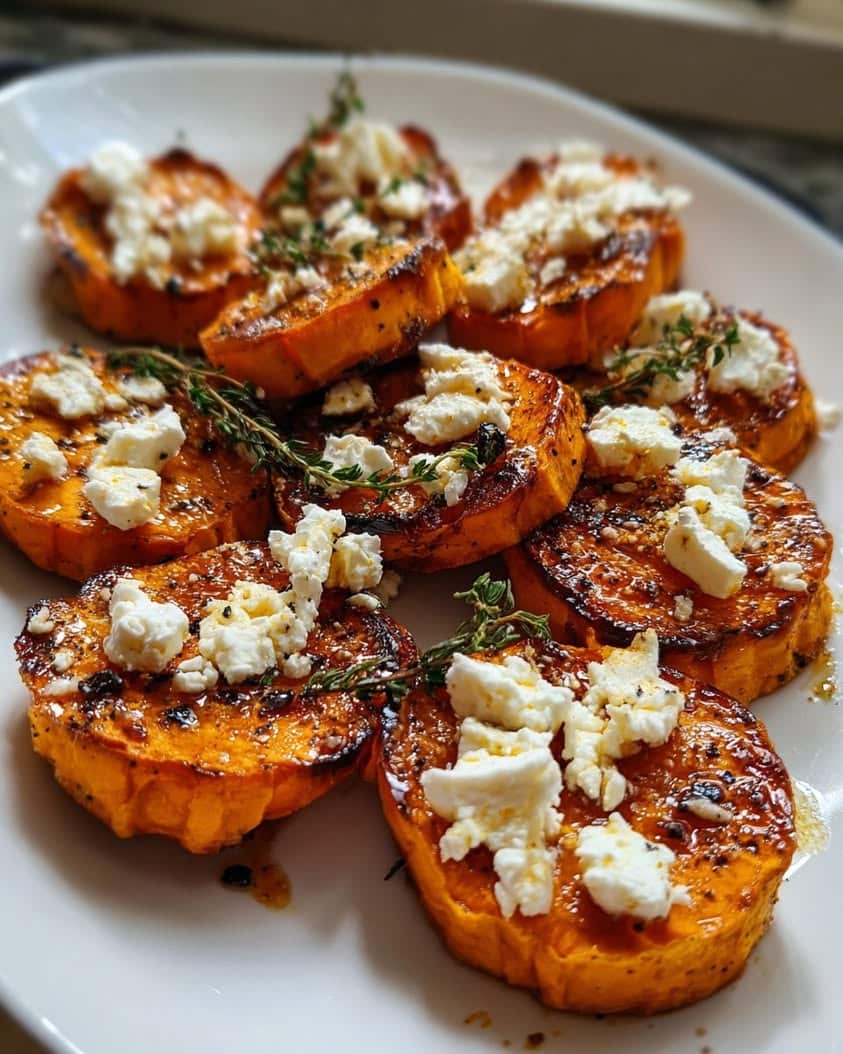
Roasted Sweet Potato Rounds with Whipped Feta and Golden Honey Drizzle: The Ultimate Sweet and Savory Appetizer
Imagine the perfect bite. It starts with a crispy-edged, caramelized round of sweet potato, its natural sugars intensified by roasting. Then, a cloud of tangy, creamy whipped feta adds a salty, luxurious contrast. Finally, a generous drizzle of golden honey ties everything together with a floral, sticky sweetness. This recipe for Roasted Sweet Potato Rounds with Whipped Feta and Golden Honey Drizzle delivers that exact experience in every single mouthful.
Furthermore, this dish is a true crowd-pleaser that effortlessly bridges the gap between simple and spectacular. It works beautifully as a stunning vegetarian appetizer for a dinner party, a festive side dish for holiday meals, or even a satisfying light lunch. The combination of textures and flavors is complex enough to impress guests, yet the process is straightforward and accessible for any home cook. Ultimately, it transforms humble ingredients into an elegant and unforgettable plate.
Consequently, if you are searching for a recipe that is both visually impressive and deceptively simple to execute, you have found it. The magic lies in the harmony of sweet, salty, and savory elements, a trio that is universally loved. Each component can be prepared ahead of time, making assembly a breeze when you are ready to serve. This Roasted Sweet Potato Rounds with Whipped Feta and Golden Honey Drizzle recipe is about to become your new favorite culinary trick.
Quick Recipe Highlights
- Flavor Profile: This dish masterfully balances sweet, salty, and savory notes. The natural caramelized sweetness of the roasted potatoes contrasts with the sharp, tangy saltiness of the whipped feta. Meanwhile, the golden honey drizzle adds a floral, mellow sweetness that harmonizes all the elements into one cohesive flavor experience.
- Texture: You get a wonderful contrast of textures in every bite. The roasted sweet potato rounds offer a crispy exterior with a tender, almost creamy interior. Conversely, the whipped feta provides an incredibly smooth, light, and airy mouthfeel. Finally, the honey adds a delightful sticky viscosity that clings to both elements.
- Aroma: As the sweet potatoes roast, your kitchen will fill with the warm, comforting scent of caramelizing sugars and earthy root vegetables. Simultaneously, the whipped feta carries a distinct, tangy dairy aroma. When combined and drizzled with honey, the overall fragrance is invitingly complex and savory-sweet.
- Visual Appeal: This dish is a feast for the eyes. The vibrant orange rounds are visually striking against the stark white cloud of feta. Subsequently, the golden honey drizzle creates beautiful, glossy streaks and pools, often garnished with a sprinkle of fresh thyme or crushed nuts for color and texture contrast.
- Skill Level Needed: This is a beginner-friendly recipe requiring only basic kitchen skills. You need to be able to slice vegetables evenly, operate an oven, and use a food processor or blender. No advanced techniques like tempering or baking are involved, making it perfect for cooks of all levels.
- Special Equipment: A good sharp knife and a sturdy cutting board are essential for slicing the potatoes. Additionally, a food processor, high-powered blender, or hand mixer is required to achieve the perfectly smooth, whipped consistency of the feta. A baking sheet and parchment paper are also needed for roasting.
Recipe Overview
- Difficulty Level: We classify this recipe as “Easy” for several compelling reasons. First, the steps are sequential and simple: slice, roast, blend, and assemble. There is no intricate knife work or precision temperature control required. The roasting process is forgiving, and the whipped feta comes together in minutes. Essentially, success is nearly guaranteed with minimal effort.
- Category: This versatile dish fits multiple categories seamlessly. It shines as a standout appetizer or hors d’oeuvre for parties. Alternatively, it serves as a beautiful and flavorful side dish alongside roasted meats or hearty salads. For a lighter meal, it can even be the main component of a vegetarian lunch or brunch spread.
- Cuisine: While not tied to one specific tradition, the recipe draws inspiration from Mediterranean and Middle Eastern culinary principles. The use of feta cheese points to Greek cuisine, while the combination of honey with savory elements is common across the region. It is a modern, fusion-style dish that celebrates bold, contrasting flavors.
- Cost: This is an incredibly cost-effective recipe. Sweet potatoes are an affordable root vegetable available year-round. Feta cheese and honey, while potentially premium ingredients, are used in moderate amounts. A small block of feta and a little honey go a long way. Overall, you can create an impressive platter for a fraction of the cost of store-bought appetizers.
- Season: While excellent any time of year, this recipe feels particularly fitting for fall and winter. Sweet potatoes are at their peak in autumn, and the warm, roasted flavors are comforting in cooler weather. However, its bright flavors also make it suitable for spring gatherings and summer potlucks when served at room temperature.
- Occasion: It is perfect for casual entertaining, holiday feasts like Thanksgiving or Christmas, potluck dinners, or even a fancy snack night at home. Its make-ahead components and elegant presentation make it ideal for situations where you want to impress without being stuck in the kitchen all day.
Why You’ll Love This Recipe
First and foremost, the taste and texture appeal is immediate and profound. The first bite delivers a symphony of contrasts that is deeply satisfying. You experience the earthy sweetness of the potato, the sharp saltiness of the cheese, and the floral sweetness of the honey all at once. Moreover, the interplay between the crispy potato and the cloud-like feta creates a mouthfeel that is both substantial and delicate. This combination is universally appealing, pleasing both adventurous foodies and picky eaters alike. Ultimately, it is a recipe that feels indulgent and gourmet, yet the flavors are familiar and comforting.
Secondly, the convenience and preparation benefits are significant. The components can be prepared entirely independently and in advance. You can roast the sweet potato rounds hours ahead and simply re-crisp them briefly before serving. Similarly, the whipped feta can be made a day or two in advance and stored in the refrigerator. Consequently, when it is time to eat or entertain, assembly takes mere minutes. This makes it an absolute lifesaver for busy hosts who want to enjoy their own party. The simplicity of the steps also means cleanup is relatively minimal, especially if you use parchment paper on your baking sheet.
From a nutritional standpoint, this dish offers several advantages. Sweet potatoes are a powerhouse of beta-carotene, which converts to vitamin A in the body and supports vision and immune health. They are also a great source of fiber and complex carbohydrates, providing sustained energy. Feta cheese offers a dose of protein and calcium, though it is lower in fat than many other cheeses. When you use high-quality, pure honey, you are incorporating natural antioxidants. While it is a treat, it is made from whole, recognizable ingredients without processed additives.
Furthermore, the social and entertaining value of this recipe is exceptionally high. It is a visually stunning dish that sparks conversation when placed on a table. The interactive element of guests assembling their own bites or simply admiring the beautiful plating adds to the experience. It is vegetarian-friendly, which is important for inclusive gatherings, and it can easily be adapted for other dietary needs. Serving this dish shows thoughtfulness and care, elevating any casual get-together into a more special occasion. It is a recipe that people will remember and ask you for.
Finally, the cost-effectiveness and accessibility of the ingredients make this a practical favorite. Sweet potatoes, feta, honey, olive oil, and basic seasonings are readily available at any standard grocery store. You do not need to hunt for exotic or expensive items. Despite the humble ingredients, the final product looks and tastes luxurious. This allows you to create restaurant-quality food on a home kitchen budget. It is a brilliant example of how smart cooking and flavor pairing can transform everyday items into something extraordinary.
Historical Background and Cultural Significance
The story of this dish is less about a single point of origin and more about the beautiful convergence of ancient, staple ingredients from different parts of the world. Sweet potatoes have a long and complex history, with evidence suggesting domestication in Central or South America over 5,000 years ago. Following the Columbian Exchange, they spread across the globe, becoming a crucial food source in many cultures. Meanwhile, feta cheese has a history deeply rooted in Greece, with its name deriving from the Italian word “fetta,” meaning slice, referencing how it is traditionally cut and served. The practice of brining cheese for preservation dates back millennia in the Mediterranean region.
Cultural importance emerges from how these ingredients are traditionally used. In many cuisines, sweet potatoes are celebrated for their sweetness and are often paired with savory or spicy elements to create balance. In the American South, for instance, they are frequently paired with marshmallows or pecans in casseroles, embracing their sweet nature. Conversely, in Mediterranean cultures, tangy, salty cheeses like feta are commonly paired with honey, a tradition seen in dishes from Greece to Turkey. This sweet-and-salty combination is a classic flavor archetype that resonates across human palates, making the pairing feel both innovative and timelessly familiar.
The evolution of this specific recipe is a modern phenomenon, a product of contemporary food culture that values fusion, bold flavors, and shareable plates. It likely evolved from the popular trend of “whipped” dips and spreads, such as whipped ricotta or hummus, which gained popularity for their luxurious texture. Applying that technique to feta created a smoother, more spreadable version of the crumbly cheese. Pairing it with a simply roasted vegetable and a sweet element is a natural progression in the world of vegetable-forward, Instagram-worthy appetizers. It represents a move towards elegant, minimalist cooking where ingredient quality is paramount.
Regional variations of this concept abound, showcasing its adaptability. In some versions, the sweet potato might be replaced with roasted beet rounds or crispy potato slices. The whipped feta could be infused with herbs like dill or mint, or given a kick with harissa or roasted red pepper. The honey might be swapped for a balsamic glaze, pomegranate molasses, or a maple syrup drizzle, depending on the regional pantry. Some presentations include a sprinkle of za’atar, dukkah, or crushed pistachios for Middle Eastern flair. This versatility is a testament to the solid foundational flavor pairing at the recipe’s core.
Ingredient Deep Dive
Sweet Potatoes: Botanically distinct from yams, sweet potatoes are tuberous root vegetables prized for their sweet, starchy flesh. They are native to the tropical regions of the Americas and were a staple for indigenous peoples long before European contact. Nutritionally, they are an excellent source of beta-carotene (vitamin A), vitamin C, manganese, and fiber. Their complex carbohydrates provide steady energy. When selecting, look for firm potatoes with smooth, unblemished skins; avoid any with soft spots or signs of sprouting. Store them in a cool, dark, well-ventilated place—not the refrigerator, as cold temperatures can negatively affect their flavor and texture.
Feta Cheese: This iconic Greek cheese is traditionally made from sheep’s milk or a blend of sheep and goat milk, then cured in brine. This process gives it its characteristic crumbly texture and tangy, salty flavor. Authentic Greek feta is a Protected Designation of Origin (PDO) product. It provides a good amount of calcium, protein, and beneficial fats, though it is lower in calories than many hard cheeses. For the best whipped texture and flavor, choose a block of feta packed in brine rather than pre-crumbled varieties, which often contain anti-caking agents. Store leftover feta submerged in its brine in the refrigerator to maintain freshness and moisture.
Honey: Honey is a natural sweetener produced by bees from the nectar of flowers. Its flavor, color, and aroma vary dramatically based on the floral source, from light and mild clover honey to dark, robust buckwheat honey. Historically, it has been used for millennia as food, medicine, and a preservative. It contains trace amounts of vitamins, minerals, and antioxidants. For this recipe, a high-quality, raw, or locally sourced honey will provide the best flavor. The “golden” descriptor often refers to its visual appeal and mild flavor profile. Store honey at room temperature in a sealed container; crystallization is natural and can be reversed by gently warming the jar in warm water.
Olive Oil: A cornerstone of Mediterranean cooking, olive oil is pressed from fresh olives. Extra virgin olive oil (EVOO) is the highest grade, obtained from the first cold pressing without chemical treatment, preserving its flavor and nutritional properties. It is rich in monounsaturated fats and antioxidants. In this recipe, it serves two purposes: coating the sweet potatoes to promote caramelization and crispness, and thinning the feta slightly in the food processor for a smooth whip. Choose a good-quality EVOO for dressing the potatoes; a more robust, peppery oil can add great flavor to the whipped feta. Store olive oil in a cool, dark place to prevent rancidity.
Seasonings (Salt, Pepper, Thyme): These foundational seasonings build layers of flavor. Kosher salt is preferred by many chefs for its clean taste and easy control. Freshly cracked black pepper adds a subtle, aromatic heat that complements the sweetness. Fresh thyme contributes an earthy, slightly floral note that bridges the savory cheese and sweet elements. Dried thyme can be used in a pinch, but use half the amount as its flavor is more concentrated. The simplicity of these seasonings allows the primary ingredients to shine while providing essential flavor enhancement that elevates the entire dish.
Common Mistakes to Avoid
- Cutting the Rounds Unevenly: Slices that are too thick will remain soft in the center without achieving a crispy edge, while slices that are too thin may burn or become brittle. Aim for consistent 1/4 to 1/2-inch thickness for uniform cooking. Using a sharp chef’s knife and taking your time will yield the best results.
- Overcrowding the Baking Sheet: Placing the sweet potato rounds too close together causes them to steam instead of roast. Steaming prevents the desirable caramelization and crisp texture. Always arrange the slices in a single layer with a little space between them. Use two baking sheets if necessary to avoid crowding.
- Skipping the Parchment Paper: Roasting the potatoes directly on a bare baking sheet often leads to sticking and difficult cleanup. The natural sugars in sweet potatoes can caramelize and fuse to the metal. Parchment paper or a silicone baking mat guarantees easy release and protects your pans.
- Using Pre-Crumbled Feta: Pre-crumbled feta often contains additives like cellulose to prevent clumping, which can inhibit a smooth, creamy whip. For the best texture, always start with a solid block of feta cheese packed in brine. The difference in creaminess and flavor is significant.
- Not Draining the Feta: Failing to pat the feta block dry before blending can introduce excess brine into the mixture. This extra liquid can make the whipped feta too runny and dilute its tangy flavor. Always drain the cheese and gently blot it with a paper towel before adding it to the food processor.
- Under-Whipping the Feta: Stopping the food processor too soon results in a grainy, crumbly texture instead of a light, airy whip. Be patient and process for a full 2-3 minutes, scraping down the sides as needed. The transformation into a smooth, almost mousse-like consistency is key to the dish’s luxury.
- Adding Cold Honey: Drizzling honey straight from a cool pantry can be difficult and may not flow beautifully. If your honey is thick or crystallized, gently warm the jar in a bowl of warm water for a few minutes. This will make it perfectly pourable for an elegant, glossy drizzle.
- Assembling Too Early: If you assemble the complete dish too far in advance, the moisture from the warm potatoes can cause the whipped feta to become watery, and the potatoes may lose their crispness. For optimal texture, assemble just before serving, or let guests build their own bites.
- Forgetting to Season the Potatoes: Sweet potatoes need adequate seasoning before roasting. A light coating of olive oil, salt, and pepper is essential to enhance their natural flavor. Do not rely solely on the saltiness of the feta or the sweetness of the honey to season the entire dish.
- Using a Weak Blender: Attempting to whip the feta in a low-powered blender or by hand with a fork will not achieve the desired creamy texture. A food processor is ideal, but a high-powered blender or a hand mixer with beaters can also work. The right tool is crucial for success.
Essential Techniques
Uniform Slicing: This technique is critical for even cooking. Using a sharp chef’s knife, trim a small slice off one side of the sweet potato to create a stable base. Then, slice straight down into consistent rounds. A mandoline can guarantee perfect uniformity but use the guard for safety. Consistent thickness ensures every piece roasts at the same rate, preventing some from burning while others remain undercooked. The visual cue for success is a pile of rounds that look nearly identical in size and shape.
High-Heat Roasting: Roasting at a high temperature (around 400-425°F) is essential for developing flavor and texture. The high heat quickly caramelizes the natural sugars on the surface of the sweet potato, creating a delicious browned crust and concentrated sweetness. It also rapidly evaporates surface moisture, leading to a crispy edge. The common pitfall is roasting at too low a temperature, which steams the vegetables and results in a soft, rather than crispy, texture. Success is visually confirmed by golden-brown, slightly puckered edges on each round.
Whipping the Feta: This technique transforms a crumbly cheese into a luxurious, spreadable dip. The key is to use a food processor to incorporate air into the cheese, breaking down its granular structure. Adding a small amount of liquid—like olive oil, yogurt, or milk—helps facilitate this process. The pitfall is under-processing; the feta should be completely smooth, with no graininess remaining. Scrape down the sides of the bowl several times during processing. The visual and auditory cue for success is a completely homogeneous, pale, and creamy mixture that holds soft peaks.
Balancing Flavors: This is the conceptual technique that makes the dish work. It involves consciously layering sweet, salty, and savory elements so no single one overpowers the others. Taste each component as you go: the roasted potato should be well-seasoned, the feta should be tangy and salty, and the honey should be sweet but not cloying. The pitfall is being heavy-handed with one element. The final assembly is where you fine-tune, adding an extra pinch of salt to the feta or a extra drizzle of honey as needed to achieve perfect harmony on the palate.
Pro Tips for Perfect Roasted Sweet Potato Rounds with Whipped Feta and Golden Honey Drizzle
For extra-crispy edges, toss the sweet potato rounds in a tablespoon of cornstarch along with the olive oil, salt, and pepper before roasting. The cornstarch draws out moisture and creates an even crispier exterior.
Allow the roasted sweet potato rounds to cool for a minute or two on the baking sheet before transferring. This lets them firm up slightly, making them less likely to break when you move them to a serving platter.
Infuse your olive oil for an extra flavor dimension. Before coating the potatoes, gently warm the olive oil with a sprig of fresh thyme or a crushed garlic clove, then let it cool slightly. Strain out the solids before using.
Add a splash of brightness to the whipped feta. A teaspoon of fresh lemon juice or a bit of lemon zest blended with the feta can cut through the richness and add a wonderful aromatic quality that complements the honey.
Toast your garnishes. If using nuts like walnuts or pecans as a garnish, toast them in a dry skillet for a few minutes until fragrant. This intensifies their flavor and adds a deeper crunch to contrast the creamy feta.
Warm your serving platter. Placing the roasted sweet potato rounds on a slightly warm platter helps keep them at an ideal temperature for serving, especially if you are assembling just before guests arrive.
Create a honey drizzle bottle for precision. If you make this often, pour some honey into a small squeeze bottle. This gives you perfect control over the drizzle, allowing for artistic plating and even distribution.
Season in layers. Do not forget to season the whipped feta with a tiny pinch of black pepper after whipping. This adds a subtle complexity that elevates it from a simple spread to a sophisticated component.
Variations and Adaptations
For regional variations, explore different global pantries. Swap the feta for Spanish Manchego or Italian ricotta salata. Use maple syrup instead of honey for a North American twist, or pomegranate molasses for a tart, Middle Eastern note. Sprinkle with za’atar, dukkah, or smoked paprika to instantly transport the flavor profile. These simple swaps can take the foundational recipe on a culinary journey around the world without changing the core technique.
Seasonal adaptations are easy and rewarding. In spring, use roasted asparagus spears or radish slices as the base. For summer, try grilled peach or nectarine halves. In autumn, roasted apple slices or cubed butternut squash work beautifully. Winter calls for the classic sweet potato or perhaps roasted parsnip rounds. Adjusting the base vegetable with the seasons keeps the recipe exciting and makes the most of fresh, local produce.
Dietary modifications are straightforward. For a vegan version, use a firm, brine-packed tofu blended with nutritional yeast, lemon juice, and salt to mimic the tangy, creamy quality of whipped feta. Agave syrup or vegan maple syrup can replace honey. To make it gluten-free, ensure all other ingredients are certified GF—this recipe is naturally gluten-free as written. For a dairy-free option, a cashew-based “cheese” spread can be a good substitute for the whipped feta.
Flavor variations for the whipped feta itself are endless. Blend in roasted garlic cloves for a mellow, sweet garlic dip. Add a tablespoon of harissa paste for a spicy kick. Incorporate fresh herbs like dill, chives, or basil. Stir in sun-dried tomatoes or roasted red peppers for a colorful, savory twist. A dash of smoked paprika or cumin can add warmth and depth. Let your taste preferences guide these delicious experiments.
Texture modifications can cater to different preferences. For a chunkier topping, simply mash the feta with a fork with a drizzle of olive oil instead of whipping it smooth. For an extra crunchy element, add a sprinkle of toasted breadcrumbs or crushed crackers over the assembled dish. You could also layer the components into a jar for a deconstructed, dip-style presentation with crudités on the side.
Presentation alternatives can refresh the dish’s look. Instead of rounds, cut the sweet potatoes into fry-like batons or small cubes. Serve the whipped feta in a bowl in the center of a platter, surrounded by the roasted potatoes for a DIY dipping experience. Stack the components vertically on small plates for an individual amuse-bouche. Use the whipped feta as a bed on a plate and artfully arrange the potatoes and drizzle on top for a restaurant-style plating.
Serving and Presentation Guide
Plating techniques can elevate this dish from casual to elegant. For a family-style presentation, arrange the roasted sweet potato rounds in a concentric circle or overlapping slightly on a large, rustic wooden board or a plain white platter. Dollop the whipped feta in generous spoonfuls across the top or pile it in the center. Alternatively, for individual servings, place three to four rounds on each small plate, add a quenelle or swipe of feta, and finish with the honey. The key is to create height and visual interest rather than just spreading everything flat.
Garnishing is the final touch that adds color, texture, and flavor. A sprinkle of fresh thyme leaves or microgreens provides a green contrast. Crushed, toasted nuts like walnuts, pecans, or pistachios add a satisfying crunch and earthy note. A light dusting of flaky sea salt, such as Maldon, just before serving enhances all the flavors and adds a subtle textural pop. A few cracks of fresh black pepper or a pinch of chili flakes can introduce a hint of heat. Edible flowers make a stunning garnish for special occasions.
Traditional accompaniments might include other Mediterranean-inspired small plates. Serve alongside olives, marinated artichoke hearts, stuffed grape leaves, or a simple cucumber salad. It pairs wonderfully with grilled lamb chops, roast chicken, or a hearty lentil salad if being served as a side dish. For a brunch spread, it complements quiche, fresh fruit, and smoked salmon beautifully.
Modern serving suggestions embrace its role as a shareable appetizer. Place it on a table with other finger foods like skewers, flatbreads, and dips. Offer small spreader knives or forks so guests can easily build their perfect bite. It also works wonderfully as part of a “build-your-own” crostini or bruschetta bar, with the sweet potato rounds acting as the gluten-free base alongside traditional bread.
Temperature considerations are important for the best experience. The sweet potato rounds are best served warm or at room temperature, when their texture is crispiest. The whipped feta should be cool but not ice-cold. If made ahead, let it sit out for 15-20 minutes before serving to take the chill off. The honey should be at room temperature or slightly warmed for easy drizzling. Avoid assembling while the potatoes are piping hot, as this can melt the feta.
Portion control tips are helpful for planning. As an appetizer, plan for 3-4 rounds per person. As a side dish, 5-6 rounds per person is appropriate. If serving as a light main for lunch or brunch, 8-10 rounds with a generous scoop of feta and a side salad is satisfying. Remember, the rich flavors are impactful, so a little goes a long way. It is always better to have a slightly smaller, perfectly executed portion than an overwhelming plateful.
Wine and Beverage Pairing
Wine pairings should complement the dish’s sweet, salty, and earthy notes. A crisp, acidic white wine like Sauvignon Blanc or Pinot Grigio cuts through the richness of the feta and balances the sweetness. An off-dry Riesling with its hint of sweetness mirrors the honey and contrasts the saltiness beautifully. For red wine lovers, a light-bodied, low-tannin red like a Pinot Noir or Beaujolais works well, as it will not overpower the delicate flavors. Rosé, with its berry notes and acidity, is another fantastic and versatile choice that bridges all the elements.
Non-alcoholic alternatives can be just as sophisticated. A sparkling water with a twist of lemon or lime cleanses the palate between bites. For something more special, try a honey-ginger lemonade, where the ginger adds spice that plays off the sweet potatoes. A tart pomegranate spritzer or a cucumber-mint infused water would also be refreshing contrasts to the creamy, rich elements of the dish.
Coffee and tea pairings are excellent for a brunch setting. A medium-roast coffee with low acidity and notes of caramel or nut will complement the roasted sweet potatoes and honey. For tea, a smoky Lapsang Souchong can echo the caramelized notes, while a floral Earl Grey or jasmine green tea can harmonize with the aromatic honey and fresh thyme. Avoid overly bitter or acidic brews that might clash with the dish’s balance.
Temperature considerations for beverages are standard: white wines, rosés, and non-alcoholic spritzers should be well-chilled. Red wines should be served slightly below room temperature. Non-alcoholic still drinks like lemonade are best over ice. Coffee and tea should be served hot. The goal is to have the beverage provide a contrasting or complementary temperature experience to the warm/cool combination of the food itself.
Serving suggestions include offering a variety of options if you are hosting a party. Having both a white wine and a non-alcoholic sparkling option ensures all guests are covered. Clearly label any non-alcoholic concoctions. For a seated dinner, pairing a single, well-chosen wine with the appetizer course sets a lovely tone for the meal. Always provide plenty of water to help guests cleanse their palates and appreciate the layered flavors fully.
Storage and Shelf Life
Storage methods differ for each component. Store leftover roasted sweet potato rounds in an airtight container in the refrigerator for up to 3 days. They will lose their crispness but can be revived. The whipped feta should be stored in a separate sealed container in the fridge for up to 4 days. Store any extra honey at room temperature in its original jar. Never store the assembled dish, as the potatoes will make the feta watery.
Temperature requirements are straightforward: the refrigerator is essential for both the potatoes and the feta to prevent bacterial growth. The ideal fridge temperature is below 40°F. Do not leave the assembled dish or its separate components at room temperature for more than 2 hours to ensure food safety.
Container recommendations are important for maintaining quality. Use shallow containers for the sweet potato rounds to prevent them from steaming and becoming soggy. A glass or plastic container with a tight-fitting lid is perfect. For the whipped feta, a container with a minimal air gap is best to prevent drying or absorbing other fridge odors. Press a piece of plastic wrap directly onto the surface of the feta before sealing the lid for extra protection.
Signs of spoilage to watch for include an off or sour smell from the feta, visible mold (which can appear as fuzzy spots of blue, green, or white), or an excessively watery separation. The sweet potatoes may develop a slimy texture or a fermented odor. If any component shows these signs, discard it immediately. Honey is naturally preservative and rarely spoils, but if it develops an unusual odor or flavor, it should be replaced.
Reheating instructions focus on restoring texture. To re-crisp the sweet potato rounds, arrange them in a single layer on a baking sheet and warm them in a 375°F oven for 5-10 minutes, or until heated through and edges re-crisp. Avoid the microwave, as it will make them soft and rubbery. The whipped feta should not be reheated; simply let it come to a cool room temperature before serving again.
Freezing guidelines are not generally recommended for this dish. The texture of both the roasted sweet potatoes and the whipped feta deteriorates significantly upon freezing and thawing. The potatoes become mushy, and the dairy in the feta can separate and become grainy. This recipe is best enjoyed fresh or stored in the refrigerator for a few days, not frozen.
Make Ahead Strategies
Prep timeline can stretch over two days for effortless entertaining. Day 1: Wash and scrub the sweet potatoes. Make the whipped feta and store it in the fridge. Day 2 (3-4 hours before serving): Slice the sweet potatoes, toss with oil and seasonings, and arrange on parchment-lined baking sheets. Cover with plastic wrap and leave at room temperature. 1 hour before serving: Roast the potatoes. 10 minutes before serving: Assemble the platter. This staggered approach minimizes last-minute stress.
Storage between steps is simple. The prepared whipped feta keeps beautifully in the refrigerator for 2-3 days. The sliced, unoiled sweet potatoes can be stored submerged in cold water in the fridge for up to 24 hours to prevent oxidation; just drain and pat them very dry before oiling and roasting. The oiled and seasoned slices can sit on the baking sheet at room temperature for a few hours before roasting.
Quality impact assessment is positive for make-ahead prep. The whipped feta’s flavor may even improve slightly as the ingredients meld. The key risk is the sweet potatoes losing their crispness if roasted too far in advance. Therefore, the roasting step is the one to do closest to serving time. All other components hold up excellently, making this an ideal candidate for advance preparation.
Assembly tips for last-minute ease include having all your components ready to go. Place the whipped feta in its serving bowl, have the honey warmed and in a drizzle bottle, and have your garnishes pre-measured in small bowls. The moment the potatoes come out of the oven and have cooled for a minute, you can plate, garnish, and serve in under five minutes, presenting a seemingly fresh-made dish to your guests.
Reheating guidelines for the potatoes are crucial for make-ahead success. If you must roast them earlier in the day, let them cool completely, then store them uncovered at room temperature. To serve, spread them on a baking sheet and re-crisp in a 400°F oven for 5-7 minutes. This method is far superior to microwaving and restores much of the original texture.
Fresh element additions are the final touch. Even if you make everything ahead, add the final garnishes—the fresh thyme, crushed nuts, flaky salt—right before serving. This ensures they retain their vibrant color, crisp texture, and potent flavor, making the dish look and taste freshly made.
Scaling Instructions
Halving the recipe is straightforward for smaller gatherings. Use one medium sweet potato, half a block of feta (about 4 oz), and adjust other ingredients proportionally. Use a smaller baking sheet or just one. The roasting time may decrease slightly, so start checking for doneness around the 18-minute mark. The whipped feta can be made in a small food processor or even with an immersion blender in a tall cup. This is perfect for a romantic appetizer for two or a small family snack.
Doubling or tripling the recipe for a crowd requires some planning. You will need multiple baking sheets. Roast in batches or on multiple oven racks, rotating the sheets top-to-bottom and front-to-back halfway through for even cooking. Do not overcrowd any single sheet. For the whipped feta, you may need to process it in batches if your food processor is small. Alternatively, use a stand mixer with the paddle attachment. Mixing a large batch by hand is not recommended, as achieving a smooth texture will be very difficult.
Equipment adjustments are necessary when scaling. For large batches, ensure you have enough baking
Print
Roasted Sweet Potato Rounds with Whipped Feta and Golden Honey Drizzle
Description
A vibrant appetizer featuring crispy roasted sweet potato rounds topped with creamy whipped feta and a sweet, golden honey drizzle.
Ingredients
For the Crust:
- 2 large sweet potatoes, sliced into 1/2-inch rounds
- 2 tablespoons olive oil
- 1 teaspoon smoked paprika
- 1/2 teaspoon garlic powder
- Salt and black pepper to taste
- 8 ounces feta cheese, crumbled
- 1/4 cup Greek yogurt
- 1 tablespoon lemon juice
- 2 tablespoons honey
- 1 tablespoon fresh thyme leaves for garnish
Instructions
1. Prepare the Crust:
- Preheat the oven to 400°F (200°C). Line a baking sheet with parchment paper.
- In a bowl, toss the sweet potato rounds with olive oil, smoked paprika, garlic powder, salt, and pepper. Arrange in a single layer on the baking sheet.
- Roast for 25-30 minutes, flipping halfway through, until tender and golden brown.
- While the potatoes roast, blend the feta, Greek yogurt, and lemon juice in a food processor until smooth and creamy.
- Transfer the whipped feta to a serving bowl. Drizzle honey over the whipped feta and swirl lightly with a knife.
- Arrange the roasted sweet potato rounds on a platter. Top each round with a dollop of whipped feta, a drizzle of honey from the bowl, and a sprinkle of fresh thyme.
Notes
You can customize the seasonings to taste.

I’m Shaykee—born in Morocco, seasoned across continents. From airplane galleys to home kitchens, I share the flavors and stories that shaped my journey.