
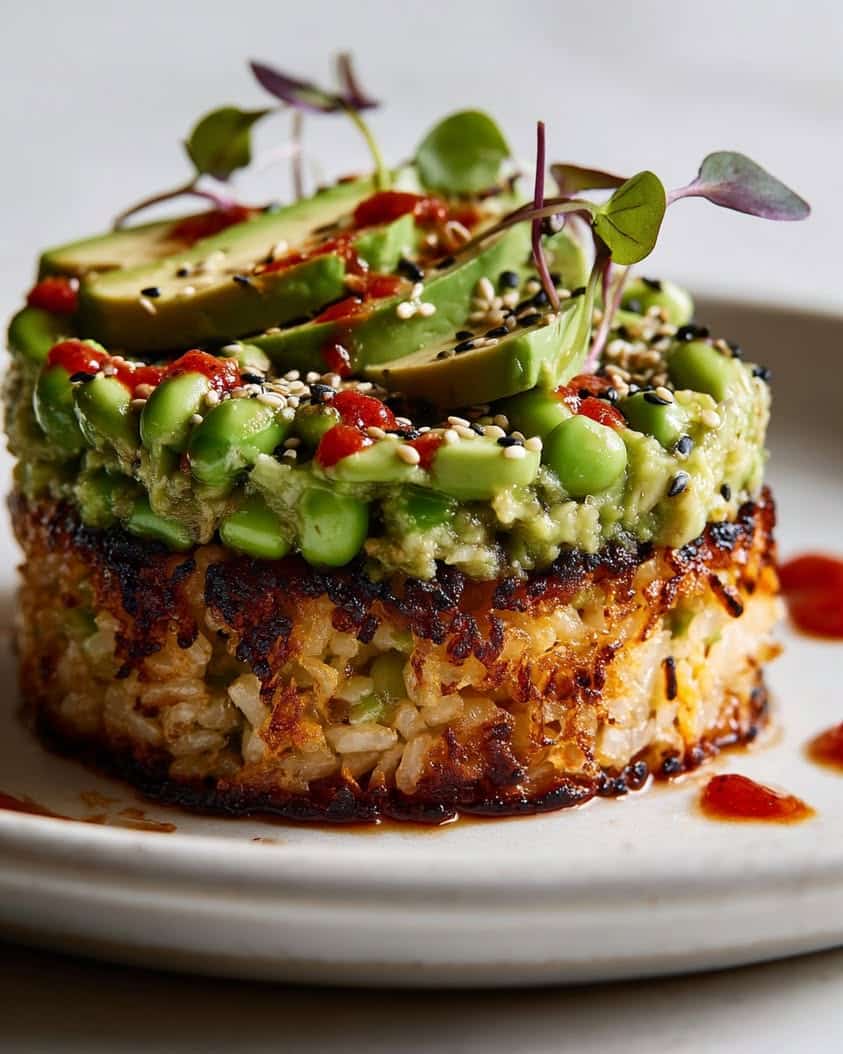
Crispy Rice Cakes with Edamame Whip and Sesame Avocado: A Vibrant Plant-Based Appetizer
Imagine a snack that perfectly balances creamy, crunchy, savory, and fresh flavors in every single bite. This recipe for crispy rice cakes with edamame whip and sesame avocado delivers exactly that experience. Moreover, it transforms simple, wholesome ingredients into a stunning and sophisticated appetizer. Consequently, it is perfect for impressing guests or treating yourself to a gourmet plant-based meal.
The foundation of this dish is a golden, crispy rice cake that provides a satisfying crunch. On top, a vibrant green edamame whip adds a layer of creamy, protein-rich flavor. Finally, a crown of sesame-laced avocado brings buttery richness and a pop of fresh color. Ultimately, this combination creates a textural symphony that is as delightful to eat as it is beautiful to behold.
These crispy rice cakes topped with creamy edamame whip and sesame avocado are a celebration of fresh, clean eating. They are naturally vegan and gluten-free, making them an inclusive option for various dietary needs. Furthermore, they come together in under forty minutes, proving that elegant food does not require hours in the kitchen. In essence, this recipe is your new secret weapon for healthy, delicious entertaining.
Quick Recipe Highlights
- Flavor Profile: These crispy rice cakes offer a masterful blend of savory, umami, and fresh notes. The edamame whip provides a deep, bean-based savoriness, while the sesame avocado adds a rich, nutty creaminess. A final sprinkle of sesame seeds and green onion introduces a subtle toasted aroma and a sharp, fresh finish.
- Texture: This dish is a textural masterpiece, featuring a delightful contrast in every layer. The base is a perfectly crispy and golden rice cake that shatters with each bite. Subsequently, the smooth and airy edamame whip creates a creamy middle layer. Finally, the chunky, ripe avocado provides a soft and luxurious counterpoint to the crunch.
- Aroma: As the rice cakes fry, they release a warm, toasty, and comforting scent. Meanwhile, blending the edamame with lemon and garlic creates a bright, zesty, and savory fragrance. Toasted sesame oil, drizzled on the avocado, adds a deeply nutty and aromatic note that ties the whole dish together.
- Visual Appeal: The presentation is a feast for the eyes with its stunning gradient of green hues. The golden-brown rice cake acts as a canvas for the vibrant pea-green edamame whip. On top, the bright green avocado and white sesame seeds create a fresh and appetizing contrast that is incredibly photogenic.
- Skill Level Needed: This recipe is wonderfully approachable for cooks of all levels. Basic techniques like shaping, pan-frying, and blending are the core requirements. Therefore, even a beginner can achieve fantastic results with careful attention to the simple steps provided.
- Special Equipment: You will need a food processor or high-speed blender to achieve the silky-smooth texture for the edamame whip. Additionally, a good non-stick skillet is essential for getting the rice cakes perfectly crispy without sticking. Otherwise, standard kitchen tools like mixing bowls and a spatula are all you require.
Recipe Overview
- Difficulty Level: We rate this recipe as easy because it breaks down into very manageable steps. The techniques involved, such as shaping patties and simple pan-frying, are fundamental cooking skills. Additionally, the component parts can be prepared separately without high-pressure timing. Consequently, you can focus on each element without feeling rushed or overwhelmed.
- Category: This dish brilliantly straddles multiple categories, making it incredibly versatile. Primarily, it serves as an elegant appetizer or passed hors d’oeuvre for parties. Alternatively, it makes a substantial and satisfying plant-based snack or light lunch. For a complete meal, simply pair it with a simple side salad or a bowl of miso soup.
- Cuisine: This recipe draws inspiration from modern fusion and plant-forward culinary trends. It incorporates Japanese elements like edamame, sesame, and short-grain rice. However, the presentation and combination are contemporary and global. Ultimately, it belongs to the growing category of health-conscious, vegetable-centric cuisine that prioritizes flavor and texture.
- Cost: This is a very cost-effective recipe, especially when you consider its impressive presentation. The main ingredients—rice, frozen edamame, and avocado—are relatively inexpensive pantry and freezer staples. Flavor enhancers like lemon, garlic, and sesame oil are typically already on hand. Therefore, you can create a gourmet-tier appetizer without a gourmet-tier grocery bill.
- Season: These crispy rice cakes are truly a recipe for all seasons, thanks to the year-round availability of its core components. However, they feel particularly refreshing in the spring and summer months. The bright, green colors and fresh flavors complement lighter, warmer-weather menus perfectly. Conversely, they also bring a vibrant pop of color to a winter table.
- Occasion: This dish is perfect for any gathering where you want to serve something special and health-conscious. It is ideal for cocktail parties, brunches, or as a starter for a dinner party. Furthermore, it makes an excellent packed lunch or a fancy treat-yourself snack. Its visual appeal guarantees it will be the star of any spread.
Why You’ll Love This Recipe
First and foremost, you will adore the incredible contrast of textures and flavors in every single bite. The initial crunch of the golden rice cake gives way to the cloud-like creaminess of the edamame whip. Subsequently, the rich, buttery avocado melds everything together with a nutty sesame finish. This layered experience makes eating these crispy rice cakes an active pleasure, far more interesting than a standard snack.
From a practical standpoint, the convenience factor of this recipe is a major win. You can prepare all three components independently, which is perfect for managing your time in the kitchen. For instance, you can make the edamame whip ahead of time and fry the rice cakes just before serving. Consequently, you can present a warm, fresh, and impressive appetizer without last-minute stress.
Nutritionally, this dish is a powerhouse that makes healthy eating feel indulgent. The edamame whip is loaded with plant-based protein and fiber, keeping you full and satisfied. Meanwhile, the avocado contributes heart-healthy monounsaturated fats and a wealth of vitamins. Therefore, these crispy rice cakes are a snack that truly nourishes your body while delighting your taste buds.
For entertaining, these crispy rice cakes topped with creamy edamame whip and sesame avocado are a guaranteed conversation starter. Their elegant, restaurant-quality appearance will impress your guests immediately. Moreover, because they are vegan and gluten-free, you can confidently serve them to almost anyone. They demonstrate thoughtfulness and culinary skill, making your guests feel specially cared for.
Finally, the cost-effectiveness and accessibility of the ingredients make this a recipe you can turn to again and again. You are not hunting for rare or expensive specialty items. Instead, you are elevating humble, easy-to-find staples into something extraordinary. This approachability ensures that delicious, beautiful, and healthy food can be a regular part of your routine.
Historical Background and Cultural Significance
The concept of using rice as a crispy cake or patty has roots in many culinary traditions around the world. In Asian cuisines, particularly Korean and Japanese, cooked rice is often pressed and pan-fried to create a delicious, crunchy exterior. This technique is a brilliant way to transform leftover rice into a new and exciting dish. Our crispy rice cakes draw inspiration from this practical and flavorful tradition, utilizing short-grain rice for its ideal sticky texture.
Edamame, or young soybeans, hold significant cultural importance in East Asian food history, especially in Japan and China. Historically, soybeans have been a cornerstone of the diet in these regions for thousands of years, valued for their protein and versatility. Edamame, typically boiled or steamed and salted, is a classic snack and appetizer. In this recipe, we honor that tradition but reinterpret it by blending the beans into a modern, smooth, and elegant whip.
The evolution of this specific recipe is a testament to the modern plant-based and fusion food movement. It takes familiar elements from different culinary backgrounds and combines them in a novel way. The idea of topping a crispy base with a creamy spread and fresh garnish is a familiar format, seen in crostini or bruschetta. However, by using rice, edamame, and avocado, we create a completely unique, dairy-free, and vibrant alternative that speaks to contemporary tastes.
Regional variations of this concept are easy to imagine, showcasing the recipe’s adaptability. In a Mediterranean version, you might use oregano and lemon zest in the whip and top with chopped olives and tomato. A Southeast Asian twist could incorporate lemongrass and coconut milk into the blend, topped with pickled vegetables and cilantro. This flexibility is the hallmark of a great foundational recipe, one that encourages creativity while maintaining its core appeal of contrasting textures and fresh, bold flavors.
Ingredient Deep Dive
Short-Grain White Rice: Short-grain rice is the essential foundation for our crispy rice cakes. Culturally, varieties like Japanese sushi rice or Arborio are prized for their high starch content, which creates a naturally sticky texture when cooked. This stickiness is crucial, as it allows the cooled rice to be pressed into cohesive cakes that hold their shape during frying. Nutritionally, it provides energy-boosting carbohydrates; for a whole-grain boost, you can experiment with short-grain brown rice, noting the texture will be chewier and may require a binding agent like a flax egg.
Shelled Edamame: These young, green soybeans are the star of our creamy whip. Historically, soybeans are one of the world’s oldest cultivated crops, with edamame becoming a popular snack in East Asia. They are a complete plant-based protein, offering all nine essential amino acids, along with significant fiber, iron, and folate. For the best results, use frozen shelled edamame and thaw them completely before blending to ensure a smooth texture. You can store unused portions in the freezer for months.
Ripe Avocado: The avocado adds a luxurious, buttery finish and healthy fats. Native to Central and South America, avocados have been cultivated for thousands of years and are now a global superfood. They are rich in monounsaturated fats, which support heart health, and are an excellent source of potassium and vitamins C, E, and K. Select an avocado that yields slightly to gentle pressure near the stem. To store a cut avocado, leave the pit in, drizzle with lemon juice, wrap tightly in plastic, and refrigerate.
Toasted Sesame Oil & Seeds: Sesame oil and seeds provide the defining nutty, aromatic flavor. Sesame is one of the oldest oilseed crops known, with uses dating back to ancient Assyrian and Babylonian civilizations. The toasted variety has a deep, complex flavor that is irreplaceable. Sesame seeds are a good source of healthy fats, protein, B vitamins, and minerals like calcium and magnesium. Always store sesame oil in a cool, dark place to prevent rancidity. For a substitution, another nut oil like walnut can be used, but the distinct sesame flavor will be lost.
Fresh Lemon Juice & Garlic: These are the flavor brighteners that elevate the entire dish. Lemon juice adds necessary acidity to cut through the richness of the avocado and edamame, while raw garlic provides a sharp, pungent kick that wakes up the palate. Both ingredients have long histories in cooking for their preservative and medicinal properties, as well as their flavor. For a milder garlic flavor, you can roast the clove first. Always use fresh lemon juice rather than bottled for the brightest, cleanest taste.
Common Mistakes to Avoid
- Using Wrong Rice Type: Avoid using long-grain rice like basmati or jasmine. These varieties are too dry and fluffy and will not stick together to form a proper cake. Short-grain rice is non-negotiable for its sticky, cohesive texture when cooked and cooled.
- Blending Warm Edamame: Do not blend the edamame while they are still warm from thawing or cooking. The heat can cause the whip to become gummy and prevent it from becoming light and fluffy. Always ensure the beans are completely cooled before processing.
- Overfilling the Food Processor: Resist the urge to under-blend the edamame mixture because the volume seems small. You need to process it long enough to break down the beans completely into a smooth, creamy consistency. A mini food processor is actually ideal for this task.
- Choosing Unripe Avocado: Using an avocado that is too hard is a critical error. It will be difficult to mash and will lack the creamy, luxurious texture that balances the dish. Always select an avocado that yields to gentle pressure for perfect ripeness.
- Skipping the Rice Cooling Step: Do not attempt to shape and fry the rice cakes immediately after cooking the rice. The rice must be completely cool, or even chilled, to handle easily and to achieve the best crispy texture when fried.
- Frying at Wrong Temperature: Avoid frying the rice cakes in oil that is not hot enough. If the oil is too cool, the cakes will absorb oil and become greasy instead of crispy. Wait until the oil shimmers and a grain of rice sizzles upon contact.
- Overcrowding the Pan: Do not crowd the skillet when frying the rice cakes. This will cause the pan temperature to drop dramatically, leading to steaming instead of frying. Cook in batches to ensure each cake has space to become perfectly golden and crisp.
- Neglecting Seasoning Layers: Forgetting to season each component individually will result in a bland final dish. Season the rice mixture, the edamame whip, and the avocado separately. This builds depth of flavor from the bottom layer to the top.
Essential Techniques
Perfectly Cooking Short-Grain Rice: Mastering this technique is the first step to a successful crispy rice cake. The goal is rice that is fully cooked, tender, and sticky. Use the absorption method, bringing the rice and water to a boil, then reducing to the lowest simmer and covering tightly. Do not peek, as this releases steam. After cooking, let it sit, covered and off the heat, for 10 minutes to finish steaming. Fluff it gently with a fork, then spread it on a tray to cool completely. Undercooked rice will be too hard, while overcooked rice can become mushy and fail to crisp up properly.
Creating a Smooth Edamame Whip: The key here is patience and a powerful blender or food processor. Start with completely cooled, thawed edamame. Add your liquids (lemon juice, water/oil) gradually while the motor is running. Scrape down the sides frequently to ensure all pieces are incorporated. Process until the mixture is completely uniform, with no visible bean fragments. It should have the consistency of a thick, spreadable hummus. Rushing this step or under-blending will leave you with a gritty, unappealing texture instead of a luxurious whip.
Pan-Frying for Optimal Crispiness: This technique transforms soft rice into a golden, crunchy canvas. Use a neutral oil with a high smoke point, like avocado or grapeseed oil, and ensure your skillet is evenly preheated over medium heat. The oil should shimmer. Gently place your shaped rice cakes in the pan, leaving space between them. Do not move them for a few minutes, allowing a solid crust to form. You will know they are ready to flip when the edges look golden and they release easily from the pan. A common pitfall is flipping too early, which can cause the cake to break apart.
Pro Tips for Perfect Crispy Rice Cakes
For the crispiest possible rice cakes, press the cooled rice mixture firmly into your measuring cup or mold. A tight pack minimizes air pockets and creates a denser cake that holds together and fries evenly.
Let the shaped rice cakes rest on a plate for 5-10 minutes before frying. This brief rest allows the surface to dry slightly, which promotes better browning and a crisper exterior in the hot oil.
When making the edamame whip, start with less liquid than you think you need. You can always add more to reach your desired consistency, but you cannot take it out if the mixture becomes too runny.
To keep your avocado topping vibrant and prevent browning, prepare it last, right before assembly. The acid from the lemon juice in the recipe will help, but immediate serving is best for color.
Use a wide, flexible spatula for flipping the rice cakes. Slide it completely under the cake to get full support, then confidently flip it in one smooth motion to avoid breakage.
If serving for a party, fry the rice cakes ahead of time and keep them warm on a rack in a low oven (200°F). Assemble with the cold toppings just before guests arrive to maintain the perfect textural contrast.
Toast your sesame seeds in a dry pan for a minute or two until fragrant. This simple step exponentially increases their nutty flavor and adds a wonderful aroma to the finished dish.
Season each component thoughtfully. Taste your edamame whip and avocado mixture separately and adjust salt, acid, or garlic until each one is delicious on its own. This layering ensures a perfectly balanced final bite.
Variations and Adaptations
Regional Variations: Explore global flavors by adapting the seasonings. For a Mexican-inspired twist, add cumin and chili powder to the rice, use lime juice in the whip, and top with pico de gallo. A Mediterranean version could include chopped kalamata olives and sun-dried tomatoes in the edamame blend, topped with a drizzle of olive oil and oregano.
Seasonal Adaptations: Make the most of seasonal produce. In summer, top the cakes with a fresh corn and cherry tomato salsa. During fall, incorporate roasted pumpkin or squash into the edamame whip for a sweeter, earthier flavor. A winter version could feature a garnish of pomegranate arils and chopped mint for a festive touch.
Dietary Modifications: For a nuttier, gluten-free grain base, substitute cooked quinoa or millet for the rice, though you may need a binder like a flax egg. To make the dish soy-free, replace the edamame with cooked white beans or peas for the whip, though the flavor profile will change. For an oil-free version, bake the rice cakes at 425°F on a parchment-lined sheet until crisp.
Flavor Variations: Infuse the edamame whip with different herbs like fresh basil, cilantro, or dill for a completely new character. Add a teaspoon of white miso paste to the whip for an extra umami punch. For a spicy kick, blend a small jalapeño (seeds removed) into the edamame or sprinkle the finished cakes with chili flakes.
Texture Modifications: If you prefer a chunkier topping, simply mash the avocado with a fork, leaving some pieces intact, rather than aiming for a smooth spread. For added crunch in the rice cake, mix in a tablespoon of black or white sesame seeds into the rice before shaping.
Presentation Alternatives: For a passed appetizer, shape the rice mixture into smaller, bite-sized rounds. Alternatively, for a family-style platter, create one large rice “pizza” in a skillet, spread the toppings over it, and slice into wedges. You can also serve the components deconstructed in bowls, allowing guests to build their own crispy rice cake bites.
Serving and Presentation Guide
Plating Techniques: For individual servings, place one crispy rice cake slightly off-center on a small plate or slate board. Use a spoon to create a quenelle or a generous dollop of the edamame whip, then artfully spoon the sesame avocado on top. Alternatively, for a rustic family-style presentation, arrange all the crispy rice cakes on a large platter and let guests top their own from bowls of whip and avocado.
Garnishing Ideas: The final garnish elevates the visual appeal and adds flavor. A sprinkle of toasted sesame seeds is classic. Thinly sliced green onion or chives add a pop of color and sharpness. Microgreens, radish slices, or edible flowers introduce sophistication. A light drizzle of sriracha or a zigzag of vegan mayo can add visual interest and a flavor boost.
Traditional Accompaniments: To create a more substantial meal, pair these crispy rice cakes with traditional sides from their flavor inspiration. A simple miso soup or a light seaweed salad makes a perfect Japanese-accented pairing. A small bowl of pickled ginger or quick-pickled cucumbers can cleanse the palate between bites.
Modern Serving Suggestions: Incorporate these into a modern grazing board or brunch spread. Surround them with other vegetable-based dips, fresh crudités, and marinated olives. They also pair beautifully with a glass of crisp, dry sparkling wine or a citrus-forward craft cocktail for a celebratory feel.
Temperature Considerations: The magic of this dish lies in the contrast of the warm, crispy rice cake with the cool, creamy toppings. Always serve immediately after assembly. If the rice cakes sit too long with the toppings, they will lose their coveted crunch from the moisture.
Portion Control Tips: As an appetizer, one full-sized rice cake per person is typically sufficient. For a light lunch or main course, plan for two to three cakes per person, accompanied by a side salad. When making smaller, bite-sized versions for a party, estimate three to four pieces per guest as part of a larger spread.
Wine and Beverage Pairing
Wine Pairings: The bright acidity, creamy textures, and umami flavors in these crispy rice cakes call for wines with similar characteristics. A crisp, dry Sauvignon Blanc or Pinot Gris, with their citrus and green fruit notes, will complement the lemon and edamame beautifully. For a rosé, choose a dry Provençal style with mineral notes. If you prefer a light red, a chilled Pinot Noir with low tannins and red berry flavors can work surprisingly well without overpowering the dish.
Non-Alcoholic Alternatives: Sparkling water with a twist of lemon or lime is a classic and refreshing choice that cleanses the palate. For more flavor, try a chilled ginger beer or a craft ginger ale, as the spice pairs wonderfully with the sesame and avocado. An iced green tea or jasmine tea offers subtle, aromatic notes that align with the dish’s inspiration without adding sweetness.
Coffee/Tea Pairings: While not a traditional pairing for this appetizer, if serving for brunch, a high-quality, lightly roasted coffee can be pleasant. The nutty and sometimes citrusy notes in the coffee can echo the sesame and lemon. A delicate white tea or a genmaicha (brown rice green tea) would be an exquisite and thematic choice, as the toasty rice notes in the tea directly complement the crispy rice cake base.
Temperature Considerations: All beverages should be served well-chilled, except for hot tea or coffee. The coolness of a white wine, sparkling water, or iced tea provides a refreshing counterpoint to the warm, fried element of the rice cake. This contrast enhances the overall dining experience, making each bite and sip feel intentional.
Serving Suggestions: Pour wine into appropriate stemware to appreciate its aroma. Serve sparkling water in a tall glass with plenty of ice. Present iced tea in a clear glass to showcase its color. Ultimately, the goal is to choose a beverage that refreshes the palate and allows the complex flavors of the crispy rice cakes to remain the star.
Storage and Shelf Life
Storage Methods: This dish is best enjoyed immediately after assembly. However, you can store the components separately for later use. Cooked, unshaped rice can be kept in an airtight container in the refrigerator for 3-4 days. The edamame whip will last in a sealed container in the fridge for up to 3 days. Store avocado mash with the pit and a tight layer of plastic wrap directly on its surface for 1 day, though it’s best made fresh.
Temperature Requirements: All components must be refrigerated at or below 40°F (4°C). Do not leave assembled rice cakes or the edamame whip at room temperature for more than two hours. The avocado, in particular, is highly perishable and will brown and degrade quickly when warm.
Container Recommendations: Use shallow, airtight containers for the rice and edamame whip to allow for rapid cooling. Glass containers are ideal as they do not retain odors. For the avocado, a small bowl with direct plastic wrap contact is the best method to limit oxidation.
Signs of Spoilage: Discard any component that develops an off smell, sour taste, or visible mold. The avocado will turn from bright green to a dull brown; while surface browning from oxidation is safe to scrape off, a slimy texture or fermented smell indicates spoilage. If the edamame whip becomes excessively watery or smells fermented, it should be discarded.
Reheating Instructions: Only the rice cakes can be reheated. Re-crisp them in a skillet over medium heat for 1-2 minutes per side, or in an air fryer/toaster oven at 375°F for 3-4 minutes. Do not microwave, as this will make them soft and chewy. The edamame whip and avocado should be served cold and never reheated.
Freezing Guidelines: Freezing is not recommended for the assembled dish or the avocado. You can freeze the unshaped, cooked rice in an airtight bag for up to 2 months; thaw in the refrigerator before using. The edamame whip can be frozen, but the texture may become slightly grainy upon thawing. It’s best to enjoy all components fresh.
Make Ahead Strategies
Prep Timeline: You can efficiently break this recipe down over two days. Day One: Cook the rice, let it cool, then refrigerate it overnight. Thaw the edamame in the refrigerator. Day Two (2-3 hours before serving): Shape the cold rice into cakes. Prepare the edamame whip and refrigerate. Right before serving: Fry the rice cakes, prepare the avocado, and assemble.
Storage Between Steps: Keep the shaped, uncooked rice cakes on a parchment-lined tray, covered with plastic wrap, in the fridge for up to 8 hours before frying. The cold helps them firm up. Store the edamame whip in a sealed container with plastic wrap pressed onto its surface to prevent a skin from forming.
Quality Impact Assessment: Making the rice ahead actually improves the texture, as the grains dry out slightly, leading to a crispier fry. The edamame whip holds its flavor and texture very well for a day. The only component that must be absolutely fresh is the avocado topping to maintain its vibrant color and texture.
Assembly Tips: For a party, fry all rice cakes and keep them warm on a rack in a 200°F oven. Have your edamame whip and pre-measured avocado ingredients ready. Mash the avocado with seasonings at the last possible moment. Then, quickly assemble each cake just before passing them to guests to preserve the crispness.
Reheating Guidelines: If you must fry the cakes ahead, let them cool completely on a rack, then store at room temperature for a few hours. Re-crisp in a 375°F oven or air fryer for 3-4 minutes before assembling. This method is second-best to fresh frying but works in a pinch.
Fresh Element Additions: Always add your final garnishes—like extra sesame seeds, green onion, or a drizzle of oil—after assembly and immediately before serving. These elements add a pop of fresh flavor, color, and texture that can be lost if applied too early.
Scaling Instructions
Halving the Recipe: Halving this recipe is straightforward for a smaller yield. Simply divide all ingredient quantities by two. Use a smaller skillet for frying to maintain the oil depth. The edamame whip may be difficult to blend in a full-sized food processor; a mini processor or immersion blender is ideal for small batches. All cooking times will remain the same.
Doubling or Tripling: For larger crowds, you can confidently double or triple the recipe. Cook the rice in batches or use a rice cooker for larger volumes. You may need to blend the edamame whip in batches as well to ensure smoothness. The most important adjustment is to fry the rice cakes in multiple batches to avoid overcrowding the pan, which leads to steaming. Keep finished cakes warm in a low oven.
Equipment Adjustments: Scaling up requires planning. Ensure you have a large enough container to cool the rice and enough sheet trays to hold the shaped cakes. A large electric skillet or two stovetop skillets going simultaneously will drastically cut down on frying time for a big batch.
Timing Modifications: While active hands-on time increases when scaling up, the individual step times do not. The rice still takes the same time to cook per batch. The key is to stagger your prep: start cooking the next batch of rice while shaping the first, and so on. Organization is crucial for efficiency.
Storage Considerations: When making a large batch, remember that the avocado component does not scale well for make-ahead. It’s better to prepare multiple separate batches of the avocado mash just before serving time to prevent browning. The edamame whip and shaped, uncooked rice cakes scale and store very well.
Nutritional Deep Dive
Macro Breakdown: One serving of these crispy rice cakes provides a balanced mix of macronutrients. The rice cakes offer complex carbohydrates for sustained energy. The edamame whip contributes a significant amount of plant-based protein and fiber, which aids in satiety and digestion. The avocado adds healthy monounsaturated fats, which are beneficial for heart health and help absorb fat-soluble vitamins from the other ingredients.
Micronutrient Analysis: This dish is rich in essential vitamins and minerals. Edamame is an excellent source of folate, vitamin K, and iron. Avocado provides high levels of potassium (more than a banana), vitamin C, vitamin E, and B-vitamins. The sesame seeds contribute calcium, magnesium, and zinc. Together, they create a nutrient-dense snack that supports overall wellness.
Health Benefits: Consuming this recipe supports several health goals. The high fiber content promotes digestive health and helps regulate blood sugar levels. The healthy fats from avocado and sesame oil support brain function and cardiovascular health. The complete protein from edamame makes it an excellent muscle-repairing food for active individuals or those following a plant-based diet.
Dietary Considerations: This recipe is naturally vegan, dairy-free, and gluten-free (ensure your soy sauce alternative is gluten-free if using). It is also cholesterol-free. It can fit into Mediterranean, vegetarian, and flexitarian dietary patterns with ease. The whole-food ingredients make it a clean-eating choice.
Portion Analysis: As an appetizer, one cake is a satisfying portion that provides a good mix of carbs, protein, and fat without being overly heavy. For a meal, two to three cakes constitute a well-rounded plate. The inherent balance of the ingredients helps prevent overeating, as the protein and fat promote feelings of fullness.
Weight Management Tips: These crispy rice cakes can be part of a weight-conscious diet. To reduce calories slightly, you can bake the rice cakes instead of pan-frying, though you’ll sacrifice some texture. The high protein and fiber content is key, as it increases satiety, helping you feel full longer and potentially reducing overall calorie intake later in the day.
Dietary Adaptations
Gluten-Free: This recipe is inherently gluten-free as written, using rice as the base. Always double-check that any packaged ingredients, like a soy sauce alternative you might add, are certified gluten-free to avoid hidden sources.
Dairy-Free: The recipe contains no dairy whatsoever. The creamy texture comes entirely from plant sources—edamame and avocado—making it a perfect rich and satisfying option for those avoiding dairy.
Vegan: This is a 100% plant-based, vegan recipe. No animal products are used in any component, aligning perfectly with a vegan lifestyle while delivering impressive flavor and presentation.
Low-Carb/Keto: This recipe is not suitable for strict low-carb or keto diets due to the rice base. For a adaptation, you could create a “cake” base from finely chopped cauliflower or broccoli rice, squeezed very dry, mixed with egg and cheese, and baked until crisp. The edamame whip would need to be limited due to its carb content, favoring a higher-fat avocado topping.
Paleo: Traditional paleo diets exclude legumes and grains. To adapt, substitute the rice with a cake made from sweet potato or parsnip mash, formed and baked. Replace the edamame with a whip made from steamed zucchini or cauliflower, blended with avocado oil and herbs.
Low-FODMAP: Edamame and avocado can be high-FODMAP in larger servings. For a low-FODMAP version, use a small serving of the avocado (1/8 per cake) and replace the edamame with a whip made from canned, drained chickpeas (which are low-FODMAP in 1/4 cup servings). Use garlic-infused oil instead of fresh garlic
Print
The Green Stack: Crispy Rice Cakes with Edamame Whip & Sesame Avocado
Description
A vibrant, plant-based dish featuring crispy pan-fried rice cakes topped with a creamy edamame whip and a zesty sesame avocado layer, perfect for a light lunch or appetizer.
Ingredients
For the Crust:
- 2 cups cooked sushi rice, cooled
- 1 cup shelled edamame, steamed
- 1 ripe avocado, mashed
- 1 tablespoon sesame oil
- 1 tablespoon soy sauce
- 1 teaspoon rice vinegar
- 1 clove garlic, minced
- 2 tablespoons cornstarch
- 2 tablespoons vegetable oil for frying
- 1 tablespoon toasted sesame seeds
- Salt and pepper to taste
- Fresh cilantro for garnish
Instructions
1. Prepare the Crust:
- Mix cooked sushi rice with cornstarch and shape into 4 round cakes, about 1/2-inch thick.
- Heat vegetable oil in a skillet over medium-high heat and pan-fry rice cakes for 3-4 minutes per side until golden and crispy. Set aside.
- In a food processor, blend steamed edamame, garlic, soy sauce, and rice vinegar until smooth to make the edamame whip.
- In a bowl, combine mashed avocado with sesame oil, toasted sesame seeds, salt, and pepper.
- To assemble, place a crispy rice cake on a plate, top with a layer of edamame whip, then a spoonful of sesame avocado.
- Garnish with fresh cilantro and serve immediately.
Notes
You can customize the seasonings to taste.

I’m Shaykee—born in Morocco, seasoned across continents. From airplane galleys to home kitchens, I share the flavors and stories that shaped my journey.