
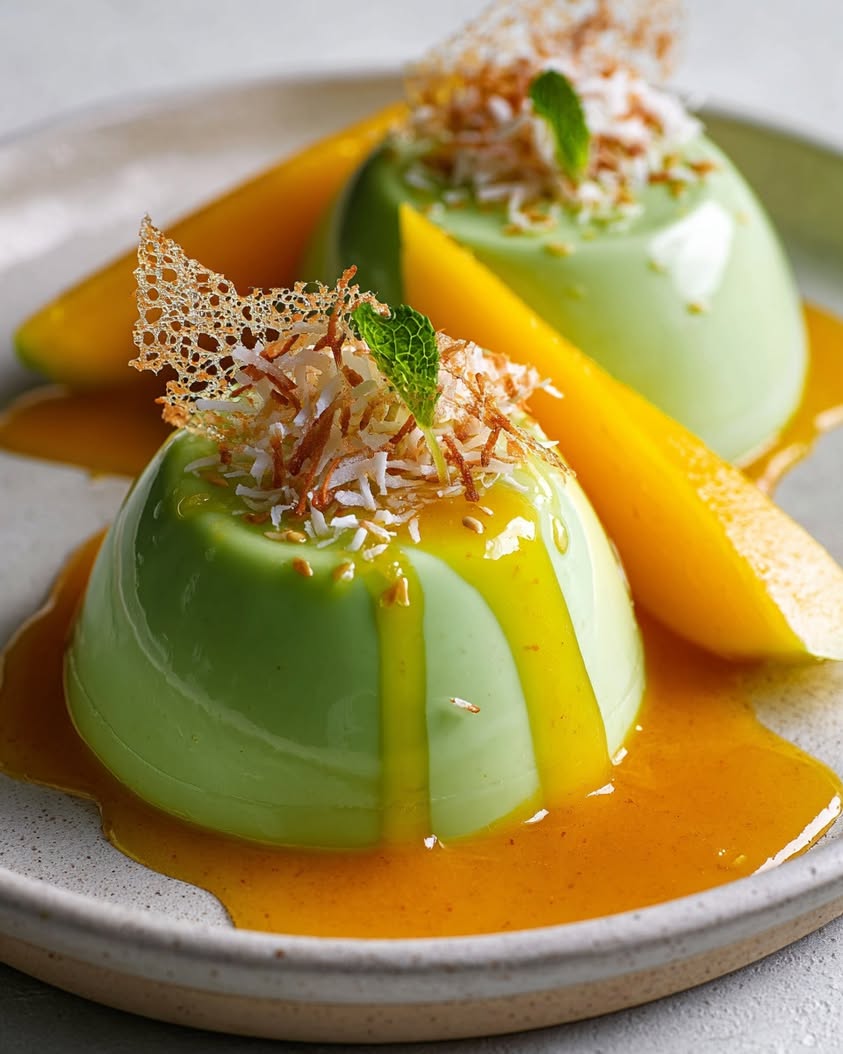
Jade Meets Mango in This Showstopper Dessert! A Barely-Set Coconut Pandan Dome Flooded with Vibrant Mango Coulis. A True Feast for the Senses.
Imagine a dessert so visually arresting it stops conversation. Picture a plate where jade green meets sunset orange in a stunning, almost artistic display. This is the magic of our Jade meets mango in this showstopper dessert! A barely-set coconut pandan dome is flooded with vibrant mango coulis. A true feast for the senses. The experience begins with your eyes, then captivates your palate with a symphony of tropical flavors and contrasting textures. Moreover, it’s a dessert that feels both elegantly complex and surprisingly approachable to make at home.
The star of the plate is a delicate, wobbly dome infused with the unique, fragrant aroma of pandan. This coconut-based creation is so tender it barely holds its shape, promising a luxuriously soft mouthfeel. Surrounding it, a river of bright, sweet-tart mango coulis flows freely, creating a dramatic “flooded” effect that is simply breathtaking. Consequently, every spoonful delivers the creamy, floral notes of coconut pandan perfectly balanced by the sunny, vibrant punch of ripe mango. Ultimately, this dessert is designed to be the unforgettable finale to any meal.
Quick Recipe Highlights
- Flavor Profile: This dessert masterfully balances sweet, creamy, and floral notes. The coconut pandan dome offers a rich, vanilla-like fragrance with a subtle nuttiness, while the mango coulis provides a bright, tangy, and intensely fruity counterpoint. Together, they create a harmonious tropical flavor experience that is neither too heavy nor too sweet.
- Texture: The contrast in textures is central to the dish’s appeal. The dome has a luxurious, barely-set, silken texture that quivers on the spoon—similar to a very soft panna cotta or Japanese purin. Conversely, the coulis is smooth yet fluid, creating a delightful interplay between the creamy solid and the luscious sauce.
- Aroma: Upon serving, the scent is instantly transporting. The pandan leaf releases a warm, sweet aroma often described as a blend of vanilla, coconut, and freshly cut grass. This fragrant bouquet is complemented by the sunny, ripe scent of mango, making the dessert as aromatic as it is delicious.
- Visual Appeal: The presentation is deliberately dramatic. The stark contrast between the pale jade-green dome and the vivid, glossy orange coulis is visually stunning. The “flooded” plating technique, where the sauce surrounds but doesn’t fully cover the dome, creates a modern, restaurant-quality look that is sure to impress guests.
- Skill Level Needed: This recipe is medium difficulty. It requires careful temperature control when setting the gelatin-based dome and a good blender for a perfectly smooth coulis. However, the steps are straightforward and well-explained, making it achievable for confident home cooks willing to follow instructions precisely.
- Special Equipment: You will need a blender or food processor for the coulis, a fine-mesh sieve for straining, a small saucepan, and 6 small dome-shaped molds or ramekins (about ½ cup capacity). A kitchen thermometer is highly recommended to ensure the gelatin sets correctly without scrambling.
Recipe Overview
- Difficulty Level: We rate this recipe as medium difficulty. The primary challenge lies in achieving the perfect “barely-set” texture for the coconut pandan dome, which requires precise gelatin measurement and gentle heating. Additionally, creating a perfectly smooth, seedless coulis demands proper straining technique. However, each step is broken down clearly, so with patience and attention, success is very achievable.
- Category: This dish falls squarely into the dessert category, specifically a chilled, molded dessert. It can also be considered a gourmet or plated dessert due to its sophisticated presentation. It’s ideal for capping off a special dinner or as the centerpiece of a dessert table.
- Cuisine: The recipe draws deep inspiration from Southeast Asian culinary traditions, particularly Thai, Vietnamese, and Malaysian cuisines where pandan and coconut are staple ingredients. The technique of creating a gelatin-set coconut dessert is common across the region, while the coulis adds a modern, chef-inspired twist to the presentation.
- Cost: The cost is moderately affordable. Fresh pandan leaves can be found frozen in Asian markets at a low cost, and canned coconut cream is inexpensive. Ripe mangoes are the main variable; using them in season keeps costs down. Overall, the ingredients for six elegant servings cost significantly less than a similar dessert at a restaurant.
- Season: This dessert shines brightest in late spring and summer when mangoes are at their peak sweetness and fragrance. The light, chilled nature of the dish also makes it a perfect refreshment during warm weather. That said, using high-quality frozen mango or imported mangoes allows you to create this taste of the tropics year-round.
- Occasion: It is perfect for dinner parties, festive celebrations like Lunar New Year or Thai New Year (Songkran), birthdays, or any occasion where you want to present a visually stunning and delicious homemade dessert. It also works beautifully for a romantic date night at home.
Why You’ll Love This Recipe
First and foremost, the taste and texture combination is utterly divine. The creamy, fragrant coconut pandan dome literally melts on your tongue, offering a subtle sweetness. Then, the vibrant mango coulis cuts through with its bright, tangy flavor, creating a perfect balance. Each component complements the other without overpowering, resulting in a sophisticated and refreshing dessert that feels light yet satisfying. Furthermore, the luxurious mouthfeel from the barely-set gelatin is a textural delight that elevates the entire eating experience.
From a convenience standpoint, this dessert is a fantastic make-ahead option. You can prepare both the domes and the coulis a full day in advance, leaving you stress-free on the day of your event. Simply unmold and plate when ready to serve. Additionally, while the presentation looks professional, the techniques involved—blending, straining, and gentle heating—are fundamental kitchen skills. Therefore, you get an impressive result without needing specialized pastry training.
Nutritionally, this dessert offers some benefits compared to heavier alternatives. Coconut milk provides medium-chain triglycerides (MCTs), a type of fat that some studies suggest is metabolized differently by the body. Mangoes are an excellent source of vitamins A and C, antioxidants, and dietary fiber. By controlling the sugar yourself, you can adjust the sweetness to your preference, potentially creating a dessert that is lower in refined sugar than store-bought versions.
The social and entertaining value of this dish cannot be overstated. When you bring this plate to the table, it genuinely creates a “wow” moment. The dramatic visual contrast is a guaranteed conversation starter. Serving a homemade dessert that looks and tastes this elegant shows a high level of care and culinary skill, making your guests feel truly special. It transforms an ordinary meal into a memorable dining event.
Finally, considering cost-effectiveness and accessibility, this recipe is a winner. The ingredients are relatively simple and can be sourced from most well-stocked supermarkets or Asian grocery stores. Compared to the price of a single plated dessert at a high-end restaurant, making six servings at home is remarkably economical. You are investing a little time to create immense visual and gustatory value, proving that gourmet experiences can be beautifully replicated in your own kitchen.
Historical Background and Cultural Significance
The roots of this dessert lie deeply embedded in the culinary traditions of Southeast Asia. Pandan, or screwpine leaf, has been used for centuries across Thailand, Malaysia, Indonesia, Vietnam, and the Philippines as a natural flavoring, coloring, and aromatic agent. Historically, its vibrant green juice was extracted to color and flavor rice cakes, sticky rice, and simple coconut-based sweets. Similarly, coconut has been a cornerstone of the regional diet, providing milk, cream, and oil that form the base of countless savory and sweet dishes. The combination of these two ingredients is therefore a classic and beloved pairing, representing the essence of tropical Asian cuisine.
Culturally, desserts featuring coconut and pandan are often associated with festivity, hospitality, and celebration. In many Southeast Asian cultures, offering sweet treats to guests is a fundamental gesture of welcome. Elaborate desserts are prepared for important festivals and religious ceremonies. The vibrant green color derived from pandan is also symbolically significant, often representing nature, freshness, and prosperity. Consequently, a dessert like this coconut pandan dome carries with it a sense of tradition and communal joy, even when presented with a modern twist.
The evolution of this specific recipe—a barely-set dome flooded with coulis—showcases the global fusion of culinary techniques. Traditional Asian coconut-pandan jellies or custards were often firmer, cut into squares, and served simply. The contemporary “dome” shape and the French technique of a “coulis” (a smooth, thick sauce made from pureed fruit) represent a modernization and plating style influenced by Western pastry arts. This evolution reflects how traditional flavors travel and adapt, finding new expressions that appeal to international palates while honoring their origins.
Regional variations of this concept abound. In Thailand, one might find “Khanom Chan,” a layered pandan and coconut steamed cake. In the Philippines, “Maja Blanca” is a creamy coconut pudding often topped with latik (coconut curds). The Vietnamese have “Bánh Da Lợn,” a steamed layer cake with pandan and mung bean. Our recipe takes the core flavor principle—the sublime pairing of pandan and coconut—and presents it in a sleek, individual portion that emphasizes visual drama and textural contrast, making it a unique yet culturally respectful interpretation of a classic theme.
Ingredient Deep Dive
Pandan Leaves: Pandan is the soul of this dessert. This fragrant leaf is a cornerstone of Southeast Asian cooking, used much like vanilla in the West. Fresh or frozen leaves are pounded or blended to extract their vibrant juice and unique aroma, which is floral, sweet, and slightly grassy. Nutritionally, pandan has been used in traditional medicine for its potential antioxidant and anti-inflammatory properties. For selection, look for fresh, vibrant green leaves in Asian markets, or more commonly, find them in the freezer section. To store fresh leaves, wrap them in a damp paper towel and keep in the fridge for a week, or freeze for months. If unavailable, the best substitute is pandan extract or paste (use sparingly, as it’s potent), though the authentic fresh flavor is unparalleled.
Full-Fat Coconut Milk/Cream: This ingredient provides the luxurious, creamy base for the dome. Opt for full-fat canned coconut milk or, better yet, coconut cream for the richest texture and flavor. The high fat content is essential for a smooth mouthfeel and helps the dome set with a tender consistency. Coconut milk adds healthy fats, including lauric acid. Always shake the can well before opening. For the best results, do not use “light” coconut milk, as the dome may not set properly and will lack richness. If separation occurs, simply whisk the contents until smooth. There is no direct dairy-free substitute needed, as it is already plant-based.
Ripe Mangoes: The coulis relies on perfectly ripe mangoes for maximum sweetness and flavor. Alphonso or Ataulfo (Honey) mangoes are ideal for their intense color, minimal fiber, and tropical sweetness. Mangoes are packed with vitamins A and C, which support immunity and skin health. Choose fruit that yields slightly to gentle pressure and has a strong, sweet fragrance at the stem end. To speed ripening, place mangoes in a paper bag at room temperature. In the off-season, high-quality frozen mango chunks are an excellent and consistent alternative, often picked and frozen at peak ripeness.
Gelatin: This is the crucial structural agent for the dome. Powdered, unflavored gelatin is recommended for its reliability. It requires “blooming” in cold water to activate before dissolving gently into the warm coconut mixture. This process ensures a smooth, lump-free set. The amount is calibrated to achieve a “barely-set” texture that quivers—too little and it won’t hold; too much and it becomes rubbery. For a vegetarian version, agar-agar powder can be substituted, but note that it sets firmer and at a higher temperature, so adjustments to quantity and method are required.
Common Mistakes to Avoid
- Overheating the Coconut-Gelatin Mixture: After adding the bloomed gelatin, heat the mixture only until the gelatin is fully dissolved (around 140°F). Do not boil it, as excessive heat can break down gelatin’s setting power, resulting in a dome that never properly firms up or has a grainy texture.
- Insufficient Straining: Skipping the step of straining both the pandan juice and the final coconut mixture will leave you with fibrous bits and potential gelatin lumps. This compromises the perfectly smooth, silken texture that defines the dome. Always strain through a fine-mesh sieve for a flawless finish.
- Using Under-ripe Mangoes: The coulis depends on the natural sweetness of the fruit. Under-ripe mangoes will be tart, fibrous, and lack vibrant flavor, forcing you to add excessive sugar to compensate. This results in a flat, overly sweet sauce instead of a bright, fruity one.
- Not Tasting the Coulis Before Chilling: Flavors become muted when cold. Always adjust the sweetness and acidity of your mango coulis with a touch of sugar or lime juice while it’s still warm or at room temperature. Taste and tweak until it sings.
- Rushing the Chilling Process: Patience is key. The domes need a full 4 hours, preferably overnight, to set properly in the refrigerator. Attempting to unmold them too early will lead to collapse. Similarly, chilling the coulis helps its flavors meld and thicken slightly.
- Forgetting to Grease the Molds: A very light coating of neutral oil (like coconut or vegetable oil) on the inside of your molds is essential for clean unmolding. Without it, the delicate dome may tear or stick, ruining your beautiful presentation.
- Over-blending the Pandan Leaves: When processing pandan leaves with water, blend just until the leaves are finely chopped. Over-blending can heat the mixture and dull the fresh green color. The goal is to extract the juice and flavor, not cook the leaves.
- Ignoring the Gelatin Bloom: Sprinkling gelatin directly into hot liquid will cause it to clump into insoluble lumps that you can never fully dissolve. Always bloom it in cold water first to hydrate the granules evenly, ensuring a smooth integration.
Essential Techniques
Extracting Pandan Juice: This technique is fundamental for achieving the authentic flavor and natural jade color. Start by roughly chopping fresh or thawed pandan leaves. Place them in a blender with a small amount of water—just enough to get the blades moving. Blend on high until the leaves are completely pulverized into a green slurry. Then, pour this mixture into a fine-mesh sieve or cheesecloth set over a bowl. Use the back of a spoon or your hands to press and squeeze out every last drop of vibrant green liquid. The remaining fibrous pulp can be discarded. The resulting juice is your flavor and color gold.
Blooming Gelatin: This step ensures your gelatin sets smoothly and effectively. Sprinkle the powdered gelatin evenly over the surface of cold water in a small bowl. Do not stir immediately. Let it sit for 5-10 minutes. The granules will absorb the water, swell up, and become translucent and spongy—this is “bloomed.” Once bloomed, you can gently stir it before adding it to your warm (not boiling) liquid, where it will dissolve completely. Skipping this bloom risks clumpy, unevenly set gelatin.
Creating a Silky-Smooth Coulis: A coulis should be perfectly smooth and seedless. After blending your ripe mango pieces until completely pureed, you must pass the mixture through a fine-mesh sieve. Press firmly with a flexible spatula or the back of a ladle to force the puree through, leaving behind any stringy fibers or unwanted bits. This extra step transforms a chunky puree into a luxurious, restaurant-quality sauce with a velvety texture that pools beautifully around the dome.
Unmolding the Dome: The grand reveal requires a gentle touch. First, run a thin, warm knife carefully around the inner edge of the mold to loosen it. Then, prepare a small bowl of hot water. Briefly dip the bottom of the mold into the hot water for just 5-10 seconds—this melts a microscopic layer of gelatin, releasing the dome. Quickly remove, dry the bottom, place your serving plate upside-down over the mold, and in one confident motion, invert the plate and mold together. Give a slight shake or tap, and the dome should slide out cleanly onto the plate.
Pro Tips for Perfect Jade Meets Mango Dessert
For the most vibrant green color, use fresh or frozen pandan leaves rather than extract. The natural chlorophyll provides a beautiful jade hue that extract alone cannot match. Additionally, process the leaves with ice-cold water to prevent the blending heat from dulling the color.
When simmering the coconut milk with sugar, do not let it come to a full boil. A gentle simmer is enough to dissolve the sugar and integrate flavors without causing the coconut fat to separate or creating a skin on the surface.
To test if your gelatin has fully dissolved after adding it to the warm coconut mixture, dip a clean spoon in and look at it. The liquid should be perfectly clear with no visible granules or specks. If you see any, continue warming and stirring gently over low heat until completely clear.
Allow the coconut mixture to cool slightly before pouring it into the molds. Pouring it while too hot can cause condensation to form under the plastic wrap (if using), which may drip into your setting dome and create watery spots.
For an ultra-smooth coulis, consider straining it twice. A first pass through a coarse sieve removes big fibers, and a second pass through a very fine chinois or double-layered cheesecloth ensures an impeccable, glossy sauce.
Add a tiny pinch of salt to both the coconut base and the mango coulis. Salt is a flavor enhancer that will make the sweetness taste more rounded and complex, elevating the entire dessert without making it taste salty.
If your mangoes are perfectly ripe and sweet, you may not need to add much sugar to the coulis. Start with a small amount, blend, taste, and adjust. The goal is to complement the fruit’s natural sweetness, not overpower it.
For the best presentation, plate the dome on a plate with a slight lip or rim. This contains the coulis when you “flood” the plate, creating a beautiful contained pool without it running off the edge.
Variations and Adaptations
Regional Variations: To lean into different Southeast Asian traditions, consider these twists. For a Thai-inspired version, infuse the coconut milk with a piece of bruised lemongrass along with the pandan. A Vietnamese adaptation might include a layer of sweetened mung bean paste at the bottom of the mold before adding the coconut mixture. Alternatively, a Malaysian “Sago Gula Melaka” influence could see the dome served alongside pearls of cooked sago and a drizzle of palm sugar syrup instead of mango coulis.
Seasonal Adaptations: While mango is classic, the coulis can change with the seasons. In summer, try a vibrant raspberry or strawberry coulis for a berry-red contrast. Fall invites a spiced pear or roasted peach coulis. Winter could feature a tangy passion fruit or blood orange sauce. The coconut pandan dome remains a constant, versatile canvas for any fruit puree.
Dietary Modifications: For a vegan dessert, replace the gelatin with agar-agar. Use 1 teaspoon of agar powder for every cup of liquid. Remember to bring the mixture to a simmer for a minute to activate the agar, and note it sets firmer and at room temperature. Ensure your sugar is vegan-certified. The recipe is naturally gluten-free.
Flavor Variations: Infuse the coconut base with other aromatics. Try steeping a kaffir lime leaf in the warm milk, or add a teaspoon of finely grated ginger for warmth. For the coulis, a dash of lime zest, a hint of chili powder, or a splash of rum or coconut liqueur can add exciting layers of complexity.
Texture Modifications: For added textural interest, sprinkle the plate with toasted coconut flakes, crushed pistachios, or crispy rice pearls before adding the coulis. You could also layer a thin base of coconut jelly or crushed graham crackers in the mold before pouring the pandan mixture for a surprise crunch at the bottom.
Presentation Alternatives: Instead of individual domes, set the mixture in a single large ring mold or a shallow dish and cut into squares or diamonds for a more traditional look. Serve the coulis on the side in a small pitcher for guests to pour themselves. For a deconstructed version, crumble a set coconut pandan jelly into a bowl and top with mango coulis and fresh mango cubes.
Serving and Presentation Guide
Plating Techniques: The classic “flooded” technique is highly effective. Place the unmolded dome slightly off-center on a clean, white plate. Using a small ladle or spoon, gently pour the mango coulis around the base of the dome, allowing it to flow naturally and pool on the plate. The goal is to surround the dome without completely submerging it, leaving the top elegantly exposed. For a more modern look, use a squeeze bottle to create artistic dots or swirls of coulis on the plate before placing the dome in the center.
Garnishing Ideas: A simple garnish elevates the visual appeal. A single fresh mint or Thai basil leaf adds a touch of green. A delicate edible flower, like a pansy or orchid, makes it exceptionally elegant. A few tiny cubes of fresh mango scattered around the plate reinforce the main flavor. A light dusting of toasted coconut or a drizzle of reduced coconut cream can add subtle texture and sheen.
Traditional Accompaniments: In a more traditional Southeast Asian serving style, you might offer sticky rice on the side. Alternatively, serve with a small bowl of sweetened coconut cream for extra richness. Crispy fried shallots, while unusual for dessert, are a salty-sweet garnish in some regional cuisines that provides a fascinating contrast.
Modern Serving Suggestions: For a dinner party, consider a “dessert flight” by serving a mini version of this dome alongside other small Asian-inspired sweets, like a sesame ball or a piece of mochi. Serve on slate tiles or black plates for dramatic contrast against the bright colors. A scoop of mild coconut sorbet or vanilla ice cream alongside can be a delightful addition for those who love extra creaminess.
Temperature Considerations: Both components should be served chilled but not ice-cold. Remove the domes and coulis from the refrigerator about 10-15 minutes before serving to take the harsh chill off. This allows the flavors and aromas, especially the pandan, to be more pronounced. The dome will also have a softer, more luxurious texture when slightly less cold.
Portion Control Tips: This dessert is rich and satisfying. Using molds that hold about ½ cup of liquid is ideal for a standard portion after a full meal. For a larger gathering or a lighter finish, use smaller ¼-cup molds or even espresso cups. Conversely, for a standalone dessert course, you could use larger molds and consider adding the textural garnishes mentioned earlier to make it more substantial.
Wine and Beverage Pairing
Wine Pairings: The dessert’s tropical and creamy profile pairs beautifully with wines that have good acidity and complementary fruit notes. A German Riesling Spätlese, with its balance of sweetness and bright acidity, cuts through the coconut cream and echoes the mango’s fruitiness. A Moscato d’Asti offers light effervescence and peachy flavors that harmonize perfectly. For a more adventurous pairing, try a glass of Sauternes; its honeyed apricot notes create a sublime match with both the pandan and the mango.
Non-Alcoholic Alternatives: A sparkling coconut water with a twist of lime provides refreshment and complements the core flavors without competing. Iced jasmine or green tea offers a floral, slightly astringent counterpoint that cleanses the palate between bites. For a more direct flavor pairing, a mango lassi (a yogurt-based drink) or a fresh coconut juice served in its shell enhances the tropical theme beautifully.
Coffee/Tea Pairings: A light-roast coffee with floral or citrusy notes can be a pleasant companion. However, avoid dark, bitter roasts that might clash. For tea, consider a fragrant oolong tea, which has stone fruit and floral notes that bridge the gap between the pandan’s aroma and the mango’s sweetness. Serving these beverages slightly warm, not hot, is best alongside a cold dessert.
Temperature Considerations: Serve all beverages well-chilled or at the appropriate cool temperature for non-alcoholic options. The contrast between a cold dessert and a warm drink can be jarring. For wines, a sweet white should be served quite cold (around 45-50°F) to highlight its freshness against the creamy dessert.
Serving Suggestions: Offer beverage pairings in appropriate glassware to enhance the experience. Serve dessert wines in smaller wine glasses to encourage sipping. Present iced tea or non-alcoholic drinks in tall, clear glasses garnished with a slice of mango or a pandan leaf knot for thematic presentation. Always provide options to cater to all your guests’ preferences.
Storage and Shelf Life
Storage Methods: Once set, keep the unmolded domes covered lightly with plastic wrap on their serving plates in the refrigerator for up to 24 hours before serving. The mango coulis should be stored separately in an airtight container in the fridge. This prevents the dome from absorbing moisture from the sauce and becoming soggy. You can also store the domes in their molds, covered with plastic wrap, for up to 2 days before unmolding.
Temperature Requirements: This dessert must be stored refrigerated at all times, at 40°F or below. The gelatin-based dome will begin to soften and lose its structure if left at room temperature for more than 30-45 minutes. For food safety and quality, never leave it out for extended periods.
Container Recommendations: Use glass or BPA-free plastic containers with tight-fitting lids for the coulis. For the domes, if not plated, store them in a single layer in a shallow airtight container, separated by parchment paper if stacked. Avoid using very deep containers where condensation might drip onto the delicate surfaces.
Signs of Spoilage: Discard the dessert if you notice any off smells, such as sourness or fermentation. Visible mold growth, an excessively watery separation in the coulis or dome, or a slimy texture are all clear indicators that the dessert is no longer safe to eat. Typically, the fresh ingredients will spoil before the gelatin becomes unsafe.
Reheating Instructions: This dessert is not meant to be reheated. If the domes have firmed up too much in the fridge, letting them sit at room temperature for 10 minutes will soften them to the ideal texture. The coulis should always be served cold or at most room temperature.
Freezing Guidelines: Freezing is not recommended for the fully assembled dessert, as the texture of the gelatin-based dome will become grainy and weep upon thawing. The mango coulis, however, freezes very well. Pour it into an ice cube tray or freezer bag, freeze flat, and thaw in the refrigerator when needed for future use.
Make Ahead Strategies
Prep Timeline: This dessert is ideal for making ahead. You can prepare both the coconut pandan mixture and the mango coulis up to 2 days in advance. Pour the coconut mixture into the molds, cover, and refrigerate. Store the coulis in a separate sealed container. On the day of serving, simply unmold the domes and plate with the coulis. This makes it perfect for stress-free entertaining.
Storage Between Steps: After straining the pandan juice, you can refrigerate it for a day before using it in the coconut mixture. The bloomed gelatin can sit at room temperature for about an hour before you need to dissolve it; do not refrigerate it at this stage or it will solidify. The completed, unmolded domes hold well on their plates in the fridge for a day.
Quality Impact Assessment: Making ahead has minimal negative impact and can even improve the dessert. The flavors in both the dome and the coulis have time to meld and deepen. The dome’s texture stabilizes fully, making unmolding easier. The only caution is to ensure everything is tightly covered to prevent absorption of other refrigerator odors.
Assembly Tips: For the freshest presentation, add the coulis just before serving. If you need to plate hours ahead, you can place the unmolded dome on the plate and carefully cover it with an inverted large bowl or a cake dome to protect it in the fridge. Keep the coulis in a pitcher or squeeze bottle and add it at the last moment.
Reheating Guidelines: No reheating is involved. If you’ve made the coulis ahead and it has thickened too much in the fridge, you can let it come to room temperature or stir in a teaspoon of warm water to loosen it to the desired pouring consistency.
Fresh Element Additions: To add a last-minute element of freshness, garnish with the mint, basil, or fresh mango cubes right before serving. You could also sprinkle on any crunchy elements like toasted coconut at this time to ensure they retain their texture.
Scaling Instructions
Halving the Recipe: Halving is straightforward for smaller gatherings. Simply divide all ingredient quantities by two. Use smaller molds or ramekins. The cooking times will remain roughly the same, though the coconut mixture may heat through a bit faster. The chilling time required for the domes to set will not change significantly; they still need the full 4+ hours.
Doubling or Tripling: This recipe scales up beautifully for a party. Multiply all ingredients accordingly. You may need to work in batches when blending the pandan leaves to extract the juice. Use a larger saucepan for the coconut mixture to ensure even heating. When doubling, the cooking time for the base may increase slightly. Ensure you have enough refrigerator space for all the molds to sit level and undisturbed while setting.
Equipment Adjustments: When scaling up, you might need a larger fine-mesh sieve or to strain the coulis in batches. If you don’t have enough individual molds, you can set the mixture in a large, shallow dish and cut it into portions, though you’ll lose the dome shape. Consider borrowing molds from a friend if needed for a big event.
Timing Modifications: The active prep time will increase linearly as you make more. However, the passive chilling time remains constant—the domes will still need at least 4 hours to set, regardless of quantity. Plan your schedule accordingly, as a large batch will take up more space and require more careful organization.
Storage Considerations: A larger batch means you’ll need more storage containers for the coulis and more space in the refrigerator. Label containers clearly if making multiple batches or variations. Remember that the shelf life does not extend because you made more; consume within the same 2-3 day window for best quality.
Nutritional Deep Dive
Macro Breakdown: A single serving of this dessert is moderately balanced in macronutrients. The primary source of calories comes from the healthy fats in the coconut milk, providing sustained energy. The mango coulis contributes natural sugars (carbohydrates), while the gelatin offers a small amount of protein. Overall, it’s a dessert that provides richness without being overloaded with refined sugars, especially if you moderate the added sugar in the recipe.
Micronutrient Analysis: This dessert is a notable source of several vitamins and minerals. Mangoes are exceptionally high in Vitamin C and Vitamin A (from beta-carotene), both powerful antioxidants. Coconut milk provides minerals like manganese, which is important for bone health and metabolism, and copper. Pandan leaves, while used in small quantities, have been associated in traditional medicine with various micronutrients and antioxidants.
Health Benefits: The ingredients offer several potential benefits. The MCTs in coconut may be more easily used for energy than other fats. The antioxidants in mango (vitamins A and C) support immune function and skin health. Gelatin contains amino acids like glycine and proline, which are beneficial for gut health and joint support. As a whole, it’s a dessert that provides more than just empty calories.
Dietary Considerations: This recipe is naturally gluten-free and dairy-free, making it suitable for those with those intolerances. It can be adapted to vegan diets using agar-agar. However, it does contain a significant amount of saturated fat from coconut and natural sugars from fruit and added sweeteners, so those monitoring intake of these should be mindful of portion size.
Portion Analysis: The recommended serving size (one ½-cup dome with coulis) is designed to be satisfying without being excessive. It provides a fulfilling end to a meal. For those looking to reduce calorie or sugar intake, using light coconut milk (though texture suffers), reducing added sugar by 25%, or making smaller portions in ¼-cup molds are effective strategies.
Weight Management Tips: Enjoy this dessert as an occasional treat within a balanced diet.
Print
Jade Green Mango Orange Coconut Pandan Dome
Description
A stunning dessert featuring a barely-set coconut pandan dome with a vibrant mango coulis that floods the plate, creating a visually arresting and refreshing tropical treat.
Ingredients
For the Crust:
- 1 cup coconut milk
- 1/2 cup heavy cream
- 1/4 cup sugar
- 1 teaspoon pandan extract
- 2 teaspoons gelatin powder
- 2 tablespoons cold water
- 2 ripe mangoes, peeled and diced
- 2 tablespoons orange juice
- 1 tablespoon honey
- Fresh mint leaves for garnish
Instructions
1. Prepare the Crust:
- In a small bowl, sprinkle gelatin over cold water and let bloom for 5 minutes.
- In a saucepan, combine coconut milk, heavy cream, sugar, and pandan extract. Heat over medium until sugar dissolves, then remove from heat.
- Stir bloomed gelatin into the warm coconut mixture until fully dissolved. Pour into dome molds and refrigerate for at least 4 hours until set.
- For the coulis, blend mangoes, orange juice, and honey until smooth. Strain through a fine sieve if desired.
- To serve, unmold coconut pandan domes onto plates and pour mango coulis around them. Garnish with mint leaves.
Notes
You can customize the seasonings to taste.

I’m Shaykee—born in Morocco, seasoned across continents. From airplane galleys to home kitchens, I share the flavors and stories that shaped my journey.