
Rich Creamy Chicken Curry with Rice: A Weeknight Wonder in 30 Minutes
Imagine a dinner that delivers the deep, complex flavors of a slow-simmered curry in just half an hour. This rich creamy chicken curry with rice is exactly that kind of culinary magic. It transforms simple pantry staples into a luxurious, soul-warming meal that feels like a hug in a bowl. The aroma alone, as the spices bloom in the pan, will have your family gathering in the kitchen, eagerly awaiting a taste of this perfect weeknight dinner.
Furthermore, this recipe is designed for maximum flavor with minimal fuss. Tender chunks of chicken bathe in a velvety coconut sauce, infused with a harmonious blend of warm spices. Served over a bed of fluffy, steaming rice, each bite is a perfect balance of comfort and excitement. Ultimately, this dish proves that you do not need hours to create a memorable, restaurant-quality meal at home.
Quick Recipe Highlights
- Flavor Profile: This curry masterfully balances warm, earthy spices like cumin and turmeric with the gentle heat of ginger and garlic. The creamy coconut milk base adds a subtle sweetness that rounds out the spice, creating a deeply satisfying and complex taste.
- Texture: You will enjoy tender, juicy chicken pieces enveloped in a luxuriously smooth and velvety sauce. The fluffy rice provides the perfect textural contrast, soaking up the rich gravy for a complete mouthfeel.
- Aroma: The cooking process releases an incredible fragrance. Initially, you will smell the savory notes of sautéing onion and garlic. Subsequently, the toasted spices fill the air with warm, inviting scents that promise a delicious meal.
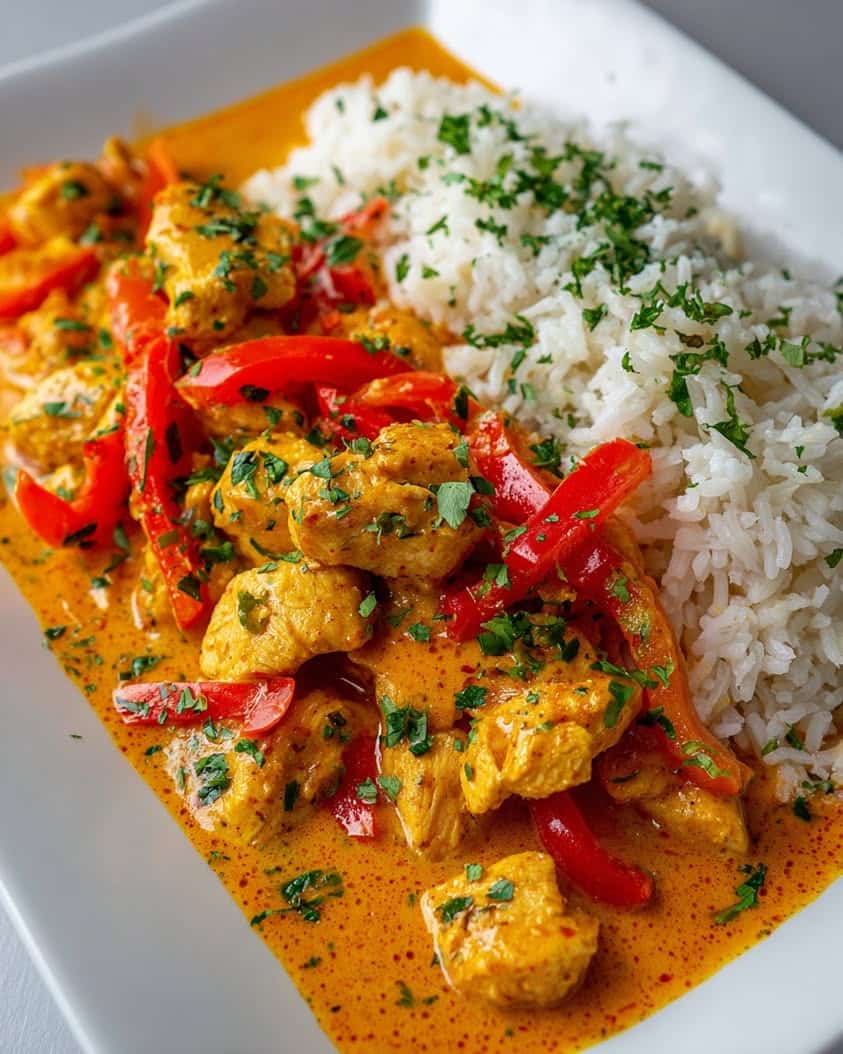
- Visual Appeal: The final dish is a feast for the eyes. The vibrant yellow-gold sauce, flecked with green herbs, cradles the golden-brown chicken. It is beautifully presented over white rice, creating a colorful and appetizing plate.
- Skill Level Needed: This is a fantastic recipe for beginners and busy cooks alike. It requires only basic knife skills for chopping and simple stovetop techniques like sautéing and simmering. No special expertise is needed for success.
- Special Equipment: You only need a large skillet or Dutch oven with a lid and a standard pot for cooking rice. A good sharp knife and a wooden spoon are the only other essential tools for this easy dinner.
Recipe Overview
- Difficulty Level: We classify this as an easy recipe because it uses straightforward techniques accessible to any home cook. The steps are sequential and simple, involving basic chopping, sautéing, and simmering. There is no complicated layering or advanced skills required, making it a very approachable dish.
- Category: This dish squarely fits into the main course category for lunch or dinner. It is a complete, protein-rich meal that is hearty and satisfying. Additionally, it can be considered a prime example of easy comfort food that brings everyone to the table.
- Cuisine: While inspired by the broad traditions of South Asian curry, this recipe is a simplified, week-friendly adaptation. It draws on the core principles of building flavor with aromatics and spices, then finishing with creaminess. Consequently, it offers a taste of global cuisine without the need for hard-to-find ingredients.
- Cost: This is an incredibly cost-effective meal. Chicken thighs or breasts, rice, coconut milk, and common spices form the base. These ingredients are typically affordable and offer multiple servings, making this creamy curry a budget-friendly choice for family meals.
- Season: This rich creamy chicken curry is truly a year-round dish. It provides warmth and comfort during chilly fall and winter evenings. Conversely, its bright, spiced flavors are also delightful in the spring and summer, especially when paired with a crisp side salad.
- Occasion: It is the ultimate weeknight dinner savior when you need something fast and fabulous. Moreover, it is impressive enough for casual weekend gatherings or a cozy date night at home. It is a versatile recipe that suits many occasions.
Why You’ll Love This Recipe
First and foremost, the taste and texture are utterly irresistible. The chicken becomes incredibly tender after simmering in the spiced coconut sauce, which itself is rich, creamy, and packed with layered flavors. Each spoonful over fluffy rice delivers the ultimate comfort food experience. The warmth from the ginger and the earthiness from the cumin and turmeric create a symphony in your mouth that is both familiar and exciting.
Secondly, the convenience factor cannot be overstated. This rich creamy chicken curry comes together in one pan in about thirty minutes. The prep is minimal, and the cooking process is largely hands-off once the simmering begins. This allows you to focus on cooking the rice or preparing a simple side salad. Therefore, it is the perfect solution for hectic evenings when takeout is tempting, but a homemade meal is desired.
From a nutritional standpoint, this dish offers a well-balanced plate. Chicken provides high-quality protein, while the spices, particularly turmeric and ginger, are celebrated for their anti-inflammatory properties. Coconut milk adds healthy fats that help you feel satisfied. When served with a reasonable portion of rice and perhaps some steamed vegetables, it becomes a wholesome meal that fuels your body.
Socially, this curry is a crowd-pleaser. It is easy to double for a larger group and is generally loved by both adults and children, especially if you adjust the spice level. Serving a beautiful, aromatic dish like this creates a sense of occasion, turning an ordinary Tuesday dinner into a special shared experience. It is fantastic for casual entertaining because most of the work is done before your guests arrive.
Finally, it is remarkably cost-effective and accessible. The ingredients are pantry staples or easy to find at any grocery store. You can make a restaurant-quality meal for a fraction of the price of dining out or ordering delivery. This accessibility ensures that you can enjoy this creamy, comforting chicken curry whenever the craving strikes, making it a reliable staple in your recipe rotation.
Historical Background and Cultural Significance
The concept of curry is vast and deeply rooted in the culinary histories of South Asia, Southeast Asia, and beyond. The word “curry” itself is believed to be an anglicization of the Tamil word “kari,” meaning sauce or relish. Originally, these dishes were complex compositions of spices, herbs, and meats or vegetables, slow-cooked to develop profound depth. Our rich creamy chicken curry is a modern, streamlined descendant of these ancient traditions, focusing on the core technique of building a flavorful base.
Culturally, curry dishes hold immense significance as communal meals. They are often central to family gatherings, festivals, and daily nourishment. The act of sharing a pot of curry signifies hospitality and togetherness. Our version, designed as a perfect weeknight dinner, carries this spirit into the modern home kitchen. It encourages families to sit down together and share a hearty, flavorful meal despite busy schedules.
The evolution of this particular recipe reflects global adaptation. The use of coconut milk for creaminess is a hallmark of many Southeast Asian and South Indian curries. Meanwhile, the spice blend of cumin, coriander, and turmeric is common across many regions. This fusion creates a universally appealing dish. Over time, such recipes have been adapted worldwide to use readily available ingredients, making the glorious taste of a creamy curry accessible to everyone.
Regional variations of chicken curry are endless. In Northern India, a curry might use a yogurt or cream base and be richer with nuts. Thai curries often feature curry paste, lemongrass, and fish sauce. Our recipe sits comfortably in the middle, offering approachable flavors. It is a celebration of the global love for spiced, saucy chicken dishes. Ultimately, it honors the tradition while fitting seamlessly into contemporary life as an easy dinner solution.
Ingredient Deep Dive
Chicken thighs are the preferred choice for this rich creamy chicken curry. Thighs remain juicy and tender through the simmering process, unlike breasts which can dry out. Culturally, dark meat is prized in many cuisines for its flavor and affordability. Nutritionally, they provide protein, iron, and zinc. For the best results, choose boneless, skinless thighs and trim excess fat. You can substitute chicken breasts if preferred, but reduce the simmering time slightly to prevent toughness.
Coconut milk is the star that creates the luxurious sauce. This ingredient has been used for centuries in tropical regions around the world. It adds a distinct, slightly sweet flavor and a wonderfully creamy texture without any dairy. It is a good source of medium-chain triglycerides (MCTs). Always shake the can well before opening. For a richer sauce, use full-fat coconut milk. Light coconut milk can be used for a less creamy result, but the sauce will be thinner.
The aromatic base of onion, garlic, and ginger is non-negotiable. This trio, often called the “holy trinity” in many Asian cuisines, forms the foundational flavor layer. Ginger and garlic have long histories in both culinary and medicinal traditions. They add a pungent, warm depth that cuts through the richness of the coconut milk. Finely mince or grate them for the best distribution of flavor. Fresh ingredients here are vastly superior to dried powders for this creamy curry.
Ground spices like cumin, coriander, and turmeric are essential for the dish’s warm, golden character. Turmeric, in particular, has a celebrated history and gives the curry its vibrant color. Toasting these spices briefly in the oil after sautéing the aromatics is a critical step. This process, called “blooming,” wakes up their essential oils and intensifies their flavor dramatically. It transforms them from dusty powders into deeply fragrant components of your perfect weeknight dinner.
Common Mistakes to Avoid
- Not Blooming the Spices: Adding ground spices directly to the liquid sauce is a common error. Instead, you must sauté them in the oil for 30-60 seconds after cooking the aromatics. This step unlocks their full aromatic potential and prevents a raw, dusty flavor in your creamy chicken curry.
- Overcooking the Chicken: Especially if using breast meat, simmering for too long will result in tough, dry chicken. Thighs are more forgiving, but all chicken should just be cooked through. The residual heat will continue to cook it slightly even after you turn off the stove.
- Using Low-Fat Coconut Milk Unawarely: Light coconut milk will make a much thinner, less luxurious sauce. For a truly rich and creamy curry, full-fat coconut milk is essential. The fat carries flavor and creates the velvety texture that defines this dish.
- Not Seasoning in Layers: Do not wait until the end to add all your salt. Season the chicken lightly before browning, and then taste and adjust the seasoning again after the sauce has simmered. Building flavor in stages ensures a perfectly seasoned easy dinner.
- Crowding the Pan When Browning Chicken: If you add all the chicken pieces at once, they will steam instead of brown. Cook in batches if necessary to get a nice sear. This caramelization adds immense flavor to the overall curry.
- Using Pre-Minced Garlic in a Jar: The flavor of fresh garlic is far superior and more authentic. Pre-minced garlic often contains preservatives and has a muted, sometimes bitter taste. Taking the minute to mince fresh garlic makes a noticeable difference.
- Rushing the Onion Cooking Stage: Allow the onions to become truly soft and translucent before adding the garlic and ginger. If they are still crunchy, they will not melt into the sauce properly, leaving unwanted texture and raw onion flavor.
- Boiling the Sauce Vigorously After Adding Coconut Milk: A gentle simmer is key. A rolling boil can cause the coconut milk to separate or become grainy. Keep the heat medium-low once the coconut milk is added to maintain a smooth, creamy consistency.
Essential Techniques
Browning the chicken is your first crucial technique. Pat the chicken pieces completely dry with paper towels before adding them to the hot oil. Moisture is the enemy of browning. Do not move the chicken for a few minutes, allowing a golden crust to form. This Maillard reaction creates complex, savory flavors that will enrich the entire sauce. If the chicken sticks, it is not ready to flip; it will release naturally when seared properly.
Blooming the spices is the secret to a deeply flavored curry. After cooking your aromatics, add the ground spices like cumin, coriander, and turmeric directly to the oily pan. Stir constantly for about 30 seconds until they become incredibly fragrant. You might see the oil slightly change color. This process toasts the spices, releasing their essential oils and transforming their flavor from flat to vibrant. It is a simple step with a monumental impact on your final dish.
Simmering gently is vital for the perfect sauce texture. Once you add the coconut milk and return the chicken to the pan, bring the mixture just to a bubble. Then immediately reduce the heat to low. The sauce should shimmer with small bubbles around the edges. A vigorous boil will cause the coconut milk to break, making the sauce oily or curdled. A gentle simmer allows the flavors to meld and the chicken to cook through tenderly without compromising the creamy consistency.
Pro Tips for Perfect Rich Creamy Chicken Curry
- For an extra layer of flavor, marinate the chicken pieces in a tablespoon of yogurt mixed with half the spice blend for 15-30 minutes before cooking. This tenderizes the meat and helps the spices adhere.
- If your sauce seems too thin after simmering, create a quick slurry by mixing one teaspoon of cornstarch with one tablespoon of cold water. Stir this into the simmering sauce and cook for one minute to thicken.
- Garnish generously just before serving. Fresh cilantro adds a bright, herbal note. A squeeze of fresh lime juice just before eating can elevate the entire dish by adding a touch of necessary acidity.
- Toast whole spices like cumin seeds or mustard seeds in the oil before adding the onion for an authentic, nuanced flavor base. Simply remove them before adding the chicken if you prefer not to bite into them.
- Use homemade chicken broth if you have it. The depth of flavor from a good-quality broth, even just one cup, makes the sauce taste like it simmered for hours.
- Let the finished curry rest off the heat for 5-10 minutes before serving. This allows the chicken to reabsorb some juices and the flavors to settle and marry more completely.
- For a smoother sauce, you can use an immersion blender to briefly puree the onion, garlic, and ginger mixture after sautéing, before adding the spices. This creates a silky, invisible base.
Variations and Adaptations
For regional variations, consider adding a tablespoon of Thai red or green curry paste when sautéing the aromatics for a Southeast Asian twist. Alternatively, stir in a couple tablespoons of tomato paste after the onions for a richer, slightly tangy North Indian-style curry. A splash of fish sauce at the end can add a savory umami depth common in many Asian cuisines.
Seasonal adaptations are easy. In summer, add fresh peas or diced zucchini in the last few minutes of cooking. During fall, incorporate diced sweet potatoes or pumpkin, allowing them to simmer until tender. These additions make the dish heartier and celebrate seasonal produce while maintaining the core creamy curry profile.
Dietary modifications are straightforward. For a gluten-free meal, ensure your broth and spices are certified gluten-free. To make it dairy-free, it already is, as coconut milk is used. For a vegan adaptation, replace the chicken with chickpeas, lentils, or firm tofu, and use vegetable broth. Adjust cooking times accordingly for your protein choice.
Flavor variations can personalize the dish. Add a cinnamon stick while simmering for warmth. Stir in a handful of spinach or kale at the end for color and nutrients. For more heat, include a diced fresh chili pepper with the aromatics or a pinch of cayenne pepper with the dried spices. A tablespoon of unsweetened creamy peanut butter can add a rich, nutty dimension.
Serving and Presentation Guide
Plating is key for visual appeal. Spoon a generous mound of fluffy white or basmati rice in the center of a shallow bowl. Ladle the rich creamy chicken curry around the rice, allowing some to cascade over the top. This method showcases both elements beautifully and makes for easy eating. Alternatively, for a family-style presentation, serve the curry in a warmed, elegant bowl alongside a separate platter of rice.
Garnishing adds the final touch of freshness and color. A vibrant sprinkle of chopped fresh cilantro or parsley is classic. Thinly sliced red chili or a twist of lime wedge on the side adds color and allows guests to customize their heat and acidity. A drizzle of plain yogurt or a sprinkle of toasted coconut flakes can also provide texture and visual contrast.
Traditional accompaniments include plain rice, naan bread, or roti for scooping up the delicious sauce. For a modern twist, serve with quinoa or cauliflower rice for a lower-carb option. A simple side salad with a lemon vinaigrette helps cut through the richness of the curry. Pickled onions or a tangy mango chutney also make excellent condiments to serve on the side.
Wine and Beverage Pairing
For wine pairings, opt for bottles that can handle the spice and richness. An off-dry Riesling or Gewürztraminer is excellent, as their slight sweetness cools the heat and complements the coconut. A fruity, low-tannin red like a Beaujolais or Pinot Noir also works well. For white lovers, a full-bodied Chardonnay with a touch of oak can stand up to the creamy sauce. Serve whites chilled and reds slightly below room temperature.
Non-alcoholic alternatives are just as important. A sweet and tangy mango lassi (a yogurt-based drink) is a classic and perfect pairing. Sparkling water with a squeeze of lime cleanses the palate. Iced herbal teas, like mint or lemongrass, are refreshing. Even a simple glass of cold milk can help soothe the palate if the curry is on the spicier side.
Storage and Shelf Life
Store leftovers in an airtight container in the refrigerator for up to 3-4 days. The flavors often improve the next day as they continue to meld. Ensure the curry cools to room temperature before covering and refrigerating to prevent condensation, which can make the sauce watery. Keep the rice stored separately for best texture, reheating it with a splash of water to refresh it.
For freezing, this creamy curry freezes quite well for up to 2-3 months. Freeze in portion-sized containers for easy thawing. Note that the texture of the coconut milk sauce may change slightly upon thawing, potentially becoming a bit grainy. Reheat it gently on the stove, stirring frequently, and it will smooth out again. Do not refreeze once thawed.
Make Ahead Strategies
You can prep components ahead to make this an even faster weeknight dinner. Chop the onion, garlic, and ginger, and store them together in a container in the fridge for up to 2 days. Cut the chicken and store it separately. Measure out your dry spices into a small bowl. When ready to cook, everything is at your fingertips, cutting the active prep time to almost nothing.
For full make-ahead, cook the entire curry a day in advance. The flavors will deepen wonderfully overnight. Cool it completely and refrigerate. When ready to serve, reheat it gently on the stove over low heat, adding a small splash of water or broth if the sauce has thickened too much. Cook fresh rice just before serving for the best texture.
Scaling Instructions
To halve the recipe, simply divide all ingredient quantities by two. Use a smaller skillet to ensure proper browning of the chicken and reduction of the sauce. Cooking times will remain roughly the same, though you may need to reduce the simmering time by a few minutes since there is less volume to heat through.
To double or triple the recipe for a crowd, multiply all ingredients accordingly. Use a large Dutch oven or stockpot. You may need to brown the chicken in more batches to avoid steaming. The simmering time might increase slightly to ensure the chicken is fully cooked and the sauce has reduced to the desired creamy consistency. Taste and adjust seasoning carefully, as scaling spices can be tricky.
Nutritional Deep Dive
This rich creamy chicken curry provides a balanced macronutrient profile. The chicken is an excellent source of lean protein, essential for muscle repair and satiety. Coconut milk contributes healthy fats, particularly medium-chain triglycerides, which are a readily available energy source. The rice offers complex carbohydrates for sustained energy. Together, they create a meal that is satisfying and energizing.
Micronutrient-wise, this dish is a powerhouse. Turmeric provides curcumin, a compound with noted anti-inflammatory properties. Ginger aids digestion and has antioxidant effects. Garlic contains allicin, which supports immune health. Chicken offers B vitamins, selenium, and phosphorus. Using bone-in chicken thighs can also add minerals like calcium and magnesium to the sauce if you simmer them long enough.
Dietary Adaptations
For a gluten-free version, this recipe is naturally compliant if you use a certified gluten-free broth. Always check the labels on your spice blends, as some may contain anti-caking agents with gluten. Serve with rice or gluten-free grains for a complete meal.
For a keto or low-carb adaptation, replace the rice with cauliflower rice. Use full-fat coconut milk and ensure there are no added sugars in your broth or tomato paste if using. You can increase the amount of chicken and add low-carb vegetables like bell peppers and spinach to bulk up the dish without the carbs.
For a vegan creamy curry, substitute the chicken with one and a half cups of cooked chickpeas or lentils, or with cubed firm tofu. Use vegetable broth instead of chicken broth. Sauté the tofu until golden before adding it back to the sauce to mimic the texture of browned chicken. The cooking method remains largely the same.
Troubleshooting Guide
If your sauce is too thin, let it simmer uncovered for a few extra minutes to reduce and thicken. Alternatively, make a cornstarch slurry (1 tsp cornstarch + 1 tbsp cold water) and stir it into the simmering sauce for one minute. If it is too thick, simply stir in a little extra broth, water, or even coconut milk until it reaches your desired consistency.
If the curry tastes bland, you likely under-seasoned. Add salt in small increments, tasting as you go. A squeeze of fresh lime juice can brighten all the flavors. A pinch of sugar can help balance acidity if you added tomatoes. Finally, ensure you properly bloomed your spices; if not, you can stir in a small amount of toasted ground spices mixed with a little oil at the end.
If the coconut sauce appears separated or oily, it may have been boiled too vigorously. Remove it from the heat and whisk vigorously to re-emulsify. Adding a tablespoon of cold coconut milk or broth and whisking can also help bring it back together. Next time, maintain a gentle simmer after adding the coconut milk.
Recipe Success Stories
Many home cooks have shared how this recipe has become a weekly staple. One reader reported that her picky children now request “the yellow chicken” every Friday. Another found that doubling the sauce and adding extra vegetables like potatoes and carrots turned it into a hearty, one-pot meal that fed her family for two nights. The simplicity and reliability of this creamy curry make it a frequent success.
Adaptation stories are inspiring. A vegan reader successfully used chickpeas and added a spoonful of peanut butter for richness, creating a delicious peanut curry variation. Others have used the same spice base with shrimp or fish for a quick seafood curry. These successes show the recipe’s fantastic versatility as a foundational template for easy, flavorful cooking.
Frequently Asked Questions
Can I use chicken breasts instead of thighs? Yes, you can. However, chicken breasts cook faster and can dry out more easily. Reduce the simmering time to about 10-12 minutes, or until just cooked through. Cut them into uniform pieces to ensure even cooking.
What can I use if I don’t have coconut milk? For a different creaminess, you can use heavy cream or half-and-half, though the flavor will change. For a dairy-free alternative, cashew cream (blended soaked cashews with water) works well. The sauce will be less sweet and more nutty.
How can I make this curry spicier? Add a diced fresh chili pepper (like serrano or jalapeño) with the onions. You can also include a pinch of cayenne pepper or red pepper flakes with the other ground spices. Serve with sliced chilies on the side for individual heat adjustment.
Is this curry freezer-friendly? Yes, it freezes well for up to 2-3 months. Cool completely, store in airtight containers, and thaw overnight in the refrigerator before reheating gently on the stove. The texture of the coconut milk may change slightly but will smooth out when stirred while reheating.
My sauce is too thin. How do I thicken it? Simmer the curry uncovered for an additional 5-10 minutes to reduce. If needed, make a slurry with 1 teaspoon of cornstarch and 1 tablespoon of cold water. Stir it into the simmering sauce and cook for 1 minute until thickened.
Can I make this in a slow cooker? Yes. Brown the chicken and sauté the aromatics and spices in a skillet first for best flavor. Then transfer everything to the slow cooker, add coconut milk and broth, and cook on low for 4-6 hours or high for 2-3 hours.
What’s the best rice to serve with this? Basmati rice or jasmine rice are classic pairings due to their fragrant, fluffy texture. Long-grain white rice or brown rice also work perfectly. The key is to cook it so the grains are separate and not mushy.
How do I know when the chicken is fully cooked? The chicken should be opaque all the way through and register an internal temperature of 165°F (74°C) on an instant-read thermometer. The juices should run clear when pierced with a fork.
Additional Resources
If you loved this rich creamy chicken curry, explore other one-pot wonders like a hearty lentil dal or a quick shrimp scampi. Understanding how to build flavor with aromatics and spices will elevate all your cooking. Consider investing in a good-quality, heavy-bottomed Dutch oven, which distributes heat evenly and is perfect for dishes like this. For more weeknight inspiration, browse our collection of 30-minute meals that don’t sacrifice flavor for speed.
PrintRich Creamy Chicken Curry with Rice
Description
A comforting and flavorful chicken curry simmered in a creamy coconut sauce with aromatic spices, served over fluffy basmati rice.
Ingredients
For the Crust:
- 1 lb boneless, skinless chicken thighs, cut into bite-sized pieces
- 1 cup basmati rice, rinsed
- 1 can (13.5 oz) coconut milk
- 1 onion, finely chopped
- 3 cloves garlic, minced
- 1 tbsp fresh ginger, grated
- 2 tbsp curry powder
- 1 tsp turmeric
- 1 tsp cumin
- 1 tbsp vegetable oil
- Salt and pepper to taste
- Fresh cilantro for garnish
Instructions
1. Prepare the Crust:
- Heat oil in a large pot over medium heat. Add onion and sauté until soft, about 5 minutes.
- Add garlic, ginger, curry powder, turmeric, and cumin. Cook for 1 minute until fragrant.
- Add chicken pieces and cook until lightly browned, about 5-7 minutes.
- Pour in coconut milk, bring to a simmer, then reduce heat and cook for 20 minutes until chicken is tender and sauce thickens.
- Meanwhile, cook basmati rice according to package instructions until fluffy.
- Season curry with salt and pepper, then serve over rice, garnished with fresh cilantro.
Notes
You can customize the seasonings to taste.

I’m Shaykee—born in Morocco, seasoned across continents. From airplane galleys to home kitchens, I share the flavors and stories that shaped my journey.