
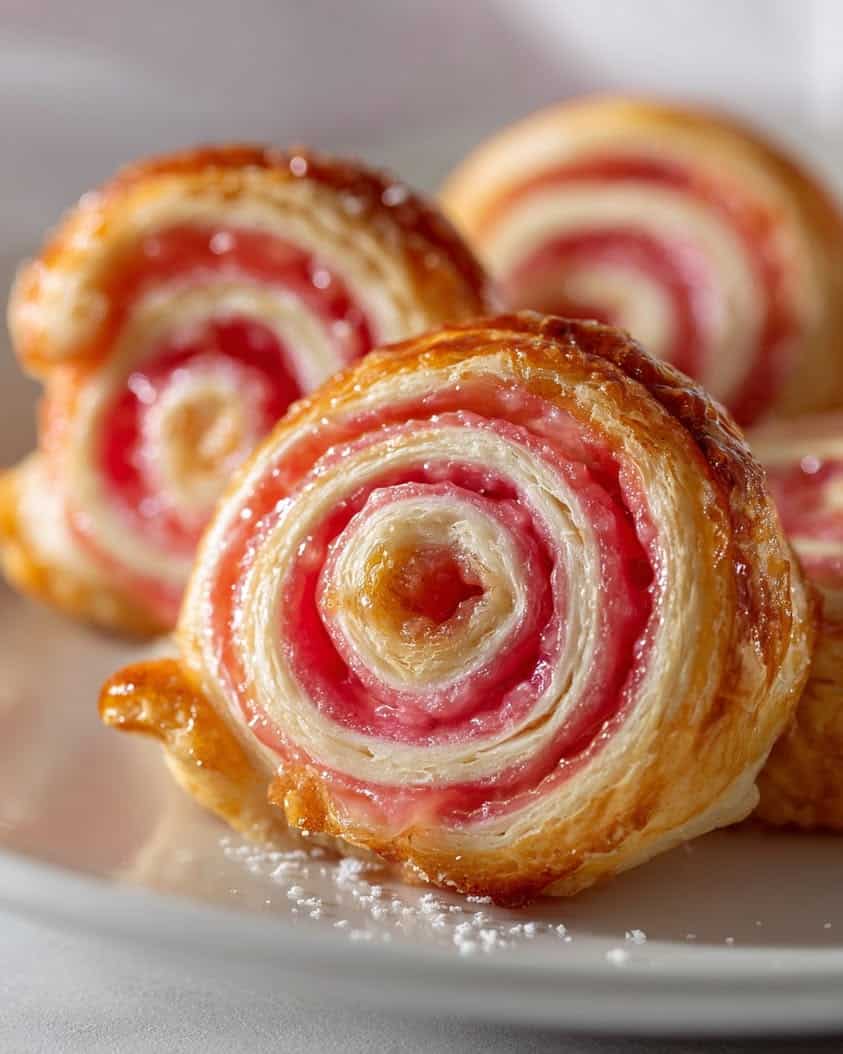
Guava Cream Cheese Puff Pastry Swirls: An Easy, Impressive Tropical Dessert!
Imagine pulling a tray of golden, flaky puff pastry swirls from your oven, their sweet tropical aroma filling your kitchen. These Guava Cream Cheese Puff Pastry Swirls are that magical, effortless dessert. They combine the buttery, crisp layers of puff pastry with a luscious cream cheese filling and the unique, floral sweetness of guava paste. Ultimately, this recipe transforms simple, store-bought ingredients into a pastry that looks and tastes like it came from a professional bakery.
The beauty of these flaky puff pastry swirls lies in their stunning visual appeal and incredible flavor contrast. Each bite delivers a perfect harmony of textures and tastes. You get the shattering crispness of the baked pastry, the rich tang of the cream cheese, and the intense, jammy fruitiness of the guava. Consequently, they are a guaranteed crowd-pleaser, equally suited for a casual weekend brunch or an elegant dinner party dessert.
Moreover, this recipe is a fantastic introduction to working with puff pastry if you are a beginner. The process is straightforward, fun, and incredibly rewarding. You will create beautiful, spiraled pastries that are sure to impress your friends and family. In short, these Guava Cream Cheese Puff Pastry Swirls are the perfect easy, impressive tropical dessert you have been searching for.
Quick Recipe Highlights
- Flavor Profile: These swirls offer a sophisticated balance of sweet and tangy flavors. The guava paste provides a distinct tropical sweetness that is floral and rich, while the cream cheese adds a delightful creamy tang. A hint of vanilla and a sprinkle of sugar on top round out the flavor perfectly.
- Texture: The texture is a masterful contrast. You experience the incredible, shatteringly flaky layers of the puff pastry first. Then, you encounter the smooth, dense cream cheese layer, followed by the soft, slightly chewy ribbon of guava paste. This combination creates a truly memorable mouthfeel.
- Aroma: As they bake, the pastries release a warm, inviting aroma. The scent of butter toasting from the pastry mixes with the sweet, candy-like fragrance of the guava. Finally, a subtle note of vanilla completes the olfactory experience, making your kitchen smell incredible.
- Visual Appeal: The pastries are visually stunning with their elegant spiral shape and golden-brown, laminated layers. The guava paste bakes into a beautiful crimson ribbon visible between the pastry folds. A dusting of powdered sugar or a drizzle of glaze adds a final, professional touch.
- Skill Level Needed: This recipe is ideal for bakers of all levels, especially beginners. It uses pre-made puff pastry, eliminating the most difficult step. The assembly involves simple spreading, rolling, and slicing techniques that are easy to master on the first try.
- Special Equipment: You need only basic kitchen tools. A rolling pin helps flatten the pastry, a sharp knife or bench scraper is essential for clean slicing, and a baking sheet lined with parchment paper is a must for easy cleanup and preventing sticking.
Recipe Overview
- Difficulty Level: We classify this recipe as easy because it leverages the convenience of store-bought puff pastry. The most complex traditional pastry technique, creating hundreds of flaky layers, is already done for you. Your tasks are simple assembly and baking, which are nearly foolproof with the provided instructions.
- Category: These pastries beautifully straddle multiple categories. They are a perfect dessert, a show-stopping brunch item, or an elegant afternoon tea treat. Additionally, they can serve as a sweet appetizer or a handheld party snack for any gathering.
- Cuisine: This recipe draws inspiration from Latin American and Caribbean cuisines, where guava paste is a staple dessert ingredient. It combines that tradition with the French technique of puff pastry, resulting in a delicious fusion treat that feels both familiar and excitingly new.
- Cost: This is a very cost-effective dessert. A box of frozen puff pastry and a block of cream cheese are inexpensive staples. Guava paste can be found in the international aisle of most supermarkets or online for a reasonable price. One batch yields many impressive pastries for a fraction of the cost of a bakery.
- Season: While delicious year-round, these swirls feel particularly special in the spring and summer. Their bright, tropical flavor evokes sunshine and warm weather. They are also a wonderful holiday treat during Christmas, adding a vibrant, fruity option to a dessert table.
- Occasion: These pastries are incredibly versatile for any occasion. They are perfect for holiday mornings, baby or bridal showers, potlucks, or as a simple “just because” treat to brighten a weekday. Their elegant appearance makes them suitable for formal events, yet they are easy enough for a casual family breakfast.
Why You’ll Love This Recipe
First and foremost, you will adore the incredible taste and texture of these flaky puff pastry swirls. The combination is simply magical. Each bite delivers a symphony of sensations, starting with the audible crunch of the golden pastry. Then, your palate is treated to the cool, tangy cream cheese filling, which perfectly cuts through the intense sweetness of the guava. This balance prevents the dessert from being cloying, making it irresistible for a second or third piece. The guava paste itself offers a unique flavor profile that is both exotic and comforting, setting these pastries apart from ordinary fruit danishes.
Furthermore, the convenience factor of this recipe is a major win. You achieve a bakery-quality result with minimal effort and time. Using pre-made puff pastry is the ultimate kitchen shortcut that does not sacrifice quality. The assembly process is relaxing and almost artistic, as you roll and slice the log into beautiful spirals. From start to finish, you can have warm pastries on the table in well under an hour. This makes them a perfect last-minute dessert solution when guests surprise you or when you simply crave something special without a lengthy baking project.
From a nutritional perspective, while this is a dessert, you can appreciate the use of real, whole ingredients. Guava paste is made from real fruit, offering a more natural sweetness source compared to desserts relying solely on refined sugars. You control the amount of added sugar in the cream cheese filling. When enjoyed in moderation as part of a balanced diet, these pastries are a delightful and satisfying treat. They are far superior to heavily processed store-bought pastries filled with artificial flavors and preservatives.
Additionally, the social and entertaining value of these Guava Cream Cheese Puff Pastry Swirls is immense. They are a guaranteed conversation starter. People are always impressed by beautiful, homemade pastries, and the unique guava flavor will have everyone asking for the recipe. They are easy to serve, require no plates or forks if you are hosting a standing cocktail party, and they look abundant and generous on a platter. Baking for others is an act of love, and this recipe allows you to share something truly special with minimal stress.
Finally, the cost-effectiveness and accessibility of the ingredients make this a recipe you will return to again and again. You likely already have cream cheese, sugar, and vanilla in your fridge and pantry. Puff pastry is a freezer staple worth keeping on hand. Guava paste is the only potential specialty item, and it is increasingly easy to find. One package of guava paste will make multiple batches, making the cost per pastry incredibly low. Compared to buying similar pastries from a cafe or bakery, you save a significant amount of money while creating something even more delicious and fresh at home.
Historical Background and Cultural Significance
The story of these pastries is a tale of culinary fusion. Puff pastry, or “pâte feuilletée,” has its origins in France, with its meticulous layering technique perfected over centuries. Meanwhile, guava paste, known as “goiabada” in Portuguese or “bocadillo” in Spanish, is a cherished preserve from Latin America and the Caribbean. It was born from the need to preserve the abundant, perishable guava fruit. The technique of cooking down guava pulp with sugar into a firm, sliceable paste allowed the tropical flavor to be enjoyed year-round. Combining these two distinct traditions creates a modern pastry that honors both histories.
In many Latin American cultures, guava paste holds significant cultural importance. It is a classic dessert component, often paired with cheese in the beloved “postre de guayaba y queso.” This combination of sweet fruit and salty, tangy cheese is a cornerstone of the region’s dessert philosophy. The pairing highlights a beautiful contrast that is universally appealing. Using cream cheese in these flaky puff pastry swirls is a slight adaptation of this tradition, making the ingredients more accessible while preserving the essential sweet-and-tangy spirit of the original.
The evolution of this specific recipe is a testament to home baking innovation. As pre-made puff pastry became widely available in grocery freezers, creative home cooks began experimenting with fillings beyond the classic apple or cinnamon. The discovery of guava paste in international aisles opened up a world of possibility. Consequently, home bakers started marrying the convenient, flaky canvas of puff pastry with the vibrant, pre-cooked guava filling. This evolution demonstrates how global ingredients can come together in a home kitchen to create something new and exciting.
Regional variations of this concept abound, showcasing its adaptability. In Puerto Rico, you might find “pastelillos de guayaba” made with a simpler pastry dough. In Brazil, “rolinhos de goiabada” might use a different type of dough or cheese. Some versions add a sprinkle of cinnamon or a brush of egg wash for extra shine. Others incorporate a drizzle of lime glaze to accentuate the tropical notes. This recipe for Guava Cream Cheese Puff Pastry Swirls sits comfortably within this family of treats, offering a reliable and delicious version that anyone can master.
Ingredient Deep Dive
Let us start with puff pastry, the foundation of our flaky puff pastry swirls. This laminated dough is a marvel of culinary engineering, consisting of hundreds of alternating layers of dough and butter. When baked, the water in the butter turns to steam, pushing the layers apart and creating that iconic, airy crispness. For this recipe, using a high-quality, all-butter frozen puff pastry will yield the best flavor and texture. Thaw it slowly in the refrigerator overnight for the best results. If you are in a pinch, you can thaw it at room temperature for about 30-40 minutes, but watch it closely so it does not become too soft and sticky.
Next, we have guava paste, the star flavoring agent. Guava paste is made by slowly cooking pureed guava fruit with sugar until it reduces into a very thick, sliceable jelly. It is rich in vitamin C and dietary fiber from the fruit. When selecting guava paste, look for a deep pink or red color, which indicates a good quality product made with ripe guavas. It is often sold in rectangular blocks or small bars in the Latin foods section. Store it tightly wrapped at room temperature for months. For a substitution, thick mango puree cooked down with sugar or a very firm quince paste (membrillo) would be the closest alternatives.
The cream cheese filling provides the essential creamy, tangy balance. Full-fat cream cheese will give you the richest flavor and smoothest texture when blended. Ensure your cream cheese is fully softened to room temperature to avoid lumps in your filling. From a nutritional standpoint, cream cheese provides protein and calcium. For a lighter version, you can use Neufchâtel cheese, which has slightly less fat. The granulated sugar in the filling sweetens the cream cheese, and the vanilla extract adds a warm, aromatic depth that complements the guava beautifully. Always use pure vanilla extract for the best flavor.
Finally, the egg wash is a small but crucial component. Beating one egg with a tablespoon of water or milk creates a simple wash that gives the pastries their gorgeous, glossy golden-brown finish when baked. The proteins in the egg promote browning and help any coarse sugar adhere to the surface. The optional coarse sugar sprinkle adds a delightful crunch and extra sweetness. Turbinado or sanding sugar works perfectly here. If you do not have coarse sugar, a light sprinkle of regular granulated sugar will still add sweetness, though it will melt more into the surface rather than providing a crunchy texture.
Common Mistakes to Avoid
- Using puff pastry that is too warm or too cold. If the pastry is too warm, it will become sticky and difficult to work with, tearing easily. If it is too cold, it may crack when you try to roll it. The ideal texture is cool and pliable, like stiff clay.
- Spreading the fillings all the way to the edges. Leave a small border (about half an inch) around all sides. This clean border is essential for creating a good seal when you roll the pastry. If filling goes to the edge, it will ooze out during rolling and baking, making a mess and potentially causing the swirls to unravel.
- Rolling the log too tightly or too loosely. Roll firmly but gently to create a snug log without squeezing the filling out the ends. A too-tight roll can force filling out the sides, while a too-loose roll will result in gaps and poorly defined swirls in your final slices.
- Slicing with a dull knife. A dull knife will crush and drag the delicate pastry layers instead of cutting cleanly through them. This can ruin the beautiful spiral shape. Use a very sharp serrated knife or a bench scraper, and use a gentle sawing motion for the cleanest cuts.
- Placing slices too close together on the baking sheet. The puff pastry needs room for the steam to escape and for the layers to expand. If the swirls are too close, they will bake into each other and not achieve maximum flakiness. Give them at least two inches of space.
- Under-baking the pastries. Puff pastry must be baked until it is deeply golden brown all over. A pale pastry is a soggy pastry. The rich color indicates that the layers have fully separated and the moisture has cooked out, resulting in that desired crisp, flaky texture.
- Adding a glaze or powdered sugar while the pastries are hot. If you drizzle a glaze on a hot pastry, it will simply melt and soak in, making the pastry soggy. Similarly, powdered sugar will dissolve. Always let the pastries cool on a wire rack for at least 15-20 minutes before adding any final toppings.
- Storing leftovers in an airtight container while still warm. Trapped steam will turn your beautifully flaky pastries soft and chewy. Cool them completely on a rack before transferring to a container. For best texture, re-crisp them in a toaster oven or air fryer for a few minutes before serving again.
Essential Techniques
Mastering the roll is key to perfect swirls. After spreading your fillings evenly, start rolling from the long side nearest to you. Use your fingers to tuck and tighten the roll as you go, similar to rolling a sushi mat. Apply even, gentle pressure. The goal is a uniform cylinder. Once rolled, give the log a gentle final roll back and forth on the seam to seal it completely. This technique ensures the fillings stay enclosed and your spiral pattern will be tight and consistent in every slice.
Chilling the log before slicing is a non-negotiable step for clean cuts. Once rolled, wrap the log in plastic wrap and refrigerate it for at least 30 minutes. This firms up the butter in the pastry and the cream cheese filling. Consequently, when you slice, the log will hold its shape perfectly. You will get clean, defined spirals instead of a smeared, messy interior. Think of it as giving the ingredients a chance to set, much like chilling cookie dough.
Applying the egg wash correctly enhances appearance and texture. Beat the egg with a tablespoon of water until completely smooth. Using a pastry brush, apply a thin, even coat to the top and sides of each swirl. Avoid letting pools of egg wash collect in the crevices, as this can cause uneven browning. The egg wash acts like an edible glue, helping any sprinkled sugar adhere and creating a professional, glossy finish as it bakes.
Understanding your oven’s hot spots is crucial for even baking. Puff pastry is sensitive to uneven heat. Halfway through the baking time, rotate your baking sheet 180 degrees. This simple action ensures all your Guava Cream Cheese Puff Pastry Swirls bake evenly, preventing some from being too dark on one side. Also, bake in the center of the oven, not too close to the top or bottom heating elements, for the most consistent result.
Pro Tips for Perfect Guava Cream Cheese Puff Pastry Swirls
For the flakiest layers, handle the puff pastry as little as possible once thawed. Excessive handling warms the butter and can cause the layers to fuse together, reducing flakiness. Work quickly and confidently.
If your guava paste is too firm to spread, microwave it for just 5-10 seconds to slightly soften it. Alternatively, you can slice it very thinly and arrange the slices over the cream cheese layer before rolling.
Create a flavor boost by adding a pinch of citrus zest to the cream cheese filling. Lime or orange zest pairs wonderfully with the tropical guava and adds a bright, fresh note.
For a stunning presentation, bake the swirls on a parchment-lined baking sheet. The parchment prevents sticking and makes cleanup effortless, ensuring your beautiful pastries release perfectly.
Let the baked pastries cool on the baking sheet for just 5 minutes before transferring them to a wire rack. This initial rest lets them set, preventing breakage. The wire rack then allows air to circulate, keeping the bottoms crisp.
If you want to add a glaze, mix powdered sugar with a tiny bit of milk or lime juice until it reaches a drizzling consistency. Drizzle it over the cooled pastries in a zigzag pattern for a beautiful finish.
For a savory-sweet twist, add a very light sprinkle of flaky sea salt over the egg wash before baking. The salt will intensify all the other flavors in a delightful way.
Always preheat your oven fully. Puff pastry needs an initial blast of high heat to create the steam that lifts the layers. Putting it in a cooler oven will result in poor rise and greasy pastry.
Variations and Adaptations
You can explore numerous regional variations on this theme. For a Cuban-inspired version, use a mild white cheese like queso fresco in place of half the cream cheese. In the Philippines, a common pairing is guava paste with Edam cheese, which you could grate and sprinkle over the guava layer. For a more European twist, substitute the guava paste with a high-quality apricot or raspberry jam, and add a sprinkle of slivered almonds on top before baking.
Seasonal adaptations are simple and fun. In the fall, try using a spiced apple butter or pear butter instead of guava paste, and add a dash of cinnamon to the cream cheese. For a winter holiday version, use cranberry sauce or mincemeat, and fold chopped pecans into the cream cheese filling. In the summer, a layer of lemon curd under fresh blueberries before rolling creates a bright, berry-filled swirl.
For dietary modifications, several paths are available. To make gluten-free flaky puff pastry swirls, use a certified gluten-free puff pastry brand. For a dairy-free version, use a plant-based cream cheese alternative and a vegan puff pastry (check the label, as many are made with butter). To reduce sugar, you can slightly decrease the sugar in the cream cheese filling and look for a guava paste with no added sugar, though it will be less firm.
Flavor variations are limited only by your imagination. Add a tablespoon of rum or coconut rum to the cream cheese filling for a tropical cocktail vibe. Mix a tablespoon of cocoa powder into the cream cheese for a chocolate-guava combination. Swirl in a spoonful of dulce de leche with the guava paste for a caramel note. You could even create a savory-sweet version with a layer of crispy bacon crumbles over the guava.
Texture modifications can also be interesting. For extra crunch, sprinkle chopped pistachios or toasted coconut over the guava layer before rolling. For a softer, more danish-like texture, you can add a simple powdered sugar glaze after baking. If you prefer a tarter filling, mix a bit of plain Greek yogurt into the cream cheese to lighten it and add tang.
Presentation alternatives offer another creative outlet. Instead of slicing into swirls, you can cut the filled sheet into squares, fold them into triangles to make turnovers, or use a round cutter to make smaller, bite-sized pinwheels. You can also braid the pastry by cutting the filled sheet into strips and twisting them before baking for an entirely different, equally beautiful look.
Serving and Presentation Guide
Plating techniques can elevate these pastries from homemade to haute cuisine. Arrange them on a simple, elegant white platter or a rustic wooden board. Place them in a circular pattern with the spiral faces pointing outward. Alternatively, stack a few in the center of a plate and dust the plate with powdered sugar for a dramatic effect. The key is to let their beautiful, golden-brown swirls be the star of the show.
Garnishing ideas add the final professional touch. A light dusting of powdered sugar using a fine-mesh sieve is classic and beautiful. A drizzle of vanilla glaze or a simple guava glaze (made by thinning a bit of guava paste with hot water) adds shine and extra flavor. For a fresh element, serve each swirl with a small side of fresh tropical fruit salad featuring mango, pineapple, and kiwi. A single mint leaf placed beside each pastry adds a pop of color.
Traditional accompaniments might include a small dollop of whipped cream or a scoop of vanilla ice cream. In Latin American tradition, a slice of mild cheese served on the side is a perfect complement. For a brunch setting, these flaky puff pastry swirls pair wonderfully with a strong cup of café con leche, Cuban coffee, or a pot of black tea. They balance the richness of the pastries beautifully.
Modern serving suggestions might involve deconstructing the elements. Serve a warm swirl alongside a quenelle of mascarpone cheese and a smear of guava puree on the plate. For a party, consider making mini swirls and serving them as a passed dessert on a tray. You can also present them as part of a dessert charcuterie board, alongside other small sweets, nuts, and fresh fruit for a interactive grazing experience.
Temperature considerations are important for the best experience. These pastries are truly at their peak when served warm or at room temperature on the day they are baked. The puff pastry will be at its crispiest. If you must serve them later, a quick 5-minute warm-up in a 350°F oven or toaster oven will revive the flakiness. Never serve them cold from the refrigerator, as the pastry will be unpleasantly firm and the filling too solid.
Portion control is easy with this recipe, as each swirl is a naturally individual serving. One swirl per person is a perfect dessert portion. For a larger brunch spread where multiple items are offered, you can slice the log into more pieces to create smaller, two-bite pastries. This is an excellent strategy for baby showers or cocktail parties where guests will want to sample many different foods.
Wine and Beverage Pairing
Selecting wine pairings for these tropical pastries is a delightful exercise. The sweet, floral guava and rich cream cheese call for wines with good acidity to cut through the fat and sweetness. A late-harvest Riesling or a Moscato d’Asti are brilliant choices, as their sweetness matches the pastry while their bright acidity cleanses the palate. For a more sophisticated pairing, try a demi-sec Champagne or sparkling wine; the bubbles and acidity are incredibly refreshing against the creamy, flaky texture.
Non-alcoholic alternatives can be just as thoughtful. A sparkling water with a squeeze of lime or a splash of guava juice keeps things light and refreshing. Iced hibiscus tea (agua de jamaica) offers a beautiful tartness that contrasts the pastry’s sweetness. A creamy, frothy horchata provides a cool, cinnamon-spiced complement that is traditional and delicious. For a warm option, a cup of mint tea or a lightly sweetened chai latte works wonderfully.
Coffee and tea pairings are a natural fit, especially for a morning or afternoon serving. A medium-roast coffee with low acidity and notes of caramel or nut will not compete with the guava’s flavor. Cuban coffee, which is strong, sweet, and served as a small shot, is a classic and perfect companion. For tea, consider a black tea like Earl Grey, whose bergamot notes are lovely with the tropical fruit, or a floral jasmine green tea.
Temperature considerations for your beverages depend on the setting. For a warm-weather brunch, iced coffee, iced tea, or chilled sparkling wines are ideal. For a cozy holiday breakfast or a dessert course after dinner, hot coffee, tea, or even a warm, spiced cider would be more appropriate. Always aim to contrast the temperature of the pastry slightly; a warm pastry with a cool drink, or a room-temperature pastry with a hot beverage, creates a more dynamic tasting experience.
Serving suggestions for your beverage pairings are simple. Offer a choice between a sparkling and a still option. Present coffee in a carafe with cream and sugar on the side. If serving wine, a small pour (3-4 ounces) is plenty for a dessert pairing. The goal is to enhance the enjoyment of your Guava Cream Cheese Puff Pastry Swirls, not overwhelm them. A well-chosen drink will highlight the pastries’ complex flavors and make the entire experience feel more special and complete.
Storage and Shelf Life
Proper storage methods are essential to preserve the texture of your flaky puff pastry swirls. Once completely cooled to room temperature, transfer them to an airtight container. Do not stack them if possible, or place a sheet of parchment paper between layers to prevent sticking. Store the container at room temperature for up to 2 days. The pastry will gradually soften but will still be tasty. For longer storage, the refrigerator is an option, but note it will accelerate the softening of the pastry due to moisture.
Understanding temperature requirements helps maintain quality. Room temperature (around 70°F) is best for short-term storage of baked goods with dairy fillings, as refrigeration can cause condensation and sogginess. However, if your kitchen is very warm or humid, refrigeration for up to 5 days is safer to prevent the cream cheese from spoiling. Always bring refrigerated pastries to room temperature or reheat them before serving to improve texture and flavor.
Container recommendations include airtight plastic or glass containers, or a cake carrier with a lid. You can also store them in a cardboard bakery box if you line it with parchment paper. Avoid storing them in a plastic bag, as it traps too much moisture and steam, making the pastry unpleasantly chewy. The goal is to protect them from air, which can stale them, while also allowing any residual moisture to escape rather than be trapped against the pastry.
Recognizing signs of spoilage is important for food safety. Visually inspect the pastries for any unusual mold growth, which may appear as fuzzy spots in green, white, or blue. Smell them; dairy products will develop a sour, off odor when they spoil. If the pastry has been left at room temperature for more than two days, especially in a warm environment, it is safest to discard it. When in doubt, throw it out.
Reheating instructions can restore the pastry’s flakiness. The best method is a toaster oven or conventional oven preheated to 350°F. Place the pastries on a baking sheet and warm for 5-8 minutes, until heated through and crisp. Avoid the microwave, as it will steam the pastry and make it rubbery and soggy. Reheating will not make them as perfect as fresh-from-the-oven, but it will significantly improve the texture compared to eating them cold and soft.
Freezing guidelines allow you to enjoy these pastries much later. They freeze best before baking. After slicing the chilled log into swirls, place them on a parchment-lined baking sheet and freeze until solid (flash freeze). Then transfer the frozen unbaked swirls to a heavy-duty freezer bag or airtight container, separating layers with parchment. They can be stored for up to 3 months. Bake directly from frozen, adding a few extra minutes to the baking time. You can also freeze baked pastries, though the texture upon reheating will be slightly less perfect.
Make Ahead Strategies
Creating a prep timeline makes entertaining stress-free. You can prepare the entire recipe up to the slicing point one day ahead. Simply assemble the log, wrap it tightly in plastic wrap, and refrigerate overnight. The next day, slice it while cold, arrange on your baking sheet, brush with egg wash, and bake. Alternatively, you can slice and then arrange the unbaked swirls on a baking sheet, cover the whole sheet tightly with plastic wrap, and refrigerate for up to 12 hours before baking.
Storage between steps is straightforward. The key is to keep the dough cold. If you need to pause during assembly—for example, if the pastry becomes too soft—simply place the whole baking sheet in the refrigerator for 10-15 minutes to firm up the butter. This prevents the layers from melting together and ensures maximum flakiness. Never leave the assembled, unbaked pastries at room temperature for an extended period.
Assessing the quality impact of make-ahead steps is reassuring. Refrigerating the filled log actually benefits the recipe. It allows the flavors to meld slightly and ensures a clean slice. The baked result from a refrigerated log is identical to that of a freshly assembled one. The only minor difference might be a slightly less dramatic “oven spring” or rise if the log is very cold going into the oven, but the texture and flavor will be excellent.
Assembly tips for make-ahead success include using plastic wrap effectively. When wrapping the log, roll it tightly in the wrap, then twist the ends like a candy wrapper to create a snug seal. This prevents the pastry from absorbing any refrigerator odors and stops a skin from forming on the surface. Label the wrap with the date so you remember when you made it.
Reheating guidelines for make-ahead baked pastries are the same as for storage. However, if you baked them the day before, they will benefit greatly from a quick refresh in the oven. Place them on a baking sheet in a 350°F oven for 5-7 minutes to re-crisp the exterior. This brings back that fresh-baked quality and warmth, which is especially welcome if serving to guests.
Fresh element additions should always be done just before serving. If you plan to dust with powdered sugar, drizzle with glaze, or add a garnish of fresh fruit or mint, do this after the pastries have been reheated (if necessary) and have cooled slightly. This ensures the toppings look their best and do not melt or sink into the pastry, maintaining the intended texture and visual appeal of your final presentation.
Scaling Instructions
Halving the recipe is simple if you want a smaller batch. Use one sheet of puff pastry (most boxes contain two). Cut the block of cream cheese in half (4 ounces) and use half the amount of sugar and vanilla. You will only need half an egg for the egg wash—beat one whole egg, use half, and discard the rest or save it for another use. The guava paste can be tricky; aim to use about 4-5 ounces, spreading it a bit thinner. Baking time may be slightly reduced, so start checking at 15 minutes.
Doubling or tripling the recipe for a crowd is easy and efficient. Simply multiply all ingredients by your desired factor. The key is to work in batches. Thaw and work with one or two sheets of puff pastry at a time to prevent them from becoming too warm. You may need to use multiple baking sheets; bake them one sheet at a time in the center of the oven for even heat, or rotate sheets between racks halfway through if baking multiple at once. Total baking time may increase slightly due to a fuller oven.
Equipment adjustments are necessary when scaling. For a double batch, ensure you have at least two large baking sheets and enough parchment paper. A larger mixing bowl may be needed for the cream cheese filling if tripling. If you are making a very large quantity, consider using a stand mixer to blend the cream cheese filling to save your arm. Most importantly, ensure you have enough refrigerator space to chill multiple logs before slicing.
Timing modifications are minimal when scaling up. The prep time will increase linearly—doubling the ingredients means roughly double the assembly time. However, the bake time per tray remains the same. The main timing consideration is that if you only have one oven, you will need to bake in sequential batches. Plan for this extra time if serving for an event. You can hold baked pastries in a warm (200°F) oven for up to 30 minutes, though they are best fresh.
Storage considerations change with batch size. If making a large batch ahead of time, it is often better to freeze the unbaked swirls rather than refrigerate them for more than a day. This preserves the quality of the puff pastry. Clearly label freezer bags with the date and baking instructions. For baked pastries, a large batch will need a larger storage container or multiple containers. Avoid overcrowding them to prevent them from becoming misshapen or sticking together.
Nutritional Deep Dive
A macro breakdown for one swirl provides context. Each pastry contains a balance of carbohydrates from the pastry and guava, fats from the pastry butter and cream cheese, and a modest amount of protein from the cream cheese and egg. The guava paste contributes natural fruit sugars and a small amount of fiber. While this is a dessert meant for enjoyment, understanding its composition helps with mindful eating. You can balance it with lighter, protein-rich meals throughout the day.
The micronutrient analysis reveals some benefits. Guava paste retains some vitamin C and vitamin A from the original fruit, though the cooking process reduces these levels. Cream cheese provides calcium, which is important for bone health, and vitamin A. The egg wash contributes small amounts of vitamin D, B vitamins, and selenium. While not a health food, this treat does offer more nutritional value than a dessert made solely with refined
Print
Pan-Seared Chicken in Creamy Herb Sauce with Mash & Carrots
Description
Tender chicken breasts pan-seared to golden perfection, served with a rich creamy herb sauce, creamy mashed potatoes, and honey-glazed carrots for a comforting and elegant meal.
Ingredients
For the Crust:
- 4 boneless, skinless chicken breasts
- 1 tsp salt, divided
- 1/2 tsp black pepper, divided
- 2 tbsp olive oil
- 1 cup chicken broth
- 1 cup heavy cream
- 2 tbsp fresh parsley, chopped
- 1 tbsp fresh thyme leaves
- 4 large potatoes, peeled and cubed
- 1/2 cup milk
- 4 tbsp butter
- 4 medium carrots, sliced
- 2 tbsp honey
- 1 tbsp butter for carrots
Instructions
1. Prepare the Crust:
- Season chicken breasts with 1/2 tsp salt and 1/4 tsp pepper. Heat olive oil in a large skillet over medium-high heat and sear chicken for 5-7 minutes per side until golden and cooked through. Remove and set aside.
- In the same skillet, add chicken broth to deglaze, scraping up browned bits. Stir in heavy cream, parsley, thyme, remaining salt and pepper. Simmer for 5 minutes until slightly thickened.
- While sauce simmers, boil potatoes in salted water until tender, about 15 minutes. Drain, mash with milk and butter until smooth. Season with salt to taste.
- In a separate pan, sauté carrots in butter over medium heat for 10 minutes. Add honey and cook for another 5 minutes until glazed and tender.
- Return chicken to the skillet with the creamy herb sauce, heat through for 2 minutes. Serve chicken and sauce over mashed potatoes with honey-glazed carrots on the side.
Notes
You can customize the seasonings to taste.

I’m Shaykee—born in Morocco, seasoned across continents. From airplane galleys to home kitchens, I share the flavors and stories that shaped my journey.