
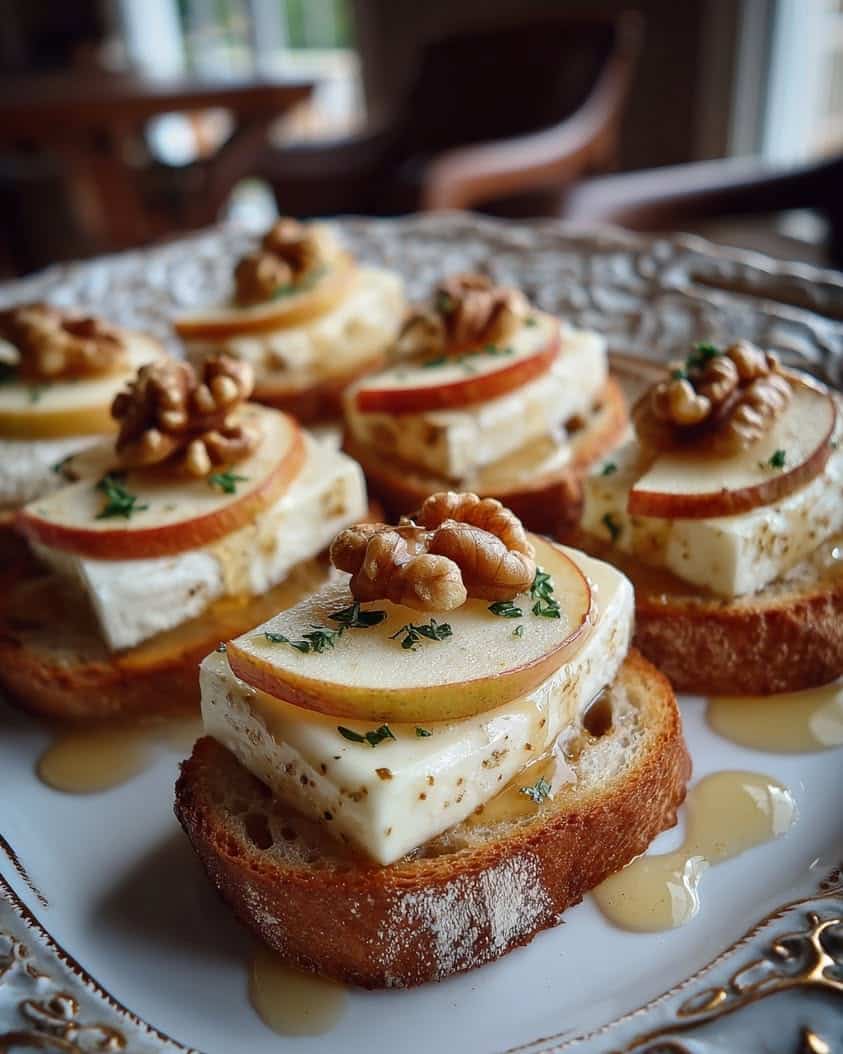
Apple, Brie & Walnut Crostini: The Ultimate Sweet and Savory Appetizer
Imagine the perfect bite: a crisp, golden slice of baguette topped with creamy, melted brie, a thin slice of sweet-tart apple, and the earthy crunch of toasted walnuts. Finally, a drizzle of warm, spiced maple cinnamon butter ties everything together. This Apple, Brie & Walnut Crostini recipe delivers an unforgettable flavor experience that will have your guests begging for the recipe. Moreover, it transforms simple, quality ingredients into an elegant appetizer that looks and tastes gourmet.
The magic of this crostini lies in its beautiful balance of textures and flavors. You get the satisfying crunch from the toasted bread and walnuts, contrasted with the luxurious melt-in-your-mouth quality of the brie. Simultaneously, the fresh apple provides a juicy, crisp counterpoint to the rich cheese. The maple cinnamon butter, however, is the true star, adding a warm, sweet, and subtly spicy note that elevates the entire dish from simple to spectacular. Consequently, this appetizer is a guaranteed crowd-pleaser for any gathering.
Furthermore, this recipe is incredibly versatile. You can serve it as a sophisticated starter for a dinner party, a standout item on a holiday charcuterie board, or even a quick and impressive snack. The combination of sweet and savory elements makes it a particularly wonderful fall recipe, but its appeal lasts all year round. Ultimately, this Apple, Brie & Walnut Crostini is more than just an appetizer; it’s a conversation starter that showcases your culinary flair with minimal effort.
Quick Recipe Highlights
- Flavor Profile: This crostini masterfully combines sweet, savory, and tangy notes. The rich, buttery brie pairs perfectly with the crisp, slightly tart apple, while the maple cinnamon butter adds a warm, autumnal sweetness. Additionally, the toasted walnuts contribute a deep, earthy flavor that grounds the entire composition.
- Texture: You will experience a delightful symphony of textures in every bite. The base offers a satisfying crunch from the toasted baguette, which contrasts beautifully with the soft, gooey brie. Meanwhile, the apple provides a fresh, juicy snap, and the walnuts add a final, essential layer of hearty crunch.
- Aroma: As these crostini bake, your kitchen will fill with an irresistible fragrance. The scent of toasting bread and walnuts blends with the melting, funky-sweet aroma of brie. Most importantly, the warm, comforting notes of cinnamon and maple from the butter create an inviting, cozy atmosphere that screams fall.
- Visual Appeal: These appetizers are a feast for the eyes with their beautiful color contrast. The golden-brown crostini base is topped with the pale, creamy brie, the vibrant red or green apple slice, and the rustic brown walnuts. Finally, the glossy drizzle of maple butter makes the entire platter look professionally crafted.
- Skill Level Needed: This is an absolutely beginner-friendly recipe that requires no advanced techniques. Essentially, if you can slice bread and use an oven, you can create this elegant appetizer. Therefore, it is perfect for novice cooks who want to impress without the stress.
- Special Equipment: You need only basic kitchen tools. A baking sheet, a small bowl for mixing the butter, and a sharp knife for slicing are sufficient. A pastry brush can be helpful for applying the maple cinnamon butter, but a spoon works perfectly fine as a substitute.
Recipe Overview
- Difficulty Level: We classify this Apple, Brie & Walnut Crostini as an easy appetizer for several compelling reasons. The steps are straightforward, involving simple slicing, toasting, and assembling. There is no complex cooking technique or precise timing required. Furthermore, the ingredient list is short and forgiving, allowing for easy substitutions if needed. Consequently, even a first-time entertainer can achieve fantastic results.
- Category: This dish falls squarely into the appetizer or starter category, ideal for kicking off a meal. It also fits beautifully within the realm of party snacks and canapés. Its elegant presentation makes it suitable for finger food at gatherings, from casual get-togethers to formal holiday parties. Moreover, it can be a star component on a larger grazing board or charcuterie platter.
- Cuisine: While crostini itself is Italian in origin, meaning “little toasts,” this particular recipe has a strong French and North American influence. The use of brie, a classic French cheese, is combined with maple syrup, a quintessential North American ingredient. This fusion creates a modern, transatlantic appetizer that feels both rustic and refined, blending culinary traditions seamlessly.
- Cost: This is a relatively affordable appetizer to prepare, especially considering its impressive presentation. A baguette, a single apple, a small wedge of brie, and a handful of walnuts are inexpensive. The maple cinnamon butter uses pantry staples like butter and cinnamon, with only maple syrup being a potential splurge. Overall, you can create a platter that serves 6-8 people for a fraction of the cost of store-bought hors d’oeuvres.
- Season: This recipe shines brightest in the autumn months when apples are at their peak and we crave warm, spiced flavors. It is the quintessential fall recipe for holiday parties like Thanksgiving or Halloween. However, its appeal is not limited to one season; it works wonderfully as a bright, fresh option in spring or a comforting bite in winter.
- Occasion: These crostini are incredibly versatile for entertaining. They are perfect for holiday cocktail parties, Friendsgiving dinners, wine tastings, and bridal or baby showers. Furthermore, they make an excellent pre-dinner bite for a formal dinner party or a simple, elegant snack for a cozy night in. Essentially, they elevate any occasion.
Why You’ll Love This Apple, Brie & Walnut Crostini
First and foremost, the taste and texture appeal is undeniable. Each component is carefully chosen to create a harmonious balance. You experience the initial crunch of the perfectly toasted baguette, followed by the rich, creamy melt of the brie. Then, the fresh, crisp apple cuts through the richness, and the toasted walnut provides a savory, earthy finish. The warm maple cinnamon butter drizzle adds a final layer of sweet and spicy complexity that makes every single bite exciting and satisfying. This combination of sweet, savory, creamy, and crunchy is what makes this crostini recipe truly addictive.
From a convenience standpoint, this appetizer is a dream come true for any host. The total active prep time is only about 15 minutes, and the cooking happens quickly in the oven. You can easily assemble the components ahead of time and simply pop the baking sheet in the oven 10 minutes before your guests arrive. This means you spend less time in the kitchen and more time socializing. Moreover, the recipe uses simple ingredients that are readily available at any standard grocery store, eliminating the need for a special shopping trip.
While this is an indulgent treat, it also offers some nutritional advantages compared to other fried or heavily processed appetizers. Apples are a great source of fiber and vitamin C, while walnuts provide healthy omega-3 fatty acids and protein. Using a whole-grain baguette can further boost the fiber content. Brie cheese offers a good source of calcium and protein. By using quality ingredients, you create a snack that feels luxurious but is made from real, whole foods, making it a smarter choice for your entertaining menu.
The social and entertaining value of this dish is incredibly high. A platter of these beautiful, golden-brown crostini immediately elevates the vibe of any party. They are easy to eat with one hand, making them perfect for cocktail-style events. The sophisticated flavor profile impresses guests and often becomes the talking point of the gathering. Serving a homemade, visually stunning appetizer like this shows thoughtfulness and care, making your guests feel truly welcomed and valued.
Finally, this recipe is remarkably cost-effective and accessible. You do not need expensive equipment or rare, exotic ingredients. A single baguette, one apple, a small wheel of brie, and a bag of walnuts can yield a generous platter that serves a crowd. Compared to ordering catering or buying pre-made frozen appetizers, making these crostini from scratch is significantly cheaper. This accessibility means that you can create a gourmet experience at home on a reasonable budget, proving that elegant eating does not have to be expensive.
Historical Background and Cultural Significance
The origin of crostini lies in the rustic kitchens of central Italy, particularly in the Tuscany region. Historically, crostini were born out of necessity as a way to use up stale, day-old bread. By toasting slices over a fire or in an oven and topping them with whatever was on hand—leftover meats, cheeses, or vegetables—Italian cooks created a simple, waste-free starter. This practice of “cucina povera,” or poor cooking, focused on maximizing resources and elevating humble ingredients. The concept of topping toasted bread eventually spread throughout Europe, evolving into various forms like French canapés and Spanish tapas.
Crostini hold significant cultural importance as a staple of Italian antipasti courses. They symbolize hospitality and the sharing of food at the start of a meal. The act of preparing small, flavorful bites to enjoy with wine before dinner is a deeply ingrained social ritual in Italian culture. This tradition of appetizers designed to stimulate the appetite and encourage conversation has been adopted and adapted worldwide. The versatility of the crostini format makes it a perfect vehicle for showcasing local and seasonal ingredients, which is a cornerstone of Italian culinary philosophy.
The evolution of this specific recipe, Apple, Brie & Walnut Crostini, is a modern story of fusion cuisine. While the base remains the classic Italian toast, the toppings reflect a blend of French and North American influences. Brie cheese, hailing from the Île-de-France region, became a globally popular “gourmet” cheese in the late 20th century. The combination of fruit and cheese on crackers or bread is a longstanding practice, but the specific pairing of apple and brie gained widespread popularity in the 1980s and 1990s, often appearing in gourmet magazines and cookbooks as a sophisticated, easy-to-love flavor pairing.
Regional variations of this concept are endless. In different parts of the world, similar appetizers use local cheeses and fruits. For instance, in the American South, you might find a crostini with pimento cheese and pear. In Spain, a version with Manchego cheese and quince paste is common. The addition of maple syrup is a distinctly North American twist, often associated with Canadian and New England cuisine. This global journey of the simple crostini demonstrates how a basic culinary concept can travel and adapt, absorbing local flavors to create new, beloved dishes like the one we are enjoying today.
Ingredient Deep Dive
Let us start with the star of the show: Brie Cheese. Brie is a soft, creamy, surface-ripened cheese that originated in the Île-de-France region near Paris. Often called the “Queen of Cheeses,” it has a history dating back to the 8th century and was famously favored by French royalty. Its bloomy, edible rind and rich, buttery interior make it incredibly versatile. From a nutritional standpoint, brie is a good source of protein, calcium, and vitamin B12. When selecting brie, look for a wheel that feels soft to the touch but is not bulging or leaking, which can indicate over-ripeness. Store it in the refrigerator’s cheese drawer and bring it to room temperature before serving for optimal flavor and texture. For substitutions, Camembert is the closest relative, but other soft, mild cheeses like triple-cream varieties or even a mild goat cheese can work in a pinch.
Next, the Apples. Apples have a profound cultural history, symbolizing everything from temptation in religious texts to health and knowledge in mythology. There are over 7,500 cultivars worldwide, each with unique properties. For this crostini, you want an apple that offers a balance of sweet and tart and can hold its shape without turning to mush when baked. Excellent choices include Honeycrisp for its juicy sweetness and firm texture, Granny Smith for a sharp tart contrast, or Pink Lady for a balanced, crisp bite. Nutritionally, apples are packed with fiber, particularly pectin, and are a good source of vitamin C and antioxidants. Store apples in the refrigerator to maintain crispness. If you need a substitute, a firm pear like Bosc would be a wonderful alternative, offering a similar texture and honeyed sweetness.
Now, for the Walnuts. Walnuts are one of the oldest tree foods, cultivated as far back as 7000 B.C. They have been revered in many cultures; for example, in ancient Rome, they were considered a food of the gods. Their brain-like appearance even led to the doctrine of signatures, suggesting they were good for mental health. Modern science confirms this, as walnuts are exceptionally high in Omega-3 fatty acids, which are crucial for brain function. They also provide protein, antioxidants, and magnesium. Toasting walnuts is non-negotiable for this recipe, as it deepens their flavor and adds a crucial crunch. Store walnuts in an airtight container in the freezer to prevent their oils from going rancid. For a substitution, pecans would be the best alternative, offering a similar buttery, rich crunch.
The Maple Cinnamon Butter deserves its own focus. Maple syrup is a uniquely North American ingredient, first harvested and used by Indigenous peoples long before European colonization. The process of tapping maple trees and boiling the sap is a cultural tradition in regions like Quebec and Vermont. Pure maple syrup is rich in antioxidants and minerals like manganese and zinc. When combined with butter and cinnamon, it creates a luxurious, aromatic sauce. Cinnamon, a spice made from the inner bark of trees, has been traded for thousands of years and was once so highly prized it was considered a gift fit for monarchs. It adds warmth and has anti-inflammatory properties. For a substitution, you can use honey, though the flavor profile will change. Always use pure maple syrup rather than pancake syrup for the best, most complex flavor.
Common Mistakes to Avoid
- Soggy Crostini Base: The most common error is not toasting the baguette slices sufficiently before adding toppings. If the bread is soft, the moisture from the cheese and apple will make it soggy. Always toast the bread until it is golden and crisp throughout. This creates a stable, waterproof foundation for your delicious toppings.
- Over-melting the Brie: While you want the brie to be soft and slightly melted, baking it for too long can cause it to completely liquefy and leak out all its fat. This results in a greasy crostini and a tough, rubbery piece of cheese. Watch carefully and remove the crostini from the oven as soon as the brie is warm and gooey but still holds its shape.
- Using the Wrong Apple Variety: Choosing a mealy or overly soft apple like a Red Delicious will lead to a mushy, unappealing texture after baking. You need a firm, crisp apple that can withstand the heat. Varieties like Honeycrisp, Granny Smith, or Fuji are excellent choices because they provide a pleasant crunch and hold their structure.
- Skipping the Walnut Toasting: Raw walnuts can have a slightly bitter, tannic flavor and a softer texture. Toasting them is a critical step that unlocks their deep, nutty, and sweet characteristics. It also makes them crunchier, which adds a vital textural element to the crostini. Simply toast them in a dry skillet for a few minutes until fragrant.
- Applying Toppings in the Wrong Order: The order of assembly matters greatly. Spreading the brie directly onto the warm crostini base allows it to act as a glue. Placing the apple slice on top of the brie helps anchor it. Finally, adding the walnuts and drizzling the butter ensures every component is secured and flavored. A haphazard assembly can lead to toppings sliding off.
- Neglecting to Bring Brie to Room Temperature: If you try to slice cold brie directly from the refrigerator, it is likely to tear, stick to the knife, and be difficult to work with. Allowing it to sit out for 20-30 minutes before slicing makes it much more pliable and easier to cut into even, attractive pieces.
- Making the Maple Butter Too Far in Advance: While you can mix the butter ingredients ahead of time, avoid melting it until you are ready to use it. If the melted butter sits for too long, the cinnamon can settle and the butter can separate or solidify. For the best consistency and flavor, prepare the maple cinnamon butter just before you are ready to drizzle it over the warm crostini.
- Overcrowding the Baking Sheet: Placing the crostini too close together on the pan prevents hot air from circulating evenly. This can lead to some pieces toasting more than others and the brie melting unevenly. For consistent results, arrange the baguette slices in a single layer with a small amount of space between each one.
Essential Techniques
Toasting the Baguette Slices is the foundational technique for perfect crostini. This step is crucial because it creates a sturdy, crisp base that can support the moist toppings without becoming soggy. To master it, brush both sides of the bread lightly with olive oil and bake in a preheated 375°F (190°C) oven for 5-7 minutes per side, until golden brown and crisp. A common pitfall is under-toasting, which leaves a soft, doughy center that will quickly absorb moisture and fail. The visual cue for success is a uniform golden color across the surface and edges of the bread. You should hear a distinct, hollow sound when you tap the crostini on the counter.
Mastering the Brie Slicing technique ensures beautiful, even pieces that melt consistently. The goal is to create slices that are thin enough to melt quickly but thick enough to provide a creamy, substantial layer. Use a sharp knife that has been lightly warmed under hot water and dried; this helps cut through the rind and soft interior cleanly. A common mistake is using a dull knife or pressing down too hard, which squishes the cheese. Instead, use a gentle sawing motion. The visual cue for a good slice is a clean edge without any tearing or smearing of the cheese. If the brie is too cold, it will be difficult to slice, so let it warm up slightly first.
The art of Toasting Walnuts is a simple but transformative step. Toasting deepens the nutty flavor, removes any raw bitterness, and creates a superior crunchy texture. To do it perfectly, spread the walnuts in a single layer on a dry baking sheet and toast in a 350°F (175°C) oven for 8-10 minutes, shaking the pan halfway through. You can also toast them in a dry skillet over medium heat for 5-7 minutes, stirring frequently. The most common pitfall is walking away and letting them burn, which happens quickly. The essential visual and aromatic cues for success are a slightly darkened color and a rich, fragrant, nutty smell. They will continue to crisp up as they cool.
Pro Tips for Perfect Apple, Brie & Walnut Crostini
First, use a serrated knife to slice your baguette. This type of knife saws through the crust without crushing the soft interior, resulting in neat, even slices that toast uniformly. Consequently, you avoid jagged edges and a crumbly base.
Second, consider brushing the baguette slices with a very light layer of olive oil or even the maple cinnamon butter before the initial toasting. This extra step adds another layer of flavor and ensures the crostini becomes exceptionally crisp and golden brown.
Third, for a more elegant presentation, slice your apple just before assembly. This prevents the slices from oxidizing and turning brown. If you must prep them ahead, toss the apple slices in a tiny bit of lemon juice to maintain their fresh, bright appearance.
Fourth, do not be afraid of the brie rind; it is entirely edible and delicious. The rind helps the cheese hold its shape as it warms and adds a subtle, mushroom-like flavor that complements the other ingredients beautifully. Therefore, always include it.
Fifth, if you are making a large batch, keep the finished crostini warm in a single layer on a baking sheet in a 200°F (95°C) oven for up to 15 minutes before serving. This ensures they are served warm and the cheese stays at its perfect, gooey consistency.
Sixth, garnish with a final flourish just before serving. A light sprinkle of flaky sea salt over the top can enhance all the flavors, or a few fresh thyme leaves can add a lovely color and an herby aroma that pairs wonderfully with the apples and brie.
Variations and Adaptations
For regional variations, you can take this crostini concept around the world. A Mediterranean version might feature fig jam, goat cheese, and toasted pistachios. A French-inspired twist could use pear instead of apple and a drizzle of honey. For a taste of the American South, try pimento cheese and a crispy fried green apple slice. The basic formula of crunchy base + soft cheese + fruit + crunch is endlessly adaptable to local flavors and ingredients.
Seasonal adaptations are easy and recommended. In the summer, use fresh peaches or nectarines with basil instead of cinnamon. During the winter holidays, a sprinkle of pomegranate arils adds a festive red pop and a juicy burst. For a spring gathering, try strawberries and a balsamic glaze reduction. Embracing seasonal produce ensures your crostini always taste fresh and vibrant.
For dietary modifications, this recipe is very forgiving. To make it gluten-free, simply use a certified gluten-free baguette. For a dairy-free version, a high-quality vegan brie-style cheese works surprisingly well. To add more protein for a heartier appetizer, include a thin slice of prosciutto or serrano ham underneath the brie. You can also make it nut-free by substituting toasted pumpkin seeds (pepitas) for the walnuts.
Flavor variations can completely change the profile of the dish. Add a thin layer of whole-grain mustard on the crostini before the brie for a sharp, tangy kick. Incorporate a slice of salty, cured meat like salami. For an herbal note, mix chopped fresh rosemary or thyme into the maple butter. A dash of cayenne pepper in the butter can also introduce a subtle, warm heat that contrasts beautifully with the sweet maple.
Serving and Presentation Guide
Plating techniques can transform your crostini from simple snacks to a stunning centerpiece. Arrange them in a circular pattern on a large, rustic wooden board or a sleek white platter for maximum visual impact. Overlap them slightly in a cascading pattern rather than lining them up in rigid rows; this creates a more organic and abundant look. Always drizzle the maple cinnamon butter over the crostini after they are arranged on the serving platter. This final touch adds a glossy, professional sheen and ensures the flavor is distributed evenly.
Garnishing is the final step to elevate your presentation. Beyond the walnuts, consider a light scattering of microgreens or a few fresh thyme sprigs for a touch of green. A light dusting of flaky sea salt, such as Maldon, just before serving not only enhances flavor but also adds a beautiful textural element. For a festive touch during the holidays, a few edible gold flakes or a sprinkle of pomegranate arils can make the platter truly spectacular.
Traditional accompaniments for a crostini platter include other complementary appetizers. Serve them alongside a simple green salad dressed with a light vinaigrette to cut through the richness. They also pair wonderfully with a bowl of marinated olives, a selection of cured meats, or other cheese-focused items. This allows guests to create their own tasting experience and makes the crostini part of a larger, more varied culinary offering.
Modern serving suggestions include presenting them as part of a “deconstructed” board. Instead of assembling all the crostini, serve the toasted baguette slices in a basket with a bowl of softened brie, a plate of sliced apples, a bowl of toasted walnuts, and a small pitcher of the warm maple cinnamon butter. This interactive approach lets guests build their own crostini to their exact preference and is a fantastic conversation starter at casual parties.
Wine and Beverage Pairing
Selecting the right wine can elevate your crostini experience significantly. The best wine pairings will complement the sweet, savory, and creamy elements. A classic Riesling, particularly an off-dry (slightly sweet) German Kabinett, is a magnificent choice. Its bright acidity cuts through the rich brie, while its subtle sweetness harmonizes with the apple and maple. Alternatively, a French Chardonnay, especially from Burgundy, with its notes of apple and butter, mirrors the flavors on the plate beautifully. For red wine lovers, a light-bodied Pinot Noir with its red fruit notes and low tannins will not overpower the delicate brie and apple.
For non-alcoholic alternatives, consider options with complexity to match the food. Sparkling apple cider is a natural and festive pairing that echoes the apple component. A ginger beer, with its spicy kick, can stand up to the cinnamon and richness of the cheese. Alternatively, a tart cranberry juice spritzer (mixed with club soda) provides a refreshing contrast. Iced chai tea is another excellent option, as the spices in the chai complement the cinnamon in the maple butter perfectly.
If you are serving these crostini for a brunch or afternoon event, coffee and tea pairings work wonderfully. A medium-roast coffee with nutty or caramel notes will complement the toasted walnuts and maple syrup. Avoid very dark, bitter roasts that could clash with the flavors. For tea, a classic Earl Grey is superb; the bergamot orange notes in the tea are a classic companion to both brie and apple. A spiced chai tea would also be a warm and cozy match.
Storage and Shelf Life
Understanding storage is key to maintaining quality. Fully assembled Apple, Brie & Walnut Crostini are best enjoyed immediately after preparation. The moisture from the toppings will eventually seep into the toasted bread, causing it to soften. However, if you have leftovers, you can store them in a single layer in an airtight container in the refrigerator for up to 24 hours. Be aware that the texture will not be the same upon reheating.
For reheating instructions, avoid the microwave, as it will make the bread soggy. Instead, place the leftover crostini on a baking sheet and warm them in a 350°F (175°C) oven for 5-7 minutes. This will help re-crisp the bread slightly and warm the cheese. They will not be as perfect as when first made, but this method is the best for reviving them.
Freezing is not recommended for the fully assembled crostini. The high water content in the apples and brie will create ice crystals, and upon thawing, the texture will become very mushy and unappealing. The components, however, can be prepared ahead and frozen separately. You can slice and toast the baguette, then freeze the toasted slices in a zip-top bag. The walnuts can also be toasted and frozen. Assemble with fresh cheese and apple when ready to serve.
Make Ahead Strategies
A smart prep timeline can make entertaining stress-free. You can prepare all the components 1-2 days in advance. Slice and toast the baguette, then store the cooled crostini bases in an airtight container at room temperature. Toast the walnuts and store them in a separate container. Mix the solid ingredients for the maple cinnamon butter (softened butter, maple syrup, cinnamon) and keep it covered in the refrigerator. Wash and dry the apple, but do not slice it until the day of assembly to prevent browning.
For storage between steps, organization is crucial. Keep each component separate until the final assembly. The toasted bread should be kept completely dry. The prepared butter can be softened at room temperature for an hour before you need to melt it. The brie should be sliced and brought to room temperature about 30 minutes before you plan to assemble and bake the crostini.
When you are ready to serve, the assembly is quick. Place the toasted crostini bases on a baking sheet. Top each with a slice of brie. Bake for 5-7 minutes at 375°F (190°C) until the brie is just beginning to melt. While they bake, slice your apple and gently warm the maple cinnamon butter mixture until it is liquid. Remove the crostini from the oven, top each with an apple slice and a sprinkle of walnuts, and finish with a drizzle of the warm butter. This last-minute assembly ensures every element is at its peak.
Scaling Instructions
Scaling this recipe up or down is straightforward because it is not a precise baking recipe. To halve the recipe, simply use half a baguette, half an apple, a 4-ounce wedge of brie, and a quarter-cup of walnuts. The maple butter can be halved by using 2 tablespoons of butter, 1 tablespoon of maple syrup, and a quarter teaspoon of cinnamon. The baking time will remain the same, as you are still baking individual crostini.
For doubling or tripling the recipe to feed a crowd, the main consideration is your oven space and baking sheets. You will likely need to bake the crostini in multiple batches to ensure they cook evenly. Do not overcrowd the baking sheets. Keep the first batch warm in a low oven while the second batch bakes. For a party of 20, plan on using two full baguettes and scaling the other ingredients accordingly.
When scaling up, timing modifications are minimal. The prep time will increase linearly with the quantity, but the cook time per batch remains constant at 5-7 minutes for the final bake. The initial toasting of the bread may take slightly longer if you are doing multiple trays, as you may need to rotate them in the oven for even browning. The key is organization: have all your toppings prepped and ready to go in separate bowls for efficient assembly line work.
Nutritional Deep Dive
Let us break down the macronutrients for a single crostini. Each piece provides a balance of carbohydrates from the bread and apple, healthy fats from the brie, walnuts, and butter, and a modest amount of protein from the cheese and nuts. The exact numbers will vary, but you can expect approximately 8-10 grams of carbohydrates, 5-7 grams of fat (a mix of saturated from the cheese and unsaturated from the walnuts), and 3-4 grams of protein per crostini. This makes it a substantial snack that provides both immediate and sustained energy.
The micronutrient analysis reveals some hidden benefits. The apple contributes vitamin C and dietary fiber, specifically pectin, which is beneficial for gut health. The walnuts are a powerhouse of manganese, copper, and magnesium, as well as those crucial omega-3 fatty acids. Brie cheese is a good source of Vitamin B12, which is essential for nerve function, and calcium for bone health. The maple syrup, while a sugar, contains antioxidants and minerals like zinc and manganese in trace amounts.
From a dietary considerations perspective, this appetizer is naturally nut-based, so it is not suitable for those with tree nut allergies. It contains dairy and gluten (from the baguette). For portion control, two to three crostini make for a satisfying appetizer portion. If you are mindful of calorie intake, you can make adjustments like using a lighter brushing of oil on the bread, opting for a slightly thinner slice of brie, or being sparing with the maple butter drizzle. Despite its indulgent taste, it is made from whole food ingredients, making it a better choice than many processed snacks.
Dietary Adaptations
For a gluten-free version, the adaptation is simple. Use a high-quality, certified gluten-free baguette. Many stores now carry excellent frozen or fresh options. Slice and toast it according to the same instructions, keeping in mind that gluten-free bread can sometimes be more delicate. The rest of the recipe remains unchanged, making this an easy switch for those with celiac disease or gluten sensitivity.
Creating a dairy-free or vegan Apple, Brie & Walnut Crostini is entirely possible with modern substitutes. Use a high-quality vegan butter for the maple cinnamon butter. For the cheese, several brands now make credible vegan brie alternatives from ingredients like cashews and coconut oil. Follow the same assembly and baking instructions. The result will be a delicious plant-based appetizer that captures the same spirit of sweet, savory, and creamy textures.
For a low-carb or keto adaptation, you will need to make more significant changes. Replace the baguette slice with a low-carb alternative such as a slice of toasted keto bread, a small portobello mushroom cap, or a slice of grilled eggplant. Ensure the apple is used very sparingly, as it contains natural sugars, or consider replacing it with a very thin slice of jicama for crunch. Use full-fat brie and check that your maple syrup is a sugar-free version to keep the carbohydrate count within keto guidelines.
Troubleshooting Guide
If you encounter soggy crostini, the issue almost always stems from the bread not being toasted enough initially. The solution is to ensure your baguette slices are thoroughly crisp and golden before adding any toppings. If you are assembling ahead, do not add the apple until after the crostini come out of the oven for the final time, as the apple’s juice is a primary culprit. You can also try a thicker-cut baguette slice, which provides a more robust barrier against moisture.
If the flavor balance seems off, you can adjust it even after baking. If the crostini are too rich, a drizzle of lemon juice or a sprinkle of flaky salt can brighten them up. If they are not sweet enough, an extra light drizzle of pure maple syrup over the top can help. If the walnuts taste bitter, they were likely either not toasted enough or were burnt; toasting them correctly is key to unlocking their natural sweetness.
For temperature problems, such as cold cheese or lukewarm crostini, the fix is in the timing. Ensure your brie is at room temperature before baking so it melts quickly and evenly. Serve the crostini immediately after the final drizzle of warm maple butter
Print
Apple, Brie & Walnut Crostini with Maple Cinnamon Butter
Description
A delightful appetizer featuring toasted baguette slices topped with creamy brie, crisp apple slices, crunchy walnuts, and a sweet and spiced maple cinnamon butter.
Ingredients
For the Crust:
- 1 French baguette, sliced into 1/2-inch thick pieces
- 4 oz brie cheese, thinly sliced
- 1 large apple (such as Honeycrisp or Granny Smith), thinly sliced
- 1/2 cup walnuts, roughly chopped
- 4 tbsp unsalted butter, softened
- 2 tbsp pure maple syrup
- 1/2 tsp ground cinnamon
- Salt to taste
Instructions
1. Prepare the Crust:
- Preheat oven to 375°F (190°C). Arrange baguette slices on a baking sheet and toast for 8-10 minutes until lightly golden and crisp.
- In a small bowl, mix softened butter, maple syrup, and cinnamon until well combined. Spread a thin layer of the maple cinnamon butter onto each toasted baguette slice.
- Top each crostini with a slice of brie, a few apple slices, and a sprinkle of chopped walnuts.
- Return crostini to the oven for 3-5 minutes, or until the brie is slightly melted.
- Remove from oven, sprinkle with a pinch of salt if desired, and serve warm.
Notes
You can customize the seasonings to taste.

I’m Shaykee—born in Morocco, seasoned across continents. From airplane galleys to home kitchens, I share the flavors and stories that shaped my journey.