
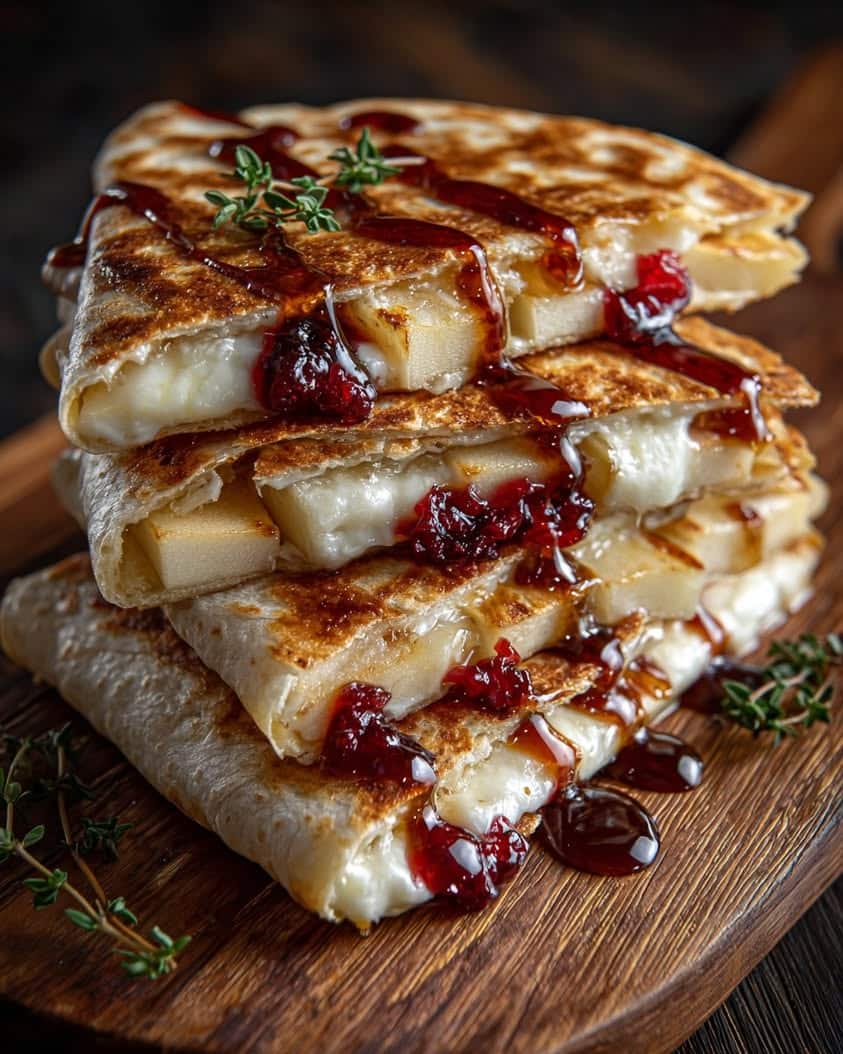
Apple Cranberry Brie Quesadillas with Hot Honey: A Sweet, Savory & Spicy Appetizer
Imagine the ultimate flavor combination, all tucked inside a warm, crispy tortilla. These Apple Cranberry Brie Quesadillas with Hot Honey are exactly that. This recipe masterfully blends sweet, savory, and spicy notes into one irresistible package. The result is a gourmet appetizer that feels special yet comes together with stunning simplicity. Ultimately, this dish is perfect for anyone seeking to impress guests or simply treat themselves to a delicious snack.
The star of this show is the incredible textural and flavor contrast. You get the creamy, rich melt of brie cheese against the crisp, tart bite of fresh apple. Meanwhile, dried cranberries add a chewy sweetness, and the hot honey drizzle brings a gentle, warming spice that ties everything together. Each bite is a delightful journey, starting with crunch, moving through creamy and fruity layers, and finishing with a spicy-sweet kick. Consequently, these quesadillas are far from ordinary; they are a culinary experience.
Furthermore, this recipe is incredibly versatile. You can serve it as a standout appetizer for holiday parties, a quick and elegant lunch, or even a fun dinner option. The ingredients are easy to find, and the process is straightforward. Whether you are a seasoned cook or a beginner, you will find success with this guide. So, let us dive into how to create these unforgettable Apple Cranberry Brie Quesadillas with Hot Honey.
Quick Recipe Highlights
- Flavor Profile: This dish offers a sophisticated balance. The sweet apples and honey contrast with the tangy cranberries and rich brie, while the hot honey introduces a subtle, lingering heat that elevates every component.
- Texture: Expect a wonderful interplay of textures. The tortilla crisps up beautifully, providing a sturdy base for the soft, melted brie, the juicy crunch of apple, and the pleasant chew of dried cranberries.
- Aroma: As these cook, your kitchen will fill with the warm, buttery scent of toasting tortillas and melting cheese, underscored by the sweet fragrance of apple and the floral, spicy hint of honey.
- Visual Appeal: These quesadillas are gorgeous when sliced. The golden-brown tortilla reveals a gooey white and yellow cheese interior studded with red cranberries and pale apple pieces, all glistening under a drizzle of amber hot honey.
- Skill Level Needed: This is a beginner-friendly recipe. The primary skills involve simple slicing, assembling, and pan-frying. No advanced techniques are required, making it accessible for cooks of all levels.
- Special Equipment: You only need basic kitchen tools: a cutting board, knife, skillet or griddle, and a spatula. A brush for the honey drizzle is helpful but not essential.
Recipe Overview
- Difficulty Level: We rate this recipe as “Easy” because it involves minimal prep and uses a straightforward cooking method familiar to most home cooks. The steps are sequential and simple, with little room for error if you follow the instructions. Essentially, if you can slice an apple and flip a quesadilla, you can master this dish.
- Category: This recipe fits multiple categories beautifully. It is primarily an appetizer or snack, but it can easily serve as a light lunch or part of a brunch spread. Its gourmet feel makes it suitable for special occasions, while its ease makes it perfect for casual meals.
- Cuisine: This is a fusion dish that blends elements. It takes the format of a Mexican quesadilla but fills it with French-inspired brie and North American fall harvest ingredients like apple and cranberry. The hot honey adds a modern, trendy twist that transcends specific cuisine boundaries.
- Cost: The cost is moderate, largely depending on the price of brie cheese. Tortillas, an apple, and dried cranberries are typically inexpensive. Hot honey can be store-bought or homemade. Overall, you can create an impressive gourmet appetizer for a fraction of the cost of restaurant fare.
- Season: This recipe shines in the fall and winter. Apples and cranberries are classic autumn harvest ingredients, and the warm, comforting nature of the dish is perfect for cooler weather. However, its appeal is year-round for those craving its unique flavor combo.
- Occasion: It is ideal for holiday gatherings, Thanksgiving appetizers, Christmas parties, or game day spreads. It also makes for a romantic snack for a date night in or a sophisticated treat for a girls’ night. Basically, it elevates any occasion.
Why You’ll Love This Recipe
First and foremost, the taste and texture appeal is undeniable. These Apple Cranberry Brie Quesadillas with Hot Honey deliver a complex flavor profile that surprises and delights with every bite. The initial crispness gives way to luxurious creaminess, followed by sweet and tart fruit notes, all finished with a warm, spicy sweetness. This multi-layered experience makes it feel like a restaurant-quality dish you crafted in your own kitchen. Moreover, the contrast between hot, melted cheese and cool, crisp apple is exceptionally satisfying.
Secondly, the convenience and preparation benefits are major wins. From start to finish, you can have this impressive appetizer on the table in about twenty-five minutes. The prep work is minimal, involving mostly slicing and assembling. There is no need for complicated sauces or lengthy marinating times. This makes it an ideal last-minute recipe when guests arrive unexpectedly or when you need a quick yet special meal. Furthermore, the ingredients are easy to keep on hand for spontaneous cravings.
Additionally, there are notable nutritional advantages to consider. Apples provide fiber and vitamin C, while cranberries offer antioxidants. Using a whole-grain or low-carb tortilla can increase the fiber content further. Brie cheese provides protein and calcium. While it is a treat, you can balance it with a side salad for a more complete meal. Choosing a quality honey also means you are using a natural sweetener. Therefore, you can enjoy gourmet flavor without completely abandoning nutritional considerations.
The social and entertaining value of this recipe is incredibly high. These quesadillas are meant to be shared, sliced into wedges, and passed around on a platter. They are a guaranteed conversation starter at any party. Their beautiful presentation and unique flavor combination show thoughtfulness and care. Guests will be impressed that you made something so delicious and visually appealing. Consequently, this recipe will become a go-to in your entertaining repertoire for years to come.
Finally, the cost-effectiveness and accessibility are key benefits. You do not need expensive, hard-to-find ingredients. Most components are available at any standard grocery store. Compared to ordering a similar appetizer at a restaurant or buying pre-made gourmet snacks, making these at home saves a significant amount of money. You can feed a small crowd for the price of one restaurant portion. This accessibility ensures that everyone can enjoy a taste of gourmet cooking without straining their budget.
Historical Background and Cultural Significance
The origin story of this dish is a modern tale of culinary fusion. The traditional quesadilla has its roots in Mexico, dating back to colonial times. It was originally a simple corn tortilla folded over cheese and heated. The introduction of wheat flour tortillas came later. The concept of adding sweet fruits and honey to a savory cheese dish, however, draws from other traditions. For instance, pairing fruit and cheese is a classic practice in European charcuterie boards. The specific combination of apple, cranberry, and brie became popular in the late 20th century, often seen in pastries and salads.
Cultural importance for this specific recipe is tied to modern American entertaining and the rise of “foodie” culture. It represents a shift towards globally inspired, mash-up cuisine that prioritizes bold flavor combinations. The hot honey trend, popularized in the last decade, adds a contemporary kick that appeals to modern palates accustomed to sweet-heat profiles. This dish is less about deep historical tradition and more about the current celebration of inventive, accessible gourmet cooking. It reflects how home cooks today freely blend ingredients and techniques from around the world.
The evolution of the recipe follows the path of ingredient availability and culinary trends. Initially, one might have seen a simpler “brie and apple quesadilla.” The addition of dried cranberries capitalized on their popularity as a sweet-tart pantry staple, especially around the holidays. The final, crucial evolution was the drizzle of hot honey, which transformed it from a very good recipe into an exceptional one. This addition provides balance, moisture, and a spicy dimension that was previously missing. Today, the recipe continues to evolve with personal touches like adding nuts, herbs, or different cheese varieties.
Regional variations are endless, showcasing the recipe’s adaptability. In the American South, one might add a sprinkle of candied pecans. In the Southwest, a pinch of chili powder could be mixed with the cheese. A Northeastern version might use a sharp cheddar alongside the brie. For a Mediterranean twist, one could substitute fig jam for the cranberries and use thyme. The basic framework is so strong that it welcomes interpretation. This flexibility is a testament to its well-designed core concept, allowing it to morph and fit into different regional ingredient preferences and culinary identities.
Ingredient Deep Dive
Let us start with Brie Cheese. Brie is a soft, creamy French cheese with a edible white rind. Historically, it is known as the “Queen of Cheeses” and originates from the Île-de-France region. Nutritionally, it provides a good source of protein, calcium, and vitamin B12. When selecting brie for this recipe, choose a wheel that is ripe but not overly runny; it should give slightly when pressed. Store brie in the refrigerator in its original wrapping. For substitutions, Camembert is the closest match, but other soft, melty cheeses like Havarti or even a creamy goat cheese can work in a pinch, though the flavor profile will change.
Next, the Apple. Apples have a vast cultural history, symbolizing everything from knowledge to health. For this recipe, you need an apple that holds its shape when heated and provides a balance of sweet and tart. Excellent choices include Honeycrisp, Pink Lady, or Granny Smith for more tartness. Apples are rich in dietary fiber and vitamin C. Select firm, unbruised apples and store them in the refrigerator to maintain crispness. If you must substitute, a firm pear makes a wonderful alternative, offering a similar texture with a slightly different, floral sweetness.
Now, consider the Dried Cranberries. Unlike fresh cranberries, dried cranberries are sweetened and chewy, making them a perfect pantry staple. They add vital pops of tart-sweet flavor and color. Culturally, cranberries are one of North America’s native fruits. They are packed with antioxidants and vitamin C. Look for dried cranberries without added oils. For storage, keep them in a cool, dark pantry. If you need a substitute, dried cherries or chopped dried apricots can provide a similar chewy, sweet-tart element, though the color and exact flavor will differ.
The Flour Tortillas are the foundation. The flour tortilla is a staple of Northern Mexican and Tex-Mex cuisine, made from wheat flour. They provide the crispy, pliable vessel for the fillings. For best results, use large burrito-size tortillas for easy folding. You can choose white, whole wheat, or low-carb varieties based on dietary needs. Store tortillas in their original package at room temperature or freeze them for longer storage. As a substitute, large spinach or tomato-flavored tortillas add color, or for a gluten-free version, use certified gluten-free tortillas or even large crepes.
Finally, the Hot Honey. This is the transformative element. Hot honey is simply honey infused with chili peppers, creating a spicy-sweet condiment. Its popularity has soared in modern American cuisine. Honey itself has ancient roots as a natural sweetener. The heat can come from various chilies like cayenne, red pepper flakes, or even fresh jalapeños. You can buy pre-made hot honey or easily make your own by warming honey with chili flakes. Store it at room temperature. For a substitute, mix regular honey with a pinch of cayenne pepper or a dash of hot sauce, though the infused flavor of real hot honey is superior.
Common Mistakes to Avoid
- Using Overripe Brie: If your brie is too runny, it will leak excessively from the quesadilla and make the tortilla soggy. Aim for a wheel that is soft but still holds its shape when sliced.
- Slicing the Apple Too Thick: Thick apple slices will not soften enough during the brief cooking time and can create a bulky, difficult-to-eat quesadilla. Thin, uniform slices ensure they integrate seamlessly with the melted cheese.
- Overfilling the Quesadilla: It is tempting to load up on fillings, but this leads to spillage, uneven cooking, and a mess when flipping. A moderate, even layer is key to a neat, crispy result.
- Skimping on the Hot Honey: The hot honey is not just a garnish; it is a core component of the flavor profile. Drizzling it only on top at the end means some bites miss out. For better distribution, you can lightly brush it on the inside of the tortilla before adding fillings.
- Cooking on Too High Heat: High heat will burn the tortilla before the cheese has fully melted. A medium-low heat allows the tortilla to turn golden brown and crispy while gently warming the fillings through.
- Not Letting it Rest Before Cutting: Slicing immediately after cooking causes the molten cheese to gush out. Letting the quesadilla rest for 1-2 minutes on a cutting board allows the cheese to set slightly, ensuring clean cuts.
- Using Cold Ingredients Straight from the Fridge: Cold brie and apples will lower the pan temperature and extend cooking time. Letting your cheese and sliced apple sit out for 10-15 minutes before assembling helps everything melt and warm evenly.
- Neglecting to Dry the Apple Slices: If you wash your apple and slice it while wet, the extra moisture can steam the tortilla. Pat apple slices dry with a paper towel before assembling.
Essential Techniques
The first essential technique is Slicing the Brie. It is important to slice the brie thinly, including the rind. The rind is edible and adds flavor. Using a sharp knife, slice the wheel into thin wedges or pieces. This ensures even melting and distribution. A common pitfall is trying to spread cold brie, which is difficult. Slicing is the best method. The visual cue for success is having many small, thin pieces of cheese that will melt quickly and uniformly throughout the quesadilla.
The second key technique is Pan-Frying to Perfect Crispness. This involves cooking the quesadilla over medium-low heat in a dry skillet or with a minimal amount of butter or oil. The goal is to achieve a golden-brown, crispy exterior without burning. Why is this important? It provides the necessary textural contrast to the soft filling. To master it, be patient and do not rush by turning up the heat. The common pitfall is frequent flipping; cook one side until perfectly crisp, then carefully flip once. The visual cue is a beautifully browned, speckled tortilla with visible melted cheese inside.
Pro Tips for Perfect Apple Cranberry Brie Quesadillas with Hot Honey
For an extra flavor boost, very lightly brush the inside of the tortilla with hot honey before adding the cheese and fillings. This distributes the sweet heat throughout every single bite.
If your dried cranberries seem very hard, plump them up by soaking them in warm apple cider or water for 5-10 minutes before assembling. Drain and pat them dry thoroughly.
Use two spatulas for the perfect flip. Slide one under the quesadilla and use the second to gently press down on top as you turn it over. This prevents fillings from shifting.
After cooking, transfer the quesadilla to a wire rack instead of a plate for a minute. This allows air to circulate underneath, preventing the bottom from getting soggy from trapped steam.
For a beautiful presentation, sprinkle a few extra dried cranberries and a tiny pinch of flaky sea salt over the hot honey drizzle just before serving.
If serving a crowd, cook quesadillas in batches and keep them warm in a single layer on a baking sheet in a 200°F oven until all are ready.
Experiment with different apple varieties for subtle flavor changes. A tart Granny Smith offers more contrast, while a sweet Fuji blends seamlessly.
Make your own hot honey by gently warming half a cup of honey with one teaspoon of crushed red pepper flakes for 5 minutes. Let it cool and infuse for deeper flavor.
Variations and Adaptations
For regional variations, consider a Southern twist with crumbled cooked bacon and candied pecans. A Pacific Northwest version could include smoked salmon and dill. A Southwestern adaptation might mix in some roasted green chilies and use pepper jack cheese alongside the brie. These changes root the dish in local flavors while keeping the core concept intact.
Seasonal adaptations are simple. In spring, use thinly sliced pear and asparagus tips. For summer, try peaches and fresh basil. The autumn version is the classic apple-cranberry. In winter, dried figs and a sprinkle of rosemary offer a cozy, festive feel. This keeps the recipe exciting and relevant all year long.
Dietary modifications are straightforward. For gluten-free, use certified gluten-free tortillas. For a dairy-free version, use a high-quality vegan melty cheese and brush the tortilla with olive oil. To make it vegan, combine vegan cheese, apple, cranberries, and use agave syrup mixed with chili powder instead of honey.
Flavor variations can explore different cheese and condiment pairings. Substitute brie with blue cheese for a stronger bite, or with goat cheese for tanginess. Instead of hot honey, try a balsamic glaze reduction or a spicy mango chutney. Add fresh herbs like thyme or sage to the filling for an aromatic layer.
Texture modifications can include adding chopped walnuts or pecans for crunch. For a smoother interior, you could use a thin layer of cream cheese under the brie. Using a shredded cheese blend with the brie can create more stretch. For maximum crispness, cook in a panini press or under a cast-iron skillet as a weight.
Presentation alternatives are fun for parties. Instead of large quesadillas, use small street-taco-sized tortillas to make mini appetizer bites. You can also bake them: assemble on a sheet pan, brush with oil, and bake at 400°F until crisp. For a deconstructed version, serve the components as a DIY quesadilla bar where guests assemble and cook their own.
Serving and Presentation Guide
Plating techniques matter for visual impact. Always slice the quesadilla into clean wedges using a sharp chef’s knife or pizza cutter. Arrange the wedges on a serving platter or wooden board, slightly fanned out or stacked. Place a small bowl of extra hot honey for dipping in the center. This creates an inviting, shareable presentation that highlights the beautiful interior.
Garnishing ideas should enhance flavor and look. A final drizzle of hot honey over the sliced wedges is essential. Sprinkle with fresh microgreens, chopped chives, or parsley for color. A light dusting of powdered sugar can accentuate the sweetness, or a pinch of flaky sea salt can balance it. A few whole dried cranberries scattered on the plate add a professional touch.
Traditional accompaniments might include a light, crisp side salad to cut through the richness. A simple arugula salad with lemon vinaigrette works perfectly. For a heartier meal, serve with a black bean soup or a tomato bisque for dipping. These pairings round out the meal and provide contrasting textures and flavors.
Modern serving suggestions lean towards casual elegance. Serve on individual slate boards or colorful plates for a dinner party. For a cocktail party, keep them whole and let guests tear off pieces family-style. Pair with a signature cocktail, like a cranberry spritz or an apple cider mimosa, to tie the theme together beautifully.
Temperature considerations are crucial. Quesadillas are best served immediately after cooking while the cheese is luxuriously molten and the tortilla is at peak crispness. If you must hold them, keep them in a warm oven but expect some softening. The hot honey should be at room temperature or slightly warmed so it drizzles easily.
Portion control tips are helpful for events. One large quesadilla typically yields 4 generous wedges as an appetizer. For a main course, plan for half a quesadilla per person alongside a salad. For a party with many other foods, one large quesadilla can serve 6-8 people as part of a varied spread. Always err on the side of making more, as they disappear quickly.
Wine and Beverage Pairing
Wine pairings should complement the sweet, savory, and spicy notes. A slightly off-dry Riesling or Gewürztraminer is fantastic; their fruity sweetness mirrors the apple and cranberry while balancing the heat and cheese richness. For white wine lovers, a creamy Chardonnay can match the brie’s butteriness. If preferring red, choose a light, low-tannin option like a Pinot Noir or Beaujolais that will not overpower the delicate flavors.
Non-alcoholic alternatives offer just as much sophistication. Sparkling apple cider is a natural and celebratory match. A ginger beer or spicy ginger ale echoes the heat from the honey and cleanses the palate. For a herbal note, a chilled rosemary-infused lemonade or an iced green tea with honey can be refreshing and complementary.
Coffee and tea pairings work well, especially for a brunch setting. A medium-roast coffee with notes of caramel or nut will complement the toasted tortilla and sweet honey. For tea, a chai latte with its warm spices harmonizes with the dish’s autumnal vibe. A simple black tea with a slice of apple is also a delightful, understated pairing.
Temperature considerations for beverages are key. Iced or chilled beverages provide a refreshing contrast to the warm, rich quesadilla. However, a warm mug of spiced cider or tea can create a cozy, unified sensory experience. Offer a mix to cater to different preferences, especially during fall and winter gatherings.
Serving suggestions include setting up a small drink station alongside the food. Label pairings with little cards for a thoughtful touch. For wines, serve whites chilled and reds slightly below room temperature. For non-alcoholic options, use attractive pitchers with garnishes like apple slices, cinnamon sticks, or cranberries floating inside to tie the whole theme together visually.
Storage and Shelf Life
Storage methods for leftovers are simple but important. Allow any leftover quesadilla wedges to cool completely to room temperature. Do not store them while still warm, as condensation will make them soggy. Once cool, place them in a single layer in an airtight container, separating layers with parchment paper. You can also wrap them individually in foil. Store in the refrigerator.
Temperature requirements are strict for food safety. These quesadillas must be stored in the refrigerator at 40°F or below. They are a dairy-based product and can spoil if left at room temperature for more than two hours. For longer storage, freezing is an option, though the texture of the apple may soften upon reheating.
Container recommendations include shallow airtight containers to prevent crushing. Glass containers are excellent because they do not absorb odors. If using plastic wrap or foil directly on the food, ensure it is sealed tightly to prevent the tortilla from drying out or the refrigerator from imparting other flavors.
Signs of spoilage are typical for dairy products. Look for any off smells, such as a sour or unpleasant odor. Visible mold growth, especially on the cheese or apple components, means it must be discarded. If the tortilla becomes excessively slimy or the fillings develop an unusual texture, it is best to err on the side of caution and throw it away.
Reheating instructions are crucial for restoring texture. The oven or toaster oven is best. Preheat to 350°F and place quesadilla wedges on a baking sheet. Heat for 5-10 minutes until the cheese is melted and the tortilla is re-crisped. The air fryer works wonderfully at 350°F for 3-4 minutes. Avoid the microwave, as it will make the tortilla rubbery and soggy.
Freezing guidelines can extend shelf life up to 2 months. Assemble and cook the quesadillas as directed. Let them cool completely, then wrap each one tightly in plastic wrap and then in foil. Label with the date. To reheat from frozen, unwrap and bake from frozen at 375°F for 10-15 minutes, flipping halfway, until hot and crisp.
Make Ahead Strategies
Prep timeline can save you significant time when entertaining. You can slice the apples and brie up to a day in advance. Store the apple slices in a bowl of water with a squeeze of lemon juice to prevent browning, then drain and pat dry before using. Keep the sliced brie in an airtight container in the fridge. The hot honey can be made weeks ahead. On the day of serving, assembly and cooking take just minutes.
Storage between steps is simple with proper planning. Prepped ingredients should be kept in separate, clearly labeled containers in the refrigerator. Bring the cheese to room temperature for about 15 minutes before assembling to ensure even melting. Having everything measured and ready in “mise en place” bowls makes the final cooking process fast and stress-free.
Quality impact assessment is important. Pre-sliced apples may lose a tiny bit of crispness but remain perfectly acceptable. The brie will be fine. The overall flavor and quality of the final cooked dish are virtually indistinguishable from a fully made-from-scratch version. The biggest risk is a soggy tortilla if you assemble the entire quesadilla hours ahead, so avoid that.
Assembly tips for make-ahead involve keeping components separate until the last minute. You can set up an assembly line: tortillas, bowl of apple slices, bowl of cranberries, plate of brie slices, and bottle of hot honey. This allows you or even guests to quickly assemble quesadillas on demand, which is fun for interactive gatherings.
Reheating guidelines for pre-cooked quesadillas are the same as for leftovers. If you must cook them entirely ahead, let them cool and then re-crisp in the oven or air fryer just before serving. Adding a fresh drizzle of hot honey after reheating is essential to revive the flavors.
Fresh element additions are the final touch. Even if you prepped everything else, always add the final drizzle of hot honey and any fresh garnishes like herbs or a sprinkle of salt after reheating and just before serving. This ensures the brightest flavors and most appealing presentation.
Scaling Instructions
Halving the recipe is straightforward for a smaller yield. Simply divide all ingredient quantities by two. Use a medium skillet instead of a large one. The cooking time may be slightly reduced, so keep a close eye. This is perfect for a romantic dinner for two or a small family snack.
Doubling or tripling the recipe is easy for parties. Multiply all ingredients accordingly. The most efficient method is to use a large griddle or multiple skillets to cook several quesadillas simultaneously. Keep cooked ones warm in a low oven. Be mindful of not overcrowding your cooking surface, as this lowers the temperature and leads to steaming rather than crisping.
Equipment adjustments are necessary when scaling up. For a large batch, a electric griddle or two large stovetop skillets are invaluable. Have multiple spatulas ready. Use a large cutting board and pizza cutter for slicing many quesadillas quickly. For very large events, consider the bake-in-the-oven method on sheet pans.
Timing modifications are minimal when scaling. The prep time will increase linearly as you chop more apples and slice more cheese. However, the cook time per quesadilla remains the same. The total active cooking time will be longer if you are cooking in batches. Factor this in and start earlier to have all food ready at the same time.
Storage considerations change with scale. If making a huge batch, you are more likely to have leftovers. Plan your storage containers accordingly. It is often better to cook in waves throughout an event rather than cooking everything at once, ensuring guests always get a hot, fresh quesadilla.
Nutritional Deep Dive
Macro breakdown per serving typically includes a balance of carbohydrates from the tortilla and fruit, fats from the cheese and any cooking fat, and protein from the cheese. Using a whole-grain tortilla increases fiber. The brie contributes saturated fat, so moderation is key. The honey adds simple sugars. Overall, it is a energy-dense food best enjoyed as part of a varied diet.
Micronutrient analysis reveals benefits. Apples provide vitamin C and potassium. Cranberries are rich in vitamin C and manganese. Brie offers calcium, vitamin B12, and phosphorus. Using a nutrient-rich honey can provide small amounts of antioxidants. While not a vitamin powerhouse, the dish contributes valuable nutrients alongside its indulgent qualities.
Health benefits are tied to its whole-food ingredients. The fiber from apples and whole grains supports digestion. Calcium is crucial for bone health. The antioxidants in cranberries and apples combat oxidative stress. The pleasure of eating a delicious, satisfying food also has mental health benefits, reducing stress and promoting enjoyment.
Dietary considerations include being vegetarian. It can be adapted for gluten-free and dairy-free needs as outlined earlier. It is not suitable for a strict vegan diet without modifications. Those monitoring sodium should note that cheese and tortillas contain sodium. Individuals with lactose intolerance may tolerate brie better than other cheeses, but caution is advised.
Portion analysis shows that one wedge is a satisfying appetizer portion. Two wedges could constitute a light meal. Being mindful of portion size helps manage calorie and fat intake. Pairing a single wedge with a large green salad creates a more balanced meal with increased volume and nutrients for fewer calories overall.
Weight management tips involve strategic choices. Use a low-carb, high-fiber tortilla. Opt for a lighter brushing of oil in the pan. Increase the ratio of apple to cheese slightly. Drizzle the hot honey sparingly. These small adjustments reduce the calorie density while preserving the core flavors, making it easier to fit into a weight management plan.
Dietary Adaptations
For a gluten-free adaptation, the only critical change is the tortilla. Use certified gluten-free flour tortillas, which are widely available. Ensure all other ingredients, like dried cranberries, are certified gluten-free, as some may be processed in facilities with wheat. The cooking method remains identical.
For a dairy-free version, replace the brie with a high-quality vegan cheese that melts well. Many brands offer vegan “cream” or “mozzarella” styles that work. Alternatively, a spread of vegan cream cheese mixed with nutritional yeast can mimic some richness. Use oil or vegan butter to cook the quesadilla.
For a vegan adaptation, combine the dairy-free cheese substitution with a honey alternative. Use agave nectar or maple syrup infused with chili powder to create the “hot honey” effect. Ensure your tortillas are vegan (most are, but check for dairy derivatives like whey). All other components are naturally vegan.
For a low-carb or keto adaptation, use a low-carb tortilla or a keto-friendly wrap. Reduce the amount of apple slightly, as apples contain natural sugars. Increase the cheese and fat content. Ensure the dried cranberries are sugar-free or omit them, using a few raspberries instead. The hot honey can be replaced with a sugar-free syrup mixed with chili powder.
For a paleo adaptation, this is challenging due to the grains and dairy. A creative approach is to use grain-free tortillas made from cassava or almond flour. Omit the cheese entirely and use a mashed avocado or a paleo “cheese” sauce made from nutritional yeast and cashews. Use raw honey for the drizzle.
For a low-FODMAP adaptation, this recipe requires careful modification. Brie is low-FODMAP in servings of 40g or less per sitting. Use a gluten-free tortilla. Replace apple with a low-FODMAP fruit like firm orange segments or a small amount of pineapple. Omit honey and use maple syrup infused with chili. Ensure cranberries are pure dried cranberries without high-fructose corn syrup.
Troubleshooting Guide
If your quesadilla is soggy, the primary culprit is excess moisture or low heat. Ensure apple slices are patted dry. Do not overfill, as too much cheese can leak and steam the tortilla. Always cook on medium-low heat to allow moisture to evaporate while crisping the exterior. Using a wire rack after cooking also prevents sogginess.
If the flavor balance seems off, assess each component. Not sweet enough? Add a touch more hot honey. Not savory enough? A pinch of salt on the filling before closing can help. Lacking tang? Add a few more cranberries. Too spicy? Drizzle with plain honey or a bit of sour cream to cool it down. Balancing is key.
If you have temperature problems where the tortilla burns before the cheese melts, your heat is too high. Immediately reduce the heat. For the next one, start on medium-low and be patient. You can also cover the skillet briefly with a lid to trap heat and melt the cheese, then uncover to re-crisp the tortilla.
If you face equipment challenges like not having a large enough skillet, cook smaller quesadillas or fold the tortilla in half over the filling to make a half-moon shape, which fits in a smaller pan. If you lack a spatula for flipping, carefully use two large spoons or slide the quesadilla onto a plate, then invert it back into the pan.
If you need ingredient substitutions, refer to the deep dive section. The most important rule is to maintain the balance of creamy, sweet, tart, and spicy. If you change one element, try to adjust another to compensate. For example, if using a less creamy cheese, add a thin layer of cream cheese. If using a sweeter fruit, reduce the honey drizzle.
If timing concerns arise when cooking for a crowd, do not try to cook all quesadillas to order at the last second. Cook them in batches and keep
Print
Apple Cranberry Brie Quesadillas with Hot Honey
Description
A sweet and savory quesadilla featuring melted brie, crisp apples, tart cranberries, and a drizzle of spicy honey for a perfect fall-inspired appetizer or light meal.
Ingredients
For the Crust:
- 4 large flour tortillas
- 8 oz brie cheese, sliced
- 1 medium apple, thinly sliced
- 1/4 cup dried cranberries
- 2 tbsp butter, softened
- 1/4 cup honey
- 1/2 tsp red pepper flakes
- Fresh thyme for garnish (optional)
Instructions
1. Prepare the Crust:
- In a small saucepan, warm the honey and red pepper flakes over low heat for 5 minutes to infuse, then set aside.
- Lay out two tortillas. Layer brie slices, apple slices, and dried cranberries evenly on each, then top with the remaining tortillas.
- Heat a skillet over medium heat. Spread butter on one side of each quesadilla and place butter-side down in the skillet. Cook for 3-4 minutes until golden brown.
- Butter the top side, flip, and cook for another 3-4 minutes until the cheese is melted and the tortilla is crispy. Repeat with the second quesadilla.
- Remove from skillet, cut into wedges, drizzle with the hot honey, and garnish with fresh thyme if desired. Serve immediately.
Notes
You can customize the seasonings to taste.

I’m Shaykee—born in Morocco, seasoned across continents. From airplane galleys to home kitchens, I share the flavors and stories that shaped my journey.