
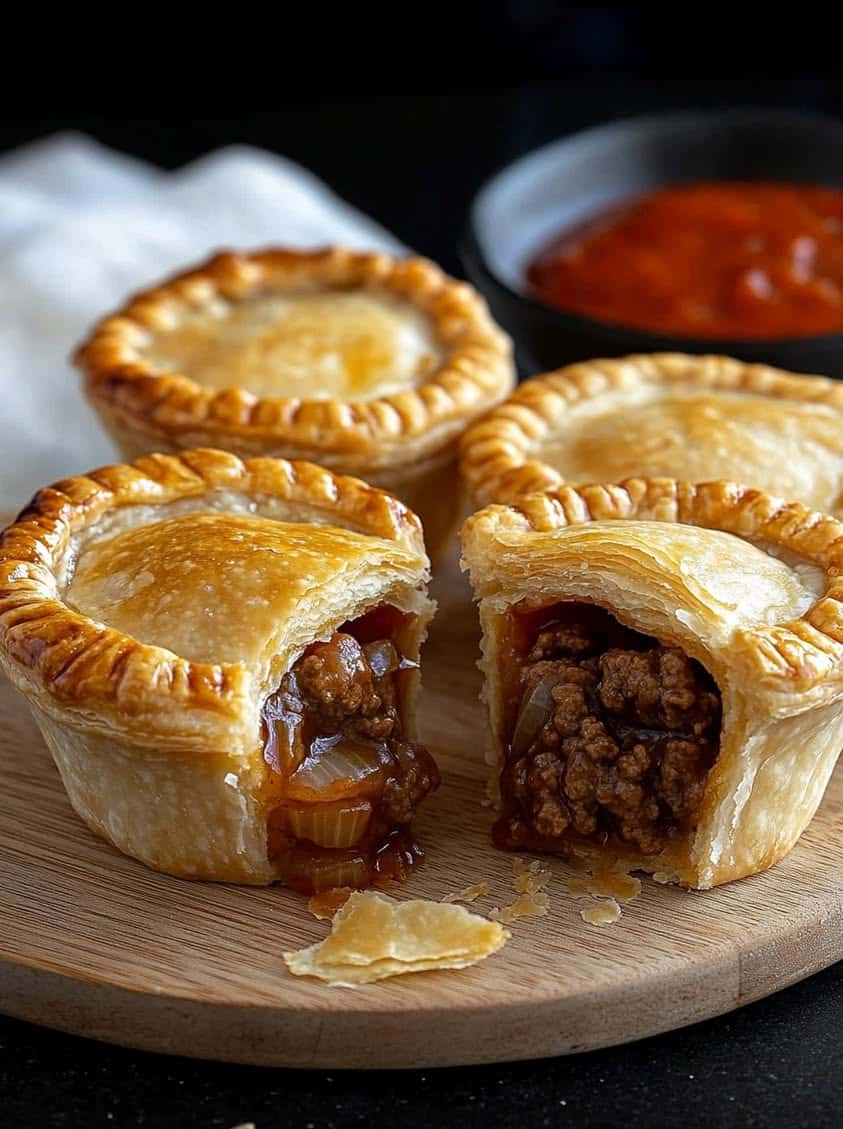
Golden, Flaky Mini Meat Pies with a Rich Beef Filling! The Ultimate Aussie Comfort Food
Imagine biting into a warm, golden pastry that shatters into a thousand buttery flakes, revealing a steaming, savory heart of rich beef filling. This is the magic of an authentic Australian mini meat pie, a handheld icon of comfort food. Today, we are bringing this beloved pub and stadium snack right into your kitchen. These golden, flaky mini meat pies with a rich beef filling are the ultimate Aussie comfort food, perfect for game day, parties, or a cozy family dinner.
Furthermore, the beauty of this recipe lies in its perfect balance of simplicity and flavor. The filling simmers into a deeply savory, gravy-like consistency, while the pastry bakes to a crisp, golden perfection. Consequently, each bite delivers a satisfying contrast of textures and a warm, peppery aroma that is utterly irresistible. Ultimately, mastering these pies connects you to a vibrant culinary tradition, all while creating a crowd-pleasing dish that disappears in minutes.
Quick Recipe Highlights
- Flavor Profile: These pies deliver a robust, savory taste from the ground beef and Worcestershire sauce, balanced with the subtle sweetness of sautéed onion and carrot. A hint of tomato paste and beef stock creates a rich, gravy-like depth that is both comforting and complex.
- Texture: The experience begins with a shatteringly crisp and flaky pastry shell. Then, you encounter the tender, finely minced beef filling suspended in a thick, luscious gravy. This combination of crisp exterior and soft, savory interior is the hallmark of a perfect meat pie.
- Aroma: As these golden, flaky mini meat pies bake, they fill your kitchen with an intoxicating scent. Notes of browned beef, sweet onion, and buttery pastry mingle with the earthy warmth of cracked black pepper, promising a delicious meal before the first pie is even plated.
- Visual Appeal: The finished pies are a beautiful sight, with pastry tops baked to a deep, golden-brown hue. A glossy egg wash gives them a professional sheen, while the perfectly crimped edges show careful craftsmanship. They look as impressive as they taste.
- Skill Level Needed: This recipe is accessible to intermediate home cooks. While making the filling is straightforward, handling the pastry for the mini pies requires a bit of patience. However, with clear instructions, even a confident beginner can achieve excellent results.
- Special Equipment: You will need a standard 12-cup muffin tin to form the pies. A rolling pin is essential for the pastry. Additionally, a pastry brush for the egg wash and a small round cutter or glass for shaping the lids will make the assembly process much smoother.
Recipe Overview
- Difficulty Level: We rate this recipe as intermediate. The primary challenge involves working with pastry dough, which requires keeping it cold and handling it gently to maintain flakiness. Additionally, forming the small pie shells in a muffin tin demands a careful touch to avoid tearing. However, each step is clearly explained, making success very achievable.
- Category: These golden, flaky mini meat pies fit perfectly into several categories. They are an outstanding appetizer or party food, a satisfying handheld snack, and a comforting main course when served with sides like mashed peas or a simple salad. Their versatility is a major part of their appeal.
- Cuisine: This dish is a cornerstone of modern Australian cuisine, with roots tracing back to British meat pies. The Australian version has evolved into its own distinct style, often featuring a ground beef and gravy filling encased in a flaky puff or shortcrust pastry. It is a true national dish.
- Cost: This is a very cost-effective recipe to make. Ground beef is an affordable protein, and the vegetables and pantry staples are inexpensive. Using store-bought puff pastry keeps costs and prep time down, though homemade pastry is an option. You get impressive results for a modest investment.
- Season: While these golden, flaky mini meat pies are a fantastic comfort food for fall and winter, they are truly enjoyed year-round in Australia. They are perfect for summer barbecues as a hearty snack or for watching sports in any season. Their appeal is timeless.
- Occasion: These pies are incredibly versatile for entertaining. They are ideal for football watch parties, casual gatherings, picnics, and kids’ events. Moreover, they make a fun and interactive family cooking project. Ultimately, they bring a taste of Australian culture to any table.
Why You’ll Love This Recipe
First and foremost, the taste and texture are utterly irresistible. The rich beef filling, simmered with aromatic vegetables and savory sauces, creates a deeply flavorful gravy that soaks into the flaky pastry. Every bite delivers a perfect harmony of savory, peppery notes and buttery, crisp layers. This is handheld comfort food at its absolute finest, guaranteed to satisfy even the heartiest appetite.
From a convenience standpoint, these golden, flaky mini meat pies are surprisingly manageable. You can prepare the filling ahead of time, and using quality store-bought pastry streamlines the process. Additionally, their individual serving size makes them perfect for parties—no slicing required. They reheat beautifully, meaning you can enjoy them fresh from the oven or as a quick snack later.
Nutritionally, you have control over the ingredients, which is a significant advantage. You can choose lean ground beef to reduce fat content and pack the filling with finely diced vegetables like carrots and onions for added fiber and vitamins. Compared to many processed frozen snacks, this homemade version is a more wholesome choice without sacrificing any of the indulgent flavor.
The social and entertaining value of this dish is immense. A platter of these golden, flaky mini meat pies is always a conversation starter and a guaranteed crowd-pleaser. They are easy for guests to eat while mingling, and their familiar yet special nature makes them appealing to all ages. Serving them is a surefire way to impress your friends and family.
Finally, this recipe is wonderfully cost-effective and accessible. The ingredients are common and affordable, and the recipe yields a generous amount of food. You can easily double the batch for a large crowd without straining your budget. Essentially, you get a taste of gourmet pub food for a fraction of the price, all from your own kitchen.
Historical Background and Cultural Significance
The story of the Australian meat pie begins with British colonization. Early settlers brought with them the tradition of the savory pie, a practical method for preserving and cooking meat. These early versions were often large, family-sized affairs with sturdy crusts. Over time, as Australia developed its own identity, the pie shrank in size and evolved in flavor, becoming a portable, personal meal for workers.
Today, the meat pie is woven into the very fabric of Australian culture. It is famously the staple food at sporting events, particularly Australian Rules Football matches. The phrase “a pie and a pint” encapsulates a classic Aussie social experience. Consequently, the pie transcends mere food; it is a symbol of national pride, casual camaraderie, and shared tradition.
The recipe has evolved significantly from its British ancestor. The classic Australian filling is typically a simple, saucy mince (ground beef), often seasoned with Worcestershire sauce and pepper, distinct from the chunkier steak fillings found elsewhere. The pastry also changed, with the flaky puff pastry top becoming a popular choice alongside the traditional shortcrust. This evolution created the distinct, handheld snack we celebrate today.
Regional variations do exist across Australia. Some bakeries add a splash of tomato sauce (ketchup) to the filling, while others might include mushrooms or cheese. A famous variation is the “pie floater,” where a meat pie is served upside down in a bowl of thick pea soup—a specialty of South Australia. However, the classic golden, flaky mini meat pie with a rich beef filling remains the universal standard, beloved from coast to coast.
Ingredient Deep Dive
Ground Beef (Mince): The star of the filling, ground beef provides the hearty, savory base. Opt for a medium-fat content, like 85/15, for the best balance of flavor and moisture without being overly greasy. Historically, cheaper cuts were used, making pies a working-class food. Nutritionally, it’s a great source of protein, iron, and B vitamins. For storage, use it within 1-2 days of purchase or freeze it. You can substitute with ground lamb for a different flavor or use a plant-based ground “meat” for a vegetarian version.
Puff Pastry: This laminated dough is responsible for the iconic flaky, golden layers. When baked, the butter between the dough layers vaporizes, creating steam that pushes the layers apart. For the best results, use an all-butter puff pastry for superior flavor. Always keep it cold until the moment you need to roll it out; warm pastry becomes sticky and difficult to handle. Thaw frozen pastry slowly in the refrigerator overnight. For a shortcut, you can use pie crust, though the texture will be more crumbly than flaky.
Beef Stock: This liquid forms the foundation of the rich gravy in the filling. It adds a deep, meaty umami flavor that water simply cannot provide. Using a good-quality stock, whether homemade, store-bought, or from a concentrate, is crucial for depth. It also provides minerals like potassium. For a richer result, you can use a beef broth or demi-glace. As a substitute, a rich mushroom broth works well, especially for a vegetarian adaptation.
Worcestershire Sauce: This fermented condiment is a flavor powerhouse, adding a complex savory, slightly sweet, and tangy note to the beef filling. It originated in England but became a staple in Australian cooking. It contains anchovies, giving it a unique umami depth. A little goes a long way. For a vegetarian version, look for anchovy-free Worcestershire sauce or use a splash of soy sauce mixed with a pinch of sugar as an alternative.
Common Mistakes to Avoid
- Using Hot Filling: Placing warm filling into the pastry shells is a critical error. The heat will melt the butter in the pastry before baking, resulting in a greasy, tough crust that won’t puff up properly. Always cool the filling completely before assembly.
- Overworking the Pastry: Handling puff pastry too much compresses the delicate layers. Roll it out gently and only as much as needed. Similarly, re-rolling scraps excessively will diminish the flakiness in those pieces.
- Skimping on Seasoning: The beef filling needs bold seasoning to shine through the pastry. Underseasoning at the browning stage is a common pitfall. Taste the filling after it has simmered and reduced, and adjust salt and pepper accordingly.
- Not Thickening the Filling Enough: A runny filling will make the bottom pastry soggy. Ensure the flour is cooked out with the vegetables and that the mixture simmers until it is very thick, almost like a spreadable paste. It will thicken slightly more as it cools.
- Forgetting the Egg Wash: Skipping the egg wash results in pale, dull-looking pastry. The egg wash gives the pies their beautiful golden-brown color and professional sheen. For extra color, you can add a pinch of salt to the egg wash.
- Overfilling the Pie Shells: It is tempting to pack in more filling, but overfilling causes leaks during baking as the gravy bubbles over. Fill the shells to just below the rim, leaving room for the pastry lid to seal properly.
- Not Venting the Tops: Failing to cut a small slit or poke holes in the pastry lid traps steam inside. This steam can create a soggy top crust or even cause the lid to separate from the base. A small vent is essential.
- Baking on the Wrong Rack: Placing the muffin tin too high or too low in the oven leads to uneven baking. The middle rack provides the most consistent, all-around heat to ensure both the pastry and filling cook perfectly.
Essential Techniques
Properly Browning the Beef: This step is not just about cooking the meat; it is about building flavor. Do not simply gray the beef. Cook it in batches if necessary to avoid steaming, allowing it to develop a deep, brown crust. This browning, known as the Maillard reaction, creates complex, savory compounds that form the flavor foundation of your rich beef filling. The visual cue is small, crispy brown bits (fond) sticking to the pan.
Creating a Roux-Based Filling: Cooking the flour with the butter and vegetables is a crucial thickening technique. You must cook the raw flour taste out for at least a minute, stirring constantly. This creates a roux that will thicken the stock into a luscious gravy as it simmers. The mixture should look pasty and coat the vegetables before you add the liquid. This technique prevents a chalky taste and ensures a smooth, cohesive filling.
Handling and Shaping Puff Pastry: The key to flaky layers is keeping the butter in the pastry cold. Work quickly on a lightly floured surface. Roll the pastry out evenly to the desired thickness, lifting and turning it occasionally to prevent sticking. To cut rounds for the pie bases, press straight down without twisting the cutter, which can seal the edges and inhibit rising. Keep unused pastry in the fridge until needed.
Pro Tips for Perfect Golden, Flaky Mini Meat Pies
- Chill your muffin tin for 10 minutes before lining it with pastry. A cold tin helps keep the butter in the pastry firm, leading to a flakier result.
- For an extra glossy finish, use an egg yolk mixed with a teaspoon of water or cream for the wash instead of a whole egg.
- Let the baked pies rest in the tin for 5 minutes before removing. This allows the filling to set slightly, making them less likely to collapse when you take them out.
- Add a teaspoon of Vegemite to the beef filling for an authentic, deeply savory Australian umami boost. It dissolves completely into the gravy.
- If your pastry becomes too soft while working, pop the entire muffin tin back into the refrigerator for 15 minutes before baking.
- For a more traditional look, use a fork to crimp the edges of the pastry lid onto the base, which also helps create a better seal.
- Place the muffin tin on a preheated baking sheet in the oven. This extra heat from below helps ensure the bottom pastry cooks through and becomes crisp.
Variations and Adaptations
Regional Variations: Embrace different Australian styles. For a “Party Pie,” make them even smaller using a mini muffin tin. Try a “Cheese and Bacon” variation by adding grated cheddar and crispy bacon bits to the beef filling. For a “Curry Pie,” stir a tablespoon of your favorite curry powder into the filling with the vegetables.
Seasonal Adaptations: In autumn, add finely diced mushrooms or a pinch of thyme to the filling for an earthy note. For a summer twist, serve the pies at room temperature with a fresh tomato chutney or salsa on the side, balancing the rich meat with bright acidity.
Dietary Modifications: For a gluten-free version, use a certified gluten-free flour blend to thicken the filling and gluten-free puff pastry. To make it dairy-free, ensure your pastry is made with vegetable shortening or oil, and use a plant-based milk or water for the egg wash substitute.
Flavor Variations: Experiment with different meats. Ground lamb with a hint of rosemary makes a fantastic “Shepherd’s Pie” style filling. For a peppery kick, add a diced jalapeño to the onion mixture. A splash of red wine added with the beef stock introduces wonderful complexity.
Serving and Presentation Guide
Presentation is key for these golden, flaky mini meat pies. For a casual gathering, simply pile them high on a rustic wooden board or in a basket lined with a checkered napkin. For a more elegant appetizer spread, arrange them on a sleek platter with small bowls of traditional accompaniments like tomato sauce (ketchup) and Worcestershire sauce for dipping.
Garnishing can be simple yet effective. A small sprinkle of flaky sea salt and cracked black pepper on top after baking adds texture and highlights the flavor. Alternatively, a tiny fresh herb like parsley or chive adds a pop of color. For a truly authentic Aussie “pie and peas” experience, serve them alongside a scoop of mushy peas.
Consider temperature carefully. These pies are best served warm, when the pastry is at its crispiest and the filling is steaming. If serving as part of a buffet, you can keep them in a low oven (around 200°F) on a wire rack to prevent sogginess. For portion control, remember that each mini pie is a satisfying two-bite appetizer, so plan for 2-3 per person as a starter.
Wine and Beverage Pairing
The rich, savory beef filling and buttery pastry of these golden, flaky mini meat pies call for beverages that can cut through the fat and complement the umami. A medium-bodied red wine with low tannins is ideal. An Australian Shiraz is a perfect match, offering ripe dark fruit flavors that harmonize with the beef, or a Grenache with its peppery notes. A cold, hoppy Australian lager or pale ale is the classic pub pairing, its carbonation and bitterness cleansing the palate beautifully.
For non-alcoholic options, consider a sparkling ginger beer with a bit of spice, which contrasts wonderfully with the richness. Iced tea, especially a slightly sweet black tea, also works well. If serving for breakfast or brunch, a strong cup of black coffee or a flat white provides a bitter counterpoint that highlights the savory notes of the pie.
Storage and Shelf Life
Once cooled completely, store leftover golden, flaky mini meat pies in an airtight container in the refrigerator for up to 3 days. To maintain crispness, place a paper towel at the bottom of the container to absorb any condensation. For longer storage, they freeze exceptionally well. Freeze the baked and cooled pies in a single layer on a baking sheet, then transfer to a freezer bag for up to 3 months.
Reheating is crucial for restoring texture. To reheat from refrigerated, place pies on a baking sheet in a 350°F oven for 10-12 minutes until hot and crisp. Avoid the microwave, as it will make the pastry soggy. To reheat from frozen, bake at 350°F for 15-20 minutes directly from the freezer, no need to thaw. Always check that the filling is piping hot in the center before serving.
Make Ahead Strategies
These pies are excellent candidates for advanced preparation. You can make the rich beef filling up to 2 days in advance and store it covered in the refrigerator. This not only saves time but also allows the flavors to deepen and meld. On the day of baking, let the filling come to room temperature or give it a quick reheat and then cool again before assembling.
You can also assemble the pies completely a day ahead. After placing them in the muffin tin, cover the entire tin tightly with plastic wrap and refrigerate. Before baking, brush with egg wash and vent the tops. You may need to add 2-3 extra minutes to the baking time since they will be going into the oven cold. For the freshest, flakiest result, however, baking them on the same day is ideal.
Scaling Instructions
This recipe scales beautifully for a crowd. To double or triple it, use a larger pot for the filling and work in batches if necessary to properly brown all the beef. When scaling up, you may need to simmer the filling a few minutes longer to achieve the proper thick consistency. Ensure you have enough muffin tins or bake in consecutive batches, keeping the unbaked assembled pies chilled.
For halving the recipe, simply divide all ingredient quantities by two. Use a standard 6-cup muffin tin. The cooking times for the filling and the baking time will remain roughly the same, as the volume in the pan and the size of the individual pies does not change. Always taste and adjust seasoning at the end, as scaling can sometimes throw off the salt balance.
Nutritional Deep Dive
One of these golden, flaky mini meat pies provides a balanced mix of macronutrients: carbohydrates from the pastry, high-quality protein from the beef, and fats from both. The beef is an excellent source of iron, zinc, and vitamin B12, essential for energy and immune function. The vegetables in the filling contribute dietary fiber, vitamin A from the carrot, and various antioxidants.
For those monitoring intake, the primary considerations are the saturated fat from the butter in the pastry and the sodium from the stock and seasonings. You can moderate this by using lean ground beef and a reduced-sodium beef stock. Remember, these are rich, savory treats best enjoyed in moderation as part of a balanced diet. Their handheld size naturally aids in portion control.
Dietary Adaptations
Gluten-Free: Use a 1:1 gluten-free flour blend to make the roux for the filling. Ensure your Worcestershire sauce is gluten-free (many brands contain barley malt vinegar). The key is finding a good gluten-free puff pastry, which is available in the freezer section of many specialty stores.
Dairy-Free: Most store-bought puff pastry is made with butter. Seek out brands that use vegetable shortening or margarine. For the egg wash, simply use plant-based milk, olive oil, or a commercial egg replacer to achieve a golden color.
Vegetarian/Vegan: Replace the ground beef with a plant-based ground “meat” alternative or cooked brown lentils. Use vegetable stock and ensure your Worcestershire sauce is anchovy-free or use a vegan alternative like soy sauce. A vegan puff pastry is required, often made with palm oil.
Troubleshooting Guide
Soggy Bottom Pastry: This occurs if the filling is too wet or the pastry is underbaked. Ensure your filling is very thick before cooling. Also, try placing the muffin tin directly on a preheated baking sheet in the oven to blast the bottom with heat. Using a metal muffin tin (not silicone) also promotes better browning.
Filling is Too Dry: If your filling seems pasty or dry after baking, you may have reduced it too much or used a stock that was too thick. Next time, reserve a little extra stock to stir in after simmering if the mixture seems too thick. You can also add a tablespoon of the stock to the cooled filling before assembling to loosen it slightly.
Pastry Not Rising or Flaking: This usually means the butter melted before baking. Causes include overhandling warm dough, using warm filling, or a too-hot kitchen. Ensure all components are cold at assembly. If your kitchen is very warm, chill the assembled pies for 30 minutes before baking.
Recipe Success Stories
Home cooks love sharing their triumphs with this recipe. One reader reported making a quadruple batch for her son’s Australian-themed birthday party, and they were the first food to disappear. Another successfully adapted the recipe to be gluten-free for her husband, using a homemade rough puff pastry, and said it brought a taste of home back to him after years without a proper meat pie.
Many have found creative presentation ideas, like serving the mini pies in little paper soufflé cups for easy handling at tailgates. Photographers recommend shooting them fresh from the oven, with a bite taken out of one to reveal the steaming filling, on a dark slate background to make the golden pastry truly pop. The common thread in all feedback is how impressive and delicious these golden, flaky mini meat pies are for the relatively straightforward effort required.
Frequently Asked Questions
Can I use pie crust instead of puff pastry? Yes, you can. The result will be a more crumbly, shortcrust-style pie instead of a flaky one. The baking time may be slightly less, so watch for the crust to turn golden brown.
What’s the best way to cut the pastry rounds? Use a round cookie cutter or the rim of a glass that is slightly larger than the top of your muffin cups. For the lids, use a cutter about 1/2 inch smaller than the base rounds.
My filling is leaking out the sides. What happened? This is usually due to overfilling or not sealing the edges properly. Ensure you press the lid firmly onto the base and crimp the edges. Also, leave a small gap between the filling and the top rim.
Can I make one large pie instead? Absolutely. Use a standard pie dish. You’ll need to blind bake the bottom crust for about 15 minutes before adding the filling and top crust to prevent sogginess. Increase the final baking time to 35-40 minutes.
Is there a substitute for Worcestershire sauce? You can use soy sauce mixed with a small pinch of sugar, or a teaspoon of balsamic vinegar. The flavor won’t be identical, but it will provide the needed savory tang.
How do I know when the pies are done baking? The pastry should be puffed and a deep, golden brown all over. The filling should be bubbling visibly through the vent hole in the top. An internal thermometer should read at least 165°F in the center of the filling.
Can I add other vegetables to the filling? Definitely. Finely diced celery, peas, or corn are great additions. Sauté harder vegetables like celery with the onion and carrot. Add softer ones like peas at the very end of cooking the filling.
Why did my pastry shrink down the sides of the tin? This happens if the pastry was stretched when placed in the tin or if it wasn’t chilled before baking. Always ease the pastry into the cup without pulling, and chill the assembled pies before baking.
Additional Resources
If you loved mastering these golden, flaky mini meat pies, consider exploring other classic handheld pies. A British Cornish pasty or a Jamaican beef patty uses similar techniques with different spice profiles. For more Australian inspiration, look up recipes for Lamingtons or Anzac biscuits.
To deepen your pastry skills, research the difference between shortcrust, flaky, and rough puff pastry. Understanding how gluten and fat interact will make you a more confident baker. For equipment, a sturdy rolling pin and a set of round cutters are invaluable. Finally, remember that the best cooking often comes from practice and personalization, so make this recipe your own.
PrintAustralian Mini Meat Pies
Description
Golden, flaky, and packed with rich beef filling, these Australian mini meat pies are pure comfort food.
Ingredients
For the Crust:
- 1 lb ground beef
- 1 onion, finely chopped
- 2 cloves garlic, minced
- 1 cup beef broth
- 2 tbsp tomato paste
- 1 tbsp Worcestershire sauce
- 1 tsp dried thyme
- Salt and pepper to taste
- 2 sheets puff pastry, thawed
- 1 egg, beaten (for egg wash)
Instructions
1. Prepare the Crust:
- Preheat oven to 400°F (200°C). Grease a mini pie tin or muffin tin.
- In a skillet, cook ground beef over medium heat until browned. Add onion and garlic, cooking until softened.
- Stir in beef broth, tomato paste, Worcestershire sauce, thyme, salt, and pepper. Simmer for 10-15 minutes until thickened. Let cool slightly.
- Cut puff pastry into rounds to fit the tin. Press rounds into the tin, fill with beef mixture, and top with another pastry round. Seal edges with a fork.
- Brush tops with egg wash. Bake for 20-25 minutes until golden and flaky. Let cool slightly before serving.
Notes
You can customize the seasonings to taste.

I’m Shaykee—born in Morocco, seasoned across continents. From airplane galleys to home kitchens, I share the flavors and stories that shaped my journey.