
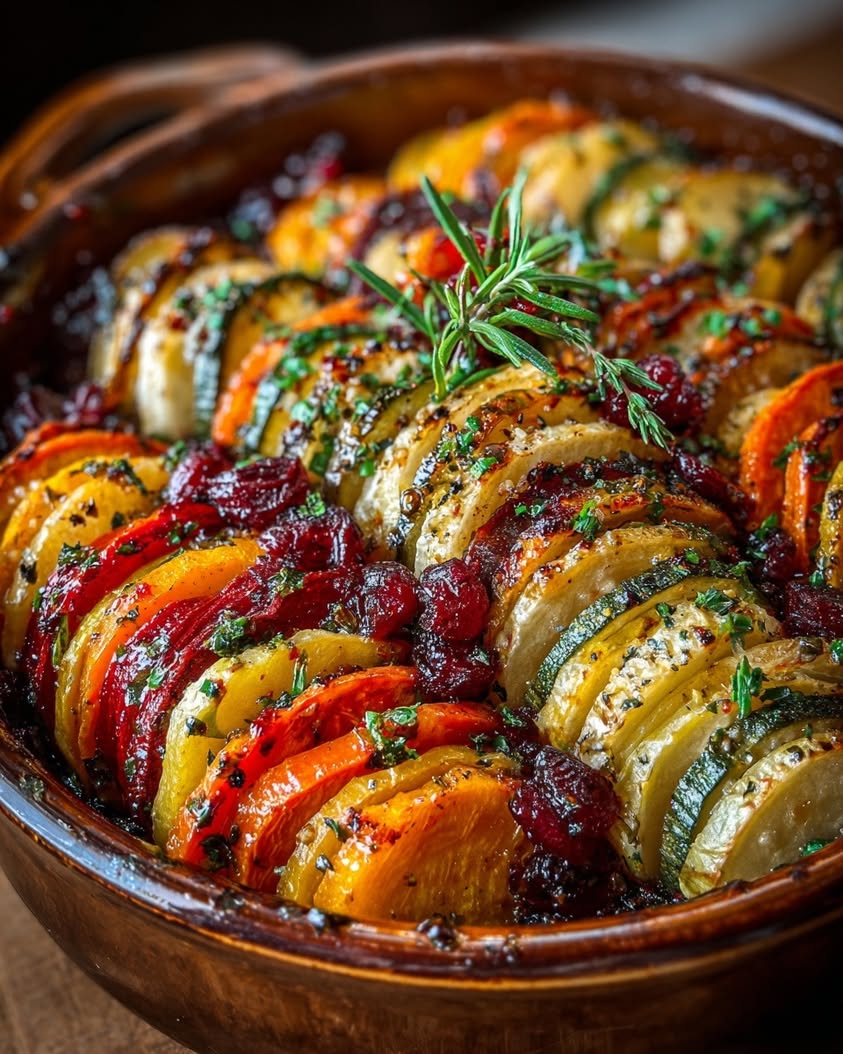
Autumn Vegetable Layer Bake with Cranberry-Maple Glaze: A Stunning Holiday Centerpiece
Welcome the crisp autumn air into your kitchen with this spectacular Autumn Vegetable Layer Bake with Cranberry-Maple Glaze. This dish transforms humble root vegetables and seasonal squash into an edible masterpiece, perfect for your holiday table. Moreover, the sweet-tart cranberry-maple glaze cascading over the colorful layers creates a flavor profile that is both comforting and sophisticated. Ultimately, this recipe celebrates the very best of fall produce in a visually stunning and delicious way.
Imagine slicing into a golden-brown crust to reveal vibrant, tender layers of sweet potato, earthy beets, and creamy parsnips. The aroma of roasting herbs and maple syrup will fill your home with an unmistakable sense of warmth and celebration. This Autumn Vegetable Layer Bake is more than a side dish; it is a conversation-starting centerpiece that brings the rich colors and flavors of the season directly to your plate. Consequently, it is an ideal choice for Thanksgiving, Friendsgiving, or any festive autumn gathering where you want to impress your guests.
Creating this beautiful bake is a rewarding process. While it requires some careful assembly, the result is a show-stopping dish that balances sweet, savory, and earthy notes in every bite. The cranberry-maple glaze provides a brilliant pop of color and a tangy-sweet counterpoint to the savory roasted vegetables. Therefore, if you are looking for a memorable and flavorful vegetarian main or side dish that captures the essence of fall, this Autumn Vegetable Layer Bake with Cranberry-Maple Glaze is your answer.
Quick Recipe Highlights
- Flavor Profile: This dish masterfully balances earthy roasted root vegetables with a bright, sweet-tart cranberry-maple glaze. Savory herbs like thyme and rosemary deepen the flavor, while the natural sugars in the vegetables caramelize during baking for a complex taste.
- Texture: Expect a delightful contrast between the tender, almost creamy interior vegetable layers and the slightly crisp, golden-brown top crust. The glaze adds a sticky, glossy finish that complements the soft vegetables perfectly.
- Aroma: As it bakes, your kitchen will fill with the warm, comforting scents of roasting garlic and onions, woody herbs, sweet maple syrup, and the festive tartness of simmering cranberries.
- Visual Appeal: The cross-section reveals a stunning rainbow of autumn colors—deep ruby beets, orange sweet potatoes, and pale yellow parsnips. The glossy red glaze on top makes the entire presentation magazine-worthy.
- Skill Level Needed: This is a moderate-difficulty recipe due to the vegetable prep and layering technique. However, clear instructions make it achievable for confident home cooks who enjoy a project. Basic knife skills and patience are key.
- Special Equipment: A mandoline slicer is highly recommended for achieving uniformly thin vegetable slices, which ensures even cooking. You will also need a 9×13 inch baking dish and a medium saucepan for the glaze.
Recipe Overview
- Difficulty Level: We rate this Autumn Vegetable Layer Bake as moderate. The challenge lies not in complex techniques, but in the precision of slicing vegetables evenly and the careful, time-consuming layering process. Following the steps methodically leads to a beautiful result.
- Category: This versatile dish shines as a spectacular vegetarian main course for holiday meals. Alternatively, it serves as an impressive and substantial side dish alongside a roast turkey, ham, or other centerpiece protein.
- Cuisine: This recipe draws inspiration from modern American harvest cuisine, which emphasizes seasonal, local produce. The use of maple syrup and cranberries nods strongly to traditional New England and Canadian fall cooking traditions.
- Cost: The cost is mid-range, largely dependent on seasonal produce prices. Root vegetables are generally affordable, while fresh cranberries and pure maple syrup may represent a higher cost. Overall, it is a cost-effective way to feed a crowd with elegance.
- Season: This is the quintessential autumn and winter recipe. It is best made when root vegetables and winter squash are at their peak sweetness and cranberries are freshly harvested, typically from October through December.
- Occasion: Perfect for Thanksgiving, Christmas, Friendsgiving, and potluck dinners where a beautiful, shareable dish is required. It also makes a wonderful Sunday supper centerpiece during the colder months.
Why You’ll Love This Recipe
First and foremost, the taste and texture of this Autumn Vegetable Layer Bake are utterly captivating. Each forkful delivers a harmonious blend of sweet caramelized vegetables, savory herbs, and the vibrant punch of the cranberry-maple glaze. The vegetables become meltingly tender while the top layer crisps slightly, creating a satisfying contrast. Furthermore, the natural sugars concentrate during the long bake, making every vegetable taste like the best version of itself. This is not a bland vegetable casserole; it is a symphony of autumnal flavors designed to delight your palate.
From a convenience standpoint, this recipe offers significant preparation benefits. You can slice all the vegetables ahead of time and store them in water in the refrigerator. Similarly, the cranberry-maple glaze can be made a day or two in advance. Consequently, on the day of your event, assembly is straightforward and baking is mostly hands-off. This make-ahead flexibility is a huge advantage for holiday cooking, where oven and stovetop space are at a premium. You get an impressive result without last-minute kitchen chaos.
Nutritionally, this dish is a powerhouse. It is packed with fiber, vitamins, and antioxidants from its diverse array of colorful vegetables. Sweet potatoes and carrots provide beta-carotene, beets offer folate and nitrates, and parsnips contribute vitamin C and potassium. Using olive oil and a moderate amount of maple syrup keeps added sugars in check compared to many traditional holiday sides. Therefore, you can feel good about serving a dish that is as nourishing as it is delicious.
The social and entertaining value of this bake cannot be overstated. Its stunning visual appeal makes it a natural focal point on any buffet or dinner table. Guests will be genuinely impressed by the colorful layers and glossy glaze, sparking conversation and admiration. Serving a beautiful, plant-forward centerpiece also caters to diverse dietary preferences, ensuring vegetarian guests feel fully included in the feast. It is a dish that shows care, effort, and a celebration of the season.
Finally, this recipe is cost-effective and accessible. Root vegetables are among the most affordable produce items, especially in the fall. While pure maple syrup is an investment, a little goes a long way in the glaze. Compared to a meat-based main course, feeding a crowd with this vegetable bake is remarkably economical. The ingredients are readily available at most grocery stores during the autumn months, making this an accessible showstopper for any home cook.
Historical Background and Cultural Significance
The concept of layering and baking vegetables has roots in many global culinary traditions, from French gratins to Italian parmigiana. However, this specific Autumn Vegetable Layer Bake with Cranberry-Maple Glaze is a distinctly modern creation born from the American farm-to-table movement. It represents a contemporary desire to elevate seasonal, plant-based ingredients into a celebratory centerpiece. Chefs and home cooks began experimenting with visually striking vegetable dishes as vegetarian and vegan diets gained popularity, leading to innovations like this layered bake.
Culturally, the dish taps deeply into the iconography of an American Thanksgiving and harvest festival. The ingredients read like a list of New World foods: sweet potatoes, cranberries, and maple syrup are all native to North America. Incorporating them into a single dish connects the recipe to centuries of autumn harvest celebrations. It is a celebration of abundance and the closing of the growing season, transforming the bounty of the land into a shared meal. The practice of gathering around a table to share the harvest’s riches is a universal human tradition this bake perfectly embodies.
The recipe has evolved from simpler, more rustic vegetable casseroles. Earlier versions might have involved chopping vegetables and mixing them in a dish. The evolution to precise, mandoline-thin slices and careful layering reflects a broader trend in food presentation and the influence of food media. The addition of a refined, reduction-style glaze instead of a simple drizzle of syrup or honey elevates it from a homey side to a chef-inspired creation. This evolution mirrors how home cooking has embraced both technique and aesthetics.
Regional variations of this concept abound. In the South, you might find a similar bake with added pecans or a bourbon-infused glaze. In the Pacific Northwest, huckleberries could stand in for cranberries. Some versions incorporate layers of sautéed kale or wild mushrooms for deeper umami notes. The basic template—layered roots, a binding element, and a sweet glaze—is wonderfully adaptable. This adaptability ensures the Autumn Vegetable Layer Bake can reflect local tastes and available produce, making it a truly customizable holiday classic.
Ingredient Deep Dive
Sweet Potatoes are a cornerstone of this bake. Historically, they originated in Central or South America and were a staple for indigenous peoples long before European contact. Nutritionally, they are an excellent source of beta-carotene (which converts to vitamin A), vitamin C, manganese, and fiber. When selecting sweet potatoes, choose firm ones with smooth, unbruised skin. Store them in a cool, dark, well-ventilated place—not the refrigerator. For substitutions, garnet yams are virtually identical, or you could use butternut squash for a similar texture and sweetness.
Beets bring dramatic color and earthy sweetness. They have been cultivated since ancient times, with evidence of their use in Mediterranean regions thousands of years ago. They are rich in folate, manganese, potassium, and dietary nitrates, which may support blood pressure and athletic performance. Choose beets that are firm with smooth skin and vibrant greens attached if possible. Store them separately from their greens in the refrigerator crisper. Golden beets can be used for a less-staining alternative, though they offer a milder flavor. Pre-cooked vacuum-packed beets are a major time-saver.
Parsnips, often overlooked, provide a crucial nutty, slightly spicy flavor. Resembling pale carrots, they were a European starch staple before the introduction of the potato. They are a good source of vitamin C, vitamin K, folate, and soluble fiber. Look for small to medium parsnips, as larger ones can have a woody, fibrous core. Store them in a plastic bag in the refrigerator. If parsnips are unavailable, carrots are the closest substitute, though they are sweeter. Celery root could also work for a more savory, herbal note.
Fresh Cranberries are non-negotiable for the glaze. These native North American berries were used by Indigenous peoples for food, dye, and medicine. They are packed with vitamin C, fiber, and unique proanthocyanidins, which are linked to urinary tract health. Purchase berries that are firm, shiny, and bright to deep red. They freeze beautifully for year-round use; simply use them directly from frozen when making the glaze. Do not substitute dried cranberries, as they are too sweet and will not provide the necessary tartness or liquid for the glaze reduction.
Pure Maple Syrup is the other half of the glaze’s magic. Made from the sap of sugar maple trees, it is a traditional product of northeastern North America. It contains antioxidants and minerals like manganese and zinc, and it has a lower glycemic index than refined sugar. Always choose “pure maple syrup,” not “pancake syrup,” which is corn syrup with flavoring. Grade A Amber Color and Rich Taste is perfect for this recipe. For a vegan alternative, agave nectar could work, but it will lack maple’s distinctive flavor. Honey is a good substitute if veganism is not a concern.
Common Mistakes to Avoid
- Uneven Vegetable Slices: Using a knife instead of a mandoline often results in slices of varying thickness. Consequently, some vegetables will be undercooked and crunchy while others turn to mush. Invest in a mandoline for perfect, paper-thin slices that cook evenly.
- Skipping the Oil and Seasoning Between Layers: Simply layering raw vegetables will result in a dry, bland bake. You must toss each vegetable type separately with oil, salt, and pepper before layering. This ensures every bite is seasoned and the vegetables roast properly.
- Overcrowding the Baking Dish: Packing the vegetables too tightly prevents steam from escaping and leads to steaming rather than roasting. The layers should be snug but not compressed. This allows the top to crisp up and the interior to cook through properly.
- Using a Glass Baking Dish Without Adjusting Time: Glass and ceramic dishes retain heat differently than metal. If using glass, you may need to add 10-15 minutes to the covered baking time. Check for doneness by piercing the center with a knife; it should slide in easily.
- Not Letting the Bake Rest Before Serving: Cutting into the bake immediately after it comes out of the oven will cause it to fall apart. Let it rest for 15-20 minutes. This allows the layers to set, making for cleaner, more beautiful slices.
- Over-Reducing the Cranberry Glaze: Simmering the glaze too long can make it overly thick and sticky, almost like candy. It should coat the back of a spoon but still be pourable. Remember, it will thicken further as it cools on the hot vegetables.
- Forgetting to Reserve Glaze for Serving: Brushing all the glaze on before baking is a mistake. The high heat can cause it to burn. Apply half before baking and warm the other half to serve alongside. This provides a fresh, glossy finish and extra flavor.
- Using Pre-Shredded Cheese if Included: If adapting the recipe to include cheese, never use pre-shredded bags. They contain anti-caking agents that prevent proper melting. Always grate your cheese from a block for the best texture and melt.
Essential Techniques
Mandoline Slicing is critical for success. This technique ensures uniform, thin slices that cook at the same rate and create distinct, beautiful layers. To master it, always use the hand guard to protect your fingers. Adjust the thickness setting to about 1/8-inch. Use a firm, even pressure as you slide the vegetable across the blade. A common pitfall is applying uneven pressure, which creates wedges. The visual cue for success is a stack of perfectly even, translucent slices ready for seasoning.
Layering with Intent is what transforms sliced vegetables into a cohesive bake. The goal is to create even, distinct strata. After tossing each vegetable type with oil and seasoning, spread them in a single, overlapping layer, like shingles on a roof. Gently press down to eliminate large air pockets. Alternate colors and vegetable types for visual drama. The importance lies in ensuring heat and moisture distribute evenly during baking. A haphazard pile will cook unevenly, while intentional layers promise a perfect slice.
Creating a Reduction Glaze involves simmering a liquid to evaporate water and concentrate flavors. For the cranberry-maple glaze, combine the ingredients and simmer until the cranberries pop and the liquid thickens sufficiently. The key is maintaining a gentle bubble, not a rolling boil. Stir occasionally to prevent scorching. The technique is important because it develops a deep, complex sweetness and tartness that a simple mix of ingredients cannot achieve. The visual cue for doneness is when the syrup coats the back of a spoon and leaves a clear path when you run your finger through it.
Pro Tips for Perfect Autumn Vegetable Layer Bake
Chill your sliced vegetables in ice water for 10 minutes after cutting, especially the potatoes and sweet potatoes. This removes excess surface starch, preventing them from sticking together and resulting in clearer, more distinct layers in the finished bake.
Use a pastry brush to lightly grease your baking dish with oil, then sprinkle with breadcrumbs or fine cornmeal. This creates a delicious, slightly crispy bottom layer that helps the entire structure hold together when sliced and served.
If your vegetables are releasing a lot of liquid during baking, carefully tilt the dish and use a baster to remove excess liquid about halfway through the uncovered cooking time. This prevents a soggy bottom and helps the top crisp up.
For an extra flavor boost, infuse your olive oil before tossing the vegetables. Gently warm the oil with the rosemary and thyme sprigs, then let it cool. This herb-infused oil will carry flavor deep into every layer.
Let the assembled, unbaked dish sit at room temperature for 20-30 minutes before putting it in the oven. This takes the chill off the vegetables and promotes more even cooking from the center out.
Test for doneness with a long, thin skewer or a paring knife inserted into the center. It should meet no resistance when the vegetables are fully tender. If there’s a hard spot, cover and bake for another 10-15 minutes.
Garnish just before serving with fresh elements for texture and color. Try toasted pecans, pomegranate arils, or finely chopped fresh parsley or chives. This adds a final layer of flavor and makes the presentation pop.
For the crispiest top, during the last 10 minutes of baking, switch your oven to the high broil setting. Watch it closely! This will blister and caramelize the top layer of vegetables and glaze beautifully.
Variations and Adaptations
For regional variations, consider a Southern twist by adding a layer of collard greens sautéed with garlic and a splash of apple cider vinegar. A sprinkle of smoked paprika in the oil or crumbled cornbread on top would also be delicious. In a French-inspired version, layer in sautéed wild mushrooms and use a Gruyère cheese sauce between the vegetable layers instead of just oil.
Seasonal adaptations are simple. In winter, incorporate peeled and sliced celery root or rutabaga. For a spring version, use thin slices of fennel, asparagus (laid crosswise), and new potatoes with a lemon-herb glaze. The basic technique remains the same, allowing the produce to guide the flavor profile.
Dietary modifications are straightforward. For a vegan version, ensure your maple syrup is vegan (most are) and use a plant-based butter alternative if any is called for. To make it gluten-free, use certified gluten-free oats or breadcrumbs for any topping, or simply omit them. The core vegetable layers are naturally gluten-free and vegan.
Flavor variations can personalize your bake. Add warmth with a teaspoon of ground cumin or coriander to the oil. For an Italian flair, use oregano and basil, and add a layer of marinara sauce. A Moroccan-inspired version could include ras el hanout spice blend and a glaze made with pomegranate molasses instead of maple syrup.
Texture modifications can cater to preferences. For a creamier interior, pour a mixture of beaten eggs and cream over the layers before baking, transforming it into a vegetable strata. For a chunkier, more rustic bake, cut the vegetables into 1/2-inch cubes instead of slices and toss everything together before baking.
Presentation alternatives offer fun twists. Instead of a large rectangular dish, assemble individual bakes in oven-safe mason jars or small ramekins for a personalized touch. You can also create a “vegetable cake” by using a springform pan, resulting in a tall, round presentation that slices like a torte.
Serving and Presentation Guide
Plating techniques matter for this showpiece. Use a sharp, thin-bladed knife to cut clean portions. A flat, wide spatula or pie server is essential for transferring slices intact to the plate. For a formal dinner, plate each slice individually, pooling extra warm glaze around the base. On a buffet, present the whole bake on a trivet, garnished, with the serving utensil alongside.
Garnishing ideas should enhance, not overwhelm. Fresh herb sprigs like rosemary or thyme echo the interior flavors. Toasted nuts like pecans or walnuts add crunch. A sprinkle of flaky sea salt just before serving heightens all the flavors. For a festive touch, bright pomegranate arils or dried cranberries add color and a burst of tartness.
Traditional accompaniments include a classic roast turkey or honey-glazed ham. It also pairs wonderfully with pork chops or a herb-crusted roast chicken. For a vegetarian feast, serve it alongside a lentil loaf, stuffed mushrooms, or a rich wild rice pilaf.
Modern serving suggestions lean into its role as a centerpiece. Slice it and serve on a large wooden board surrounded by complementary sides like a bitter greens salad with apple, or a whipped goat cheese crostini. Let it be the star, and build simpler dishes around it.
Temperature considerations are key. This dish is best served warm, not piping hot. The resting period allows the flavors to settle and the structure to firm up. If it cools down too much, reheat individual slices in a 350°F oven for 10 minutes rather than microwaving, which can make it soggy.
Portion control tips are helpful for planning. This recipe yields 8 generous servings as a main dish or 10-12 smaller servings as a side. The layers are rich and satisfying, so people may take less than they would of a simpler vegetable side. When planning a menu with multiple sides, you can confidently stretch this bake to feed more people.
Wine and Beverage Pairing
Wine pairings should complement the earthy sweetness and tart glaze. A medium-bodied Pinot Noir with its red fruit notes and earthy undertones is a classic, fail-safe choice. Alternatively, an off-dry Riesling or Gewürztraminer beautifully mirrors the sweetness of the vegetables and cuts through the richness with bright acidity. For a richer option, a Chardonnay with subtle oak aging can stand up to the caramelized flavors.
Non-alcoholic alternatives can be just as sophisticated. Sparkling apple cider is a festive and natural pairing. A ginger beer mocktail with muddled cranberries provides spice and fizz. For a warm option, a mulled cranberry-apple juice with cinnamon and orange zest echoes the dish’s autumnal spices perfectly.
Coffee and tea pairings work well for a brunch or late holiday meal. A medium-roast coffee with notes of maple or nut complements the bake without bitterness. For tea, choose a smoky Lapsang Souchong to contrast the sweetness, or a spiced chai tea to harmonize with the warm baking spices in the glaze.
Temperature considerations for beverages are straightforward. Serve white wines and sparkling beverages well-chilled. Red wines should be served slightly below room temperature. Non-alcoholic sparklers should be ice-cold. Warm beverages like mulled cider or tea should be served piping hot to contrast the warm, not scalding, bake.
Serving suggestions include offering a choice. Set up a small beverage station with a bottle of Pinot Noir, a bottle of Riesling, and a carafe of sparkling cider. This allows guests to choose their perfect pairing and accommodates all preferences seamlessly.
Storage and Shelf Life
Storage methods are simple for leftovers. Cool the bake completely, then cover the baking dish tightly with plastic wrap or transfer portions to an airtight container. You can refrigerate it for up to 4 days. For longer storage, freezing is an option, though the texture of the vegetables may become slightly softer upon reheating.
Temperature requirements are crucial for safety. Never leave the baked dish at room temperature for more than two hours. Refrigerate promptly. When reheating, ensure the internal temperature reaches 165°F to eliminate any risk of bacterial growth.
Container recommendations depend on the portion. For whole leftover slabs, store them flat in a single layer in a rectangular container. For smaller portions, stack them with parchment paper between layers to prevent sticking. Glass containers with tight-fitting lids are ideal as they don’t absorb odors.
Signs of spoilage include an off or sour smell, visible mold (often fuzzy and green or white), or a significant change in texture becoming unpleasantly slimy. If you see any of these signs, discard the entire portion immediately.
Reheating instructions are best done in the oven. Preheat to 350°F. Place portions in an oven-safe dish, cover with foil to prevent drying out, and heat for 15-20 minutes or until warmed through. The microwave can be used in a pinch but may make the top soggy; use a lower power setting.
Freezing guidelines involve wrapping tightly. Cool completely, then wrap the entire bake or individual portions first in plastic wrap, then in aluminum foil. Label with the date. Freeze for up to 2 months. Thaw overnight in the refrigerator before reheating using the oven method above.
Make Ahead Strategies
Your prep timeline can be spread over two days. On Day 1, wash, peel, and slice all vegetables. Store them submerged in cold water in separate containers in the refrigerator. Also, prepare the cranberry-maple glaze and refrigerate it. On Day 2 (serving day), drain and pat the vegetables very dry, toss with oil and seasoning, assemble, and bake.
Storage between steps is safe if handled correctly. The water bath for sliced vegetables prevents oxidation (browning) and keeps them crisp. Change the water if it becomes cloudy. The glaze can be stored in a jar in the fridge; gently reheat it on the stove or in the microwave before using.
Quality impact assessment is positive. Prepping vegetables ahead does not harm quality; in fact, the brief water soak can improve texture. The glaze’s flavor often improves as the ingredients meld. The only step that must be done day-of is the final assembly and baking for the best texture.
Assembly tips for make-ahead: Ensure your vegetables are thoroughly dried after their water bath. Any excess water will steam the bake and make it soggy. Use salad spinners and pat diligently with clean kitchen towels. Assemble the dish just before baking for optimal results.
Reheating guidelines for a fully baked make-ahead dish: If you bake it a day early, cool, cover, and refrigerate. On serving day, let it sit at room temperature for 30 minutes. Cover with foil and reheat in a 325°F oven for 25-35 minutes, until hot in the center. Then, uncover, add the reserved fresh glaze, and broil for 2-3 minutes to refresh the top.
Fresh element additions are key when making ahead. Always reserve half of your cranberry glaze to warm and serve fresh. Also, plan to add any fresh garnishes like herbs or nuts after reheating. This brings brightness and texture that can be lost during storage.
Scaling Instructions
Halving the recipe is easy for smaller gatherings. Use an 8×8 inch baking dish. Halve all ingredient quantities precisely. The baking time may be reduced by 10-15 minutes; start checking for doneness at the 50-minute mark (covered). The glaze will also reduce faster, so watch it closely on the stove.
Doubling or tripling for a crowd requires planning. Double all ingredients. Use two separate 9×13 inch dishes rather than one gigantic pan, as the center may not cook through. You may need to rotate the dishes in the oven for even cooking. Expect the total baking time to increase by 10-20 minutes.
Equipment adjustments are necessary when scaling. For a double batch, ensure you have a very large bowl for tossing vegetables or work in batches. Your saucepan for the glaze should be large enough to hold the doubled liquid without boiling over. Have extra baking sheets on hand to hold your prepped vegetable piles.
Timing modifications are minimal when scaling up. The active prep time will increase linearly with the amount of vegetables to slice. The baking time does not double; it only increases modestly because the depth of the vegetable layers remains the same if using multiple dishes. Always rely on the knife-tenderness test, not just the clock.
Storage considerations change with scale. A double batch will yield more leftovers. Plan your refrigerator space accordingly. Consider freezing a portion of the unbaked assembled dish (wrap tightly) for a future meal. Thaw in the fridge overnight before baking as directed.
Nutritional Deep Dive
The macro breakdown of this dish is favorable. It is primarily a complex carbohydrate source from the vegetables, with a moderate amount of healthy fats from olive oil. Protein content is low, making it ideal to pair with a protein source. The glaze adds simple sugars, but they are from natural fruit and maple syrup, accompanied by fiber from the cranberries.
A micronutrient analysis reveals a vitamin and mineral powerhouse. Sweet potatoes and carrots provide massive amounts of Vitamin A. Beets are rich in folate and iron. Parsnips and potatoes contribute potassium and Vitamin C. The herbs and olive oil add antioxidants. Together, they support immune function, vision, heart health, and digestion.
Health benefits are extensive. The high fiber content promotes satiety and gut health. The array of antioxidants fights inflammation. The nitrate content in beets may support blood pressure regulation. This dish is inherently anti-inflammatory, heart-healthy, and supports a robust immune system, which is especially valuable during the colder months.
Dietary considerations are mostly positive. The dish is naturally vegetarian, gluten-free, and can be vegan. It is not suitable for a strict low-carb or keto diet due to the root vegetables. For those watching sugars, the maple syrup in the glaze is the primary source of added sugar, which can be slightly reduced if desired.
Portion analysis shows that one serving as a main dish is satisfying and nutrient-dense. As a side dish, the portion is smaller, contributing valuable vitamins and fiber to the meal without excessive calories. The fat content is primarily from heart-healthy monounsaturated olive oil.
Weight management tips include being mindful of the glaze portion, as it is the most calorie-dense component. You can lightly brush it on rather than pouring. Also, ensure your serving as a main dish is accompanied by a large leafy green salad to increase volume and nutrients without many added calories.
Dietary Adaptations
For a gluten-free version, this recipe is already compliant if you use certified gluten-free oats in any topping or omit it. Always check labels on pre-made broths or stocks if used, as some may contain gluten. This is one of the easiest diets to accommodate with this bake.
A dairy-free adaptation is simple, as the core recipe contains no dairy. If you see a variation that includes cheese, simply omit it or use a high-quality vegan cheese alternative that melts well. The olive oil and vegetables provide plenty of richness on their own.
To make it vegan, confirm your maple syrup is vegan (most are) and that any sugar used is not processed with bone char. The recipe as written is typically vegan. This makes it an excellent inclusive centerpiece for holiday tables with mixed dietary needs.
For a low-carb or keto adaptation, this recipe is challenging due to the starchy root vegetables. A radical adaptation would replace them with layers of low-carb vegetables like zucchini, eggplant, bell peppers, and mushrooms. The glaze would need to be made with a sugar-free maple-flavored syrup and fresh cranberries, with a low-carb thickener like xanthan gum.
A Paleo adaptation requires ensuring all ingredients are whole, unprocessed. Use pure maple syrup and avoid any grain-based toppings. The recipe is largely Paleo-friendly as written, focusing on vegetables, herbs, and natural sweeteners. Ghee or avocado oil can substitute olive oil if preferred.
For a Low-FODMAP version, you must modify the vegetable selection. Omit onions and garlic. Use garlic-infused oil (where the garlic is strained out) for flavor. Replace high-FODMAP vegetables like sweet potato with carrots and parsnips in moderation, and be cautious with the amount of maple syrup. Consult a Monash University app for precise serving sizes.
Troubleshooting Guide
If the vegetables are still crunchy after baking, the slices were likely too thick, or the dish was under-baked. Solution: Cover tightly with foil and return to the oven for another 15-20 minutes. Test with a knife. For next time, use a mandoline and ensure your oven temperature is accurate with an oven thermometer.
If the bake is too watery or soggy, excess moisture is the culprit. This can come from wet vegetables, overcrowding, or vegetables with very high water content. Solution: For leftovers, reheat portions in a skillet to evaporate moisture. Next time, pat vegetables obsessively dry and consider salting slices of zucchini or squash and draining them before use if included.
If the top is burning before the inside is cooked, your oven rack is too high, or the temperature is too high. Solution: Immediately cover the dish with foil to stop further browning and lower the oven temperature by 25°F. Finish baking. Next time, bake covered for the majority of the time and only uncover for the final 15-20 minutes.
If the layers fall apart when serving, it needed more resting time or was undercooked. Solution: For future slices, let it rest a full 20 minutes. If it’s already cut, serve it as a deconstructed “hash” – it will still taste delicious. A binder like a thin egg wash between layers can help cohesion if you don’t mind altering the recipe.
If the cranberry glaze is too tart, the balance is off. Solution: Stir in an extra tablespoon or two of maple syrup or a pinch of sugar while warming it. If it’s too sweet, a small squeeze of fresh lemon juice or a splash of apple cider vinegar can brighten it up. Always taste and adjust before serving.
If you don’t have a mandoline, you can use a very sharp chef’s knife and extreme patience. Aim for slices no thicker than 1/8-inch. A food processor with a slicing disk can also work for some vegetables like potatoes and carrots, but may struggle with harder vegetables like raw beets.
Recipe Success Stories
Community feedback on this Autumn Vegetable Layer Bake has been overwhelmingly positive. Many home cooks report it becoming the new “most requested” dish for their Thanksgiving. A common theme is surprise at how such beautiful layers are achievable. Several readers have mentioned that even vegetable-skeptic family members asked for seconds, thanks to the caramelized flavors and sweet-tart glaze. The visual “wow” factor consistently earns compliments.
Variation successes abound. One reader added a layer of thinly sliced apples with the sweet potatoes for extra autumn flavor. Another successfully incorporated leftover Thanksgiving turkey, shredding it and adding a layer in the middle for a hearty post-holiday
Print
Autumn Vegetable Layer Bake with Cranberry-Maple Glaze
Description
A hearty, sweet-savory casserole featuring layers of seasonal root vegetables and squash, topped with a tangy cranberry-maple glaze for a festive autumn meal.
Ingredients
For the Crust:
- 2 large sweet potatoes, peeled and thinly sliced
- 1 butternut squash, peeled and cubed
- 3 parsnips, peeled and sliced
- 2 red onions, sliced into rings
- 3 tablespoons olive oil
- 1 teaspoon dried thyme
- 1 teaspoon smoked paprika
- Salt and black pepper to taste
- 1 cup fresh cranberries
- 1/4 cup maple syrup
- 2 tablespoons apple cider vinegar
- 1 tablespoon Dijon mustard
- Fresh parsley for garnish
Instructions
1. Prepare the Crust:
- Preheat oven to 400°F (200°C). Grease a large baking dish.
- In a large bowl, toss sweet potatoes, butternut squash, parsnips, and red onions with olive oil, thyme, smoked paprika, salt, and pepper until evenly coated.
- Layer the vegetables in the prepared baking dish, alternating types for even distribution.
- Cover with foil and bake for 25 minutes, or until vegetables are tender when pierced with a fork.
- While baking, combine cranberries, maple syrup, apple cider vinegar, and Dijon mustard in a small saucepan. Simmer over medium heat for 10 minutes, stirring occasionally, until cranberries burst and glaze thickens.
- Remove foil from baking dish, pour the cranberry-maple glaze evenly over the vegetables, and bake uncovered for an additional 5 minutes to caramelize.
- Garnish with fresh parsley before serving warm.
Notes
You can customize the seasonings to taste.

I’m Shaykee—born in Morocco, seasoned across continents. From airplane galleys to home kitchens, I share the flavors and stories that shaped my journey.