
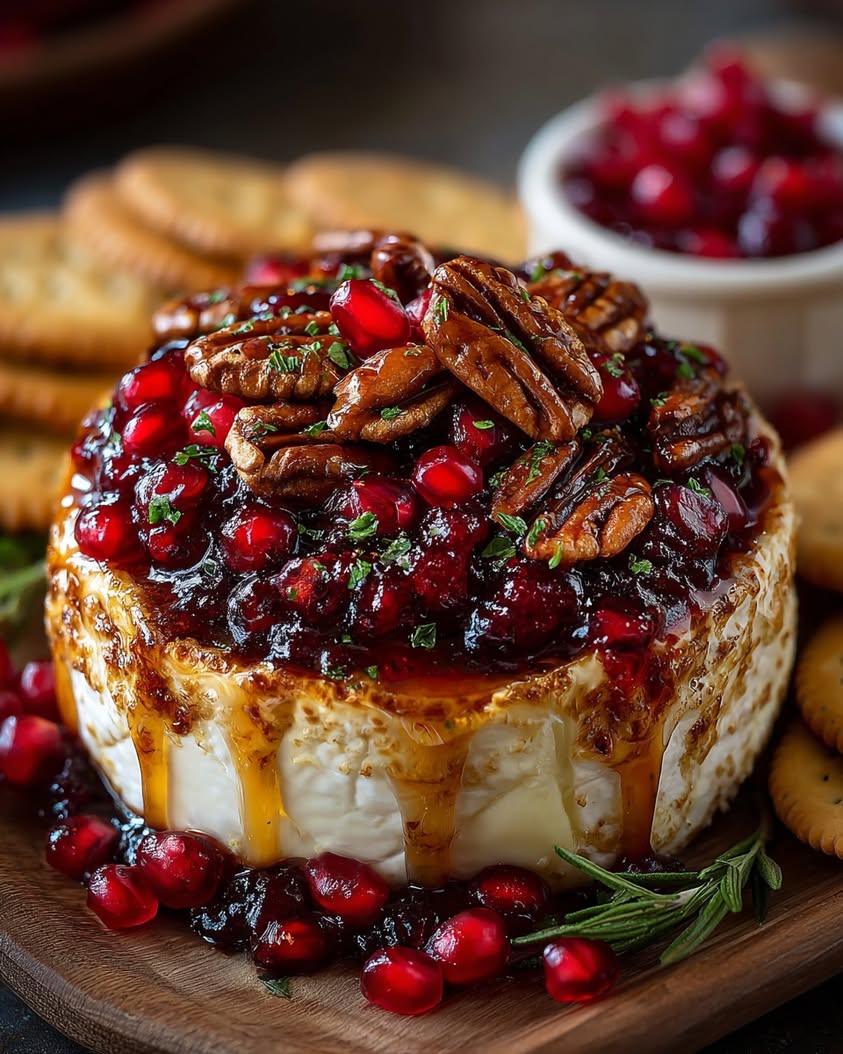
Baked Brie with Honey-Balsamic Cranberry Sauce: The Ultimate Festive Appetizer
Imagine pulling a golden, bubbling wheel of baked brie from your oven, its surface glistening with a jewel-toned cranberry sauce and scattered with crunchy pecans and vibrant pomegranate arils. This stunning baked brie with honey-balsamic cranberry sauce is not just an appetizer; it is a centerpiece that promises to steal the show at any gathering. The aroma alone, a harmonious blend of warm, melted cheese, sweet honey, and tangy cranberries, will draw everyone to your kitchen, creating an atmosphere of anticipation and celebration.
This recipe for baked brie masterfully balances a spectrum of flavors and textures. You get the rich, creamy indulgence of the melted cheese, perfectly contrasted by the sweet-tart pop of the cranberry-pomegranate sauce. Furthermore, the pecans add a necessary crunch, while the honey-balsamic reduction introduces a complex, caramelized sweetness. Consequently, every scoop onto a cracker or slice of baguette delivers a perfect bite, making it an unforgettable holiday appetizer or party food that looks as spectacular as it tastes.
Crafting this impressive dish is surprisingly straightforward, requiring minimal effort for maximum reward. Whether you are hosting a large holiday party or an intimate dinner with friends, this easy recipe ensures you spend less time in the kitchen and more time enjoying the company. Ultimately, this baked brie is a guaranteed crowd-pleaser, a recipe you will return to season after season for its reliability, elegance, and downright delicious flavor profile.
Quick Recipe Highlights
- Flavor Profile: This baked brie features a beautiful dance between the rich, buttery cheese and the vibrant, sweet-tart cranberry sauce. The honey adds a floral sweetness, while the balsamic vinegar introduces a subtle, sophisticated acidity that cuts through the richness.
- Texture: Experience a luxurious combination of the oozing, creamy brie, the slightly chewy and jammy cranberry sauce, the satisfying crunch of toasted pecans, and the juicy burst of fresh pomegranate arils. This variety makes every mouthful exciting.
- Aroma: As it bakes, the kitchen fills with the warm, nutty scent of melting cheese, complemented by the festive, spiced aroma of simmering cranberries and the sweet, tangy notes of honey and balsamic.
- Visual Appeal: The presentation is stunning, with a golden-brown cheese wheel topped with a deep red, glossy sauce, bright red pomegranate seeds, and the earthy brown of pecans. It is a true feast for the eyes.
- Skill Level Needed: This is an easy recipe perfect for beginners. The steps are simple, involving minimal chopping and straightforward stovetop and oven work. No advanced culinary techniques are required.
- Special Equipment: You only need a small saucepan for the sauce, a baking dish for the brie, and a sharp knife. A pastry brush can be helpful for applying the honey glaze, but it is not essential.
Recipe Overview
- Difficulty Level: We classify this baked brie recipe as easy because it involves very few technical steps. The primary tasks are simmering a simple sauce and baking a wheel of cheese. There is no complex knife work or precise baking science involved, making it nearly foolproof for cooks of any experience level.
- Category: This dish falls squarely into the appetizer category, perfect for starting a meal or serving as part of a larger cocktail party spread. It can also function as a luxurious cheese course or a standout item on a holiday buffet table.
- Cuisine: While brie cheese originates from France, this preparation is a modern American fusion. It combines a classic French cheese with a cranberry sauce that is deeply rooted in North American Thanksgiving and Christmas traditions, creating a celebratory transatlantic dish.
- Cost: The cost is moderate, largely dependent on the price of the brie wheel. Fresh cranberries, pomegranate, and pecans are seasonal but generally affordable. This recipe provides excellent value, transforming a few key ingredients into a show-stopping centerpiece.
- Season: This baked brie is a quintessential fall and winter recipe, perfectly aligned with the holiday season when cranberries and pomegranates are at their peak. Its warm, comforting nature makes it ideal for cooler weather gatherings.
- Occasion: It is perfect for holiday parties, Thanksgiving feasts, Christmas Eve gatherings, New Year’s Eve celebrations, and festive potlucks. It also makes a wonderful appetizer for a romantic dinner or a special family weekend treat.
Why You’ll Love This Baked Brie Recipe
First and foremost, the taste and texture of this baked brie are simply extraordinary. The warm, gooey cheese provides a rich, creamy base that melds perfectly with the sweet-tart cranberry sauce. Additionally, the honey-balsamic glaze adds a layer of caramelized depth, while the pecans and pomegranates contribute a fantastic textural contrast. Every single bite is a harmonious blend of creamy, crunchy, juicy, and sweet, ensuring your taste buds are never bored. This complex flavor profile makes it far superior to any store-bought appetizer.
From a convenience standpoint, this easy recipe is a lifesaver for busy hosts. With only ten minutes of active prep time, you can assemble the components quickly before your guests arrive. Furthermore, the sauce can be made days in advance, and the actual baking time is just fifteen to twenty minutes. This means you can achieve a gourmet-looking dish with minimal last-minute effort, allowing you to be present with your friends and family instead of being stuck in the kitchen.
While it is an indulgent treat, this baked brie also offers some nutritional advantages. Cranberries are packed with antioxidants and vitamin C, and pomegranates are renowned for their anti-inflammatory properties. Pecans provide healthy fats, fiber, and minerals. Using a high-quality honey also offers trace enzymes and antioxidants. Therefore, you can feel good about serving a dish that delights the palate while providing more than just empty calories.
The social and entertaining value of this dish cannot be overstated. A wheel of baked brie served on a beautiful board encourages sharing and conversation. It becomes a focal point on your table, inviting people to gather round and dig in. Its impressive appearance will have your guests believing you spent hours in the kitchen, making it one of the most rewarding party foods for building your reputation as a fantastic host.
Finally, this recipe is remarkably cost-effective and accessible. The ingredient list is short, and most components are easy to find in any standard grocery store, especially during the holiday season. Compared to the cost of a similar appetizer at a restaurant or a pre-made version from a gourmet shop, making this baked brie at home saves you a significant amount of money while yielding a far superior, fresher product.
Historical Background and Cultural Significance
The story of baked brie begins in the French region of Île-de-France, where this famous cow’s milk cheese has been produced since the Middle Ages. Traditionally, Brie de Meaux is a protected cheese with a specific terroir and production method. The concept of baking brie whole, however, is a more modern interpretation, likely popularized in the latter half of the 20th century as French cuisine gained global popularity. This preparation transforms the cheese’s texture, making it irresistibly soft and spreadable.
Culturally, baked brie has become a staple of American holiday entertaining, symbolizing warmth, abundance, and celebration. It bridges the gap between rustic French country cooking and elegant American party fare. The act of sharing a warm, communal wheel of cheese speaks to a desire for connection and festivity, making it a centerpiece that goes beyond mere sustenance. It represents a generous spirit and a love for rich, comforting foods during the coldest months of the year.
The evolution of this specific recipe, featuring cranberry sauce, is a distinctly North American innovation. Cranberries are one of the few native fruits of the continent and have been a part of Thanksgiving and Christmas dinners for centuries. Combining this traditional American fruit with a classic French cheese is a perfect example of culinary fusion. The addition of honey and balsamic vinegar reflects a more contemporary palate that appreciates balancing sweet, tart, and acidic flavors.
Regional variations of baked brie are now endless. In the American South, you might find it topped with pepper jelly. On the West Coast, fig jam and walnuts are a popular combination. Some versions are wrapped in puff pastry, while others, like this one, are left open-faced to showcase the beautiful toppings. This particular recipe with honey-balsamic cranberry sauce, pecans, and pomegranates draws from several traditions, creating a festive and visually stunning version that has become a modern classic in its own right.
Ingredient Deep Dive
Let us start with the star of the show: the brie cheese. Originating from France, brie is a soft, creamy, surface-ripened cheese known for its edible, bloomy rind. When baked, it transforms into a molten, velvety pool of richness. Nutritionally, it provides protein, calcium, and vitamin B12, though it is also high in saturated fat, so moderation is key. When selecting a wheel, look for one that feels slightly soft at room temperature and avoid any with an ammonia smell. For baking, a full, unpasteurized wheel offers the best flavor and melting quality.
Next, we have the cranberries, a native North American superfruit. They were a staple in Native American diets and used for their medicinal properties long before the first Thanksgiving. They are incredibly rich in vitamin C, fiber, and proanthocyanidins, which are powerful antioxidants that support urinary tract health. Choose cranberries that are firm, shiny, and deep red in color; discard any that are soft or discolored. They freeze beautifully, so you can keep a bag on hand year-round. If fresh are unavailable, you can use high-quality frozen cranberries without thawing.
The honey-balsamic glaze is the flavor engine of the sauce. Honey, produced by bees from flower nectar, has been used as a sweetener for thousands of years. It contains trace amounts of enzymes, antioxidants, and vitamins. Balsamic vinegar, or Aceto Balsamico, hails from Italy and is made from concentrated grape must, aged in wooden barrels to develop its complex, sweet-tart flavor. Together, they create a syrup that balances the tartness of the cranberries. For the best results, use a raw, local honey and a moderately priced, aged balsamic vinegar.
Pecans and pomegranates provide the crucial textural and visual elements. Pecans are native to North America and are a good source of healthy monounsaturated fats, zinc, and manganese. Toasting them enhances their nutty flavor and crunch. Pomegranates, ancient fruits symbolizing prosperity and abundance in many cultures, are packed with antioxidants called punicalagins and vitamin K. Their juicy burst cuts through the richness of the dish. Select pecans that smell fresh, not rancid, and a pomegranate that feels heavy for its size with taut, unblemished skin.
Common Mistakes to Avoid
- Overbaking the Brie: Baking the brie for too long or at too high a temperature will cause it to break, releasing all its fat and leaving a rubbery texture. The goal is a warm, soft center, not a completely liquid one. Remove it from the oven when it feels very soft to the touch.
- Using a Ripe Pomegranate: A pomegranate that is lightweight for its size or has soft, brownish skin will likely be dry and lack juice. Always choose a heavy fruit with vibrant, firm skin to ensure you get plump, juicy arils for topping your baked brie.
- Not Toasting the Pecans: Adding raw pecans will result in a soft, bland nut. Toasting them in a dry skillet for a few minutes until fragrant is a simple step that unlocks their essential oils and provides a deeper flavor and superior crunch for your appetizer.
- Skipping the Sauce Reduction: If you do not allow the cranberry sauce to simmer and reduce sufficiently, it will be too watery and will run off the baked brie wheel instead of sitting prettily on top. Cook it until it has a thick, jam-like consistency.
- Using a Sharp Knife to Score the Brie: While scoring the top rind helps the cheese ooze out, using a sharp knife and cutting too deep can cause it to burst prematurely. Use the tip of a very sharp paring knife and only cut through the top rind, not into the cheese.
- Serving Straight from the Oven: The baked brie is dangerously hot when it first comes out of the oven. Allowing it to rest for 5-10 minutes lets the cheese set slightly, making it easier to scoop without burning anyone’s mouth, and it gives the flavors time to meld.
- Choosing the Wrong Baking Dish: Using a baking dish that is too large can cause the melted cheese to spread out too thin. A dish just slightly larger than the brie wheel itself will contain the cheese beautifully as it softens and melts.
- Forgetting to Cool the Sauce: Pouring a piping hot cranberry sauce onto the baked brie can sometimes cause the cheese to seize or break. Let the sauce cool for a few minutes after cooking so it is warm but not scalding when you add it to the cheese.
Essential Techniques
Mastering the sauce reduction is critical for the perfect texture. This technique involves simmering the cranberry mixture to evaporate excess water, concentrating the flavors and thickening the consistency. You must stir frequently to prevent burning, especially as the sauce thickens. The visual cue for success is when the sauce coats the back of a spoon and you can draw a line through it that holds its shape. Furthermore, the bubbles will become larger and gloopier as it reaches a jam-like state. This step ensures your sauce will sit elegantly on top of the brie instead of sliding off.
Properly scoring the brie rind is a simple but important technique. Using the very tip of a sharp paring knife, you lightly cut a cross-hatch or simple cross pattern through the top white rind only. Do not cut deep into the cheese itself. This process serves two purposes: it allows the steam to escape during baking, preventing the wheel from bursting unpredictably, and it creates weak points from which the molten cheese can beautifully ooze out once baked. Consequently, you get a more controlled and visually appealing melt.
Knowing the exact moment to remove the brie from the oven is the key to its perfect texture. The goal is a warm, soft, and spreadable cheese, not a completely liquid one. The primary technique is the touch test. Gently press the center of the wheel with your finger; it should feel very soft and jiggle significantly when you move the pan. The rind will also look puffed up. If you see a large amount of butterfat leaking out, it is a sign of overbaking. Perfectly baked brie will be molten on the inside while still holding its wheel shape.
Pro Tips for Perfect Baked Brie
- Bring the brie to room temperature for about 30 minutes before baking. This simple step ensures the cheese heats evenly all the way through, preventing a scenario where the outside is overbaked while the center is still cool.
- Use a small, oven-safe skillet or a ceramic baking dish that is just slightly larger than the brie wheel. This will contain the melted cheese beautifully, creating a perfect pool for dipping rather than a thin, messy spread.
- If your cranberry sauce seems too tart after cooking, do not be afraid to adjust the sweetness. Add another tablespoon of honey and stir until dissolved. The balance between sweet and tart is personal, so tailor it to your taste.
- For an extra flavor boost, add a sprig of fresh rosemary or thyme to the cranberry sauce as it simmers. Remove it before spooning the sauce over the brie. This infuses a subtle, herby note that complements the other flavors wonderfully.
- To easily remove pomegranate seeds, cut the fruit in half horizontally, hold it cut-side down over a bowl, and firmly tap the back with a wooden spoon. The seeds will fall out effortlessly, minimizing mess and preserving the juicy arils.
- For the ultimate presentation, arrange the toasted pecans and pomegranate arils in a deliberate pattern on top of the sauce. This extra minute of care elevates the dish from homemade to professional-looking.
- Always let the baked brie rest for 5-10 minutes after removing it from the oven. This allows the cheese to set slightly, making it easier and safer to scoop without burning your guests.
Variations and Adaptations
Consider exploring regional variations to suit different palates. For a Southern twist, replace the cranberry sauce with a spicy pepper jelly and top with crispy fried onions. A Mediterranean version could feature a topping of sun-dried tomatoes, Kalamata olives, and fresh oregano. Alternatively, for a sweeter take, use fig jam instead of cranberry sauce and top with walnuts and a drizzle of reduced balsamic glaze. These adaptations show the incredible versatility of the baked brie concept while maintaining its core appeal as a warm, shareable appetizer.
Seasonal adaptations are simple and effective. In the spring, try a topping of strawberry-rhubarb compote with slivered almonds. During summer, a fresh peach and basil relish with pistachios would be delightful. If cranberries are out of season, a high-quality store-bought cranberry sauce or jam can work in a pinch, though the flavor will be less vibrant. The goal is to use fruits that are at their peak to ensure the best possible flavor and texture for your holiday appetizer or party food.
For dietary modifications, this recipe is quite adaptable. To make it gluten-free, simply serve it with gluten-free crackers or crostini. For a nut-free version, omit the pecans and consider using toasted pumpkin seeds for crunch. While a dairy-free baked brie is challenging, there are now some impressive vegan brie-style cheeses available that can be baked. Always check the labels on your balsamic vinegar and other ingredients if you are catering to specific allergies or dietary restrictions.
Serving and Presentation Guide
Plating techniques are crucial for making this baked brie the star of your table. Place the warm wheel directly on a beautiful wooden board, a slate cheese plate, or a decorative ceramic platter. Spoon the cranberry sauce over the top, allowing it to cascade naturally down the sides. This rustic yet elegant presentation invites guests to dig in. Ensure you have a dedicated cheese knife or small spreader for serving, making it easy for everyone to get a perfect scoop of cheese, sauce, and toppings onto their chosen vehicle.
Garnishing adds the final touch of finesse. Beyond the pecans and pomegranates, consider a final drizzle of honey over the assembled dish for extra gloss. A few fresh rosemary sprigs or thyme leaves scattered around the platter introduce a pop of green and a hint of fresh aroma. If you have extra pomegranate arils, sprinkle them around the base of the brie wheel on the board. These small details significantly enhance the visual appeal, making your easy recipe look like it came from a professional kitchen.
Traditional accompaniments are key to the experience. Offer a variety of dippers to cater to different preferences. Thinly sliced and toasted baguette is a classic choice, providing a sturdy base. An assortment of plain water crackers, rosemary crackers, and gluten-free options ensures everyone can partake. For a fresh contrast, include crisp apple slices or pear slices. The mild, crunchy texture of the apples pairs perfectly with the rich, creamy cheese and sweet-tart sauce, creating a balanced bite.
Wine and Beverage Pairing
Selecting the right wine can elevate your baked brie experience. The richness of the cheese and the sweet-tartness of the sauce pair beautifully with wines that have good acidity and a touch of sweetness. A classic Gewürztraminer or a Riesling from Alsace is an excellent choice, as their floral notes and slight sweetness complement the dish without overpowering it. Alternatively, a sparkling wine like Champagne or Prosecco cuts through the fat of the cheese beautifully and cleanses the palate between bites, making it a festive and practical pairing.
For non-alcoholic alternatives, consider options that mirror the complexity of wine. A tart cranberry spritzer made with chilled cranberry juice and sparkling water provides a refreshing counterpoint. Alternatively, a ginger beer with its spicy kick can stand up to the bold flavors. For a warmer option, a spiced apple cider echoes the fall and holiday themes of the recipe. The key is to choose beverages with enough character to balance the richness of the cheese and the sweetness of the honey-balsamic sauce.
If you prefer coffee or tea, certain varieties can work surprisingly well. A light-roast coffee with bright, fruity notes can complement the cranberry and pomegranate flavors. For tea, a smoky Lapsang Souchong or an Earl Grey with its bergamot citrus notes can create an interesting contrast with the creamy brie. Serve these hot beverages after the appetizer course as a transition to the main meal, or offer them as an option for guests who do not drink alcohol.
Storage and Shelf Life
Storing leftover baked brie requires careful handling. Once cooled to room temperature, transfer any leftovers to an airtight container and refrigerate them. The brie will solidify, and the texture will become denser. Consequently, it is best consumed within 2-3 days. You cannot re-bake the entire wheel to its original molten glory, but you can scoop portions onto crackers and gently warm them in a toaster oven or a conventional oven at a low temperature until the cheese softens again.
For the honey-balsamic cranberry sauce, storage is more straightforward. Any leftover sauce can be kept in a separate airtight container in the refrigerator for up to one week. The flavors often meld and improve over a day or two. You can also freeze the cranberry sauce for up to three months in a freezer-safe container. Thaw it overnight in the refrigerator before using it on another cheese board, with roasted meats, or even as a condiment for sandwiches.
Recognizing signs of spoilage is important for food safety. If the baked brie develops an off smell, a slimy texture, or any visible mold (beyond the original edible rind), it should be discarded immediately. The cranberry sauce is high in acid and sugar, which are natural preservatives, but if you see any signs of fermentation like fizzing or an alcoholic smell, or if mold appears, it is time to throw it out. Always practice safe food handling to ensure your delicious appetizer remains a treat.
Make Ahead Strategies
Advanced preparation is the secret to stress-free entertaining with this baked brie. The honey-balsamic cranberry sauce is an ideal make-ahead component. You can prepare it completely up to three days in advance and store it in the refrigerator. In fact, the flavors have time to deepen and meld, often improving the sauce. On the day of your event, simply let it come to room temperature or give it a brief gentle reheat on the stove while your brie is in the oven.
You can also prep all your other components ahead of time. Toast the pecans and store them in an airtight container at room temperature. Extract the pomegranate arils and keep them in a sealed container in the fridge. You can even score the top rind of the brie wheel a few hours before you plan to bake it. This “mise en place” approach means that when your guests arrive, you simply need to pop the cheese in the oven and assemble the toppings, taking less than five minutes of active effort.
For the best quality, avoid assembling the entire dish too far in advance. The baked brie is at its peak when served warm, and the crunchy pecans can become soft if they sit on the warm sauce for too long. Therefore, the optimal strategy is to have everything prepped and ready to go, then execute the final baking and assembly just before serving. This ensures the perfect contrast of temperatures and textures that make this appetizer so memorable.
Scaling Instructions
Halving this baked brie recipe is perfectly feasible for a smaller gathering. Use a 4-ounce mini brie wheel instead of an 8-ounce one. Halve all the other ingredient quantities for the sauce and toppings precisely. The baking time will be slightly shorter, so start checking for softness at around 10-12 minutes. This is an excellent option for a romantic dinner for two or a small family treat, ensuring you do not have excessive leftovers while still enjoying this luxurious dish.
Doubling or tripling the recipe is straightforward for larger parties. Simply use multiple brie wheels, each baked in its own appropriately sized dish. You can prepare a single large batch of the cranberry sauce, toasting all the pecans and prepping all the pomegranates at once. The key consideration is oven space; you may need to bake the wheels in batches or use two ovens if available. Keep the first batches warm in a low-temperature oven (around 200°F) while the others bake, though they are best served immediately.
When scaling up, pay attention to your serving setup. Instead of one large board, consider setting up multiple smaller stations around your party space, each with its own baked brie wheel. This prevents a bottleneck and allows guests to mingle freely. Ensure you have plenty of crackers, bread, and spreading knives at each station. This approach not only manages crowd flow but also makes the appetizer more accessible to everyone, enhancing the overall guest experience.
Nutritional Deep Dive
From a macronutrient perspective, this baked brie is a rich source of fats and provides moderate amounts of carbohydrates and protein. The brie cheese contributes the majority of the saturated fat and protein, while the cranberries, honey, and pomegranate arils supply the carbohydrates, primarily in the form of natural sugars and fiber. The pecans add healthy monounsaturated fats, more protein, and fiber. This combination provides sustained energy, though the calorie density is high, so portion control is advisable if you are mindful of your intake.
The micronutrient profile is quite impressive for an indulgent appetizer. Cranberries and pomegranates are powerhouses of vitamin C and various antioxidants, which support immune function and combat oxidative stress. Pecans offer manganese and copper, important for bone health and energy production. Brie provides calcium for strong bones and vitamin B12, which is crucial for nerve function. While it is a treat, this dish does deliver valuable nutrients alongside its decadent flavors, making it a more thoughtful choice than many other party foods.
For those managing their diet, understanding the portions is key. A single serving, assuming eight servings from one wheel, provides a satisfying taste without overindulgence. Pairing a scoop of the brie and toppings with a fiber-rich cracker or a fresh apple slice can help balance the meal. Remember, this is an appetizer meant to be shared and savored in moderation. Enjoying it as part of a varied diet allows you to reap the sensory pleasures and nutritional benefits without concern.
Dietary Adaptations
Creating a gluten-free version of this baked brie is incredibly simple. The recipe itself contains no gluten-based ingredients. The only consideration is the serving accompaniment. Therefore, ensure you offer gluten-free crackers, toasted gluten-free bread, or fresh vegetable crudités like endive leaves or cucumber rounds for dipping. Always check the labels on pre-made items like crackers to confirm they are certified gluten-free if you are serving guests with celiac disease or a severe sensitivity.
For a dairy-free or vegan adaptation, the challenge lies in replacing the brie cheese. Fortunately, several brands now produce high-quality vegan brie-style cheeses made from cashews or coconut oil. These can often be baked with good results, though the melting properties will differ from dairy brie. Follow the same recipe instructions, using a vegan brie wheel and ensuring your honey is replaced with maple syrup or agave nectar to keep the dish fully plant-based. The result will be a delicious vegan appetizer that captures the spirit of the original.
For those on a low-carb or keto diet, this recipe can be modified. The primary sources of carbohydrates are the cranberries and honey. You can significantly reduce the carb count by making the sauce with a sugar-free sweetener like erythritol or monk fruit instead of honey and using only a small amount of cranberries, perhaps supplementing with lower-carb berries like raspberries. Serve the baked brie with keto-friendly dippers like pork rinds, flaxseed crackers, or simply eat it with a fork. Always calculate the net carbs based on your specific modifications.
Troubleshooting Guide
If your baked brie turns out too runny, it is likely overbaked. The cheese should be soft and oozy, not completely liquid. Next time, reduce the baking time by a few minutes and rely on the touch test for doneness. If it has already happened, let it rest longer; it will firm up slightly as it cools. Serve it with a spoon to scoop up the liquid cheese. Remember, even an overbaked brie still tastes delicious, so do not fret.
Should your cranberry sauce be too tart, the balance is easily fixed. Stir in an additional tablespoon of honey or a pinch of sugar off the heat until dissolved. Taste and adjust as needed. If the sauce is too sweet, a squeeze of fresh lemon juice or a tiny splash of balsamic vinegar can bring back the necessary acidity. The beauty of this sauce is its flexibility, so adjust the sweet-tart balance to perfectly suit your palate.
If the brie does not melt enough in the center, it was likely underbaked or went into the oven too cold. Ensure you let the cheese sit at room temperature for 20-30 minutes before baking. If you discover a cool center after cutting in, you can carefully return the entire dish to the oven for another 5 minutes. Use an oven mitt to handle the hot dish, and watch it closely to prevent overbaking this time.
Recipe Success Stories
We have received wonderful feedback from our community of home cooks who have tried this baked brie recipe. One reader, Sarah from Colorado, shared that it was the hit of her Christmas Eve party, with guests requesting the recipe before they even left. She mentioned that the honey-balsamic cranberry sauce was a revelation, far surpassing any store-bought version she had tried before. Her tip was to double the sauce recipe to have extra for serving with the leftover turkey the next day.
Another success story comes from Mark, a self-proclaimed novice cook from Texas. He was nervous about making an appetizer for his office potluck but found the step-by-step instructions foolproof. He reported that the baked brie earned him countless compliments and gave him the confidence to try more complex recipes. His key takeaway was the importance of toasting the pecans, a step he said made a huge difference in the final flavor and texture of the dish.
Many readers have also shared their creative adaptations. A common variation is using different nuts; walnuts and almonds are popular substitutes for pecans. Some have added a pinch of orange zest to the cranberry sauce for a citrusy note, while others have incorporated a dash of cinnamon or nutmeg for a warmer spice profile. These stories highlight the recipe’s versatility and how it serves as a fantastic foundation for personal culinary expression.
Frequently Asked Questions
Can I use a different type of cheese instead of brie?
While brie is ideal for its creamy texture and mild flavor, you can substitute it with a similar bloomy-rind cheese like Camembert. The results will be very comparable. Avoid using hard cheeses or cheeses with a strong, pungent flavor, as they will not provide the same melting quality or balanced taste that works so well with the sweet and tart toppings in this recipe.
Can I make this baked brie ahead of time and reheat it?
You can prepare the cranberry sauce and prep the toppings ahead of time, but for the best texture and experience, bake the brie just before serving. Once baked and cooled, reheating it will cause the cheese to separate and become oily. The dish is at its absolute peak when served fresh from the oven, so we highly recommend baking it as a final step.
My brie burst in the oven. What did I do wrong?
A burst brie is typically caused by not scoring the rind or scoring it too deeply. The rind is tough, and as the cheese heats up, steam builds up inside. If there is no escape route, the pressure can cause the wheel to rupture. Always score the top rind lightly with a sharp knife to create vents for the steam, preventing this messy situation.
Is the rind on the brie edible?
Yes, the white rind on brie is completely edible and is a natural part of the cheese. It is a mold called Penicillium candidum, which is safe to eat and contributes to the cheese’s flavor and texture. When baked, the rind softens and becomes perfectly pleasant to eat. There is no need to remove it before or after baking.
Can I use frozen cranberries?
Absolutely. Frozen cranberries work very well in this recipe. There is no need to thaw them beforehand; you can add them directly to the saucepan with the other sauce ingredients. You may need to add a minute or two to the cooking time since you are starting with frozen fruit, but the result will be just as delicious as using fresh cranberries.
What can I serve with baked brie besides crackers?
Baked brie is wonderfully versatile. Beyond crackers, try serving it with sliced baguette, toasted pita chips, crisp apple slices, pear slices, or even endive leaves for a low-carb option. The creamy cheese and flavorful topping pair well with any neutral or slightly sweet vehicle that can provide a textural contrast and carry the rich flavors to your mouth.
How do I know when the brie is done A warm, gooey baked brie topped with a sweet and tangy cranberry sauce, crunchy pecans, and juicy pomegranate seeds. Perfect for holiday gatherings or as an elegant appetizer. You can customize the seasonings to taste.
PrintBaked Brie with Honey-Balsamic Cranberry Sauce, Topped with Pecans and Pomegranates
Description
Ingredients
For the Crust:
Instructions
1. Prepare the Crust:
Notes

I’m Shaykee—born in Morocco, seasoned across continents. From airplane galleys to home kitchens, I share the flavors and stories that shaped my journey.
Hi Shaykee, your food looks wonderful! I can’t wait to try your recipes.