
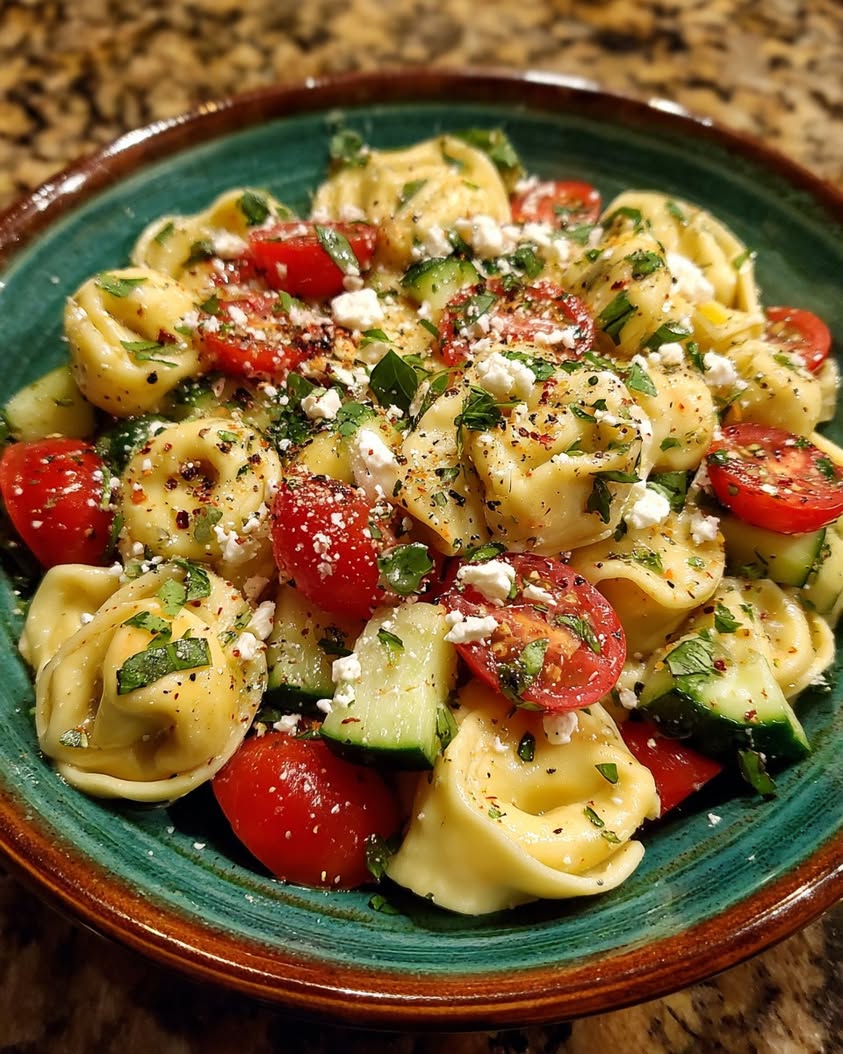
Basil Feta Tortellini Pasta Salad: A Zesty Summer Showstopper
Imagine a dish that perfectly captures the essence of a sunny summer day. This basil feta tortellini pasta salad does exactly that. It combines the comforting, cheesy pockets of tortellini with the bright, tangy punch of a homemade lemon vinaigrette. Consequently, every bite is a delightful contrast of creamy and zesty, hearty and fresh. This recipe is not just a side dish; it is a vibrant, satisfying meal that stands confidently at the center of any picnic table or dinner spread.
Furthermore, this tortellini pasta salad recipe is incredibly versatile. You can serve it warm right after tossing, or let it chill for a few hours to let the flavors meld beautifully. The creamy feta cheese crumbles into the dressing, creating little pockets of salty richness that complement the fragrant fresh basil. Ultimately, this dish is a guaranteed crowd-pleaser, whether you are hosting a backyard barbecue, needing a quick weeknight dinner, or preparing a make-ahead lunch for the week.
Additionally, the beauty of this recipe lies in its simplicity and speed. With minimal prep and cook time, you can have a restaurant-quality pasta salad on your table in under thirty minutes. The ingredients are straightforward, yet they come together to create something truly special. This basil feta tortellini pasta salad is the ultimate solution for busy cooks who refuse to compromise on flavor or presentation.
Quick Recipe Highlights
- Flavor Profile: This salad delivers a masterful balance. The creamy feta and rich cheese-filled tortellini provide a savory, umami base. Meanwhile, the zesty lemon vinaigrette cuts through with a bright acidity, and the fresh basil adds a sweet, peppery finish that ties everything together.
- Texture: You will enjoy a wonderful play of textures. The tortellini offers a satisfying, pillowy chew, while the crumbled feta provides soft, creamy bits. Fresh vegetables like cherry tomatoes add a juicy pop, creating a mouthfeel that is far from boring.
- Aroma: The moment you toss the salad, the kitchen fills with an irresistible fragrance. The citrusy zest of fresh lemon mingles with the earthy, sweet scent of torn basil. This aromatic promise is a sure sign of the delicious meal to come.
- Visual Appeal: This dish is a feast for the eyes with its vibrant color palette. The green basil and red cherry tomatoes look stunning against the golden tortellini and white feta cheese. As a result, it brings a cheerful, appetizing look to any table setting.
- Skill Level Needed: This is a perfect recipe for beginners and seasoned cooks alike. The techniques involve simple boiling, whisking, and tossing. Therefore, you do not need any advanced culinary skills to achieve a spectacular result.
- Special Equipment: You only need basic kitchen tools: a large pot for boiling pasta, a mixing bowl for the vinaigrette, and a large serving bowl for tossing. A whisk or a fork for emulsifying the dressing is helpful, but not strictly necessary.
Recipe Overview
- Difficulty Level: We classify this recipe as “Easy” for several compelling reasons. The steps are sequential and simple: cook the tortellini, whisk the dressing, and combine. There is no intricate knife work or complex cooking methods. Moreover, the margin for error is very small, making it a stress-free cooking experience.
- Category: This dish brilliantly straddles multiple categories. It functions perfectly as a hearty main course salad for a light dinner. Simultaneously, it shines as a standout side dish at potlucks and cookouts. You can also pack it for lunches, making it a wonderfully versatile addition to your recipe repertoire.
- Cuisine: While tortellini hails from Italian cuisine, this preparation is a modern, American-style pasta salad. It takes inspiration from Italian flavors—basil, lemon, cheese—and presents them in a format popular for casual entertaining and picnics across the United States. It is a delicious fusion of tradition and convenience.
- Cost: This is a very cost-effective meal, especially when considering its yield. Cheese tortellini and block feta are affordable protein sources. Fresh herbs and lemons are low-cost flavor powerhouses. Overall, you can feed a family or a group of friends for a fraction of the cost of takeout, without sacrificing quality.
- Season: This salad is a quintessential summer recipe. Its bright, refreshing flavors and no-oven-required preparation make it ideal for hot weather. However, it is truly a year-round winner. You can easily enjoy it in spring for its freshness, or in fall and winter as a vibrant counterpoint to heavier meals.
- Occasion: It is the ultimate party and gathering food. Bring it to Fourth of July barbecues, potluck dinners, baby showers, or weekend picnics. Alternatively, it makes for a fantastic weekly meal prep option. Simply put, any occasion that calls for delicious, shareable food is the right occasion for this salad.
Why You’ll Love This Recipe
First and foremost, the taste and texture are absolutely irresistible. Each forkful delivers a symphony of flavors: the rich, cheesy tortellini, the salty tang of feta, the herbal punch of basil, and the bright zing of lemon. The textures are equally engaging, from the satisfying bite of the pasta to the creamy crumbles of cheese and the burst of juicy tomatoes. This combination ensures that every single bite is interesting and delicious, preventing any hint of monotony.
Secondly, the convenience factor is a major win. From start to finish, this recipe takes about twenty-five minutes, with most of that time being hands-off while the tortellini cooks. You can literally prepare a gourmet-tasting salad in the time it takes to decide on and order delivery. Furthermore, it requires minimal cleanup, using just a pot, a bowl, and a whisk. For busy individuals and families, this efficiency is a game-changer.
From a nutritional perspective, this salad offers a well-rounded profile. Tortellini provides carbohydrates for energy and often contains protein from its cheese filling. Feta cheese adds calcium and more protein. Fresh basil contributes antioxidants and vitamins, while the olive oil in the dressing offers heart-healthy fats. When you add vegetables like cherry tomatoes, you increase the fiber and nutrient content even further. Therefore, it is a meal that satisfies your hunger and nourishes your body.
Socially, this dish is a superstar. It travels beautifully, does not require constant refrigeration once served, and appeals to a wide range of palates. Bringing this basil feta tortellini pasta salad to an event guarantees compliments and recipe requests. It serves as a fantastic conversation starter and demonstrates thoughtfulness and culinary skill. Essentially, it makes you look like a hosting pro with minimal effort.
Finally, it is incredibly cost-effective and accessible. The ingredients are common and available at any standard grocery store. You do not need expensive, hard-to-find items. By making this at home, you save significant money compared to buying a similar prepared salad from a gourmet market or restaurant. This accessibility means you can enjoy a luxurious-tasting meal on a regular budget, which is always a reason to celebrate.
Historical Background and Cultural Significance
The story of this dish begins with its core component: tortellini. Legend traces tortellini’s origins to the Italian region of Emilia-Romagna, with fanciful tales linking its shape to the navel of Venus. Traditionally, these stuffed pasta parcels were served in rich broths, like capon broth, for festive occasions. Their labor-intensive nature made them a special- treat, symbolizing hospitality and celebration in Italian culture. The evolution of tortellini from a broth-based first course to a salad ingredient reflects the global adaptation of Italian cuisine.
Pasta salads themselves have a distinct cultural footprint, particularly in the United States. They gained massive popularity in the mid-20th century, becoming a staple of potlucks, picnics, and backyard barbecues. This was partly due to the rise of convenience foods and the American love for hearty, make-ahead dishes that could feed a crowd. The fusion of Italian pasta with mayonnaise-based or vinaigrette-style dressings created a new, uniquely American food category that prioritized ease and flavor.
The specific combination of basil and feta, while not classically Italian together, draws from broader Mediterranean flavor principles. Feta cheese hails from Greece, where it is often paired with lemon and oregano. Basil is a cornerstone of Italian pesto. Merging these elements in a pasta salad represents a modern, global approach to cooking. It takes the best flavors from different culinary traditions and combines them in an accessible, crowd-pleasing format. This evolution speaks to how recipes travel and transform across borders.
Today, recipes like this basil feta tortellini pasta salad represent a desire for fresh, flavorful food that does not require slaving in the kitchen. They honor the heritage of their components while embracing contemporary eating habits. This salad is a testament to the ongoing dialogue between tradition and innovation in the culinary world. It shows how home cooks continuously adapt classic ideas to suit their tastes, time constraints, and available ingredients, keeping food culture vibrant and ever-changing.
Ingredient Deep Dive
Let us start with the star: cheese tortellini. Originating in Northern Italy, tortellini are small, ring-shaped stuffed pasta. The filling traditionally includes meats like prosciutto or pork, but cheese-filled versions have become immensely popular worldwide. They offer a convenient source of protein and carbohydrates, making the salad more substantial. For the best results, choose a high-quality refrigerated or frozen tortellini over dried. Look for brands with simple ingredient lists. After cooking, rinse them briefly under cool water to stop the cooking process and prevent sticking, but do not over-rinse as you will wash away starches that help the dressing cling.
Next, we have feta cheese, a brined curd cheese with a tangy, salty flavor. Authentic Greek feta is made from at least 70% sheep’s milk, sometimes blended with goat’s milk. This cheese is a good source of calcium, phosphorus, and protein. When selecting feta, opt for a block packed in brine rather than pre-crumbled dry feta. The block is creamier, less salty, and holds its shape better when crumbled. Store leftover feta submerged in its brine in the refrigerator. If you need a substitute, creamy goat cheese (chèvre) or ricotta salata can work, though the flavor profile will shift.
Fresh basil is the herbal soul of this dish. A member of the mint family, basil is native to tropical regions from Central Africa to Southeast Asia. It is rich in vitamins A, K, and C, and contains antioxidants like beta-carotene. The key to maximizing its flavor is to add it just before serving and to tear the leaves by hand rather than chopping them with a knife. Tearing helps prevent bruising and blackening, releasing the aromatic oils more gently. Store basil stems in a glass of water on the counter, like a bouquet, for short-term freshness. For a different twist, you could substitute fresh mint or a combination of parsley and a pinch of dried oregano.
The lemon vinaigrette brings everything to life. Fresh lemon juice is non-negotiable for its bright, clean acidity. Bottled juice often contains preservatives and lacks the vibrant flavor of fresh. The zest, the yellow outer part of the peel, contains potent citrus oils that intensify the lemon flavor without additional acidity. Extra virgin olive oil forms the base of the dressing, providing richness and helping to carry the flavors. A good-quality olive oil makes a noticeable difference. Finally, a touch of honey or maple syrup balances the sharpness of the lemon and mustard. Whisk the dressing vigorously to create an emulsion, which means the oil and acid combine into a smooth, cohesive sauce that coats the salad evenly.
Common Mistakes to Avoid
- Overcooking the Tortellini: This is the most critical error. Mushy, bloated tortellini will ruin the salad’s texture. Always cook according to package directions for “al dente,” and remember they will continue to soften slightly as they cool and absorb the dressing. Start tasting a minute or two before the suggested time is up.
- Using Pre-Crumbled Feta: Pre-crumbled feta is often drier, saltier, and coated with anti-caking agents. It does not integrate into the dressing as beautifully. Instead, purchase a block of feta in brine and crumble it yourself just before adding to the salad. The difference in creaminess and flavor is substantial.
- Skipping the Lemon Zest: The zest is where the true, fragrant lemon essence lives. Using only juice will give you acidity but miss the deep, aromatic citrus flavor that makes the vinaigrette special. Always zest your lemon before juicing it for maximum impact.
- Not Tasting and Adjusting the Dressing: Dressings need balance. After whisking, dip a piece of tortellini or lettuce into it and taste. You may need a pinch more salt, another squeeze of lemon, or a drizzle of honey. Seasoning is personal, so adjust to your preference before tossing.
- Adding Dressing to Hot Pasta: Pouring vinaigrette onto piping hot tortellini can cause the oil to separate and the fresh herbs to wilt instantly. Allow the cooked pasta to cool for at least 10-15 minutes, or rinse it briefly with cool water, before adding the dressing and fresh ingredients.
- Chopping the Basil with a Knife: A knife can bruise and blacken delicate basil leaves, leading to a bitter taste and unattractive dark spots. Gently tear the leaves with your hands to preserve their color, texture, and essential oils.
- Forgetting to Season the Pasta Water: The water you boil the tortellini in should taste like the sea. This is your primary opportunity to season the pasta itself. Generously salt the boiling water before adding the tortellini; it makes a fundamental difference in the final flavor.
- Not Reserving Pasta Water: Before draining, scoop out about a 1/4 cup of the starchy cooking water. If your salad seems a bit dry after tossing, adding a splash of this water can loosen the dressing and help it cling to the pasta more effectively.
Essential Techniques
Mastering the vinaigrette emulsion is crucial. An emulsion is a stable mixture of two liquids that normally do not combine, like oil and vinegar. To achieve this, start by combining your acidic elements (lemon juice, mustard) and seasonings in a bowl. Then, whisk constantly while you drizzle in the olive oil in a very slow, steady stream. This gradual incorporation breaks the oil into tiny droplets that suspend in the acid, creating a creamy, unified dressing. If you dump the oil in all at once, it will simply separate. If your dressing breaks, you can fix it by starting with a fresh teaspoon of mustard in a clean bowl and slowly re-whisking the broken dressing into it.
Properly cooking and cooling the tortellini is another key technique. Bring a large pot of well-salted water to a rolling boil. Add the tortellini and stir gently to prevent sticking. Cook until they are just tender, or al dente. Immediately drain and rinse briefly under cool running water to halt the cooking. Alternatively, you can spread them on a baking sheet to cool quickly. This step prevents overcooking and ensures the pasta maintains its perfect texture when combined with the other ingredients. The goal is pasta that is tender but still has a slight bite.
The art of gentle folding is important for assembly. Use a large, wide bowl to give yourself plenty of room. Add the cooled tortellini, most of your add-ins (like tomatoes), and about three-quarters of the dressing. With a large rubber spatula or serving spoon, gently lift from the bottom and fold over the top. This method combines everything without crushing the tortellini or bruising delicate ingredients. After folding, taste and decide if you need the remaining dressing. Finally, fold in the fresh basil and crumbled feta last to keep them looking and tasting their best.
Pro Tips for Perfect Basil Feta Tortellini Pasta Salad
For an extra flavor boost, toast the tortellini. After boiling and draining, spread them on a baking sheet, drizzle with a tiny bit of olive oil, and broil for 2-3 minutes until the edges just begin to crisp and golden. This adds a wonderful textural contrast and a deeper, nutty flavor to the pasta.
Infuse your olive oil for the dressing. Gently warm the olive oil with a clove of smashed garlic and a strip of lemon zest for about 5 minutes over low heat. Let it cool completely, then strain. Use this infused oil in your vinaigrette for a more complex, aromatic base.
Add a handful of toasted pine nuts or walnuts. Toasting nuts unlocks their oils and intensifies their flavor. Simply add them to a dry skillet over medium heat for 3-5 minutes, shaking often, until fragrant and lightly browned. They provide a fantastic crunch and richness.
Let the dressed salad rest. After the initial toss, cover the salad and let it sit in the refrigerator for 30 minutes to an hour before serving. This allows the tortellini to absorb some of the dressing and the flavors to marry. Always give it a final gentle fold and add a fresh garnish before serving.
Use the salad as a base for protein. This salad is fantastic on its own, but you can easily turn it into a more robust meal by adding grilled chicken strips, flaked canned tuna, chickpeas, or white beans. Fold these in at the end to keep their texture intact.
Get creative with your vegetables. While cherry tomatoes are classic, consider adding thinly sliced red onion (soaked in cold water for 10 minutes to tame the bite), roasted red peppers, chopped artichoke hearts, or blanched asparagus spears cut into pieces. This customizes the salad to your taste and what is in season.
Garnish with purpose. Do not just mix in all the basil. Reserve a few perfect, whole leaves to place on top of the salad just before serving. You can also add a final sprinkle of feta, a grind of black pepper, or a drizzle of high-quality olive oil for a beautiful, finished presentation.
Variations and Adaptations
For regional variations, consider a Greek-inspired twist. Substitute the tortellini with orzo pasta, add chopped cucumbers, Kalamata olives, and red onion. Use oregano in place of basil, and keep the feta and lemon vinaigrette. For an Italian Caprese version, use mozzarella pearls instead of feta, add fresh basil leaves and halved cherry tomatoes, and dress with a balsamic vinaigrette instead of lemon.
Seasonal adaptations are simple and rewarding. In spring, add blanched peas and fresh mint. For summer, incorporate grilled corn kernels and zucchini ribbons. In fall, roasted butternut squash cubes and toasted pecans add warmth. During winter, roasted broccoli florets and sun-dried tomatoes bring depth and color, ensuring the salad remains a year-round favorite.
Dietary modifications are straightforward. For a gluten-free version, use certified gluten-free cheese tortellini, which are now widely available. To make it dairy-free or vegan, seek out vegan tortellini (often filled with plant-based cheeses or vegetables) and use a vegan feta alternative made from tofu or almonds. The lemon vinaigrette is naturally vegan as written.
Experiment with flavor variations by changing the herb profile. Try using dill and parsley for a more garden-fresh taste, or cilantro and a pinch of cumin for a Southwestern flair. You can also add a teaspoon of pesto to the vinaigrette for an extra basil-garlic punch, or a pinch of red pepper flakes for a subtle heat.
Texture modifications can keep the salad exciting. Add crunch with diced bell peppers, sunflower seeds, or crispy chickpeas. For creaminess, fold in diced avocado just before serving (note it will not hold for long storage). For a heartier feel, include cooked and cooled grains like farro or quinoa along with the tortellini.
Presentation alternatives can elevate the dish. Serve the salad in a hollowed-out large heirloom tomato or bell pepper for individual portions. Alternatively, layer it in a clear glass trifle bowl to show off the colorful ingredients. Skewer tortellini, cherry tomatoes, basil leaves, and feta cubes on appetizer picks for a fun, handheld party option.
Serving and Presentation Guide
Plating techniques matter for visual appeal. For family-style service, use a wide, shallow bowl or a colorful platter. Mound the salad in the center, allowing some of the vibrant ingredients like red tomatoes and green basil to tumble naturally to the sides. Avoid overfilling the dish; leave a clean border for an elegant look. For individual servings, use a ring mold to create a neat, cylindrical tower of salad on each plate, then carefully lift the mold away.
Garnishing is the final touch that signals care. Beyond reserved basil leaves, consider a light dusting of freshly cracked black pepper, a few delicate edible flowers, a sprinkle of flaky sea salt, or a drizzle of a reduced balsamic glaze in a decorative pattern around the plate. A final microplane grating of lemon zest over the top just before serving releases an incredible aroma.
Traditional accompaniments for a pasta salad like this include simple grilled proteins. Grilled chicken breasts, shrimp skewers, or Italian sausages pair beautifully. A crusty baguette or garlic bread is perfect for soaking up any extra dressing. For a lighter meal, serve it alongside a simple green salad with a light vinaigrette to complement, not compete with, the main salad.
Modern serving suggestions lean towards interactive and customizable presentations. Set up a “pasta salad bar” with the base salad in a large bowl and small dishes of additional toppings: extra feta, toasted nuts, different fresh herbs, grilled vegetables, or protein options. This allows guests to personalize their portions, which is especially fun for casual gatherings.
Temperature considerations are flexible. This salad is delicious served slightly chilled, at room temperature, or even slightly warm. If serving chilled, take it out of the refrigerator 15-20 minutes before serving to take the extreme chill off, which allows the flavors to be more pronounced. If serving warm, toss the dressing with the just-cooled tortellini and serve immediately.
Portion control is easy to manage. As a main course, plan for about 1.5 to 2 cups per person. As a side dish, 3/4 to 1 cup is sufficient. When serving at a buffet with other dishes, err on the side of smaller portions, as people will want to try a bit of everything. Remember, you can always refill the bowl if it runs out quickly.
Wine and Beverage Pairing
Wine pairings should complement the salad’s bright acidity and creamy cheese. A crisp, dry white wine like Sauvignon Blanc or Pinot Grigio is an excellent choice. Their citrus and green apple notes mirror the lemon in the vinaigrette and cut through the richness of the feta. For a rosé option, choose a dry Provençal style with strawberry and herbal notes that will harmonize with the basil and tomato. If you prefer red, opt for a light-bodied, low-tannin red like a chilled Beaujolais or a Pinot Noir served slightly cool.
Non-alcoholic alternatives can be just as sophisticated. Sparkling water with a twist of lemon or a few muddled basil leaves is refreshing and thematic. Iced herbal teas, like lemon verbena or mint, are fantastic pairings. For a more celebratory feel, a non-alcoholic sparkling wine or a “mocktail” of ginger beer, lime, and a basil sprig makes the meal feel special without the alcohol.
While not typical for a salad, coffee and tea pairings can work if this is part of a larger brunch. A light roast coffee with citrusy notes would complement the lemon. A cup of iced green tea, with its grassy, slightly sweet profile, can be a surprisingly good match, cleansing the palate between bites of the savory, cheesy pasta.
Temperature is key for beverages. White wines, rosés, and non-alcoholic sparklers should be served well-chilled, between 45-50°F. Light reds like Pinot Noir are best served slightly cooler than room temperature, around 55°F. Iced teas and sparkling waters should be ice-cold to provide a refreshing contrast to the salad.
Serving suggestions include offering a variety. At a gathering, set out a bottle of white wine and a pitcher of a signature non-alcoholic beverage. Provide clear glassware to show off the colors of the drinks. Always ensure plenty of ice and fresh citrus slices or herb sprigs for garnishing glasses, which ties the beverage presentation back to the flavors on the plate.
Storage and Shelf Life
Proper storage methods are essential for food safety and quality. Transfer the salad to an airtight container. Glass containers are ideal as they do not absorb odors. Press a piece of plastic wrap directly onto the surface of the salad before sealing the lid; this minimizes air exposure and helps prevent the basil from oxidizing and turning black. Store the container in the coldest part of your refrigerator, typically the middle or lower shelf, not in the door.
The ideal storage temperature is 40°F or below. Your refrigerator should be set to maintain this temperature consistently. The salad’s shelf life is 3-4 days when stored correctly. After this time, the texture of the tortellini will continue to soften, and the fresh herbs will wilt significantly. The flavors, however, often improve over the first 24 hours.
Container recommendations focus on size and material. Choose a container that is just large enough to hold the salad without crushing it, but with minimal empty space to reduce air inside. As mentioned, glass is best. If using plastic, ensure it is BPA-free and designated for food storage. Avoid storing in metal containers, as the acid from the lemon vinaigrette can react with the metal and impart an off-flavor.
Recognizing signs of spoilage is crucial. Discard the salad if you notice an off or sour smell, significant discoloration (especially a slimy texture on the pasta or vegetables), or any signs of mold. If the salad has been left at room temperature for more than 2 hours (or 1 hour if the temperature is above 90°F), it should be discarded due to the risk of bacterial growth.
Reheating instructions are generally not recommended, as this is a cold salad. However, if you must serve it warm, the best method is to gently warm a portion in a skillet over low heat with a tiny splash of water or broth to prevent sticking and drying out. Stir constantly and only heat until just warmed through. Do not microwave, as this will make the tortellini rubbery.
Freezing guidelines are not advised for this specific recipe. The high water content in the fresh vegetables and the dairy-based cheese filling in the tortellini do not freeze and thaw well. The texture will become mushy and watery upon thawing. This salad is best enjoyed fresh or refrigerated for a few days.
Make Ahead Strategies
An efficient prep timeline can turn this into a true 10-minute assembly dish. The day before, cook the tortellini, rinse, cool, and store it in an airtight container in the fridge. Prepare the lemon vinaigrette and store it in a separate jar in the refrigerator. Wash and halve the cherry tomatoes, and store them in a container. Crumble the feta and keep it wrapped. On the day of serving, simply combine all components and fold in the fresh basil.
Storage between steps is simple with proper planning. Keep all prepped components cold and separate. The dressing may solidify slightly in the fridge; simply let it sit at room temperature for 10 minutes and shake vigorously to re-emulsify before using. Keeping the elements apart until the last moment preserves the best possible texture, especially for the basil and any crunchy add-ins like nuts.
Assessing the quality impact of make-ahead steps is important. The tortellini may absorb some dressing and soften slightly when stored, but this is often desirable as it allows flavors to penetrate. The key is to reserve a little extra dressing to refresh the salad just before serving if it seems dry. Adding the fresh basil and any delicate garnishes at the last second ensures they look and taste their best.
Assembly tips for make-ahead success: When you are ready to serve, place the cold tortellini in your serving bowl. Add the tomatoes and any other sturdy vegetables. Shake or whisk the dressing thoroughly and pour about three-quarters of it over the salad. Toss gently. Let it sit for 5-10 minutes, then assess. Add more dressing if needed. Finally, fold in the crumbled feta and fresh basil.
Reheating guidelines, as noted, are not typical. The make-ahead strategy is designed for a cold or room temperature salad. If you prefer it less chilled, simply take the assembled salad out of the refrigerator 20-30 minutes before serving. This takes the edge off the cold without compromising food safety.
For the freshest element additions, consider setting aside a small portion of each component. Reserve a handful of the prettiest cherry tomato halves, a few tablespoons of feta, and a small bunch of basil. After you have assembled the main salad, use these reserved items to artfully garnish the top. This creates the visual impression of a just-made salad, even though most of the work was done in advance.
Scaling Instructions
Halving the recipe is straightforward for smaller households. Simply divide all ingredient quantities by two. Use a medium pot for cooking the tortellini. The dressing can be made in a small jar by shaking all halved ingredients together. The assembly process remains identical. Be mindful that cooking time for the tortellini may be slightly less since you are boiling a smaller quantity in the same volume of water; keep a close eye on it.
Doubling or tripling the recipe for a crowd requires minor adjustments. Use your largest stockpot to ensure the tortellini have plenty of room to cook without sticking together; you may need to cook in two batches for tripling. Whisk the dressing in a very large bowl or directly in a large measuring pitcher. For assembly, use an extra-large mixing bowl or even a clean, food-safe storage bin. Toss in batches if necessary to ensure even coating.
Equipment adjustments are key when scaling up. For a doubled recipe, your standard kitchen tools may suffice. For tripling or more, consider using a stand mixer with the paddle attachment on low speed to gently combine the salad and dressing in batches. Ensure you have a serving vessel large enough, or plan to use multiple bowls. Having extra tongs or large spoons for serving is also helpful.
Timing modifications are minimal. The tortellini cooking time itself does not change significantly with quantity, as long as the water returns to a boil quickly after adding the pasta. However, the time to bring the large volume of water to a boil initially will be longer. Factor this into your planning. Dressing a very large batch may take a few extra minutes to ensure everything is evenly coated.
Storage considerations become more important with large batches. If not serving immediately, store the scaled-up salad in multiple smaller containers rather than one gigantic one. This promotes faster, more even cooling in the refrigerator and makes it easier to take out only what you need for a meal, keeping the rest fresher for longer.
Nutritional Deep Dive
A macro breakdown for a typical serving reveals a balanced profile. The tortellini provides complex carbohydrates for sustained energy. The cheese in the tortellini and the feta contribute protein and fat, making the salad satiating. The olive oil in the dressing adds heart-healthy monounsaturated fats. While exact numbers vary by specific brands and ingredients, this salad generally offers a good mix of all three macronutrients, preventing blood sugar spikes and keeping you full.
The micronutrient analysis is promising. Feta cheese is an excellent source of calcium and phosphorus, vital for bone health. Basil provides vitamin K, essential for blood clotting, and vitamin A in the form of beta-carotene, which supports vision and immunity. Tomatoes contribute vitamin C and lycopene, a powerful antioxidant. Lemon juice is rich in vitamin C. Together, these ingredients make the salad a nutrient-dense choice.
Health benefits extend beyond basic nutrition. The monounsaturated fats from olive oil can support heart health. The antioxidants in basil, tomatoes, and lemon help combat oxidative stress in the body. The fiber from the vegetables and whole-wheat tortellini (if used) supports digestive health. Choosing a salad like this over heavier, creamier pasta salads can contribute to a balanced diet without feeling deprived.
Dietary considerations are important to note. Those monitoring sodium should be aware that feta cheese and the brine in packaged tortellini can be high in salt. You can mitigate this by using a low-sodium feta and rinsing the cooked tortellini well. For those watching carbohydrates, portion control is key, or consider using a higher-protein, lower-carb pasta alternative. The salad contains dairy, which is a consideration for those with lactose intolerance or a milk allergy.
Portion analysis is your friend for weight management. A standard serving as a main course is satisfying and can fit into a balanced diet. To make it even more weight-conscious, increase the ratio of non-starchy vegetables (like adding spinach or arugula) to tortellini. You can also slightly reduce the amount of olive oil in the dressing without sacrificing too much flavor, as the lemon juice and mustard provide plenty of taste.
Weight management tips include using this salad as a tool. Its high flavor and satisfying texture can help curb cravings for less nutritious options. Preparing it at home gives you complete control over ingredients and portions. Packing it for lunch prevents impulsive, unhealthy takeout choices. Because it is delicious both fresh and as leftovers, it supports consistent, healthy eating habits throughout the week.
Dietary Adaptations
For a gluten-free adaptation, the only critical change is the pasta. Seek out certified gluten-free cheese tortellini, which are increasingly available in the refrigerated or frozen section of major grocery stores. Ensure all other packaged ingredients, like Dijon mustard, are labeled gluten-free. The rest of the recipe—feta, basil,
Print
Basil Feta Tortellini Pasta Salad with Lemon Vinaigrette
Description
A refreshing and vibrant pasta salad featuring cheese tortellini, fresh basil, crumbled feta, and a zesty lemon vinaigrette, perfect for picnics or light meals.
Ingredients
For the Crust:
- 1 pound cheese tortellini
- 1 cup cherry tomatoes, halved
- 1/2 cup kalamata olives, pitted and sliced
- 1/2 red onion, thinly sliced
- 1 cup fresh basil leaves, chopped
- 1 cup crumbled feta cheese
- 1/4 cup extra virgin olive oil
- 3 tablespoons fresh lemon juice
- 1 teaspoon Dijon mustard
- 1 garlic clove, minced
- Salt and black pepper to taste
Instructions
1. Prepare the Crust:
- Cook the tortellini according to package directions until al dente. Drain and rinse under cold water to cool.
- In a large bowl, combine the cooled tortellini, cherry tomatoes, olives, red onion, basil, and feta cheese.
- In a small bowl, whisk together the olive oil, lemon juice, Dijon mustard, minced garlic, salt, and pepper to make the vinaigrette.
- Pour the vinaigrette over the pasta salad and toss gently to coat all ingredients evenly.
- Chill in the refrigerator for at least 30 minutes before serving to allow flavors to meld.
Notes
You can customize the seasonings to taste.

I’m Shaykee—born in Morocco, seasoned across continents. From airplane galleys to home kitchens, I share the flavors and stories that shaped my journey.