
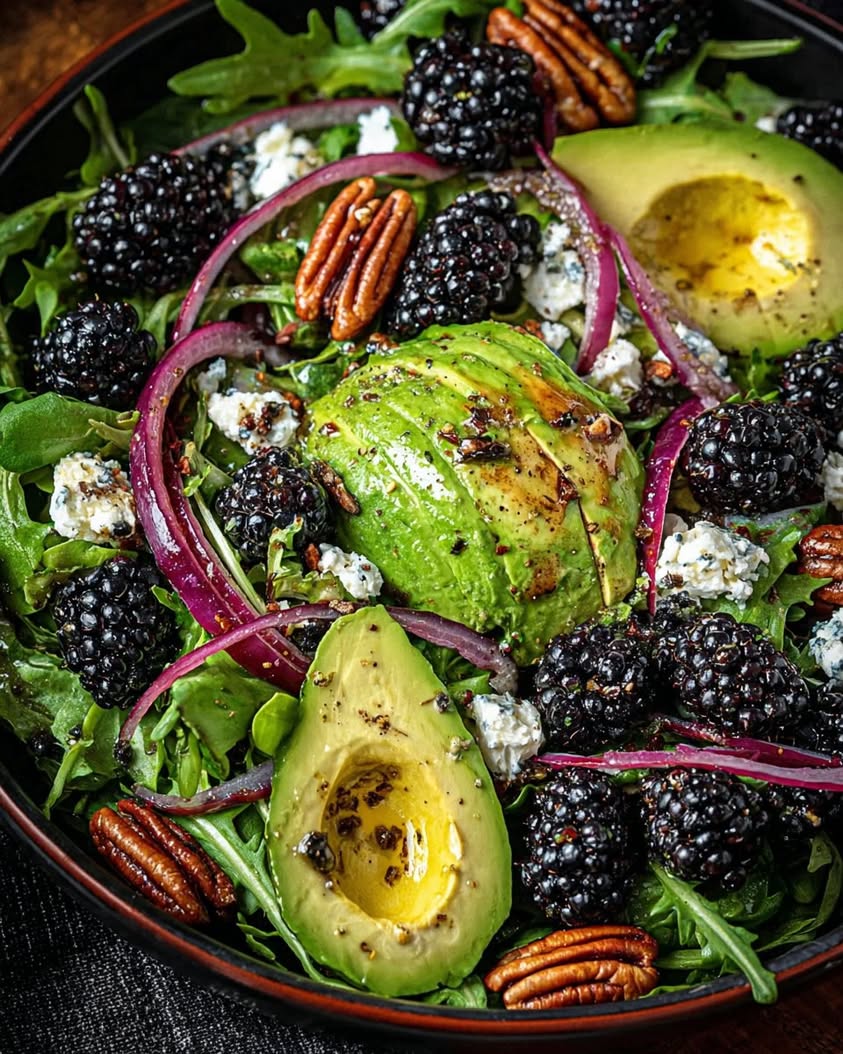
Blackberry & Avocado Salad with Honey Lemon Vinaigrette: A Symphony of Sweet and Savory
This Blackberry & Avocado Salad with Honey Lemon Vinaigrette is a stunning celebration of fresh, vibrant ingredients. It masterfully combines creamy, rich avocado with the bright, juicy pop of seasonal blackberries. Consequently, every bite delivers a delightful contrast that is both refreshing and deeply satisfying. The homemade honey lemon vinaigrette ties everything together with its perfect balance of sweet and tangy notes. Ultimately, this salad recipe is a testament to how simple ingredients can create an extraordinary eating experience.
Imagine a dish that looks as beautiful as it tastes, featuring a gorgeous palette of deep purples, lush greens, and creamy whites. This healthy salad is not just a side dish; it is a light main course that will impress at any dinner party or provide a nourishing lunch. Furthermore, it comes together in just fifteen minutes, making it an ideal choice for busy weeknights. The combination of textures and flavors is truly unforgettable, offering a gourmet experience with minimal effort. You will find yourself returning to this recipe again and again.
The magic of this Blackberry & Avocado Salad lies in its versatility and nutritional profile. It is packed with healthy fats, antioxidants, and vitamins, making it a powerhouse of wellness. Whether you are seeking a quick lunch or an elegant starter, this dish delivers on all fronts. The honey lemon vinaigrette is so delicious you will want to put it on everything. Get ready to fall in love with this simple yet sophisticated salad that celebrates the best of fresh produce.
Quick Recipe Highlights
- Flavor Profile: This salad offers a complex dance of flavors. You experience the creamy, mild fat from the avocado, which beautifully contrasts with the tart sweetness of the blackberries. Meanwhile, the honey lemon vinaigrette adds a bright, tangy finish that enhances every component without overpowering them.
- Texture: The mouthfeel is a crucial part of the experience. Expect the lush, buttery softness of ripe avocado against the gentle burst of juicy blackberries. Additionally, the optional add-ins like nuts or seeds provide a satisfying crunch that completes the textural symphony.
- Aroma: The scent is fresh and invigorating. The dominant notes come from the bright, citrusy zest of the lemon in the vinaigrette, complemented by the subtle, earthy fragrance of the fresh greens. It smells like a sunny, healthful day.
- Visual Appeal: This dish is a feast for the eyes. The deep purple-black of the berries creates a stunning contrast against the vibrant green of the spinach and the pale green of the avocado. It is a salad that looks as incredible as it tastes, perfect for social media or impressing guests.
- Skill Level Needed: This is an absolutely beginner-friendly recipe. In fact, no cooking is required whatsoever. The only skills needed are the ability to whisk a dressing and chop some vegetables. It is a fantastic introduction to making homemade salads with from-scratch vinaigrettes.
- Special Equipment: You need virtually no special tools. A good chef’s knife for slicing the avocado, a cutting board, a small bowl or jar for shaking the vinaigrette, and a large salad bowl for tossing are all that is required. A microplane for zesting the lemon is helpful but not essential.
Recipe Overview
- Difficulty Level: This Blackberry & Avocado Salad is classified as easy for a very good reason. There is no complex cooking technique or hard-to-find ingredient. The process involves simple assembly and making a straightforward vinaigrette. Anyone, regardless of their experience in the kitchen, can achieve perfect results with this healthy salad recipe on their first try.
- Category: This dish fits wonderfully into multiple meal categories. It shines as a light main course for lunch, an elegant starter for a multi-course dinner, or a vibrant side dish alongside grilled chicken or fish. Its flexibility makes it a valuable addition to your culinary repertoire for any time of day.
- Cuisine: While not tied to one specific tradition, this salad draws inspiration from modern California cuisine, which emphasizes fresh, local, and vibrant ingredients. It also has touches of contemporary American cooking, where fruit in salads is celebrated for its ability to balance flavors and add nutritional value.
- Cost: The cost is generally moderate and depends heavily on the seasonality of the blackberries. Avocados, spinach, and lemons are typically affordable year-round. Using seasonal, local blackberries will significantly reduce the cost. Overall, it is a cost-effective way to create a restaurant-quality, healthy meal at home.
- Season: This salad is truly perfect for late spring and summer when blackberries are at their peak of sweetness and affordability. However, it also serves as a wonderful burst of brightness during the colder months, reminding you of summer’s bounty. It is a versatile dish for any season.
- Occasion: It is ideal for a wide array of events. Serve it at a casual weekend brunch, a formal dinner party, a potluck, or as a simple yet satisfying weekday lunch. Its elegant appearance makes it special, while its ease of preparation makes it practical for daily life.
Why You’ll Love This Recipe
First and foremost, the taste and texture appeal of this Blackberry & Avocado Salad is undeniable. The creamy avocado melts in your mouth, creating a rich base that is perfectly cut by the juicy, slightly tart pop of fresh blackberries. Each leaf of spinach carries the sweet-tangy honey lemon vinaigrette, ensuring every single bite is packed with flavor. This combination is not just refreshing; it is genuinely exciting and far from the ordinary salad experience. You will find the interplay of sweet, savory, and tangy elements to be completely addictive.
From a convenience standpoint, this healthy salad recipe is a true lifesaver. It requires zero cooking and comes together in about fifteen minutes, making it the ultimate fast and fresh meal. You can easily whip it up during a busy lunch break or assemble it quickly before guests arrive. Furthermore, the ingredients are simple and often already in your kitchen or easy to find at any local grocery store. This accessibility means you can enjoy a gourmet-quality dish without any stress or lengthy preparation.
The nutritional advantages are another massive reason to adore this dish. Avocados provide a fantastic source of healthy monounsaturated fats and fiber, which are great for heart health and keeping you full. Blackberries are loaded with antioxidants, vitamin C, and vitamin K. Spinach adds iron and a host of other vital nutrients. Together, they create a power-packed meal that fuels your body beautifully. This salad is a delicious way to eat well and feel great, proving that healthy eating does not have to be boring.
For social and entertaining value, this salad is a guaranteed showstopper. Its vibrant colors and elegant composition look like they came from a high-end restaurant. Serving this to friends and family will undoubtedly draw compliments and questions about the recipe. It is a conversation starter that demonstrates your knack for combining flavors in a sophisticated way. Whether it is a casual picnic or a formal dinner, this dish elevates the occasion and makes any meal feel special.
Finally, the cost-effectiveness and accessibility of this Blackberry & Avocado Salad make it a practical choice for any budget. Compared to eating out, making this at home saves a significant amount of money. You can control the quality of every ingredient, opting for organic or local produce as you prefer. The recipe is also highly adaptable; if blackberries are expensive, you can substitute another berry. This flexibility ensures you can always create a delicious, healthy, and impressive meal without breaking the bank.
Historical Background and Cultural Significance
The origin story of combining fruit with savory salad elements is a long and cross-cultural one. While this specific Blackberry & Avocado Salad is a modern invention, its roots lie in centuries of culinary experimentation. Historically, sweet and savory combinations were common in medieval European cooking. The contemporary trend, however, is largely attributed to the rise of California Cuisine in the late 20th century. This movement, championed by chefs like Alice Waters, emphasized using fresh, local, and seasonal ingredients in simple, innovative preparations. This salad is a direct descendant of that philosophy, celebrating the bounty of local farmers’ markets.
The cultural importance of this dish reflects our evolving relationship with food and health. In many cultures, salads were once simple side dishes of leafy greens. Today, they are often the main event, packed with proteins, grains, and fruits to create a complete, nutrient-dense meal. This Blackberry & Avocado Salad embodies this shift towards mindful eating and wellness. It represents a global palate that is unafraid to mix flavors and textures from different culinary traditions to create something new, exciting, and health-conscious.
The evolution of this recipe is a story of ingredient availability and culinary creativity. Avocados, once a regional specialty, have become a global superstar, finding their way into everything from toast to smoothies. Their creamy texture makes them a perfect fat component in a salad, replacing heavier, dairy-based dressings or cheeses. Similarly, blackberries have been cultivated for thousands of years, but their use in savory applications is a more recent development. This recipe is a product of our modern kitchen, where global ingredients are at our fingertips, encouraging innovation and personal expression on the plate.
Regional variations of this concept are endless, demonstrating its incredible adaptability. In the American South, you might find a similar salad with pecans and a buttermilk dressing. On the West Coast, chefs might add goat cheese and a citrus vinaigrette. Across the Atlantic, a European version might feature arugula instead of spinach and a different berry, like red currants. The core concept—creamy fruit meets leafy greens with a bright dressing—is a template that travels well and adapts to local tastes and ingredients, making it a truly global citizen in the world of salads.
Ingredient Deep Dive
Let us start with the star of the show: the blackberry. Cultivated from wild brambles, blackberries have a long history in Europe and North America, where they were foraged for centuries. They are members of the rose family and are technically an aggregate fruit, composed of many tiny drupelets. Nutritionally, they are a powerhouse, packed with Vitamin C, Vitamin K, and manganese. They are also one of the highest-fiber fruits and are loaded with antioxidants like anthocyanins, which give them their deep color. When selecting blackberries, look for plump, deeply colored berries without any mushy spots. Store them unwashed in a single layer in the refrigerator and wash just before using to prevent mold. If blackberries are unavailable, blueberries, raspberries, or even sliced strawberries make excellent substitutions.
Next, the creamy counterpart: the avocado. Native to south-central Mexico, avocados have been cultivated for over 5,000 years and were prized by ancient Mesoamerican cultures. The name comes from the Nahuatl word “āhuacatl.” Avocados are unique fruits because they are high in healthy monounsaturated fats, particularly oleic acid, which is linked to reduced inflammation. They are also an excellent source of potassium, fiber, and vitamins C, E, and K. To select a perfect avocado for this salad, choose one that is slightly soft to the touch but not mushy. It should yield to gentle pressure. To speed up ripening, place it in a paper bag with a banana. Store ripe avocados in the refrigerator to halt the ripening process. For a substitution, a ripe, diced mango can provide a different kind of sweetness and soft texture, though the creamy fat content will be different.
The foundation of our salad is fresh spinach. Spinach has its origins in ancient Persia and was introduced to Europe in the 12th century. It gained pop culture fame through Popeye, who touted its iron content. While its iron levels are good, its true power lies in its high levels of vitamins A and K, folate, and antioxidants like lutein. For this recipe, you want fresh, flat-leaf baby spinach for its tender texture and mild flavor. Avoid wilted or slimy leaves. Store spinach in the refrigerator in its original bag or a container lined with a paper towel to absorb moisture. If you prefer a peppery bite, arugula is a fantastic alternative. For a sturdier green, chopped romaine or kale would also work well, though kale may require a quick massage with the dressing to soften it.
The final key component is the honey lemon vinaigrette. This simple emulsion is what brings the entire dish to life. The lemon juice provides acidity, which helps balance the fat from the avocado and oil while also preventing the avocado from browning. Freshly squeezed juice is vastly superior to bottled for its bright, vibrant flavor. The honey adds a natural sweetness that mirrors the blackberries and creates a harmonious bridge between the sweet fruit and savory greens. Use a good quality, extra-virgin olive oil for its fruity, peppery notes. For a vegan version, maple syrup or agave nectar can replace the honey. If you do not have lemon juice, a good quality white wine vinegar or champagne vinegar can be used, though the flavor profile will shift slightly. This dressing is so versatile you will want to make a double batch.
Common Mistakes to Avoid
- Using Overripe or Underripe Avocados: An underripe avocado will be hard and tasteless, failing to provide the necessary creaminess. Conversely, an overripe avocado will be brown and mushy, creating an unappealing texture. The perfect avocado should yield gently to pressure like the palm of your hand.
- Washing Berries Too Early: Washing blackberries long before you assemble the salad is a common error. The excess moisture will make them soggy and can cause them to mold more quickly. Always wash your berries right before you are ready to use them and pat them dry gently with a paper towel.
- Dressing the Salad Too Far in Advance: Pouring the vinaigrette onto the salad long before serving is a recipe for a wilted, soggy mess. The acid in the lemon juice will quickly break down the delicate spinach leaves. Always dress the salad just moments before you plan to serve it to maintain crisp, fresh greens.
- Not Tasting the Dressing Before Adding It: The balance of sweet and tangy is personal. Failing to taste your honey lemon vinaigrette and adjust the seasoning is a missed opportunity. You may find you want a touch more honey for sweetness or another pinch of salt to make the flavors pop.
- Using Bottled Lemon Juice: The flavor of fresh-squeezed lemon juice is incomparably brighter and more complex than its bottled counterpart. Bottled juice often has a flat, chemically taste that will dull the entire salad. Always take the extra minute to juice a fresh lemon for the best results.
- Neglecting to Add Texture: Serving the salad with only soft ingredients (avocado, berries, spinach) can make it feel one-dimensional. Forgetting to add a crunchy element like toasted nuts, seeds, or croutons misses a key opportunity to create a more engaging and satisfying mouthfeel.
- Overcomplicating the Recipe: The beauty of this salad is its simplicity. Adding too many other ingredients can muddy the clear, beautiful flavors of the main components. Stick to the core recipe first before experimenting to understand the perfect balance it offers.
- Improperly Storing Leftovers: If you have leftovers, storing them as one mixed bowl will result in a soggy disaster. Instead, store the undressed components separately in airtight containers in the refrigerator. The dressed salad does not keep well and is best enjoyed immediately.
Essential Techniques
Mastering the vinaigrette emulsion is the first crucial technique. A vinaigrette is a temporary emulsion of oil and acid. The key to a well-balanced dressing is slowly incorporating the oil into the acid while whisking vigorously. This action breaks the oil into tiny droplets that suspend throughout the vinegar, creating a slightly thickened, cohesive dressing. If you add the oil too quickly, it will separate. For an even easier method, combine all ingredients in a small jar with a tight-fitting lid and shake vigorously until emulsified. The visual cue for success is a dressing that is slightly opaque and uniform, not a separate layer of oil floating on top.
Properly slicing the avocado is another essential skill for both presentation and texture. Start by slicing the avocado in half lengthwise around the pit. Twist the halves to separate. Carefully tap a chef’s knife into the pit and twist to remove it. To dice, make lengthwise and crosswise cuts into the avocado flesh while still in the skin, being careful not to pierce the skin. Then, use a spoon to scoop out the perfectly diced cubes. For slices, simply slice the avocado halves while in the skin and scoop out with a large spoon. This technique ensures you get beautiful, intact pieces rather than a mashed mess.
The art of assembling a salad is the final technique to perfect. To ensure every component is evenly distributed and coated, build your salad in layers in a large, wide bowl. Start with the spinach as your base. Then, strategically place the avocado and blackberries on top. Just before serving, drizzle the vinaigrette around the edges of the bowl and over the ingredients. Using salad tongs or two large spoons, gently lift and toss the salad from the bottom up. This method prevents the softer ingredients from getting crushed at the bottom and ensures a light, even coating of dressing on every leaf and piece of fruit.
Pro Tips for Perfect Blackberry & Avocado Salad
First, for the ultimate flavor, zest the lemon before you juice it and add a teaspoon of the fresh zest to your vinaigrette. The zest contains potent aromatic oils that will intensify the citrus flavor and aroma of your dressing, making it truly exceptional.
To keep your avocado from browning if you must prep it ahead, toss the diced pieces very lightly with a teaspoon of the lemon juice from your vinaigrette recipe. The citric acid creates a protective barrier that significantly slows down the oxidation process.
If your honey has crystallized or is too thick to mix easily, gently warm the jar in a bowl of warm water for a few minutes. This will return it to a liquid state, making it much easier to incorporate smoothly into your honey lemon vinaigrette.
For a more substantial salad that can serve as a full meal, add a protein. Grilled chicken breast, flaked salmon, canned chickpeas, or crumbled goat cheese are all excellent additions that complement the existing flavors beautifully.
Always taste a blackberry before adding it to the salad. Berries can vary in sweetness and tartness. If they are particularly tart, you may want to adjust the honey in your dressing slightly to maintain the perfect sweet-tangy balance.
To elevate the presentation, use a vegetable peeler to create long, elegant shavings of a mild cheese like Parmesan or Manchego over the top of the finished salad just before serving. This adds a salty, umami element and a professional touch.
If you are making the salad for a crowd, prepare all the components separately and assemble them in a large, wide, shallow bowl or platter. This “family-style” presentation allows the vibrant colors to shine and lets guests serve themselves easily.
For the best textural contrast, toast any nuts you plan to add. Toasting walnuts, almonds, or pecans in a dry skillet for a few minutes until fragrant brings out their natural oils and makes them significantly crunchier and more flavorful.
Variations and Adaptations
For regional variations, consider the ingredients local to your area. In the South, add candied pecans and a crumble of cornbread. A Mediterranean twist could include kalamata olives, cucumber, and crumbled feta cheese, using an oregano-infused vinaigrette. A tropical version might swap blackberries for mango and avocado for papaya, with a lime and cilantro dressing. These adaptations show how the core recipe can be a canvas for local flavors.
Seasonal adaptations are straightforward and recommended. In spring, use strawberries or asparagus tips. During autumn, roasted cubed butternut squash or sliced pears are wonderful additions, paired with a vinaigrette that has a touch of maple syrup instead of honey. In winter, segments of citrus like blood orange or grapefruit can provide the necessary juicy brightness when fresh berries are not at their best.
Dietary modifications are easily accommodated. For a vegan version, simply replace the honey in the vinaigrette with maple syrup or agave nectar. To make it nut-free, ensure you use seeds like sunflower or pumpkin for crunch instead of walnuts or almonds. For a Paleo or Whole30 version, use compliant mayonnaise as a base for a creamier dressing or ensure your honey substitution is approved.
Flavor variations can keep this salad exciting all year round. Add fresh herbs like mint or basil for a refreshing kick. Incorporate a teaspoon of Dijon mustard into the vinaigrette for a sharper, more complex flavor profile. For a spicy twist, add a pinch of red pepper flakes or a dash of hot sauce to the dressing to play against the sweetness of the berries and honey.
Texture modifications can tailor the salad to your preference. If you love crunch, add toasted sunflower seeds, pepitas, or homemade croutons. For extra creaminess, incorporate crumbled goat cheese, feta, or blue cheese. If you prefer a smoother, more integrated feel, you can mash half the avocado into the dressing to create a creamy avocado vinaigrette.
Presentation alternatives can make the same salad feel new. Instead of a tossed salad, create a composed plate with a bed of spinach, artfully arranged avocado slices, a cluster of blackberries, and a drizzle of dressing. For individual servings, use a ring mold to create a tall, elegant stack in the center of each plate. Serving it in a hollowed-out avocado shell is another fun and visually striking option.
Serving and Presentation Guide
Plating techniques can transform this salad from simple to stunning. For individual servings, use a pair of tongs to create a high, fluffy mound of the dressed salad in the center of a white or neutral-colored plate. This allows the vibrant colors to stand out. Alternatively, for a family-style meal, a large, wide, shallow wooden bowl or a ceramic platter provides a rustic and inviting presentation. The key is to avoid overcrowding the bowl, which can crush the delicate ingredients.
Garnishing is the final touch that adds professionalism. A final drizzle of the honey lemon vinaigrette over the top of the plated salad looks beautiful. Sprinkle with fresh, whole blackberries and a few perfectly sliced avocado pieces placed strategically on top. Fresh herb leaves like microgreens, tiny mint leaves, or basil sprigs add a touch of green and a hint of fresh aroma. A light dusting of flaky sea salt just before serving enhances all the flavors.
Traditional accompaniments for a salad like this are light and simple. A crusty, artisanal bread like a baguette or sourdough is perfect for soaking up any leftover dressing on the plate. If serving as a starter, a light, broth-based soup would precede it well. As a main course, it stands beautifully on its own but can be complemented by a simple quiche or a cup of soup.
Modern serving suggestions might include deconstructing the salad. Serve the spinach, avocado, and blackberries in separate small piles on a long rectangular plate with the vinaigrette in a small pitcher on the side, allowing guests to assemble their own bites. Another contemporary idea is to serve it in a jar for a portable lunch, layering the dressing at the bottom, then avocado, then berries, and spinach on top to prevent sogginess.
Temperature considerations are straightforward but important. All ingredients should be cold and fresh from the refrigerator. A chilled plate or bowl will help keep the salad crisp, especially on a warm day. Conversely, you do not want any component to be frozen or too cold, as this can mute the flavors. The ideal is a refreshing, cool temperature that highlights the freshness of the produce.
Portion control tips are useful for both health and event planning. As a side salad, a generous cup per person is sufficient. As a main course, plan for at least two to three cups per person. Remember that the avocado is calorie-dense, so if you are monitoring intake, you can slightly reduce the amount of avocado per serving and bulk up the volume with extra spinach or other non-starchy vegetables like sliced cucumber or bell peppers.
Wine and Beverage Pairing
Selecting the right wine pairing enhances the salad’s delicate balance. A dry or off-dry Riesling is an excellent choice because its natural acidity matches the lemon in the vinaigrette, while its slight stone fruit sweetness complements the blackberries. Another fantastic option is a Sauvignon Blanc, particularly from New Zealand, which has vibrant citrus and grassy notes that will not overpower the salad. For a rosé, choose a dry Provencal style with its crisp, mineral character. If you prefer a light red, a chilled Pinot Noir with its red fruit notes and low tannins can work surprisingly well.
Non-alcoholic alternatives should be just as thoughtfully considered. A sparkling water with a twist of lemon or a few muddled blackberries is a simple and refreshing option. For something more complex, an iced herbal tea like hibiscus or peppermint complements the fruit and herbal notes in the salad. A lemonade, especially one infused with basil or lavender, can mirror the sweet-tart profile of the vinaigrette beautifully.
While not a traditional pairing for salad, certain iced teas can be delightful. A lightly sweetened green tea iced tea offers antioxidants and a clean, slightly bitter finish that cleanses the palate. A black tea with a hint of peach or berry flavor can also echo the fruit components in the dish. The key is to avoid overly sweet or heavy drinks that would clash with the salad’s lightness.
Temperature considerations for beverages are crucial. All drinks, whether wine, water, or tea, should be served well-chilled. The cold temperature is refreshing and helps to balance the richness of the avocado. Iced beverages should be cold but not so diluted that the flavor is lost. For wines, follow standard serving temperatures: white and rosé wines between 45-50°F, and light reds like Pinot Noir slightly chilled, around 55°F.
Serving suggestions for your beverage pairings are simple. Always offer water as a baseline. If serving wine, pour it just before the salad is served to ensure it is at its peak temperature. For non-alcoholic options, consider serving them in a elegant pitcher with visible fruit or herb infusions to match the salad’s aesthetic. Presentation matters, making the entire meal feel cohesive and special.
Storage and Shelf Life
Understanding storage methods is key to enjoying any leftovers. This Blackberry & Avocado Salad is best enjoyed immediately after assembly. However, if you must store it, the components must be kept separate. Store undressed spinach in a zip-top bag or airtight container lined with a paper towel to absorb moisture. Place the washed and dried blackberries in a separate, shallow container. Store the diced avocado in a small container with a squeeze of lemon juice over the top. The vinaigrette can be stored in a jar in the refrigerator for up to a week.
Temperature requirements are non-negotiable for food safety. All components must be stored in the refrigerator at or below 40°F (4°C). The dressed salad should never be left at room temperature for more than two hours, as the moisture and nutrients in the fresh produce can quickly become a breeding ground for bacteria. Always chill ingredients promptly.
Container recommendations can make a big difference. Use glass or BPA-free plastic containers with tight-fitting lids. For the spinach, a container that is too large will have too much air, promoting wilting. For the berries, a container that is too deep can crush the bottom layers. Shallow, wide containers are often best for delicate produce. The vinaigrette is best stored in a glass jar so you can see if it has separated and easily shake it to re-emulsify.
Signs of spoilage are important to recognize. For the spinach, look for wilting, sliminess, or a foul odor. Blackberries will become mushy, develop mold (often white or green fuzz), or smell fermented. Avocado will turn from green to a deep brown and develop an off-putting smell. The vinaigrette is generally stable, but if you see any unusual mold or it smells rancid, discard it immediately. When in doubt, throw it out.
Reheating instructions are not applicable for this fresh salad. It is meant to be served cold and should never be reheated. If the components have become too cold from the refrigerator, you can let them sit at room temperature for about 10 minutes before assembling to take the harsh chill off, which can help the flavors express themselves more fully.
Freezing guidelines for this particular salad are not recommended. Freezing will completely destroy the texture of the spinach, avocado, and blackberries, turning them into a watery, mushy mess upon thawing. The only component that freezes well is the vinaigrette. You can freeze it in an ice cube tray and then transfer the cubes to a bag, thawing as needed for future use.
Make Ahead Strategies
Creating a prep timeline can make entertaining stress-free. The day before, you can wash and thoroughly dry the spinach, then store it in the refrigerator as described. You can also toast any nuts or seeds and let them cool completely before storing them at room temperature. The honey lemon vinaigrette can be made up to three days in advance and stored in the jar in the fridge. On the day of serving, all you need to do is slice the avocado, give the dressing a good shake, and assemble everything.
Storage between steps is critical for maintaining quality. Keep all prepped ingredients in their separate, airtight containers. Do not combine anything until you are ready to serve. This includes not adding the nuts until the end, as storing them with moist ingredients can make them lose their crunch. Proper storage between prep and assembly is the secret to a make-ahead salad that still tastes fresh.
Assessing the quality impact of make-ahead steps is important. Pre-washing the spinach and making the dressing ahead have a positive or neutral impact. However, slicing the avocado more than an hour in advance, even with lemon juice, will result in some browning on the surface. Washing the berries too far ahead can make them waterlogged. Therefore, prioritize your tasks: dressing and dry greens can be done early, while wet berries and avocado should be prepped just before serving.
Assembly tips for a make-ahead meal are simple. Use the “dressing at the bottom” method for individual portable jars. For a party, have all your chilled components in separate bowls and the dressing in its jar. When guests are ready to eat, combine everything in a large bowl and toss. This final-minute assembly takes less than a minute but makes all the difference in texture and presentation.
Regarding reheating guidelines, remember that this is a cold salad. There is no reheating involved. The goal is to keep everything properly chilled until the moment of service. If you have stored your dressing in the refrigerator, it may solidify slightly due to the olive oil. Simply let it sit at room temperature for 15-20 minutes before serving, or run the jar under warm water and shake to liquefy it again.
Knowing when to add fresh elements is the final key. Any delicate herbs, like basil or mint, should be torn and added at the very end of assembly to prevent wilting. Similarly, any crunchy elements like croutons or toasted nuts should be added at the last second to maintain their texture. This ensures that every component is at its peak when the salad hits the table.
Scaling Instructions
Halving the recipe is straightforward for a smaller meal. Simply divide all the ingredient quantities by two. Use one small avocado, about 1.5 cups of spinach, and 3/4 cup of blackberries. For the vinaigrette, whisk together 1.5 tablespoons of lemon juice, 1.5 teaspoons of honey, 3 tablespoons of olive oil, and a small pinch of salt and pepper. The assembly method remains exactly the same. This is perfect for a lunch for one or two people.
Doubling or tripling the recipe for a crowd requires a bit more planning. Multiply all ingredients accordingly. The most important tip is to mix the dressing in a very large jar or a bowl with a spout to make tossing easier. When assembling, use the largest bowl you have and consider mixing in batches to ensure even distribution without crushing the ingredients. You may need to make the dressing in two separate batches to ensure proper emulsification, as shaking a completely full jar can be ineffective.
Equipment adjustments are necessary when scaling up. A standard-sized salad bowl will not be sufficient for a doubled or tripled recipe. Invest in a large, restaurant-quality stainless steel mixing bowl. You will also need larger serving utensils for tossing. If you are making individual portions, ensure you have enough small plates or jars for everyone. For a large event, a buffet-style setup with the salad in a large, wide platter and the dressing in a pitcher on the side often works best.
Timing modifications are minimal when scaling this no-cook salad. The prep time will increase linearly with the quantity. Chopping four avocados takes longer than chopping two. However, since there is no cooking involved, you do not need to worry about oven space or stovetop timing. The entire process remains an assembly job, just on a larger scale. Delegate tasks like washing berries or tearing spinach to helpers to speed up the process for a big group.
Storage considerations become more complex with larger batches. You will have more containers of prepped ingredients to manage in the refrigerator. Ensure you have enough space to store everything without stacking containers that could crush the produce. For leftovers, the “separate components” rule is even more critical. Having multiple large batches of dressed salad leftover is a recipe for food waste, so try to estimate your needs accurately and dress only what you will serve immediately.
Nutritional Deep Dive
A macro breakdown of this salad reveals a well-balanced profile. The primary source of healthy fats comes from the avocado and the olive oil in the dressing, providing sustained energy and aiding in the absorption of fat-soluble vitamins. The carbohydrates are primarily from the blackberries and spinach, which are high in fiber, leading to a slow and steady release of energy. There is a small amount of protein from the spinach, but for a more balanced meal, adding a protein source like grilled chicken or chickpeas is recommended. This macro combination is excellent for blood sugar
Print
Blackberry & Avocado Salad with Honey Lemon Vinaigrette
Description
A refreshing and vibrant salad that combines sweet blackberries, creamy avocado, and mixed greens, all tossed in a zesty honey lemon vinaigrette.
Ingredients
For the Crust:
- 6 cups mixed salad greens
- 1 cup fresh blackberries
- 1 large avocado, sliced
- 1/4 cup sliced almonds
- 2 tablespoons honey
- 3 tablespoons fresh lemon juice
- 1/4 cup extra virgin olive oil
- Salt and pepper to taste
Instructions
1. Prepare the Crust:
- In a small bowl, whisk together honey, lemon juice, olive oil, salt, and pepper to make the vinaigrette.
- In a large salad bowl, combine mixed greens, blackberries, avocado slices, and sliced almonds.
- Drizzle the honey lemon vinaigrette over the salad and toss gently to coat.
- Serve immediately and enjoy.
Notes
You can customize the seasonings to taste.

I’m Shaykee—born in Morocco, seasoned across continents. From airplane galleys to home kitchens, I share the flavors and stories that shaped my journey.