
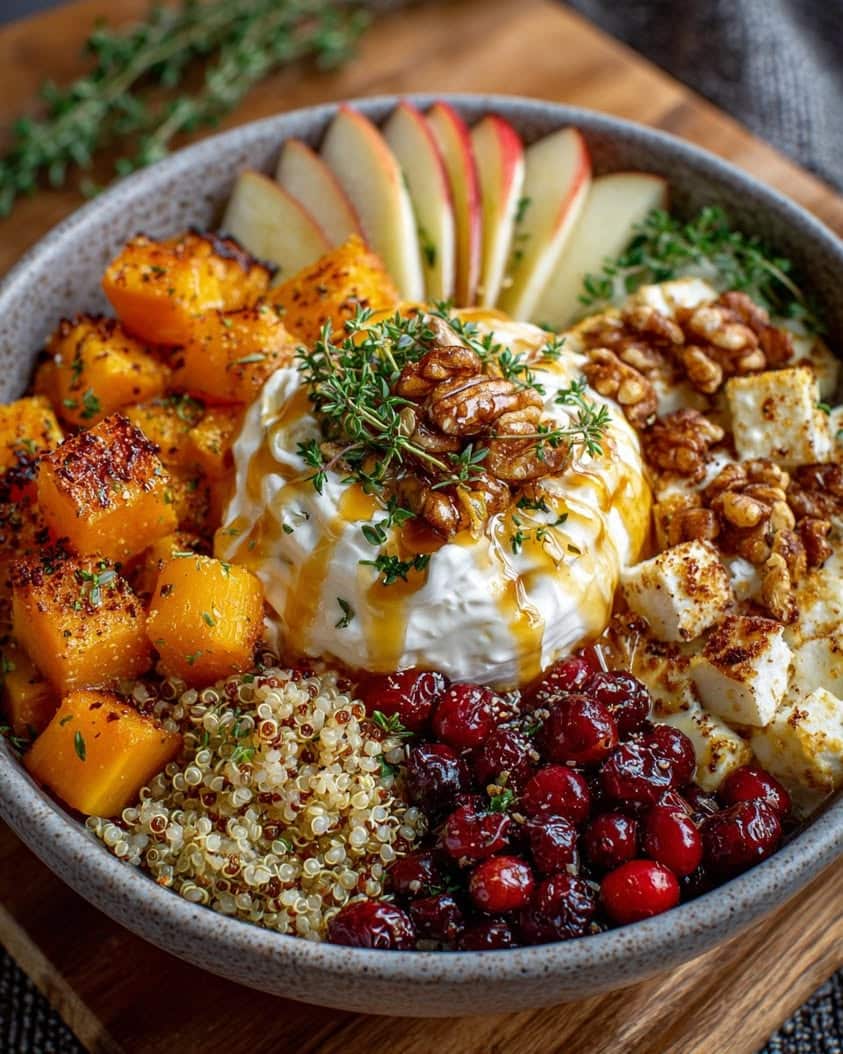
Butternut Squash Christmas Bowls: A Festive, Savory-Sweet Holiday Masterpiece
Welcome the holiday season with a dish that perfectly captures its spirit: Butternut Squash Christmas Bowls. This recipe is a true celebration on a plate, designed to be the star of your holiday dinner. Creamy whipped ricotta and spicy hot honey crown roasted butternut squash in this festive, savory-sweet holiday bowl. A stunning vegetarian main or side! Consequently, it delivers a symphony of flavors and textures that will impress every guest at your table. Moreover, it’s a visually stunning centerpiece, boasting vibrant orange hues, snowy white ricotta, and a glossy honey drizzle that screams festive elegance.
Imagine the sweet, caramelized notes of perfectly roasted butternut squash, balanced by the gentle heat of infused honey and the luxurious coolness of whipped cheese. This dish is more than just food; it’s an experience. It fills your kitchen with the warm, comforting aromas of cinnamon, thyme, and roasting squash, instantly creating a cozy holiday atmosphere. Ultimately, these bowls are a testament to how simple, whole ingredients can be transformed into something truly magical and memorable for any Christmas gathering.
Beyond its beauty, this recipe is incredibly versatile. For instance, you can serve it as a hearty vegetarian main course for guests who skip the meat. Alternatively, it makes a spectacular and substantial side dish alongside a traditional roast or ham. The components are easy to prepare ahead of time, allowing you to assemble the bowls just before serving. This makes it a stress-free choice for busy holiday hosts who want to enjoy the party rather than be stuck in the kitchen.
Quick Recipe Highlights
- Flavor Profile: This dish is a masterclass in balance. You get the natural sweetness of roasted butternut squash, deepened with warm spices like cinnamon. Then, a sharp contrast arrives with the spicy kick of hot honey, which is perfectly tempered by the mild, creamy ricotta. Finally, fresh herbs like thyme or rosemary add an earthy, aromatic finish that ties everything together beautifully.
- Texture: The texture journey is equally exciting. Expect tender, almost melt-in-your-mouth cubes of squash with crispy, caramelized edges. The whipped ricotta provides a cloud-like, smooth, and cool contrast. Toasted nuts or seeds, if added, contribute a satisfying crunch. Every bite is a delightful mix of soft, creamy, and crisp elements that keep your palate engaged.
- Aroma: As this dish roasts, your kitchen will fill with an irresistible fragrance. The primary scent is the sweet, earthy aroma of butternut squash caramelizing. This is layered with the warm, comforting notes of cinnamon and the woody, pine-like scent of fresh thyme or rosemary. When drizzled, the hot honey adds a final, subtle sweet and spicy perfume that is utterly inviting.
- Visual Appeal: These bowls are a feast for the eyes, making them perfect for holiday photos. The bright orange squash creates a vibrant base. The snowy-white, fluffy ricotta adds a beautiful contrast, reminiscent of a winter landscape. The glossy, amber hot honey drizzle looks like edible gold. Garnishes like pomegranate arils or fresh herbs add pops of red and green, completing the Christmas color scheme.
- Skill Level Needed: This is an accessible recipe for cooks of all levels. The techniques involved—chopping vegetables, whisking, and roasting—are fundamental. There’s no need for advanced pastry skills or tricky cooking methods. If you can use a knife and an oven, you can absolutely create this stunning dish. It’s a fantastic way to build confidence in the kitchen while producing a result that looks professionally crafted.
- Special Equipment: You need only very basic kitchen tools. A good chef’s knife and cutting board are essential for safely cubing the squash. A sturdy baking sheet is needed for roasting. For the whipped ricotta, a mixing bowl and a whisk will work, though a hand mixer makes the process faster and yields a fluffier result. No specialty pans or appliances are required.
Recipe Overview
- Difficulty Level: We classify this recipe as “Easy.” The steps are straightforward and sequential. You prepare the squash, roast it, whip the ricotta, and assemble. There are no complex sauces to break or delicate pastries to shape. Most of the active time is hands-off roasting. Therefore, even a novice cook can follow along and achieve a spectacular result with minimal stress, making it ideal for holiday cooking where simplicity is key.
- Category: This dish beautifully straddles multiple categories. Primarily, it’s a fantastic vegetarian main course, providing substance and satisfaction without meat. Simultaneously, it serves as an elegant and substantial side dish. You could even present it as part of a holiday brunch spread. Its flexibility is a major asset, allowing it to fit seamlessly into various meal plans and menus throughout the festive season.
- Cuisine: While not tied to one specific tradition, this recipe draws inspiration from modern American and Mediterranean culinary styles. The use of roasted vegetables and fresh cheese is classic Mediterranean. The concept of hot honey has roots in American Southern cuisine. The combination creates a contemporary, fusion-style dish that feels both familiar and excitingly new, perfect for today’s global palate.
- Cost: This is a very cost-effective recipe, especially for a holiday centerpiece. Butternut squash is an inexpensive vegetable, particularly in autumn and winter. Ricotta cheese is affordable compared to many other specialty cheeses. Honey and spices are pantry staples. The most significant cost might be high-quality olive oil or fresh herbs. Overall, you can feed a crowd beautifully without straining your holiday food budget.
- Season: This recipe is quintessentially a fall and winter dish. Butternut squash is at its peak sweetness and availability from early fall through late winter. The warm spices and hearty nature of the bowl are perfectly suited to cold weather. It provides comfort and warmth from the inside out. Serving it in summer would feel out of place, whereas in December, it feels absolutely essential.
- Occasion: Obviously, it’s perfect for Christmas dinner, whether as a main or side. Beyond that, it’s excellent for any holiday gathering like Thanksgiving, Friendsgiving, or a New Year’s Eve buffet. It also makes a wonderful special weekend dinner during the colder months. Essentially, any occasion that calls for a warm, beautiful, and celebratory meal is the right occasion for these bowls.
Why You’ll Love This Recipe
First and foremost, the taste and texture appeal is undeniable. Each component is carefully chosen to create a harmonious balance. The squash offers sweet, earthy depth. The hot honey brings a slow-building, spicy warmth that intrigues rather than overwhelms. Meanwhile, the whipped ricotta acts as a creamy, cooling counterpoint that soothes the palate. Additionally, the optional crunch from nuts or seeds adds a final textural dimension. Every spoonful is a complex and satisfying experience that delights all the senses and leaves you wanting just one more bite.
Furthermore, the convenience and preparation benefits are a huge win for any cook. The recipe uses simple techniques and common ingredients. Most of the cook time is passive roasting, freeing you up to prepare other dishes or socialize with guests. You can easily prep the squash and make the whipped ricotta hours in advance. Consequently, last-minute assembly is quick and stress-free. This streamlined process means you can deliver a show-stopping dish without the show-stopping stress typically associated with holiday cooking.
From a nutritional standpoint, this dish is packed with advantages. Butternut squash is a powerhouse of vitamins A and C, crucial for immune support during the cold season. It’s also high in fiber, which aids digestion. Ricotta provides a good source of protein and calcium. Using honey as a sweetener is a more natural alternative to refined sugars. Olive oil contributes healthy fats. Altogether, you have a meal that is indulgent-tasting yet built on a foundation of wholesome, nutrient-dense ingredients, making it a guilt-free holiday choice.
Moreover, the social and entertaining value of this recipe is immense. It is a guaranteed conversation starter at any dinner party. The beautiful presentation invites compliments and questions. Serving it in individual bowls makes each guest feel specially catered to. Because it is vegetarian, it thoughtfully accommodates diverse dietary preferences without feeling like an afterthought. This inclusivity allows everyone to enjoy the same stunning centerpiece, fostering a sense of shared celebration and making your hosting efforts truly memorable.
Finally, the cost-effectiveness and accessibility are major perks. As mentioned, the core ingredients are budget-friendly, especially in season. You likely already have many of the spices and olive oil in your pantry. There’s no need for expensive, hard-to-find specialty items. The recipe is also highly adaptable based on what you have available. For example, you can use different nuts, herbs, or even a different squash variety. This flexibility ensures you can create a magnificent holiday dish without a special grocery trip or a hefty receipt, proving that festive eating can be both elegant and economical.
Historical Background and Cultural Significance
The story of this dish begins not with a single recipe, but with the convergence of several culinary traditions. Butternut squash itself is a New World vegetable, cultivated by Indigenous peoples long before European colonization. Its natural sweetness and storability made it a vital winter food source. Meanwhile, the technique of roasting vegetables to concentrate their sugars is ancient and universal. The concept of pairing sweet and savory, especially with meatless dishes, has deep roots in many cultures that relied on hearty vegetables and grains for sustenance during lean times.
Culturally, this recipe taps into the modern evolution of holiday dining. Historically, Christmas feasts in many Western cultures were centered around a large roast meat. However, as dietary preferences have diversified, the demand for spectacular vegetarian centerpieces has grown. This dish answers that call. It carries the same ceremonial weight and visual importance as the traditional roast but does so with plants at its heart. Consequently, it represents a shift towards more inclusive and varied holiday tables, reflecting contemporary values without sacrificing an ounce of tradition’s festivity.
The evolution of the recipe is a tale of modern flavor trends. Whipped ricotta gained popularity as a versatile, restaurant-style garnish, prized for its light texture and mild flavor that carries other ingredients beautifully. Hot honey, a infusion of chili peppers in honey, surged onto the culinary scene from specialty pizza shops and has since become a pantry staple for adding sweet heat to everything from cheese to fried chicken. Combining these two trendy elements with the timeless, comforting roasted squash creates a dish that feels both of-the-moment and classically satisfying.
Regarding regional variations, the core concept is wonderfully adaptable. In the American South, you might find a version using pecans and a bourbon-infused honey. A Mediterranean twist could include za’atar spice on the squash and a drizzle of tahini alongside the ricotta. In parts of Europe, a similar dish might feature pumpkin instead of butternut and be topped with a blue cheese crumble rather than ricotta. This global potential highlights the recipe’s fundamental strength: it is a perfect canvas for local flavors and ingredients, allowing it to be reimagined across countless culinary landscapes while maintaining its festive, bowl-based charm.
Ingredient Deep Dive
Let’s start with the star: Butternut Squash. This winter squash, a cultivar of Cucurbita moschata, is beloved for its sweet, nutty flavor and smooth texture. Historically, squashes were among the “Three Sisters” cultivated by Native Americans, planted alongside corn and beans. Nutritionally, it’s a superstar, exceptionally high in beta-carotene (which converts to Vitamin A), Vitamin C, potassium, and fiber. When selecting, choose squash that feels heavy for its size with a firm, matte skin and no soft spots. Store whole squash in a cool, dark place for months; once cut, wrap tightly and refrigerate for up to five days. For a substitution, try sweet potato, acorn squash, or even carrots for a similar sweet, roasty profile.
Next, Whole Milk Ricotta Cheese is the creamy foundation. Ricotta, meaning “recooked” in Italian, is made from the whey left over from cheesemaking, giving it a lighter texture and flavor than many cheeses. Its cultural significance in Italian cuisine is immense, featuring in dishes from lasagna to cannoli. Nutritionally, it provides a good source of protein and calcium with a lower fat content than many hard cheeses. For the best texture in whipping, seek out whole-milk ricotta from the dairy section, not the shelf-stable kind. It should be stored in the refrigerator and used by the date on the container. If you need a substitute, full-fat cottage cheese (blended until smooth), mascarpone (richer), or even a thick Greek yogurt can work in a pinch, though the flavor and texture will vary.
The flavor catalyst is Hot Honey. This is simply honey infused with chili peppers, creating a magical sweet-heat synergy. Honey has been prized across ancient civilizations, from Egypt to Greece, as both food and medicine. Chili peppers, native to the Americas, traveled the world to become a cornerstone of many spice profiles. Combining them is a relatively modern, genius move. Nutritionally, honey offers antioxidants and is a natural sweetener, while capsaicin from chilies may boost metabolism. You can buy prepared hot honey or easily make your own by gently warming honey with dried chili flakes. Store honey at room temperature indefinitely. For a substitute, mix regular honey with a pinch of cayenne or chili powder, or use maple syrup with a dash of hot sauce.
Finally, the supporting cast of Olive Oil, Fresh Thyme, and Cinnamon. Extra virgin olive oil, the cornerstone of the Mediterranean diet, provides healthy monounsaturated fats and a fruity note. It’s best stored in a cool, dark place. Fresh thyme, with its tiny, aromatic leaves, offers an earthy, slightly minty flavor that complements squash perfectly. It symbolizes courage in the language of herbs. Cinnamon, one of the world’s oldest spices, traded along ancient routes, adds warm, sweet complexity that enhances the squash’s natural sugars. These ingredients may seem small, but they are essential for building the deep, layered flavor profile that makes these Christmas bowls so special and memorable.
Common Mistakes to Avoid
- Unevenly Cubed Squash: Cutting the squash into different sizes is a common error. Consequently, smaller pieces will burn before larger ones are tender. Always aim for uniform 1-inch cubes to ensure even roasting and consistent texture in every bite of your holiday dinner.
- Crowding the Baking Sheet: Dumping all the squash onto one pan forces it to steam rather than roast. You need space for hot air to circulate and create those desirable caramelized edges. Use two sheets if necessary, or roast in batches for perfect results.
- Underseasoning the Squash: Butternut squash needs a generous amount of salt to make its natural sweetness pop. Don’t be shy. Season the olive oil and spice mixture well before tossing with the squash. Taste a piece before roasting if unsure.
- Using Low-Fat or Grainy Ricotta: Whipped ricotta requires whole-milk ricotta for the best texture and flavor. Low-fat versions often contain stabilizers that prevent proper whipping. Additionally, some brands can be grainy; seek out a smooth, fresh variety for a cloud-like finish.
- Over-whipping the Ricotta: While whipping adds air and fluffiness, going too far can cause the ricotta to become loose and almost liquid. Whip just until it’s smooth, light, and holds a soft peak. This usually takes only 1-2 minutes with a mixer.
- Applying Hot Honey Before Serving: If you drizzle the hot honey over the assembled bowls too far in advance, it will melt into the ricotta and make the presentation soggy. Always add the honey drizzle as the very last step, right before the bowls go to the table.
- Skipping the Resting Time: Pulling the roasted squash directly from the oven and assembling the bowls immediately can lead to a too-hot dish that melts the ricotta on contact. Let the squash cool for 5-10 minutes. This allows flavors to settle and preserves the distinct layers.
- Neglecting the Garnish: The garnish is not just decoration; it adds crucial texture and flavor. Skipping the toasted pepitas, pomegranate seeds, or fresh herbs means missing out on the final layer of crunch, brightness, and color that completes the dish.
- Using Dull Spices: Ground cinnamon and dried herbs lose their potency over time. If your spices have been in the pantry for over a year, their flavor will be muted. For the brightest taste, ensure your spices are fresh, especially for a standout Christmas recipe.
- Not Tasting as You Go: This is a universal mistake. Taste the whipped ricotta for seasoning—does it need a pinch more salt or lemon zest? Taste the roasted squash. Adjusting at each stage ensures a perfectly balanced final bowl.
Essential Techniques
Peeling and Cubing Butternut Squash Safely: This is the most daunting step for many, but technique is key. First, stabilize the squash by cutting a thin slice off the stem and blossom ends so it sits flat on the board. Use a sharp, sturdy chef’s knife—a dull knife is more dangerous. Carefully peel the squash with a sharp vegetable peeler. Then, cut it in half crosswise where the neck meets the bulb. Slice the neck into planks, then cubes. For the bulb, scoop out the seeds with a spoon, then cut into slices and cubes. The goal is uniform size for even cooking. Always keep your fingers curled under (the “claw grip”) to protect them from the knife.
The Art of High-Heat Roasting: Roasting is not just baking; it’s a dry-heat method that caramelizes natural sugars. For perfect squash, preheat your oven fully—a hot start is non-negotiable. Toss the squash in enough oil to coat lightly but thoroughly; this conducts heat and promotes browning. Spread the cubes in a single layer with space between them. Crowding leads to steaming. Roast on a middle rack, and resist the urge to stir too often. Let one side develop a deep, caramelized crust before turning. This technique, known as the Maillard reaction, is what builds the complex, savory-sweet flavor that defines this holiday bowl.
Whipping Ricotta to Perfection: Whipping transforms dense, grainy ricotta into a light, spreadable cloud. Start with well-drained, whole-milk ricotta at room temperature for easiest whipping. Place it in a mixing bowl. Using a hand mixer, stand mixer, or a vigorous whisk, beat the ricotta on medium speed. The goal is to incorporate air and break down any curds. After about a minute, it will become noticeably smoother and increase slightly in volume. Add a pinch of salt, a drizzle of olive oil, or lemon zest at this stage. Stop whipping once it is uniformly smooth and holds a soft shape. Over-whipping can cause it to separate, so watch it closely.
Infusing Honey with Heat: Making your own hot honey is simple and allows you to control the spice level. Gently warm honey in a small saucepan over very low heat—do not boil, as high heat can destroy honey’s delicate flavors. Once warm, add dried chili flakes, sliced fresh chili, or even a dash of cayenne pepper. Remove from heat and let it steep for at least 20-30 minutes; the longer it sits, the hotter it gets. Strain if you prefer a clear honey. This infusion technique melds the sweetness and spice into a harmonious syrup that will elevate not just this recipe, but countless others.
Pro Tips for Perfect Butternut Squash Christmas Bowls
1. Boost Flavor with a Spiced Oil: Don’t just toss squash with plain oil. Warm the olive oil slightly and stir in the cinnamon, salt, pepper, and chopped fresh thyme before coating the squash. This helps the spices bloom and distribute more evenly, resulting in a more deeply flavored roast.
2. Achieve Maximum Caramelization: For the crispiest, most flavorful edges, place the baking sheet in the oven as it preheats. Adding the squash to a hot pan gives it an instant sear. Furthermore, use the convection roast setting if your oven has one, as the circulating air promotes even browning.
3. Elevate the Whipped Ricotta: Add a touch of sophistication by incorporating finely grated lemon zest or a whisper of freshly grated nutmeg into the ricotta as you whip it. These subtle notes add a bright, complex layer that cuts through the richness beautifully.
4. Toast Your Garnishes: If using nuts or seeds like pepitas or walnuts, always toast them in a dry skillet for a few minutes until fragrant. This simple step unlocks their oils and intensifies their flavor and crunch, adding a professional touch to the final presentation.
5. Layer for Texture and Temperature: Build your bowls intentionally. Start with the warm squash as the base. Add a generous dollop of cool whipped ricotta. Then, sprinkle with your crunchy garnish. Finally, drizzle with room-temperature hot honey. This method preserves the distinct textures and temperatures for the best eating experience.
6. Make it a Complete Meal: Transform the bowl into a hearty vegetarian main by adding a layer of cooked farro, quinoa, or wild rice beneath the squash. The whole grains add substance, fiber, and a lovely chewy texture that makes the dish even more satisfying.
7. Control the Heat: The spice level of hot honey can vary. Always taste your honey before drizzling. You can serve extra on the side for heat lovers. For a milder version, use plain honey and offer crushed red pepper flakes separately so guests can customize their bowl.
8. Prep for a Crowd: For a large holiday dinner, roast the squash on multiple racks, but rotate the baking sheets top-to-bottom and front-to-back halfway through cooking. This ensures even browning when your oven has hot spots, guaranteeing every guest gets a perfect serving.
Variations and Adaptations
Regional Variations: Take your taste buds on a trip. For a Southern twist, use pecans as a garnish and add a teaspoon of smoked paprika to the squash seasoning. A Mediterranean version could include za’atar on the squash, a drizzle of tahini over the ricotta, and a garnish of sumac and chopped mint. For a Nordic feel, swap cinnamon for ground cardamom and use toasted hazelnuts.
Seasonal Adaptations: While perfect for fall and winter, adapt this bowl year-round. In spring, use roasted asparagus and fresh peas with lemon-whipped ricotta. For summer, try roasted zucchini and eggplant with a basil-infused oil. The concept of a roasted vegetable bowl with creamy cheese and a vibrant sauce is endlessly versatile across all seasons.
Dietary Modifications: For a vegan version, substitute the ricotta with whipped silken tofu or cashew cream blended with lemon juice and salt. Use maple syrup instead of honey for the hot honey (simmer maple syrup with chilies). Ensure all other ingredients, like spices and oil, are plant-based. This allows everyone to enjoy the festive centerpiece.
Flavor Variations: Experiment with different spice profiles. Swap cinnamon for pumpkin pie spice, garam masala, or ras el hanout. Infuse the olive oil with roasted garlic or fresh rosemary before tossing the squash. Add a crumble of crispy fried sage or shallots on top for a savory, aromatic crunch.
Texture Modifications: Love crunch? Add more! Include crispy chickpeas roasted with the squash, or top with homemade croutons. Prefer ultra-creamy? Blend a portion of the roasted squash into the ricotta for a stunning orange-and-white swirled effect. You can also leave the squash in larger, rustic chunks for a more hearty, family-style presentation.
Presentation Alternatives: Instead of individual bowls, present the dish on one large, beautiful platter for a family-style feast. Layer the roasted squash, then artfully dollop the ricotta over the top, drizzle with honey, and scatter garnishes. You can also serve the components in separate dishes for a build-your-own-bowl bar, which is fun for casual holiday gatherings.
Serving and Presentation Guide
Plating Techniques: For individual servings, choose wide, shallow bowls to showcase all the beautiful layers. Start by placing a generous scoop of warm roasted squash as the base, slightly mounding it in the center. Using a large spoon or an ice cream scoop, place a dollop of whipped ricotta off-center on top of the squash. This asymmetric placement is more visually appealing than a perfect circle in the middle.
Garnishing Ideas: Garnishes add the final “wow” factor. A sprinkle of toasted pepitas or chopped walnuts provides essential crunch. Vibrant pomegranate arils add a juicy burst and a festive red pop. Fresh herb leaves like thyme, rosemary, or even microgreens contribute color and freshness. A final flake of sea salt over everything enhances flavors and adds a slight sparkle.
Traditional Accompaniments: If serving as a side dish, these bowls pair classically with a holiday roast like turkey, ham, or prime rib. They also complement other winter sides like garlicky sautéed greens, a simple green salad with a tart vinaigrette to cut the richness, or creamy mashed potatoes for the ultimate comfort food spread.
Modern Serving Suggestions: For a contemporary, meal-in-a-bowl presentation, add a base of a whole grain like farro, freekeh, or wild rice. Include a handful of spicy arugula or massaged kale for a fresh, peppery element. This turns the side dish into a nutritionally complete and deeply satisfying vegetarian entrée that stands proudly on its own.
Temperature Considerations: The magic lies in the contrast. The squash should be served warm, not piping hot, to prevent melting the ricotta. The whipped ricotta should be cool, straight from the fridge. The hot honey is best at room temperature so it flows easily. Assembling just before serving preserves these distinct temperatures for the most delightful sensory experience.
Portion Control Tips: As a main course, plan for about 1/4 to 1/3 of a medium squash per person. As a side dish, 1/6 of a squash is sufficient. The ricotta is rich; a heaping 1/4 cup per bowl is ample. Remember, you can always serve extra squash and ricotta on the side for guests who want more, preventing waste and ensuring everyone is satisfied.
Wine and Beverage Pairing
Wine Pairings: The sweet, spicy, and creamy elements in this dish call for versatile wines. An off-dry Riesling or Gewürztraminer is a classic pairing—their slight sweetness mirrors the squash, while their acidity cuts through the ricotta. For red lovers, a light-bodied, low-tannin Pinot Noir with red fruit notes complements without overpowering. A dry rosé, especially from Provence, offers crispness and berry flavors that bridge all the components beautifully. Ultimately, avoid heavily oaked or high-tannin wines, as they can clash with the squash’s sweetness.
Non-Alcoholic Alternatives: Sparkling apple cider is a festive and perfect match, echoing the autumnal sweetness. A ginger beer or spicy ginger ale complements the heat from the honey wonderfully. For a more sophisticated option, try a tart cranberry spritzer made with muddled cranberries, soda water, and a touch of lime. Herbal teas like peppermint or chamomile served iced can also be a soothing, palate-cleansing accompaniment.
Coffee and Tea Pairings: After the meal, a cup of coffee or tea can be lovely. A medium-roast coffee with notes of caramel or nut pairs nicely with the roasted flavors. For tea, consider a spiced chai latte—the cinnamon and cardamom in the chai will harmonize with the spices on the squash. A simple cup of Earl Grey with its citrusy bergamot note can also provide a refreshing finish.
Temperature Considerations: Serve white wines and sparkling ciders well-chilled, around 45-50°F. Red wines like Pinot Noir should be slightly cooler than room temperature, about 55°F. Non-alcoholic sparklers should be ice-cold. This contrast between the cool drink and the warm food is part of the pleasure. Always have water on the table as well to cleanse the palate between bites of the rich, flavorful bowl.
Serving Suggestions: Offer a choice if possible, especially at a holiday gathering. You might set out a bottle of Riesling and a pitcher of sparkling cider. Clearly label non-alcoholic options. Using appropriate glassware enhances the experience—a white wine glass for Riesling, a tulip glass for cider. Presentation matters, making the beverage feel like part of the celebratory feast.
Storage and Shelf Life
Storage Methods: Store components separately for best results. Place cooled roasted squash in an airtight container in the refrigerator. Transfer whipped ricotta to a separate sealed container. Keep hot honey in its jar at room temperature. This prevents the ricotta from becoming watery and the squash from getting soggy. Properly stored, each component maintains its ideal texture and flavor for reassembly.
Temperature Requirements: The squash and ricotta must be refrigerated at or below 40°F. The honey is shelf-stable. Never leave assembled bowls at room temperature for more than two hours, as the dairy poses a food safety risk. When storing leftovers, chill them promptly. The contrast of temperatures is lost upon storage, but the flavors will still be delicious when reheated properly.
Container Recommendations: Use glass or BPA-free plastic containers with tight-fitting lids. For the squash, a shallow container allows it to cool quickly and evenly. For the whipped ricotta, a deeper container prevents it from drying out. Avoid storing the squash while it’s still warm, as the steam created in a sealed container will make it mushy.
Signs of Spoilage: Discard the squash if it develops an off smell, becomes slimy, or shows mold. Ricotta that smells sour, has visible mold, or has separated severely should be thrown out. Honey is naturally preservative and rarely spoils, but if it ferments, you’ll notice bubbles, an off odor, or a changed flavor. When in doubt, follow the golden rule: throw it out.
Reheating Instructions: Reheat only the squash. Spread it on a baking sheet and warm in a 350°F oven for 10-15 minutes until heated through. You can also use a skillet over medium heat. Avoid the microwave, as it will make the squash steam and become soft. Serve the reheated squash with fresh, cold ricotta and a new drizzle of honey for the best leftover experience.
Freezing Guidelines: You can freeze the roasted squash successfully. Spread cooled cubes on a parchment-lined sheet, freeze solid, then transfer to a freezer bag. It will keep for 2-3 months. Thaw in the fridge overnight and reheat in the oven. Do not freeze the whipped ricotta, as it will separate and become grainy upon thawing. The hot honey does not need freezing.
Make Ahead Strategies
Prep Timeline: You can prep this dish entirely 1-2 days in advance. Day 1: Peel and cube the squash. Make the hot honey infusion so the flavors have time to develop. Day of Serving: Roast the squash (it can be done up to 4 hours ahead and kept at room temp). Whip the ricotta (can be done 2-3 hours ahead and refrigerated). Assemble the bowls just before serving. This timeline minimizes day-of stress.
Storage Between Steps: Keep the uncubed squash wrapped in the fridge. Store cubed squash in a bowl of water in the fridge to prevent browning, but drain and pat very dry before roasting. The whipped ricotta should be covered with plastic wrap pressed directly onto its surface to prevent a skin from forming. These small steps preserve quality during the waiting period.
Quality Impact Assessment: Prepping ahead has minimal negative impact if done correctly. The squash may lose a tiny bit of its crisp edge after refrigeration but will still taste wonderful. The whipped ricotta may firm up slightly in the fridge; you can give it a quick stir before serving to fluff it back up. The flavors often improve as they meld.
Assembly Tips: When ready to serve, if the squash is cold, give it a quick warm-up in a 300°F oven for 5-10 minutes—just enough to take the chill off. Have all your garnishes pre-measured and ready in small bowls. Set up an assembly line: bowls, warm squash, ricotta, garnishes, honey. This makes final plating fast, efficient, and fun, even if you’re assembling for a crowd.
Reheating Guidelines: Only reheat the squash component, and do so gently in the oven as described earlier. Never microwave assembled bowls. If you must assemble ahead (for a potluck, for instance), keep the ricotta and honey separate in small containers and add them on-site. This ensures the textures remain perfect upon serving.
Fresh Element Additions: Even with advanced prep, some elements are best added fresh. Always add delicate fresh herbs (like thyme leaves) as a final garnish, not mixed in ahead, as they can wilt. If using pomegranate arils, add them just before serving so they stay plump and don’t bleed color. A final drizzle of olive oil or squeeze of lemon right at the end can also brighten prepped components.
Scaling Instructions
Halving the Recipe: Halving is straightforward for a smaller household. Use half a medium squash, about 1.5 pounds. Reduce
Print
Butternut Squash Christmas Bowls with Whipped Ricotta & Hot Honey
Description
A festive, cozy bowl featuring roasted butternut squash, creamy whipped ricotta, and a spicy-sweet hot honey drizzle, perfect for holiday meals.
Ingredients
For the Crust:
- 1 medium butternut squash, peeled and cubed
- 2 tablespoons olive oil
- 1 teaspoon smoked paprika
- 1/2 teaspoon cinnamon
- Salt and black pepper to taste
- 1 cup whole milk ricotta cheese
- 2 tablespoons honey
- 1/4 teaspoon red pepper flakes
- 1/4 cup pomegranate seeds
- 2 tablespoons chopped fresh parsley
- 1/4 cup toasted pecans
Instructions
1. Prepare the Crust:
- Preheat oven to 400°F (200°C). Toss butternut squash cubes with olive oil, smoked paprika, cinnamon, salt, and pepper. Spread on a baking sheet and roast for 25-30 minutes until tender and caramelized.
- In a small bowl, whip ricotta with a fork until smooth and creamy. Set aside.
- In a small saucepan, warm honey over low heat. Stir in red pepper flakes and let simmer for 2 minutes to infuse. Remove from heat.
- Assemble bowls: Divide roasted squash among bowls. Top with a dollop of whipped ricotta, drizzle with hot honey, and garnish with pomegranate seeds, toasted pecans, and parsley.
Notes
You can customize the seasonings to taste.

I’m Shaykee—born in Morocco, seasoned across continents. From airplane galleys to home kitchens, I share the flavors and stories that shaped my journey.