
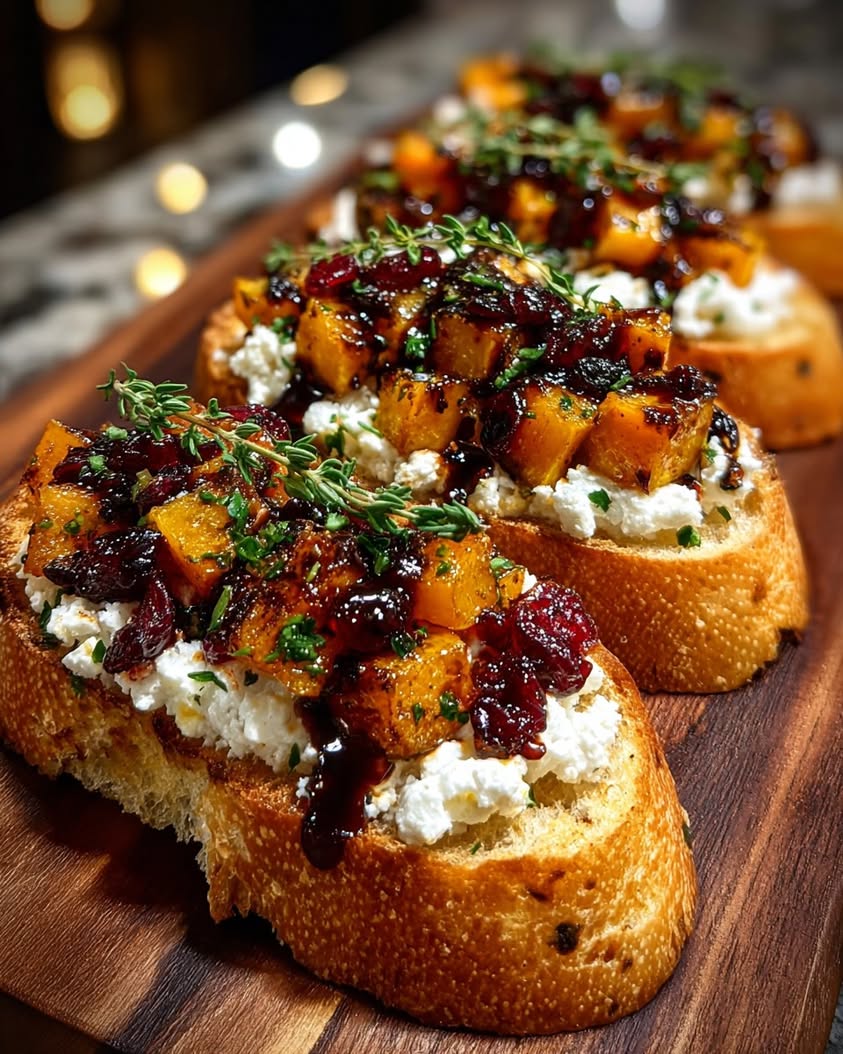
Creamy Ricotta & Roasted Butternut Squash Crostini: The Perfect Elegant, Easy Holiday Appetizer!
Imagine a perfect bite that captures the essence of the holiday season. This butternut squash and ricotta crostini recipe delivers exactly that. Furthermore, it combines sweet roasted squash with creamy ricotta on a crispy baguette slice. Ultimately, it is finished with a stunning cranberry-balsamic drizzle that adds a pop of color and tangy flavor. This dish is not just food; it is an experience that will impress your guests from the very first glance.
The beauty of this holiday appetizer lies in its harmonious balance. Each component plays a crucial role in creating a symphony of textures and tastes. For instance, the earthy sweetness of the squash contrasts beautifully with the rich, mild ricotta. Meanwhile, the cranberry drizzle cuts through the richness with its vibrant acidity. This easy elegant crostini is a guaranteed crowd-pleaser that looks far more complicated than it actually is.
Creating memorable party food should not be a stressful endeavor. Consequently, this recipe is designed for maximum flavor with minimal fuss. You can roast the squash and prepare the drizzle ahead of time. Then, you simply assemble these beautiful bites just before serving. They are the ultimate make-ahead holiday appetizer that allows you to enjoy your own party.
Quick Recipe Highlights
- Flavor Profile: This butternut squash crostini features sweet, caramelized squash paired with mild, creamy ricotta. The cranberry-balsamic drizzle introduces a bright, tangy counterpoint that elevates the entire experience. Every bite delivers a complex balance of sweet, savory, and tart notes.
- Texture: You will experience a delightful contrast between the crispy, toasted baguette and the soft, creamy ricotta. The roasted squash adds a tender, almost velvety mouthfeel, while the drizzle provides a slight gel-like consistency. Ultimately, these textural variations make each bite exciting and satisfying.
- Aroma: As the squash roasts, it fills your kitchen with a warm, sweet, and nutty fragrance. The cranberry drizzle simmering on the stove adds a festive, fruity sharpness. When combined, these aromas create an unmistakable holiday scent that welcomes guests.
- Visual Appeal: This dish is a feast for the eyes with its vibrant orange squash, white ricotta, and deep red drizzle. The colorful layers create a stunning presentation on any platter. It is a holiday appetizer that looks as beautiful as it tastes.
- Skill Level Needed: This is an accessible recipe perfect for novice cooks and entertaining pros alike. Basic knife skills for cubing squash and simple stovetop simmering are the primary techniques required. Anyone comfortable following straightforward instructions can achieve impressive results.
- Special Equipment: You only need a standard baking sheet, a small saucepan, and a basic blender or food processor. A silicone spatula helps with spreading the ricotta, but a butter knife works perfectly fine. No specialized or expensive tools are necessary for this easy elegant crostini.
Recipe Overview
- Difficulty Level: We classify this butternut squash and ricotta crostini as easy because it involves fundamental cooking techniques. The steps are sequential and simple, with no complicated procedures or precision required. Even a first-time entertainer can confidently prepare this dish for guests. The forgiving nature of the ingredients means small variations will not ruin the final product.
- Category: This recipe firmly sits in the appetizer and snack category, perfect for starting a meal or serving at a gathering. It also fits well within the vegetarian and holiday cooking genres. Its elegant presentation makes it suitable for formal events, while its approachable flavors work for casual parties.
- Cuisine: This crostini draws inspiration from modern American culinary trends that prioritize seasonal, fresh ingredients. It incorporates Italian elements with the ricotta and crostini base. The use of winter squash and cranberries is deeply rooted in North American harvest traditions.
- Cost: Preparing this holiday appetizer is surprisingly budget-friendly, especially when using in-season produce. A single butternut squash and a baguette are inexpensive staples. Quality ricotta and fresh cranberries represent the main costs, but the recipe uses them efficiently. Overall, it is an affordable way to create a luxurious-looking party food.
- Season: This butternut squash crostini is an ideal autumn and winter recipe when squash and cranberries are at their peak. The warm, comforting flavors perfectly suit cooler weather gatherings. It is especially fitting for the holiday season from Thanksgiving through New Year’s Eve.
- Occasion: This versatile appetizer shines at holiday parties, cocktail hours, and festive gatherings. It is elegant enough for a Christmas Eve dinner yet approachable for a casual Friendsgiving. Furthermore, it makes a wonderful addition to any potluck or buffet-style meal.
Why You’ll Love This Butternut Squash and Ricotta Crostini
First and foremost, the taste and texture appeal of this holiday appetizer is undeniable. Each component brings something unique to the party. The sweet, caramelized squash melds perfectly with the cool, creamy ricotta. Meanwhile, the crispy baguette provides a sturdy base that holds everything together. Finally, the cranberry-balsamic drizzle adds a sophisticated tang that ties all the flavors together beautifully. Every single bite delivers a complex journey for your palate that feels both rustic and refined.
Convenience is another major benefit of this easy elegant crostini recipe. You can prepare nearly every element in advance, which is a lifesaver during busy holiday seasons. Roast the squash and make the drizzle a day ahead, storing them separately in the refrigerator. Then, simply toast your baguette slices and assemble everything just before your guests arrive. This strategic make-ahead approach means you can spend less time in the kitchen and more time enjoying the party.
From a nutritional standpoint, this butternut squash crostini offers substantial advantages. Butternut squash is packed with vitamin A, vitamin C, and fiber, supporting immune health and digestion. Ricotta provides a good source of protein and calcium. Using whole-grain baguette adds extra fiber and nutrients. Compared to many heavy holiday appetizers, this option feels lighter and more balanced while still being satisfying.
The social and entertaining value of this dish cannot be overstated. These beautiful crostini make a stunning presentation on any platter, immediately elevating your party spread. Their finger-food size encourages mingling and conversation, as guests can easily eat them while standing. Furthermore, they serve as a fantastic conversation starter, with guests often asking for the recipe. This butternut squash and ricotta crostini truly embodies the spirit of sharing good food with good company.
Cost-effectiveness makes this recipe accessible for any budget. Butternut squash is an economical vegetable, especially in autumn and winter. A single squash can yield enough for multiple batches of this party food. Baguettes and ricotta are similarly budget-friendly, leaving the fresh cranberries as the potentially priciest item. Even then, a small bag goes a long way in creating the beautiful drizzle. You get restaurant-quality presentation and flavor at a fraction of the cost.
Historical Background and Cultural Significance
The origin story of crostini begins in medieval Italy, where peasants needed to use stale bread creatively. They would toast slices over open fires and top them with whatever ingredients were available. This practical solution to prevent waste evolved into a beloved culinary tradition throughout Tuscany. Originally, these toppings were simple—often just olive oil, garlic, or beans. Over centuries, crostini transformed from peasant food to sophisticated party food served in elegant establishments.
Crostini holds significant cultural importance in Italian cuisine, particularly as part of the antipasti course. It represents the Italian philosophy of “cucina povera” or “poor cooking,” which emphasizes making the most of humble ingredients. This approach values resourcefulness and flavor over extravagance. In modern times, crostini has become a canvas for culinary creativity across the world. Chefs everywhere use this format to showcase seasonal, local, and innovative flavor combinations.
The evolution of the butternut squash and ricotta crostini recipe reflects contemporary food trends. As global cuisine became more accessible, traditional Italian crostini met New World ingredients like squash and cranberries. The focus on vegetable-forward dishes and beautiful plating further popularized this type of appetizer. Today’s versions often feature seasonal produce and artisanal cheeses, moving far beyond the original simple toppings. This particular recipe represents a beautiful fusion of Old World technique and New World ingredients.
Regional variations of crostini abound throughout Italy and beyond. In Tuscany, classic chicken liver crostini remains a staple. Other regions feature toppings like mushrooms, beans, or tomatoes. The American adaptation often incorporates local ingredients and flavors, as seen with this cranberry drizzle. Modern interpretations might include global influences like Middle Eastern spices or Asian flavor profiles. This butternut squash version fits perfectly within this tradition of adaptation and innovation.
Ingredient Deep Dive
Butternut squash serves as the sweet, hearty foundation of this holiday appetizer. This winter squash originated in the Americas and has been cultivated for thousands of years. It is incredibly rich in vitamin A, providing over 450% of the daily value in just one cup. When selecting squash, look for one that feels heavy for its size with a firm, matte skin. Store whole squash in a cool, dark place for up to three months. For a substitution, sweet potatoes or acorn squash would work beautifully.
Whole milk ricotta cheese brings a luxurious creaminess that balances the sweet squash. Ricotta, meaning “recooked” in Italian, is traditionally made from the whey leftover from cheese production. It is an excellent source of protein and calcium, with a milder flavor than many other cheeses. Always look for fresh, whole milk ricotta for the best texture and flavor. Store it tightly sealed in the refrigerator and use within a week of opening. For a dairy-free version, cashew cheese or almond-based ricotta would be suitable alternatives.
The cranberry-balsamic drizzle provides the vibrant, tangy counterpoint that makes this crostini special. Cranberries are native to North America and were used by Indigenous peoples both as food and medicine. They are packed with antioxidants and vitamin C, supporting urinary tract and immune health. Select firm, brightly colored berries that bounce when dropped. Fresh cranberries keep in the refrigerator for several weeks or can be frozen for up to a year. If fresh are unavailable, high-quality cranberry sauce can be thinned with balsamic as a quick substitute.
A quality baguette forms the essential crispy base for our butternut squash crostini. Traditional French baguettes contain just four ingredients: flour, water, yeast, and salt. Opt for a day-old baguette, as it slices more cleanly and toasts up extra crispy. Whole grain or sourdough baguettes add wonderful flavor complexity. Store unused baguette at room temperature in a paper bag for a day or freeze for longer storage. For a gluten-free version, use your favorite gluten-free bread sliced and toasted until crisp.
Common Mistakes to Avoid
- Underseasoning the squash before roasting is a common error. Butternut squash needs generous seasoning to develop its full flavor potential. Always taste your roasted squash before assembling the crostini to ensure proper seasoning.
- Overloading the crostini with toppings makes them difficult to eat neatly. The perfect butternut squash and ricotta crostini should have balanced layers. Remember that guests need to pick them up without the toppings sliding off.
- Using soggy bread ruins the textural contrast that defines great crostini. Always toast your baguette slices until they are thoroughly crisp and golden brown. This creates a stable base that won’t become soggy from the toppings.
- Skipping the olive oil brush on the baguette before toasting misses an opportunity for flavor. A light brushing of quality olive oil enhances both taste and texture. It also helps the bread achieve a beautiful golden color during toasting.
- Overcooking the cranberry drizzle can make it too thick and jam-like. The ideal consistency should be pourable but not runny. Remember that the drizzle will thicken slightly as it cools, so remove it from heat when it still seems a bit thin.
- Not allowing the roasted squash to cool before assembling causes the ricotta to warm and potentially separate. Always cool your squash completely before building your crostini. This maintains the distinct temperature contrast between the cool cheese and warm squash.
- Using low-quality balsamic vinegar significantly impacts the final flavor of the drizzle. Invest in a decent aged balsamic for the best results. Cheap, overly acidic balsamic can make the drizzle unpleasantly sharp.
- Spreading the ricotta all the way to the edges of the bread makes for messy eating. Leave a small border around each crostini for easy handling. This simple presentation tip makes your holiday appetizer look more professional.
Essential Techniques
Properly roasting butternut squash is fundamental to this recipe’s success. Cubing the squash into even, half-inch pieces ensures uniform cooking. Tossing the cubes thoroughly with oil and seasonings guarantees every piece develops flavor. Roast at a high temperature (400°F) until the edges caramelize and the centers become tender. This technique concentrates the squash’s natural sweetness and creates a delightful texture. The visual cue for perfection is golden-brown edges with a fork-tender interior.
Creating the cranberry-balsamic drizzle requires careful simmering and reduction. Combine the cranberries, balsamic, and sweetener in a saucepan over medium heat. As the cranberries heat, they will pop and release their pectin, naturally thickening the mixture. Simmer until the cranberries have broken down completely and the liquid has reduced by about one-third. The finished drizzle should coat the back of a spoon but still be pourable. Straining removes the skins for a smoother consistency, though leaving them in adds texture.
Toasting the baguette slices correctly provides the crucial crispy foundation. Slice the baguette on a slight diagonal into half-inch thick pieces. Brush both sides lightly with olive oil before arranging them in a single layer on a baking sheet. Bake at 375°F until golden brown and crisp throughout, flipping halfway through. Properly toasted crostini should be firm and snap when broken. This technique ensures your butternut squash crostini maintains structural integrity from first bite to last.
Pro Tips for Perfect Butternut Squash and Ricotta Crostini
Season your ricotta separately with a pinch of salt and pepper before assembling. This simple step elevates the flavor dramatically compared to using plain ricotta. Furthermore, consider adding a teaspoon of lemon zest to the ricotta for extra brightness.
Let the roasted squash cool completely before assembling your crostini. Warm squash will make the ricotta runny and compromise the texture. Alternatively, you can serve the components separately and let guests assemble their own.
Use a small cookie scoop or melon baller to place the squash neatly on the ricotta layer. This creates uniform, professional-looking presentations quickly. Additionally, it helps control portion size and prevents overloading.
Garnish with fresh herbs just before serving for maximum visual impact. Tiny thyme leaves, chopped chives, or microgreens all work beautifully. The fresh green color provides a stunning contrast against the orange squash and red drizzle.
If making ahead, store the toasted baguette slices in an airtight container at room temperature. This prevents them from becoming stale or absorbing moisture from the refrigerator. Assemble no more than an hour before serving for optimal texture.
For an extra flavor dimension, toast the baguette slices with a light rubbing of fresh garlic. Do this immediately after toasting while the bread is still warm. The residual heat helps release the garlic’s aromatic oils onto the bread’s surface.
Variations and Adaptations
Regional variations can take your butternut squash crostini in exciting new directions. For a Mediterranean twist, add chopped Kalamata olives and crumbled feta to the topping. A French-inspired version might feature herbes de Provence in the ricotta. Southwestern flavors emerge with the addition of chili powder to the squash and a cilantro garnish. These adaptations demonstrate the incredible versatility of this basic holiday appetizer format.
Seasonal adaptations keep this recipe relevant throughout the year. In spring, substitute asparagus tips and peas for the squash with a lemon-dill ricotta. Summer versions might feature grilled zucchini and fresh tomato with basil. Autumn obviously shines with the original butternut squash combination. Winter variations could include roasted root vegetables like parsnips or sweet potatoes. This approach lets you enjoy easy elegant crostini no matter the season.
Dietary modifications make this party food accessible to almost everyone. For a vegan version, use dairy-free ricotta and maple syrup instead of honey. Gluten-free guests will appreciate the same recipe on their favorite gluten-free bread. Lower-carb options might use cucumber rounds or endive leaves as the base instead of bread. These thoughtful adaptations ensure all your guests can enjoy your beautiful holiday appetizer.
Serving and Presentation Guide
Plating techniques dramatically impact how guests perceive your butternut squash and ricotta crostini. Arrange them in a single layer on a large wooden board or elegant platter. Create visual interest by placing some crostini straight and others on a slight angle. Leave a small amount of space between each piece to prevent sticking and make serving easier. This thoughtful arrangement transforms simple ingredients into a stunning centerpiece for your holiday table.
Garnishing adds the final touch that elevates your holiday appetizer from homemade to professional. Sprinkle with flaky sea salt just before serving to enhance flavors and add texture. Fresh herb sprigs like thyme, rosemary, or sage provide color and fragrance. For special occasions, edible flowers or pomegranate arils create a spectacular visual impact. Remember that garnishes should be edible and complement the existing flavors of your butternut squash crostini.
Traditional accompaniments for crostini often include other antipasti items. Serve alongside marinated olives, cured meats, and assorted cheeses for a complete spread. A simple green salad with a light vinaigrette balances the richness of the crostini. These complementary dishes create a well-rounded eating experience for your guests.
Wine and Beverage Pairing
Wine pairings should complement the sweet, savory, and tangy elements of this butternut squash crostini. A crisp, unoaked Chardonnay stands up well to the squash’s sweetness without overwhelming the ricotta. Pinot Noir’s light body and red fruit notes harmonize beautifully with the cranberry drizzle. For sparkling options, Prosecco or Cava cuts through the richness with refreshing acidity. These selections enhance rather than compete with the complex flavors of your holiday appetizer.
Non-alcoholic alternatives can be just as sophisticated as their alcoholic counterparts. Sparkling apple cider mirrors the squash’s sweetness while cleansing the palate. Ginger beer provides a spicy kick that contrasts nicely with the creamy ricotta. For a more savory option, tomato juice with a celery salt rim offers a classic brunch pairing. These thoughtful non-alcoholic options ensure all guests feel included in the festive experience.
Storage and Shelf Life
Storage methods vary depending on whether you’ve stored components separately or assembled the complete crostini. Individual components keep well for several days when stored properly in airtight containers. The roasted squash lasts up to 4 days refrigerated, while the cranberry drizzle keeps for about a week. Always store the toasted baguette slices at room temperature to maintain their crisp texture.
Fully assembled butternut squash crostini do not store well and should be eaten within a few hours. The moisture from the toppings gradually softens the bread, compromising the signature crisp texture. If you must store assembled crostini, place them in a single layer on a parchment-lined tray. Cover loosely with plastic wrap and refrigerate for no more than 4 hours before serving.
Make Ahead Strategies
Prep timeline for this easy elegant crostini can span up to three days before your event. Two days ahead, roast and cube the butternut squash, then store it refrigerated in an airtight container. The cranberry-balsamic drizzle can also be prepared and refrigerated at this stage. One day before, slice and toast your baguette, storing the cooled slices in an airtight container at room temperature. This strategic staging makes final assembly quick and stress-free.
Assembly tips for make-ahead success focus on maintaining optimal textures. Remove the ricotta from the refrigerator about 30 minutes before assembling to soften slightly. If your cranberry drizzle has thickened too much in the refrigerator, warm it gently to restore pourability. Assemble the crostini in batches if serving over several hours, keeping backups of each component ready. This approach ensures every guest enjoys your butternut squash crostini at its absolute best.
Scaling Instructions
Halving the recipe works perfectly for smaller gatherings or testing the dish beforehand. Use half a medium butternut squash (about 1 pound) and 6 ounces of ricotta. The cranberry drizzle can be halved, though it may be easier to make the full batch and save half for another use. Bake on a quarter sheet pan instead of a half sheet pan for proper roasting. This scaled-down version still delivers all the flavor of the original holiday appetizer.
Doubling or tripling the recipe requires some practical adjustments for large parties. Use multiple baking sheets for the squash, rotating them halfway through roasting for even cooking. Consider using a food processor to quickly cube multiple squashes efficiently. For the drizzle, use a wider, heavier-bottomed pot to accommodate the larger volume. These simple adjustments ensure your butternut squash crostini production scales smoothly for any size gathering.
Nutritional Deep Dive
Macro breakdown of this butternut squash and ricotta crostini offers a balanced nutritional profile. Each crostini provides approximately 8 grams of carbohydrates, primarily from the squash and bread. The ricotta contributes about 4 grams of protein and 5 grams of fat per serving. This combination provides sustained energy without the heavy feeling of many traditional holiday appetizers. The fiber content from the squash and whole-grain bread supports digestive health.
Micronutrient analysis reveals an impressive array of vitamins and minerals in this holiday appetizer. Butternut squash delivers massive amounts of vitamin A in the form of beta-carotene, essential for vision and immune function. It also provides significant vitamin C, potassium, and manganese. Ricotta contributes calcium for bone health and B vitamins for energy metabolism. Together, these ingredients create a nutrient-dense party food that actually benefits your health.
Dietary Adaptations
Gluten-free adaptation simply requires substituting the baguette with your favorite gluten-free bread. Look for a sturdy, artisanal-style gluten-free loaf that toasts well without becoming crumbly. Slice slightly thicker than regular bread to ensure structural integrity. Toast until thoroughly crisp to prevent sogginess from the toppings. This simple swap makes your butternut squash crostini accessible to gluten-sensitive guests without compromising flavor or presentation.
Vegan adaptation replaces the ricotta with cashew-based cheese or commercial vegan ricotta. Use maple syrup instead of honey in the cranberry drizzle for sweetness. Ensure your baguette is vegan-friendly, as some artisan breads contain dairy or honey. These substitutions create a plant-based version that maintains the elegant appearance and complex flavors of the original holiday appetizer.
Troubleshooting Guide
Texture issues often arise if the bread becomes soggy after assembly. To prevent this, ensure your roasted squash has cooled completely before building the crostini. If using freshly made cranberry drizzle, let it cool to room temperature before drizzling. Another solution is to create a thin barrier of ricotta between the bread and the squash. This technique helps protect the crispy base from moisture.
Flavor balance problems might include the crostini tasting too sweet or too tangy. If the squash seems excessively sweet, add a pinch of black pepper or chili flakes to the roasting process. If the cranberry drizzle is too sharp, balance it with a bit more sweetener. Always taste each component separately before assembly and adjust seasonings accordingly. Remember that flavors will mingle and change once combined on the crostini.
Frequently Asked Questions
Can I use frozen butternut squash instead of fresh? Yes, frozen cubed butternut squash works well in this recipe. There is no need to thaw it before roasting; simply spread the frozen cubes on your baking sheet. You may need to add a few extra minutes to the roasting time. The texture might be slightly softer than fresh, but the flavor will still be delicious.
How far in advance can I prepare the components? The roasted squash and cranberry drizzle can be made up to 3 days in advance. Store them separately in airtight containers in the refrigerator. The baguette slices can be toasted 1 day ahead and kept at room temperature. Assemble the crostini no more than 2 hours before serving for the best texture.
What can I substitute for fresh cranberries? If fresh cranberries are unavailable, use high-quality whole-berry cranberry sauce. Thin it with balsamic vinegar until it reaches a drizzling consistency. Alternatively, cherry preserves mixed with a little balsamic and lemon juice make a good substitute. The color and tang will be similar to the original cranberry drizzle.
Can I make this recipe vegan? Absolutely. Use a plant-based ricotta alternative and maple syrup instead of honey in the drizzle. Ensure your baguette is vegan-friendly. The roasting process for the squash remains exactly the same. These simple substitutions create a beautiful vegan holiday appetizer that everyone can enjoy.
What’s the best way to cube butternut squash? First, carefully slice off the stem and bottom ends. Stand the squash upright and peel it with a sturdy vegetable peeler. Cut it in half crosswise where the narrow neck meets the bulbous bottom. Slice both pieces lengthwise and scoop out the seeds. Then cut into uniform half-inch cubes for even roasting.
My drizzle is too thick. How can I thin it? Simply add warm water, one teaspoon at a time, stirring well after each addition until it reaches your desired consistency. Alternatively, you can add a little more balsamic vinegar for extra flavor. Remember that the drizzle will thicken slightly as it cools, so aim for a bit thinner than perfect.
Can I use a different type of squash? Certainly. Acorn squash, delicata squash, or sweet potatoes all work beautifully in this recipe. Adjust roasting times accordingly, as different squashes have varying moisture contents and densities. The method remains the same regardless of which orange-fleshed vegetable you choose.
How do I prevent the crostini from becoming soggy? Ensure your bread is thoroughly toasted and completely cool before assembling. Make sure the roasted squash has cooled to room temperature. Apply the ricotta in a thin, even layer to create a moisture barrier. Assemble as close to serving time as possible for the crispiest results.
What’s the best ricotta to use? Look for whole milk ricotta for the creamiest texture and richest flavor. If possible, choose fresh ricotta from the cheese counter rather than the pre-packaged varieties. Before using, drain any excess liquid from the ricotta to prevent a watery consistency on your crostini.
Can I add protein to this appetizer? Definitely. Crispy pancetta or prosciutto crumbles make a wonderful addition. For vegetarian protein, toasted walnuts or pecans add crunch and substance. Cooked lentils or white beans mashed into the ricotta also work well. These additions make the crostini more substantial while complementing the existing flavors.
Additional Resources
Related recipes that complement this butternut squash crostini include other seasonal appetizers. A wild mushroom bruschetta makes an excellent earthy counterpart to the sweet squash. For something lighter, consider a shaved fennel and citrus salad. Hearty options like sausage-stuffed mushrooms balance the vegetarian nature of the crostini. These additional dishes create a well-rounded holiday menu that caters to diverse tastes.
Seasonal variations allow you to adapt this basic crostini format throughout the year. Spring might feature asparagus and pea puree with minted ricotta. Summer versions could highlight grilled stone fruits with goat cheese and basil. Autumn obviously shines with the original butternut squash combination. Winter variations might include roasted root vegetables with horseradish cream. This cyclical approach keeps your party food repertoire fresh and exciting.
PrintButternut Squash & Ricotta Crostini with Cranberry-Balsamic Drizzle
Description
A festive and elegant appetizer featuring roasted butternut squash, creamy ricotta, and a tangy cranberry-balsamic drizzle on toasted baguette slices.
Ingredients
For the Crust:
- 1 small butternut squash, peeled and cubed
- 2 tbsp olive oil
- 1 tsp fresh thyme leaves
- Salt and black pepper to taste
- 1 baguette, sliced into 1/2-inch pieces
- 1 cup whole milk ricotta cheese
- 1/2 cup fresh or frozen cranberries
- 2 tbsp balsamic vinegar
- 1 tbsp honey
- 1/4 cup chopped walnuts, toasted
- Fresh parsley for garnish
Instructions
1. Prepare the Crust:
- Preheat oven to 400°F (200°C). Toss cubed butternut squash with olive oil, thyme, salt, and pepper. Spread on a baking sheet and roast for 20-25 minutes, until tender and lightly browned.
- Arrange baguette slices on a separate baking sheet. Toast in the oven for 5-7 minutes, until golden and crisp.
- In a small saucepan, combine cranberries, balsamic vinegar, and honey. Simmer over medium heat for 5-7 minutes, until cranberries burst and sauce thickens slightly. Remove from heat and let cool.
- Spread a layer of ricotta on each toasted baguette slice. Top with roasted butternut squash, then drizzle with the cranberry-balsamic sauce. Garnish with toasted walnuts and fresh parsley before serving.
Notes
You can customize the seasonings to taste.

I’m Shaykee—born in Morocco, seasoned across continents. From airplane galleys to home kitchens, I share the flavors and stories that shaped my journey.