
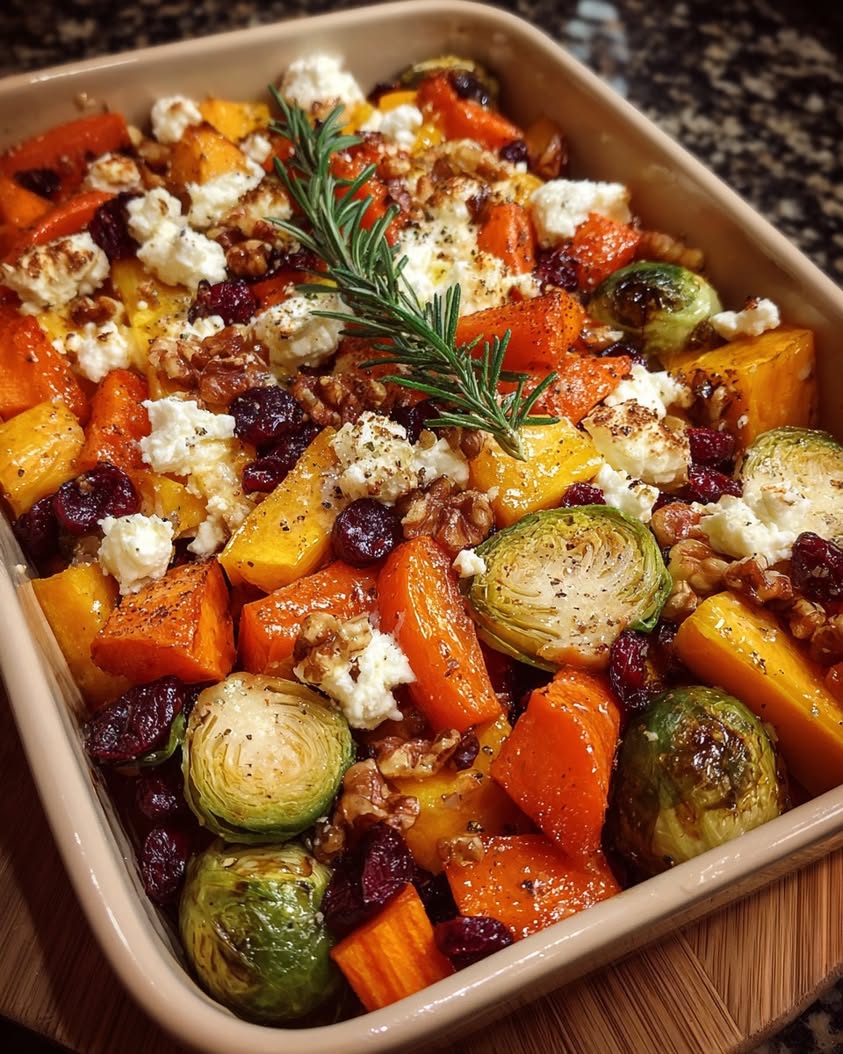
Roasted Harvest Bowl: A Symphony of Sweet, Savory, and Spicy Flavors
This roasted harvest bowl recipe creates an unforgettable culinary experience that celebrates the best of autumn produce. Creamy roasted squash and sweet potatoes meet crispy Brussels sprouts, salty feta, and sweet cranberries. Ultimately, the entire dish gets drizzled with a vibrant hot honey for the perfect sweet and spicy bite. This recipe transforms simple vegetables into a spectacular meal that feels both rustic and elegant.
Imagine pulling a sheet pan from your oven filled with caramelized, jewel-toned vegetables. The aroma of roasted garlic and herbs fills your kitchen, promising a meal that is as nourishing as it is delicious. This dish delivers a beautiful harmony of textures and flavors in every single forkful. Consequently, it works perfectly as a hearty vegetarian main course or as a stunning side dish for holiday gatherings.
Furthermore, this recipe is incredibly versatile and forgiving. You can easily adapt it based on what you have in your pantry or to suit different dietary needs. The combination of sweet, savory, spicy, and tangy elements ensures that your taste buds will never get bored. This roasted harvest bowl is a true celebration of seasonal eating at its finest.
Quick Recipe Highlights
- Flavor Profile: This dish features a complex balance of sweet from the roasted vegetables and cranberries, savory from the feta cheese, and a gentle heat from the hot honey drizzle. The result is a sophisticated flavor experience that is both comforting and exciting.
- Texture: You will enjoy a delightful contrast between the creamy, soft interior of the roasted butternut squash and sweet potatoes and the crispy, caramelized edges. The toasted walnuts add a satisfying crunch, while the feta provides a crumbly, creamy element.
- Aroma: As the vegetables roast, your kitchen will fill with the warm, earthy scents of rosemary and garlic melding with the natural sweetness of the caramelizing squash and potatoes. The final drizzle of hot honey adds a final aromatic punch.
- Visual Appeal: This bowl is a feast for the eyes with its vibrant colors—deep orange squash, green Brussels sprouts, white feta, red cranberries, and golden-brown walnuts. It’s a visually stunning dish that looks beautiful on any table.
- Skill Level Needed: This is a beginner-friendly recipe that requires basic knife skills for chopping and the ability to use an oven safely. The techniques are straightforward, making it an excellent recipe for cooks of all experience levels.
- Special Equipment: You only need a large baking sheet, a good chef’s knife, and a mixing bowl. Parchment paper is highly recommended for easy cleanup and to prevent sticking.
Recipe Overview
- Difficulty Level: This recipe earns its easy rating because it involves simple chopping, tossing, and roasting techniques. There are no complicated steps or advanced culinary skills required. The process is largely hands-off once the vegetables are in the oven, making it very approachable. Even a novice cook can achieve fantastic results with this method.
- Category: This dish beautifully straddles the line between a satisfying vegetarian main course and an impressive side dish. It’s perfect for a healthy weeknight dinner, yet special enough for holiday meals like Thanksgiving or Christmas. You can also serve it over grains like quinoa or farro for a more substantial meal.
- Cuisine: While not tied to one specific tradition, this recipe draws inspiration from modern American farm-to-table cooking and Mediterranean influences. The use of feta cheese and olive oil nods to Greek cuisine, while the hot honey adds a contemporary American twist. It’s a fusion that celebrates global flavors.
- Cost: This is a very cost-effective recipe, especially during the fall and winter months when these vegetables are in season and priced lower. The most expensive components are typically the feta cheese and walnuts, but they provide a lot of flavor impact for their quantity. Overall, it’s an affordable way to feed a family or group.
- Season: This dish is truly perfect for autumn and winter when squash, sweet potatoes, and Brussels sprouts are at their peak of flavor and freshness. The warm, roasted flavors are particularly comforting during cooler weather. That said, you can find these vegetables year-round in most supermarkets.
- Occasion: This versatile recipe works for casual weeknight dinners, meal prep for lunches, potlucks, and elegant holiday feasts. It’s equally at home on a Tuesday night table as it is on a Thanksgiving spread. It’s a crowd-pleaser that adapts to any gathering.
Why You’ll Love This Roasted Harvest Bowl
First and foremost, the taste and texture appeal of this dish is absolutely remarkable. Each component brings something unique to the table, creating a symphony in your mouth. The creamy sweetness of the roasted squash and potatoes contrasts beautifully with the slight bitterness of the Brussels sprouts. Meanwhile, the salty feta and sweet cranberries play off each other, and the spicy hot honey ties everything together with a delightful kick. Every single bite offers a new combination of flavors and textures that will keep you coming back for more.
Additionally, the convenience and preparation benefits make this recipe a weeknight hero. You simply chop the vegetables, toss them with oil and seasonings, and let the oven do most of the work. This hands-off approach means you can prepare other components of your meal or simply relax while dinner cooks. The recipe uses just one sheet pan, which translates to minimal cleanup—a huge bonus for busy cooks. Furthermore, the ingredients are readily available at most grocery stores year-round.
From a nutritional standpoint, this roasted harvest bowl is packed with health advantages. Butternut squash and sweet potatoes deliver a powerful dose of Vitamin A, while Brussels sprouts are rich in Vitamin K and fiber. The walnuts provide healthy omega-3 fatty acids, and the olive oil contributes heart-healthy monounsaturated fats. This dish is naturally vegetarian and can easily be made vegan with a simple cheese substitution. It’s a meal that makes you feel as good as it tastes.
The social and entertaining value of this dish cannot be overstated. It presents beautifully on the table, looking rustic yet elegant with its vibrant colors and varied textures. It’s a fantastic option for serving a mixed group of eaters, including vegetarians, without requiring separate meals. The recipe scales up easily for a crowd, making it perfect for holiday gatherings and potlucks. Your guests will be impressed by the complex flavors, never guessing how simple it was to prepare.
Finally, the cost-effectiveness and accessibility of this recipe make it a practical choice for any budget. The foundation of the dish is affordable root vegetables and brassicas, which are typically among the least expensive produce items. The pricier components like feta and walnuts are used sparingly but strategically for maximum impact. You can often find sales on these items, especially around the holidays. This dish delivers restaurant-quality flavors at a fraction of the cost.
Historical Background and Cultural Significance
The practice of roasting vegetables dates back to ancient cooking methods, where open-fire cooking was the primary way to prepare food. However, the specific combination of these ingredients is a relatively modern development that reflects contemporary culinary trends. This recipe embodies the farm-to-table movement that gained momentum in the late 20th and early 21st centuries, emphasizing fresh, seasonal, and locally sourced ingredients. The inclusion of diverse elements like feta (Mediterranean), sweet potatoes (Central American origin), and hot honey (American South) represents our current globalized food culture.
Each component of this dish carries its own cultural significance and history. Butternut squash is native to North America and was a staple in Indigenous diets long before European colonization. Sweet potatoes have a complex history spanning Central and South America, eventually traveling to Europe and Asia via exploration routes. Brussels sprouts, as their name suggests, were popularized in Belgium before spreading throughout Europe and beyond. Feta cheese is protected by designation of origin in Greece, while cranberries are one of the few fruits native to North America.
The evolution of this recipe reflects changing American eating habits and the rise of vegetable-forward dining. As vegetarian and flexitarian diets have become more mainstream, creative dishes like this have emerged to center vegetables rather than treating them as mere side dishes. The hot honey trend represents a more recent innovation, adding contemporary excitement to traditional roasting methods. This dish is a perfect example of how culinary traditions evolve by incorporating new ingredients and techniques while honoring fundamental cooking methods.
Regional variations of roasted vegetable dishes exist across many cultures. Mediterranean countries have long roasted vegetables with olive oil and herbs, while Middle Eastern cuisine often incorporates similar spice profiles. The American South contributes the hot honey element, which has become increasingly popular nationwide. In different parts of the world, you might find similar concepts using local cheeses, different nuts, or alternative seasonal vegetables. This particular combination, however, beautifully represents the melting pot of modern American cuisine.
Ingredient Deep Dive
Butternut squash serves as the sweet, creamy foundation of this dish. This winter squash originated in the Americas and was a crucial food source for Native American tribes long before European contact. Nutritionally, it’s packed with vitamin A, vitamin C, potassium, and fiber while being low in calories. When selecting butternut squash, look for one that feels heavy for its size with a firm, matte skin free of soft spots. Store whole squash in a cool, dark place for up to three months. For a substitution, you could use acorn squash, pumpkin, or even carrots for a similar sweet, earthy flavor profile.
Brussels sprouts provide a cruciferous counterpoint with their slight bitterness and wonderful crispness when roasted. These miniature cabbages were cultivated in ancient Rome but gained their name from their popularity in Belgium during the 16th century. They’re nutritional powerhouses, offering high levels of vitamin K, vitamin C, folate, and cancer-fighting antioxidants called glucosinolates. Choose firm, bright green sprouts that are similar in size for even cooking. Store them unwashed in your refrigerator’s crisper drawer. If you’re not a fan of Brussels sprouts, broccoli florets or cauliflower would make excellent substitutes in this recipe.
Sweet potatoes contribute their distinctive sweetness and vibrant orange color to the dish. Despite their name, sweet potatoes are only distantly related to regular potatoes and actually belong to the morning glory family. They originated in Central or South America over 5,000 years ago. These tubers are incredibly nutritious, providing massive amounts of vitamin A, along with vitamin C, manganese, and fiber. Select firm sweet potatoes with smooth skin and no soft spots. Store them in a cool, dark, well-ventilated place—not the refrigerator. As alternatives, regular potatoes, parsnips, or carrots would work well.
Feta cheese brings a salty, tangy element that cuts through the sweetness of the roasted vegetables. This brined cheese has protected designation of origin status in Greece, meaning authentic feta must be made there using specific methods. Feta is lower in fat than many cheeses but is quite high in sodium. It does provide calcium and protein. Look for feta blocks packed in brine for the best flavor and texture. For storage, keep it submerged in its brine in the refrigerator. If you need a substitute, goat cheese, queso fresco, or even blue cheese would provide a similar salty, tangy punch.
Walnuts offer a satisfying crunch and nutty flavor that complements the other textures in the bowl. These nuts have a rich history dating back thousands of years to Persia and the Mediterranean region. Nutritionally, they’re an excellent source of omega-3 fatty acids, antioxidants, and various vitamins and minerals. Always choose walnuts that smell fresh and nutty, not rancid. Store them in an airtight container in the refrigerator or freezer to prevent their oils from going bad. Pecans or almonds would make fine substitutions if you prefer or have an allergy.
The hot honey provides the signature sweet and spicy finish that makes this dish so memorable. While honey has been used for thousands of years, the specific combination with chili peppers is a more recent innovation with roots in American Southern cuisine. Honey offers natural sweetness along with trace enzymes, minerals, and antioxidants. You can use any variety you prefer, though a milder honey like clover or wildflower works well to let the chili heat shine through. For storage, keep honey at room temperature in a sealed container. To substitute, you could make a simple syrup with a pinch of chili flakes or use maple syrup with a dash of hot sauce.
Common Mistakes to Avoid
- Cutting vegetables unevenly: This leads to inconsistent cooking where some pieces are burnt while others remain undercooked. Always aim for uniform-sized pieces, about 1-inch cubes for the squash and potatoes, and halved Brussels sprouts. This ensures everything finishes roasting at the same time.
- Crowding the baking sheet: Overloading the pan causes the vegetables to steam rather than roast, preventing that desirable caramelization. Use two baking sheets if necessary, ensuring each piece has some space around it. This allows hot air to circulate properly for even browning.
- Neglecting to preheat the oven: Starting with a properly preheated oven is crucial for immediate roasting and proper texture development. If the oven isn’t hot enough, the vegetables will release their moisture before browning occurs. Always wait for your oven to reach the specified temperature before adding your pan.
- Underseasoning the vegetables: Vegetables need generous seasoning to bring out their natural flavors. Don’t be shy with salt and pepper during the initial tossing stage. Remember that the feta will add saltiness later, but the vegetables themselves need proper seasoning to shine.
- Using old baking soda instead of baking powder: While this might seem obvious, it’s a common error that can ruin the texture of baked goods. Always check the expiration date on your leavening agents. For this savory dish, ensure your spices are fresh for the best flavor.
- Adding the toppings too early: The feta, cranberries, and walnuts should be added after roasting to maintain their textures. If you add them before roasting, the cheese will melt into a mess, the cranberries may burn, and the walnuts will become bitter.
- Skipping the toast on the walnuts: Raw walnuts can have a slightly bitter flavor and less crunch. Taking the extra few minutes to toast them unlocks their nutty flavor and gives them a superior texture that complements the roasted vegetables perfectly.
- Not adjusting for your specific oven: Oven temperatures can vary significantly from what the dial indicates. Know your oven’s quirks—you might need to rotate the pan halfway through cooking or adjust the temperature slightly for optimal results.
- Forgetting to drizzle with hot honey until serving: The hot honey is meant to be a finishing element that adds brightness and spice. If you add it before roasting, the honey will burn and become bitter. Always add it just before serving for the best flavor.
Essential Techniques
Proper vegetable roasting requires understanding the Maillard reaction—the chemical process that creates browning and complex flavors. For success, ensure your vegetables are completely dry before tossing with oil, as moisture prevents proper browning. Use enough oil to lightly coat every surface, which helps conduct heat and promotes caramelization. Spread the vegetables in a single layer with space between them to allow steam to escape. The high oven temperature (400°F-425°F is ideal) quickly caramelizes the natural sugars while cooking the interiors. Visual cues for perfectly roasted vegetables include golden-brown edges and tender flesh that easily pierces with a fork.
Knife skills for vegetable prep are fundamental to even cooking. For butternut squash, first slice off the top and bottom to create stable surfaces. Peel the squash thoroughly with a sharp vegetable peeler, then cut it in half where the narrow neck meets the bulbous bottom. Scoop out the seeds from the bottom section, then cut both parts into manageable planks before dicing into uniform cubes. For Brussels sprouts, trim the dry stem end and remove any discolored outer leaves before halving them lengthwise. With sweet potatoes, simply peel and cube them to match the size of your squash pieces. Consistent sizing is the most important factor for uniform roasting.
Toasting nuts properly maximizes their flavor and crunch. Spread raw walnuts in a single layer on a dry baking sheet—you can do this while the oven preheats or in a separate batch. Watch them carefully as they can go from perfectly toasted to burned very quickly. They’re done when they become fragrant and take on a slightly darker color, typically 5-8 minutes at 350°F. You can also toast them in a dry skillet over medium heat, shaking frequently. The key is to remove them from the heat immediately once done, as they continue to cook from residual heat. Never leave toasting nuts unattended.
Pro Tips for Perfect Roasted Harvest Bowls
First, consider roasting your vegetables on parchment paper or a silicone baking mat. This prevents sticking without requiring excessive oil and makes cleanup remarkably easy. Additionally, the parchment helps with even heat distribution across the pan.
Second, don’t toss the Brussels sprouts with the other vegetables initially if they’re significantly smaller. Instead, add them to the sheet pan about 10-15 minutes into the roasting time. This ensures everything finishes cooking simultaneously without overcaramelizing the sprouts.
Third, reserve some fresh herbs to sprinkle over the finished dish. While roasted herbs develop deep flavor, fresh herbs added at the end provide a bright, aromatic lift that contrasts beautifully with the rich roasted vegetables.
Fourth, make extra hot honey—it keeps well and is fantastic on everything from pizza to fried chicken. Simply warm honey gently with your preferred chili flakes or hot sauce, then let it steep for deeper flavor.
Fifth, if serving as a main course, consider adding a protein boost. Chickpeas tossed with the vegetables before roasting or a perfectly poached egg on top transforms this side into a complete, satisfying meal.
Sixth, let the roasted vegetables rest for 5 minutes after removing them from the oven. This allows them to reabsorb some of their natural juices and makes them easier to handle when assembling your bowls.
Variations and Adaptations
Regional variations can transform this dish entirely. For a Mediterranean twist, substitute the feta with goat cheese, add Kalamata olives, and use oregano instead of rosemary. For a Middle Eastern version, incorporate cumin and coriander into the spice mix, use pistachios instead of walnuts, and finish with a tahini-lemon drizzle alongside the hot honey. Southern-inspired adaptations might include using pecans instead of walnuts and adding a sprinkle of smoked paprika to the roasting vegetables.
Seasonal adaptations keep this recipe exciting year-round. In spring, substitute asparagus and radishes for the root vegetables. Summer versions could feature zucchini, eggplant, and bell peppers. Winter adaptations might include parsnips and turnips alongside the squash. The method remains consistent regardless of the vegetables you choose—just adjust roasting times based on the density and moisture content of your selections.
Dietary modifications are straightforward with this versatile recipe. For a vegan version, omit the feta or use a plant-based alternative, and ensure your honey substitute is vegan-friendly (maple syrup works well). For a gluten-free diet, this recipe is naturally compliant—just check that any pre-made hot honey doesn’t contain additives with gluten. Low-carb adaptations might reduce or eliminate the sweet potatoes and increase the Brussels sprouts and other low-starch vegetables.
Flavor variations allow for endless customization. Instead of hot honey, try a balsamic glaze reduction or a miso-ginger dressing. Experiment with different herb combinations like thyme, sage, or herbes de Provence. Spice blends such as za’atar, curry powder, or Chinese five-spice can completely transform the flavor profile while maintaining the same roasting technique.
Serving and Presentation Guide
Plating techniques significantly impact the visual appeal of this dish. For individual servings, start with a base of grains like farro, quinoa, or brown rice at the bottom of wide, shallow bowls. Artfully arrange the roasted vegetables over the grains, rather than dumping them haphazardly. Place the Brussels sprouts cut-side up to show their caramelized surfaces, and distribute the squash and sweet potato pieces to create color contrast.
Garnishing adds the final touches that elevate this from simple roasted vegetables to a restaurant-quality dish. Sprinkle the toasted walnuts, dried cranberries, and crumbled feta strategically rather than uniformly. This creates visual interest and ensures each bite contains different elements. Finish with a generous drizzle of hot honey in a zigzag pattern across the vegetables, and perhaps a final sprinkle of flaky sea salt and fresh herbs.
Traditional accompaniments might include crusty bread to soak up any remaining honey and vegetable juices, or a simple green salad with a light vinaigrette to cut through the richness. For holiday meals, this pairs beautifully with roast turkey, baked ham, or other traditional centerpieces. As a vegetarian main, consider serving it with a protein-rich legume dish like lentil salad.
Wine and Beverage Pairing
Wine pairings should complement both the sweetness of the vegetables and the spice of the honey. An off-dry Riesling or Gewürztraminer works beautifully as their slight sweetness mirrors the roasted vegetables while their acidity cuts through the richness. For red wine lovers, a fruity Beaujolais or Pinot Noir has enough brightness to stand up to the dish without overpowering it. Rosé, particularly a dry Provencal style, offers versatility that bridges the gap between the various flavor components.
Non-alcoholic alternatives can be just as sophisticated. Sparkling apple cider provides effervescence and autumnal flavors that complement the dish perfectly. For something more unique, try a ginger-based mocktail or a tart cranberry spritzer. Iced hibiscus tea offers beautiful color and tannic structure that stands up to the robust flavors. Even a simple sparkling water with lemon can cleanse the palate between bites.
Coffee and tea pairings work surprisingly well with this savory dish. After the meal, a medium-roast coffee with notes of caramel and nut complements the toasted elements in the bowl. For tea, an Earl Grey provides bergamot notes that cut through the richness, while a smoky Lapsang Souchong echoes the caramelized flavors. Chai tea’s warming spices harmonize beautifully with the hot honey component.
Storage and Shelf Life
Storage methods for leftovers are straightforward but important for maintaining quality. Allow the roasted vegetables to cool completely before transferring them to an airtight container. Store the components separately if possible—the roasted vegetables in one container, and the feta, walnuts, and cranberries in another. The hot honey can be stored at room temperature in a sealed jar. This separation prevents the walnuts from becoming soggy and the feta from dissolving into the vegetables.
Temperature requirements are specific to each component. The roasted vegetable mixture should be refrigerated and will keep for 3-4 days. The feta should remain in its brine or in a separate sealed container in the refrigerator. Walnuts are best stored in the freezer to maintain freshness, while dried cranberries can be kept in the pantry. The assembled dish with all components should not be left at room temperature for more than two hours.
Reheating instructions are crucial for restoring the dish’s original texture. To reheat the roasted vegetables, spread them in a single layer on a baking sheet and warm in a 350°F oven for 10-15 minutes until heated through. This method helps restore some of the crispness lost during refrigeration. Avoid microwaving if possible, as this will make the vegetables soft and steamy. Always add the fresh toppings and hot honey drizzle after reheating, not before.
Make Ahead Strategies
Prep timeline for efficient meal preparation can save significant time. The day before serving, you can wash, peel, and chop all vegetables. Store them in separate airtight containers in the refrigerator—the squash and sweet potatoes should be submerged in water to prevent browning. You can also toast the walnuts and prepare the hot honey in advance. On cooking day, simply drain the vegetables, toss with oil and seasonings, and roast.
Storage between steps maintains quality when preparing components at different times. If pre-roasting vegetables, undercook them slightly since they’ll be reheated later. Cool them completely before refrigerating in a single layer if possible. When making the hot honey ahead, store it in a glass jar and gently reheat it before serving to return it to a drizzle-able consistency. Toasted walnuts should be completely cooled before storing in an airtight container.
Assembly tips for make-ahead success focus on strategic timing. If preparing the entire dish ahead for an event, keep all components separate until just before serving. Transport the roasted vegetables in an insulated container, and bring the toppings in separate bags or containers. Assemble on-site to maintain optimal textures. For meal prep, portion the roasted vegetables into containers and pack the toppings in small separate compartments within the same container.
Scaling Instructions
Halving the recipe works perfectly for smaller households. Simply divide all ingredient quantities by two and use a standard baking sheet. The roasting time may decrease slightly since there’s less mass in the oven, so begin checking for doneness about 5-10 minutes earlier than the original recipe suggests. All other techniques remain identical. This scaled-down version is perfect for 2-3 servings with minimal leftovers.
Doubling or tripling the recipe requires some adjustments for optimal results. Use multiple baking sheets and rotate them halfway through cooking to ensure even browning. You may need to increase the roasting time by 5-10 minutes since a fuller oven cooks less efficiently. Consider working in batches if your oven doesn’t accommodate multiple sheets comfortably. When scaling up, mix the vegetables with oil and seasonings in very large bowls to ensure even coating.
Equipment adjustments become necessary when scaling the recipe significantly. For large batches, commercial-sized sheet pans or roasting pans provide more surface area. If using multiple regular baking sheets, ensure your oven can accommodate them with proper air circulation between racks. For very large quantities, you might need to roast in successive batches, keeping finished batches warm in a low oven. Industrial-sized mixing bowls make tossing large volumes of vegetables much easier.
Nutritional Deep Dive
Macro breakdown reveals this dish’s balanced nutritional profile. The roasted vegetables provide complex carbohydrates for sustained energy, while the walnuts and olive oil contribute healthy fats. Feta cheese adds protein, making this a relatively complete meal from a macronutrient perspective. The exact ratios depend on your specific portions, but generally, this dish offers moderate carbohydrates, moderate fats, and lower protein—perfect as a side dish or when supplemented with additional protein as a main course.
Micronutrient analysis shows an impressive array of vitamins and minerals. Butternut squash and sweet potatoes deliver exceptionally high levels of vitamin A in the form of beta-carotene. Brussels sprouts provide vitamin K, vitamin C, and folate. Walnuts contribute manganese and copper, while olive oil offers vitamin E. Together, these ingredients create a micronutrient-dense dish that supports vision, bone health, immune function, and antioxidant protection.
Health benefits extend beyond basic nutrition due to the synergistic effects of these whole food ingredients. The combination of fiber from the vegetables and healthy fats from the olive oil and walnuts supports stable blood sugar levels. The anti-inflammatory compounds in Brussels sprouts and the antioxidants in sweet potatoes may help reduce chronic disease risk. The diversity of plant foods contributes to a healthy gut microbiome, supporting overall digestive health and immunity.
Dietary Adaptations
Gluten-free adaptation is naturally simple since this recipe contains no gluten-containing ingredients. The only potential concern would be pre-made hot honey that might include additives with gluten, so either make your own or check labels carefully. All other components—vegetables, nuts, cheese, and oil—are naturally gluten-free, making this a safe option for those with celiac disease or gluten sensitivity.
Dairy-free and vegan modifications require replacing the feta cheese. Excellent plant-based alternatives include vegan feta products now available in many supermarkets, or you can make your own from tofu or almonds. For the hot honey, substitute maple syrup or agave nectar infused with chili flakes. Nutritional yeast can provide a cheesy flavor note if desired. With these simple swaps, the dish becomes completely plant-based while maintaining its flavor profile.
Low-carb and keto adaptations focus on reducing the higher-carb vegetables. Decrease or eliminate the sweet potatoes and butternut squash, replacing them with low-carb options like cauliflower, broccoli, or zucchini. Increase the Brussels sprouts proportionally, and consider adding other low-carb vegetables like bell peppers or asparagus. The walnuts, olive oil, and cheese align well with keto macros, making this an easy adjustment for low-carb diets.
Troubleshooting Guide
Texture issues commonly involve vegetables that are either too soft or not cooked enough. If your vegetables are coming out soggy, you’re likely overcrowding the pan or not using a hot enough oven. For undercooked vegetables, simply return them to the oven in 5-minute increments until tender. If some pieces are cooking faster than others, your vegetable cuts are likely uneven—be more precise with your knife work next time.
Flavor balance problems typically involve dishes that are too sweet, too salty, or lacking dimension. If too sweet, increase the salty elements like feta or add a squeeze of lemon juice for acidity. If too salty, add more sweet elements like additional cranberries or a drizzle of plain honey. If the dish tastes flat, you probably underseasoned—add more salt, pepper, or herbs to taste.
Equipment challenges often relate to baking sheet quality and oven performance. If using dark baking sheets, reduce the oven temperature by 25°F as they conduct heat more efficiently. If your oven has hot spots, rotate the pan halfway through cooking. For ovens that run cool, you may need to increase the temperature slightly or extend the cooking time. Knowing your specific equipment helps tremendously with consistent results.
Recipe Success Stories
Community feedback consistently highlights how this recipe converts vegetable skeptics, particularly those who claim to dislike Brussels sprouts. The caramelization that occurs during roasting transforms their flavor, while the combination with sweet elements makes them more approachable. Many readers report that this dish has become a regular in their meal rotation, with some making it weekly throughout the fall and winter months. The versatility to serve as both side and main appeals to households with diverse eating preferences.
Variation successes demonstrate the recipe’s adaptability. One reader created a Thanksgiving version with added pecans and pomegranate seeds that became their new family tradition. Another added chickpeas for extra protein and made it their weekly meal prep lunch. Several home cooks have experimented with different spice blends, reporting excellent results with everything from smoked paprika to curry powder. The basic template proves remarkably resilient to creative interpretation.
Reader suggestions have included brilliant additions that enhance the recipe. Multiple people recommend adding a grain base like farro or quinoa to make it more substantial. Others suggest sprinkling with pomegranate seeds in addition to cranberries for extra freshness and color. Several cooks recommend serving with a dollop of Greek yogurt or tzatziki on the side to cool the heat from the honey. These community-generated ideas enrich the recipe experience for everyone.
Frequently Asked Questions
Can I use pre-cut butternut squash to save time? Absolutely. Pre-cut squash works perfectly in this recipe and can save significant prep time. Just ensure the pieces are relatively uniform in size, and consider cutting any particularly large chunks down to match the size of your other vegetables for even cooking.
What’s the best way to make this dish spicier? To increase the heat, you can add more chili flakes to your hot honey, use a hotter variety of chili, or even incorporate a few dashes of your favorite hot sauce. Alternatively, you could sprinkle the finished dish with crushed red pepper flakes for an extra kick.
Can I use different nuts besides walnuts? Certainly. Pecans, almonds, or pine nuts would all work beautifully in this recipe. Just toast them similarly to the walnuts until fragrant and lightly browned. Each nut will bring its own unique flavor and texture to the dish.
How do I prevent the vegetables from sticking to the pan? Using parchment paper or a silicone baking mat is the most effective method. If you don’t have these, ensure your baking sheet is well-coated with oil, and avoid moving the vegetables until they’ve developed a crust, which naturally releases from the pan.
Can I make this recipe with frozen vegetables? While possible, frozen vegetables will release more water during cooking, preventing proper caramelization. If using frozen, thaw completely and pat very dry before roasting. Fresh vegetables will always yield superior texture and flavor for this particular recipe.
What can I use instead of feta cheese? Goat cheese, queso fresco, blue cheese, or even shaved Parmesan would make excellent substitutes. For vegan versions, there are several plant-based feta alternatives available, or you can use nutritional yeast for a cheesy flavor.
How far in advance can I prepare the components? The vegetables can be chopped 1-2 days ahead if stored properly in airtight containers. The hot honey can be made up to two weeks in advance. Toasted nuts will keep for about a week in an airtight container. Assemble just before serving for best texture.
Can I add protein to make this a complete meal? Definitely. Chickpeas tossed with the vegetables before roasting, grilled chicken slices served alongside, or a fried egg on top all work beautifully. Lentils or cooked quinoa mixed into the finished dish also adds protein and makes it more substantial.
What’s the best way to reheat leftovers? Spread the roasted vegetables on a baking sheet and warm in a 350°F oven for 10-15 minutes. This method helps restore some crispness. The microwave will work but will result in softer vegetables. Always add fresh toppings after reheating.
Can I make this recipe without honey? Absolutely. Maple syrup, agave nectar, or even a brown sugar glaze would work well. For the spicy element, you can add chili flakes directly to the vegetables before roasting or serve with hot sauce on the side.
Additional Resources
Related recipes that complement this roasted harvest bowl include grain-based salads that can serve as bases, such as farro with roasted grapes and walnuts or quinoa with roasted vegetables. Other vegetable side dishes that would pair well include roasted cauliflower with tahini sauce or garlic sautéed greens. For those who enjoy the hot honey concept, try it drizzled over roasted carrots, pizza, or even fried chicken.
Technique guides that would
Print
Roasted Harvest Veggies with Feta, Cranberries & Toasted Walnuts in Hot Honey Glaze
Description
A vibrant and savory-sweet medley of roasted butternut squash, carrots, Brussels sprouts, and sweet potatoes, topped with creamy feta, tart cranberries, crunchy toasted walnuts, and a drizzle of spicy hot honey.
Ingredients
For the Crust:
- 1 small butternut squash, peeled and cubed
- 2 large carrots, peeled and sliced
- 1 lb Brussels sprouts, trimmed and halved
- 1 large sweet potato, peeled and cubed
- 3 tbsp olive oil
- 1 tsp garlic powder
- 1 tsp smoked paprika
- Salt and black pepper to taste
- 1/2 cup crumbled feta cheese
- 1/4 cup dried cranberries
- 1/4 cup walnuts, toasted
- 2 tbsp hot honey
Instructions
1. Prepare the Crust:
- Preheat oven to 400°F (200°C). Line a large baking sheet with parchment paper.
- In a large bowl, toss butternut squash, carrots, Brussels sprouts, and sweet potato with olive oil, garlic powder, smoked paprika, salt, and pepper until evenly coated.
- Spread vegetables in a single layer on the prepared baking sheet. Roast for 25-30 minutes, or until tender and lightly browned, stirring halfway through.
- While vegetables roast, toast walnuts in a dry skillet over medium heat for 3-5 minutes, stirring frequently, until fragrant and lightly browned. Set aside.
- Transfer roasted vegetables to a serving platter. Top with crumbled feta, dried cranberries, and toasted walnuts. Drizzle with hot honey just before serving.
Notes
You can customize the seasonings to taste.

I’m Shaykee—born in Morocco, seasoned across continents. From airplane galleys to home kitchens, I share the flavors and stories that shaped my journey.