
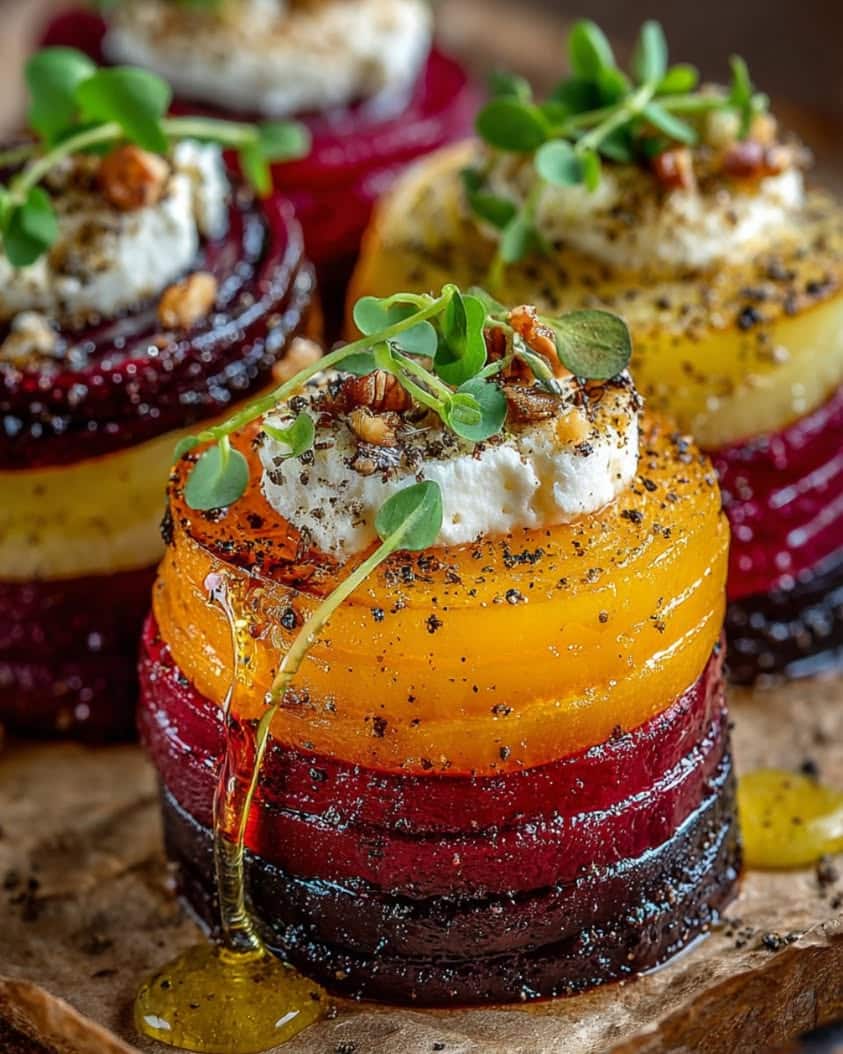
Caramelized Beet & Pear Towers with Feta Snow & Citrus Honey Drip: An Elegant Sweet-Savory Vegetarian Appetizer
Imagine presenting a dish that looks like a miniature work of modern art, yet tastes like a harmonious symphony of earthy sweetness and bright, creamy tang. This is precisely what you achieve with Caramelized Beet & Pear Towers with Feta Snow & Citrus Honey Drip. This elegant, sweet-savory vegetarian appetizer is a true showstopper, designed to impress guests and delight your own palate. Moreover, it transforms humble root vegetables and fruit into a culinary masterpiece.
The process involves roasting beets to concentrate their natural sugars, then caramelizing them alongside pears for a deep, complex flavor. Subsequently, you layer these components into neat towers. Finally, you finish the dish with a delicate snowfall of crumbled feta and a glossy, aromatic citrus honey drip. Each bite delivers a stunning contrast of textures and temperatures, making it an unforgettable start to any meal. Consequently, this recipe proves that vegetarian dishes can be every bit as sophisticated and satisfying as their meat-based counterparts.
Ultimately, this Caramelized Beet & Pear Towers recipe is more than just food; it’s an experience. The vibrant crimson of the beets against the pale gold of the pears creates a visual feast. Meanwhile, the aroma of warm honey and orange zest fills the air. This dish is perfect for those who love to cook with intention and present food with pride. It bridges the gap between rustic comfort and refined elegance effortlessly.
Quick Recipe Highlights
- Flavor Profile: This dish masterfully balances earthy sweetness from the caramelized beets and pears with the salty, creamy punch of feta and the bright, floral notes of citrus-infused honey. It’s a complex dance of sweet, savory, tangy, and aromatic elements in every single bite.
- Texture: You experience a wonderful contrast: the tender, almost meaty give of the roasted beets, the soft but firm slice of pear, the cool, crumbly melt of the feta snow, and the sticky-smooth viscosity of the honey drip. This variety keeps your palate engaged and delighted from start to finish.
- Aroma: As the towers are assembled, warm scents of roasted root vegetable, caramelized fruit, and fragrant orange zest mingle together. The final drizzle of warmed honey releases a final, intoxicating floral note that promises the delicious experience to come.
- Visual Appeal: The presentation is stunning. The deep ruby red and golden yellow layers create a striking vertical stack, dramatically topped with a white “snow” of feta and a glossy amber honey drip that cascades down the sides. It’s a plate that demands attention and admiration.
- Skill Level Needed: This is a medium-difficulty recipe ideal for a confident home cook. It requires patience for roasting and a careful hand for assembly, but no overly advanced techniques. Attention to detail in slicing and layering is key to achieving the beautiful tower structure.
- Special Equipment: You will need a good chef’s knife and cutting board for even slices, a baking sheet for roasting, and a small grater (like a Microplane) for creating the fine “snow” from the frozen feta. A pastry brush can be helpful for applying the honey drip artistically.
Recipe Overview
- Difficulty Level: We rate this recipe as medium difficulty. While the individual steps are straightforward, success hinges on precision. You must slice the beets and pears uniformly for stable towers, monitor the caramelization process to avoid burning, and master the gentle assembly. Therefore, it’s perfect for a cook looking for a rewarding weekend project or a special occasion centerpiece.
- Category: This dish fits beautifully into several categories. Primarily, it is an elegant vegetarian appetizer or starter. Alternatively, you can serve it as a light lunch alongside a peppery arugula salad. It also makes a spectacular side dish for a holiday feast, offering a vibrant and modern alternative to traditional sides.
- Cuisine: This recipe draws inspiration from modern fusion cuisine. It combines techniques from European vegetable cookery (roasting root vegetables) with a presentation style influenced by contemporary gastronomy. The use of honey and citrus is Mediterranean in spirit, while the architectural “tower” plating is a hallmark of modern restaurant presentation.
- Cost: This is a moderately priced appetizer. Fresh beets and pears are affordable, especially in season. A block of good-quality feta and a jar of local honey are pantry investments that you can use across many recipes. Overall, the cost per impressive serving is very reasonable compared to restaurant equivalents.
- Season: This recipe shines in the late fall and winter. This is when beets are at their sweetest and heartiest, and pears are perfectly ripe. The warm, roasted flavors are comforting in cooler weather. However, with stored root veggies, you can create a taste of elegance any time of year.
- Occasion: This dish is tailor-made for special occasions. Think dinner parties, holiday gatherings (especially Christmas or Thanksgiving for a colorful veggie option), anniversary dinners, or any event where you want the food to make a statement. It says “I care” without saying a word.
Why You’ll Love This Recipe
First and foremost, the taste and texture appeal is undeniable. Each component brings something unique to the table, creating a symphony in your mouth. The caramelization process unlocks profound sweetness and umami in the beets, while the pears retain a slight floral crispness. Then, the cold, salty feta snow provides a shocking and delightful contrast. Finally, the citrus honey ties everything together with its aromatic sweetness. Consequently, every forkful is a new discovery of flavor harmony.
From a convenience perspective, this recipe offers fantastic make-ahead potential. You can roast the beets and slice the pears a day in advance. Furthermore, you can mix the citrus honey and freeze the feta ahead of time. When guests arrive, you simply need to caramelize the slices quickly, assemble the towers, and garnish. This strategic prep turns an impressive dish into a manageable one, allowing you to be a calm and present host.
Nutritionally, this appetizer is a powerhouse. Beets are rich in fiber, folate, and beneficial nitrates that support heart health and stamina. Pears add more fiber and vitamin C. Meanwhile, feta provides a boost of calcium and protein. Using honey as a natural sweetener is a better alternative to refined sugars. Therefore, you can indulge in this beautiful dish knowing it’s nourishing your body with every vibrant, delicious bite.
The social and entertaining value of this dish is through the roof. It is a guaranteed conversation starter. Guests will be wowed by its appearance and then thrilled by its taste. Serving such a thoughtfully crafted dish shows a high level of care and culinary skill. It elevates the entire dining experience and makes any meal feel like a celebrated event. Ultimately, it creates a memorable moment for everyone at the table.
Finally, this recipe is cost-effective and accessible. You do not need rare or expensive ingredients. The magic lies in the transformation of common produce through technique and presentation. A humble beet becomes a jewel. A simple pear becomes a golden layer of luxury. This approach to cooking is deeply satisfying, proving that you do not need a huge budget to create restaurant-worthy food at home.
Historical Background and Cultural Significance
The story of this dish is not rooted in ancient tradition but is a modern invention born from contemporary culinary trends. It reflects a 21st-century approach to vegetarian cooking, where vegetables are elevated to center stage through technique and artistry. Chefs began exploring ways to present plant-based dishes with the same drama and sophistication as meat or seafood courses. Consequently, the concept of stacking or “towering” ingredients gained popularity for its visual impact and ability to showcase contrasting components in a single bite.
Culturally, this recipe speaks to a growing global appreciation for vegetable-forward cuisine. Movements like “Meatless Monday” and a rising number of flexitarians have created demand for vegetarian dishes that are celebratory, not just an afterthought. Dishes like these Caramelized Beet & Pear Towers demonstrate that omitting meat does not mean compromising on flavor, satisfaction, or elegance. They are a symbol of modern, conscious eating where produce is the protagonist.
The evolution of this specific recipe likely draws from multiple culinary threads. The pairing of beets and goat or feta cheese is classic in Eastern European and Mediterranean salads. Adding fruit like pear or apple to savory salads is a common practice in American and Western European fall cuisine. The “snow” technique, grating frozen cheese, is a modern garnish trick used in high-end restaurants to add a light, cold, salty element without overwhelming the dish. The fusion of these ideas into a structured tower is a contemporary innovation.
Regional variations of this concept are endless. In the Mediterranean, one might use roasted eggplant and zucchini with halloumi and a pomegranate molasses drip. In the autumn in New England, chefs might stack roasted sweet potato and apple with a cheddar snow and maple syrup drip. The core principle—caramelized vegetables/fruit, a crumbled or snowed cheese, and a sweet-acidic glaze—is adaptable to local produce and tastes. This adaptability is what makes the concept so enduring and exciting for home cooks everywhere.
Ingredient Deep Dive
Let’s start with the star: beets. These vibrant root vegetables have been cultivated since ancient times, prized by Romans and later in Eastern Europe. Nutritionally, they are a superfood, packed with betalains (powerful antioxidants), folate, manganese, and potassium. Their natural sugars caramelize beautifully. When selecting, choose firm, smooth beets with vibrant greens still attached if possible, a sign of freshness. Store them unwashed in the fridge. For a variation, try golden beets for a different color, or candy-striped Chioggia beets for a stunning interior pattern.
Next, the pears. Choose a firm variety like Bosc or Anjou that will hold its shape during roasting and caramelization. Pears have been a symbol of immortality in Chinese culture and were beloved by the ancient Greeks and Romans. They are an excellent source of dietary fiber and vitamin C. A ripe pear will yield slightly at the stem. To speed ripening, place them in a paper bag. For this recipe, slice them just before cooking to prevent excessive browning, or toss slices in a little lemon juice.
The feta snow relies on a good-quality block feta, preferably made from sheep’s or a sheep/goat milk blend for authentic tang and creaminess. Feta, meaning “slice” in Greek, is a brined cheese with a history dating back to the Byzantine era. It provides protein, calcium, and probiotics. Freezing it for about 30 minutes is the key technique for grating it into a light, fluffy snow that melts delicately on the warm towers. For a dairy-free version, a frozen, firm vegan feta or even grated coconut butter can work in a pinch.
Finally, the citrus honey drip. Honey is one of humanity’s oldest sweeteners, used in food, medicine, and ritual for millennia. Raw, local honey may offer additional health benefits. The citrus zest (orange or lemon) is crucial; the oils in the zest provide intense aroma without added liquid acidity. Warm the honey gently to make it pourable and to better infuse the zest. The combination creates a complex syrup that is floral, sweet, and bright. For a vegan adaptation, a warm maple syrup or agave nectar infused with zest is a perfect substitute.
Common Mistakes to Avoid
- Slicing Unevenly: Using a wobbly knife or rushing the slicing step results in uneven beet and pear rounds. Consequently, your towers will be unstable and may lean or collapse. Always use a sharp chef’s knife and take your time for uniform, 1/4-inch thick slices.
- Overcrowding the Pan: When caramelizing the beet and pear slices, give them space. If the pan is too crowded, the slices will steam instead of sear. This leads to soggy, pale slices without the beautiful caramelized crust that adds flavor and texture.
- Using Wet Beets: After roasting or boiling beets, you must pat them completely dry. Any residual moisture will prevent proper caramelization in the skillet. Patience here is key to achieving those delicious, crispy-edged slices.
- Not Freezing the Feta: Attempting to grate room-temperature feta will result in a pasty, clumpy mess, not a light snow. The 30-minute freeze is non-negotiable. It firms up the cheese just enough for your grater to create fine, delicate flakes.
- Overheating the Honey: When making the citrus honey drip, gently warm the honey only until it is just runny. Boiling or overheating it can destroy delicate floral notes and cause it to become too thin, making it run off the towers instead of clinging beautifully.
- Assembling with Hot Components: If your beet and pear slices are piping hot when you assemble the towers, they will melt the feta snow on contact into a greasy puddle. Let them cool for a few minutes so they are warm, not scorching hot.
- Skimping on Salt: Beets and pears need seasoning to enhance their natural sweetness. Do not forget to season each layer lightly with flaky salt during assembly. This step elevates the flavors from simple to spectacular.
- Using Pre-Crumbled Feta: The anti-caking agents in pre-crumbled feta prevent it from grating into a proper snow. Always start with a solid block of feta for the best texture and flavor in this specific application.
Essential Techniques
Roasting Beets: This technique concentrates flavor and yields a tender, sliceable texture. Wrap cleaned, dry beets individually in foil with a drizzle of oil. Roast until a knife slides in easily. The steam inside the pouch cooks them evenly. After roasting, let them cool slightly; the skins will rub off easily with paper towels. Do not boil beets, as this washes flavor into the water.
Caramelization: This is the Maillard reaction at work, creating complex, savory-sweet flavors and a beautiful crust. Use a hot, well-oiled skillet. Do not move the slices for a few minutes to allow a crust to form. Look for deep golden-brown edges and a noticeable caramelized aroma. This step is what transforms the sweet vegetables into something deeply flavorful and sophisticated.
Creating a “Cheese Snow”: Freezing the cheese is the critical first step. Then, using a fine grater like a Microplane, grate the cheese over the cold, hard surface. Use a light, quick motion. The result should be fluffy, cold flakes that resemble snow. This technique adds a burst of salty flavor and a melting texture without the heaviness of a solid cheese chunk.
Infusing Honey: Gently warming honey allows you to stir in citrus zest without crystallizing the honey. The heat helps release the essential oils from the zest into the honey. Let it sit for 5-10 minutes off the heat to steep. Strain if you prefer no zest bits, or leave it in for added texture and visual appeal. The infused honey should be warm and viscous for the perfect drip.
Pro Tips for Perfect Caramelized Beet & Pear Towers
Use a mandoline slicer for perfectly uniform beet and pear rounds if you have one; just use the guard for safety. Uniformity is the foundation of a stable, beautiful tower.
Roast a few extra beets. They keep well in the fridge for days and can be used in salads, hummus, or as a side, ensuring no waste from this recipe.
Choose pears that are ripe but still firm. Overly soft pears will turn to mush during caramelization and will not support the tower structure.
After caramelizing, lay the slices on a parchment-lined tray in a single layer. This prevents them from steaming each other and becoming soggy while you finish the batch.
Assemble your towers directly on the serving plates. Trying to move a completed tower is a recipe for disaster. Build them where they will be eaten.
For the most dramatic “snow” effect, hold your grater high above the plate and grate with a confident, swift motion. The flakes will fall lightly and evenly.
Drizzle the citrus honey drip from a spoon held at a height, letting it cascade down the sides artistically. You can also use a small squeeze bottle for more control.
Add a final flourish with a few tiny, delicate microgreens or edible flowers on the plate beside the tower for an extra touch of color and freshness.
Variations and Adaptations
For regional variations, consider the produce local to you. In the South, try caramelized sweet potato and peach towers with goat cheese snow and a bourbon-honey drip. On the West Coast, stack roasted golden beet and persimmon with a queso fresco snow and a lime-agave drip. The core technique remains, but the flavors tell a different geographic story.
Seasonal adaptations are easy. In spring, use roasted baby carrots and thinly sliced strawberries with a herbed chèvre snow. In summer, try grilled zucchini and yellow squash rounds with a ricotta salata snow and a basil-infused honey. This keeps the concept fresh and exciting all year round.
Dietary modifications are straightforward. For a vegan version, use a firm, freeze-able vegan feta and maple syrup. For a nut-free version, ensure your vegan cheese is nut-based. For a lower-sugar option, reduce the honey drizzle or use a sugar-free syrup alternative infused with citrus zest.
Flavor variations can change the profile entirely. Add a sprinkle of smoked paprika to the beets before roasting. Incorporate a layer of toasted walnuts or pecans between the beet and pear. Infuse the honey with thyme, rosemary, or a pinch of chili flake for a savory or spicy kick.
Texture modifications might include adding a crispy element. Consider a thin, crisp tuile made from baked parmesan nestled between layers, or a sprinkle of toasted panko breadcrumbs on the plate for crunch against the soft components.
Presentation alternatives are fun if towers feel too fussy. Simply arrange the caramelized beet and pear slices in a beautiful overlapping fan on the plate. Scatter the feta snow over the top and drizzle with honey for a deconstructed, equally stunning version.
Serving and Presentation Guide
Plating is everything. Use large, white or neutral-colored plates to let the vibrant colors of the dish pop. Build each tower in the center of the plate. Start with a beet round as the sturdy base, add a pear slice, and repeat, alternating and slightly offsetting each layer for visual interest. Aim for 3-4 layers per tower for stability and elegance.
Garnishing should enhance, not overwhelm. After the feta snow, a single small leaf of fresh thyme, a twist of orange zest, or a single pink peppercorn adds a professional touch. Keep it minimal. The tower itself is the star; the garnish is the supporting actor.
For traditional accompaniments, a simple mound of peppery arugula lightly dressed with lemon juice and olive oil beside the tower is perfect. The bitterness of the greens cuts through the sweetness beautifully. Alternatively, a swipe of beet purée or reduced balsamic glaze on the plate adds another layer of flavor and artistry.
Modern serving suggestions might include presenting the towers as a shared appetizer on a long wooden board. Alternatively, serve them as individual amuse-bouche for a fancy multi-course meal. You can also deconstruct the elements into a stunning salad for a more casual but equally impressive presentation.
Temperature considerations are crucial. The beet/pear layers should be warm, the feta snow should be cold, and the honey should be at room temperature or slightly warm. This trifecta of temperatures creates an incredible sensory experience in the mouth that is part of the magic of this dish.
Portion control is built in. One tower per person as an appetizer is perfect. As a side dish, one tower is also sufficient. The richness and complexity of flavors are satisfying without being overly heavy, leaving room for the courses to come.
Wine and Beverage Pairing
Wine pairings should complement the sweet, earthy, and tangy notes. A dry Riesling or Gewürztraminer is excellent; their slight sweetness and acidity mirror the dish. A crisp, unoaked Chardonnay or a French Rosé from Provence also works beautifully. For red wine lovers, a light, low-tannin Pinot Noir can handle the earthiness of the beets without overpowering the delicate pear and honey.
Non-alcoholic alternatives are just as important. A sparkling water with a twist of orange or a dash of bitters mimics the citrus notes. A cold, dry ginger beer provides a spicy kick that cleanses the palate. For a more elaborate option, a homemade honey-lemon-thyme shrub soda would be a spectacular match.
While not a classic coffee or tea dish, pairings exist. A light, floral white tea or a green tea with citrus notes would be lovely after the meal. For coffee, a bright, fruity light-roast coffee could surprisingly highlight the caramelized fruit flavors if served as part of a brunch.
Always serve white wines and sparkling beverages well-chilled. The coolness contrasts wonderfully with the warm elements of the tower. Red wines should be served slightly cooler than room temperature. Non-alcoholic drinks should be served ice-cold to provide the most refreshing counterpoint.
Presentation of the beverage matters too. Serve wine in appropriate stemware. Pour sparkling drinks into champagne flutes or coupes to make the non-drinkers feel just as celebrated. A beautiful drink alongside a beautiful plate completes the elegant experience.
Storage and Shelf Life
Storage of components is best done separately. Store roasted, cooled beets in an airtight container in the refrigerator for up to 5 days. Sliced, uncooked pears can be stored in lemon water for a day. The citrus honey can be kept at room temperature in a sealed jar indefinitely.
Assembled towers do not store well and should be eaten immediately. The feta snow will melt, and the structure will soften. Therefore, plan to assemble just before serving for the ideal texture and presentation.
If you have leftover caramelized beet and pear slices, store them in a single layer separated by parchment in an airtight container in the fridge for 2-3 days. They can be gently reheated in a skillet or enjoyed cold in salads.
Signs of spoilage for the components are standard: mold, off odors, or excessive sliminess on the beets. The honey may crystallize over time, which is natural; simply warm it gently to reliquefy.
Reheating instructions are simple for the vegetable components. Re-crisp the caramelized slices in a dry skillet over medium heat for a minute per side to restore their texture. Do not microwave, as this will make them soggy.
Freezing is not recommended for the assembled dish or the caramelized slices, as the texture of the beets and pears will become unpleasantly watery upon thawing. It is best enjoyed fresh.
Make Ahead Strategies
You can create an efficient prep timeline. Day 1: Roast the beets, let them cool, peel, and store whole in the fridge. Make the citrus honey and store it at room temp. Freeze the block of feta. Day of Serving: Slice the beets and pears. Caramelize all slices. Let them cool slightly. Assemble towers, add feta snow, and drizzle with honey just before serving.
Storage between steps is simple. Keep roasted beets whole and refrigerated. Keep the honey in a jar. Keep the feta frozen until you are ready to grate it. This compartmentalization keeps everything fresh and prevents texture degradation.
The quality impact of making components ahead is minimal if done correctly. Roasted beets actually improve in flavor overnight. The honey infusion deepens over time. The only element that must be day-of is the caramelization and final assembly to preserve the essential contrast of warm and cold, crisp and tender.
Assembly tips for make-ahead: Have all your components lined up on the counter—warm slices, frozen feta with grater, honey, serving plates. Work quickly and confidently to build each tower. This assembly line approach is efficient and ensures all towers are served at the perfect temperature.
If you must reheat the slices, do so gently in a skillet as mentioned. Never assemble with cold slices, as the dish will lack the wonderful temperature contrast. Warm components are key.
Add the fresh elements—the feta snow and honey drip—at the absolute last second. This preserves the snow’s texture and the honey’s glossy sheen, ensuring the first impression is as breathtaking as the last bite.
Scaling Instructions
Halving the recipe for a romantic dinner for two is easy. Use one medium beet and one pear. All other ingredient quantities can be eyeballed and reduced by roughly half. The process and timing remain exactly the same, just with fewer slices to manage.
Doubling or tripling for a party requires a bit more planning. You will need multiple baking sheets for roasting beets and likely will need to caramelize the slices in batches to avoid overcrowding. Consider enlisting a helper for assembly to get all towers plated quickly while components are at their ideal temperature.
Equipment adjustments for scaling up are minimal. Ensure you have enough skillets or a large griddle to caramelize multiple slices at once. Have plenty of clean kitchen towels or paper towels on hand for drying beets. Prep space is key.
Timing modifications are important when scaling up. The roasting time for beets remains the same regardless of quantity. However, caramelization time will increase linearly with more slices. Factor this in so you are not rushed during the final, crucial step before guests arrive.
Storage considerations for a larger batch are the same: components separate until the last moment. Have your fridge organized with containers of pre-sliced beets and pears (stored separately). The make-ahead strategy becomes even more critical for stress-free entertaining at scale.
Nutritional Deep Dive
This dish offers a favorable macro breakdown. It is relatively low in fat, with the primary sources being the healthy oils used for roasting/caramelizing and the feta cheese. Carbohydrates come from the natural sugars in beets, pears, and honey, accompanied by a good amount of dietary fiber from the whole vegetables and fruit. Protein is present from the feta cheese, making it a more balanced appetizer.
The micronutrient profile is impressive. Beets provide folate, manganese, potassium, and iron. Pears contribute vitamin C and copper. Feta adds calcium, phosphorus, and B vitamins. The citrus zest provides a burst of antioxidants and vitamin C. Together, they create a nutrient-dense starter that supports energy production, bone health, and immune function.
Specific health benefits include the nitrates in beets, which can help lower blood pressure and improve exercise performance. The fiber aids digestion and promotes satiety. The probiotics in feta support gut health. The antioxidants throughout the dish combat oxidative stress. It’s a delicious way to eat for wellness.
Dietary considerations are mostly positive. The dish is naturally vegetarian and gluten-free. It can be adapted to be vegan and dairy-free. However, those monitoring sodium should be mindful of the feta, and those on strict low-sugar or low-carb diets may need to modify the honey and pear components significantly.
Portion analysis shows one tower is a satisfying appetizer of roughly 200-250 calories, depending on specific quantities used. It provides a meaningful serving of vegetables and a touch of protein and healthy fat, making it a substantial start to a meal without being overly filling.
For weight management, this is an excellent choice. It is high in volume and fiber, which promotes fullness, and is relatively low in calorie density. The complex flavors and beautiful presentation provide high sensory satisfaction, which can prevent overeating later in the meal by making you feel truly indulged from the first course.
Dietary Adaptations
For a gluten-free version, this recipe is naturally compliant as written. Just ensure any pre-packaged ingredients like vegan cheese substitutes are certified gluten-free if using.
For a dairy-free or vegan adaptation, omit the feta. Instead, freeze a block of firm, salty vegan feta (almond or coconut-based work well) and grate it into snow. Use maple syrup or agave nectar instead of honey for the drip. The result is still stunning and delicious.
A low-carb or keto adaptation requires significant changes. Substitute the beets with roasted radishes or turnips, which caramelize nicely. Replace the pear with a very thin slice of jicama or a keto-friendly fruit like a few blackberries layered in. Use a sugar-free syrup alternative for the drip and a full-fat cheese snow.
For a Paleo version, follow the dairy-free instructions and ensure you use a Paleo-approved sweetener like raw honey or pure maple syrup. The dish then aligns with Paleo principles of whole, unprocessed foods.
A Low-FODMAP adaptation is tricky due to the beets and pears. A small serving might be tolerated, but for a safer version, use roasted carrots (low FODMAP in larger servings) and a single slice of orange instead of pear. Use a lactose-free hard cheese for the snow and maple syrup for the drip.
For other specific diets like Whole30, you would need to omit the honey and cheese. A compliant version might use a reduction of orange juice and a “snow” made from frozen coconut milk fat. Always check the latest guidelines for your specific dietary protocol.
Troubleshooting Guide
If your towers are wobbly or collapsing, the issue is likely uneven slicing. Use a mandoline or take more care with your knife. Also, ensure each slice is completely dry before caramelizing. Soggy slices slide. If a tower falls, simply deconstruct it artistically on the plate—call it a “deconstructed tower” and no one will know the difference.
If the flavor seems flat, you probably underseasoned. Remember to season the beet and pear slices with salt during caramelization and again lightly during assembly. Salt is essential for making the natural sugars and other flavors “pop.” A final tiny sprinkle of flaky sea salt on top can rescue a bland tower.
If the feta snow is clumpy and not snow-like, your feta was not frozen enough or your grater is too coarse. Ensure the feta is rock-hard, almost for 45 minutes. Use the finest side of your box grater or, ideally, a Microplane. Grate directly from the freezer, and do not handle the cheese too much with warm hands.
If the honey drip is too thick, gently warm the jar in a bowl of hot water to thin it slightly. If it is too thin and runs everywhere, let it cool to thicken. You want a viscous, slow-moving syrup that clings to the tower in beautiful drips, not a watery puddle on the plate.
If you lack a specific tool like a Microplane, you can crumble the very cold feta finely between your fingers. It will not be as ethereal as snow, but it will still provide the salty, crumbly texture and flavor. For slicing, a very sharp knife and a steady hand are the best substitutes for a mandoline.
If timing is an issue and components are cooling too fast, prioritize. Have your guests seated. Caramelize the slices as the final step, then assemble and serve immediately. The few minutes of waiting are worth it for the perfect temperature contrast, which is a hallmark of this dish’s success.
Recipe Success Stories
Community feedback on this Caramelized Beet & Pear Towers recipe has been overwhelmingly positive. Home cooks love that it looks far more complex than it is. Many report that it became the star of their holiday table, with guests asking for the recipe. Several have mentioned that even self-proclaimed beet skeptics were converted after one bite of the caramelized, sweet version presented here.
Variation successes abound. One reader used golden beets and added a layer of walnut pesto, calling it a “flavor explosion.” Another made mini versions in a muffin tin for a cocktail party appetizer, which were a huge hit. A vegan follower successfully used Miyoko’s vegan mozzarella, frozen and grated, and reported it was “unbelievably good.”
Adaptation stories include a cook who served it as a main course over a bed of quinoa for a light dinner. Another used it as part of a romantic “chef’s tasting menu” at home for an anniversary, pairing each course with a different wine. The versatility of the concept continues to inspire creative cooks.
Reader suggestions have improved the recipe over time. The tip to pat the beets completely dry came from a reader. Another suggested adding a tiny drop of orange blossom water to the honey, which is now a favorite variation. The community of cooks makes every recipe better through shared experience.
Photography tips from successful makers: shoot in natural light to capture the deep red of the beets. Get a close-up shot of the honey drip in action. Use a dark slate board as a background to make the colors pop. A sprinkle of green microgreens adds the perfect color contrast for a magazine-worthy photo.
Frequently Asked Questions
Q: Can I use canned beets?
A: We do not recommend canned beets. They are often too soft, too vinegary, and too wet to caramelize properly. The texture and flavor of fresh roasted beets are fundamental to this dish’s success. The extra time is worth it.
Q: My pears are turning brown after I slice them. What can I do?
A: This is enzymatic browning. To prevent it, toss the pear slices in a little lemon juice or submerge them in cold water with a squeeze of lemon until you are ready to caramelize them. Pat them dry thoroughly before adding to the hot pan.
PrintCaramelized Beet & Pear Towers with Feta Snow & Citrus Honey Drip
Description
Elegant, layered stacks of roasted beets and pears, topped with crumbled feta and drizzled with a zesty honey sauce for a stunning appetizer or side dish.
Ingredients
For the Crust:
- 2 large beets, peeled and sliced into 1/4-inch rounds
- 2 firm pears, cored and sliced into 1/4-inch rounds
- 2 tablespoons olive oil
- 1 tablespoon balsamic vinegar
- 1/4 cup crumbled feta cheese
- 2 tablespoons honey
- 1 teaspoon orange zest
- 1 tablespoon fresh orange juice
- Salt and black pepper to taste
- Fresh thyme leaves for garnish
Instructions
1. Prepare the Crust:
- Preheat oven to 400°F (200°C). Toss beet and pear slices with olive oil, balsamic vinegar, salt, and pepper. Arrange in a single layer on a baking sheet.
- Roast for 20-25 minutes until caramelized and tender, flipping halfway through. Let cool slightly.
- While roasting, whisk together honey, orange zest, and orange juice in a small bowl to make the citrus honey drip.
- To assemble towers, layer alternating slices of beet and pear on serving plates, stacking 3-4 layers high.
- Sprinkle crumbled feta over the top of each tower, drizzle with citrus honey drip, and garnish with fresh thyme leaves.
Notes
You can customize the seasonings to taste.

I’m Shaykee—born in Morocco, seasoned across continents. From airplane galleys to home kitchens, I share the flavors and stories that shaped my journey.