
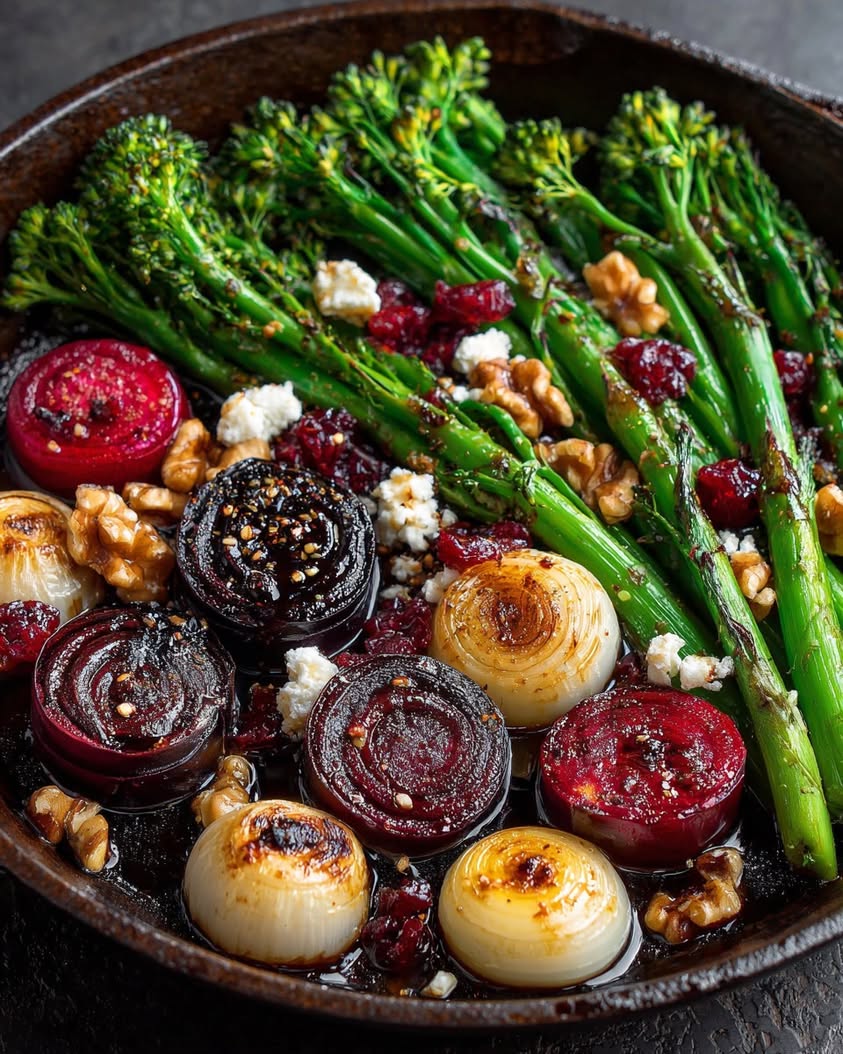
Caramelized Broccolini, Baby Beets & Pearl Onions with Goat Cheese, Walnuts & Maple-Cranberry Drizzle: A Show-Stopping Holiday Side Dish
Imagine a dish that brings the entire holiday table to life with its vibrant colors and sophisticated flavors. This Caramelized Broccolini, Baby Beets & Pearl Onions with Goat Cheese, Walnuts & Maple-Cranberry Drizzle is precisely that kind of culinary masterpiece. It transforms simple roasted vegetables into an elegant centerpiece worthy of your most cherished gatherings. Furthermore, it combines sweet, savory, tangy, and earthy notes in every single bite. Consequently, this recipe will quickly become your new favorite holiday side dish.
The magic of this dish lies in its beautiful balance. Tender roasted broccolini develops deliciously crispy edges while the baby beets become wonderfully sweet and soft. Meanwhile, the pearl onions caramelize into little bursts of flavor. Ultimately, the creamy goat cheese, crunchy walnuts, and that spectacular maple-cranberry drizzle tie everything together. This stunning holiday side dish not only tastes incredible but also looks like it came from a professional kitchen. It is a guaranteed conversation starter that will have your guests asking for the recipe.
Creating this elegant recipe is surprisingly straightforward. You will achieve restaurant-quality results with simple, wholesome ingredients. Moreover, the process fills your kitchen with an incredible aroma that promises a memorable meal. Whether you are hosting Thanksgiving, Christmas, or a special dinner party, this dish delivers on every level. It is a celebration of texture and taste that complements any main course beautifully. Prepare to impress everyone at your table with this unforgettable creation.
Quick Recipe Highlights
- Flavor Profile: This dish offers a symphony of tastes, from the earthy sweetness of caramelized root vegetables to the sharp tang of goat cheese. Additionally, the maple-cranberry drizzle introduces a sweet-tart element that perfectly balances the savory components.
- Texture: You will experience a delightful contrast between the tender-crisp broccolini, soft roasted beets, and crunchy walnuts. The creamy goat cheese adds a luxurious, smooth mouthfeel that brings all the elements together harmoniously.
- Aroma: As the vegetables roast, your kitchen will fill with the sweet, nutty scent of caramelization. The warm spices from the drizzle and the earthy fragrance of the beets create an incredibly inviting and festive atmosphere.
- Visual Appeal: This dish is a feast for the eyes with its deep green broccolini, ruby-red beets, and golden pearl onions. The white goat cheese crumbles and vibrant crimson drizzle make for a stunning holiday side dish presentation.
- Skill Level Needed: This is an accessible recipe for cooks of all levels, requiring basic roasting and whisking techniques. Even a beginner can create this impressive dish with confidence and fantastic results.
- Special Equipment: You only need a large baking sheet, parchment paper, and a small saucepan. No fancy gadgets are required, making this an easy recipe to prepare in any kitchen.
Recipe Overview
- Difficulty Level: We classify this recipe as easy because it involves straightforward techniques like chopping, roasting, and whisking. The steps are simple to follow, and the ingredient list is composed of whole foods that are easy to find. Even novice cooks can achieve beautiful, delicious results with this guide.
- Category: This dish fits perfectly into the side dish category, specifically as a vegetable accompaniment. It shines as a holiday or special occasion side but is also robust enough for a light vegetarian main course. You can serve it year-round with various proteins.
- Cuisine: This recipe draws inspiration from modern American farm-to-table cooking with its focus on fresh, seasonal produce. It incorporates elements from Mediterranean cuisine through the use of goat cheese and walnuts. The maple syrup adds a classic North American touch.
- Cost: This is a moderately priced dish that delivers high-end appeal. Seasonal root vegetables are typically affordable, while goat cheese and walnuts represent the main splurges. You can easily feed a crowd for less than the cost of a complicated casserole.
- Season: This recipe is perfect for fall and winter when root vegetables are at their peak. The warm, comforting flavors align perfectly with holiday menus. That said, you can enjoy it any time of year thanks to the widespread availability of these ingredients.
- Occasion: This stunning holiday side dish is ideal for Thanksgiving, Christmas, Easter, and other festive gatherings. It also works beautifully for dinner parties, potlucks, and special family meals. Furthermore, it makes an impressive contribution to any celebratory table.
Why You’ll Love This Caramelized Vegetable Dish
First and foremost, the taste experience is truly exceptional. Each component brings its own unique flavor profile that harmonizes beautifully with the others. The caramelization process unlocks natural sugars in the vegetables, creating a deep, complex sweetness. Meanwhile, the tangy goat cheese cuts through the richness, and the walnuts provide a satisfying crunch. Finally, the maple-cranberry drizzle adds a festive, sweet-tart note that ties everything together. This combination of flavors will delight your palate and leave you craving more.
From a convenience perspective, this recipe is a dream for any host. You can prepare many elements ahead of time, reducing day-of stress significantly. The vegetables can be pre-chopped, and the drizzle can be made a day in advance. Consequently, you simply need to roast the vegetables and assemble the dish before serving. This make-ahead flexibility makes it an ideal choice for busy holiday meals where oven space and timing are crucial. You get an impressive result without the last-minute frenzy.
Nutritionally, this dish is a powerhouse of vitamins, minerals, and antioxidants. Broccolini is rich in vitamins C and K, while beets provide folate and manganese. Walnuts contribute healthy omega-3 fatty acids, and goat cheese offers protein and calcium. This is a side dish that not only tastes good but also makes you feel good. It is a welcome balance to the heavier, richer foods often found on holiday tables. You can enjoy it generously without any guilt.
For entertaining, this recipe offers incredible social value. Its stunning visual appeal immediately elevates your table setting and sparks conversation. Guests are always impressed by the beautiful colors and sophisticated flavor combinations. Moreover, it caters to various dietary preferences, as it is naturally vegetarian and can be adapted for other needs. Serving a dish that looks and tastes this special shows your guests that you care about creating a memorable experience for them.
Regarding cost and accessibility, this dish delivers restaurant-quality results without the premium price tag. The ingredients are readily available at most grocery stores year-round. You do not need any special equipment or hard-to-find items. This accessibility makes it easy to whip up for a last-minute gathering or a planned celebration. Ultimately, you get a spectacular holiday side dish that is both budget-friendly and incredibly impressive.
Historical Background and Cultural Significance
Roasted root vegetables have been a staple in human diets for centuries, dating back to when early civilizations discovered the magic of cooking over fire. The technique of caramelization, which is central to this recipe, transforms humble vegetables into sweet, deeply flavorful components. In European culinary traditions, roasting seasonal vegetables was a practical way to preserve the harvest through colder months. Meanwhile, the combination of sweet and savory elements reflects a more modern approach to vegetable cookery that has gained popularity in recent decades.
The cultural significance of this dish lies in its embodiment of contemporary dining trends that prioritize vegetable-forward plates. It represents a shift away from heavy, cream-laden casseroles toward dishes that highlight the natural flavors of produce. The inclusion of goat cheese nods to Mediterranean and Middle Eastern traditions where tangy cheeses have long complemented vegetables. Similarly, the use of walnuts connects to ancient Persian and Mediterranean cuisines where nuts were prized for their texture and nutritional value.
This recipe has evolved from simple roasted vegetable preparations to its current sophisticated form through the influence of farm-to-table and New American culinary movements. Chefs began treating vegetables as the star of the plate, using techniques like high-heat roasting to develop complex flavors. The addition of a fruit-based drizzle reflects a modern understanding of flavor pairing, where contrasting elements create a more dynamic eating experience. This evolution mirrors our growing appreciation for plant-based diversity in our diets.
Regional variations of this concept abound, each reflecting local ingredients and traditions. In the American South, you might find pecans instead of walnuts and a sorghum glaze rather than maple. Mediterranean versions could feature olives and rosemary, while Asian-inspired interpretations might incorporate sesame and ginger. This adaptability is part of the recipe’s enduring appeal—it provides a template that welcomes creativity and personalization based on what is fresh and available in your region.
Ingredient Deep Dive
Broccolini, a hybrid of broccoli and Chinese kale, brings a sophisticated twist to this holiday side dish. This vegetable offers a milder, sweeter flavor than traditional broccoli with tender stems that require minimal preparation. Nutritionally, it is packed with vitamins A, C, and K, along with fiber and antioxidants. When selecting broccolini, look for bright green stalks with firm stems and tightly closed florets. Store it in the refrigerator’s crisper drawer and use within three to four days for optimal freshness. If unavailable, broccoli rabe or regular broccoli make suitable substitutes, though cooking times may vary slightly.
Baby beets contribute earthy sweetness and vibrant color to this elegant recipe. Unlike their larger counterparts, baby beets cook more quickly and have a more delicate texture. They have been cultivated since ancient Roman times and were initially valued for their leafy greens rather than their roots. Beets are rich in folate, manganese, and betalains, which have anti-inflammatory properties. Choose small, firm beets with smooth skin and vibrant greens attached. Store them unwashed in the refrigerator, separating the greens from the roots to prevent moisture loss. Golden beets can be substituted if you prefer to avoid the deep red color.
Pearl onions, the petite jewels of the allium family, caramelize beautifully in this roasted vegetable medley. These small onions have a sweeter, milder flavor than full-sized onions due to their higher sugar content and lower sulfur compounds. Historically, onions have been a culinary staple across cultures for thousands of years, valued for their flavor and preservation qualities. Pearl onions provide chromium, vitamin C, and fiber. Select firm, dry bulbs with papery skins and no signs of sprouting. To peel them easily, blanch in boiling water for one minute before transferring to an ice bath. Frozen peeled pearl onions work well as a time-saving alternative.
Goat cheese, or chèvre, introduces a creamy, tangy element that balances the sweetness of the roasted vegetables. This cheese has been produced for thousands of years in Mediterranean regions, where goats were more common than cows in mountainous areas. Goat cheese is easier to digest for many people compared to cow’s milk cheese and provides protein, calcium, and healthy fats. Look for a fresh, crumbly log rather than pre-crumbled cheese, which often contains anti-caking agents. For dairy-free adaptations, firm tofu crumbled with nutritional yeast or vegan feta make excellent substitutes that mimic the texture and tang.
The maple-cranberry drizzle creates the sweet-tart signature flavor that makes this holiday side dish so memorable. Pure maple syrup, a North American indigenous tradition, adds deep caramel notes without refined sugar. Cranberries, native to New England, contribute vibrant color and tartness that cut through the richness. Together they create a complex sauce that enhances every component. Use pure maple syrup rather than pancake syrup for the best flavor, and opt for fresh or frozen cranberries instead of dried. The drizzle can be prepared ahead and gently reheated before serving.
Common Mistakes to Avoid
- Overcrowding the baking sheet prevents proper caramelization. The vegetables will steam rather than roast if placed too close together. Always use a large enough pan and arrange vegetables in a single layer with space between them.
- Neglecting to dry vegetables thoroughly after washing leads to soggy results. Excess moisture creates steam during roasting, which inhibits the development of those desirable crispy, caramelized edges. Pat everything dry thoroughly before tossing with oil.
- Using pre-crumbled goat cheese often results in a drier, less creamy texture. These products typically contain anti-caking agents that affect melting and distribution. Instead, buy a log of fresh goat cheese and crumble it yourself just before serving.
- Burning the maple-cranberry drizzle happens quickly if unattended. The sugar content means it can go from perfectly reduced to burnt in moments. Stir constantly over medium-low heat and remove immediately once it coats the back of a spoon.
- Cutting vegetable pieces unevenly causes inconsistent cooking. Smaller pieces will burn before larger ones caramelize properly. Take time to cut everything into similarly sized pieces for even roasting throughout.
- Skipping the resting time for the roasted vegetables diminishes flavor development. Like meat, vegetables benefit from resting after roasting, allowing juices to redistribute and flavors to meld. Let them sit for 5-10 minutes before adding cheese and drizzle.
- Adding the goat cheese while vegetables are piping hot causes it to melt completely rather than maintaining its distinct creamy texture. Allow the roasted vegetables to cool slightly so the cheese retains its form and provides textural contrast.
- Toasting walnuts in a too-hot pan burns their delicate oils and creates bitterness. Toast over medium heat, stirring frequently, until just fragrant. They will continue to cook slightly after removal from heat.
- Using stale spices in the drizzle results in lackluster flavor. Ground spices lose potency over time. If your cinnamon or allspice doesn’t smell fragrant when opened, it is time to replace them.
- Underseasoning at each step creates a bland final dish. Season the vegetables before roasting, taste the drizzle for balance, and finish the assembled dish with flaky sea salt. Layer seasoning throughout the process.
Essential Techniques
Proper caramelization is the foundation of this stunning holiday side dish. This chemical process occurs when vegetable sugars break down and brown between 300-400°F, creating complex, sweet flavors and appealing color. To achieve perfect caramelization, ensure your oven is fully preheated and use a heavy-duty baking sheet that distributes heat evenly. Do not overcrowd the pan, as steam from too many vegetables will prevent browning. The visual cues for success are golden-brown edges and lightly blistered spots on the vegetables. If your vegetables are pale and steamed rather than browned, your oven temperature is likely too low or the pan is overcrowded.
Creating an emulsified drizzle requires understanding how to balance fat, acid, and sweet components. The maple syrup and olive oil must combine into a smooth, cohesive sauce rather than separating. The key is gradual incorporation—start by whisking the maple syrup with vinegar and spices, then slowly stream in the olive oil while whisking continuously. If the drizzle separates, it can often be rescued by adding a teaspoon of warm water and whisking vigorously. The finished consistency should coat the back of a spoon but still be pourable. If it becomes too thick, thin it with a little warm water until desired consistency is reached.
Roasting multiple vegetables with different cooking times demands strategic preparation. Denser root vegetables like beets require longer cooking than delicate broccolini. The solution is either cutting slower-cooking vegetables smaller or adding them to the pan at different times. For this recipe, we roast the beets and onions first, then add the broccolini later. This staggered approach ensures everything reaches perfect doneness simultaneously. Test doneness with a paring knife—it should slide easily into the thickest part of a beet or onion. Proper timing prevents either undercooked hard spots or overcooked mushy vegetables.
Toasting nuts maximizes their flavor and crunch factor. This process heats the natural oils in walnuts, enhancing their nutty essence and creating a more complex taste profile. Spread walnuts in a single layer on a dry skillet over medium heat. Shake the pan frequently for even toasting until they become fragrant and slightly darker—usually 3-5 minutes. Immediately transfer to a cool plate to stop the cooking process. The most common mistake is walking away during toasting, as nuts can burn in seconds. Properly toasted walnuts should be golden brown, not blackened, with a crisp texture.
Pro Tips for Perfect Caramelized Vegetables
Bring all vegetables to room temperature before roasting. Cold vegetables straight from the refrigerator will steam rather than caramelize initially. This simple step ensures even cooking and better browning from the moment they hit the hot oven.
Invest in an oven thermometer to verify your oven’s accuracy. Many home ovens run hot or cold, which significantly impacts roasting times and caramelization results. Knowing your oven’s true temperature prevents undercooked or burnt vegetables.
Use a light-colored, heavy-duty baking sheet for optimal results. Dark pans can cause excessive browning on the bottom before the vegetables are properly cooked through. A quality baking sheet distributes heat evenly for consistent caramelization.
Toss vegetables with oil and seasonings in a large bowl rather than on the baking sheet. This method ensures more even coating without overhandling the vegetables. The uniform oil coverage promotes consistent browning across all pieces.
Rotate your baking sheet halfway through the cooking time. Most ovens have hot spots that can cause uneven cooking. Turning the pan ensures all vegetables receive equal heat exposure for uniform caramelization.
Let the roasted vegetables rest for 5-10 minutes before adding the cheese and drizzle. This allows the vegetables to reabsorb some of their natural juices and firms up their texture slightly. The result is better flavor distribution and more distinct components.
Toast extra walnuts while you are already heating the skillet. Store cooled extras in an airtight container for future salads, oatmeal, or snacking. This efficient approach saves time on your next cooking project.
Double the maple-cranberry drizzle recipe and refrigerate the extra. This versatile sauce enhances roasted meats, pancakes, yogurt, and cheese plates. Having it on hand makes elevating simple meals effortless throughout the week.
Variations and Adaptations
Regional variations of this elegant recipe can transport your taste buds around the world. For a Mediterranean twist, substitute kalamata olives for the cranberries in the drizzle and use feta instead of goat cheese. An Asian-inspired version might feature a miso-sesame glaze and garnish with toasted sesame seeds. Southern adaptation could include pecans instead of walnuts and a bourbon-infused maple syrup. Each regional interpretation maintains the core concept of caramelized vegetables with contrasting textures and flavors while reflecting local culinary traditions.
Seasonal adaptations ensure this dish remains relevant throughout the year. During spring, substitute asparagus for broccolini and radishes for beets, using a lemon-honey drizzle. Summer versions might feature zucchini, cherry tomatoes, and eggplant with a basil-infused vinaigrette. Autumn naturally suits the original recipe, while winter variations could include parsnips, sweet potatoes, and Brussels sprouts with a pomegranate molasses drizzle. These seasonal rotations keep the concept fresh and exciting while utilizing produce at its peak.
Dietary modifications make this stunning holiday side dish accessible to everyone. For vegan guests, omit the goat cheese or use a plant-based alternative, and ensure the maple syrup is vegan-certified. A nut-free version can substitute toasted pumpkin seeds for walnuts. Low-carb adaptations might reduce the maple syrup in the drizzle or use a sugar-free alternative. Gluten-free needs are naturally met by this recipe, but always check labels on prepared ingredients to confirm compliance with specific dietary requirements.
Flavor variations can customize this dish to complement your main course perfectly. Herb-infused versions might include rosemary or thyme tossed with the roasting vegetables. Spicy adaptations could add red pepper flakes to the drizzle or garnish with pickled jalapeños. Smoky variations might include a pinch of smoked paprika in the seasoning or garnishing with crumbled smoked almonds instead of walnuts. Umami-rich versions could incorporate a teaspoon of white miso into the drizzle or garnish with shaved Parmesan instead of goat cheese.
Serving and Presentation Guide
Plating techniques significantly enhance the visual impact of this holiday side dish. For family-style service, arrange the roasted vegetables on a large platter with deliberate color distribution—create pockets of green broccolini, red beets, and golden onions. Drizzle the sauce in zigzag patterns rather than pouring it evenly across everything. This approach creates visual interest and allows guests to control how much sauce they take. Sprinkle the goat cheese and walnuts in clusters rather than scattering them uniformly, creating textural and visual focal points throughout the presentation.
Garnishing ideas can elevate this elegant recipe from beautiful to breathtaking. Fresh herb sprigs like thyme, rosemary, or parsley add color and fragrance. Edible flowers such as nasturtiums or pansies create a spectacular special occasion presentation. Pomegranate arils provide brilliant red jewels that complement the cranberries in the drizzle. Microgreens offer a delicate, restaurant-quality finish. For additional crunch, consider adding some crispy fried shallots or garlic chips. Each garnish should complement rather than overwhelm the existing flavors and colors of the dish.
Traditional accompaniments for this roasted vegetable medium include holiday main courses like roast turkey, baked ham, or prime rib. The vegetables’ sweet and savory profile cuts through the richness of these meats beautifully. For vegetarian menus, pair with wild rice stuffing, mushroom wellington, or lentil loaf. Classic holiday sides that complement without competing include mashed potatoes, dinner rolls, and simple green salads. The key is balancing rich, starchy elements with this brighter, vegetable-forward dish to create a harmonious plate.
Modern serving suggestions might include presenting individual portions in shallow bowls for a more composed presentation. For cocktail parties, create skewers with single pieces of each vegetable drizzled with the sauce and topped with a tiny goat cheese dollop. Deconstructed versions might arrange each vegetable component separately on a divided platter with the drizzle in a small pitcher for guests to add themselves. These contemporary approaches refresh the traditional family-style presentation while maintaining the dish’s essential character.
Wine and Beverage Pairing
Wine pairings for this caramelized vegetable dish should complement its sweet, earthy, and tangy elements. A crisp, acidic white wine like Sauvignon Blanc cuts through the richness and mirrors the tanginess of the goat cheese. For red wine lovers, a light Pinot Noir with its red fruit notes and earthy undertones harmonizes beautifully with the roasted beets and onions. Rosé offers versatility with its fruit-forward character and refreshing acidity that cleanses the palate between bites. Regardless of your choice, avoid heavily oaked wines that can overwhelm the vegetables’ delicate flavors.
Non-alcoholic alternatives provide sophisticated options for all guests. Sparkling apple cider mirrors the autumnal flavors without alcohol. A ginger-based mocktail with its slight spice complements the sweetness of the maple drizzle beautifully. For herbal options, rosemary-infused lemonade or thyme-spiked iced tea echo the savory notes in the dish. Even simple club soda with a twist of orange or cranberry provides a refreshing palate cleanser between bites. The goal is beverages that refresh rather than compete with the complex flavors of this holiday side dish.
Coffee and tea pairings work surprisingly well with the earthy-sweet profile of these roasted vegetables. For after-dinner service, medium-roast coffee with its balanced acidity and nutty notes complements the walnuts and caramelization. Chai tea’s warm spices echo the cinnamon and allspice in the maple-cranberry drizzle. For a lighter option, green tea provides a clean, slightly bitter contrast that highlights the vegetables’ natural sweetness. Serve these warm beverages after the meal rather than during to avoid overwhelming the delicate flavors of the dish itself.
Storage and Shelf Life
Proper storage methods preserve the quality of this elegant recipe for future enjoyment. Store components separately whenever possible—keep roasted vegetables, walnut garnish, crumbled goat cheese, and maple-cranberry drizzle in individual airtight containers. This approach maintains textural integrity better than storing the fully assembled dish. Vegetables and walnuts can be stored at cool room temperature for up to two hours after cooking before refrigeration becomes necessary. The drizzle should always be refrigerated if not used immediately due to its fresh cranberry content.
Temperature requirements are crucial for food safety and quality preservation. Refrigerate all components promptly at 40°F or below. Do not leave the assembled dish at room temperature for more than two hours, as the dairy component poses a food safety risk. When transporting this dish, keep it chilled with ice packs until ready to serve. If reheating is necessary, bring only the vegetable component to temperature, then add fresh cheese, walnuts, and drizzle to maintain optimal texture and flavor.
Container recommendations directly impact how well this holiday side dish maintains its quality. Use shallow containers for roasted vegetables to allow for quick cooling and even refrigeration. Glass containers prevent plastic absorption of the maple-cranberry drizzle’s strong flavors. For the walnut garnish, airtight containers in a cool, dark place protect against rancidity. The goat cheese should be wrapped in parchment paper then placed in an airtight container to prevent drying without creating condensation that promotes mold.
Make Ahead Strategies
Prep timeline planning transforms this recipe from stressful to seamless for holiday meals. Up to three days ahead, wash and thoroughly dry all vegetables, then store them in separate airtight containers with paper towels to absorb excess moisture. Two days before serving, toast and chop the walnuts, storing them at room temperature. The day before, prepare the maple-cranberry drizzle and refrigerate it in a sealed container. You can also crumble the goat cheese and refrigerate it separately. On serving day, simply roast the vegetables and assemble all components.
Storage between steps requires attention to detail for optimal results. Pre-chopped vegetables maintain quality best when stored unwashed until ready to use. If you must wash them ahead, ensure they are thoroughly dried before storage to prevent spoilage. The maple-cranberry drizzle will thicken when refrigerated; gently reheat it with a tablespoon of water to restore its pouring consistency. Toasted walnuts become stale quickly if exposed to air; always store them in airtight containers. Goat cheese should remain refrigerated until moments before assembly to preserve its fresh texture.
Quality impact assessment helps determine which elements truly benefit from advance preparation. Vegetables lose some texture and vibrancy when chopped more than a day in advance. The maple-cranberry drizzle actually improves when made ahead, allowing flavors to meld. Toasted walnuts maintain their crunch for several days if properly stored. Goat cheese can be crumbled ahead but may dry out slightly. Understanding these nuances helps you prioritize your prep schedule for the best possible final dish with minimal last-minute effort.
Scaling Instructions
Halving the recipe works beautifully for smaller gatherings without significant adjustments. Use a standard baking sheet rather than downsizing the pan, as the vegetables still need space for proper caramelization. Reduce oven temperature by 25°F and check for doneness 5-10 minutes earlier than the original time, as smaller quantities cook faster. When halving the maple-cranberry drizzle, use a small saucepan and watch carefully, as the reduced volume means it will thicken more quickly. This scaled-down version perfectly serves 2-3 as a main course or 4 as a side dish.
Doubling or tripling the recipe requires practical considerations for holiday crowds. Use multiple baking sheets rather than overcrowding a single pan, and rotate them between oven racks halfway through cooking. You may need to roast in batches depending on your oven size. For the maple-cranberry drizzle, use a wider saucepan to accommodate the increased volume while maintaining the same depth for proper reduction. When tripling, consider making the drizzle in two separate batches to ensure even cooking and consistent texture. These larger quantities can comfortably serve 12-18 people as part of a holiday meal.
Nutritional Deep Dive
Macro breakdown reveals why this stunning holiday side dish satisfies without weighing you down. A serving provides approximately 12 grams of healthy fats primarily from the olive oil, walnuts, and goat cheese. Complex carbohydrates from the vegetables and maple syrup deliver around 25 grams, while the goat cheese and walnuts contribute 8 grams of protein. This balanced macronutrient profile provides sustained energy without blood sugar spikes. The fiber content from the vegetables and walnuts promotes digestive health and satiety, making it an excellent choice for holiday meals where overindulgence is common.
Micronutrient analysis highlights the impressive vitamin and mineral content of this elegant recipe. Broccolini delivers vitamins C and K, crucial for immune function and bone health. Beets provide folate and manganese, supporting cell growth and metabolism. Walnuts contribute biotin and copper, important for hair health and iron absorption. Goat cheese offers calcium and phosphorus for strong bones. The colorful variety of vegetables ensures a broad spectrum of phytonutrients with antioxidant and anti-inflammatory properties. This nutrient density makes the dish both delicious and genuinely nourishing.
Dietary Adaptations
Vegan adaptation of this holiday side dish requires simple substitutions without sacrificing flavor. Replace goat cheese with crumbled firm tofu marinated in lemon juice and nutritional yeast, or use a commercial vegan feta alternative. Ensure your maple syrup is vegan-certified, as some processing methods use animal-derived filters. The remaining ingredients are naturally plant-based. The result maintains the creamy, tangy element essential to the dish’s balance while making it accessible to those following completely plant-based diets.
Dairy-free modification focuses on replacing the goat cheese while maintaining its textural and flavor role. Commercial dairy-free feta alternatives made from almond or coconut work well. For a whole-food approach, marinated sunflower seeds or chickpeas provide a satisfying crunch and protein element. Nutritional yeast can be sprinkled over the finished dish to replicate the cheesy flavor note. These substitutions allow those with dairy sensitivities or allergies to enjoy this stunning side dish without compromise.
Low-carb and keto adaptations adjust the maple-cranberry drizzle to reduce sugar content. Replace maple syrup with a sugar-free alternative like monk fruit or erythritol-based syrup. Consider increasing the vinegar slightly to maintain the sweet-tart balance. You might also reduce the quantity of beets and pearl onions, which contain more natural sugars, and increase the broccolini proportion. These modifications create a vegetable side dish that fits within low-carbohydrate dietary parameters while preserving the essential flavor profile.
Troubleshooting Guide
Texture issues commonly arise with roasted vegetables. If your vegetables are soggy rather than caramelized, the oven temperature is likely too low or the pan is overcrowded. For future attempts, ensure proper preheating and use two baking sheets if necessary. To rescue already-cooked soggy vegetables, spread them in a single layer under the broiler for 2-3 minutes to crisp the exteriors. If vegetables are burnt on the bottom but undercooked inside, your oven rack is positioned too low or the baking sheet is too dark, causing excessive bottom heat.
Flavor balance problems can usually be corrected even after cooking. If the dish tastes bland, season with flaky sea salt just before serving—this provides bursts of salinity that wake up all the flavors. If it’s too sweet, add a squeeze of fresh lemon juice or a drizzle of balsamic vinegar to counterbalance the maple syrup. If the tanginess overpowers, a teaspoon of honey or maple syrup drizzled over the assembled dish can restore equilibrium. Remember that flavors continue to develop as the dish sits, so make slight adjustments and wait a few minutes before adding more.
Frequently Asked Questions
Can I use regular broccoli instead of broccolini? Yes, regular broccoli works as a substitute. Cut it into florets with some stem attached, and increase the roasting time by 5-7 minutes since the stems are thicker. The flavor will be slightly stronger and less sweet than broccolini, but still delicious in this caramelized vegetable dish.
How do I prevent red beet juice from staining everything? Wear disposable gloves when handling raw beets, and work on a cutting board that you don’t mind potentially staining. Immediately wash utensils and boards with soap and water after use. Some people find that rubbing a lemon wedge over their hands after beet preparation helps remove stains.
Can I make this dish completely ahead of time? You can prepare components ahead but assemble just before serving. Roasted vegetables can be refrigerated for up to 3 days and reheated at 400°F for 10 minutes. The drizzle keeps for 1 week refrigerated. However, assemble with cheese and walnuts right before serving to maintain optimal textures.
What can I substitute for goat cheese? Feta cheese provides a similar tangy saltiness, while blue cheese offers a stronger flavor profile. For creaminess without tang, fresh mozzarella pearls work well. Vegan alternatives include tofu feta or nutritional yeast sprinkled over the dish for a cheesy flavor note without dairy.
Is this recipe gluten-free? Yes, all natural ingredients in this recipe are naturally gluten-free. However, if you have celiac disease or severe sensitivity, always check labels on packaged ingredients like maple syrup to ensure they’re processed in gluten-free facilities, as cross-contamination can occasionally occur.
Can I use frozen vegetables? Frozen pearl onions work well without thawing. Frozen beets will become mushy when roasted. Frozen broccolini can be used but pat it thoroughly dry and expect slightly different texture results. Fresh vegetables generally provide superior texture and caramelization for this holiday side dish.
How do I know when the vegetables are properly caramelized? Properly caramelized vegetables have golden-brown edges and lightly blistered spots. They should be tender when pierced with a fork but not mushy. The pearl onions will become slightly translucent and sweet, while broccolini stems should be crisp-tender. Beets should be easily pierced but still hold their shape.
Can I use different nuts in this recipe? Absolutely. Pecans, almonds, hazelnuts, or pine nuts all make excellent substitutions. Toast them similarly to the walnuts until fragrant. Each nut will bring its own distinct flavor profile—pecans offer buttery sweetness, while hazelnuts provide earthy notes that complement the roasted vegetables beautifully.
What main dishes pair well with this side? This versatile side complements roast turkey, baked ham, beef tenderloin, roasted chicken, and salmon. For vegetarian menus, it pairs wonderfully with mushroom Wellington, lentil loaf, or quinoa stuffed peppers. The sweet and savory elements cut through rich proteins while complementing plant-based mains.
How long do leftovers keep? Assembled leftovers keep refrigerated for 3-4 days, though the walnuts will soften. For best quality, store components separately and reassemble portions as needed. The vegetables reheat well in a 350°F oven for 10-15 minutes or until warmed through. The drizzle may thicken when cold; thin
Print
Caramelized Broccolini, Baby Beets & Pearl Onions with Goat Cheese, Walnuts & Maple-Cranberry Drizzle
Description
A vibrant and elegant side dish featuring roasted vegetables, creamy goat cheese, crunchy walnuts, and a sweet-tart maple-cranberry drizzle.
Ingredients
For the Crust:
- 1 bunch broccolini, trimmed
- 1 lb baby beets, peeled and halved
- 1 cup pearl onions, peeled
- 2 tbsp olive oil
- 1/4 cup maple syrup
- 1/4 cup dried cranberries
- 2 oz goat cheese, crumbled
- 1/4 cup walnuts, toasted
- Salt and black pepper to taste
Instructions
1. Prepare the Crust:
- Preheat oven to 400°F (200°C). Toss broccolini, baby beets, and pearl onions with olive oil, salt, and pepper on a baking sheet.
- Roast for 20-25 minutes, until vegetables are tender and lightly caramelized.
- In a small saucepan, warm maple syrup and dried cranberries over low heat until cranberries plump, about 5 minutes.
- Arrange roasted vegetables on a serving platter, top with crumbled goat cheese and toasted walnuts, and drizzle with maple-cranberry mixture.
Notes
You can customize the seasonings to taste.

I’m Shaykee—born in Morocco, seasoned across continents. From airplane galleys to home kitchens, I share the flavors and stories that shaped my journey.