
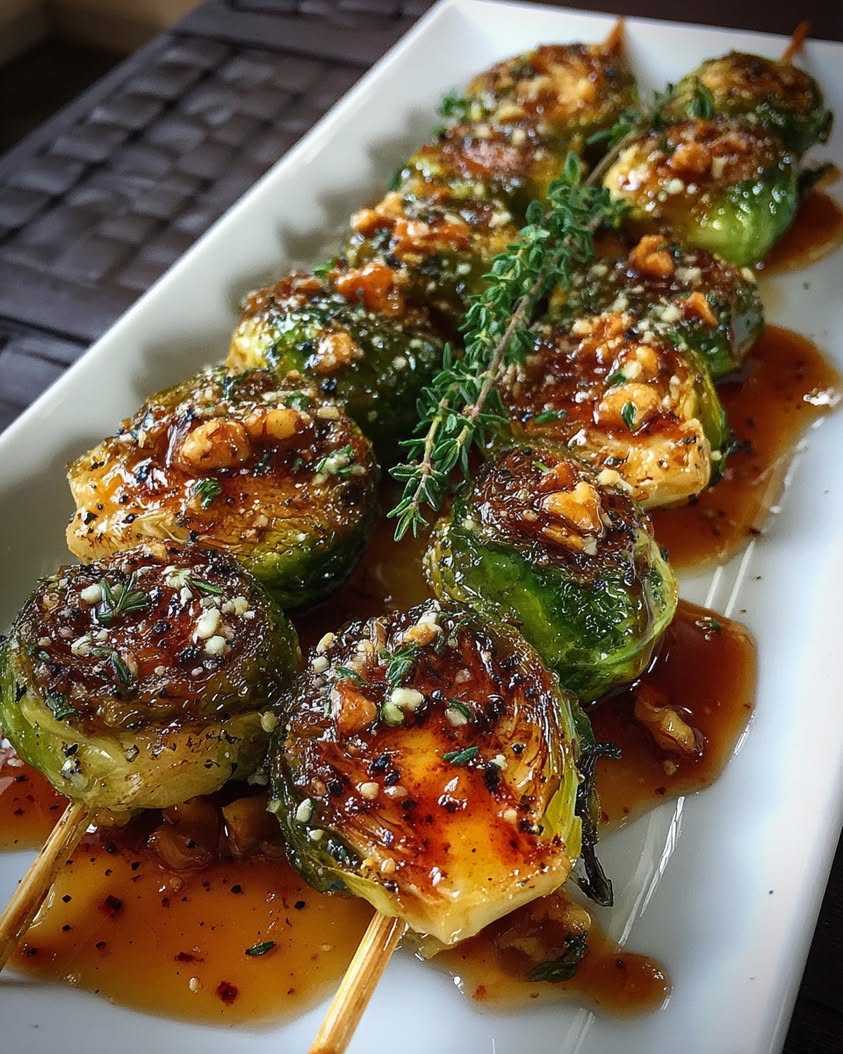
Caramelized Brussels Sprouts Christmas Skewers with Walnut Honey: A Festive Appetizer Sensation
Elevate your holiday table with these stunning Caramelized Brussels Sprouts Christmas Skewers with Walnut Honey. This recipe transforms simple ingredients into an elegant and unforgettable appetizer or side dish. Moreover, the combination of sweet, savory, and nutty flavors creates a complex taste profile that will impress even the most discerning guests. Ultimately, these skewers offer a modern twist on classic holiday vegetables, making them a perfect centerpiece for your festive spread.
Imagine tender Brussels sprouts, perfectly caramelized to bring out their natural sweetness, threaded onto skewers with vibrant red cranberries. They are then generously glazed with a rich walnut honey sauce that clings to every nook and cranny. The final result is a beautiful, edible decoration that tastes as incredible as it looks. Consequently, this dish solves the age-old problem of serving vegetables in a way that guests eagerly devour. Furthermore, the interactive skewer presentation makes serving effortless and fun for any holiday gathering.
The magic of these Caramelized Brussels Sprouts Christmas Skewers lies in the balance of textures and flavors. You get the crispy, golden-brown exterior of the sprouts, the juicy pop of fresh cranberries, and the crunchy, toasted walnut garnish. Simultaneously, the walnut honey glaze adds a luxurious stickiness that ties everything together. This recipe is not just food; it’s a festive experience. Therefore, if you are searching for a show-stopping holiday dish that is surprisingly simple to prepare, you have found your answer.
Quick Recipe Highlights
- Flavor Profile: These skewers masterfully balance sweet and savory notes. The caramelization process deepens the natural sugars in the Brussels sprouts, while the walnut honey glaze adds a rich, nutty sweetness. Additionally, the fresh cranberries provide a crucial tart contrast that cuts through the richness.
- Texture: You will enjoy a delightful contrast in every bite. Expect crispy, caramelized edges on the sprouts against their tender interiors. The toasted walnuts offer a satisfying crunch, and the glaze provides a lovely sticky mouthfeel that is utterly addictive.
- Aroma: As these skewers roast, your kitchen will fill with an irresistible fragrance. The scent of caramelizing vegetables mingles with the warm, toasty aroma of nuts and the sweet, floral notes of honey. This combination is the very essence of holiday cooking.
- Visual Appeal: These skewers are a feast for the eyes with their festive color palette. The deep green of the sprouts, bright red cranberries, and golden-brown glaze create a stunning presentation. They look elegant arranged on a platter, making them perfect for holiday photos.
- Skill Level Needed: This is an accessible recipe for cooks of all levels. Basic knife skills for trimming sprouts and a simple stirring technique for the glaze are all that’s required. Importantly, the oven does most of the work, allowing you to focus on other holiday preparations.
- Special Equipment: You will need wooden or metal skewers and a baking sheet. If using wooden skewers, remember to soak them in water for 30 minutes beforehand to prevent burning. A small saucepan is also necessary for preparing the simple glaze.
Recipe Overview
- Difficulty Level: We rate this recipe as easy because it involves straightforward techniques like roasting and making a simple stovetop glaze. The assembly is intuitive, and there is no complicated timing or advanced culinary skills required. Essentially, it is a very approachable recipe that delivers gourmet results.
- Category: This versatile dish fits multiple categories beautifully. It functions perfectly as a passed appetizer during a cocktail hour, a seated starter course, or a standout side dish alongside the main holiday roast. Its flexibility is one of its greatest strengths.
- Cuisine: While not tied to one specific tradition, this recipe draws inspiration from modern American holiday cuisine. It takes a beloved winter vegetable and enhances it with global pantry staples like honey and walnuts, creating a contemporary fusion dish perfect for today’s festive tables.
- Cost: This is a cost-effective holiday dish. Brussels sprouts and cranberries are seasonal and affordable in winter. Honey and walnuts are pantry items that can be used in many other recipes. Overall, you can create an impressive platter without straining your holiday budget.
- Season: This recipe is ideal for the fall and winter seasons. Brussels sprouts are at their peak sweetness after a frost, and cranberries are freshly harvested. The warm, comforting flavors are specifically designed to complement hearty cold-weather meals.
- Occasion: While perfect for Christmas dinner, these skewers are also fantastic for Thanksgiving, New Year’s Eve parties, festive potlucks, or any winter gathering. Their elegant appearance makes them suitable for formal dinners and casual buffets alike.
Why You’ll Love This Recipe
First and foremost, the taste and texture appeal is undeniable. Each bite delivers a symphony of flavors: the deep, almost nutty caramelization of the sprouts, the bright acid from the cranberry, and the rich, sweet glaze. The texture journey from crispy to tender to crunchy is equally satisfying. This complexity makes the eating experience far more exciting than a standard vegetable side. Consequently, guests will remember this dish long after the holiday season ends.
From a convenience standpoint, this recipe is a holiday host’s dream. You can prepare components in advance, and the final assembly is quick. The skewers roast on a single sheet pan, minimizing cleanup during a busy cooking day. Furthermore, they are easy to serve and eat, requiring no plates or forks if served as an appetizer. This streamlined approach allows you to spend less time in the kitchen and more time enjoying your company.
Nutritionally, these skewers pack a powerful punch. Brussels sprouts are loaded with vitamins C and K, fiber, and antioxidants. Walnuts contribute healthy omega-3 fatty acids and protein. Using honey as a natural sweetener is a better alternative to refined sugars. So, you are serving a dish that is not only delicious but also genuinely good for you. It is a guilt-free way to indulge in the festive spirit.
The social and entertaining value of this dish is exceptionally high. Food on sticks is inherently fun and interactive. These skewers become a natural conversation starter due to their beautiful appearance. They encourage mingling as guests can easily grab one while holding a drink. Presenting a vegetable in such a creative, celebratory way often inspires others to try new recipes. Ultimately, it elevates the entire dining experience.
Finally, the cost-effectiveness and accessibility of the ingredients make this recipe a winner. You do not need expensive or hard-to-find items. Most components are available at any standard grocery store. This accessibility means anyone can recreate this stunning dish. The impressive yield from a modest investment makes it perfect for feeding a crowd. Therefore, it is a smart choice for both your palate and your wallet.
Historical Background and Cultural Significance
The story of the Brussels sprout is a long and noble one. Believed to have been cultivated in ancient Rome, the vegetable found its namesake and fame in Brussels, Belgium, as early as the 13th century. Their popularity spread across Europe, eventually becoming a staple in winter gardens due to their hardiness in cold weather. For centuries, they were often simply boiled, a preparation that unfortunately gave them a somewhat negative reputation for being bland and sulfurous. However, modern cooking techniques, like the high-heat roasting used in this recipe, have completely revolutionized their culinary status, unlocking their natural sweetness.
Skewered foods, or kebabs, have a rich history across countless cultures, from the Middle East to Asia. The act of threading food onto sticks for cooking over fire is one of humanity’s oldest cooking methods. In a holiday context, the skewer presentation transforms individual ingredients into a deliberate, festive arrangement. It turns eating into an event. Using this ancient technique for a Christmas dish creates a beautiful link between timeless cooking traditions and contemporary holiday celebration. It is a way to make history part of your feast.
The evolution of this specific recipe is a testament to modern culinary trends. It represents a move away from heavy, cream-laden holiday sides toward dishes that highlight the natural qualities of vegetables. The walnut honey glaze reflects a growing appreciation for using nuts and artisanal sweeteners to create depth of flavor without overpowering the main ingredient. This recipe did not appear in classic cookbooks but is a product of today’s desire for food that is visually stunning, flavor-forward, and mindful of ingredients.
Regional variations of this concept are easy to imagine. In the American South, you might see a pecan and sorghum glaze. A Mediterranean version could feature olive oil, lemon, and pine nuts. For a Nordic twist, you could use a lingonberry in place of the cranberry and a drizzle of dark syrup. The basic framework of caramelized sprouts on a skewer is wonderfully adaptable. This flexibility allows home cooks around the world to incorporate local flavors, making the recipe their own while keeping the festive spirit intact.
Ingredient Deep Dive
Brussels Sprouts are the star of this show. These miniature cabbages are packed with nutrients, including high levels of vitamin C, vitamin K, and folate. They contain antioxidants and compounds that support detoxification. When selecting sprouts, look for firm, bright green heads that are similar in size for even cooking. Avoid any with yellowing leaves or a strong odor. Store them unwashed in an open bag in your refrigerator’s crisper drawer. For a substitution, you could use large broccoli florets, but the cooking time may need adjustment.
Fresh Cranberries provide the essential pop of color and tartness. Native to North America, they are a true seasonal treasure, harvested in the fall. They are renowned for their proanthocyanidins, which help prevent urinary tract infections. Choose berries that are firm, shiny, and deep red in color. They should bounce when dropped. Store fresh cranberries in their original bag in the refrigerator or freeze them for longer storage. If unavailable, you can use dried cranberries (add them later in roasting) or even pomegranate arils for a similar festive color and tart burst.
Walnuts are among the oldest tree foods, cultivated for thousands of years. They are an excellent source of plant-based omega-3 fatty acids (ALA), which are beneficial for heart and brain health. They also provide protein and magnesium. For the best flavor, always buy raw walnuts and toast them yourself. Toasting intensifies their nutty taste and improves texture. Store walnuts in an airtight container in the freezer to prevent their oils from turning rancid. For a different nutty profile, pecans or hazelnuts would be delicious alternatives.
Honey is the natural sweetener that creates the luxurious glaze. As a product made by bees from flower nectar, its flavor varies dramatically based on the floral source. Using a good-quality, flavorful honey like wildflower or orange blossom will make a noticeable difference in your glaze. Honey has trace amounts of vitamins and antioxidants and has been used medicinally for millennia. It should be stored at room temperature in a sealed container. For a vegan adaptation, pure maple syrup is the best substitute, though it will impart a different, earthier flavor note.
Common Mistakes to Avoid
- Not soaking wooden skewers. This is a critical step. If you skip it, the skewers will burn and become brittle in the oven, potentially ruining your presentation and creating a charred taste.
- Crowding the baking sheet. If the Brussels sprouts are too close together, they will steam instead of roast. You need space for hot air to circulate to achieve proper caramelization. Use two sheets if necessary.
- Underseasoning the sprouts before roasting. Salt is crucial for drawing out moisture and enhancing flavor. Do not be shy with salt and pepper on the sprouts before they go into the oven.
- Overcooking the honey glaze. When heating the honey and butter mixture, just warm it until combined and fluid. Boiling it can cause the honey to scorch or the butter to separate, creating a greasy glaze.
- Adding the walnuts too early. Toasted walnuts should be added as a final garnish after the skewers are glazed. If you add them before roasting, they will burn and become bitter.
- Using old or soft Brussels sprouts. The quality of your main ingredient matters. Old, soft sprouts will not caramelize well and can develop an unpleasant, strong flavor during cooking.
- Skipping the cranberry. The cranberry is not just for color. Its sharp acidity is vital for balancing the sweetness of the glaze and the richness of the caramelized sprouts. Do not omit it.
- Not letting the skewers rest after glazing. Allow the glazed skewers to sit for a minute or two before serving. This lets the glaze set slightly so it is sticky, not runny.
Essential Techniques
Trimming and Halving Brussels Sprouts is the foundational technique. First, cut off the dry, woody stem end. Then, peel away any loose or discolored outer leaves. Finally, slice each sprout in half from top to bottom (through the stem). This creates a flat surface that will make direct contact with the hot baking sheet, leading to superior browning and caramelization. The consistent size from halving ensures even cooking. A common pitfall is cutting them unevenly, which results in some pieces being overcooked while others are still hard.
The process of Caramelization is a chemical reaction where sugars within the food brown and develop complex flavors. For perfect caramelization on Brussels sprouts, you need high heat (400°F or above), enough space on the pan, and a light coating of oil. Do not move them too often. Let them sit undisturbed for several minutes to allow a golden-brown crust to form. The visual cue for success is a deep, appetizing brown color on the flat cut sides. If they are just turning pale yellow, they need more time.
Creating a Simple Pan Glaze requires gentle heat. Combine the butter and honey in a saucepan over low heat. The goal is to melt and combine them without boiling. Stir constantly until the mixture is smooth, fluid, and emulsified. If you see it starting to bubble vigorously, immediately remove it from the heat. A successful glaze will be glossy and coat the back of a spoon. The common pitfall is overheating, which can cause separation or burning, giving the glaze a bitter taste.
Pro Tips for Perfect Caramelized Brussels Sprouts Christmas Skewers
For extra-crispy sprouts, ensure they are completely dry after washing. Pat them thoroughly with a kitchen towel or salad spinner. Any excess water will create steam and hinder browning.
Add a pinch of red pepper flakes to the honey butter glaze. This introduces a subtle, warm heat that beautifully complements the sweet and savory flavors without being overtly spicy.
If your cranberries are very tart, toss them in a teaspoon of the honey glaze before threading. This gives them a slight pre-sweetening and helps them roast to a perfect jammy texture.
Use a pastry brush to apply the glaze. This gives you more control and allows you to get an even, generous coating on all sides of the skewered ingredients.
Let the roasted skewers cool for one minute on the pan before glazing. Applying glaze to piping hot skewers can cause it to slide right off instead of clinging.
For a deeper flavor, use browned butter in your glaze. Simply cook the butter in the saucepan until it turns a light golden brown and smells nutty, then whisk in the honey.
If making ahead, roast the sprouts and prepare the glaze separately. Assemble and glaze the skewers just before serving to maintain the best texture and visual appeal.
Variations and Adaptations
For regional variations, consider the flavors of your heritage. An Italian-inspired version could use a balsamic glaze reduction instead of honey and garnish with shaved Parmesan. A Spanish twist might include a sprinkle of smoked paprika and Marcona almonds. These adaptations keep the festive structure while personalizing the taste profile.
Seasonal adaptations are simple. In autumn, use cubed sweet potato or apple slices alongside the sprouts. For a spring version, substitute asparagus spears and use a lemon-infused honey. The skewer method is wonderfully versatile for showcasing whatever produce is at its peak.
Dietary modifications are straightforward. For a vegan dish, use maple syrup and vegan butter or olive oil in the glaze. To make it gluten-free, ensure all packaged ingredients like broth or pre-chopped nuts are certified GF, though this recipe is naturally gluten-free as written.
Flavor variations can come from the glaze. Infuse the honey with rosemary or thyme by warming them together gently, then straining. Alternatively, add a tablespoon of Dijon mustard or a splash of soy sauce to the glaze for a savory-umami kick.
Texture modifications can cater to different preferences. For extra crunch, sprinkle the finished skewers with panko breadcrumbs toasted in a little butter. For a creamy element, serve with a side of whipped goat cheese or garlic aioli for dipping.
Presentation alternatives include ditching the skewers for a simpler salad. Toss the roasted, glazed sprouts and cranberries with the walnuts and serve over a bed of kale or arugula. This turns the dish into a hearty winter salad perfect for a lighter holiday meal.
Serving and Presentation Guide
Plating techniques matter for visual impact. Arrange the skewers in a sunburst pattern on a large round platter or line them up neatly on a long rectangular slate. Place a small bowl of extra glaze or a sprinkle of flaky sea salt in the center for garnish. Use fresh herb sprigs like rosemary or thyme to fill empty spaces on the platter, enhancing the festive feel.
Garnishing ideas go beyond the walnuts. A final drizzle of high-quality balsamic reduction adds beautiful color and acidity. A light dusting of powdered sugar (for a snowy effect) or a sprinkle of pomegranate arils adds a festive touch. Microgreens or edible flowers can elevate the presentation for a more formal dinner.
Traditional accompaniments for this dish include a classic holiday roast like turkey, prime rib, or glazed ham. It also pairs beautifully with other winter sides such as mashed potatoes, sweet potato casserole, or wild rice stuffing. Consider it part of a larger, harmonious holiday plate.
Modern serving suggestions position these skewers as a standalone appetizer. Serve them on a bed of kale to catch any drips, with cocktail napkins nearby. For a seated dinner, place one or two skewers across each dinner plate as an elegant starter before the main course.
Temperature considerations are key. These skewers are best served warm, when the glaze is still slightly tacky. If they sit too long and cool completely, the glaze can harden. You can briefly rewarm them in a 300°F oven for 5 minutes if needed before serving.
Portion control is easy with skewers. Plan for 1-2 skewers per person as an appetizer or side dish. Since they are pre-portioned, guests can easily take what they want, and there is no messy serving spoon required, making buffet lines move smoothly.
Wine and Beverage Pairing
Wine pairings should complement the sweet and savory balance. A slightly off-dry Riesling or Gewürztraminer is fantastic, as their fruity sweetness mirrors the honey and their acidity cuts through the richness. For red wine lovers, a Pinot Noir with its bright red fruit notes and low tannins will not overpower the dish. A dry rosé, especially from Provence, offers a refreshing and festive middle ground.
Non-alcoholic alternatives can be just as sophisticated. Sparkling apple cider is a classic and celebratory choice. A ginger beer mocktail with muddled cranberries provides a spicy kick that pairs well. For a simpler option, sparkling water with a twist of orange or a few fresh cranberries adds a festive touch without competing with the food’s flavors.
Coffee and tea pairings work well if serving these as part of a brunch or late-evening gathering. A medium-roast coffee with nutty notes will echo the walnuts. A chai tea latte, with its warm spices like cinnamon and cardamom, complements the holiday flavors beautifully. Avoid overly bitter or strong brews that might clash with the glaze’s sweetness.
Temperature considerations for beverages are standard. Serve white wines and sparkling drinks well-chilled. Red wines should be served slightly below room temperature. Non-alcoholic sparkling drinks are also best served cold to provide a refreshing contrast to the warm, sticky skewers.
Serving suggestions include offering a variety. Set up a small beverage station with a bottle of each recommended wine and a carafe of a signature mocktail. This allows guests to choose their perfect pairing and encourages them to try the skewers with different drinks to discover their favorite combination.
Storage and Shelf Life
Storage methods for leftovers are simple. Place any uneaten skewers in a single layer in an airtight container. You can separate layers with parchment paper if stacking is necessary. Store them in the refrigerator. The glaze will solidify when cold, which is normal.
Temperature requirements are standard refrigerator temperatures, below 40°F. Do not leave the skewers at room temperature for more than two hours after cooking, as the dairy-based glaze can spoil. Always refrigerate promptly.
Container recommendations include shallow glass or BPA-free plastic containers with tight-fitting lids. Avoid storing them in the metal pan they were cooked in. For best results, transfer them to a proper storage container once they have cooled slightly.
Signs of spoilage include an off or sour smell, visible mold (especially on the cranberries), or a slimy texture on the Brussels sprouts. If you observe any of these signs, discard the skewers immediately.
Reheating instructions are important for texture. To restore crispness, reheat in an oven or toaster oven at 375°F for 8-10 minutes until warmed through. Avoid the microwave, as it will make the sprouts soggy and the glaze overly liquid.
Freezing guidelines are not recommended for this specific recipe. The high water content in Brussels sprouts and cranberries causes them to become mushy and weepy upon thawing. The glaze may also separate. For best quality, enjoy fresh or refrigerated for a short period.
Make Ahead Strategies
Prep timeline can save you crucial time on the day of your event. Up to two days ahead, trim and halve the Brussels sprouts. Store them in a sealed bag or container in the fridge. You can also toast the walnuts and make the glaze, storing it separately in the refrigerator.
Storage between steps is straightforward. Keep prepped vegetables cold. Store the prepared glaze in a jar; if it solidifies, gently re-warm it in a saucepan or microwave before using. Keep toasted walnuts in an airtight container at room temperature.
Quality impact assessment shows that prepping the sprouts ahead has minimal effect. Making the glaze ahead can actually improve flavor as the ingredients meld. The only step best done just before serving is the final assembly, glazing, and garnishing to ensure peak texture and presentation.
Assembly tips for efficiency are key. On the day of, take your prepped sprouts from the fridge, toss them with oil and seasoning, and roast. While they roast, gently reheat your pre-made glaze. As soon as the sprouts are done, thread them with cranberries, brush with warm glaze, and garnish. This streamlined process takes under 30 minutes of active time.
Reheating guidelines for pre-assembled skewers are not ideal. It is better to reheat the roasted components (sprouts and cranberries) separately, then assemble. If you must reheat fully assembled skewers, do so in a 350°F oven for 5-7 minutes, watching carefully to prevent the nuts from burning.
Fresh element additions are the final touch. Always add the toasted walnuts as a garnish after the skewers are glazed and just before serving. This preserves their crunch. You can also add a final sprinkle of fresh herbs or flaky salt at the last moment for maximum impact.
Scaling Instructions
Halving the recipe is simple for smaller gatherings. Simply divide all ingredient quantities by two. Use one standard baking sheet. The roasting time may be slightly shorter, so start checking for doneness around the 15-minute mark. The glaze will also require less cooking time; warm it gently until just combined.
Doubling or tripling the recipe for a large party is easy. Use multiple baking sheets and rotate them in the oven halfway through cooking to ensure even browning. You may need to roast in batches. For the glaze, make it in a larger saucepan to prevent overflow. Consider setting up an assembly line for threading the skewers efficiently.
Equipment adjustments when scaling up are necessary. Ensure you have enough skewers and baking sheets. If your oven cannot fit multiple sheets on different racks, roast in consecutive batches and keep the finished batches warm in a 200°F oven while the others cook.
Timing modifications are minimal when scaling. The roasting time per batch remains roughly the same. The primary increase in time will be for prep work—more sprouts to trim and more skewers to thread. Factor this into your party planning schedule.
Storage considerations for a large batch are important. If making a huge quantity, do not glaze all the skewers at once. Keep roasted, unglazed skewers warm, and glaze them in smaller batches as needed for serving. This prevents them from sitting too long and becoming soggy.
Nutritional Deep Dive
Macro breakdown for one skewer is favorable. You get a good balance of complex carbohydrates from the sprouts, healthy fats from the oil and walnuts, and a small amount of plant-based protein from the nuts and sprouts. The honey adds simple sugars, but in a moderate amount that is balanced by the fiber in the vegetables.
Micronutrient analysis reveals a powerhouse of vitamins. Brussels sprouts are exceptionally high in Vitamin K, crucial for blood clotting and bone health, and Vitamin C for immunity. They also provide folate, potassium, and manganese. Walnuts contribute magnesium and additional antioxidants like ellagic acid.
Health benefits are significant. The fiber promotes digestive health and satiety. The antioxidants in both the sprouts (sulforaphane) and the walnuts combat oxidative stress. The healthy fats support heart and brain function. This dish is a prime example of how holiday food can also be nourishing.
Dietary considerations are mostly positive. The recipe is naturally gluten-free and vegetarian. For those monitoring sugar intake, the honey is the primary source. You can reduce the amount slightly or use a sugar-free syrup alternative if necessary, though it will alter the flavor profile.
Portion analysis shows that one or two skewers make a reasonable serving. As an appetizer or side, they add valuable nutrients and fiber to your meal without excessive calories. The skewer format naturally encourages mindful eating and portion control, which is helpful during indulgent holiday seasons.
Weight management tips include enjoying these as a flavorful vegetable side to fill your plate. Their satisfying combination of fiber, fat, and protein can help you feel full, potentially preventing overindulgence in less nutrient-dense holiday foods. They are a strategic and delicious choice for a balanced holiday plate.
Dietary Adaptations
Gluten-free adaptation is inherent. This recipe contains no gluten-containing ingredients. As always, double-check labels on pre-packaged items like broth or pre-chopped nuts to ensure no cross-contamination if you have celiac disease or a severe sensitivity.
Dairy-free adaptation is simple. Replace the butter in the glaze with an equal amount of vegan butter or a neutral-tasting oil like avocado oil. The rest of the recipe is already dairy-free. The glaze will be slightly less rich but still delicious.
Vegan adaptation combines the dairy-free swap with a honey substitute. Use maple syrup or agave nectar in place of honey, and vegan butter or oil for the fat. Ensure your sugar is certified vegan if that is a concern. All other ingredients are plant-based.
Low-carb and Keto adaptations require a few changes. The primary carb sources are Brussels sprouts and honey. You can reduce the number of cranberries or omit them. Replace the honey with a keto-friendly sweetener like monk fruit or erythritol that measures like sugar. Be mindful of the carb count in the sprouts themselves.
Paleo adaptation is straightforward. Use ghee or coconut oil instead of butter, and ensure your honey is pure and unprocessed. All other ingredients are paleo-approved. This makes a fantastic Whole30-compliant dish if you omit the honey (though it would no longer be a “honey glaze”).
Low-FODMAP adaptation requires careful portioning. Brussels sprouts are high in FODMAPs (specifically fructans) in servings over ½ cup (75g). To adapt, serve just one skewer per person as a small side, or replace half the sprouts with low-FODMAP vegetables like carrot chunks or bell pepper. Use maple syrup instead of honey.
Troubleshooting Guide
Texture issues like soggy sprouts are usually due to overcrowding on the pan or insufficient oven heat. Ensure your oven is fully preheated and the sprouts have space. If they are steamed, not roasted, they will be soft. For burnt edges, your oven temperature may be too high, or the sprouts were cut too small. Use an oven thermometer to verify temperature.
Flavor balance problems can be fixed. If the skewers taste too sweet, add a squeeze of fresh lemon juice over the top before serving to add acidity. If they are too bland, you likely underseasoned before roasting. A final sprinkle of flaky sea salt can help rescue them. If the walnuts taste bitter, they are likely over-toasted.
Temperature problems often relate to oven accuracy. If the sprouts are not browning, your oven may run cool. Try increasing the temperature by 25 degrees or moving the rack to a higher position. Conversely, if they are burning, your oven may run hot. Use an oven thermometer to calibrate and adjust accordingly.
Equipment challenges include skewers burning or breaking. This is a sure sign you forgot to soak wooden skewers. For next time, soak them in water for at least 30 minutes. If you do not have skewers, you can simply roast the sprouts and cranberries loose on the pan and toss them with the glaze and nuts for a “deconstructed” version.
Ingredient substitutions may affect outcome. If using dried cranberries, add them in the last 5 minutes of roasting to prevent burning. If using maple syrup, note it burns at a lower temperature than honey, so watch the glaze carefully. Different nuts will toast at different rates, so adjust your toasting time.
Timing concerns are common when coordinating a holiday meal. The best solution is to roast the sprouts until they are almost done, then hold them at room temperature for up to an hour. Finish roasting them for 3-5 minutes just before serving to re-crisp, then immediately glaze and garnish. This splits the workload.
Recipe Success Stories
Community feedback on this recipe has been overwhelmingly positive. Many home cooks report that it has become a new holiday tradition, often requested by family members who previously claimed to dislike Brussels sprouts. The skewer presentation consistently receives compliments for making the dinner table look extra special and festive.
Variation successes are fun to share. One reader added crumbled crispy bacon to the glaze for a smoky twist, which was a huge hit. Another used a combination of rainbow carrots and sprouts for a stunning color variation. A third successfully made it for a large wedding shower by tripling the recipe and setting up a DIY glazing station.
Adaptation stories from those with dietary restrictions are inspiring. Several vegan readers have shared their maple syrup version with pride. A parent of a child with multiple allergies used sunflower seed butter and pumpkin seeds to create a nut-free, dairy-free version that the whole family could enjoy, proving the recipe’s wonderful flexibility.
Reader suggestions have improved the recipe over time. The tip to add a pinch of chili flake to the glaze came from a reader. Another suggested scoring the flat side of the sprouts with a small “X” to help the glaze penetrate deeper, which is now a recommended pro tip for maximum flavor.
Photography tips from successful makers include shooting the skewers on a dark, rustic wooden board to make the colors pop. Natural window light is best. Photograph them immediately after glazing while the sauce is still glossy. A sprig of fresh rosemary and a few stray cranberries scattered around the platter add to the festive scene.
Frequently Asked Questions
Can I use frozen Brussels sprouts? We do not recommend frozen sprouts for this recipe. They contain too much water and will steam instead of roast, resulting in a soggy texture and preventing proper caramelization. Fresh sprouts are essential for the right result.
How long do I need to soak the wooden skewers? Soak them in room temperature water for at least 30 minutes before using. For best results, you can soak them for several hours or even overnight. This prevents them from burning and smoking in your oven.
Can I make these on the grill? Absolutely. Preheat your grill to medium-high heat (about 400°F). Grill the skewers for 12-15 minutes, turning occasionally, until the sprouts are charred and tender. Brush with the glaze in the last few minutes of cooking.
My glaze separated. What happened? This usually means the glaze was heated too quickly or too high. Gently re-warm it over very low heat while whisking vigorously to re-emulsify. Adding a teaspoon of warm water can also help bring it back together.
Can I prepare these entirely ahead of time? You can prep components ahead, but for best quality, assemble and glaze the skewers just before serving. Pre-roasted, unglazed skewers can be held at room temp for an hour, then briefly reheated before glazing.
What can I use instead of cranberries? Pomegranate arils are a perfect substitute, adding a similar tart pop and red color. Diced apple or pear would also work, though they are less tart. For a savory version, try a
Print
Caramelized Brussels Sprouts Christmas Skewers with Walnut Honey
Description
Festive Brussels sprouts skewers roasted until caramelized and drizzled with a sweet walnut honey glaze, perfect for holiday gatherings.
Ingredients
For the Crust:
- 1 pound Brussels sprouts, trimmed and halved
- 2 tablespoons olive oil
- 1 teaspoon salt
- 1/2 teaspoon black pepper
- 1/2 cup walnuts, chopped
- 1/4 cup honey
- 1 tablespoon balsamic vinegar
- Wooden skewers, soaked in water for 30 minutes
Instructions
1. Prepare the Crust:
- Preheat oven to 400°F (200°C). Line a baking sheet with parchment paper.
- Toss Brussels sprouts with olive oil, salt, and pepper. Thread 4-5 halves onto each skewer.
- Arrange skewers on the baking sheet. Roast for 20-25 minutes until caramelized and tender.
- In a small pan over medium heat, toast walnuts for 3-4 minutes until fragrant. Stir in honey and balsamic vinegar, simmer for 2 minutes.
- Drizzle walnut honey over roasted skewers before serving.
Notes
You can customize the seasonings to taste.

I’m Shaykee—born in Morocco, seasoned across continents. From airplane galleys to home kitchens, I share the flavors and stories that shaped my journey.