
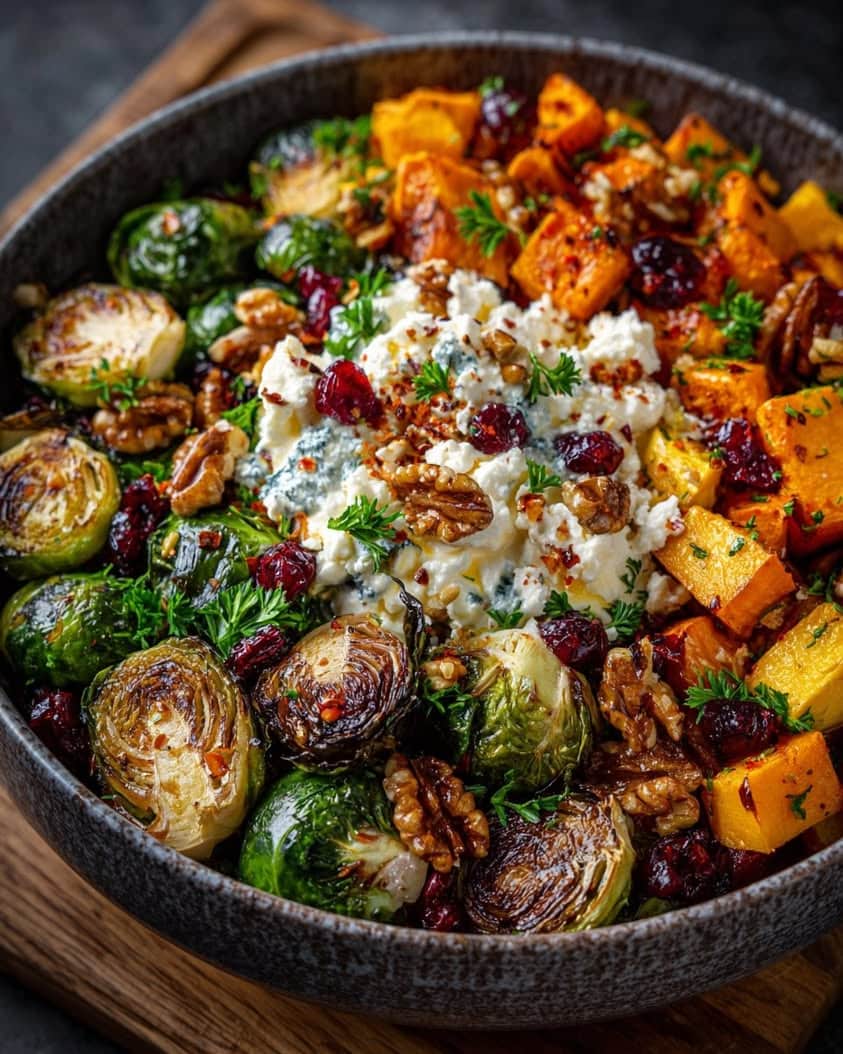
Caramelized Brussels Sprouts & Sweet Potato with Chili Hot Honey Whipped Feta Dip: The Ultimate Sweet and Spicy Side Dish
This recipe for caramelized Brussels sprouts and sweet potato with chili hot honey whipped feta dip delivers an unforgettable flavor experience. Imagine tender, caramelized sweet potatoes and crispy Brussels sprouts meeting a creamy, tangy, and spicy dip. This dish masterfully balances sweet, savory, and spicy notes in every single bite. Consequently, it will quickly become your new favorite side dish for any occasion, from weeknight dinners to festive holiday gatherings.
The magic of this caramelized Brussels sprouts and sweet potato recipe lies in its contrasting textures and flavors. Roasting transforms the vegetables, creating crispy edges and soft, sweet interiors. Meanwhile, the whipped feta dip provides a cool, creamy counterpoint to the spicy chili honey drizzle. Ultimately, this combination creates a complex and satisfying dish that will impress even the most skeptical vegetable eaters.
Furthermore, this recipe is incredibly versatile and approachable for home cooks of all skill levels. With simple ingredients and straightforward techniques, you can create a restaurant-quality dish right in your own kitchen. The result is a visually stunning and deliciously addictive plate of food that celebrates the best of seasonal produce.
Quick Recipe Highlights
- Flavor Profile: This dish features a masterful balance of sweet from the roasted sweet potatoes and honey, savory from the caramelized Brussels sprouts, and a spicy kick from the chili-infused honey. The tangy, salty whipped feta dip brings all these elements together harmoniously.
- Texture: You will experience a delightful contrast between the crispy, almost charred edges of the Brussels sprouts, the soft and creamy interior of the sweet potatoes, and the impossibly smooth, cloud-like whipped feta dip.
- Aroma: As the vegetables roast, your kitchen will fill with the warm, nutty scent of caramelizing Brussels sprouts and the sweet, earthy fragrance of roasting sweet potatoes, followed by the sharp, inviting aroma of the feta and honey.
- Visual Appeal: The final plate is a feast for the eyes, featuring deep golden-brown Brussels sprouts, vibrant orange sweet potato cubes, a snowy white bed of whipped feta, and a glossy, crimson drizzle of chili hot honey.
- Skill Level Needed: This is an easy-to-moderate recipe perfect for confident beginners. The techniques involve simple knife work for chopping, straightforward roasting, and using a food processor for the dip.
- Special Equipment: You will need a large baking sheet, a food processor or high-speed blender for the whipped feta, and basic kitchen tools like a sharp knife and cutting board.
Recipe Overview
- Difficulty Level: This caramelized Brussels sprouts and sweet potato recipe is rated easy because it relies on fundamental cooking techniques like chopping and roasting. The most complex step is making the whipped feta dip, which is simply a matter of blending ingredients until smooth. Even novice cooks can achieve excellent results by following the clear instructions provided.
- Category: This dish fits perfectly into several categories, primarily as a standout vegetarian side dish. Additionally, it can serve as a light main course, a spectacular appetizer for sharing, or a vibrant component on a holiday table or party platter.
- Cuisine: While not tied to one specific tradition, this recipe draws inspiration from modern American cuisine with Mediterranean influences, notably from the use of feta cheese. The sweet and spicy profile also has subtle nods to global flavor trends that prioritize balance and big, bold tastes.
- Cost: This is a cost-effective recipe, especially when Brussels sprouts and sweet potatoes are in season. Feta cheese and honey are pantry staples for many, making the overall cost per serving quite reasonable for such an impressive and flavorful dish.
- Season: This recipe shines brightest in the fall and winter months when Brussels sprouts and sweet potatoes are at their peak of flavor and freshness. However, its popularity as a year-round favorite means you can enjoy it anytime, thanks to the reliable availability of these vegetables.
- Occasion: It is perfectly suited for casual weeknight dinners, holiday feasts like Thanksgiving and Christmas, potlucks, and game day gatherings. Its visually appealing nature and crowd-pleasing flavors make it a guaranteed hit for any social event.
Why You’ll Love This Caramelized Brussels Sprouts and Sweet Potato Recipe
You will absolutely adore the incredible flavor journey this dish offers. The first bite delivers a complex symphony of tastes: the deep, almost nutty caramelization of the Brussels sprouts, the inherent sweetness of the roasted potatoes, the fiery sting of the chili honey, and the cooling, salty creaminess of the feta dip. This combination is so addictive that you will find yourself making it repeatedly. Moreover, the textural contrast between the crispy vegetables and the smooth dip creates a mouthfeel that is endlessly satisfying and keeps you coming back for more.
The convenience factor of this caramelized Brussels sprouts and sweet potato dish is another major benefit. Essentially, you just chop, toss, and roast. While the vegetables are in the oven, you quickly whip up the dip in a food processor. This parallel prep makes the entire process efficient and manageable, even on a busy weeknight. Furthermore, the ingredients are simple and easy to find at any standard grocery store, eliminating the need for a special shopping trip.
From a nutritional standpoint, this recipe is a powerhouse. Brussels sprouts are loaded with vitamins C and K, fiber, and antioxidants. Sweet potatoes provide a fantastic source of vitamin A, complex carbohydrates, and additional fiber. Consequently, you are serving a side dish that is not only delicious but also genuinely good for you. Using olive oil for roasting adds healthy fats, making this a well-rounded and wholesome choice for any meal.
For entertaining, this caramelized Brussels sprouts and sweet potato recipe is a true superstar. Its dramatic presentation and unique flavor profile are guaranteed to draw compliments from your guests. It serves as a fantastic conversation starter and can be easily scaled up to feed a crowd. Whether served on a large platter for a family-style meal or in individual portions for a more formal dinner, it elevates the entire dining experience.
Finally, this dish is remarkably cost-effective. Brussels sprouts and sweet potatoes are typically affordable vegetables, especially in season. A small amount of feta cheese goes a long way when whipped, creating a luxurious-feeling dip without a luxury price tag. This accessibility means you can enjoy a gourmet-tasting dish regularly without straining your food budget, making it a practical and delicious addition to your culinary repertoire.
Historical Background and Cultural Significance
The story of Brussels sprouts begins in ancient Rome, but they earned their name from their cultivation near Brussels, Belgium, as early as the 13th century. They became a staple in European winter gardens due to their hardiness. Interestingly, they did not gain widespread popularity in the United States until the 20th century. Initially, they were often boiled or steamed, methods that sometimes produced a sulfurous odor and mushy texture, leading to their infamous reputation among picky eaters. The modern culinary revolution, however, rediscovered them through roasting, a technique that unlocks their natural sweetness and creates a delicious caramelization, completely transforming their culinary status.
Sweet potatoes have a much deeper and global history, with evidence of cultivation dating back over 5,000 years in Central and South America. They were a fundamental crop for many indigenous cultures long before European contact. Christopher Columbus brought sweet potatoes to Europe after his first voyage, and from there, they spread via trade routes to Asia and Africa. In the United States, they have long been a Southern staple, famously featured in sweet potato pies and casseroles. Their versatility and nutritional value have cemented their place in cuisines worldwide, from Japanese tempura to African stews.
The technique of roasting vegetables is one of the oldest cooking methods known to humanity. Historically, this was done over open fires or in hot ashes. The modern oven simply refined this ancient process. The trend of combining roasted vegetables with creamy dips is a relatively recent development in food culture, influenced by the rise of shared plates and appetizer-focused dining. This particular recipe represents a fusion of these ideas, taking classic, humble ingredients and elevating them with contemporary flavor combinations and presentation styles.
Feta cheese, a key component of the dip, has a protected designation of origin (PDO) in the European Union, meaning true feta must be made in specific regions of Greece from sheep’s milk or a sheep and goat milk blend. Its briny, tangy character has been a hallmark of Greek cuisine for centuries. Whipping feta into a creamy spread is a modern twist on its traditional use, making it smoother and more spreadable. The addition of chili-infused honey draws from the global “sweet and heat” trend, creating a dish that is both grounded in tradition and excitingly current.
Ingredient Deep Dive
Brussels sprouts are miniature cabbages that grow on a long stalk. They are packed with nutrients, including vitamin K for bone health and blood clotting, vitamin C for immune function, and fiber for digestive health. When selecting them, look for firm, bright green sprouts with tightly packed leaves; avoid any that are yellowing or have loose leaves. Store them unwashed in a plastic bag in your refrigerator’s crisper drawer. For a substitution, you could use broccoli florets or cauliflower, though the cooking time may vary slightly.
Sweet potatoes are root vegetables distinct from yams, which have darker, bark-like skin and a less sweet, starchier flesh. They are an excellent source of beta-carotene, which your body converts to vitamin A, crucial for vision and skin health. Choose firm sweet potatoes with smooth, unbruised skin. Store them in a cool, dark, well-ventilated place—not the refrigerator, as cold temperatures can negatively alter their taste and texture. Butternut squash or carrots make a good alternative, offering a similar sweetness and texture when roasted.
Feta cheese is a brined curd cheese traditionally made from sheep’s milk or a mixture of sheep and goat’s milk. Its salty, tangy flavor is iconic. From a nutritional standpoint, feta is lower in fat than many aged cheeses but is high in sodium due to the brining process. It also provides calcium and protein. For the best whipped feta dip, use a block of feta in brine rather than pre-crumbled cheese, which often contains anti-caking agents that can prevent a smooth blend. If you need a dairy-free alternative, firm tofu blended with lemon juice and salt can mimic the texture, though the flavor profile will differ.
Honey is a natural sweetener produced by bees from flower nectar. It contains trace amounts of vitamins and minerals and has antimicrobial properties. For the chili hot honey, any pure honey will work, but a lighter, milder honey like clover or wildflower allows the chili heat to shine through. To make the infused honey, you simply warm it gently with dried chili flakes, allowing the capsaicin to dissolve into the syrup. For a vegan version, you can use maple syrup or agave nectar, though the flavor will be distinct. Store honey at room temperature in a sealed container.
Common Mistakes to Avoid
- Overcrowding the Pan: Placing too many vegetables on one baking sheet causes them to steam instead of roast. This mistake prevents the crucial caramelization and crispiness that define this dish. Always use a large enough pan and spread the sprouts and potatoes in a single, uncrowded layer.
- Using a Dull Knife: Brussels sprouts are round and firm, making them tricky to chop safely with a dull blade. A sharp chef’s knife ensures clean cuts and reduces the risk of the sprout slipping and causing an injury. Furthermore, clean cuts lead to better browning on the flat surfaces.
- Skipping the Preheating Step: Placing your vegetables in a cold oven is a critical error. The oven must be fully preheated to achieve the necessary high-heat sear that instantly begins the caramelization process. Otherwise, you will end up with soft, steamed vegetables lacking flavor and texture.
- Not Drying the Vegetables: If you wash your Brussels sprouts and sweet potatoes and do not dry them thoroughly, the excess water will create steam on the pan. This steam hinders the roasting process, preventing the crispy, caramelized exterior you are aiming for. Always pat them completely dry with a kitchen towel.
- Underseasoning: Vegetables need a generous amount of seasoning to shine. Do not be shy with the salt and pepper before roasting. Seasoning at this stage ensures the flavor penetrates the vegetables as they cook, rather than just sitting on the surface after they are done.
- Blending Warm Feta: If your feta cheese is too warm when you try to whip it, the dip can become greasy and thin. For the best, fluffiest texture, ensure your feta and cream cheese are cold straight from the refrigerator. The cold helps the fats emulsify properly with the other liquids.
- Burning the Chili Honey: When infusing the honey with chili flakes, use low heat. Honey can burn quickly, which will introduce a bitter, unpleasant flavor. Gently warm the honey just until it becomes thin enough to easily mix with the chili flakes, then immediately remove it from the heat.
- Cutting the Vegetables Unevenly: If your sweet potato chunks are much larger than your Brussels sprout halves, they will not cook at the same rate. You will end up with either burnt sprouts or undercooked potatoes. Aim for uniformly sized pieces to ensure even cooking and browning across the entire pan.
Essential Techniques
The technique of high-heat roasting is fundamental to this recipe’s success. Roasting at a high temperature, typically 400-425°F, causes the natural sugars in the Brussels sprouts and sweet potatoes to caramelize. This chemical reaction, known as the Maillard reaction, creates hundreds of new flavor compounds, resulting in a deep, complex, nutty, and sweet taste. To master this, ensure your oven is fully preheated and your baking sheet is hot when you add the oiled vegetables. A common pitfall is roasting at too low a temperature, which steams the vegetables instead of browning them. Visual cues for success are golden-brown, crispy edges and tender interiors that are easily pierced with a fork.
Proper vegetable preparation is another critical technique. Trimming the Brussels sprouts correctly involves slicing off the dry, woody stem end and then cutting them in half from top to bottom. This creates a flat surface that makes consistent contact with the hot pan, promoting superior browning. For the sweet potatoes, peeling and cutting them into evenly sized, one-inch cubes ensures they cook at the same rate as the sprouts. The pitfall here is uneven chopping, which leads to some pieces being overcooked while others remain hard. The visual cue for perfect prep is a baking sheet filled with uniformly sized vegetable pieces ready for an even roast.
Creating the whipped feta dip relies on the technique of emulsion in a food processor. Blending the cold feta and cream cheese with lemon juice and yogurt forces the fats and liquids to combine into a smooth, airy, and stable mixture. The key is to use cold dairy and to process it long enough for all graininess to disappear. A common mistake is under-blending, which leaves the dip grainy, or using ingredients that are too warm, which can cause the fat to separate and make the dip oily. The visual and textural cue for success is a dip that is perfectly smooth, pale, and holds soft peaks when scooped.
Pro Tips for Perfect Caramelized Brussels Sprouts and Sweet Potato
For extra crispiness, place your empty baking sheet in the oven during the preheat cycle. Adding the oiled vegetables to a hot pan gives them an instant sear, significantly improving browning and creating a wonderfully crispy texture on the outside while keeping the inside tender.
Toss the vegetables in a large bowl with the oil and seasonings instead of on the pan. This method ensures every single piece is evenly coated, which promotes uniform browning and seasoning. Consequently, you avoid bland or unevenly cooked spots in your final dish.
If your Brussels sprouts are very large, consider cutting them into quarters instead of halves. This adjustment ensures that the dense sprouts and the softer sweet potatoes finish cooking at the same time, preventing the potatoes from becoming mushy while waiting for the sprouts to tenderize.
Let the roasted vegetables rest for a few minutes after taking them out of the oven. This brief waiting period allows them to reabsorb some of their own steam, which intensifies their flavor and improves their texture, making them even more delicious.
For a super-smooth whipped feta dip, crumble the feta block into your food processor before adding the other ingredients. This simple step helps prevent the blade from getting stuck and ensures a more consistent, creamy blend from the very beginning of the processing time.
Customize the heat level of your chili honey to your personal preference. Start with a teaspoon of red pepper flakes for a mild warmth, or add a full tablespoon for a significant spicy kick. You can even add a whole dried arbol chili for a deeper, smokier heat.
Add a tablespoon of fresh lemon juice or a teaspoon of zest to the whipped feta. This bright, acidic note cuts through the richness of the cheese and the sweetness of the vegetables, balancing the entire dish and making the flavors pop even more.
Variations and Adaptations
For regional variations, you can take this dish in many exciting directions. A Mediterranean twist could include adding Kalamata olives and fresh oregano to the vegetables before roasting, and mixing sun-dried tomatoes into the whipped feta. For a Middle Eastern flair, toss the vegetables with za’atar seasoning and use a labneh-based dip instead of feta. An Asian-inspired version might involve tossing the roasted vegetables in a sesame-soy glaze and serving them with a miso-sesame whip.
Seasonal adaptations are simple and effective. In the spring, incorporate asparagus tips and fresh peas during the last few minutes of roasting. During summer, add cherry tomatoes and zucchini slices. For a heartier winter version, mix in cubed butternut squash and parsnips. You can also top the finished dish with pomegranate arils in the winter for a festive, juicy crunch or with fresh corn in the summer.
Dietary modifications are straightforward. For a vegan version, substitute the feta and cream cheese with a block of firm tofu and a quarter cup of nutritional yeast, blended with lemon juice until smooth. Use maple syrup instead of honey for the chili drizzle. To make it gluten-free, simply ensure all your packaged ingredients, like the chili flakes, are certified gluten-free, which they typically are.
Experiment with flavor variations by changing the seasoning profile. Toss the vegetables with smoked paprika and cumin for a smoky depth. Alternatively, use garlic powder and onion powder for a more classic savory note. You could even add a sprinkle of brown sugar to the vegetables before roasting for an extra caramelized crust, though the natural sugars usually suffice.
Texture modifications can also enhance the dish. For extra crunch, sprinkle the finished platter with toasted pecans, walnuts, or pumpkin seeds. For a contrasting creamy element, add dollops of goat cheese over the hot vegetables just before serving so it slightly melts. You can also leave the sweet potato skins on for added fiber and a more rustic texture.
Presentation alternatives offer a final touch of customization. Instead of a family-style platter, serve individual portions in shallow bowls with a swoosh of dip at the bottom. For a party, serve the whipped feta dip in a bowl surrounded by the roasted vegetables on a large board, creating an interactive appetizer station. Skewering the roasted vegetables for easy grabbing is another fun option for gatherings.
Serving and Presentation Guide
Plating techniques can elevate this humble dish into a restaurant-quality presentation. For a family-style serve, spread the entire batch of creamy whipped feta dip onto the center of a large, warm platter. Then, artfully pile the hot caramelized Brussels sprouts and sweet potatoes over and around the dip. This method creates a beautiful contrast of colors and textures and allows guests to scoop up both elements together. Alternatively, for individual servings, create a base of the dip in the center of each plate and arrange the vegetables around it.
Garnishing is the final step that adds freshness, color, and a final flavor layer. A drizzle of the vibrant chili hot honey is essential, both for taste and a glossy visual appeal. Then, sprinkle with fresh, finely chopped herbs like parsley, chives, or dill. The green herbs provide a beautiful color contrast against the orange, brown, and white components. For a textural garnish, add a sprinkle of toasted sesame seeds or chopped pistachios.
Traditional accompaniments for this dish include simple proteins that do not overpower its bold flavors. Grilled chicken, pan-seared salmon, or a hearty lentil loaf are all excellent choices. The vegetables and dip can also stand confidently as a vegetarian main course, especially when paired with a grain like quinoa, farro, or crusty bread to soak up every last bit of the delicious dip and chili honey.
Modern serving suggestions lean into its versatility as an appetizer or party food. Serve it as part of a “mezze” or tapas-style spread with other small plates like hummus, olives, and flatbread. It also makes a phenomenal, unique topping for a gourmet pizza or flatbread when chopped slightly finer. For a brunch option, top the dish with a softly fried egg, allowing the runny yolk to create another layer of sauce.
Temperature considerations are important for the best experience. The roasted vegetables are at their peak when served hot and crispy, straight from the oven. The whipped feta dip, however, should be served chilled or at a cool room temperature. This contrast between the hot vegetables and the cool, creamy dip is a key part of the sensory pleasure. Avoid serving the dip warm, as it can become too soft and lose its fluffy texture.
Portion control tips are helpful for meal planning and entertaining. As a substantial side dish, this recipe comfortably serves four people. If you are serving it as an appetizer for a larger group, it can stretch to six to eight people. When scaling for a crowd, remember that the visual impact of a heaping platter is part of the appeal, so it is better to have a little extra than to run out.
Wine and Beverage Pairing
Selecting the right wine pairing enhances the sweet, savory, and spicy elements of this dish. A crisp, unoaked white wine like a Sauvignon Blanc or Pinot Grigio works wonderfully. Their high acidity and citrus notes cut through the richness of the whipped feta and complement the caramelized vegetables. Alternatively, a dry Riesling can mirror the dish’s sweetness while balancing the heat from the chili honey. For red wine lovers, a light-bodied, low-tannin red like a Gamay or Pinot Noir is a great choice, as it will not overpower the vegetables’ delicate flavors.
Non-alcoholic alternatives provide sophisticated and refreshing options. A sparkling lemonade or limeade offers acidity and sweetness that cleanse the palate between bites. For a more complex option, try a chilled ginger beer; its spicy-sweet profile directly echoes the flavors in the chili honey. Iced green tea with a hint of mint is another excellent choice, as its slight bitterness and herbal notes provide a refreshing counterpoint to the dish’s richness.
While not a classic pairing for this type of dish, coffee and tea can work if served after the meal. A light roast coffee with bright, fruity notes would be preferable to a dark, bitter roast. For tea, an herbal peppermint or chamomile tea would aid digestion after a satisfying meal, whereas a strong black tea might clash with the dish’s complex flavor profile.
Temperature considerations for beverages are crucial. White wines and non-alcoholic sparklers should be served well-chilled, between 45-50°F. Light reds should be slightly cooled, around 55°F, rather than at room temperature. Iced teas and lemonades are most refreshing when served cold with plenty of ice. Serving beverages at their ideal temperature ensures they perform their role of complementing and cleansing the palate effectively.
General serving suggestions for your beverage pairings include having plenty of cold water available to help manage the spice from the chili honey. When serving wine, pour modest amounts to allow guests to experience how the pairing evolves with the food. For non-alcoholic options, consider serving them in elegant glassware to make the experience feel just as special as an alcoholic pairing.
Storage and Shelf Life
Proper storage methods are essential for maintaining quality and safety. Store the leftover roasted vegetables and the whipped feta dip in separate, airtight containers. Do not combine them until you are ready to serve, as the moisture from the dip will make the vegetables soggy. Glass containers are ideal because they do not absorb odors and allow you to see the contents easily. Always allow the roasted vegetables to cool completely to room temperature before sealing the container to prevent condensation, which leads to sogginess.
Temperature requirements are straightforward. Both the roasted vegetables and the whipped feta dip must be stored in the refrigerator at or below 40°F. The dip, containing dairy, is particularly perishable and should never be left at room temperature for more than two hours. The vegetables can be kept refrigerated for up to four days, while the dip is best consumed within three to four days for optimal freshness and food safety.
Recognizing signs of spoilage is a critical food safety skill. For the roasted vegetables, look for any signs of mold, an off or sour smell, or an excessively slimy texture. The whipped feta dip should be discarded if it develops an off odor, a sour taste, or if any visible mold appears. When in doubt, it is always safer to throw it out rather than risk foodborne illness.
Reheating instructions for the vegetables are key to restoring their texture. Avoid the microwave, as it will steam them and make them soft. Instead, reheat them in an air fryer or a conventional oven preheated to 375°F for 5-10 minutes, or until heated through and crispy again. This method will help revive some of the lost crispiness from storage. The whipped feta dip should be served cold and should not be reheated.
Freezing guidelines are not generally recommended for this specific dish. The high water content in the vegetables means they will become mushy and watery upon thawing. The whipped feta dip will also suffer in texture, likely becoming grainy and separating after being frozen and thawed. For the best quality, it is highly recommended to enjoy this dish fresh or refrigerated for a few days rather than attempting to freeze it.
Make Ahead Strategies
A strategic prep timeline can make assembling this dish for a party or busy weeknight incredibly easy. You can prepare the components up to two days in advance. First, chop the Brussels sprouts and sweet potatoes, then store them separately in airtight containers or resealable bags in the refrigerator. The vegetables’ exposure to air can cause slight oxidation, so this is best done the day before. You can also make the chili honey and the whipped feta dip up to two days ahead. Store the dip in a sealed container and the honey at room temperature.
Storage between steps is simple. Keep the chopped, raw vegetables chilled until you are ready to roast them. The whipped feta dip will thicken slightly in the refrigerator; you can stir it well before serving to fluff it up again. If the chili honey solidifies, which is natural, gently warm the jar in a bowl of hot water or microwave it in short bursts until it returns to a liquid state.
Assessing the quality impact of make-ahead prep is important. The vegetables will lose a minimal amount of moisture and may not brown quite as intensely as when freshly chopped, but the difference is negligible. The flavors of the whipped feta dip often improve after a day, as the ingredients have more time to meld. The chili honey’s flavor will also deepen and become more infused over time.
Final assembly tips for a make-ahead meal are straightforward. About an hour before you plan to serve, take the dip out of the fridge to take the chill off—it should be cool, not ice-cold. Roast the vegetables so they are hot and fresh when it is time to eat. Then, compose your platter with the dip, hot vegetables, and a final drizzle of the chili honey just before serving to guests.
Reheating guidelines for pre-roasted vegetables are the same as for leftovers. Use an oven or air fryer to re-crisp them. Do not reheat the dip. If you have pre-mixed the vegetables with the dip for individual lunches, it is best to reheat only the vegetable portion separately if possible, though it will be softer than ideal.
Scaling Instructions
Halving the recipe is simple for smaller households. Use half the amount of all ingredients. A standard half-sheet pan will still work well, as the smaller quantity of vegetables will have even more room to caramelize beautifully. The cook time may be slightly reduced, so start checking for doneness around the 20-minute mark. You can easily make a half-batch of the whipped feta dip, but note that some food processors struggle with very small volumes. Alternatively, make the full dip recipe—it is delicious as a spread on sandwiches or with other raw vegetables.
Doubling or tripling the recipe for a crowd requires some adjustments. You will need to use multiple baking sheets and rotate them between the oven racks halfway through the cooking time to ensure even browning. Do not overcrowd the pans; it is better to use three pans with a single layer of vegetables than to overload two pans. The cooking time may increase by 5-10 minutes due to the larger volume of food in the oven. For the dip, you can double the ingredients in a standard-sized food processor, but for tripling, you may need to work in batches to ensure a smooth consistency.
Equipment adjustments are necessary when scaling. For a double batch, ensure you have two large baking sheets. If you only have one, you will need to roast the vegetables in consecutive batches, keeping the first batch warm in a low oven while the second batch cooks. For a very large event, consider using disposable aluminum pans for easy cleanup. For the dip, a high-powered blender can sometimes handle larger quantities more efficiently than a food processor.
Timing modifications are minimal when scaling up. The prep time will naturally increase with the volume of vegetables to chop. The roasting time, however, may not double. It will likely only require a slight extension. The key is to rely on visual and textural cues—golden-brown color and tender insides—rather than strictly adhering to the timer. Always taste a piece to confirm it is done to your liking.
Storage considerations for large batches are similar to the standard recipe. Store any leftovers in multiple smaller containers rather than one gigantic one. This practice helps the food cool more quickly and safely, reducing the risk of bacterial growth. It also makes it easier to reheat smaller portions as needed throughout the week.
Nutritional Deep Dive
A macro breakdown of this dish reveals a well-balanced profile. The sweet potatoes provide complex carbohydrates for sustained energy, while the Brussels sprouts and olive oil contribute healthy fats and fiber. The feta cheese in the dip is a significant source of protein and fat. This combination offers a good mix of macronutrients, making it a satisfying side dish that can help keep you full and energized. The honey adds simple sugars, so moderation is key if you are monitoring your sugar intake.
The micronutrient analysis is particularly impressive. Brussels sprouts are a powerhouse of vitamin K, essential for blood clotting and bone health, and vitamin C, a potent antioxidant. Sweet potatoes are famously rich in beta-carotene, which the body converts to vitamin A for vision and immune function. Together, they provide a broad spectrum of B vitamins, potassium, and manganese. The feta cheese adds calcium and phosphorus, contributing to bone strength.
The health benefits of this dish are extensive. The high fiber content from the vegetables supports digestive health and helps regulate blood sugar levels. The antioxidants, such as vitamin C and beta-carotene, combat oxidative stress and inflammation in the body. Furthermore, the healthy fats from the olive oil aid in the absorption of these fat-soluble vitamins, making the nutrients more bioavailable. This makes the dish not just delicious but also a functional part of a health-conscious diet.
Dietary considerations are mostly positive. This recipe is naturally vegetarian and can be easily adapted to be gluten-free and vegan. For those on a low-sodium diet, be mindful that feta cheese is quite high in salt; you could seek out a lower-sodium variety or reduce the amount used. The carbohydrate content is primarily from whole food sources, making it a better choice than refined carbs, but those on strict low-carb or keto diets may want to enjoy a smaller portion.
Portion analysis shows that a single serving provides a substantial amount of your daily vegetable intake recommendations. It is a volumous dish, meaning you can eat a satisfying portion for a relatively moderate calorie count, especially if you are mindful of the amount of oil and cheese used. This makes it an excellent choice for weight management, as it promotes feelings of fullness with nutrient-dense ingredients.
Dietary Adaptations
For a gluten-free version, this recipe is already nearly perfect. The primary ingredients—vegetables, cheese, honey, and oil—are naturally gluten-free. The only potential source of gluten would be in any pre-packaged spice blends or if the chili flakes have added fillers. To be safe, simply check the labels on your chili flakes to ensure they are pure and processed in a gluten-free facility. Otherwise, no modifications are needed.
A dairy-free or vegan adaptation requires replacing the feta and cream cheese in the dip. A fantastic alternative is to use a block of firm or extra-firm tofu, well-drained. Blend it with two tablespoons of nutritional yeast for a cheesy flavor, the juice of one lemon, a clove of garlic, and salt to taste. The result is a surprisingly creamy and tangy dip. For the chili honey, substitute with maple syrup or agave nectar to maintain the sweet and spicy element without using an animal product.
For a low-carb or keto adaptation, the main challenge is the sweet potato, which is high in carbohydrates. Replace the sweet potato with lower-carb vegetables like cauliflower florets, broccoli, or radishes. The Brussels sprouts can remain, as they are relatively low in net carbs. The whipped feta dip is already excellent for a keto diet, being high in fat and protein. For the chili honey, you would need to use a sugar-free maple-flavored syrup or a monk fruit-sweetened syrup to replicate the sweetness without the carbs.
A Paleo adaptation aligns with the vegan
Print
Caramelized Brussels Sprouts & Sweet Potato with Chili Hot Honey Whipped Feta Dip
Description
A savory-sweet side dish featuring crispy caramelized Brussels sprouts and sweet potatoes, served with a spicy, creamy whipped feta dip.
Ingredients
For the Crust:
- 1 lb Brussels sprouts, trimmed and halved
- 1 large sweet potato, peeled and cubed
- 3 tbsp olive oil
- 1 tsp smoked paprika
- 1/2 tsp garlic powder
- Salt and black pepper to taste
- 8 oz feta cheese, crumbled
- 1/4 cup Greek yogurt
- 2 tbsp hot honey
- 1 tsp chili flakes
- 1 tbsp lemon juice
Instructions
1. Prepare the Crust:
- Preheat oven to 400°F (200°C). Line a baking sheet with parchment paper.
- In a large bowl, toss Brussels sprouts and sweet potato with olive oil, smoked paprika, garlic powder, salt, and pepper. Spread evenly on the baking sheet.
- Roast for 25-30 minutes, flipping halfway, until vegetables are tender and caramelized.
- Meanwhile, in a food processor, combine feta, Greek yogurt, hot honey, chili flakes, and lemon juice. Blend until smooth and creamy.
- Serve the roasted vegetables warm with the whipped feta dip on the side.
Notes
You can customize the seasonings to taste.

I’m Shaykee—born in Morocco, seasoned across continents. From airplane galleys to home kitchens, I share the flavors and stories that shaped my journey.