
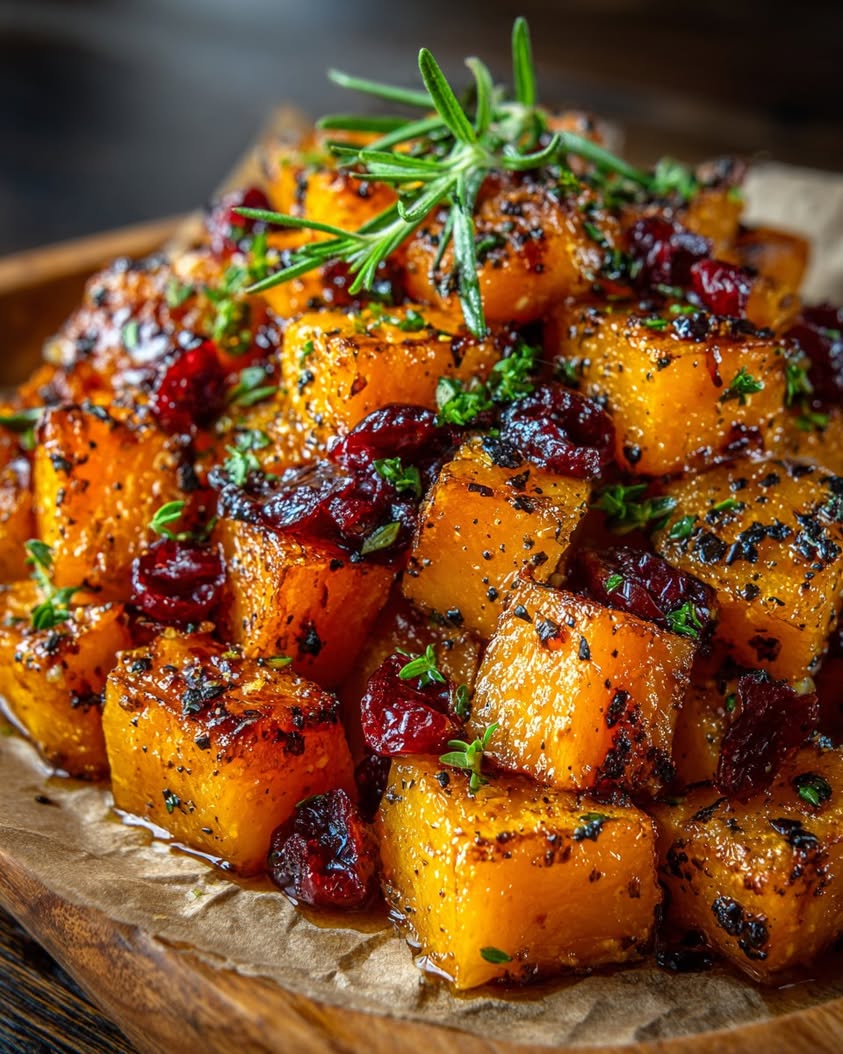
Caramelized Butternut Squash with Cranberry-Balsamic Glaze: A Sweet and Savory Holiday Masterpiece
This recipe for caramelized butternut squash with cranberry-balsamic glaze is a true celebration of fall flavors on a single platter. Imagine tender, sweet cubes of squash roasted to a perfect golden brown, their edges kissed with a deep caramelization. Then, picture them generously draped in a glossy, jewel-toned glaze that perfectly balances tart cranberries with the rich, complex sweetness of balsamic vinegar. The result is a side dish that is as stunning visually as it is delicious, guaranteed to become the star of your holiday table.
Moreover, this dish masterfully bridges the gap between sweet and savory, making it an incredibly versatile companion for everything from a simple roasted chicken to the grandest Thanksgiving turkey. The process of creating the caramelized butternut squash is straightforward, focusing on high-heat roasting to draw out the vegetable’s natural sugars. Simultaneously, the cranberry-balsamic glaze simmers into a luxurious, syrupy reduction that clings beautifully to every piece. Ultimately, this recipe delivers restaurant-quality presentation and flavor with surprisingly simple, approachable techniques.
Furthermore, the aroma that fills your kitchen while this cooks is nothing short of magical. The warm, nutty scent of roasting squash mingles with the festive, tangy perfume of simmering cranberries and balsamic. This sensory experience alone makes the preparation a joyful part of any holiday gathering. Consequently, this caramelized butternut squash is not just food; it is an edible centerpiece that evokes warmth, comfort, and celebration.
Quick Recipe Highlights
- Flavor Profile: This dish offers a sophisticated harmony of sweet, savory, and tart notes. The natural sweetness of the caramelized butternut squash is beautifully contrasted by the bright, tangy punch of the cranberry-balsamic glaze, creating a complex and deeply satisfying taste experience.
- Texture: You will enjoy a delightful contrast between the soft, creamy interior of the roasted squash and the slightly crisp, caramelized edges. The glaze adds a luxurious, sticky-smooth coating that enhances every bite without being overly heavy.
- Aroma: The cooking process fills your kitchen with an irresistible festive fragrance. Key aromatic notes include the earthy, sweet smell of roasting squash, the sharp, fruity tartness of cranberries, and the rich, acetic sweetness of reducing balsamic vinegar.
- Visual Appeal: This dish is a feast for the eyes with its vibrant autumn color palette. The deep orange squash glistens under a glossy, ruby-red glaze, often garnished with fresh herbs for a pop of green, making it a stunning addition to any table setting.
- Skill Level Needed: This recipe is perfect for cooks of all levels. It requires basic knife skills for cubing the squash and simple stovetop simmering for the glaze. No advanced techniques are necessary, making it an accessible yet impressive holiday side dish.
- Special Equipment: You need only standard kitchen tools: a sharp chef’s knife, a sturdy cutting board, a large baking sheet, and a medium saucepan. Parchment paper is highly recommended for easy cleanup and to prevent the squash from sticking during roasting.
Recipe Overview
- Difficulty Level: We classify this caramelized butternut squash recipe as easy because it breaks down into two very simple processes: roasting and simmering. The most challenging aspect is safely cutting the squash, which can be mitigated by purchasing pre-cubed squash. Otherwise, the steps are clear, sequential, and forgiving, allowing even novice cooks to achieve fantastic results.
- Category: This recipe falls squarely into the side dish category, specifically designed for holiday meals and special dinners. It can also function as a vegetarian main course when served over a bed of grains like farro or quinoa, or as part of a larger harvest bowl with other roasted vegetables and a protein.
- Cuisine: While not tied to one specific tradition, this dish draws inspiration from modern American fall and holiday cooking. It utilizes classic New World ingredients like squash and cranberries, interpreting them through a contemporary, chef-driven lens that emphasizes balanced, bold flavors and beautiful plating.
- Cost: This is a cost-effective holiday side dish. Butternut squash and fresh cranberries are inexpensive in autumn. The other ingredients, like olive oil, balsamic vinegar, maple syrup, and common spices, are pantry staples for most home cooks. Consequently, you can create an impressive, restaurant-quality dish for a fraction of the price of store-bought specialty sides.
- Season: This recipe is quintessentially a fall and winter dish. Butternut squash and cranberries are at their peak flavor and most affordable during these cooler months. The warm, hearty nature of the dish perfectly complements the comfort food cravings of the season, making it ideal for Thanksgiving, Christmas, and cozy Sunday dinners.
- Occasion: It is perfectly suited for formal holiday gatherings like Thanksgiving and Christmas feasts. Additionally, it works wonderfully for festive potlucks, Friendsgiving dinners, or as an elegant side for a special weekend roast. Its make-ahead potential also makes it a smart choice for reducing day-of cooking stress.
Why You’ll Love This Recipe
First and foremost, the taste and texture appeal of this caramelized butternut squash is absolutely irresistible. The roasting process transforms the humble squash, concentrating its sugars and creating pockets of creamy flesh with delectably crisp, caramelized corners. When you toss these warm cubes in the cranberry-balsamic glaze, each piece becomes coated in a sticky, sweet-tart sauce that clings perfectly. The flavor combination is complex yet familiar, offering a sophisticated upgrade to a classic vegetable that will have everyone asking for seconds. Every bite delivers a satisfying contrast that is both comforting and exciting.
Next, consider the convenience and preparation benefits. This recipe is remarkably straightforward, using mostly hands-off cooking time. While the squash roasts in the oven, you can quickly prepare the simple glaze on the stovetop. Furthermore, you can easily cube the squash a day ahead, storing it in the fridge to cut down on active prep time when you are busy hosting. The entire dish can also be assembled and reheated beautifully, making it a strategic champion for managing a crowded holiday kitchen schedule. Ultimately, you get a stunning, flavorful result without last-minute fuss or complicated techniques.
Additionally, this caramelized butternut squash offers notable nutritional advantages. Butternut squash is a powerhouse of vitamins A and C, essential for immune function and eye health. It is also rich in fiber, which aids digestion and promotes satiety. Cranberries bring their famous antioxidant and anti-inflammatory properties to the table. By using natural sweeteners like maple syrup and allowing the vegetable’s own sugars to caramelize, this dish delivers deep sweetness without relying on refined sugars. Therefore, you can feel good about serving a side dish that is as wholesome as it is delicious.
From a social and entertaining perspective, this dish provides immense value. Its vibrant, festive appearance makes it a guaranteed conversation starter on any buffet or dinner table. It caters beautifully to vegetarian guests and can be easily adapted for other dietary needs, which is crucial for modern gatherings. Serving a homemade, visually spectacular dish like this shows care and effort, elevating the entire dining experience for your family and friends. It is a recipe that people will remember and request year after year, becoming part of your own holiday tradition.
Finally, the cost-effectiveness and accessibility of the ingredients make this a smart choice. Seasonal butternut squash and cranberries are very affordable, especially compared to pre-made specialty sides from gourmet stores. The other components are basic pantry items you likely already own. This means you can create a show-stopping, restaurant-worthy side dish for a crowd without straining your holiday budget. It proves that impressive cooking does not require expensive or hard-to-find ingredients, just a thoughtful recipe and a little time.
Historical Background and Cultural Significance
The story of this dish begins with its two New World stars: butternut squash and cranberries. Indigenous peoples across North America cultivated various squash varieties for thousands of years, valuing them as a vital, storable food source through harsh winters. The butternut squash we know today is a relatively modern cultivar, developed in the 1940s in Massachusetts. However, its use in autumn cooking is deeply rooted in Native American harvest traditions, where squash was often roasted in coals or stewed. Cranberries, similarly, were a staple for Native Americans, used fresh, dried, and in pemmican, and later adopted by European colonists.
Culturally, the combination of squash and cranberries speaks directly to the American holiday table, particularly Thanksgiving. This meal, itself a narrative of harvest and community, naturally features native ingredients. While sweet potato casseroles and green bean bakes have their place, this caramelized butternut squash with a glossy glaze represents a more contemporary, chef-driven interpretation of that tradition. It moves beyond the often overly sweet, marshmallow-topped preparations towards a balance that highlights the inherent qualities of the produce, aligning with modern culinary trends that favor vegetable-forward, balanced plates.
The evolution of this specific recipe is a testament to the globalization of the pantry. The use of balsamic vinegar, a prized product from Modena, Italy, introduces an Old World element that perfectly complements the New World ingredients. This fusion is characteristic of modern American cooking, which freely borrows and blends techniques and ingredients from around the world to create something new. The technique of reducing vinegar with fruit into a glaze has roots in both European and Asian cuisines, applied here to create a sophisticated sauce that elevates the humble roasted squash.
Regional variations of this concept abound. In the Northeastern United States, maple syrup is a natural sweetener pairing. In other areas, honey or brown sugar might be used. Some cooks add warm spices like cinnamon, nutmeg, or a pinch of cayenne pepper to the squash or the glaze for extra depth. A savory twist might include a sprinkle of fresh rosemary or thyme over the squash before roasting, or a dash of soy sauce in the glaze for umami. The basic template of caramelized squash with a tart-sweet fruit glaze is wonderfully adaptable, allowing it to reflect local tastes and ingredient availability while maintaining its core identity as a celebratory harvest dish.
Ingredient Deep Dive
Butternut Squash: This winter squash is a cultivar of Cucurbita moschata, developed for its sweet, nutty flavor and smooth texture. Historically, squash was one of the “Three Sisters” planted by Native Americans alongside corn and beans, a symbiotic agricultural system. Nutritionally, it is an exceptional source of beta-carotene (which converts to Vitamin A), Vitamin C, potassium, and fiber. When selecting, choose a squash that feels heavy for its size with a firm, matte skin and no soft spots. Store whole squash in a cool, dark place for up to 3 months. Once cut, wrap tightly and refrigerate for up to 5 days. For a substitution, sweet potatoes or acorn squash would be the closest alternatives, though cooking times may vary slightly.
Fresh Cranberries: These native North American berries have a long history of use by Indigenous peoples for food, dye, and medicine. Their incredible shelf life, due to natural preservatives, made them valuable. They are packed with vitamin C, fiber, and unique phytonutrients like proanthocyanidins, known for supporting urinary tract health. Select berries that are firm, plump, and deep red in color; avoid any that are shriveled or brown. Refrigerate in their original bag or a ventilated container for up to two months, or freeze them for up to a year. If fresh are unavailable, frozen cranberries work perfectly in the glaze; do not thaw before using. There is no perfect substitute for their unique tart flavor, but pomegranate molasses or a reduced red currant sauce could provide a similar sweet-tart profile.
Balsamic Vinegar: Authentic Traditional Balsamic Vinegar (Aceto Balsamico Tradizionale) is a protected product from Modena or Reggio Emilia, Italy, aged for years in wooden casks. The more common commercial “balsamic vinegar of Modena” is what most recipes, including this one, utilize. It adds a complex sweetness and acidity that balances the cranberries. For best results, choose a vinegar that lists grape must as the first ingredient. Store in a cool, dark cupboard. While expensive aged balsamic is delightful for drizzling, a good-quality everyday balsamic is perfect for cooking into a glaze. If you must substitute, a combination of red wine vinegar and a teaspoon of maple syrup or sugar can mimic some of the sweet-tart notes, though the flavor will be less complex.
Maple Syrup: This natural sweetener, made from the sap of sugar maple trees, is a hallmark of North American, particularly Canadian, cuisine. It contains antioxidants and minerals like manganese and zinc. Its flavor profile, with notes of caramel and wood, complements the squash and cranberries far better than refined white sugar. Always choose 100% pure maple syrup, not pancake syrup which contains corn syrup and flavorings. Grade A Amber Color, Rich Taste is ideal for cooking. Store in the refrigerator after opening. For substitutions, honey or agave nectar can be used in a pinch, but they will impart their own distinct flavors. Brown sugar dissolved in a little water could also work, though it lacks the nuanced depth of real maple syrup.
Common Mistakes to Avoid
- Cutting Squash Pieces Unevenly: Inconsistent cube sizes lead to uneven cooking. Smaller pieces will burn before larger ones caramelize properly. Take the time to cut the squash into uniform 1-inch cubes for even roasting and a perfect texture throughout the dish.
- Crowding the Baking Sheet: If you dump all the squash onto one pan without space, it will steam instead of roast. Steaming prevents the beautiful caramelization and crisp edges that define this recipe. Always use a large enough sheet and spread the cubes in a single layer with some breathing room.
- Underseasoning the Squash: Salt is crucial for drawing out moisture and enhancing flavor. Do not be shy with salt and pepper before roasting. Seasoning at this stage ensures the flavor is embedded in the squash itself, not just on the surface from the glaze.
- Overcooking the Cranberry Glaze: Simmering the glaze too long can make it overly thick, sticky, and bitter as it reduces past the syrupy stage. Remove it from the heat when it has thickened to a consistency that coats the back of a spoon but is still pourable.
- Adding the Glaze to Cold Squash: Tossing the roasted squash with the glaze while the squash is still warm allows it to absorb the flavors better and creates a beautiful glossy coating. If the squash cools completely, the glaze may just sit on top and not adhere as well.
- Using Low-Quality Balsamic Vinegar: A harsh, overly acidic balsamic can ruin the balance of the glaze. Invest in a decent, moderately priced balsamic vinegar where “grape must” is the first ingredient. The difference in the final flavor of your caramelized butternut squash is significant.
- Skipping the Fresh Herb Garnish: While optional, a sprinkle of fresh thyme or chopped parsley adds a necessary pop of color and a bright, fresh aromatic note that cuts through the richness. It elevates the presentation from homemade to professional instantly.
- Not Tasting for Balance Before Serving: Always taste the finished dish. Depending on your cranberries’ tartness, you may want a tiny pinch more salt to balance the sweetness or a tiny drizzle of extra balsamic for acidity. Adjusting at the end ensures perfect flavor harmony.
Essential Techniques
High-Heat Roasting for Caramelization: This technique is the foundation of the dish’s flavor. Roasting at a high temperature (around 425°F) causes the natural sugars in the butternut squash to undergo the Maillard reaction and caramelize. This creates complex, nutty flavors and a desirable contrast between a creamy interior and slightly crisp, browned edges. To master it, ensure your oven is fully preheated and use a heavy-duty baking sheet. The most common pitfall is overcrowding, which leads to steaming. For success, look for golden-brown spots on the cubes and edges that appear slightly shrunken and crisp.
Reducing a Fruit Glaze: Reducing a liquid mixture by simmering evaporates water, concentrating flavors and thickening the consistency. For the cranberry-balsamic glaze, this process mellows the sharp vinegar, softens the cranberries’ pucker, and blends the sweetener into a unified, syrupy sauce. The key is a gentle simmer, not a rolling boil, which can cause scorching. Stir occasionally, especially as it thickens. The visual cue for success is when the glaze coats the back of a spoon and leaves a clear path when you run your finger through it. It will continue to thicken slightly as it cools.
Balancing Sweet and Tart Flavors: This is the conceptual technique that makes the dish sing. It involves layering and adjusting sweet elements (squash, maple syrup) against acidic elements (cranberries, balsamic vinegar) until neither dominates. The roasting adds savory depth, and salt is the crucial moderator that enhances all other flavors. To master it, taste your glaze at different stages. If it’s too tart, add a teaspoon more maple syrup. If it’s too sweet, a splash of balsamic or a squeeze of lemon juice can bring it back. The final toss with the warm, savory squash is the last step in this balancing act.
Pro Tips for Perfect Caramelized Butternut Squash
For the easiest prep, look for pre-cubed butternut squash in the produce section of your grocery store. This saves significant time and effort, especially when preparing large holiday meals.
Line your baking sheet with parchment paper. This guarantees easy release, prevents any sticking that could ruin your caramelized edges, and makes cleanup an absolute breeze.
Let the roasted squash sit for 5 minutes after pulling it from the oven before tossing with the glaze. This allows excess steam to escape, ensuring the glaze coats the squash rather than sliding off a wet surface.
If your cranberry glaze becomes too thick upon standing, simply stir in a teaspoon or two of warm water or orange juice to loosen it back to a perfect, pourable consistency.
For an extra flavor dimension, add a sprig of fresh rosemary or a few thyme sprigs to the baking sheet with the squash. The herbs will infuse their aroma into the squash as it roasts.
To achieve maximum caramelization, resist the urge to stir the squash too often during roasting. Let it sit undisturbed for at least 20 minutes to allow proper browning to develop on one side before giving it a turn.
For a beautiful presentation, garnish with not just herbs, but also a sprinkle of toasted pecans or walnuts for crunch and a final, light drizzle of high-quality balsamic vinegar over the plated dish.
If making ahead, store the roasted squash and the glaze separately in the refrigerator. Reheat the squash in the oven to maintain texture and warm the glaze gently on the stovetop before combining.
Variations and Adaptations
For regional variations, consider using local sweeteners. In the South, sorghum syrup could replace maple syrup for a distinct, earthy sweetness. In the Pacific Northwest, a blackberry-balsamic glaze would be a stunning alternative, playing on similar tart-sweet notes with a different berry profile. A Southwestern twist could involve tossing the roasted squash with a glaze infused with a chipotle pepper for smoky heat.
Seasonal adaptations are simple and effective. In late summer, try this technique with peaches or nectarines instead of cranberries for a stone fruit glaze. For a winter citrus variation, use blood orange juice and zest in the glaze with dried cranberries. In spring, a rhubarb-balsamic glaze would provide a wonderfully tart counterpart to the sweet squash.
Dietary modifications are straightforward. For a vegan version, ensure your maple syrup is certified vegan (most are) and that’s it; the recipe is naturally plant-based. To make it gluten-free, simply confirm your balsamic vinegar is gluten-free, which the vast majority are. For a lower-sugar option, reduce the maple syrup by half and rely more on the natural sweetness of the well-caramelized squash.
Flavor variations can personalize the dish. Add warm spices like a pinch of cinnamon, nutmeg, or cardamom to the squash before roasting. For savory depth, toss the squash with a tablespoon of white miso paste thinned with olive oil. A splash of orange liqueur like Grand Marnier added to the simmering glaze introduces a sophisticated citrus note.
Texture modifications can cater to different preferences. For extra crunch, sprinkle with toasted pumpkin seeds (pepitas) or candied pecans after glazing. For a creamier component, serve the glazed squash over a smear of whipped goat cheese or ricotta. Alternatively, blend half the roasted squash into a smooth puree as a base, topping it with the glazed cubes for contrast.
Presentation alternatives can refresh the look. Instead of a large platter, serve individual portions in small bowls or on slate tiles. Skewer the glazed squash cubes with fresh rosemary sprigs as a festive finger food. Layer the warm squash and glaze in a baking dish, top with breadcrumbs and cheese, and broil for a few minutes for a hot, bubbly casserole-style presentation.
Serving and Presentation Guide
For elegant plating, use a large, shallow white or neutral-colored platter to let the vibrant colors of the caramelized butternut squash and ruby glaze shine. Arrange the glazed squash in a casual but intentional heap, allowing some pieces to tumble naturally. Avoid spreading it flat, as height and dimension make the dish look more abundant and appealing. Drizzle any extra glaze from the bowl over the top for a glossy finish.
Garnishing is the final touch of artistry. A generous scattering of finely chopped fresh parsley, chives, or thyme leaves adds a necessary pop of green and fresh aroma. For texture and luxury, add a handful of toasted, chopped nuts like pecans, walnuts, or hazelnuts. A final, sparing drizzle of a high-quality, aged balsamic vinegar just before serving adds beautiful dark streaks and a burst of concentrated flavor.
Traditional accompaniments for this holiday side dish are classic. It pairs magnificently with roast turkey, honey-glazed ham, or herb-crusted pork tenderloin. For a vegetarian feast, serve it alongside mushroom Wellington, lentil loaf, or a rich chestnut and wild rice stuffing. It also complements other classic sides like creamy mashed potatoes, green bean almondine, and a simple green salad with a sharp vinaigrette to cut the sweetness.
Modern serving suggestions think beyond the holiday table. Use the glazed squash as a topping for a fall harvest bowl with quinoa, kale, and roasted chickpeas. Fold it into warm pasta with browned butter and sage. Serve it alongside a sharp cheese like aged cheddar or goat cheese as part of an autumnal cheese board. It can even be a stunning topping for crostini spread with ricotta.
Temperature considerations are key. This dish is best served warm. The glaze is most fluid and aromatic, and the squash is at its optimal creamy texture. If it sits and cools, the glaze can become too sticky. You can gently reheat the entire platter in a 300°F oven for 10-15 minutes before serving if needed. Avoid microwaving, as it can make the squash mushy.
For portion control, a standard serving is about 1 cup per person as a side dish. When serving as part of a large holiday buffet with many other rich sides, you can plan for slightly smaller portions. If featuring it as a main component for a vegetarian meal, aim for 1.5 to 2 cups per person, accompanied by grains and a protein source like beans or lentils.
Wine and Beverage Pairing
Choosing the right wine enhances the sweet and savory notes of the caramelized butternut squash. A slightly off-dry white wine, like a Riesling or Gewürztraminer, is a classic pairing. Their hint of sweetness mirrors the dish’s profile while their acidity cuts through the richness. For red wine lovers, a light-bodied, low-tannin red such as a Pinot Noir or Beaujolais works beautifully. Their red fruit flavors (cherry, raspberry) complement the cranberry glaze without overwhelming the squash. Avoid heavily oaked Chardonnays or bold, tannic reds like Cabernet Sauvignon, as they can clash with the dish’s sweetness.
Non-alcoholic alternatives can be just as thoughtful. Sparkling apple cider is a festive and perfect match, offering bubbles and apple notes that pair well with fall flavors. A cranberry spritzer made with tart cranberry juice, club soda, and a lime wedge echoes the glaze’s key ingredient. For a warm option, a mulled cider with cinnamon and orange slices creates a cohesive autumnal experience. Even a simple glass of chilled, dry sparkling water with a twist of lemon can cleanse the palate between bites beautifully.
While not a traditional pairing for the dish itself, consider the coffee or tea you might serve after a meal featuring this squash. A medium-roast coffee with notes of caramel or nut would be a harmonious follow-up. For tea, a smoky Lapsang Souchong or a sweet, caramel-like Rooibos would complement the meal’s end without repeating the exact flavors of the main course.
Temperature considerations for beverages are straightforward. Serve white wines and spritzers well-chilled, between 45-50°F. Light reds like Pinot Noir are best served slightly cool, around 55°F. Mulled cider should be served piping hot. These temperatures ensure the beverages refresh and balance the warm, rich food rather than fighting against it.
For serving suggestions, always offer a water glass alongside any other beverage to keep palates cleansed. If hosting a dinner, you might pour a specific pairing wine just as this side dish is being served. For a buffet, label your non-alcoholic options clearly so guests understand the thoughtful pairing you’ve provided alongside this standout caramelized butternut squash.
Storage and Shelf Life
For optimal storage, place leftover caramelized butternut squash in an airtight container in the refrigerator. It is best to store the squash and any remaining glaze separately if possible, as the glaze can make the squash soggy over time. Properly stored, the combined dish will last for 3 to 4 days. The cranberry-balsamic glaze alone can be refrigerated in a sealed jar for up to 2 weeks.
Temperature requirements are simple: constant refrigeration at 40°F or below is essential for safety and quality. Do not leave the finished dish at room temperature for more than 2 hours. When reheating, ensure it reaches an internal temperature of 165°F to eliminate any potential bacteria.
Container recommendations include glass or BPA-free plastic containers with tight-fitting lids. For the glaze, a small mason jar is perfect. Avoid storing in metal containers, as the acidity from the balsamic vinegar could react with the metal over time, affecting flavor.
Signs of spoilage to watch for include an off or sour smell, significant moisture separation, or visible mold growth. If the squash becomes excessively mushy or slimy, it is time to discard it. The glaze may thicken considerably in the fridge; this is normal and not a sign of spoilage.
Reheating instructions are crucial for texture. To reheat, spread the squash in a single layer on a baking sheet and warm in a 350°F oven for 10-15 minutes until heated through. This method helps re-crisp the edges. Avoid microwaving, as it will steam the squash, making it soft and potentially watery. Warm the glaze separately in a small saucepan over low heat, thinning with a teaspoon of water if necessary.
Freezing guidelines are possible but with caveats. You can freeze the roasted (but unglazed) squash cubes on a parchment-lined tray before transferring to a freezer bag for up to 3 months. The texture may become slightly softer upon thawing and reheating. The cranberry glaze freezes very well for up to 6 months. Freeze the combined dish only if you accept that the squash texture will be much softer, best suited for purees or soups after thawing.
Make Ahead Strategies
Creating a prep timeline reduces day-of stress. You can cube the butternut squash 1-2 days in advance. Store the raw cubes in a sealed container or zip-top bag in the refrigerator. The entire cranberry-balsamic glaze can be made up to 5 days ahead and stored in the fridge. On the day you plan to serve, simply roast the pre-cut squash and gently reheat the glaze. You can even roast the squash 3-4 hours ahead, leave it at room temperature, and then re-crisp it in a hot oven for 5 minutes before adding the warm glaze.
For storage between steps, keep all components separate until the final assembly. Raw squash goes in the fridge. The cooled glaze goes in a jar in the fridge. If you roast the squash ahead, let it cool completely on the baking sheet before transferring it to a container. Do not cover it while still warm, as condensation will make it soggy.
Assessing the quality impact of make-ahead steps is important. Pre-cutting the squash has no negative impact. Making the glaze ahead often improves it, as the flavors have more time to meld. The only potential quality loss is in the texture of the roasted squash if it is refrigerated after roasting; it may lose some crispness, which is why a quick reheat in the oven is recommended.
Assembly tips for a make-ahead plan are simple. Have your serving platter ready. Warm the glaze in a saucepan until fluid. Reheat the squash in the oven until hot. Place the warm squash in a large mixing bowl, pour most of the warm glaze over it, and toss gently to coat. Transfer to the platter and drizzle with the remaining glaze. This final toss while both components are warm is the secret to perfect cohesion and gloss.
Reheating guidelines are specific. For the squash, use an oven or toaster oven at 375°F for 5-10 minutes. For the glaze, use a small saucepan over low heat, stirring frequently. If the glaze is too thick, whisk in a tablespoon of water, orange juice, or even a splash of broth to loosen it to the right consistency for coating.
For fresh element additions, add any garnishes like fresh herbs or toasted nuts immediately before serving, not during storage or reheating. This ensures they retain their color, texture, and vibrant flavor, providing the perfect finishing touch to your pre-prepared masterpiece.
Scaling Instructions
Halving the recipe is straightforward for smaller gatherings. Simply divide all ingredient quantities by two. Use a standard baking sheet; the smaller amount of squash will have plenty of room to caramelize properly. The cook time may be slightly reduced by 5-10 minutes, so start checking for doneness early. The glaze will also take less time to reduce. This scaling is perfect for a cozy dinner for two or three.
Doubling or tripling the recipe for a large crowd requires some adjustments. Do not double the amount of squash on a single baking sheet; instead, use multiple sheets and rotate them in the oven halfway through cooking. You may need to roast in batches depending on your oven size. For the glaze, use a wider, heavy-bottomed saucepan or Dutch oven to allow for faster, more even evaporation. The reduction time will increase slightly. Mix the glaze and squash in a very large bowl or pot to ensure even coating.
Equipment adjustments are necessary when scaling. For a doubled recipe, ensure you have at least two large rimmed baking sheets. You may need a larger mixing bowl for tossing. A wider saucepan for the glaze is better than a deeper one, as it provides more surface area for reduction. For a tripled recipe, consider using your largest roasting pan for the squash, though spreading it in a thin layer is still critical.
Timing modifications are minimal but important. When roasting multiple sheets of squash, the total oven time may increase slightly due to the added moisture in the oven. Allow an extra 5-10 minutes and rely on visual cues (golden brown edges) rather than strict timing. For the glaze, start checking for the “coat the spoon” consistency a few minutes earlier than the original recipe suggests, as larger volumes can sometimes thicken more quickly once they reach a certain point.
Storage considerations change with scale. A large batch will take longer to cool. Spread the roasted squash on a clean baking sheet or a large platter to cool quickly before refrigerating to prevent bacterial growth. Store the large batch of glaze in several smaller containers for easier reheating. Remember that a large, deep container of food takes much longer to cool in the fridge, so dividing it is a food safety best practice.
Nutritional Deep Dive
This caramelized butternut squash provides a balanced macronutrient profile. A serving is primarily composed of complex carbohydrates from the squash, providing sustained energy. The olive oil contributes healthy monounsaturated fats, which are beneficial for heart health and help absorb the fat-soluble vitamins in the squash. The protein content is modest, as expected for a vegetable side dish, but it pairs perfectly with a protein-rich main course. The natural sugars from the squash and maple syrup are present but balanced by significant fiber.
The micronutrient analysis is impressive. Butternut squash is exceptionally high in Vitamin A (from beta-carotene), providing well over 100% of the daily value in a serving, crucial for vision and immune function. It is also a great source of Vitamin C, potassium, and manganese. Cranberries add more Vitamin C and a unique array of antioxidants and phytonutrients, including proanthocyanidins, which are noted for supporting urinary tract health.
Overall health benefits are significant. The high fiber content promotes digestive health and satiety. The antioxidants in both the squash and cranberries combat oxidative stress and inflammation. The healthy fats from olive oil support nutrient absorption and cardiovascular health. This dish is a nutrient-dense choice that supports overall wellness, especially during cold and flu season.
Dietary considerations are favorable. The recipe is naturally vegetarian, vegan, gluten-free, and dairy-free. It is also nut-free, though garnishes can introduce nuts. For those monitoring specific conditions, it is relatively low in sodium if you control the salt added
Print
Caramelized Butternut Squash with Cranberry-Balsamic Glaze
Description
A sweet and savory side dish featuring tender butternut squash roasted until caramelized, topped with a tangy cranberry-balsamic glaze for a festive touch.
Ingredients
For the Crust:
- 1 medium butternut squash, peeled and cubed
- 2 tablespoons olive oil
- 1 teaspoon salt
- 1/2 teaspoon black pepper
- 1/2 cup fresh or frozen cranberries
- 1/4 cup balsamic vinegar
- 2 tablespoons honey
- 1 tablespoon butter
- 1/4 teaspoon cinnamon
- Fresh thyme for garnish
Instructions
1. Prepare the Crust:
- Preheat oven to 400°F (200°C). Toss butternut squash cubes with olive oil, salt, and pepper on a baking sheet.
- Roast for 25-30 minutes, stirring halfway, until squash is tender and edges are caramelized.
- While squash roasts, combine cranberries, balsamic vinegar, honey, butter, and cinnamon in a small saucepan. Simmer over medium heat for 8-10 minutes until cranberries burst and glaze thickens.
- Drizzle the cranberry-balsamic glaze over the roasted squash just before serving. Garnish with fresh thyme.
Notes
You can customize the seasonings to taste.

I’m Shaykee—born in Morocco, seasoned across continents. From airplane galleys to home kitchens, I share the flavors and stories that shaped my journey.