
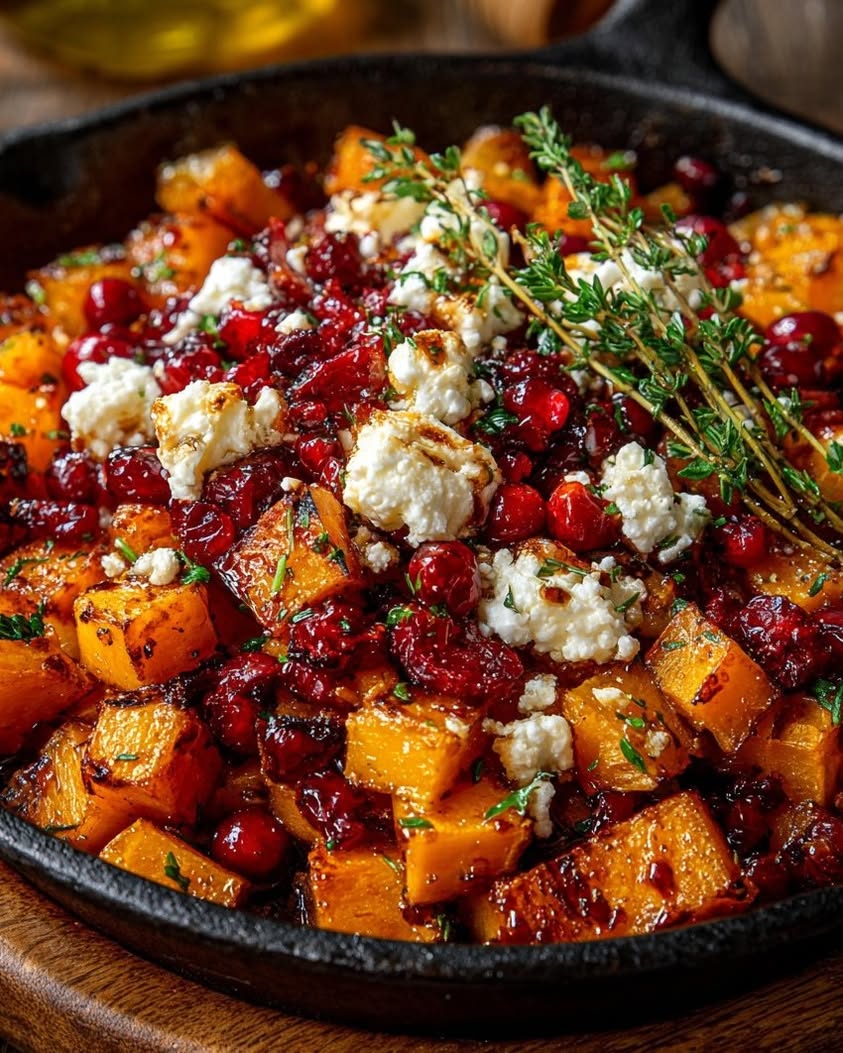
Caramelized Butternut Squash with Goat Cheese, Almonds, and Cranberry Drizzle: The Ultimate Sweet and Savory Fall Side Dish
This caramelized butternut squash recipe perfectly captures the essence of autumn in a single, stunning dish. Imagine tender, sweet squash cubes with beautifully browned edges, paired with creamy, tangy goat cheese, crunchy toasted almonds, and a vibrant sweet-tart cranberry drizzle. Consequently, every bite delivers a symphony of textures and flavors that will make this your new go-to fall side dish. Furthermore, it’s surprisingly simple to prepare, making it ideal for both weeknight dinners and festive holiday gatherings.
The magic of this caramelized butternut squash lies in its balance. The natural sweetness of the squash intensifies during roasting, creating a perfect foundation for the other components. Meanwhile, the tangy goat cheese cuts through the richness, and the almonds provide a satisfying crunch. Finally, the cranberry drizzle adds a pop of color and a burst of fruity acidity that ties everything together. This dish is not just a side; it’s a conversation starter and a guaranteed crowd-pleaser.
Quick Recipe Highlights
- Flavor Profile: This dish masterfully combines sweet, savory, tangy, and nutty notes. The caramelized butternut squash offers a deep, roasted sweetness that contrasts beautifully with the sharp, creamy goat cheese. Additionally, the cranberry drizzle introduces a bright, tart element that elevates the entire flavor experience.
- Texture: You will experience a delightful contrast of soft and creamy, crunchy and chewy. The roasted squash becomes tender and almost creamy inside, while the toasted almonds provide a firm, satisfying crunch. Meanwhile, the crumbled goat cheese adds a soft, luxurious mouthfeel.
- Aroma: As this dish roasts, your kitchen will fill with the warm, comforting scent of caramelizing squash and maple syrup. The final addition of fresh thyme and the tangy cranberry drizzle creates an aromatic profile that is unmistakably festive and inviting.
- Visual Appeal: This caramelized butternut squash is a feast for the eyes with its vibrant orange hues, white cheese crumbles, deep red drizzle, and speckles of green herbs. It presents beautifully on any table, adding a touch of rustic elegance to your meal.
- Skill Level Needed: This is an accessible recipe for cooks of all levels, from beginners to experts. The techniques involved are straightforward, primarily chopping and roasting. Therefore, you do not need any specialized culinary skills to achieve impressive, restaurant-quality results.
- Special Equipment: You only need a good baking sheet, a sharp knife for peeling and cubing the squash, and a small saucepan for the drizzle. A sturdy baking sheet ensures even caramelization, which is key to the recipe’s success.
Recipe Overview
- Difficulty Level: We rate this caramelized butternut squash recipe as easy because it involves fundamental kitchen skills. The most challenging part is safely peeling and cubing the squash, a task that becomes simple with a sharp peeler and a stable cutting board. Otherwise, the process is largely hands-off roasting and simple assembly.
- Category: This versatile dish fits into multiple categories, primarily as a standout side dish. It can also serve as a light vegetarian main course when paired with a simple green salad or some quinoa. Its elegance makes it suitable for everything from a casual family dinner to a formal holiday feast.
- Cuisine: While butternut squash is a staple in North American fall cooking, the combination of ingredients draws inspiration from modern American and rustic Mediterranean cuisines. The use of goat cheese and herbs like thyme gives it a European flair, while the cranberry drizzle is a nod to classic Thanksgiving traditions.
- Cost: This recipe is quite cost-effective, especially during the autumn months when butternut squash is in season and plentiful. The main expense is often the goat cheese and almonds, but a little goes a long way. Overall, you can create this impressive dish without straining your grocery budget.
- Season: This is the quintessential fall and winter recipe. Butternut squash is at its peak sweetness during these cooler months, and the warm, hearty flavors are perfectly suited for holiday tables from Halloween straight through to New Year’s. It brings warmth and color to the colder seasons.
- Occasion: This caramelized butternut squash is perfect for Thanksgiving, Christmas, and potluck dinners where you want to bring something special. It also works wonderfully for a cozy Sunday supper or as an elegant side for a dinner party. Its flexibility is one of its greatest strengths.
Why You’ll Love This Caramelized Butternut Squash Recipe
You will adore the complex flavor journey in every single bite of this caramelized butternut squash. The initial taste is a deep, caramelized sweetness from the roasted squash, which is immediately followed by the sharp, tangy punch of the goat cheese. Subsequently, the crunchy almonds add a textural surprise, and the sweet-tart cranberry drizzle finishes the experience with a bright, fruity note. This harmonious blend of sweet and savory elements is incredibly satisfying and keeps your palate engaged from start to finish. It is a dish that feels both comforting and sophisticated at the same time.
The convenience of this recipe is another major reason to love it. After the initial prep work of cubing the squash, the oven does most of the heavy lifting. This hands-off cooking time allows you to focus on other parts of your meal or simply relax. Furthermore, the components can be prepared in advance, making final assembly a breeze right before serving. This makes it an ideal stress-free option for entertaining, as you can avoid last-minute kitchen chaos and actually enjoy time with your guests.
From a nutritional standpoint, this caramelized butternut squash is a powerhouse. Butternut squash is loaded with Vitamin A, Vitamin C, and fiber, supporting eye health and immune function. Almonds contribute healthy fats, protein, and Vitamin E, while cranberries are famous for their antioxidants. Goat cheese is often easier to digest than cow’s milk cheese for some people and provides a good source of protein and calcium. Therefore, you are serving a dish that is as nourishing as it is delicious.
This dish possesses incredible social and entertaining value. Its stunning visual appeal makes it a centerpiece on any buffet or dinner table, guaranteed to draw compliments. The familiar yet elevated flavors appeal to a wide range of tastes, pleasing both adventurous eaters and those with more traditional palates. It is a reliable conversation starter and often becomes the most-requested recipe after a gathering. Bringing this caramelized butternut squash to a potluck ensures you will go home with an empty dish and plenty of recipe requests.
Finally, this recipe is remarkably cost-effective and accessible. Butternut squash is an inexpensive vegetable, especially in the fall. The other ingredients—goat cheese, almonds, and cranberries—are used in modest amounts, so a little investment goes a long way in creating a dish that looks and tastes luxurious. You can easily find all the ingredients at any standard grocery store, with no need for special trips to high-end markets. This accessibility means you can enjoy gourmet-quality food any day of the week.
Historical Background and Cultural Significance
The story of butternut squash begins in the Americas, where it was cultivated by Indigenous peoples for thousands of years before European colonization. Originally, these hardy squashes were valued for their ability to be stored through long winters, providing a vital source of nutrition. The specific butternut variety is a more modern development, a cross between the gooseneck squash and the Hubbard squash that was developed in the 1940s. Its sweet, nutty flavor and smooth texture quickly made it a favorite, leading to its prominent role in modern fall and holiday cooking, especially in the United States and Canada.
Culturally, squash holds a significant place in North American food traditions, particularly around the Thanksgiving holiday. It symbolizes the harvest and the abundance of the autumn season. The practice of sweetening squash with maple syrup or sugar has roots in both Indigenous and colonial cooking methods. Incorporating it into a roasted side dish with warming spices is a tradition that has evolved over centuries, reflecting a blend of cultural influences that define American cuisine today. This caramelized butternut squash recipe is a direct descendant of those long-standing culinary practices.
The evolution of this specific recipe showcases modern culinary trends toward balancing flavors and textures. While roasted squash is ancient, the addition of tangy goat cheese is a more recent innovation, reflecting the late 20th-century rise in popularity of artisanal cheeses. The cranberry drizzle is a clear nod to the classic Thanksgiving relish, but its presentation as a sleek sauce is a contemporary twist. The inclusion of toasted almonds for crunch speaks to our current appreciation for textural contrast in dishes. This recipe is a beautiful example of how traditional ingredients are constantly being reimagined.
Regional variations of roasted squash dishes are found worldwide. In Italy, squash might be roasted with rosemary and Parmesan. In the Middle East, it could be paired with warming spices like cumin and coriander and served with yogurt. This particular caramelized butternut squash recipe with goat cheese and cranberry has a distinctly North American, holiday-centric identity. However, its core concept—roasting a sweet vegetable and pairing it with a creamy and a tart element—is a universal culinary principle that resonates across many different food cultures.
Ingredient Deep Dive
Butternut squash is the star of this show. Native to the Americas, it has been a dietary staple for millennia. This vibrant orange vegetable is incredibly rich in beta-carotene, which your body converts to Vitamin A, crucial for vision and immune health. It also provides a good amount of Vitamin C, potassium, and fiber. When selecting a squash, look for one that feels heavy for its size with a firm, matte skin and no soft spots. Store it in a cool, dark place; once cut, wrap it tightly and refrigerate for up to five days. For a substitution, sweet potato or acorn squash would work well, though the cooking time may vary slightly.
Goat cheese, or chèvre, brings a essential tangy creaminess to the dish. With a history dating back thousands of years in the Mediterranean, it’s known for its distinct, sharp flavor. Nutritionally, it is a good source of protein, calcium, and healthy fats. Many people who are sensitive to cow’s milk find goat cheese easier to digest due to its different protein structure. Choose a fresh, soft log of plain goat cheese for easy crumbling. If you need a substitute, feta cheese will provide a similar salty tang, while a soft vegan cheese can work for a dairy-free version. Always crumble it just before serving to maintain its texture.
The cranberry drizzle introduces a vital sweet and tart element. Cranberries are one of only three fruits native to North America and have long been used by Native Americans for both food and medicine. They are famously packed with antioxidants and Vitamin C, supporting urinary tract health. For this recipe, you can use whole fresh cranberries, frozen cranberries, or even a high-quality cranberry sauce that you thin out with a bit of orange juice or water. If cranberries are unavailable, a reduction of pomegranate juice or a cherry jam thinned with vinegar can create a similar sweet-tart sauce effect.
Toasted almonds provide the crucial crunchy texture. Almonds have been cultivated since ancient times and are mentioned in historical texts from various cultures. They are a nutritional powerhouse, offering healthy monounsaturated fats, Vitamin E, magnesium, and plant-based protein. Toasting them is non-negotiable, as it unlocks their full, nutty flavor and makes them extra crispy. You can substitute them with other nuts like pecans, walnuts, or pine nuts based on your preference or what you have on hand. Store almonds in an airtight container in a cool, dark place to prevent their natural oils from going rancid.
Common Mistakes to Avoid
- Uneven Cubes: Cutting the squash into uneven pieces is a common error. Consequently, smaller pieces will burn before larger pieces cook through. Always aim for a consistent 1-inch dice to ensure everything caramelizes evenly in the same amount of time.
- Crowding the Pan: Do not overcrowd your baking sheet. If the squash cubes are piled on top of each other, they will steam instead of roast. For perfect caramelization, they need space for the oven’s hot air to circulate around each piece.
- Skipping the Oil Toss: Failing to coat the squash evenly in oil and maple syrup will lead to dry, bland spots. Take the time to toss everything thoroughly so each cube is glistening; this is the key to that beautiful, sticky caramelization.
- Using Raw Almonds: Adding raw, untoasted almonds will result in a soft, bland crunch. Toasting them separately enhances their flavor and texture dramatically, making them a standout component rather than an afterthought.
- Adding Cheese Too Early: If you add the goat cheese before serving, it will melt into a messy, unappealing puddle. The cheese should always be a fresh, cool garnish added at the very end to provide a contrast to the warm squash.
- Overcooking the Cranberry Drizzle: Boiling the cranberry drizzle for too long can make it overly thick and jam-like. You want a pourable sauce, so cook it just until the cranberries burst and the liquid slightly thickens.
- Neglecting Seasoning: Butternut squash needs a good amount of salt to balance its natural sweetness. Do not be shy with the salt and pepper; taste the squash straight out of the oven and adjust the seasoning if necessary.
- Using a Dull Knife: Trying to peel and cube a butternut squash with a dull knife is dangerous and difficult. Always use a sharp chef’s knife for stability and control, making the prep work much safer and faster.
Essential Techniques
Caramelization is the most important technique in this recipe. This is a chemical process where the natural sugars in the butternut squash brown and develop complex, deep flavors when exposed to high heat. To achieve it, you must ensure your oven is fully preheated and that the squash cubes are in a single layer with space between them. Crowding will cause steaming, which prevents caramelization. The visual cue for success is golden brown, slightly crispy edges on the squash cubes. The maple syrup aids in this process, but the squash’s own sugars are the primary driver of that rich, sweet flavor.
Properly toasting the almonds is a simple but transformative step. Toasting nuts deepens their flavor, making them more aromatic and complex, and gives them a satisfying, crisp texture. Spread the almonds in a single layer on a dry baking sheet and toast them in the oven for 5-7 minutes, watching carefully as they can burn quickly. The key visual cue is a light golden-brown color and a fragrant, nutty smell. Avoid store-bought pre-toasted almonds if possible, as toasting them yourself just before serving guarantees the best flavor and crunch for your caramelized butternut squash.
Creating the cranberry drizzle requires a gentle cooking technique. The goal is to coax the cranberries to burst and release their pectin, which will naturally thicken the sauce, without reducing it into a stiff jam. Combine the cranberries with your liquid (like orange juice or water) and sweetener over medium heat. Cook just until you hear the cranberries pop and the liquid has thickened slightly to a syrupy consistency. This should only take 5-10 minutes. Overcooking will make the sauce too thick and overly tart, so watch it carefully.
Pro Tips for Perfect Caramelized Butternut Squash
For the easiest prep, microwave the whole squash for 2-3 minutes before cutting. This softens the skin slightly, making it much safer and easier to peel and cube with your knife. Furthermore, use a sharp vegetable peeler for the most efficient removal of the tough outer skin.
Invest in a high-quality, heavy-duty baking sheet. A thin, flimsy pan can warp in the high heat of the oven and lead to hot spots, causing uneven cooking and caramelization. A good, sturdy pan ensures consistent heat distribution for perfectly roasted squash every time.
Do not toss the squash directly on the baking sheet. Instead, mix the squash cubes with oil, maple syrup, salt, and pepper in a large bowl. This method guarantees a much more even coating than trying to drizzle and toss on the pan, leading to superior flavor and browning.
Let the roasted squash rest for a minute on the pan after taking it out of the oven. This allows the caramelized edges to set slightly, preventing them from sticking to the pan and tearing when you transfer the squash to a serving platter.
Prepare the cranberry drizzle and toast the almonds while the squash is in the oven. This efficient use of time means all components will be ready for assembly at the same time, and you can serve the dish warm for the best possible flavor and texture experience.
If you are making components ahead, bring the cranberry drizzle to room temperature and re-crisp the almonds in the oven for a few minutes before serving. Assemble the dish just before it hits the table to keep the goat cheese fresh and the almonds crunchy.
Variations and Adaptations
For regional variations, you can take this caramelized butternut squash in many different directions. A Mediterranean version could feature crumbled feta, Kalamata olives, and a drizzle of olive oil with oregano. For a Middle Eastern twist, try swapping the goat cheese for a dollop of garlicky yogurt, and add spices like cumin, coriander, and a sprinkle of za’atar. A Southern-inspired adaptation might include pecans instead of almonds and a drizzle sweetened with a touch of bourbon.
Seasonal adaptations are simple and effective. In the winter, add roasted chestnuts or pomegranate arils for a festive touch. For a spring version, use asparagus tips and a lemon-herb vinaigrette instead of the cranberry drizzle. In the summer, you can grill the squash cubes for a smoky flavor and serve them at room temperature with fresh basil and a balsamic glaze.
Dietary modifications are straightforward. For a vegan caramelized butternut squash, omit the goat cheese or use a vegan feta alternative. Ensure your maple syrup is 100% pure to keep it vegan. For a nut-free version, substitute toasted pumpkin seeds (pepitas) for the almonds. To make it Paleo, simply omit the goat cheese and confirm that all other ingredients comply with Paleo guidelines.
Experiment with flavor variations by changing the herbs and spices. Rosemary or sage can be a robust substitute for thyme. For a warm, spicy note, add a pinch of cayenne pepper or smoked paprika to the oil before tossing the squash. You could also incorporate a tablespoon of miso paste into the oil mixture for an umami-rich, savory-sweet flavor profile that is incredibly addictive.
Serving and Presentation Guide
Plating this caramelized butternut squash beautifully elevates it from a simple side to a stunning centerpiece. For a family-style presentation, use a large, shallow platter or a rustic wooden board. Spread the warm roasted squash as the base layer. Then, artfully crumble the goat cheese over the top, letting some pieces be large and others small for visual interest. Next, scatter the toasted almonds evenly. Finally, use a spoon to drizzle the cranberry sauce in zig-zags or swirls across the entire dish, ensuring every serving will get a bit of the vibrant sauce.
Garnishing is the final touch that adds freshness and color. A final sprinkle of fresh thyme leaves or chopped flat-leaf parsley right before serving introduces a pop of green that makes the other colors stand out even more. If you have extra cranberries, a few whole raw ones scattered on top look beautiful and hint at the flavor within the drizzle. For a special occasion, a few edible flower petals can add a touch of elegance.
For traditional accompaniments, this caramelized butternut squash pairs classically with roasted turkey, honey-glazed ham, or a standing rib roast. It also complements other fall sides like creamy mashed potatoes, green bean casserole, and savory stuffing. For a vegetarian feast, serve it alongside a wild rice pilaf, roasted Brussels sprouts, and a lentil loaf. It is a versatile side that fits seamlessly into a wide array of menus.
Wine and Beverage Pairing
Choosing the right wine can enhance the sweet and savory notes of this dish beautifully. A crisp, unoaked Chardonnay is an excellent choice because its bright acidity can cut through the richness of the squash and goat cheese. Alternatively, a Pinot Noir with its light body and red fruit notes complements the earthiness of the squash and the tartness of the cranberry without overpowering the dish. For a festive option, a dry Riesling or a sparkling rosé provides enough acidity and fruitiness to balance all the components harmoniously.
For non-alcoholic alternatives, consider options with complexity to match the food. A sparkling apple cider offers both sweetness and effervescence that cleanses the palate. Ginger beer, with its spicy kick, pairs wonderfully with the warm, caramelized flavors. Alternatively, a tart cranberry spritzer made with club soda and a splash of cranberry juice echoes the flavors in the dish itself. Iced herbal tea, such as peppermint or chamomile, can also provide a soothing, complementary beverage.
Storage and Shelf Life
Store any leftover caramelized butternut squash in an airtight container in the refrigerator for up to 3-4 days. It is best to store the components separately if possible. Keep the roasted squash in one container, the cranberry drizzle in another, and the almonds and crumbled goat cheese in their own containers. This prevents the almonds from getting soggy and the goat cheese from melting into the squash. The cranberry drizzle will thicken when chilled; you can gently reheat it with a teaspoon of water to return it to a drizzling consistency.
Reheating instructions are important for maintaining quality. To reheat the squash, spread it on a baking sheet and warm it in a 350°F oven for about 10 minutes. This method will help re-crisp the edges better than using a microwave, which can make the squash mushy. If you must use a microwave, do so in short bursts and be aware that the texture will soften. Always add the fresh goat cheese, almonds, and drizzle after reheating the squash, not before.
Make Ahead Strategies
This caramelized butternut squash is an excellent candidate for advanced preparation, making holiday cooking much less stressful. You can peel and cube the squash up to two days in advance. Store the raw cubes in an airtight container or a zip-top bag in the refrigerator. The cranberry drizzle can be made up to 5 days ahead and stored in the fridge. The almonds can be toasted 2-3 days in advance and kept at room temperature in an airtight container.
On the day of serving, your workflow becomes incredibly efficient. Simply toss the pre-cut squash with oil and maple syrup, then roast it. While it’s in the oven, you can take the pre-made drizzle out of the fridge to come to room temperature and give the almonds a quick refresh in the oven for 2-3 minutes to restore their crunch. This strategy allows you to have a spectacular, fresh-tasting dish with minimal active cooking time on a busy day.
Scaling Instructions
Scaling this recipe up or down is straightforward. For a smaller portion, simply halve all the ingredients. Use a smaller baking sheet to ensure the squash still has enough space to caramelize properly rather than steam. The cooking time may be slightly less, so start checking for doneness around the 25-minute mark. For a larger crowd, you can double or even triple the recipe. The key is to use multiple baking sheets and rotate them in the oven halfway through the cooking time to ensure even browning. You may need to add a few extra minutes to the total roasting time.
Nutritional Deep Dive
This caramelized butternut squash dish is a nutrient-dense addition to your meal. Butternut squash is the primary source of complex carbohydrates and dietary fiber, which aids in digestion and provides sustained energy. Its vibrant orange color signals a high beta-carotene content, a powerful antioxidant that supports eye and skin health. The goat cheese contributes protein and fat, making the dish more satiating and helping to balance blood sugar levels. Almonds add healthy monounsaturated fats, more protein, and Vitamin E, a fat-soluble antioxidant. The cranberries bring a significant dose of Vitamin C and other phytonutrients.
From a dietary consideration standpoint, this recipe is naturally gluten-free. It can be adapted to be vegan and dairy-free with simple substitutions. While it contains natural sugars from the squash and maple syrup, it is not excessively high in added sugars, especially if you moderate the amount of maple syrup used. The combination of fiber, protein, and healthy fats creates a well-rounded side dish that is both satisfying and nourishing, contributing valuable vitamins and minerals to your overall diet.
Dietary Adaptations
For a vegan version of this caramelized butternut squash, the goat cheese is the only ingredient that needs to be replaced. You can use a commercial vegan feta or goat cheese, or make a creamy topping from crumbled firm tofu marinated in lemon juice and nutritional yeast. Another option is to use a dollop of thick, unsweetened coconut yogurt for creaminess. Ensure your maple syrup is 100% pure and not processed with animal-derived filters. The rest of the recipe is naturally vegan.
To make this dish dairy-free, follow the same instructions as for the vegan adaptation, focusing on replacing the goat cheese. For a Paleo adaptation, omit the goat cheese entirely, as dairy is not included in the Paleo diet. Confirm that your maple syrup is 100% pure, as some strict Paleo followers limit sweeteners, but it is generally accepted in moderation. The other core ingredients—squash, almonds, cranberries, and olive oil—are all Paleo-friendly.
Troubleshooting Guide
If your squash is not caramelizing and instead is steaming, the issue is likely overcrowding on the pan. The squash cubes release moisture as they cook, and if they are too close together, that moisture gets trapped and steams the squash. The solution is to always use a large enough baking sheet and spread the squash in a single layer with space between the pieces. If necessary, roast the squash in two batches or on two separate pans to achieve the proper browning and crispy edges that define this dish.
If the finished dish tastes bland, the problem is almost certainly under-seasoning. Butternut squash can absorb a surprising amount of salt. The solution is to season aggressively at every stage. Salt the squash well before roasting, and do not forget to season the cranberry drizzle with a tiny pinch of salt to balance its sweetness and acidity. Always taste the components as you go and adjust the seasoning before final assembly. A final flake of sea salt on top before serving can also brighten all the flavors.
Recipe Success Stories
Home cooks consistently report that this caramelized butternut squash becomes an instant favorite and a recurring star on their holiday tables. One reader shared that she brought it to a Friendsgiving potluck and it was the first dish to disappear, with multiple guests asking for the recipe. Another home cook mentioned that her children, who typically avoid vegetables, asked for seconds because they loved the sweet, caramelized flavor and the fun crunch of the almonds. These stories highlight the dish’s universal appeal and its ability to impress both family and guests alike.
Many readers have also found creative ways to adapt the recipe to their needs. A vegan reader successfully used a cashew-based cheese and reported it was a hit with her entire mixed-diet family. Another cook, short on time, used pre-cut squash from the grocery store and said it still turned out wonderfully, proving the recipe is both flexible and forgiving. One photographer shared that the vibrant colors of the dish made it incredibly easy to photograph, resulting in stunning photos for their blog and social media.
Frequently Asked Questions
Can I use pre-cut butternut squash from the store? Yes, pre-cut squash works perfectly well and is a great time-saver. The pieces are usually uniform, which helps with even cooking. Just be sure to check the roasting time, as pre-cut pieces can sometimes be smaller and may cook a few minutes faster than hand-cut ones.
Can I make this recipe ahead of time? Absolutely. You can prep all the components ahead. Roast the squash and let it cool, then store it in the fridge. Make the cranberry drizzle and store it separately. Toast the almonds and keep them at room temperature. Reheat the squash in the oven before assembling with the other cold ingredients.
What can I use instead of goat cheese? If you are not a fan of goat cheese, feta cheese is a fantastic substitute that provides a similar salty, tangy flavor. For a milder option, fresh mozzarella pearls or even ricotta salata would work. For a vegan version, use a plant-based feta alternative.
My cranberry drizzle is too thick. What should I do? If your drizzle has thickened too much, especially after refrigeration, simply thin it out. Add a teaspoon of warm water, orange juice, or maple syrup at a time and whisk until it reaches your desired, pourable consistency.
Can I freeze the caramelized butternut squash? You can freeze the roasted squash, but be aware that the texture will become softer upon thawing. It is best used in soups or purees after freezing. The cranberry drizzle freezes well. I do not recommend freezing the assembled dish with the goat cheese and almonds.
How do I know when the squash is perfectly roasted? The squash is done when it is tender enough to be easily pierced with a fork and the edges have turned a deep golden brown and are slightly crispy. The maple syrup will have caramelized and created a sticky glaze on the pieces.
Is there a way to make this less sweet? To reduce the sweetness, you can cut the amount of maple syrup in half or omit it entirely, relying only on the squash’s natural sugars to caramelize. You can also increase the amount of black pepper or add a pinch of chili flakes for a savory-spicy balance.
Can I add other vegetables to this dish? Certainly. Root vegetables like carrots, parsnips, or red onion wedges roast beautifully alongside the squash. Just ensure they are cut to a similar size for even cooking. Brussels sprouts halves would also be a delicious addition.
Additional Resources
If you loved this caramelized butternut squash, you might enjoy exploring other seasonal vegetable dishes. Consider a recipe for roasted Brussels sprouts with a balsamic glaze and bacon, or a creamy parmesan risotto with roasted mushrooms. For another festive side, a pear and arugula salad with candied pecans and blue cheese offers a similar balance of sweet, savory, and crunchy elements. Mastering the technique of roasting vegetables will open up a world of easy, flavorful side dishes for any occasion.
For those looking to deepen their culinary skills, researching knife skills for safely prepping hard squashes is highly recommended. Understanding the science of caramelization can also help you become a more intuitive cook. Investing in a few key pieces of kitchen equipment, like a sharp chef’s knife, a sturdy half-sheet pan, and a set of glass storage containers for make-ahead components, will make preparing recipes like this one a joy rather than a chore.
PrintCaramelized Butternut Squash with Goat Cheese, Almonds, and Cranberry Drizzle
Description
A sweet and savory side dish featuring tender roasted butternut squash topped with creamy goat cheese, crunchy almonds, and a tangy cranberry drizzle.
Ingredients
For the Crust:
- 1 medium butternut squash, peeled and cubed
- 2 tablespoons olive oil
- 1 tablespoon maple syrup
- 1 teaspoon smoked paprika
- Salt and black pepper to taste
- 1/4 cup crumbled goat cheese
- 2 tablespoons sliced almonds, toasted
- 1/4 cup dried cranberries
- 2 tablespoons balsamic vinegar
- 1 tablespoon honey
Instructions
1. Prepare the Crust:
- Preheat oven to 400°F (200°C). Toss cubed butternut squash with olive oil, maple syrup, smoked paprika, salt, and pepper.
- Spread squash in a single layer on a baking sheet. Roast for 25-30 minutes, flipping halfway, until caramelized and tender.
- While squash roasts, prepare the cranberry drizzle by simmering dried cranberries, balsamic vinegar, and honey in a small saucepan until cranberries soften and mixture thickens slightly.
- Transfer roasted squash to a serving dish. Top with crumbled goat cheese, toasted almonds, and drizzle with the cranberry sauce.
Notes
You can customize the seasonings to taste.

I’m Shaykee—born in Morocco, seasoned across continents. From airplane galleys to home kitchens, I share the flavors and stories that shaped my journey.