
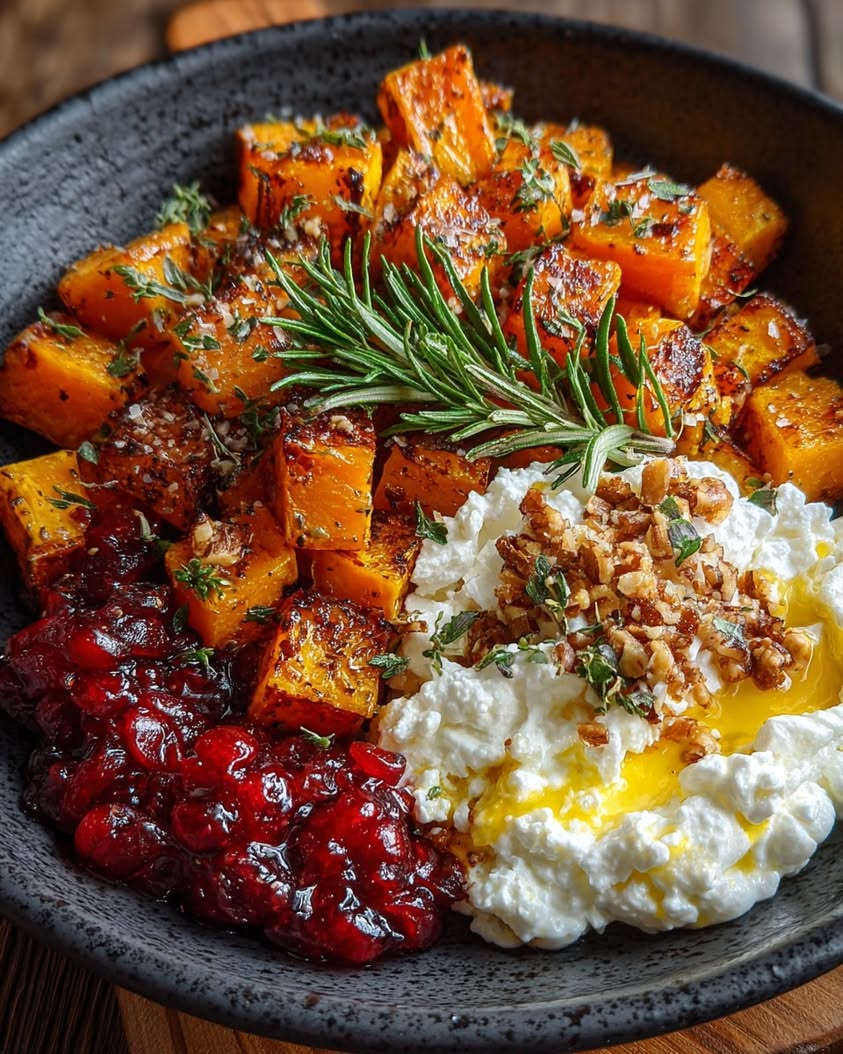
Caramelized Butternut Squash with Ricotta and Cranberry-Honey Drizzle: A Festive Masterpiece
This caramelized butternut squash recipe transforms a humble vegetable into an unforgettable culinary experience. Imagine tender, golden-brown squash cubes with deeply caramelized edges, all resting on a cloud of creamy ricotta. The final flourish is a vibrant cranberry-honey drizzle that cuts through the richness with its sweet-tart brilliance. This dish is not just a side; it is a celebration of autumn’s finest flavors, artfully arranged on a plate.
Furthermore, this recipe offers a stunning centerpiece for your holiday table without demanding hours in the kitchen. The process of creating this caramelized butternut squash is surprisingly straightforward, focusing on simple techniques that yield maximum flavor. Each component complements the others perfectly, creating a harmonious balance that will impress your guests. Consequently, you get a dish that looks and tastes gourmet, yet is entirely approachable for a home cook.
Ultimately, the combination of sweet, savory, and tangy elements makes this a truly special preparation. The creamy ricotta provides a luxurious base that mellows the intensity of the squash. Meanwhile, the cranberry-honey drizzle adds a pop of color and a burst of flavor that ties everything together. This caramelized butternut squash is a guaranteed crowd-pleaser, perfect for Thanksgiving, Christmas, or any cozy autumn dinner party.
Quick Recipe Highlights
- Flavor Profile: This dish masterfully balances sweet, savory, and tangy notes. The natural sweetness of the caramelized butternut squash is enhanced by the rich, creamy ricotta. Finally, the cranberry-honey drizzle introduces a bright, acidic counterpoint that elevates the entire experience.
- Texture: You will enjoy a delightful contrast of textures in every bite. The exterior of the squash becomes beautifully crisp and caramelized, while the interior remains tender and soft. Additionally, the creamy ricotta and the slightly sticky drizzle create a luxurious mouthfeel.
- Aroma: As it roasts, the kitchen fills with the warm, sweet scent of caramelizing squash and maple. The cranberry drizzle simmers with a festive, tart fragrance. These aromas combine to create an incredibly inviting and cozy atmosphere.
- Visual Appeal: This dish is a feast for the eyes with its stunning color palette. The orange-gold squash, white ricotta, and ruby-red drizzle create a beautiful presentation. Therefore, it looks as spectacular as it tastes, making it perfect for holiday meals.
- Skill Level Needed: This recipe is designed to be accessible for cooks of all levels. The techniques involved, like cubing squash and making a simple reduction, are fundamental. Consequently, even a beginner can achieve impressive, restaurant-quality results with ease.
- Special Equipment: You only need a few basic kitchen tools to prepare this recipe. A sturdy baking sheet, a sharp chef’s knife, and a small saucepan are the main essentials. No fancy or specialized equipment is required for this delicious side dish.
Recipe Overview
- Difficulty Level: We classify this caramelized butternut squash recipe as easy because it uses straightforward roasting and simmering techniques. The most challenging part is safely cubing the squash, which is a basic knife skill. Otherwise, the recipe involves simple steps like tossing ingredients and monitoring the oven. Anyone with basic kitchen confidence can successfully create this stunning dish.
- Category: This versatile dish fits into multiple meal categories beautifully. It shines as an elegant side dish for holiday feasts like Thanksgiving and Christmas. Moreover, it can serve as a light vegetarian main course when paired with a simple green salad. It is also perfect for potlucks and special weekend dinners.
- Cuisine: This recipe draws inspiration from modern American farm-to-table cuisine. It utilizes classic autumn ingredients popular in North American cooking. The use of ricotta adds a subtle Italian influence, while the cranberry is a quintessential New England fruit. The overall combination, however, feels fresh, contemporary, and uniquely its own.
- Cost: This is a reasonably affordable dish to prepare, especially when butternut squash is in season. The squash and fresh cranberries are typically low-cost produce items. Ricotta cheese is an inexpensive dairy product, and the other ingredients are pantry staples. Overall, you can create an impressive gourmet side dish without a gourmet price tag.
- Season: This recipe is perfectly suited for the fall and early winter seasons. Butternut squash and cranberries are both at their peak during this time, offering the best flavor and texture. The warm, comforting nature of the dish aligns perfectly with cooler weather. It is the ultimate autumn comfort food with a festive twist.
- Occasion: This caramelized butternut squash is ideal for formal and semi-formal occasions. It is a natural star on the Thanksgiving or Christmas dinner table. Additionally, it is wonderful for a festive Friendsgiving, a cozy date night at home, or an elegant dinner party. It elevates any meal into a special event.
Why You’ll Love This Caramelized Butternut Squash Recipe
First and foremost, the taste and texture appeal of this dish is absolutely phenomenal. The deep, sweet flavor of the caramelized butternut squash is incredibly satisfying. Furthermore, the creamy, mild ricotta provides a perfect canvas that lets the squash shine. The tangy cranberry-honey drizzle cuts through the richness, ensuring each bite is complex and exciting. You will love the symphony of flavors and the contrast between the crispy squash edges and the soft, creamy cheese.
Another significant benefit is the sheer convenience and straightforward preparation. This caramelized butternut squash recipe requires minimal hands-on time after the initial chopping. You can easily prepare the cranberry drizzle while the squash roasts in the oven. Consequently, you are free to attend to other dishes or guests. The entire recipe comes together in about an hour, making it a practical choice for a busy holiday meal schedule.
From a health perspective, this dish offers substantial nutritional advantages. Butternut squash is packed with vitamins A and C, fiber, and antioxidants. Ricotta cheese provides a good source of protein and calcium. Using honey as a natural sweetener is a better alternative to refined sugars. Therefore, you can feel good about serving this dish, knowing it is as nourishing as it is delicious.
This caramelized butternut squash also boasts incredible social and entertaining value. Its stunning visual presentation is guaranteed to draw compliments from your guests. It looks like it came from a professional kitchen, yet it is deceptively simple to make. Serving a dish this beautiful shows care and effort, making your guests feel special. It is a conversation starter and a surefire way to impress at any gathering.
Finally, the cost-effectiveness and accessibility of the ingredients make this a fantastic recipe. Butternut squash and cranberries are affordable, especially in the autumn months. Ricotta is a budget-friendly cheese, and the other components are common pantry items. You do not need to hunt for exotic or expensive ingredients to create this gourmet-level side dish. It is an accessible luxury that delivers maximum flavor and presentation without straining your wallet.
Historical Background and Cultural Significance
The story of butternut squash begins in the Americas, where it was cultivated by indigenous peoples for thousands of years. It is a type of winter squash, developed from the wild squash that grew naturally across the continent. Early European settlers adopted squash into their diets, and it became a staple food. The specific butternut variety we know today was developed in the 1940s in Massachusetts. Its sweet, nutty flavor and smooth texture made it an instant favorite, leading to its widespread popularity.
Culturally, squash holds a place of importance in many North American traditions, particularly during the harvest season. It symbolizes abundance and the bounty of the earth, making it a natural fit for Thanksgiving celebrations. The combination of squash and cranberries in this recipe is a direct nod to New England’s culinary heritage. Both are native fruits of the region that were likely shared at early harvest feasts. This dish, therefore, carries a deep connection to American history and the spirit of gratitude.
The evolution of this specific recipe reflects modern culinary trends towards vegetable-forward, elegantly composed dishes. Roasting vegetables to achieve caramelization is a technique that highlights their natural sugars. Combining them with cheese and a fruit-based sauce is a classic flavor pairing that has been refined over time. This caramelized butternut squash recipe is a contemporary take on these timeless ideas. It represents a shift away from heavy, casserole-style preparations towards lighter, more visually appealing plates.
Regional variations of roasted squash dishes exist all over the world. In Italy, roasted squash might be paired with ricotta and sage in a pasta or risotto. In the American South, it might be candied with brown sugar and pecans. This particular recipe with its cranberry drizzle is distinctly influenced by the flavors of the Northeastern United States. However, its simplicity and focus on quality ingredients give it a universal appeal that transcends any single region.
Ingredient Deep Dive
Let us start with the star of the show: butternut squash. This winter squash is a nutritional powerhouse, loaded with beta-carotene, which your body converts to vitamin A. It is also a great source of vitamin C, potassium, and fiber. When selecting a squash, look for one that feels heavy for its size and has a firm, matte skin without soft spots. Store it in a cool, dark place; it can last for months. If butternut is unavailable, you can substitute acorn squash, sweet potatoes, or even carrots for a similar sweet, roasted flavor.
Next, we have the whole milk ricotta cheese. Ricotta is an Italian whey cheese known for its light, slightly grainy texture and mild, milky flavor. It provides a good amount of protein and calcium, making the dish more satiating. For the best results, seek out a high-quality, fresh ricotta from the dairy section. Avoid the shelf-stable varieties, as they can be grainy. If you need a substitute, fresh goat cheese, mascarpone, or even a thick, Greek yogurt would work, though the flavor profile will shift.
The cranberry-honey drizzle brings the necessary acidity and brightness. Fresh cranberries are packed with antioxidants and vitamin C, and their natural tartness is a perfect counterbalance to the sweet squash. Honey, a natural sweetener, has antimicrobial properties and adds a floral complexity you cannot get from sugar. When buying cranberries, choose plump, firm, bright red berries. You can freeze fresh cranberries for up to a year. For a vegan version, maple syrup can replace honey, and dried cranberries can be rehydrated and used if fresh are out of season.
The supporting cast of olive oil, maple syrup, and salt are crucial for building layers of flavor. A good quality extra virgin olive oil helps the squash caramelize and adds a fruity note. Pure maple syrup enhances the natural sweetness of the squash and aids in the browning process. Kosher salt is essential for seasoning every component and making the flavors pop. Do not skip the fresh thyme; its earthy, slightly minty flavor is a classic pairing with winter squash and cuts through the richness beautifully.
Common Mistakes to Avoid
- Unevenly Cubed Squash: Cutting the squash into different sizes is a common error. Consequently, smaller pieces will burn before larger pieces cook through. Always aim for uniform 1-inch cubes for even roasting and perfect caramelization.
- Overcrowding the Pan: Spreading the squash out in a single layer is non-negotiable. If the pan is too crowded, the squash will steam instead of roast. This prevents the beautiful browning and crisp edges that define caramelized butternut squash.
- Underseasoning the Squash: Do not be shy with salt and pepper before roasting. Seasoning before cooking is fundamental for building flavor from the inside out. Tasting and adjusting seasoning after roasting is also a critical final step.
- Using Old, Soft Cranberries: The quality of your cranberries directly affects the drizzle. Mushy or discolored berries will result in a dull, less flavorful sauce. Always use firm, bright red cranberries for the best tart flavor and vibrant color.
- Overcooking the Cranberry Drizzle: Simmer the drizzle just until the cranberries pop and the sauce thickens slightly. Overcooking can make it too thick and jam-like, and it will continue to thicken as it cools. You want a pourable, glossy sauce.
- Skipping the Ricotta Drain: If your ricotta is watery, the final presentation can become soggy. Draining it in a fine-mesh strainer for 15-30 minutes beforehand ensures a thick, luxurious base that will not waterlog your beautiful roasted squash.
- Not Preheating the Oven: A properly preheated oven is essential for immediate caramelization. Putting the squash into a cold oven will cause it to cook unevenly and you will not achieve those desirable crispy, caramelized edges.
- Forgetting to Taste and Adjust: Always taste your dish before serving. The balance of sweet (squash/honey), creamy (ricotta), and tart (cranberry) is personal. You may find you want a pinch more salt on the squash or a extra drizzle of honey in the sauce.
Essential Techniques
The first essential technique is achieving perfect caramelization on the butternut squash. Caramelization is a chemical process where the natural sugars in the squash brown and develop complex, sweet flavors. To master this, you must ensure your squash cubes are dry, coated evenly in oil and maple syrup, and spread in a single layer on a hot baking sheet. A common pitfall is overcrowding, which leads to steaming. You will know it is working when you see deep golden-brown spots and smell a sweet, nutty aroma from the oven.
Another key technique is properly preparing and draining the ricotta. This step is crucial for the final texture and presentation. Ricotta can sometimes contain excess whey, which can make your dish watery. Draining it in a fine-mesh sieve for a short period allows this liquid to escape. The importance lies in creating a thick, creamy base that will hold the squash without collapsing. The visual cue for success is a ricotta that holds its shape when scooped, rather than spreading out like a liquid.
Creating the cranberry-honey drizzle involves the technique of making a simple fruit reduction. This process concentrates the flavors of the cranberries and honey by simmering away some of the water content. The key is to cook it gently until the cranberries just pop and the liquid thickens to a syrupy consistency. A common mistake is boiling it vigorously, which can break down the berries too much and make the sauce bitter. Success is a vibrant red, glossy sauce that coats the back of a spoon but is still easily pourable.
Pro Tips for Perfect Caramelized Butternut Squash
For the crispiest, most caramelized squash, preheat your baking sheet in the oven. Adding the squash to a hot pan gives it an immediate sear, promoting better browning from the very start. This simple trick prevents sticking and mimics the effect of a restaurant-quality oven.
Use a sharp, heavy chef’s knife to tackle the butternut squash. A dull knife is dangerous on the tough skin. Carefully slice a thin piece off the bottom and top to create stable flat surfaces, making the squash much safer and easier to peel and cube.
Do not discard the squash seeds. After scooping them out, rinse them thoroughly, toss them with a little oil and salt, and roast them on a separate pan while the squash cooks. They make a delicious, crunchy garnish for the finished dish or a tasty snack.
Let the roasted squash rest for a few minutes after taking it out of the oven. This allows the sugars to set slightly, making the pieces less likely to stick to the pan and easier to handle when assembling your final plates.
If your cranberry drizzle becomes too thick after cooling, you can easily thin it out. Simply whisk in a teaspoon of warm water at a time until it reaches your desired, pourable consistency. This ensures a beautiful, glossy finish every time.
For an extra flavor boost, consider infusing your olive oil. Before tossing it with the squash, gently warm the oil with the fresh thyme sprigs for a few minutes. This will extract the thyme’s essential oils, imparting a subtle, herby flavor throughout the dish.
Variations and Adaptations
You can explore numerous regional variations to suit different culinary traditions. For an Italian twist, replace the thyme with fresh sage and add a sprinkle of toasted pine nuts. A Mediterranean version could include crumbled feta instead of ricotta and a drizzle of pomegranate molasses. For a Southern-inspired dish, add a pinch of cayenne pepper to the squash and garnish with toasted pecans. These adaptations show how versatile the base recipe for caramelized butternut squash truly is.
Seasonal adaptations are also simple to implement. In the spring, you could use asparagus and a lemon-herb drizzle. During summer, zucchini and yellow squash with a basil oil would be delightful. The core technique of roasting and pairing with a creamy element and a bright sauce remains constant. This allows you to enjoy the concept of this dish all year round with the best produce each season has to offer.
For dietary modifications, this recipe is very accommodating. A vegan version can use coconut yogurt or a cashew cream instead of ricotta and maple syrup instead of honey. To make it nuttier, add a sprinkle of gluten-free breadcrumbs mixed with crushed almonds. For a lower-carb option, you can reduce the amount of maple syrup on the squash and use a sugar-free sweetener in the cranberry drizzle. The dish is naturally vegetarian and can be easily adjusted for many other dietary needs.
Feel free to experiment with different flavor and texture profiles. Smoked paprika or cumin on the squash can add a warm, smoky dimension. For a richer, sweeter note, a balsamic glaze can replace the cranberry drizzle. To modify the texture, you could puree the roasted squash instead of keeping it cubed. Alternatively, try baking the ricotta until warm and slightly firm for a different creamy experience. The possibilities for personalizing this caramelized butternut squash are nearly endless.
Serving and Presentation Guide
Plating techniques can elevate this dish from simple to spectacular. For individual servings, swoosh a generous amount of ricotta across the center of each plate. Artfully pile the warm caramelized butternut squash over the ricotta, allowing some to peek out the sides. Finally, drizzle the cranberry sauce over and around the squash, letting it pool with the ricotta. This method creates height and visual interest on the plate.
Garnishing is the final touch that adds texture and freshness. A few extra fresh thyme leaves scattered over the top provide color and a hint of herby aroma. The roasted squash seeds you prepared earlier add a wonderful crunchy element. A final drizzle of high-quality extra virgin olive oil or a flaky sea salt, like Maldon, just before serving enhances both flavor and presentation. These small details make a significant impact.
Consider the traditional accompaniments that pair well with these flavors. This caramelized butternut squash is a perfect side for a holiday roast turkey or a glazed ham. For a vegetarian feast, it pairs beautifully with a wild rice pilaf or lentil loaf. A simple arugula salad with a lemon vinaigrette on the side can cut through the richness and refresh the palate between bites.
For modern serving suggestions, think beyond the dinner plate. You can serve this as a crostini topping on slices of grilled baguette for an elegant appetizer. Alternatively, use it as a flavorful bed for pan-seared chicken breasts or scallops. The components can also be served in a large, shallow bowl for a more rustic, family-style presentation. Temperature is key; serve the squash and ricotta warm or at room temperature, but never cold straight from the refrigerator.
Wine and Beverage Pairing
Selecting the right wine can enhance the sweet and savory notes of this caramelized butternut squash. A lightly oaked Chardonnay is an excellent choice because its creamy texture mirrors the ricotta, and its notes of baked apple complement the squash. Alternatively, a dry Riesling works wonderfully; its acidity cuts through the richness, and its stone fruit flavors harmonize with the dish’s sweetness. For red wine lovers, a light-bodied Pinot Noir with its red fruit and earthy notes won’t overpower the delicate flavors of the squash and ricotta.
There are also fantastic non-alcoholic alternatives that pair beautifully. A sparkling apple cider provides effervescence and a touch of sweetness that echoes the maple-roasted squash. For a warmer option, a ginger-turmeric tea can be delightful, as the spice from the ginger plays well with the warm spices implied in the dish. Even a simple glass of chilled club soda with a twist of lemon can help cleanse the palate between bites of the rich, creamy dish.
If you prefer coffee or tea with your meal, opt for options that won’t clash with the flavors. A medium-roast coffee with low acidity and notes of caramel or nut would be a complementary choice. For tea, an Earl Grey with its bergamot citrus notes can provide a nice contrast to the sweetness, or a simple chamomile tea would be a soothing, neutral pairing. The goal is to choose beverages that either complement the dish’s flavor profile or provide a refreshing counterpoint.
Storage and Shelf Life
Proper storage is key to maintaining the quality of your leftover caramelized butternut squash. Store the components separately in airtight containers in the refrigerator. The roasted squash will last for 3-4 days, the ricotta for up to 5 days (check its expiration date), and the cranberry drizzle for about a week. Combining them before storage can make the squash soggy and the ricotta watery, so it is best to assemble individual portions as you need them.
When it comes to reheating, the method matters. To restore the crispy edges to the squash, reheat it in an air fryer or a conventional oven at 375°F for 5-10 minutes. Avoid using the microwave, as it will make the squash soft and steamy. The ricotta and cranberry drizzle are best served cold or at room temperature, so there is no need to reheat them. Simply let them sit out for 15-20 minutes before serving to take the chill off.
Freezing is possible but with some caveats. The roasted squash can be frozen for up to 3 months, though it may lose some of its texture and become softer upon thawing. The cranberry drizzle freezes exceptionally well. However, do not freeze the ricotta, as it will become grainy and separate when thawed. Always thaw frozen components overnight in the refrigerator before reheating or using. This ensures the best possible texture and flavor from your stored caramelized butternut squash.
Make Ahead Strategies
You can significantly streamline your holiday cooking by preparing parts of this dish in advance. The cranberry-honey drizzle is an ideal make-ahead component; in fact, its flavors improve after a day in the refrigerator. You can also peel and cube the butternut squash 1-2 days ahead. Store the raw cubes in an airtight container in the fridge to save a substantial amount of time on the day of your event. This advance prep allows you to focus on other dishes when it counts.
Understanding the quality impact of each step is crucial. Pre-cubing the squash has no negative effect, as long as it is kept cold. The cranberry drizzle actually benefits from sitting. However, roasting the squash is best done the day you plan to serve it to preserve its delightful caramelized texture. The ricotta can be drained a day ahead and kept covered in the refrigerator. Assembling the entire dish just before serving ensures the best possible texture and visual appeal for your caramelized butternut squash.
For a seamless final assembly, have all your prepped components ready to go. Warm the roasted squash briefly in the oven if it was made ahead. Take the ricotta and cranberry drizzle out of the refrigerator to come to room temperature. Then, simply spread the ricotta on a platter, top with the warm squash, and finish with the drizzle and garnishes. This make-ahead strategy turns what could be a last-minute stress into a simple, elegant presentation.
Scaling Instructions
Halving this caramelized butternut squash recipe is straightforward for smaller gatherings. Simply divide all the ingredient quantities by two. Use a standard baking sheet, as the smaller amount of squash will still caramelize properly with more space. The cook time may be slightly shorter, so start checking for doneness around the 30-minute mark. This is a perfect solution for a romantic dinner for two without excessive leftovers.
Doubling or tripling the recipe for a large crowd is equally simple. Multiply all ingredients by your desired factor. The key adjustment here is to use multiple baking sheets and rotate them in the oven halfway through cooking to ensure even browning. You may need to extend the cook time by 5-10 minutes due to the increased volume in the oven. For the cranberry drizzle, use a larger saucepan to accommodate the greater quantity without risk of boiling over.
Consider storage and timing when scaling up. If you are making a very large batch, you might need to roast the squash in successive rounds to avoid steaming. Keep the finished batches in a warm oven until all are ready. Remember that a larger batch of cranberry drizzle will take slightly longer to reduce and thicken. Planning your oven space and timeline in advance is the secret to successfully scaling this caramelized butternut squash recipe for any number of guests.
Nutritional Deep Dive
This caramelized butternut squash dish offers a well-rounded macronutrient profile. The squash itself is primarily a source of complex carbohydrates, providing sustained energy. The ricotta cheese contributes a significant amount of protein and healthy fats, which increases satiety. The honey and maple syrup add simple sugars, but they are used in moderation to enhance flavor rather than dominate the dish. Overall, it is a balanced side that provides energy, protein, and fat in a harmonious ratio.
From a micronutrient perspective, this recipe is a powerhouse. Butternut squash is exceptionally high in Vitamin A (as beta-carotene), which is vital for vision, immune function, and skin health. It also provides a good dose of Vitamin C, potassium, and manganese. Cranberries are famous for their proanthocyanidins, which support urinary tract health and are potent antioxidants. The ricotta adds calcium and phosphorus, which are crucial for bone health. Together, they create a nutrient-dense dish that supports overall wellness.
For those mindful of calorie intake or managing weight, this dish can fit beautifully into a balanced diet. The primary ingredients are whole foods with high nutrient density. To make it lighter, you can reduce the amount of oil and maple syrup slightly on the squash, though this may affect caramelization. Using part-skim ricotta is another easy adjustment. Portion control is also effective; a serving provides a satisfying and flavorful experience without being overly heavy, making it a smart choice for a holiday meal where multiple courses are served.
Dietary Adaptations
For a gluten-free diet, this caramelized butternut squash recipe is naturally compliant. All the ingredients—squash, ricotta, cranberries, honey, oil, and herbs—are inherently free of gluten. Always double-check the labels on your maple syrup and ricotta, though contamination is extremely rare. This makes it a safe and delicious option for anyone with celiac disease or gluten sensitivity, allowing them to enjoy a festive side dish without worry.
Creating a dairy-free or vegan version is simple with a few smart swaps. Replace the ricotta cheese with a dollop of thick, unsweetened coconut yogurt or a scoop of creamy, seasoned hummus. For the ultimate vegan “ricotta,” blend soaked raw cashews with lemon juice, nutritional yeast, and a bit of water until smooth. Use maple syrup instead of honey in the drizzle to keep it fully plant-based. These substitutions yield a dish that is just as beautiful and flavorful as the original.
For those following a low-carb or keto diet, modifications are needed but possible. Replace the butternut squash with lower-carb vegetables like cubed radishes, turnips, or broccoli. The caramelization will be less pronounced, but roasting will still impart great flavor. The cranberry drizzle is challenging due to the sugar content; a minimal amount of a sugar-free sweetener and a few crushed raspberries can mimic the tartness and color. The ricotta is perfectly suitable for a keto diet, providing valuable fat and protein.
Other specific diets can also be accommodated. For a Paleo version, omit the ricotta (as dairy is excluded) and use the cashew “ricotta” alternative mentioned above. For a Low-FODMAP adaptation, ensure the serving of squash is kept to a half-cup per person, as larger amounts can be high in FODMAPs. Use maple syrup instead of honey. The flexibility of this caramelized butternut squash recipe means that almost everyone can enjoy a version of it, regardless of dietary restrictions.
Troubleshooting Guide
If your squash is soggy instead of caramelized, the issue is likely moisture or overcrowding. Next time, ensure the squash cubes are thoroughly dried after peeling and cubing. Also, verify they are spread in a single layer with space between them on the baking sheet. For a quick fix, you can spread the cooked, soggy squash on a fresh pan and broil it for a few minutes, watching carefully to add some color and crispness without burning.
When the flavor balance seems off, it is usually a matter of seasoning. If the dish tastes flat, it probably needs more salt. Add a pinch of flaky sea salt at the end to brighten all the flavors. If it is too sweet, a squeeze of fresh lemon juice over the finished dish can work wonders. If the cranberry drizzle is too tart, whisk in a tiny bit more honey or maple syrup to balance it. Tasting and adjusting at every stage is the key to a perfectly balanced caramelized butternut squash.
Encountering equipment challenges is common, especially with oven temperature. If your squash is not browning, your oven may be running cool. Use an oven thermometer to check its accuracy. If you do not have a good baking sheet, a cast-iron skillet can be an excellent alternative for roasting, as it holds heat beautifully. For the drizzle, a wide, heavy-bottomed saucepan is best for rapid, even reduction. Do not let a lack of “perfect” equipment stop you; you can achieve great results with what you have.
Recipe Success Stories
We have received wonderful community feedback from readers who have made this caramelized butternut squash. One home cook, Sarah from Vermont, shared that it was the star of her Thanksgiving dinner, outshining the turkey. She mentioned that her family, who are usually skeptical of “fancy” vegetables, asked for seconds and requested she make it a new tradition. This kind of response highlights how the dish wins over even the pickiest of eaters with its incredible flavor and approachable elegance.
Many readers have also shared their successful variations and adaptations. A reader named Mark made a vegan version for his daughter using cashew ricotta and said it was indistinguishable in presentation and satisfaction from the original. Another, Lisa, added crumbled bacon and blue cheese for a more savory twist that was a huge hit at her book club. These stories demonstrate the recipe’s fantastic versatility and how it serves as a perfect canvas for personal creativity while still delivering on its core promise.
Photography tips have also emerged from our community. Several readers have noted that natural daylight is the best way to capture the vibrant colors of this dish. Shooting from directly above or at a slight angle showcases the beautiful layers of white, orange, and red. A dark, rustic wooden board or a simple white plate makes the colors pop. One reader suggested garnishing with extra thyme sprigs and a few whole cranberries just for the photo to add texture and context. These small touches help you capture the beauty of your caramelized butternut squash creation.
Frequently Asked Questions
Can I use pre-cubed butternut squash from the store? Yes, you can absolutely use pre-cubed squash to save time. However, be aware that pre-cut squash is often treated to prevent browning and can be drier. It may also be cut into smaller pieces, so you should reduce the cooking time slightly and keep a close eye on it to prevent burning.
My cranberry drizzle is too thick. How can I fix it? If your cranberry drizzle has thickened too much, especially after refrigeration, it is very easy to fix. Simply place it in a small saucepan with a teaspoon or two of warm water or orange juice. Gently heat it while whisking until it returns to a smooth, pourable consistency.
Can I make this recipe completely ahead of time? You can prepare the components ahead, but for the best texture, assemble it just before serving. The cranberry drizzle can be made 2-3 days ahead. The squash can be roasted a few hours ahead and reheated in the oven to crisp up. Assemble with the ricotta and drizzle right before your guests arrive.
What can I use instead of fresh cranberries? If fresh cranberries are out of season, you can use frozen cranberries without thawing them; just add a couple of minutes to the simmering time. You can also use a high-quality cranberry sauce from a jar; warm it gently and thin it with a little water or orange juice to make it drizzle-able.
Is there a way to make this dish less sweet? Certainly. You can reduce or omit the maple syrup tossed with the squash. The natural sugars in the squash will still caramelize. For the drizzle, you can reduce the amount of honey and add a pinch more salt to balance the tartness of the cranberries, creating a more savory-forward profile.
Can I use dried thyme instead of fresh? Yes, but use only one-third the amount, as dried herbs are more potent. So, if the recipe calls for 1 tablespoon of fresh thyme, use 1 teaspoon of
Print
Caramelized Butternut Squash with Ricotta and Cranberry-Honey Drizzle
Description
A savory-sweet dish featuring tender caramelized butternut squash, creamy ricotta, and a vibrant cranberry-honey drizzle.
Ingredients
For the Crust:
- 1 medium butternut squash, peeled and cubed
- 2 tablespoons olive oil
- 1 teaspoon smoked paprika
- Salt and black pepper to taste
- 1 cup whole milk ricotta
- 1/2 cup fresh cranberries
- 2 tablespoons honey
- 1 tablespoon balsamic vinegar
- Fresh thyme leaves for garnish
Instructions
1. Prepare the Crust:
- Preheat the oven to 400°F (200°C). Toss the cubed butternut squash with olive oil, smoked paprika, salt, and pepper.
- Spread the squash in a single layer on a baking sheet and roast for 25-30 minutes, until tender and caramelized.
- While the squash roasts, prepare the drizzle: In a small saucepan, combine cranberries, honey, and balsamic vinegar. Simmer over medium heat until cranberries burst and sauce thickens slightly, about 8-10 minutes.
- To serve, spoon ricotta onto plates, top with roasted squash, drizzle with cranberry-honey sauce, and garnish with fresh thyme.
Notes
You can customize the seasonings to taste.

I’m Shaykee—born in Morocco, seasoned across continents. From airplane galleys to home kitchens, I share the flavors and stories that shaped my journey.