
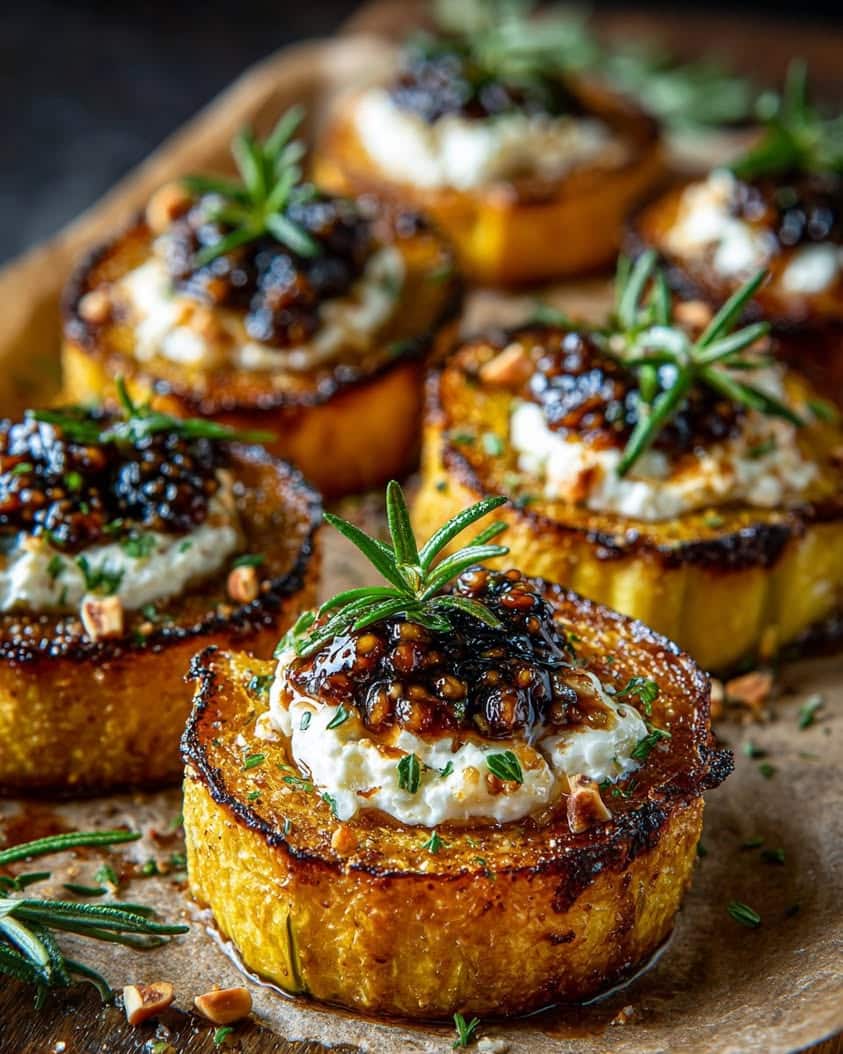
Caramelized Delicata Squash Rounds with Ricotta, Fig Jam & Toasted Hazelnuts: An Elegant Fall Appetizer
These caramelized delicata squash rounds are a celebration of autumn on a plate. This recipe transforms simple seasonal produce into an elegant appetizer or side dish that will impress any guest. The natural sweetness of the squash deepens beautifully in the oven. Meanwhile, the creamy ricotta and sweet fig jam create a luxurious topping that perfectly balances the savory, caramelized edges.
Imagine biting into a tender, golden round of squash with a crisp edge. Then, you experience the cool, rich ricotta followed by the complex sweetness of fig jam. Finally, a satisfying crunch of toasted hazelnuts finishes each bite. This dish is not just food; it is a sensory experience that highlights the best flavors of fall. Consequently, it has become a staple in my kitchen from September through December.
This recipe is incredibly versatile. For instance, you can serve it as a stunning starter for a dinner party. Alternatively, arrange it on a platter for a holiday gathering. It also works beautifully as a vegetarian main course when paired with a hearty salad. The combination of textures and flavors feels both rustic and refined. Ultimately, it proves that impressive dishes do not require complicated techniques or hard-to-find ingredients.
Quick Recipe Highlights
- Flavor Profile: This dish masterfully balances sweet, savory, and nutty notes. The caramelized squash offers a deep, almost buttery sweetness. Meanwhile, the fig jam provides a fruity, floral complexity that contrasts with the tangy, mild ricotta. The toasted hazelnuts add a final earthy, rich layer that ties everything together.
- Texture: You will enjoy a wonderful contrast of textures in every bite. The squash becomes tender and creamy inside with delightfully crisp, caramelized edges. The ricotta is luxuriously smooth and cool. Furthermore, the fig jam is sticky and lush. Finally, the toasted hazelnuts deliver the essential satisfying crunch that elevates the entire dish.
- Aroma: As this dish cooks, your kitchen will fill with the warm, inviting scents of autumn. Roasting squash releases its natural sugary aroma. Toasting hazelnuts adds a deep, nutty fragrance. When combined with the sweet scent of fig jam and the fresh note of thyme, the overall aroma is incredibly comforting and festive.
- Visual Appeal: This recipe is a feast for the eyes with its stunning color palette. The golden-orange squash rounds create a beautiful base. Then, the white ricotta and deep purple-brown fig jam offer striking contrast. Finally, the sprinkling of chopped hazelnuts and fresh herbs adds texture and a professional finish. It looks as good as it tastes.
- Skill Level Needed: This is an accessible recipe for cooks of all levels. The techniques involved are straightforward: slicing, roasting, and toasting. There is no fancy knife work required since delicata squash skin is edible. Therefore, even a beginner can achieve impressive, restaurant-quality results with minimal effort and basic kitchen tools.
- Special Equipment: You only need a few standard kitchen items. A good baking sheet is essential for achieving even caramelization. Parchment paper prevents sticking and makes cleanup easy. A small skillet is perfect for toasting the hazelnuts. Other than that, a sharp knife and a mixing bowl are all you need to prepare this stunning dish.
Recipe Overview
- Difficulty Level: This recipe is rated easy for several important reasons. First, the preparation involves simple steps like slicing and seasoning. Second, the oven does most of the work, requiring only an occasional check. There is no intricate assembly or precise timing between components. Consequently, it is a low-stress recipe that yields high-impact results, perfect for entertaining.
- Category: These caramelized delicata squash rounds fit beautifully into multiple meal categories. Primarily, they shine as an elegant finger food or plated appetizer. They also work wonderfully as a seasonal side dish alongside roast chicken or pork. For a light meal, they can be the main event atop a bed of peppery arugula. Their versatility is a key strength.
- Cuisine: This dish draws inspiration from modern American farm-to-table cuisine with Italian and Mediterranean influences. The use of ricotta and fig jam nods to Italian antipasti traditions. Meanwhile, the focus on highlighting a single, perfect seasonal vegetable is a hallmark of contemporary American cooking. It is a fusion that feels both timeless and fresh.
- Cost: This is a moderately priced recipe that feels luxurious. Delicata squash is an affordable winter vegetable. Ricotta and fig jam are pantry staples with reasonable cost. Hazelnuts are the premium ingredient, but a small amount goes a long way. Overall, you can create an impressive platter for a fraction of the cost of a store-bought cheese board.
- Season: This recipe is quintessentially autumnal. Delicata squash hits its peak flavor and availability from early fall through winter. Figs are also a late summer and early fall fruit, making fig jam a seasonal pairing. The warm, comforting flavors are ideally suited to cooler weather. However, you can enjoy it anytime you crave a taste of fall.
- Occasion: This dish is perfect for many occasions. It is elegant enough for Thanksgiving, Christmas, or a fancy dinner party. Simultaneously, it is simple enough for a cozy weeknight treat or a festive weekend lunch. Its make-ahead components also make it ideal for potlucks or holiday gatherings where you need to bring a stunning, shareable dish.
Why You’ll Love This Recipe
You will adore the incredible taste and texture appeal of these caramelized delicata squash rounds. Each component brings something special to create a harmonious bite. The squash itself becomes candy-like and tender. Meanwhile, the ricotta adds a creamy, cooling element that cuts through the sweetness. The fig jam introduces a complex, jammy fruitiness. Finally, the hazelnuts provide the essential contrasting crunch that makes the dish truly memorable. It is a symphony of fall flavors in one elegant package.
The convenience and preparation benefits are another major reason to love this recipe. For starters, delicata squash requires no peeling, saving you significant time and effort. The rounds roast quickly on a single sheet pan. Additionally, you can toast the hazelnuts and prepare the ricotta mixture while the squash is in the oven. This efficient workflow means you can have an impressive appetizer ready in well under an hour. It is the definition of simple sophistication.
This dish offers notable nutritional advantages as part of a balanced diet. Delicata squash is rich in vitamin A, vitamin C, and fiber. Ricotta provides a good source of protein and calcium. Hazelnuts contribute healthy fats, vitamin E, and magnesium. Fig jam, while sweet, offers antioxidants and minerals like potassium. Together, they create a dish that is as nourishing as it is delicious. It is a wholesome way to enjoy the bounty of the season.
The social and entertaining value of this recipe cannot be overstated. It is a guaranteed conversation starter at any gathering. Guests are always impressed by its beautiful presentation and sophisticated flavor combination. Because it is easy to eat as finger food, it encourages mingling. You can confidently serve it to vegetarians and omnivores alike. Ultimately, it makes you look like a culinary rock star with minimal behind-the-scenes stress.
Finally, the cost-effectiveness and accessibility of the ingredients make this a repeatable favorite. You can find delicata squash at most grocery stores and farmers markets during its season. Ricotta and fig jam are common pantry items. While hazelnuts are a bit pricier, you only need a small handful to finish the dish. Compared to expensive store-bought appetizers or restaurant prices, this homemade version delivers incredible value. It allows you to create restaurant-quality food in your own kitchen on a reasonable budget.
Historical Background and Cultural Significance
The story of this recipe begins with its star ingredient: delicata squash. This heirloom variety, also known as the “sweet potato squash,” was first introduced in the late 1800s by the Peter Henderson & Company seed catalog. It enjoyed popularity for decades due to its sweet flavor and thin, edible skin. However, it nearly vanished from commercial cultivation in the mid-20th century because its thin skin made it less durable for long-distance shipping compared to thicker-skinned varieties like butternut. Thankfully, a resurgence in heirloom produce and farmers markets in the 1990s brought the delicata back from the brink. Its return symbolizes a broader cultural shift towards valuing flavor and variety over pure shelf stability.
The cultural importance of squash in general spans continents and millennia. Indigenous peoples across the Americas cultivated squash alongside corn and beans in the “Three Sisters” agricultural system for over a thousand years. Squash provided essential nutrients and could be stored through winter. In European cuisine, particularly in Italy, stuffed and roasted squash became a peasant food that celebrated abundance. The act of caramelizing squash through roasting taps into a universal culinary truth: applying heat to natural sugars creates deep, complex flavors that humans inherently crave. This recipe connects to that ancient practice of transforming humble vegetables into something extraordinary.
The evolution of this specific recipe reflects modern dining trends. The composition—a roasted vegetable round topped with cheese, jam, and nuts—is a classic flavor triad found on contemporary restaurant menus and artisanal cheese boards. It represents a move towards vegetable-centric appetizers that are both visually striking and packed with flavor. The use of fig jam bridges sweet and savory, a pairing popular in Mediterranean and Middle Eastern cuisines for centuries. By combining these elements on a single, edible “cracker” of squash, the recipe streamlines the cheese board experience into a composed bite. It is a perfect example of how home cooking adapts professional culinary techniques for everyday enjoyment.
Regional variations of this concept are endless, showcasing its adaptable nature. In the American South, you might find it with pimento cheese and pepper jelly. A French-inspired version could use goat cheese and onion confit. In the Pacific Northwest, blackberry jam and local hazelnuts would be a natural fit. The basic formula—sweet roasted vegetable + creamy cheese + fruity preserve + crunchy nut—is a template for seasonal creativity. This particular combination with ricotta, fig, and hazelnut has a distinctly Italian-American feel, celebrating ingredients that are beloved in that culinary tradition while utilizing a native American vegetable. It is a beautiful fusion of Old World and New World pantry staples.
Ingredient Deep Dive
Let us start with the foundation: delicata squash. This heirloom variety is a type of winter squash, originally cultivated by Native Americans. Its name comes from its delicate, edible skin, which sets it apart from tougher-skinned cousins. Nutritionally, it is a powerhouse of beta-carotene (which converts to vitamin A), vitamin C, fiber, and potassium. Its vibrant orange flesh indicates high antioxidant levels. When selecting squash, look for firm, heavy fruits with creamy beige skin and dark green stripes; avoid any with soft spots or blemishes. Store whole delicata squash in a cool, dark place for up to three months. Once cut, wrap it tightly and refrigerate for up to five days. If you cannot find delicata, good substitutes include acorn squash (peeled after roasting) or even sweet potato rounds.
Whole milk ricotta cheese is the creamy heart of this dish. Ricotta, meaning “recooked” in Italian, is a fresh cheese made from the whey leftover from producing other cheeses. Traditionally, it was a resourceful way to use every part of the milk. It is an excellent source of protein and calcium, and its mild flavor makes it a perfect canvas for other ingredients. For this recipe, seek out high-quality, whole-milk ricotta for the best texture and richness; avoid skim varieties which can be grainy. Drain any excess liquid from the container before using. Store ricotta in its original container in the coldest part of your refrigerator and use it within a week of opening. For a dairy-free version, a thick, plain almond or cashew-based cream cheese can work, though the flavor profile will change.
Fig jam brings a luxurious sweetness and depth. Figs are one of the oldest cultivated fruits, with a history stretching back to ancient Mesopotamia. They are a good source of dietary fiber, calcium, and antioxidants like polyphenols. Fig jam concentrates this natural sweetness and pairs brilliantly with savory elements. When shopping, look for jam with a high fruit content and minimal added sugars. You can often find excellent fig jam at specialty stores or in the cheese section of grocery stores. An unopened jar can be stored in a cool pantry for up to a year; once opened, refrigerate it. If fig jam is unavailable, other fruit preserves like cherry, blackberry, or even a good-quality apricot jam can be delightful substitutes. For a less sweet option, a drizzle of balsamic glaze is a fantastic alternative.
Toasted hazelnuts provide the essential crunch and earthy flavor. Hazelnuts, also known as filberts, have been foraged and cultivated for thousands of years, particularly in Turkey and the Mediterranean region. They are rich in healthy monounsaturated fats, vitamin E, magnesium, and fiber. Toasting is non-negotiable, as it deepens their flavor and improves their crunch. To toast, spread raw hazelnuts on a baking sheet and bake at 350°F for 10-12 minutes, watching carefully to avoid burning. Once cooled, you can rub them in a kitchen towel to remove most of the bitter skins. Store toasted hazelnuts in an airtight container at room temperature for a week or freeze them for longer storage. If you have a nut allergy, toasted pumpkin seeds (pepitas) or sunflower seeds offer a similar crunchy texture without the allergens.
Common Mistakes to Avoid
- Not Toasting the Hazelnuts: Skipping the toasting step is a major flavor misstep. Raw hazelnuts taste bland and slightly bitter. Toasting unlocks their essential oils, creating a deep, nutty aroma and a satisfying crunch that is critical to the dish’s texture. Always take the extra ten minutes to toast them; it makes a world of difference.
- Overcrowding the Baking Sheet: Placing the squash rounds too close together on the pan will cause them to steam instead of caramelize. For perfect, crisp-edged rounds, they need space for hot air to circulate. Use two baking sheets if necessary to ensure each piece has room. This guarantees that beautiful golden-brown sear.
- Using Watery Ricotta: Ricotta that has not been drained can make your topping runny and dilute the flavors. Before mixing, spoon the ricotta into a fine-mesh strainer or place it in a cheesecloth-lined colander for a few minutes to let excess whey drain. This results in a thicker, creamier, more luxurious spread.
- Underseasoning the Squash: Squash needs ample seasoning before roasting. Do not be shy with the salt, pepper, and olive oil. The seasoning should penetrate the flesh as it cooks. Remember, the ricotta and jam are also seasoned, so a well-seasoned base ensures every layer of the bite is flavorful.
- Slicing the Squash Unevenly: If your squash rounds are different thicknesses, they will cook unevenly. Some pieces will burn while others remain undercooked. Aim for consistent ½-inch thick rounds. Using a sharp chef’s knife and taking your time during prep ensures even cooking and a professional presentation.
- Neglecting to Flip the Squash: For even caramelization on both sides, you must flip the squash rounds halfway through the roasting time. This simple step ensures you get color and crispness on both the top and bottom. Set a timer as a reminder so you do not forget this crucial move.
- Spreading Toppings While Squash is Hot: If you add the ricotta and jam to piping hot squash, the ricotta will melt and become messy. Let the squash rounds cool for 5-10 minutes on the baking sheet. This allows them to set slightly and ensures your toppings stay beautifully distinct and photogenic.
- Using Stale Spices: Dried thyme that has been in your pantry for years will have lost its punch. For the best flavor, use fresh thyme if possible, or ensure your dried thyme is relatively new (less than a year old). The same goes for black pepper; freshly cracked pepper has a brighter, more aromatic flavor.
Essential Techniques
Caramelization is the most important technique in this recipe. This is the process where natural sugars in the squash brown and develop complex, deep flavors when exposed to high, dry heat. To master it, ensure your oven is fully preheated and your baking sheet is hot when you add the oiled squash. Do not move the rounds too often; let them sit undisturbed to develop a good sear. A common pitfall is roasting at too low a temperature, which leads to steaming. The visual cue for success is a deep golden-brown color with slightly crispy, darkened edges on each round. This transformation is what gives the dish its signature sweet and savory depth.
Toasting nuts is a simple but transformative technique. Toasting drives off moisture and heats the natural oils within the nuts, radically enhancing their flavor and crunch. The key is to use even, moderate heat and watch them closely, as they can go from perfectly toasted to burnt in moments. Shake the pan or stir the nuts occasionally for even coloring. Listen for a light cracking sound and watch for them to become fragrant and slightly darker in color. A common mistake is walking away from the stove or oven. The visual cue for perfectly toasted hazelnuts is a rich golden-brown color and a skin that is easy to rub off. Always let them cool before chopping to preserve their texture.
Preparing the ricotta mixture is about creating a cohesive, seasoned spread. The technique involves draining any excess liquid and then gently folding in seasonings. Vigorous stirring can break down the delicate curds and make the ricotta gummy. Instead, use a fork or a small spatula to lightly combine the ricotta with salt, pepper, and lemon zest until just incorporated. The goal is a homogeneous mixture that still has some body. A common pitfall is over-mixing, which leads to a pasty texture. The visual cue is a creamy, spreadable consistency that holds its shape when dolloped. This careful preparation ensures the ricotta acts as a perfect, creamy base for the other toppings.
Pro Tips for Perfect Caramelized Delicata Squash Rounds
First, for extra crispy edges, place your empty baking sheet in the oven while it preheats. Carefully add the oiled squash rounds to the hot pan; the instant sizzle will jump-start the caramelization process. This restaurant trick ensures a beautiful sear from the very beginning of cooking.
Second, use a melon baller or a small spoon to create a slight divot in the center of each warm squash round before adding the ricotta. This simple step creates a little well that helps the toppings stay neatly in place, making the rounds easier to pick up and eat.
Third, add a whisper of flavor to your ricotta. A tiny bit of finely grated lemon zest or a pinch of freshly grated nutmeg can elevate the creamy cheese without overpowering the other ingredients. These subtle additions add a layer of complexity that makes the dish taste even more special.
Fourth, if your fig jam is very thick, warm it slightly before drizzling. Place a few spoonfuls in a microwave-safe bowl and heat for 10-15 seconds, or stir in a teaspoon of warm water. This makes it easier to artfully drizzle over the ricotta without disturbing the creamy layer underneath.
Fifth, garnish with both texture and color. Beyond the hazelnuts, a final sprinkle of flaky sea salt (like Maldon) and a few fresh thyme leaves just before serving makes the dish pop visually and adds bursts of flavor. The salt crystals provide a delightful crunch and enhance all the other tastes.
Sixth, consider a balsamic accent. A very light drizzle of aged balsamic vinegar or reduction over the assembled rounds adds a wonderful sweet-tart acidity that cuts through the richness. Apply it sparingly after the fig jam for a professional finishing touch.
Variations and Adaptations
For regional variations, consider the flavors of your locale. In the Southwest, try topping the squash with a lime-spiked cotija cheese and a spicy pepper jelly, finishing with toasted pepitas. A Nordic-inspired version could use a dollop of skyr (Icelandic yogurt) and lingonberry jam, topped with crushed rye crackers. These adaptations show how the core recipe can travel and reflect different culinary traditions while maintaining its elegant structure.
Seasonal adaptations keep this recipe exciting year-round. In spring, use thick rounds of roasted asparagus or baby zucchini as the base with herbed goat cheese and strawberry rhubarb compote. For summer, try grilled eggplant rounds with whipped feta and a tomato-olive tapenade. In deep winter, roasted beet slices with horseradish cream and cranberry relish would be stunning. The formula is endlessly adaptable to what is fresh and available.
Dietary modifications are straightforward. For a vegan version, use a thick, seasoned cashew cream or vegan ricotta alternative and a high-quality fruit-sweetened fig spread. For a paleo or Whole30 adaptation, omit the cheese and jam; instead, top the squash with a savory walnut “meat” made from minced mushrooms and walnuts, and a drizzle of date paste. A low-carb option might use the squash sparingly as a base and increase the ratio of ricotta and nuts for more fat and protein.
Flavor variations can take this dish in countless directions. Swap the ricotta for creamy goat cheese, blue cheese crumbles, or even a whipped feta. Replace fig jam with onion marmalade, hot pepper jelly, or a savory tomato jam. Substitute hazelnuts with walnuts, pecans, pistachios, or Marcona almonds. A drizzle of honey or pomegranate molasses can replace the jam. Experimenting with these components allows you to create a new signature appetizer every time.
Serving and Presentation Guide
Plating techniques can elevate this dish from simple to spectacular. For a family-style presentation, arrange the topped squash rounds in a concentric circle on a large, rustic wooden board or a beautiful platter. Alternatively, for an individual appetizer course, place one or two rounds in the center of a small plate and garnish with microgreens. Use negative space on the plate for a clean, modern look. The key is to arrange them with intention, ensuring each round is easily accessible.
Garnishing is the final touch that adds visual interest and flavor. Beyond the chopped hazelnuts, consider a light dusting of smoked paprika or sumac for color. Fresh herb sprigs like thyme, rosemary, or even tiny basil leaves add a green accent. Edible flowers, such as nasturtiums or pansies in the spring, make an unforgettable impression for a special occasion. A final grind of black pepper over the whole platter adds depth.
Traditional accompaniments might include a simple green salad dressed with a bright vinaigrette to balance the richness. For a heartier offering, serve alongside a charcuterie board, allowing the squash rounds to act as a gluten-free “cracker.” They also pair beautifully with a warm, spiced soup like butternut squash or carrot ginger for a cohesive fall meal.
Modern serving suggestions embrace its versatility. Crumble the assembled rounds over a bed of peppery arugula for a composed salad. Serve them as a canapé at a cocktail party, perhaps with a small cocktail pick for easy handling. For a brunch twist, top each round with a perfectly poached egg. The possibilities extend far beyond the appetizer course.
Wine and Beverage Pairing
Wine pairings should complement the sweet, savory, and creamy elements of the dish. A dry Riesling or Gewürztraminer works wonderfully; their slight sweetness and acidity cut through the ricotta and mirror the fruitiness of the fig. For red wine lovers, a light-bodied, low-tannin Pinot Noir is an excellent choice, as its red fruit notes will not clash with the squash’s sweetness. A sparkling wine, like Prosecco or Cava, provides a refreshing palate cleanser with every bubbly sip, making each bite taste fresh. Avoid heavily oaked Chardonnays or bold, tannic reds like Cabernet Sauvignon, as they can overwhelm the delicate flavors.
Non-alcoholic alternatives can be just as sophisticated. A sparkling apple cider offers autumnal sweetness and effervescence. For a warmer option, a spiced apple tea or a chai latte highlights the cozy spices of the season. A tart cranberry spritzer (cranberry juice mixed with soda water and a squeeze of lime) provides the necessary acidity to balance the dish’s richness. The goal is to choose a beverage with enough character to stand up to the complex flavors without competing with them.
Storage and Shelf Life
Storage methods differ for components and the fully assembled dish. Store leftover roasted, un-topped squash rounds in an airtight container in the refrigerator for up to 3 days. The ricotta mixture should be stored separately in its own container for up to 4 days. Toasted hazelnuts can be kept at room temperature in a sealed bag or jar for up to a week, or frozen for a month. Assembled rounds do not store well, as the squash will soften and the toppings will meld together. Therefore, it is best to assemble only what you plan to serve immediately.
Reheating instructions are simple but important. To refresh the roasted squash, place rounds on a baking sheet in a 350°F oven for 5-8 minutes until warmed through and re-crisped slightly. Do not microwave, as this will make them soggy. The ricotta should be served cold or at room temperature. There is no need to reheat the nuts or jam. For best quality, bring all components to their ideal temperature and texture before assembling.
Make Ahead Strategies
A smart prep timeline makes entertaining effortless. You can roast the squash rounds up to two days in advance; let them cool completely and store them layered between parchment paper in the refrigerator. Toast and chop the hazelnuts up to a week ahead. Mix the seasoned ricotta 1-2 days before. The fig jam can be purchased or made well in advance. On the day of serving, simply bring the ricotta to room temperature, briefly re-crisp the squash in the oven, and assemble. This strategy distributes the work and minimizes day-of stress.
Storage between steps is crucial for maintaining quality. Always let the roasted squash cool to room temperature on the baking sheet before storing to prevent condensation, which causes sogginess. Store the toasted hazelnuts in an airtight container away from light and heat to preserve their crunch. Keep the ricotta covered tightly in the fridge. When you are ready to assemble, the components will be in perfect condition for a flawless final presentation.
Scaling Instructions
Halving the recipe is simple for a smaller household. Use one medium delicata squash, about ¾ cup of ricotta, and proportionally reduce all other ingredients. The cooking time may be slightly less, so start checking for doneness around the 18-minute mark. Use a standard baking sheet; the smaller quantity will ensure even more space for perfect caramelization. This is a great way to enjoy the recipe as a side dish for two without leftovers.
Doubling or tripling the recipe for a crowd requires minor adjustments. You will need multiple baking sheets and may need to roast in batches or use two oven racks, rotating the sheets halfway through. Do not overcrowd any single pan. Mix the ricotta in a large bowl. Toasting a large batch of hazelnuts is best done in the oven on a rimmed sheet pan rather than in a skillet for even results. Assemble in stages to keep the process manageable.
Nutritional Deep Dive
A macro breakdown of one serving (approximately three topped rounds) reveals a balanced profile. You can expect a good mix of complex carbohydrates from the squash, healthy fats from the olive oil and hazelnuts, and a moderate amount of protein from the ricotta. The dish is relatively low in saturated fat, especially if you use a light hand with the olive oil. The sugars are primarily natural from the squash and figs, with minimal added sugar if you choose a high-quality jam.
The micronutrient analysis is impressive. Delicata squash is exceptionally high in Vitamin A (in the form of beta-carotene), crucial for vision and immune health, and a good source of Vitamin C and potassium. Hazelnuts contribute significant Vitamin E, a powerful antioxidant, and magnesium for muscle and nerve function. Ricotta provides calcium for bone health. Together, they create a nutrient-dense appetizer that supports overall wellness.
Dietary Adaptations
For a gluten-free diet, this recipe is naturally perfect, as it contains no grains. Always check the label on your fig jam to ensure no gluten-containing additives were used in processing. For dairy-free needs, substitute the ricotta with a thick, plain vegan cream cheese or a cashew cream seasoned with nutritional yeast, lemon juice, and salt. Ensure the chosen product has a spreadable, rich consistency.
A vegan adaptation replaces both the ricotta and honey (if used). Use a vegan ricotta alternative or make a batch of cashew ricotta by blending soaked cashews with lemon juice, nutritional yeast, salt, and a little water until smooth. Choose a fig jam sweetened with fruit juice or cane sugar rather than honey. All other components are naturally plant-based.
Troubleshooting Guide
If your squash is soggy instead of caramelized, the likely culprit is overcrowding on the pan or an oven temperature that is too low. Ensure your oven is fully preheated to 425°F and that the rounds are in a single layer with space between them. Also, pat the squash rounds dry with a paper towel after slicing to remove excess surface moisture before oiling and seasoning.
If the flavors seem flat or unbalanced, assess your seasoning. The squash itself needs adequate salt before roasting. The ricotta mixture also benefits from salt, pepper, and an acid like lemon zest. A final sprinkle of flaky salt on the assembled dish can brighten all the flavors. If the dish is too sweet, a tiny drizzle of balsamic vinegar or a sprinkle of chili flakes can add necessary contrast.
Recipe Success Stories
Community feedback on this recipe consistently highlights its “wow” factor relative to its simplicity. Many home cooks report that it has become their go-to fall appetizer for book clubs, Thanksgiving, and even casual dinners. One reader shared that she made it for her in-laws, who requested the recipe and now make it themselves every year. Another mentioned that her children, who are typically picky about vegetables, devoured these “squash cookies.” These stories underscore the recipe’s broad appeal and reliability.
Frequently Asked Questions
Can I make this recipe ahead of time? Yes, you can prepare all components ahead. Roast the squash and store it for up to 2 days. Mix the ricotta 1-2 days ahead. Toast the nuts up to a week ahead. Assemble just before serving for the best texture.
Do I need to peel the delicata squash? No, that is the beauty of delicata! Its skin is thin, tender, and completely edible when cooked. It also helps the rounds hold their shape, making them the perfect edible base.
What can I use instead of fig jam? Many fruit preserves work well. Try cherry, blackberry, apricot, or even a spicy pepper jelly for a different twist. A drizzle of high-quality honey or balsamic glaze is also a fantastic substitute.
My ricotta is watery. What should I do? Drain it! Place the ricotta in a fine-mesh strainer lined with cheesecloth or a paper towel over a bowl. Let it sit for 15-30 minutes to drain excess whey before mixing with seasonings.
Can I use a different type of squash? Acorn squash is the closest substitute, but you will need to peel the rounds after roasting as the skin is tougher. Sweet potato rounds are another excellent option, though they may cook faster.
How do I know when the squash is done roasting? The rounds should be tender when pierced with a fork and have deep golden-brown, slightly crisp edges on both sides. They should not be mushy or blackened.
Is this recipe served warm or cold? It is best served warm or at room temperature. The squash should be warm (not piping hot) when assembled, and the ricotta should be cool or room temp. This temperature contrast is part of the appeal.
Can I freeze the assembled rounds? We do not recommend freezing the assembled dish. The texture of the thawed squash and ricotta will be compromised. It is best enjoyed fresh.
What main dish does this pair well with? It pairs beautifully with roast chicken, pork tenderloin, or a hearty lentil stew. It also works wonderfully as part of a vegetarian feast with other vegetable sides and a grain salad.
How do I toast hazelnuts without an oven? You can toast them in a dry skillet over medium-low heat. Shake the pan frequently for 5-7 minutes until they are fragrant and the skins begin to blister and crack. Watch them closely to prevent burning.
Additional Resources
For related recipes, explore other ways to use delicata squash, such as stuffed delicata squash boats with quinoa and kale, or a simple roasted delicata squash salad with farro and apples. If you love the sweet-savory combination, a baked brie with fig jam and walnuts or a pear and gorgonzola crostini would be delightful next projects. These recipes continue the theme of elegant, seasonal entertaining with minimal fuss.
For technique guides, mastering basic roasting principles will serve you well for countless vegetables. Learning how to properly toast and skin nuts is another fundamental skill. Understanding how to balance flavors—sweet, salty, acidic, fatty, bitter—is the key to adjusting any recipe to your taste. These foundational skills will make you a more confident and creative cook in the kitchen.
PrintCaramelized Delicata Squash Rounds with Ricotta, Fig Jam & Toasted Hazelnuts
Description
A stunning fall appetizer or side dish featuring sweet, caramelized delicata squash rounds topped with creamy ricotta, tangy fig jam, and crunchy toasted hazelnuts.
Ingredients
For the Crust:
- 2 medium delicata squash, sliced into 1/2-inch rounds and seeds removed
- 2 tablespoons olive oil
- 1 tablespoon maple syrup
- 1 teaspoon smoked paprika
- Salt and black pepper to taste
- 1 cup whole milk ricotta cheese
- 1/4 cup fig jam
- 1/3 cup hazelnuts, toasted and roughly chopped
- Fresh thyme leaves for garnish
- Flaky sea salt for finishing
Instructions
1. Prepare the Crust:
- Preheat oven to 425°F (220°C). Line a baking sheet with parchment paper.
- In a large bowl, toss the squash rounds with olive oil, maple syrup, smoked paprika, salt, and pepper until evenly coated. Arrange in a single layer on the baking sheet.
- Roast for 20-25 minutes, flipping halfway through, until the squash is tender and caramelized at the edges.
- While the squash roasts, toast the hazelnuts in a dry skillet over medium heat for 5-7 minutes, shaking often, until fragrant and lightly browned. Let cool, then chop roughly.
- To serve, arrange the warm squash rounds on a platter. Top each with a dollop of ricotta, a small spoonful of fig jam, and a sprinkle of toasted hazelnuts. Garnish with fresh thyme and a pinch of flaky sea salt.
Notes
You can customize the seasonings to taste.

I’m Shaykee—born in Morocco, seasoned across continents. From airplane galleys to home kitchens, I share the flavors and stories that shaped my journey.