
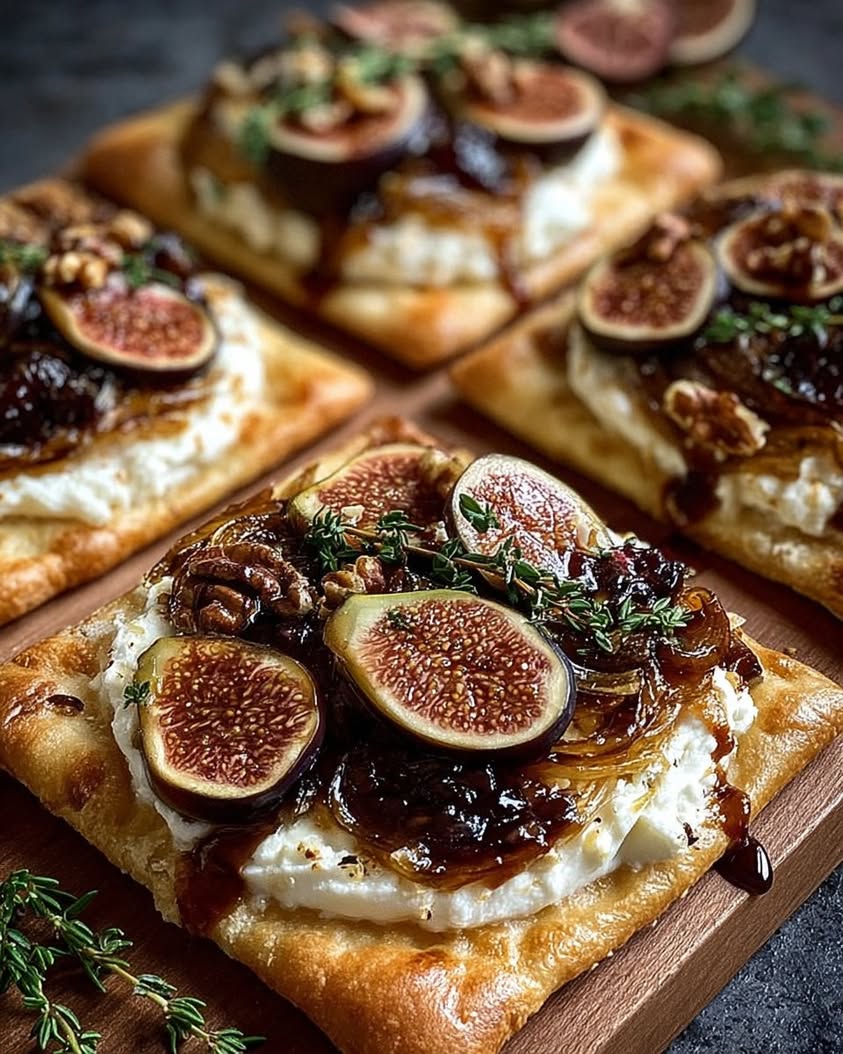
Caramelized Fig & Ricotta Flatbread: An Elegant Sweet and Savory Appetizer
This stunning Caramelized Fig & Ricotta Flatbread with Balsamic Cranberry Glaze is a showstopping appetizer that masterfully balances sweet and savory flavors. Imagine creamy ricotta cheese spread over a crisp flatbread base, topped with juicy figs caramelized to perfection, and finished with a tangy balsamic cranberry glaze. This recipe transforms simple ingredients into an elegant dish that will impress your guests at any gathering. Furthermore, the combination of textures and tastes creates a memorable culinary experience from the first bite to the last.
Creating this beautiful flatbread requires minimal effort for maximum impact. The process involves quickly caramelizing fresh figs to enhance their natural sweetness, whipping ricotta with herbs for a fluffy texture, and reducing balsamic vinegar with cranberry for a glossy, complex glaze. Consequently, even novice cooks can achieve restaurant-quality results with this straightforward method. This Caramelized Fig & Ricotta Flatbread works beautifully as an appetizer, light lunch, or even a sophisticated snack. Additionally, it pairs wonderfully with various wines and cocktails for a complete entertaining experience.
The visual appeal of this dish is undeniable, featuring vibrant colors and artistic presentation. Ruby-red figs contrast beautifully with the white ricotta and dark balsamic glaze, creating a feast for the eyes before the first bite. This Caramelized Fig & Ricotta Flatbread makes any occasion feel special, from holiday parties to casual weeknight dinners. Moreover, the recipe allows for numerous adaptations based on seasonal availability and dietary preferences. Ultimately, this versatile dish will become a go-to in your entertaining repertoire for its reliability and impressive presentation.
Quick Recipe Highlights
- Flavor Profile: This Caramelized Fig & Ricotta Flatbread delivers a sophisticated balance of sweet caramelized figs, creamy mild ricotta, and tangy balsamic cranberry glaze. The flavor journey begins with subtle sweetness, transitions through rich creaminess, and finishes with a bright acidic note that cleanses the palate. Each component complements the others without overwhelming, creating a harmonious taste experience.
- Texture: The textural contrast is a key feature, featuring crisp flatbread base, velvety whipped ricotta, and tender caramelized figs. Meanwhile, the balsamic cranberry glaze adds a slight viscosity that ties everything together. This combination of crispy, creamy, and juicy elements creates an exciting mouthfeel that keeps each bite interesting and satisfying.
- Aroma: As this Caramelized Fig & Ricotta Flatbread bakes, your kitchen will fill with the warm scent of caramelizing figs and toasting flatbread. The balsamic reduction contributes acidic notes that cut through the sweetness, while fresh thyme adds an herbal fragrance. These aromatic layers signal the complex flavor experience awaiting your first bite.
- Visual Appeal: The presentation is restaurant-worthy, with the deep purple fig halves arranged artfully against the white ricotta background. The dark balsamic cranberry glaze drizzled over top creates dramatic swirls and accents. Finally, fresh thyme sprigs and microgreens add green accents that make the colors pop for an Instagram-worthy dish.
- Skill Level Needed: This recipe is accessible for cooks of all experience levels, requiring basic kitchen skills like slicing, mixing, and baking. The techniques are straightforward, and the ingredient list is simple. Consequently, even beginner cooks can create an impressive dish that looks and tastes professional.
- Special Equipment: You need only basic kitchen tools: a baking sheet, small saucepan, mixing bowl, and knife. A pastry brush helps evenly coat the figs with honey before caramelizing. Additionally, a pizza cutter or sharp knife makes clean slicing easy for serving.
Recipe Overview
- Difficulty Level: This Caramelized Fig & Ricotta Flatbread ranks as easy because it uses pre-made flatbread and involves simple techniques like spreading, slicing, and reducing. The most challenging aspect is properly caramelizing the figs without burning them, which requires only basic attention. Furthermore, the assembly process is intuitive and forgiving, allowing for personal touches. Overall, the recipe provides clear, step-by-step guidance for success.
- Category: This versatile dish fits multiple categories including appetizers, light meals, and party food. It works beautifully as a starter for multi-course dinners or as the main component of a light lunch with a side salad. Additionally, it serves as impressive party fare that can be sliced into smaller portions for passing.
- Cuisine: This recipe draws inspiration from Mediterranean and contemporary American culinary traditions. Flatbreads have roots in Italian cuisine, while the sweet-savory fruit and cheese combination appears across European cooking. The balsamic glaze adds a modern touch that elevates the dish to current restaurant trends.
- Cost: The ingredients are moderately priced, with fresh figs representing the most significant investment when out of season. Using quality pre-made flatbread saves both time and money compared to homemade dough. Overall, this Caramelized Fig & Ricotta Flatbread delivers luxury restaurant quality at a fraction of the cost.
- Season: Fresh figs are most abundant and affordable in late summer and early fall, making this the ideal season for this recipe. However, you can adapt it year-round using preserved figs or alternative fruits. The warm, comforting qualities also make it suitable for holiday entertaining during colder months.
- Occasion: This elegant flatbread suits various occasions from casual gatherings to formal events. It makes a beautiful addition to holiday parties, bridal showers, and dinner parties. Additionally, it serves as a special weekend treat or romantic date night meal that feels celebratory.
Why You’ll Love This Caramelized Fig & Ricotta Flatbread
The taste experience of this Caramelized Fig & Ricotta Flatbread is truly exceptional, balancing multiple flavor profiles in each bite. Sweet caramelized figs play against tangy balsamic cranberry glaze, while creamy ricotta provides a neutral canvas that brings harmony to the composition. The fresh thyme adds an herbal note that cuts through the richness, creating complexity that keeps your palate interested. Furthermore, the contrast between warm figs and cool ricotta adds another dimension that enhances the overall experience. This sophisticated flavor combination feels indulgent yet balanced, satisfying both sweet and savory cravings simultaneously.
Preparation convenience makes this recipe particularly appealing for busy hosts and home cooks. Using pre-made flatbread eliminates the need for dough preparation and rising time, significantly reducing active kitchen work. The component parts can be prepared in advance and assembled just before serving, making entertaining stress-free. Moreover, the cooking techniques are simple and require minimal supervision, allowing you to focus on other dishes or guests. This Caramelized Fig & Ricotta Flatbread delivers maximum impression with minimal effort, the holy grail of entertaining recipes.
Nutritional benefits provide another compelling reason to love this dish. Fresh figs deliver fiber, potassium, and antioxidants, while ricotta cheese offers protein and calcium. Using olive oil instead of butter keeps the fat profile healthier, and the modest portion size supports mindful eating. Additionally, the natural sweetness of caramelized figs reduces the need for added sugars in the recipe. This Caramelized Fig & Ricotta Flatbread satisfies gourmet cravings while providing substantive nutritional value compared to many appetizers.
Entertaining value cannot be overstated, as this dish consistently draws compliments and admiration from guests. The beautiful presentation creates a centerpiece for your appetizer spread, setting a sophisticated tone for the entire meal. The recipe scales easily to accommodate larger groups by preparing multiple flatbreads with minimal additional effort. Furthermore, it serves beautifully at room temperature, eliminating last-minute kitchen stress. This Caramelized Fig & Ricotta Flatbread makes any host feel accomplished and any gathering feel special.
Accessibility and cost-effectiveness round out the appeal, using mostly pantry staples with a few special ingredients. While fresh figs might seem luxurious, the other components are budget-friendly, keeping the overall cost reasonable. The recipe also adapts readily to ingredient substitutions based on availability and preference. Consequently, this Caramelized Fig & Ricotta Flatbread delivers restaurant-quality sophistication without restaurant pricing or complexity. It represents the perfect balance of special occasion feeling and everyday practicality that defines great home cooking.
Historical Background and Cultural Significance
Flatbreads represent one of humanity’s oldest prepared foods, dating back thousands of years across numerous cultures. The combination of bread with toppings evolved independently in various regions, from Italian pizza to Middle Eastern manakish. Fruit and cheese pairings have equally ancient roots, appearing in Mediterranean culinary traditions where both items were plentiful. This Caramelized Fig & Ricotta Flatbread connects to these historical precedents while incorporating contemporary flavor combinations and techniques. The modern sweet-savory trend in appetizers finds perfect expression in this recipe that honors traditional foodways while looking forward.
Figs hold particular cultural significance across Mediterranean and Middle Eastern cultures, where they’ve been cultivated for millennia. Ancient Greeks and Romans valued figs both as food and for their symbolic associations with abundance and fertility. In many traditions, figs paired with cheese and honey represented hospitality and celebration. The balsamic glaze component connects to Italian culinary heritage, where aged balsamic vinegar is prized as a luxury ingredient. This Caramelized Fig & Ricotta Flatbread therefore draws from deep cultural wells while creating something distinctly modern and accessible.
The evolution of flatbread toppings reflects changing agricultural practices, trade routes, and culinary innovation. As ingredients became more widely available through globalization, chefs began experimenting with nontraditional combinations. The sweet-savory trend gained momentum in restaurant cuisine during the late 20th century, moving into home kitchens through food media and celebrity chefs. This Caramelized Fig & Ricotta Flatbread represents a distillation of these trends into an approachable format that home cooks can execute successfully. The recipe honors tradition while embracing contemporary tastes and techniques.
Regional variations of fruit and cheese flatbreads appear across culinary traditions, from the French tarte fine to Italian crostini. Each culture adapts the basic concept using local ingredients and traditional flavor profiles. This Caramelized Fig & Ricotta Flatbread follows in this adaptive tradition, offering a template that welcomes personalization and seasonal variations. The inclusion of cranberry in the glaze adds a North American element that creates cross-cultural dialogue on the plate. Such fusion approaches characterize contemporary cooking while respecting ingredient integrity and flavor harmony.
Ingredient Deep Dive
Fresh figs serve as the star ingredient, offering complex sweetness and beautiful visual appeal. These ancient fruits have been cultivated since prehistoric times and feature prominently in Mediterranean and Middle Eastern cuisines. Nutritionally, figs provide dietary fiber, potassium, calcium, and antioxidant compounds. When selecting figs, look for plump fruits with intact skins that yield slightly to gentle pressure. Store them in a single layer in the refrigerator for up to three days, though they’re best used shortly after purchase. If fresh figs are unavailable, reconstituted dried figs make an acceptable substitute with adjusted cooking time.
Whole milk ricotta cheese provides the creamy base that balances the sweet and tangy elements. This fresh Italian cheese has a mild, slightly sweet flavor and granular texture that becomes luxuriously smooth when whipped. Ricotta delivers high-quality protein, calcium, and phosphorus with moderate fat content. For best results, choose high-quality whole milk ricotta rather than part-skim varieties for superior texture and flavor. Always drain excess liquid from ricotta before using to prevent a soggy flatbread. For dairy-free adaptation, cashew cheese or almond ricotta provide excellent alternatives with similar texture.
Balsamic vinegar forms the foundation of the glossy glaze that elevates the entire dish. Traditional balsamic vinegar from Modena, Italy undergoes years of aging in wooden barrels, developing complex sweetness and acidity. While authentic aged balsamic is wonderful, a quality supermarket variety works perfectly for this glaze. The vinegar provides antioxidants and may offer digestive benefits. Combined with cranberry juice, it reduces to a syrupy consistency that clings beautifully to the flatbread. If cranberry juice is unavailable, pomegranate juice or red wine make suitable substitutes with slightly different flavor profiles.
Quality flatbread serves as the canvas for all other ingredients, providing structural integrity and textural contrast. While homemade dough is an option, excellent pre-made flatbreads available today save significant time without sacrificing quality. Look for varieties with minimal ingredients and no excessive thickness. The flatbread should become crisp during baking without becoming hard or brittle. For gluten-free adaptation, numerous quality gluten-free flatbreads and pizza crusts work beautifully. The neutral flavor of the base allows the fig and ricotta flavors to shine while providing satisfying crunch.
Common Mistakes to Avoid
- Using wet ricotta straight from the container creates a soggy flatbread that won’t crisp properly. Always drain excess liquid from ricotta by placing it in a fine mesh strainer for 15-30 minutes before using. This simple step ensures your Caramelized Fig & Ricotta Flatbread maintains structural integrity and pleasing texture.
- Overcrowding the baking sheet prevents proper air circulation and even cooking. Arrange flatbread with ample space between them, baking in batches if necessary. Crowding creates steam that makes the flatbread soggy rather than crisp, compromising the textural contrast essential to this dish.
- Slicing figs too thinly causes them to burn during caramelization rather than developing deep flavor. Cut figs into quarters or halves depending on size to maintain substance through the cooking process. Proper thickness allows figs to soften while developing complex caramelized notes.
- Rushing the balsamic reduction prevents proper thickening and flavor development. Simmer the glaze gently until it coats the back of a spoon, indicating sufficient viscosity. A properly reduced glaze will drizzle beautifully rather than soaking into the flatbread.
- Neglecting to let the flatbread cool slightly before slicing causes toppings to slide off. Allow 2-3 minutes after removing from oven for components to set. This brief rest ensures clean cuts and maintained presentation when serving.
- Applying glaze while flatbread is piping hot causes it to absorb rather than sit beautifully on surface. Cool the flatbread for five minutes before drizzling glaze for optimal visual appeal. The slightly cooled temperature helps the glaze maintain its definition on the finished dish.
- Overloading with toppings creates difficulty in slicing and eating neatly. Exercise restraint when assembling, remembering that each component should complement rather than overwhelm. Proper balance ensures every bite contains all elements in harmony.
- Using inferior quality balsamic vinegar results in overly sharp or one-dimensional glaze flavor. Invest in a decent quality balsamic that offers balanced sweetness and acidity. This ingredient significantly impacts the final flavor profile so quality matters.
Essential Techniques
Proper fig caramelization requires medium heat and patience to develop deep flavor without burning. The natural sugars in figs transform through the Maillard reaction, creating complex flavor compounds that enhance the entire dish. To master this technique, arrange figs cut-side down in a preheated pan with just a touch of oil or butter. Cook undisturbed until deep golden brown develops on the cut surface, then flip briefly to warm the other side. The visual cue for success is a rich caramel color with slight softening while maintaining structure. Rushing this process over high heat creates bitter notes rather than sweet complexity.
Whipping ricotta creates ethereal texture that spreads beautifully and feels luxurious on the palate. This technique incorporates air into the cheese, lightening its density and creating smoother mouthfeel. Use a fork or whisk to vigorously beat the ricotta until noticeably fluffier and spreadable, about one minute of active effort. Season during whipping to ensure even distribution throughout. The result should hold soft peaks when lifted with a utensil, indicating proper aeration. Properly whipped ricotta transforms from a dense cheese into a cloud-like base for other ingredients.
Reducing the balsamic cranberry glaze requires gentle simmering to achieve ideal viscosity without scorching. This process evaporates excess water content, concentrating flavors and thickening the liquid to coating consistency. Use a saucepan with ample surface area to encourage rapid evaporation, maintaining bubbles that just break the surface. Stir occasionally to prevent sticking, especially as the reduction nears completion. The finished glaze should coat the back of a spoon and leave a clear trail when you run your finger through it. Proper reduction creates glossy, flavorful drizzle that enhances both taste and presentation.
Pro Tips for Perfect Caramelized Fig & Ricotta Flatbread
Preheat your baking sheet in the oven before adding the flatbread for extra crispness. This technique jumpstarts the cooking process on the bottom surface, preventing sogginess and creating ideal textural contrast. The immediate heat contact mimics pizza oven results in a standard home kitchen.
Brush the flatbread lightly with olive oil before adding ricotta to create a moisture barrier. This simple step prevents the bread from becoming soggy from the cheese moisture, maintaining desirable crispness throughout. The oil also adds flavor and promotes even browning during baking.
Season each component individually rather than relying solely on final salt and pepper. Salt the ricotta mixture, lightly season the figs before caramelizing, and taste the glaze for proper balance. Layering seasoning throughout creates depth that singular salting cannot achieve.
Arrange figs with cut sides facing upward after caramelizing to showcase their beautiful interior. This presentation highlights the jewel-like quality of the fruit and creates visual interest across the flatbread surface. The arrangement also provides textural variation in each bite.
Create a flavor bridge by adding a tablespoon of the balsamic reduction to the ricotta mixture. This technique ties the components together more cohesively, ensuring every bite contains elements of each flavor profile. The integrated approach creates greater harmony in the finished dish.
Garnish with fresh herbs and finishing salt after drizzling the glaze for maximum impact. The vibrant green herbs provide color contrast, while flaky salt enhances all flavors and adds subtle crunch. These final touches elevate the dish from homemade to professional appearance.
Variations and Adaptations
Regional variations allow this recipe to reflect local ingredients and culinary traditions. Mediterranean adaptation might include Kalamata olives and oregano alongside the figs for Greek influence. French interpretation could feature herbes de Provence and goat cheese instead of ricotta. Middle Eastern version might incorporate za’atar seasoning and pomegranate molasses in the glaze. Southern adaptation could use pecans and local honey for distinct regional character. These variations demonstrate the recipe’s flexibility while maintaining the core sweet-savory flatbread concept that makes it special.
Seasonal adaptations ensure this dish can be enjoyed year-round with optimal ingredients. Spring version might feature caramelized rhubarb and strawberries with lemon-thyme ricotta. Summer adaptation could showcase peaches or nectarines with basil and honey. Autumn variation might include roasted grapes and walnuts with rosemary. Winter interpretation could feature roasted squash and pomegranate seeds with sage. These seasonal rotations keep the concept fresh while taking advantage of peak produce availability throughout the year.
Dietary modifications accommodate various eating preferences and restrictions without sacrificing flavor. Vegan adaptation uses cashew ricotta and maple syrup instead of honey. Gluten-free version requires only selecting appropriate flatbread base. Lower-carb adaptation might use cauliflower crust or portobello mushroom caps as base. Dairy-free version utilizes almond or coconut-based cheese alternatives. Nut-free adaptation simply omits any nut garnishes. These modifications demonstrate the recipe’s inherent flexibility while maintaining its essential character and appeal.
Serving and Presentation Guide
Plating techniques significantly impact the visual appeal and perceived sophistication of this dish. For individual servings, slice the flatbread into wedges before plating, arranging them slightly overlapping on each plate. For family-style presentation, place the whole flatbread on a large wooden board or platter with the serving utensil nearby. Create height variation by propping some slices upright against others or adding garnish mounds. Always wipe the plate edges clean after arranging for professional presentation. These simple techniques transform the flatbread from casual food to restaurant-quality presentation.
Garnishing provides the final touches that elevate both appearance and flavor complexity. Fresh herb sprigs like thyme, rosemary, or basil add color and fragrance. Microgreens or arugula lend peppery notes and visual lightness. Toasted nuts like walnuts or pistachios contribute crunch and richness. Edible flowers create dramatic visual impact for special occasions. Flaky sea salt sprinkled just before serving enhances all flavors and adds textural interest. These garnishes should complement rather than overwhelm the main components, providing accent rather than distraction.
Traditional accompaniments balance the richness and create a more complete eating experience. Bitter greens salad with citrus vinaigrette cuts through the richness and cleanses the palate. Marinated olives provide salty counterpoint to the sweet elements. Charcuterie selections like prosciutto or salami create savory contrast when served alongside. Roasted vegetables offer hearty complement for more substantial meals. These accompaniments allow the flatbread to anchor a larger culinary experience while maintaining its star status.
Wine and Beverage Pairing
Wine pairings should complement the sweet-savory profile without overwhelming delicate flavors. Off-dry Riesling or Gewürztraminer provide slight sweetness that mirrors the figs while cutting through the ricotta richness. Sparkling options like Prosecco or Cava offer acidity and bubbles that cleanse the palate between bites. Light-bodied reds such as Pinot Noir or Gamay provide fruit notes without tannic conflict. Rosé offers versatility with its fruit and acid balance that suits multiple components. These selections enhance rather than compete with the complex flavor profile of the flatbread.
Non-alcoholic alternatives provide sophisticated options for all guests. Sparkling grape juice with a splash of cranberry mirrors the wine pairing experience without alcohol. Herbal iced tea with honey and lemon complements the herbal notes in the dish. Craft sodas with natural fruit flavors provide sweetness and carbonation. Cucumber-mint infused water offers refreshing contrast to the rich flavors. These thoughtful non-alcoholic options ensure all guests enjoy complementary beverage experiences with their flatbread.
Coffee and tea pairings work beautifully when serving this dish for brunch or dessert occasions. Light roast coffee with bright acidity cuts through the richness without bitter conflict. Chai tea provides warming spices that echo the caramelized notes in the figs. Earl Grey tea offers bergamot citrus notes that contrast the sweetness. Herbal peppermint tea cleanses the palate thoroughly after the rich experience. These hot beverages provide comforting conclusion to the meal while complementing the flavor profile.
Storage and Shelf Life
Storage methods vary depending on whether the flatbread is fully assembled or components are separate. Unassembled components keep well for 2-3 days refrigerated in airtight containers. The fully assembled flatbread tastes best immediately after preparation but remains edible for up to 24 hours refrigerated. Always store in the refrigerator regardless of assembly state due to the dairy content. Place parchment between layers if stacking multiple pieces to prevent sticking. These storage guidelines ensure food safety while maintaining reasonable quality.
Reheating instructions differ based on desired texture restoration. For recrisping the flatbread, use an oven or toaster oven at 350°F for 5-7 minutes until warmed through. The microwave creates undesirable sogginess and should be avoided. If the flatbread has been glazed, the glaze may become absorbed during reheating. For best results, reassemble with fresh glaze after reheating the base. These methods restore some of the original texture and warmth without compromising food safety.
Freezing guidelines accommodate advance preparation but with texture compromises. The fully assembled flatbread does not freeze well due to texture changes in the ricotta and figs. Component parts freeze better separately, with the caramelized figs maintaining reasonable quality for up to one month. The flatbread base can be frozen before topping and reheated directly from frozen. The balsamic glaze freezes well in ice cube trays for portioned future use. These selective freezing approaches provide convenience while minimizing quality sacrifice.
Make Ahead Strategies
Prep timeline allows significant advance preparation without quality sacrifice. The balsamic cranberry glaze can be prepared up to one week ahead and refrigerated. The ricotta mixture can be whipped and seasoned 2-3 days in advance. The figs can be caramelized 1-2 days ahead and stored separately. The flatbread can be pre-baked without toppings one day in advance. These staggered preparation options reduce day-of effort significantly while maintaining excellent final quality.
Storage between steps requires proper technique to preserve component integrity. Store the balsamic glaze in a jar with tight-fitting lid to prevent evaporation and odor absorption. Keep the ricotta mixture in an airtight container with plastic wrap pressed directly on the surface. Refrigerate caramelized figs in a single layer to prevent mushiness. Store pre-baked flatbread in a paper bag inside a plastic bag to maintain crispness. These specific storage methods address each component’s particular needs for optimal results.
Assembly tips for make-ahead preparation ensure the final product tastes freshly made. Bring all components to near room temperature before assembly for even heating. Re-crisp the flatbread base in a 350°F oven for 3 minutes before adding toppings. Warm the caramelized figs slightly to revive their texture before arranging. Thin the balsamic glaze with a teaspoon of warm water if it has thickened excessively in storage. These simple revival techniques restore the components to near-fresh quality before final assembly and serving.
Scaling Instructions
Halving the recipe works beautifully for smaller households or more intimate occasions. Use one flatbread instead of two, preparing half the quantity of all toppings. The balsamic glaze can be challenging to reduce in very small quantities, so consider making the full batch and storing half for future use. Baking time may decrease slightly due to less mass in the oven. All other techniques and proportions remain identical when scaling down. This flexibility makes the recipe adaptable to various group sizes without complication.
Doubling or tripling accommodates larger gatherings with minimal additional effort. Use multiple baking sheets, rotating them halfway through cooking for even results. Work in batches when caramelizing figs to avoid steaming rather than proper browning. Consider preparing the ricotta mixture in a stand mixer for larger quantities. The balsamic glaze can be multiplied without adjustment to the technique. These simple adjustments allow the recipe to scale successfully for parties and events of various sizes.
Equipment adjustments become necessary when significantly increasing quantities. For multiple flatbreads, baking stones or steels provide more consistent results than baking sheets. Large electric griddles offer ample surface area for caramelizing figs in single batches. Squeeze bottles facilitate efficient drizzling of glaze across multiple flatbreads. Pizza cutters with rolling blades speed slicing for high-volume serving. These equipment considerations streamline the process when preparing larger quantities for entertaining.
Nutritional Deep Dive
Macro breakdown varies based on specific ingredients but generally provides balanced nutrition. The flatbread contributes complex carbohydrates for sustained energy release. Ricotta cheese delivers high-quality protein for satiety and muscle maintenance. Figs provide natural sugars alongside beneficial fiber for digestive health. Olive oil contributes heart-healthy monounsaturated fats. The modest portion size supports calorie consciousness while providing substantive nutrition. This balanced macro profile makes the dish suitable as part of varied eating pattern.
Micronutrient analysis reveals significant vitamin and mineral content from multiple components. Figs offer potassium for blood pressure regulation and bone-strengthening calcium. Ricotta provides phosphorus for energy metabolism and B vitamins for cellular function. Olive oil delivers vitamin E antioxidant protection. Herbs contribute various phytonutrients with anti-inflammatory properties. The combination creates a nutrient-dense appetizer that provides more than empty calories. These micronutrients support various bodily functions beyond basic nutrition.
Health benefits extend beyond basic nutrition to specific wellness advantages. The fiber content supports digestive health and blood sugar regulation. Antioxidant compounds from figs, cranberry, and olive oil provide cellular protection. Calcium and phosphorus promote bone integrity. The moderate calorie density supports weight management goals when consumed mindfully. These attributes make the dish both indulgent and substantively nutritious compared to many appetizer options.
Dietary Adaptations
Gluten-free adaptation requires only selecting appropriate flatbread alternatives. Numerous quality gluten-free flatbreads and pizza crusts work beautifully as base. Ensure all other components remain gluten-free, particularly checking balsamic vinegar for potential additives. Cooking techniques remain identical with adjusted baking time based on the specific product used. The final result should be indistinguishable from the original version, providing inclusive option for gluten-sensitive guests.
Dairy-free adaptation substitutes the ricotta with plant-based alternatives. Cashew cheese provides the closest texture and neutral flavor profile. Almond-based ricotta alternatives work well with slight adjustment to seasoning. Coconut-based options offer different flavor profile that pairs surprisingly well with figs. Increase herb seasoning slightly to compensate for flavor differences in alternatives. The adaptation creates inclusive option for those avoiding dairy while maintaining the dish’s essential character.
Vegan adaptation combines dairy-free substitution with honey alternative. Use maple syrup or agave nectar instead of honey for caramelizing the figs. Select vegan flatbread without dairy or egg ingredients. Ensure the balsamic glaze uses vegan-friendly ingredients without animal products. The complete adaptation allows everyone to enjoy the flavor experience regardless of dietary philosophy. The result remains delicious and visually identical to the original preparation.
Troubleshooting Guide
Texture issues commonly involve sogginess or excessive hardness in the flatbread base. Sogginess typically results from undrained ricotta or overcrowded baking. Excessive hardness usually comes from overbaking or insufficient oil on the base before topping. To correct sogginess, ensure proper ricotta draining and adequate space between flatbreads during baking. To address hardness, reduce baking time slightly and brush base with olive oil before topping. These adjustments restore the desired crisp-yet-yielding texture that defines excellent flatbread.
Flavor balance problems might include excessive sweetness or overwhelming acidity. Too much sweetness typically comes from overcaramelized figs or excessive honey. Overpowering acidity usually results from unbalanced balsamic reduction or insufficient ricotta creaminess. To correct excessive sweetness, reduce honey quantity and watch fig caramelization carefully. To temper acidity, ensure proper ricotta seasoning and balance the glaze with a pinch of sugar if needed. These adjustments restore the harmonious sweet-savory balance that defines the dish.
Temperature concerns often involve component mismatch or serving challenges. Cold ricotta on hot flatbread creates unpleasant temperature contrast. Overcooled figs lose their appealing soft texture. To address temperature issues, bring ricotta to near room temperature before assembling. Briefly rewarm figs if prepared significantly in advance. Serve immediately after final assembly for ideal temperature harmony. These simple practices ensure all components contribute positively to the overall eating experience.
Recipe Success Stories
Community feedback consistently highlights the impressive results relative to effort invested. Home cooks express delight at achieving restaurant-quality presentation with basic kitchen skills. Many report this recipe becoming their go-to impressive appetizer for various occasions. The adaptability receives particular praise, with numerous variations shared based on seasonal ingredients and personal preferences. These success stories demonstrate the recipe’s reliability and appeal across different cooking skill levels and taste preferences.
Variation successes showcase the recipe’s flexibility and creative potential. One cook substituted peaches for figs during summer months with excellent results. Another incorporated blue cheese crumbles alongside the ricotta for added complexity. A third created a holiday version with pomegranate arils and toasted pecans. These adaptations prove the template welcomes personalization while maintaining its essential appeal. The core concept provides sufficient structure while encouraging creative expression.
Reader suggestions have contributed valuable refinements to the technique over time. One recommendation involved adding orange zest to the ricotta for bright contrast. Another suggested brushing the flatbread with garlic-infused oil for savory depth. A third recommended topping with prosciutto after baking for non-vegetarian version. These community contributions enrich the recipe while demonstrating its capacity for evolution and improvement through shared experience.
Frequently Asked Questions
Can I use dried figs instead of fresh? Yes, dried figs can be reconstituted by soaking in warm water or juice for 30 minutes before caramelizing. The flavor will be more concentrated and texture slightly different, but still delicious. Adjust sweetener quantity since dried figs contain more natural sugar concentration.
What’s the best ricotta brand for this recipe? Look for brands with simple ingredients and whole milk content for best texture and flavor. Polly-O, Calabro, and BelGioioso consistently receive positive reviews. Avoid ultra-pasteurized varieties when possible as they often have inferior texture.
Can I make this completely ahead and reheat? For best quality, assemble and bake just before serving. However, you can prepare all components 1-2 days ahead and assemble before serving. The fully assembled flatbread doesn’t reheat well due to texture changes in the ricotta.
What if I can’t find cranberry juice? Pomegranate juice makes an excellent substitute with similar tart-sweet profile. Red wine reduced with a touch of honey also works beautifully. Even apple juice can substitute in a pinch with adjusted reduction time.
How do I prevent the flatbread from getting soggy? Ensure proper ricotta draining, brush flatbread with oil before topping, don’t overload with ingredients, and bake on preheated surface. These steps create barrier and promote crispness despite the moist toppings.
Can I use pizza dough instead of flatbread? Yes, roll pizza dough very thin and pre-bake for 5-7 minutes before topping. The result will be slightly different texture but equally delicious. Adjust baking time based on dough thickness.
What herbs work best besides thyme? Rosemary, sage, and marjoram all complement the flavors beautifully. Fresh basil added after baking provides bright contrast. Even mint offers interesting twist with the sweet elements.
How do I know when the balsamic glaze is reduced enough? The glaze should coat the back of a spoon and leave clear trail when you run your finger through it. It will thicken slightly upon cooling, so err toward slightly thinner consistency while warm.
Can I add protein to make it more substantial? Prosciutto, cooked chicken, or bacon crumbles can be added for protein boost. Add delicate proteins like prosciutto after baking to prevent overcooking. Heartier proteins should be cooked before adding.
What’s the best way to slice figs for this recipe? Halve medium figs or quarter large ones for ideal size and presentation. The cut sides caramelize beautifully while maintaining structural integrity. Uniform sizing ensures even cooking and visual appeal.
Additional Resources
Related recipes that complement this flatbread include various salad options that balance its richness. A bitter greens salad with citrus vinaigrette provides refreshing contrast. Roasted vegetable dishes make excellent side options for more substantial meals. Additional appetizer ideas that pair well include stuffed dates, marinated olives, and simple bruschetta variations. These complementary recipes help build complete menus around the flatbread centerpiece for various occasions and group sizes.
Technique guides for fundamental skills enhance overall cooking competence. Mastering
Print
Caramelized Fig & Ricotta Flatbread with Balsamic Cranberry Glaze
Description
A sweet and savory flatbread featuring caramelized figs, creamy ricotta, and a tangy balsamic cranberry glaze.
Ingredients
For the Crust:
- 1 pre-made flatbread crust
- 1 cup fresh ricotta cheese
- 6 fresh figs, sliced
- 1/4 cup dried cranberries
- 1/4 cup balsamic vinegar
- 1 tbsp honey
- 1 tbsp olive oil
- 1 tsp fresh thyme leaves
- Salt and pepper to taste
Instructions
1. Prepare the Crust:
- Preheat oven to 400°F (200°C). Place flatbread crust on a baking sheet.
- In a small saucepan, combine balsamic vinegar, dried cranberries, and honey. Simmer over medium heat until reduced to a syrupy glaze, about 8-10 minutes.
- Brush flatbread with olive oil, then spread ricotta evenly over the surface. Arrange fig slices on top and season with salt and pepper.
- Bake for 12-15 minutes, until edges are golden and figs are caramelized.
- Drizzle with balsamic cranberry glaze and sprinkle with fresh thyme before serving.
Notes
You can customize the seasonings to taste.

I’m Shaykee—born in Morocco, seasoned across continents. From airplane galleys to home kitchens, I share the flavors and stories that shaped my journey.