
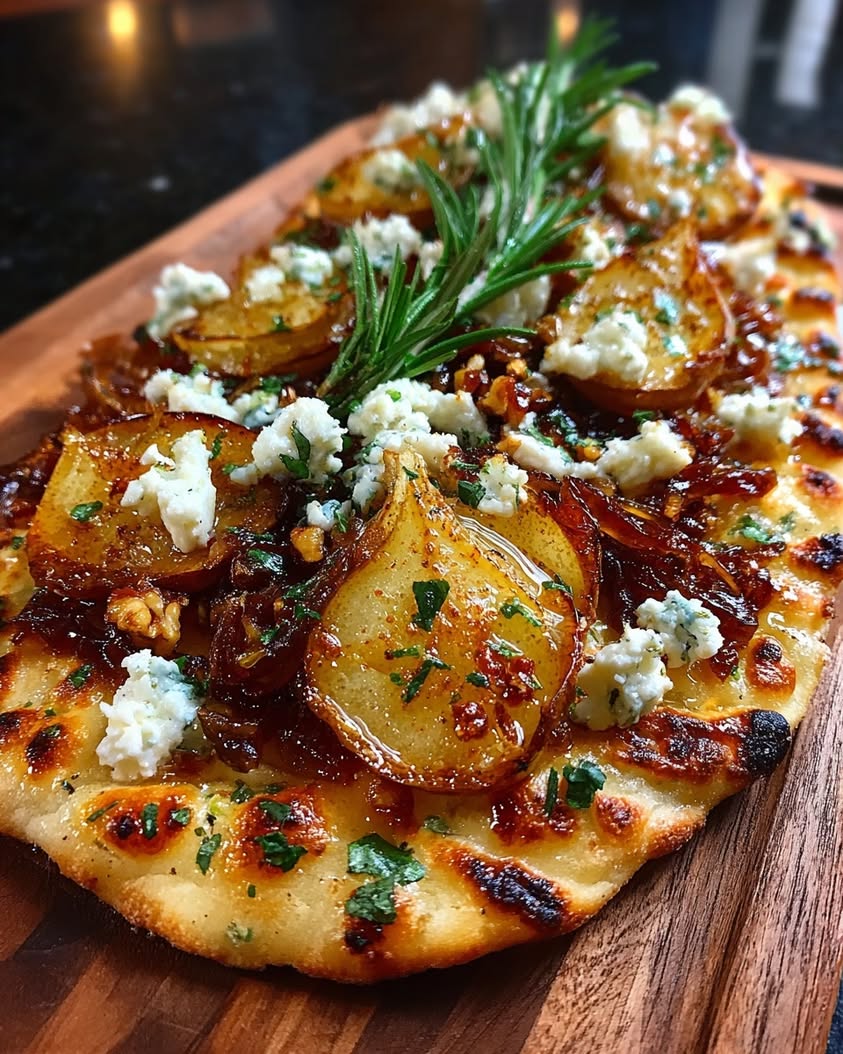
Caramelized Pear & Feta Flatbread with Rosemary Hot Honey: A Gourmet Appetizer Made Easy
This Caramelized Pear & Feta Flatbread with Rosemary Hot Honey is an extraordinary flavor journey that transforms simple ingredients into a gourmet experience. Imagine a crisp, golden flatbread base topped with sweet, tender pears that have been caramelized to perfection. Furthermore, the creamy, salty tang of feta cheese creates a beautiful contrast. Ultimately, a drizzle of aromatic rosemary hot honey ties everything together with a subtle kick.
Creating this impressive dish is surprisingly straightforward, making it perfect for both weeknight dinners and entertaining guests. The combination of sweet and savory elements is incredibly sophisticated, yet the process is accessible for cooks of all levels. Moreover, the visual appeal of this flatbread is stunning, with vibrant colors and an artisanal look. Consequently, it is a fantastic recipe to have in your repertoire for any occasion.
The magic of this recipe lies in its balance. Each component plays a crucial role, from the crisp crust to the flavorful toppings. Additionally, the rosemary hot honey adds a unique, modern twist that elevates the entire dish. This Caramelized Pear & Feta Flatbread is not just food; it is a conversation starter and a guaranteed crowd-pleaser.
Quick Recipe Highlights
- Flavor Profile: This flatbread recipe masterfully balances sweet caramelized pears with salty feta cheese. The rosemary hot honey introduces a warm, herbal spice that complements the other ingredients perfectly. Ultimately, the flavor profile is complex yet harmonious.
- Texture: You will enjoy a delightful contrast of textures, from the crisp flatbread crust to the soft, juicy pears. The feta cheese adds a creamy, crumbly element that melts slightly in the heat. Consequently, every bite is a satisfying sensory experience.
- Aroma: As it bakes, the kitchen fills with the sweet scent of caramelizing fruit and the earthy fragrance of rosemary. The aroma is inviting and sophisticated, hinting at the gourmet quality of this easy appetizer. It is a truly mouth-watering experience.
- Visual Appeal: This dish boasts a beautiful color palette of golden brown crust, creamy white cheese, and glossy honey drizzle. The presentation is rustic and elegant, making it look like it came from a professional kitchen. Therefore, it is perfect for photographing and sharing.
- Skill Level Needed: This is an accessible recipe requiring basic cooking skills like slicing and sautéing. No advanced techniques are needed, making it a great starting point for exploring gourmet flatbread recipes. Essentially, anyone can achieve fantastic results.
- Special Equipment: You only need a baking sheet, a skillet for the pears, and a small saucepan for the honey. A pizza cutter or sharp knife is helpful for serving. Fortunately, no specialized kitchen tools are required for this savory and sweet creation.
Recipe Overview
- Difficulty Level: This Caramelized Pear & Feta Flatbread recipe is rated easy because it uses pre-made flatbreads, eliminating the need for dough preparation. The techniques involved, such as sautéing pears and making a simple infused honey, are fundamental. Consequently, even novice cooks can execute this dish with confidence and success, achieving a gourmet result with minimal stress.
- Category: This versatile dish fits into multiple categories, serving as a stunning appetizer, a light lunch, or a unique dinner option. It bridges the gap between a snack and a full meal, making it incredibly adaptable. Therefore, you can feature it at a party or enjoy it as a simple, satisfying supper.
- Cuisine: While flatbread is a global staple, this recipe draws inspiration from modern American gastropub cuisine with its bold flavor combinations. The use of hot honey is a contemporary trend, and the pear and feta pairing has Mediterranean influences. Ultimately, it is a fusion dish that feels both familiar and excitingly new.
- Cost: The cost of this flatbread recipe is moderate, as it relies on a few high-quality ingredients rather than a long list. Pre-made flatbreads are affordable, and pears and feta are typically mid-range. Importantly, the gourmet outcome far exceeds the relatively low financial investment required.
- Season: This recipe is excellent in the fall when pears are at their peak, offering the best flavor and texture. However, it works year-round because pears are consistently available in grocery stores. Furthermore, the warm, spiced notes of the rosemary hot honey make it particularly comforting during cooler months.
- Occasion: It is perfect for casual gatherings, wine nights, holiday parties, or a fancy Friday night at home. This flatbread elevates any event without requiring extensive kitchen time. Moreover, its visually impressive presentation makes it ideal for special celebrations and social media-worthy meals.
Why You’ll Love This Caramelized Pear & Feta Flatbread
First and foremost, the taste and texture appeal of this flatbread is undeniable. The journey begins with a crisp, chewy flatbread base that provides a sturdy foundation for the toppings. Then, you encounter the sweet, soft, and slightly jammy caramelized pears, which melt in your mouth. The creamy, salty feta cheese cuts through the sweetness, creating a perfect balance. Finally, the rosemary hot honey drizzle adds a layer of warm, floral, and spicy complexity that makes each bite exciting and unique. This combination of sweet and savory is incredibly addictive and satisfying for the palate.
Another significant benefit is the sheer convenience and preparation ease of this recipe. Unlike making pizza dough from scratch, this recipe uses pre-made flatbreads, drastically cutting down on active kitchen time. Furthermore, the component parts can often be prepared in parallel; you can caramelize the pears while the flatbreads crisp up in the oven. Consequently, you can have a gourmet-level appetizer on the table in about thirty minutes. This makes it an ideal solution for busy weeknights or when unexpected guests arrive. You achieve maximum flavor with minimal effort.
From a nutritional standpoint, this flatbread offers several advantages when enjoyed in moderation. Pears are an excellent source of dietary fiber and vitamin C, supporting digestion and immune health. Additionally, feta cheese provides a boost of calcium and protein, though it is wise to be mindful of its sodium content. Using a whole-wheat or multigrain flatbread can further increase the fiber content. Compared to many takeout options, this homemade version gives you control over the quality and quantity of ingredients. Therefore, it is a more conscious choice for a flavorful meal.
The social and entertaining value of this dish cannot be overstated. This Caramelized Pear & Feta Flatbread looks and tastes incredibly impressive, guaranteeing compliments from your friends and family. It is the perfect centerpiece for a casual cocktail party or a pre-dinner nibble. Moreover, because it is easy to slice and share, it encourages a communal and interactive dining experience. Serving this flatbread signals that you have put thought and care into the menu. It is a simple way to elevate any gathering.
Finally, this recipe is remarkably cost-effective and accessible. The ingredients are not exotic or prohibitively expensive; you can find them at most standard grocery stores. Pre-made flatbreads, a block of feta, a few pears, and basic pantry staples for the honey are all you need. Consequently, you can create a restaurant-quality dish for a fraction of the price of dining out. This accessibility makes it easy to incorporate into your regular meal rotation. It proves that gourmet cooking can be both easy and affordable.
Historical Background and Cultural Significance
The concept of flatbread is one of the oldest and most universal forms of food, with roots tracing back thousands of years across numerous cultures. From the naan of India to the piadina of Italy, flatbreads have served as a staple food, a vehicle for other ingredients, and a symbol of shared meals. The modern “flatbread” as we know it in Western cuisine often draws inspiration from these traditional bases but is typically thinner and crisper. This particular recipe represents a contemporary evolution, moving beyond classic tomato sauce and mozzarella to explore more adventurous, gourmet toppings. It is a testament to the endless adaptability of this ancient food form.
The cultural significance of combining fruit with cheese on bread is deeply embedded in many European traditions. For instance, the French have long paired pears with cheese in various forms, and the Italians are masters of balancing sweet and savory flavors on focaccia and pizzas. This Caramelized Pear & Feta Flatbread sits comfortably within this tradition while incorporating a distinctly modern American twist: hot honey. Hot honey, a infusion of chili peppers in honey, gained widespread popularity in the 2010s, particularly in the Brooklyn food scene. Therefore, this dish is a fusion of old-world sensibility and new-world culinary innovation.
The evolution of this specific recipe mirrors broader trends in the food world towards bold flavor combinations and accessible gourmet cooking. As home cooks became more adventurous and interested in restaurant-style dishes, recipes that bridged the gap between simple and sophisticated grew in popularity. The use of pre-made bases like naan or flatbread made this transition easier, allowing people to focus on creating exciting toppings without the fuss of dough-making. This flatbread recipe is a perfect example of that trend, enabling anyone to create a visually stunning and complex-tasting dish with confidence.
Regional variations of fruit and cheese on bread are plentiful, showcasing the versatility of the concept. In the American South, you might find a biscuit with pear jam and pimento cheese. Conversely, in the Mediterranean, a flatbread might be topped with figs, halloumi, and a thyme-infused syrup. This recipe’s use of feta (a Greek cheese) and rosemary (a Mediterranean herb) nods to that region’s flavors. However, the caramelization of the pears and the application of hot honey are techniques and flavors with a strong footing in modern American cuisine. This flatbread is a beautiful melting pot of global influences.
Ingredient Deep Dive
Pears: Pears have a rich history dating back to prehistoric times, with cultivation beginning in China and later spreading through Europe via Roman conquests. They are a symbol of immortality in Chinese culture and were beloved by Greek and Roman poets. Nutritionally, pears are a powerhouse of fiber, particularly in the skin, which aids digestion and promotes heart health. They are also a good source of vitamin C, potassium, and antioxidants. For this recipe, select pears that are firm but slightly yielding at the neck for optimal caramelization; Bosc or Anjou varieties work exceptionally well. Store unripe pears at room temperature and refrigerate ripe ones. If pears are unavailable, firm apples like Honeycrisp make a excellent substitution.
Feta Cheese: Feta is a brined curd cheese with a documented history in Greece dating back to the Byzantine era. It holds a Protected Designation of Origin (PDO) status in the European Union, meaning authentic feta must be made in specific regions of Greece from sheep’s milk or a sheep and goat milk blend. This cheese is a good source of calcium, phosphorus, and protein, though it is high in sodium. Its distinct tangy and salty flavor is crucial for balancing the sweetness in this flatbread. When selecting feta, opt for a block stored in brine for the best flavor and texture, avoiding pre-crumbled versions which can be drier. Store feta in its brine in the refrigerator. For a milder flavor, goat cheese can be used as a substitute, or for a dairy-free version, a firm, salted tofu or vegan feta.
Hot Honey: While honey itself is an ancient food, hot honey is a relatively modern creation, popularized by companies like Mike’s Hot Honey in New York City. It combines the natural sweetness of honey with the capsaicin heat from chili peppers, creating a complex condiment. Honey offers natural antioxidants and has antimicrobial properties. For the rosemary infusion, fresh rosemary is steeped in warmed honey, imparting its piney, aromatic essence. This step is simple but transforms ordinary honey into something extraordinary. You can control the heat level by the type and amount of chili flakes used. If you are short on time, a store-bought hot honey can be used, though infusing it with fresh rosemary is highly recommended for the best flavor.
Flatbread: The flatbread base is the canvas for your creation. You can use naan, pita bread, or specifically marketed “flatbreads” from the grocery store. Look for ones that are thick enough to hold toppings without becoming soggy. For a healthier option, choose a whole-grain or multigrain version to add fiber and nutrients. The flatbread provides the carbohydrate foundation for the meal, offering energy. To store, keep them in a cool, dry pantry or freeze them for longer shelf life. For a gluten-free adaptation, many excellent gluten-free flatbread or pizza crust options are available in stores today. The key is to pre-bake the base until crisp to prevent sogginess.
Common Mistakes to Avoid
- Using Overripe Pears: Overly soft pears will turn to mush when cooked instead of holding their shape and caramelizing nicely. You need pears that are firm-ripe so they soften during cooking but maintain some texture. This ensures a pleasing mouthfeel in the final flatbread.
- Skipping the Pre-Bake: Failing to bake the flatbread alone first is a common error that leads to a soggy crust. This crucial step ensures the base is crisp and sturdy enough to support the juicy pear toppings without becoming limp. Always pre-bake your flatbread until it is lightly golden.
- Overcrowding the Skillet: When caramelizing the pears, give them space in the pan. If the skillet is too crowded, the pears will steam instead of developing a beautiful, caramelized exterior. Cook them in a single layer, possibly in batches, for the best results.
- Burning the Honey: When infusing the rosemary hot honey, use low heat. Honey can burn quickly, which will make it bitter and ruin the sauce. Gently warm the honey just until it is thin enough to drizzle and the rosemary has had time to infuse its flavor.
- Using Pre-Crumbled Feta: Pre-crumbled feta is often coated in anti-caking agents and can be drier and less flavorful than a block feta stored in brine. For the creamiest texture and best taste, always buy a block of feta and crumble it yourself just before using.
- Adding Toppings Too Early: If you add the feta and pears at the very beginning of the final bake, the cheese can over-melt and release oil, and the pears can over-cook. Adding them partway through ensures everything heats through perfectly without compromising texture.
- Neglecting the Seasoning: Even though feta is salty, the pears and flatbread benefit from a light seasoning. A pinch of flaky sea salt and a crack of black pepper at the end can elevate the flavors and make them pop.
- Slicing Too Soon: Let the flatbread rest for a minute or two after it comes out of the oven. This allows the cheeses to set slightly and the toppings to firm up, making it easier to slice cleanly without everything sliding off.
Essential Techniques
Caramelizing Pears: Caramelization is a chemical process where natural sugars brown and develop deep, complex flavors when exposed to heat. For this flatbread recipe, it is essential for transforming the simple pear into a sweet, rich, and slightly savory component. To master it, use a medium-high heat and a neutral oil or butter, ensuring the pan is hot before adding the pear slices. Arrange them in a single layer and resist the urge to stir constantly; let them sit to develop a golden-brown crust. A common pitfall is moving the pears too often, which prevents proper browning. The visual cue for success is seeing a consistent, deep golden color on the surfaces touching the pan, which indicates the sugars have successfully caramelized.
Infusing Honey: Infusion is the process of steeping an ingredient in a liquid to transfer its flavors. For the rosemary hot honey, this technique allows the herbal notes of the rosemary and the heat from the chili flakes to permeate the honey, creating a multi-dimensional sauce. To do this correctly, gently warm the honey in a saucepan over low heat until it becomes fluid. Then, add the rosemary and chili flakes, and let them steep off the heat for several minutes. The key pitfall is applying too much heat, which can destroy the delicate flavors of the rosemary and risk burning the honey. Success is achieved when the honey has visibly thinned and carries the distinct aroma of rosemary and a subtle warmth from the chili.
Building a Flatbread: Proper assembly is crucial for achieving a flatbread with a crisp base and evenly melted toppings. The technique involves creating a barrier and layering thoughtfully to prevent sogginess. After pre-baking the flatbread, a light layer of olive oil or a thin spread of a complementary sauce (like a garlic confit spread) can act as this barrier. Then, distribute the toppings evenly, leaving a small border for the crust. A common mistake is overloading the flatbread with too many wet ingredients, which will steam the crust. The visual cue for a well-built flatbread is a golden, crisp edge and a center that is loaded but not drowning in toppings, ensuring every slice is structurally sound.
Pro Tips for Perfect Caramelized Pear & Feta Flatbread
First, for an extra flavor boost, rub the pre-baked flatbread with a cut garlic clove before adding the toppings. This simple step adds a subtle, aromatic garlic essence that complements the sweet and savory profile beautifully.
Secondly, consider adding a handful of arugula or fresh baby spinach on top of the flatbread after it comes out of the oven. The greens will wilt slightly from the heat, adding a fresh, peppery note and a vibrant color contrast.
For added crunch and nuttiness, sprinkle toasted walnuts or pecans over the flatbread along with the feta cheese. The nuts provide a textural contrast to the soft pears and creamy cheese, making the dish even more interesting.
If you have a pizza stone, preheat it in the oven and bake your flatbread directly on it. The stone conducts heat intensely, resulting in an exceptionally crisp and professionally textured crust that elevates the entire experience.
To ensure even cooking and perfect browning, rotate your baking sheet halfway through the cooking time. Ovens often have hot spots, and this rotation guarantees that every part of your flatbread cooks uniformly.
Let your infused rosemary hot honey cool completely before drizzling. As it cools, it will thicken slightly, which means it will cling to the toppings better rather than running off the sides and pooling on the plate.
For a more complex savory note, cook the pears in a combination of butter and a tiny amount of high-quality balsamic vinegar. The balsamic will reduce and add a wonderful tangy sweetness that pairs wonderfully with the pears.
Finally, always use a sharp pizza wheel or a large chef’s knife to cut your flatbread. A dull blade will drag the toppings and compress the flatbread, ruining your beautiful presentation and texture.
Variations and Adaptations
Exploring regional variations can be a fun way to experiment with this flatbread recipe. For a French-inspired twist, use creamy Brie or Camembert cheese instead of feta and top with caramelized onions alongside the pears. For an Italian flair, substitute the feta with fresh mozzarella or burrata and add a few slices of prosciutto after baking. A Middle Eastern version could feature a base spread with labneh, topped with the pears, and finished with a drizzle of date molasses and chopped pistachios. These regional adaptations show how the core concept of sweet fruit and savory cheese on bread is a global phenomenon with endless delicious interpretations.
Seasonal adaptations allow you to enjoy this flatbread year-round with the best produce available. In the summer, substitute the pears with thinly sliced peaches or nectarines for a brighter, juicier flavor. During the winter, roasted and sliced butternut squash or caramelized apples make a wonderful and cozy alternative. In the spring, consider using fresh figs when they are in season for a luxurious treat. You can also adapt the herb in the hot honey; try thyme with peaches or sage with apples. Consequently, this recipe becomes a versatile template that celebrates the flavors of each season.
Dietary modifications are straightforward, making this flatbread accessible to almost everyone. For a gluten-free version, simply use your favorite certified gluten-free flatbread or pizza crust. To make it vegan, replace the feta with a high-quality vegan feta alternative or crumbled, marinated tofu, and ensure you use oil instead of butter for caramelizing the pears. For a lower-carb option, you can serve the pear and feta topping over a bed of mixed greens instead of on a flatbread, turning it into a sophisticated salad. These adaptations ensure that no one has to miss out on this delightful combination of flavors.
Serving and Presentation Guide
Plating this flatbread is key to maximizing its visual impact. First, transfer the fully baked and sliced flatbread to a large, clean wooden cutting board or a simple, neutral-colored platter. This rustic presentation style enhances its artisanal, shareable quality. Arrange the slices slightly fanned out or overlapping, making it easy for guests to grab a piece. If you have added fresh greens like arugula, place them strategically to fill any gaps and add a pop of color. The goal is to create a presentation that looks abundant and inviting, encouraging people to dig in.
Garnishing is the final touch that elevates the dish from homemade to professional. Beyond the rosemary hot honey, a final sprinkle of fresh, finely chopped rosemary or thyme leaves adds a touch of green and fresh aroma. A scattering of flaky sea salt, such as Maldon, not only enhances flavor but also provides a pleasant textural crunch. For a bit of color and earthiness, a light dusting of smoked paprika or a few edible flower petals can be stunning. Remember, garnishes should be intentional and edible, complementing the existing flavors rather than overpowering them.
Considering traditional accompaniments and modern serving suggestions will round out your meal. This flatbread pairs wonderfully with a simple, crisp green salad dressed with a light vinaigrette to balance the richness. For a heartier meal, serve it alongside a bowl of tomato soup or a lentil salad. As part of a larger spread, it fits perfectly on a buffet table with other appetizers like olives, marinated vegetables, and a cheese board. From a temperature standpoint, this flatbread is best served warm from the oven, when the cheese is soft and the crust is at its crispiest.
Wine and Beverage Pairing
Selecting the right wine can enhance the sweet and savory experience of this flatbread. A slightly off-dry Riesling or Gewürztraminer is an excellent choice, as their inherent sweetness and floral notes harmonize with the pears and honey while their acidity cuts through the richness of the feta. Alternatively, a crisp, sparkling wine like Prosecco or Cava provides a refreshing contrast and cleanses the palate between bites. For red wine lovers, a light-bodied, low-tannin red such as a Gamay (Beaujolais) or Pinot Noir can work well, as they offer fruity notes without overwhelming the delicate flavors of the flatbread. Serve white and sparkling wines well-chilled, and red wines slightly below room temperature.
Non-alcoholic alternatives are just as important for creating an inclusive experience. A sparkling apple cider mirrors the effervescence of Prosecco and complements the pear flavors beautifully. For a more sophisticated option, a rosemary-infused lemonade or a ginger beer mocktail can echo the herbal and spicy notes in the hot honey. Iced herbal tea, such as peppermint or chamomile, provides a calming and refreshing counterpoint to the dish’s bold flavors. Ultimately, the goal is to choose beverages that either complement or contrast the key flavors of the flatbread, ensuring a balanced and enjoyable meal for all guests.
Storage and Shelf Life
Proper storage is essential for maintaining the quality of any leftovers. First, allow the flatbread to cool completely to room temperature. Then, place slices in a single layer in an airtight container, separating layers with parchment paper to prevent sticking. You can store it in the refrigerator for up to 2 days. It is not recommended to store it at room temperature due to the dairy and fruit toppings. The crust will soften in the fridge, but you can revive it successfully with the right reheating method.
Reheating instructions are crucial for restoring texture. Avoid the microwave, as it will make the flatbread soggy. Instead, reheat slices in a preheated 375°F (190°C) oven or toaster oven for 5-7 minutes, or until the crust is crisp and the cheese is warm. You can also re-crisp it in a dry skillet over medium heat for a few minutes per side. For freezing, it is best to freeze the components separately, but you can freeze a fully assembled and baked flatbread. Wrap it tightly in plastic wrap and then foil. Reheat from frozen in a 375°F oven until hot throughout. Signs of spoilage include an off smell, visible mold, or a slimy texture on the toppings.
Make Ahead Strategies
This flatbread is an excellent candidate for strategic make-ahead preparation, which is perfect for entertaining. You can caramelize the pears up to two days in advance; simply let them cool, store them in an airtight container in the refrigerator, and gently reheat them or bring them to room temperature before using. The rosemary hot honey can be made weeks ahead of time and stored in a sealed jar at room temperature; in fact, the flavors will continue to meld and improve over time. You can even pre-crumble the feta cheese and store it in the fridge.
When planning your timeline, assemble the flatbreads just before you are ready to bake them. Pre-baking the flatbread bases can be done a few hours ahead; let them cool and store them at room temperature. The quality impact of prepping components ahead is minimal, and in the case of the honey, it is beneficial. For the final assembly, have all your prepped components ready to go. Then, simply top the pre-baked bases and finish the baking process. This strategy allows you to spend time with your guests rather than in the kitchen, while still serving a hot, fresh, and impressive appetizer.
Scaling Instructions
Scaling this recipe up or down is straightforward, but requires minor adjustments. For a single serving, simply halve all the ingredients and use one flatbread. The cooking times will remain roughly the same. When doubling or tripling the recipe for a crowd, you will need to work in batches unless you have multiple oven racks and large baking sheets. If using multiple racks, rotate the baking sheets top to bottom and front to back halfway through baking to ensure even browning.
Equipment adjustments are necessary when scaling up. You may need to use two skillets to caramelize all the pears efficiently, or cook them in sequential batches. Ensure your baking sheets are not overcrowded, as this can lead to steaming instead of crisping. If you are making a very large quantity, consider staggering the baking so each flatbread is served hot and fresh from the oven. Storage considerations remain the same per flatbread, but you will obviously need more container space for any leftovers. With a little planning, you can easily adjust this recipe to feed any number of people.
Nutritional Deep Dive
This Caramelized Pear & Feta Flatbread offers a balanced mix of macronutrients. The flatbread base provides complex carbohydrates for sustained energy. The pears contribute natural sugars and a significant amount of dietary fiber, which aids in digestion and helps regulate blood sugar levels. The feta cheese is a source of protein and fats, particularly saturated fat, so moderation is key. The olive oil and honey add additional healthy fats and simple sugars, respectively. As a whole, the dish provides a good balance, but its calorie density means it is best enjoyed as part of a balanced meal, perhaps paired with a large salad.
From a micronutrient perspective, this flatbread delivers several key vitamins and minerals. Pears are a good source of Vitamin C and potassium. Feta cheese is rich in calcium, which is vital for bone health, and also provides phosphorus and B vitamins. The rosemary in the hot honey contains antioxidants and anti-inflammatory compounds. Using a whole-grain flatbread would further boost the content of B vitamins, iron, and magnesium. For those monitoring sodium intake, be mindful that feta cheese is quite salty, so you may want to reduce or omit any additional salt in the recipe.
Dietary Adaptations
Gluten-Free: Adapting this recipe for a gluten-free diet is incredibly simple. The key is to swap the standard flatbread for a certified gluten-free alternative. Many excellent pre-made gluten-free pizza crusts, naan, or flatbreads are available in most grocery stores. Be sure to follow the package instructions for pre-baking, as gluten-free bases can sometimes require slightly different handling. All other components of the recipe—the pears, feta, and rosemary hot honey—are naturally gluten-free. This easy swap allows anyone with celiac disease or a gluten sensitivity to enjoy this gourmet appetizer without compromise.
Vegan: Creating a vegan version of this flatbread requires two main substitutions. First, replace the feta cheese with a store-bought vegan feta alternative, which is often made from tofu, almonds, or coconut oil. Alternatively, you can make your own by crumbling firm tofu and marinating it in lemon juice, salt, and nutritional yeast. Second, ensure you use olive oil instead of butter for caramelizing the pears. The flatbread base should be checked for dairy, but many are naturally vegan. The rosemary hot honey is trickier, as honey is an animal product. A great substitute is agave nectar or maple syrup gently warmed with rosemary and chili flakes. This adaptation captures the spirit of the original recipe beautifully.
Low-Carb/Keto: For those following a low-carb or ketogenic diet, the flatbread base is the primary challenge. Instead of a traditional flatbread, use a low-carb tortilla or a commercially available keto-friendly pizza crust. You can also create a simple “fathead” dough from almond flour and mozzarella. The pear, while nutritious, is relatively high in sugar, so it should be used very sparingly or replaced with a lower-carb fruit like a few blackberries or raspberries scattered after baking. The feta cheese and olive oil fit well within keto guidelines. For the honey, substitute a sugar-free maple-flavored syrup or a keto-friendly honey alternative to infuse with the rosemary and chili.
Troubleshooting Guide
Soggy Crust: A soggy crust is the most common issue and usually stems from two problems. First, you may not have pre-baked the flatbread base long enough to create a moisture barrier. Second, the toppings, particularly the pears, might have been too wet. To solve this, ensure you pre-bake the base until it is crisp and golden. Also, make sure your caramelized pears have cooled slightly and are not sitting in excess liquid. If your pears are very juicy, you can pat them dry with a paper towel before placing them on the flatbread. Finally, avoid overloading the flatbread with toppings.
Bland Flavor: If your flatbread tastes bland, it is likely a seasoning issue. Remember to season the pears with a tiny pinch of salt while they caramelize, as this enhances their natural sweetness. The feta provides saltiness, but if you are using a milder cheese or less feta, the dish might need more. The solution is to taste and adjust at the end. A drizzle of high-quality extra virgin olive oil and a flaky sea salt finish can work wonders. Additionally, ensure your rosemary hot honey is flavorful enough; if not, let it steep longer or add a pinch more chili flake.
Burnt Edges or Toppings: Burnt edges typically mean your oven temperature is too high or the flatbread is too close to the heating element. Use an oven thermometer to verify the temperature. If burning is a consistent issue, try lowering the temperature by 25°F and baking for a few minutes longer. If the toppings are burning before the crust is crisp, it might be because you added them at the very beginning. The fix is to pre-bake the base first, then add the toppings and bake just until the cheese softens and the edges are golden brown.
Recipe Success Stories
We have been thrilled to receive feedback from countless readers who have made this Caramelized Pear & Feta Flatbread a staple in their homes. One home cook, Sarah from Portland, shared that this recipe was the star of her book club meeting, with guests insisting she share the recipe immediately. She mentioned that using a pre-made whole-wheat naan made the process effortless and that the rosemary hot honey was “a revelation.” Another reader, Mark, adapted it for a vegan Thanksgiving by using a vegan feta and reported that it was the first appetizer to disappear from the table, pleasing both vegan and omnivore relatives alike.
Many have also shared their creative variations, which we love to hear. A common adaptation is adding a protein; several readers have topped the finished flatbread with thin slices of prosciutto or crispy pancetta for a salty, savory punch. Others have experimented with different cheeses, reporting great success with goat cheese, Gorgonzola dolce, and even a sharp white cheddar. For photography tips, multiple readers have noted that natural daylight and a simple wooden background make the colors of the pears, feta, and green rosemary pop, creating a stunning image that is perfect for sharing on social media. These stories highlight the recipe’s versatility and its power to bring people together over fantastic food.
Frequently Asked Questions
Q: Can I use a different type of fruit?
A: Absolutely. While pears are ideal for their firm texture and mild sweetness, apples are a fantastic substitute. For a summer variation, thinly sliced peaches or nectarines work beautifully. Just ensure the fruit is firm enough to hold its shape during the brief cooking time and won’t release excessive water that could make the flatbread soggy.

I’m Shaykee—born in Morocco, seasoned across continents. From airplane galleys to home kitchens, I share the flavors and stories that shaped my journey.