
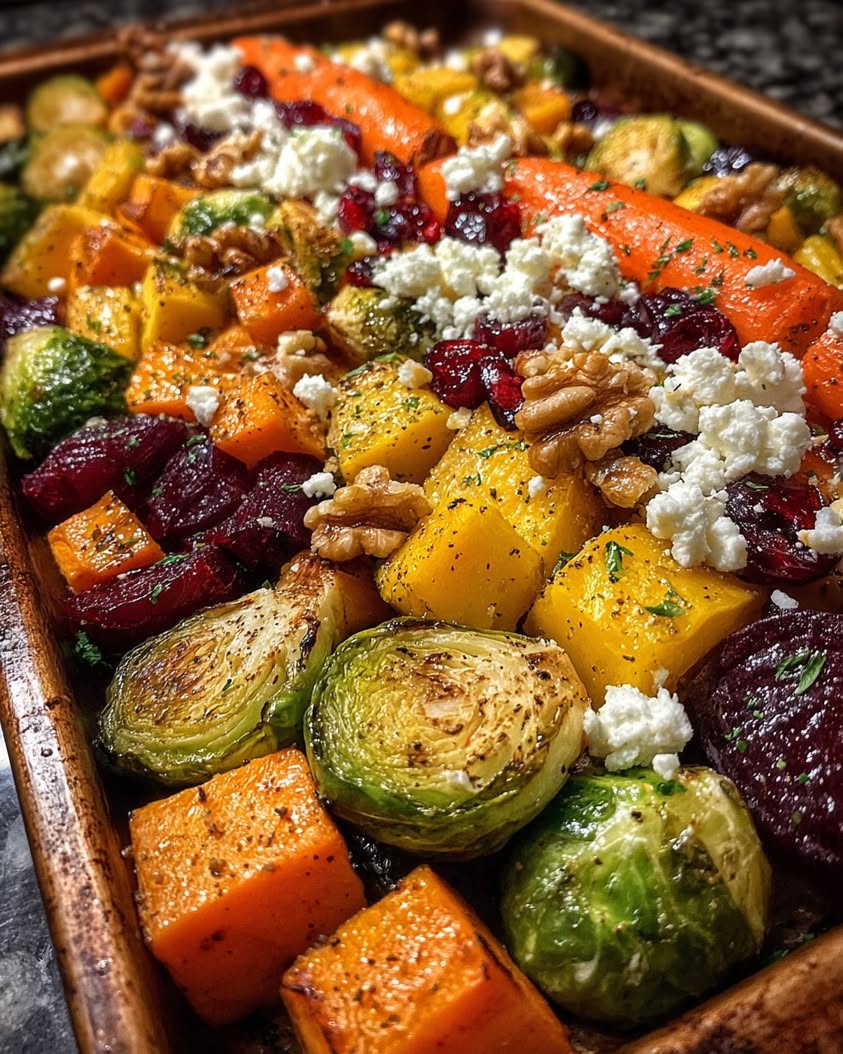
Savory Roasted Veggie Medley with Sweet & Tangy Cranberry-Honey Glaze: A Perfect Holiday Side Dish
This savory roasted veggie medley with sweet and tangy cranberry-honey glaze transforms ordinary root vegetables into an extraordinary culinary experience. Imagine tender Brussels sprouts, sweet potatoes, butternut squash, carrots, and beets all caramelized to perfection then finished with a glossy cranberry-honey glaze. The result is a stunning holiday side dish that will become the star of your dinner table. Furthermore, this recipe balances earthy, sweet, and savory flavors in every bite, creating a memorable dish your guests will request year after year.
The magic of this savory roasted veggie medley lies in its beautiful contrast of textures and flavors. Creamy feta cheese crumbles over the warm vegetables, while toasted walnuts add a satisfying crunch. Meanwhile, the cranberry-honey glaze provides a vibrant sweet-tart note that cuts through the richness of the roasted vegetables. This dish not only tastes incredible but also creates a visually stunning presentation with its deep jewel tones and varied shapes. Consequently, it serves as the perfect centerpiece for holiday meals or special occasions when you want to impress with both flavor and appearance.
Creating this savory roasted veggie medley requires simple techniques that yield restaurant-quality results. Roasting at high heat caramelizes the natural sugars in the vegetables, deepening their flavor profiles significantly. The cranberry-honey glaze adds a festive touch that makes this dish particularly suitable for holiday gatherings. Additionally, the combination of textures from creamy feta and crunchy walnuts elevates this beyond a simple vegetable side. Ultimately, this recipe demonstrates how a few quality ingredients and proper technique can create a truly spectacular dish that celebrates seasonal produce at its finest.
Quick Recipe Highlights
- Flavor Profile: This savory roasted veggie medley features deep caramelized notes from the roasted vegetables balanced by the sweet and tangy cranberry-honey glaze. Earthy flavors from the root vegetables combine beautifully with the salty feta and rich walnuts, creating a complex taste experience that evolves with each bite.
- Texture: The roasted vegetables develop a tender interior with beautifully caramelized edges, while the walnuts provide a satisfying crunch. Meanwhile, the creamy feta cheese adds a soft, crumbly element that contrasts with the glossy glaze coating the warm vegetables.
- Aroma: As this savory roasted veggie medley cooks, your kitchen fills with the warm scent of roasting root vegetables and herbs. The cranberry-honey glaze adds a festive fragrance with its sweet-tart notes that mingle with the nutty aroma of toasting walnuts.
- Visual Appeal: This holiday side dish presents a stunning array of colors from deep green Brussels sprouts to orange sweet potatoes and vibrant red beets. The glossy cranberry-honey glaze creates a beautiful sheen, while the white feta and brown walnuts provide attractive contrast.
- Skill Level Needed: This recipe requires basic knife skills for vegetable preparation and understanding of roasting techniques. However, the steps are straightforward enough for beginner cooks to execute successfully with attention to vegetable cutting sizes and roasting times.
- Special Equipment: You will need a large baking sheet, parchment paper for easy cleanup, and a small saucepan for the glaze. A sharp chef’s knife makes vegetable preparation easier, while a vegetable peeler helps with the butternut squash and carrots.
Recipe Overview
- Difficulty Level: This savory roasted veggie medley earns its easy rating because it involves fundamental cooking techniques like chopping and roasting. The most challenging aspect involves coordinating the vegetable roasting times, but the recipe provides clear guidance. Even novice cooks can achieve excellent results by following the detailed instructions for cutting vegetables to uniform sizes.
- Category: This dish functions perfectly as a holiday side dish but also works as a vegetarian main course when served over grains. It fits into multiple meal categories including weeknight dinners, special occasion feasts, and potluck contributions. The robust nature of this medley makes it substantial enough to stand alongside main proteins.
- Cuisine: This recipe draws inspiration from contemporary American cuisine with its focus on seasonal vegetables and creative flavor combinations. The use of feta cheese nods to Mediterranean influences, while the cranberry-honey glaze incorporates traditional holiday elements. The result is a fusion dish that celebrates global flavors through a modern lens.
- Cost: This savory roasted veggie medley represents excellent value, utilizing affordable root vegetables that are in season during fall and winter. The most expensive components are the feta cheese and walnuts, but both provide significant impact for their quantity. Overall, this dish delivers restaurant-quality presentation and flavor at a fraction of the cost.
- Season: This holiday side dish shines brightest during autumn and winter when root vegetables reach their peak flavor and availability. The warm, comforting nature of roasted vegetables makes it ideal for cooler weather, while the festive elements suit holiday celebrations perfectly. However, the recipe adapts well to spring and summer with seasonal vegetable substitutions.
- Occasion: This medley serves as the perfect holiday side dish for Thanksgiving, Christmas, and other festive gatherings. Beyond holidays, it elevates weeknight dinners, complements weekend brunches, and makes impressive contributions to potlucks. The beautiful presentation also makes it suitable for dinner parties and special family meals.
Why You’ll Love This Recipe
The taste and texture appeal of this savory roasted veggie medley will immediately win you over. Each component contributes something unique to the eating experience, from the caramelized edges of the Brussels sprouts to the creamy sweetness of the roasted butternut squash. The cranberry-honey glaze provides a bright, tangy counterpoint to the earthy vegetables, while the feta cheese adds a salty creaminess that ties everything together. Furthermore, the toasted walnuts deliver a satisfying crunch that contrasts beautifully with the tender vegetables. This harmonious balance of flavors and textures creates a dish that feels both comforting and sophisticated simultaneously.
Convenience and preparation benefits make this savory roasted veggie medley a practical choice for busy cooks. You can prepare the vegetables ahead of time and store them in the refrigerator until ready to roast. The cranberry-honey glaze comes together quickly in a single saucepan while the vegetables cook. Additionally, the entire dish uses just two main cooking vessels—a baking sheet and a small saucepan—minimizing cleanup. The roasting process requires minimal attention, freeing you to focus on other meal components. This straightforward approach to an impressive dish makes it accessible even for cooks with limited time.
Nutritional advantages abound in this holiday side dish, packed with vitamins, minerals, and fiber from the diverse vegetable selection. Brussels sprouts provide vitamin K and antioxidants, while sweet potatoes deliver beta-carotene and complex carbohydrates. Butternut squash contributes vitamin A, carrots offer vitamin A and biotin, and beets provide folate and manganese. The walnuts add healthy fats and protein, creating a more balanced nutritional profile. Unlike many holiday dishes heavy on cream and butter, this medley celebrates natural flavors with minimal added fats. Consequently, you can enjoy generous portions without compromising your health goals.
Social and entertaining value makes this savory roasted veggie medley a standout choice for gatherings. The stunning visual presentation creates an immediate impression when brought to the table, with its vibrant colors and attractive composition. This dish accommodates various dietary preferences since it can easily be made vegan by omitting the feta cheese. The recipe scales beautifully for larger groups without requiring additional technique or equipment. Moreover, the familiar yet elevated flavors appeal to diverse palates, from adventurous eaters to those preferring traditional tastes. This versatility ensures the dish becomes a reliable favorite for all your entertaining needs.
Cost-effectiveness and accessibility make this recipe practical for regular rotation in your meal planning. Root vegetables typically represent some of the most affordable produce options, especially during their peak seasons. The recipe utilizes common ingredients available at most grocery stores year-round. Even the specialty components like feta cheese and walnuts have become mainstream pantry items. Compared to restaurant versions of similar dishes, this homemade medley delivers superior quality at a fraction of the price. The economical nature combined with the impressive results creates outstanding value for both everyday meals and special occasions.
Historical Background and Cultural Significance
The origin story of roasted vegetable dishes traces back to ancient cooking methods where root vegetables were cooked in the embers of fires. However, the specific combination in this savory roasted veggie medley represents a modern interpretation of these traditional techniques. The inclusion of New World vegetables like sweet potatoes and squash connects to indigenous American cooking traditions. Meanwhile, the use of feta cheese links to Mediterranean preservation methods, and walnuts have been cultivated for thousands of years across Asia and Europe. This global heritage creates a dish that celebrates culinary history while feeling completely contemporary in its execution and flavor profile.
Cultural importance of roasted vegetable medleys has evolved significantly over time, particularly in American holiday traditions. The Thanksgiving table historically featured root vegetables as they were among the last fresh produce available in late autumn. Modern interpretations like this savory roasted veggie medley represent a departure from heavy, cream-based casseroles toward lighter preparations that highlight natural flavors. The incorporation of cranberries connects directly to Native American foodways, where they were used both fresh and dried. This cultural synthesis creates a dish that honors historical food traditions while embracing contemporary tastes and nutritional awareness.
Evolution of the recipe format for vegetable medleys reflects broader changes in culinary preferences and available ingredients. Early American cookbooks featured simple roasted root vegetables, typically prepared with just salt, pepper, and animal fat. The development of this savory roasted veggie medley with its cranberry-honey glaze represents the modern fascination with sweet-savory combinations. The addition of cheese and nuts as garnishes shows influence from restaurant plating techniques that have trickled down to home cooking. Current versions prioritize visual appeal and textural contrast, moving beyond mere sustenance to create multi-sensory dining experiences that celebrate seasonal abundance.
Regional variations of vegetable medleys appear across culinary traditions worldwide. Mediterranean countries combine seasonal vegetables with olive oil and herbs, while Asian preparations might include soy sauce and ginger. This particular savory roasted veggie medley incorporates elements from various traditions while remaining rooted in American holiday cooking. The cranberry-honey glaze provides a distinctly North American flavor profile, while the feta cheese introduces a Greek influence. The combination reflects our increasingly global pantry and willingness to experiment with flavor combinations from different culinary traditions. This cultural blending creates dishes that feel both familiar and excitingly new.
Ingredient Deep Dive
Brussels sprouts belong to the Brassica family, sharing lineage with cabbage, kale, and broccoli. Originally cultivated in ancient Rome, they gained their name from their popularity in Brussels, Belgium. These miniature cabbages provide excellent sources of vitamin K, vitamin C, and folate, along with antioxidants that support detoxification. When selecting Brussels sprouts, choose firm, bright green heads with tightly packed leaves, avoiding those with yellowing or loose leaves. Store them unwashed in a plastic bag in your refrigerator’s crisper drawer for up to a week. If unavailable, broccolini or small cabbage wedges make suitable substitutes with adjusted cooking times.
Sweet potatoes have a rich history dating back over 5,000 years to Central and South America, with evidence of cultivation in Peru. Unlike regular potatoes, sweet potatoes belong to the morning glory family and offer superior nutritional benefits including high levels of beta-carotene, vitamin C, and fiber. Choose firm sweet potatoes with smooth, unblemished skins, avoiding any with soft spots or signs of decay. Store them in a cool, dark, well-ventilated place—not the refrigerator, as cold temperatures can alter their texture and flavor. As alternatives, regular potatoes, carrots, or parsnips can provide similar texture with different flavor profiles.
Butternut squash, a winter squash variety, originated in Central and South America before spreading globally through exploration and trade. This versatile vegetable provides significant amounts of vitamin A, vitamin C, and potassium, along with beneficial antioxidants. Select squash that feel heavy for their size with matte, uniform beige skin and no soft spots. Store whole butternut squash in a cool, dark place for up to three months—once cut, wrap tightly and refrigerate for up to five days. Acorn squash, pumpkin, or sweet potatoes can stand in for butternut squash with similar roasting characteristics and sweet, nutty flavors.
Carrots have a fascinating history dating back over 5,000 years to Central Asia, where they were originally purple and yellow rather than orange. Modern orange carrots developed through selective breeding in the Netherlands during the 17th century. Nutritionally, carrots excel as sources of beta-carotene, fiber, vitamin K, and potassium. Choose firm, smooth carrots with bright color, avoiding those that are limp or cracked. Remove green tops before storage to prevent moisture loss, then refrigerate in plastic bags for several weeks. Parsnips make an excellent substitution with their similar texture and slightly sweeter, more complex flavor when roasted.
Beets have been cultivated since ancient times, with evidence of their consumption dating back to the Roman Empire. Originally, only the greens were eaten, with the roots used medicinally. These vibrant root vegetables provide unique phytonutrients called betalains, along with folate, manganese, and potassium. Select small to medium beets with smooth, firm skins and vibrant greens if attached. Store beets unwashed in the refrigerator, separating the greens if present to prevent moisture loss. Golden beets offer a similar flavor without the intense color, while turnips or rutabagas can provide alternative root vegetable options with different nutritional profiles.
Common Mistakes to Avoid
- Uneven vegetable cutting represents the most common error when preparing this savory roasted veggie medley. Vegetables cut to different sizes will cook unevenly, resulting in some pieces becoming overdone while others remain undercooked. Always aim for uniform approximately 1-inch pieces to ensure consistent roasting and caramelization throughout the dish.
- Overcrowding the baking sheet prevents proper caramelization and creates steamed rather than roasted vegetables. The vegetables need space around them for moisture to evaporate and for hot air to circulate. Use two baking sheets if necessary, or roast in batches to achieve the desirable caramelized edges and concentrated flavors.
- Neglecting to preheat the oven adequately compromises the roasting process from the beginning. A properly preheated oven ensures immediate searing of the vegetable surfaces, locking in flavors and creating that desirable caramelization. Always allow at least 15-20 minutes for your oven to reach the specified temperature before adding your vegetables.
- Insufficient oil coating leads to dry, tough vegetables rather than tender ones with crispy edges. The oil conducts heat evenly and helps transfer flavors from seasonings to the vegetables. However, avoid excessive oil that pools at the bottom of the baking sheet and creates greasy results.
- Incorrect roasting temperature affects texture development significantly. Too low temperatures steam the vegetables, while excessively high temperatures burn the exterior before the interior cooks through. The recommended 400°F (200°C) provides the ideal balance for thorough cooking with beautiful caramelization.
- Forgetting to stir or flip the vegetables during roasting creates uneven browning. The surfaces in contact with the hot pan caramelize more quickly than the upper surfaces. Gently stirring halfway through the cooking time ensures all sides develop that desirable golden-brown color and concentrated flavor.
- Adding the glaze too early causes burning because of the sugar content in the honey and cranberries. The high oven temperature can carbonize the sugars before the vegetables finish cooking. Always apply the cranberry-honey glaze during the final minutes of roasting or after removing from the oven.
- Using stale walnuts diminishes the textural contrast and flavor impact they provide. Walnuts contain oils that can turn rancid over time, developing unpleasant flavors. Always taste walnuts before using and purchase from stores with high turnover to ensure freshness.
- Skipping the toasting step for walnuts misses an opportunity to deepen their flavor profile. Raw walnuts have a somewhat bitter, tannic quality that mellows through toasting. The gentle heating process releases their aromatic oils and creates a crisper texture that better complements the roasted vegetables.
- Adding feta cheese before roasting causes it to melt completely rather than maintaining its crumbly texture. The high oven temperature breaks down the cheese’s structure, causing it to become oily and lose its distinctive appearance. Always add feta after removing the vegetables from the oven to preserve its texture and temperature contrast.
Essential Techniques
Proper vegetable cutting technique forms the foundation for successful roasting outcomes. Uniform pieces ensure even cooking, preventing some vegetables from burning while others remain underdone. Always use a sharp chef’s knife and create consistent approximately 1-inch pieces, adjusting cutting methods based on each vegetable’s shape. For Brussels sprouts, trim the stem end and halve lengthwise. Sweet potatoes and butternut squash should be peeled and cut into cubes, while carrots benefit from diagonal slicing for increased surface area. Beets require careful peeling after roasting to preserve their color and nutrients, though they can be peeled raw if preferred.
The roasting process itself represents the transformative technique that develops deep flavors in this savory roasted veggie medley. High heat caramelizes the natural sugars in the vegetables while creating desirable Maillard reactions that generate complex flavor compounds. Proper roasting requires adequate space between vegetable pieces to allow moisture evaporation rather than steaming. The vegetables should be tossed in oil just until coated—too little prevents browning, while too much creates greasy results. Monitoring during the final minutes prevents burning, especially for smaller pieces that cook more quickly. The perfect roast achieves tender interiors with beautifully browned, slightly crisp exteriors.
Creating the cranberry-honey glaze demands careful temperature control and timing. Gentle heating allows the honey to thin sufficiently to coat the cranberries while helping them soften and release their pectin. The mixture should simmer rather than boil vigorously to prevent the honey from developing bitter notes or the cranberries from breaking down completely. Stirring occasionally prevents sticking and ensures even heating throughout. The glaze should thicken slightly but remain pourable, continuing to thicken as it cools. Proper consistency allows it to cling to the vegetables without pooling at the bottom of the serving dish. The balanced sweet-tart flavor profile enhances rather than overwhelms the roasted vegetables.
Toasting walnuts elevates their flavor from simply nutty to deeply aromatic and complex. This technique uses gentle, indirect heat to warm the walnuts gradually, releasing their natural oils and reducing any bitter tannins. Spread walnuts in a single layer on a baking sheet and toast at a moderate temperature until fragrant and slightly darkened. Watch carefully during the final minutes as they can burn quickly once heated through. Alternatively, toast in a dry skillet over medium-low heat, shaking frequently for even coloring. The toasted walnuts should feel crisp and exhibit a richer color with an intensely nutty aroma when properly prepared.
Pro Tips for Perfect Savory Roasted Veggie Medley
Par-cook harder vegetables like beets and carrots briefly before roasting to ensure even cooking with softer vegetables. A quick blanch in boiling water for 3-4 minutes softens their dense texture enough to match roasting times with other components. This technique prevents the common problem of some vegetables remaining crunchy while others become perfectly tender.
Use parchment paper or a silicone baking mat rather than aluminum foil for roasting vegetables. Unlike foil, which can create steam pockets, parchment allows just enough moisture escape while preventing sticking. The non-stick surface makes cleanup easier and promotes more even browning across all vegetable surfaces.
Toss vegetables with oil and seasonings in a large bowl rather than on the baking sheet. This method ensures more even coating without overhandling the vegetables. The bowl’s contained space allows you to distribute oil and seasonings efficiently before spreading in a single layer on your prepared baking sheet.
Consider roasting different vegetables separately if their cooking times vary significantly. While this recipe accounts for similar roasting times, adjustments might be needed with substitutions. Roasting vegetables with similar density and moisture content together ensures optimal texture development for each component.
Add fresh herbs like thyme or rosemary sprigs to the baking sheet during the final 10 minutes of roasting. The brief exposure to heat releases their aromatic oils without burning the delicate leaves. This technique provides a brighter herbal note compared to adding dried herbs at the beginning.
Allow the roasted vegetables to rest for 5 minutes before adding the glaze and toppings. This brief standing time allows the vegetables to reabsorb some of their natural juices and firm up slightly. The improved structure helps them better support the glaze and toppings without becoming mushy.
Toast extra walnuts and store them for future use in other dishes. The toasting process extends their shelf life slightly by reducing moisture content. Cool completely before storing in an airtight container in a cool, dark place for up to two weeks.
Experiment with different artisanal honeys in the glaze to vary the flavor profile. Buckwheat honey provides deeper, molasses-like notes, while orange blossom honey adds citrus undertones. The honey selection significantly influences the final character of the glaze and how it complements the roasted vegetables.
Variations and Adaptations
Regional variations allow this savory roasted veggie medley to reflect different culinary traditions while maintaining its essential character. Mediterranean versions might include kalamata olives, sun-dried tomatoes, and oregano with feta cheese. Asian-inspired adaptations could feature a glaze of miso, ginger, and rice vinegar with sesame oil and toasted sesame seeds. Southwestern interpretations might incorporate chili powder, cumin, and lime juice with cotija cheese and pepitas. Each regional approach maintains the core concept of roasted vegetables with complementary flavors while introducing culturally specific ingredients that transform the dish’s personality completely.
Seasonal adaptations ensure this holiday side dish remains relevant throughout the year with available produce. Spring versions might feature asparagus, radishes, and new potatoes with a lemon-herb glaze. Summer adaptations could include zucchini, eggplant, and bell peppers with a basil-infused oil. Autumn remains the classic season for the original recipe, while winter variations might incorporate parsnips, turnips, and celery root with a maple-based glaze. These seasonal rotations keep the dish feeling fresh and appropriate while taking advantage of peak flavor and affordability throughout the year.
Dietary modifications make this savory roasted veggie medley accessible to various eating preferences and restrictions. Vegan versions simply omit the feta cheese or use a plant-based alternative, ensuring the honey is replaced with maple syrup or agave. For paleo diets, omit the cheese and ensure all ingredients comply with program guidelines. Low-carb adaptations might reduce or eliminate the sweet potatoes and carrots in favor of more Brussels sprouts and squash. Gluten-free needs are naturally met by the recipe’s composition, while dairy-free requirements only require cheese omission. These straightforward adjustments maintain the dish’s integrity while accommodating specific dietary needs.
Flavor variations provide creative opportunities to customize this dish to personal preferences or menu requirements. Herb-infused versions might include rosemary, thyme, or sage added during roasting. Spicy adaptations could incorporate red pepper flakes, harissa, or chipotle powder into the oil coating. Citrus variations might feature orange or lemon zest in the glaze or as finishing seasoning. Umami-boosted versions could include a drizzle of balsamic reduction or tamari after roasting. Each flavor direction maintains the essential roasted vegetable foundation while introducing new taste dimensions that complement different main courses or dining occasions.
Serving and Presentation Guide
Plating techniques significantly enhance the visual appeal of this already beautiful savory roasted veggie medley. For family-style service, arrange the vegetables in sections on a large platter rather than mixing completely, creating intentional color blocking. Alternatively, create height by mounding the vegetables slightly in the center of the platter before drizzling with glaze. For individual portions, use a ring mold to create neat cylinders of the vegetable mixture on each plate. Always leave some vegetables visible rather than completely covering with toppings to showcase the variety of colors and textures in this holiday side dish.
Garnishing ideas extend beyond the specified feta and walnuts to include additional elements that complement the dish’s flavor profile. Fresh herb sprigs like parsley, thyme, or rosemary add color and fragrance. Pomegranate arils provide jewel-like accents that echo the cranberries in the glaze. Microgreens or baby arugula contribute a fresh, peppery note that contrasts with the rich roasted vegetables. Toasted pumpkin seeds or sunflower seeds offer alternative crunch elements with different visual appeal. Each garnishing option should enhance rather than overwhelm the dish, providing both visual interest and complementary flavors.
Traditional accompaniments for this savory roasted veggie medley include roasted meats like turkey, chicken, or pork, which benefit from the sweet and savory elements. The dish also pairs beautifully with grain-based stuffings or wild rice pilafs that absorb the flavorful glaze. For vegetarian menus, serve alongside protein-rich legumes like lentils or chickpeas, or with a hearty grain like farro or quinoa. The medley’s robust flavors and substantial texture make it suitable as a main course for lighter meals when increased portion sizes are served. Consider the overall menu balance when planning accompaniments to ensure complementary flavors and textures across all dishes.
Modern serving suggestions might include deconstructed presentations that highlight individual components separately. Arrange each vegetable type in distinct sections on a long board with small bowls of the glaze, feta, and walnuts for custom assembly. Alternatively, serve the roasted vegetables in individual cast iron skillets for a rustic presentation that maintains warmth. For cocktail parties, create bite-sized versions by piling the vegetable mixture on crostini or in endive leaves. These contemporary approaches adapt the dish for different dining formats while maintaining its essential flavor combinations and visual appeal.
Wine and Beverage Pairing
Wine pairings for this savory roasted veggie medley should complement both the earthy roasted vegetables and the sweet-tart cranberry-honey glaze. Medium-bodied white wines with good acidity like Riesling, Gewürztraminer, or Viognier stand up to the diverse flavors without overwhelming them. For red wine preferences, choose lighter varieties like Pinot Noir, Gamay, or Barbera that won’t dominate the dish’s subtle nuances. Rosé wines, particularly those with some body and fruit character, bridge the gap between white and red preferences beautifully. The ideal wine should have enough acidity to cut through the richness while offering fruit notes that echo the sweet elements in the glaze.
Non-alcoholic alternatives provide sophisticated options for those avoiding alcohol without compromising flavor experience. Sparkling apple cider mirrors the autumn flavors in the dish while providing cleansing bubbles. Ginger beer offers spicy notes that complement the sweet elements and cut through the richness. Herbal teas like peppermint or chamomile served iced provide refreshing counterpoints to the warm, roasted vegetables. Fruit-infused sparkling water with cranberry, orange, or apple slices echoes the dish’s components subtly. Each non-alcoholic option should provide either contrast or complement to the medley’s flavor profile, creating a balanced beverage pairing experience.
Coffee and tea pairings work surprisingly well with this savory roasted veggie medley, particularly for brunch or lunch servings. Lightly roasted coffee with bright acidity complements the caramelized notes without overwhelming the palate. Chai tea’s warm spices echo the autumn feeling of the dish, while green tea provides a clean, palate-cleansing effect. For after-dinner service, espresso’s intensity contrasts with the sweet elements in the glaze. When pairing coffee or tea, consider the preparation method and serving temperature to ensure harmony with the dish’s characteristics and the dining occasion.
Storage and Shelf Life
Storage methods for leftover savory roasted veggie medley require proper cooling and containment to maintain quality. Transfer the vegetables to shallow containers within two hours of cooking to accelerate cooling. Refrigerate promptly at 40°F (4°C) or below, storing the vegetables, glaze, and toppings separately when possible. The walnuts particularly benefit from separate storage to maintain their crisp texture. Properly stored, the roasted vegetables maintain best quality for 3-4 days, though they remain safe to eat for up to 5 days when refrigerated consistently. Always use airtight containers to prevent odor transfer and moisture loss.
Reheating instructions focus on restoring texture and warmth without further cooking the vegetables. Spread the vegetables in a single layer on a baking sheet and warm in a 350°F (175°C) oven for 10-15 minutes until heated through. This method helps restore some crispness to the edges rather than creating steamed vegetables. Microwave reheating works for small portions but results in softer textures—spread on a microwave-safe plate and heat in 30-second intervals, stirring between. Always add fresh glaze and toppings after reheating rather than before to maintain their textures and flavors. The feta cheese should always be added after reheating to prevent melting.
Freezing guidelines allow for longer preservation though with some texture compromise, particularly for the high-water-content vegetables. Freeze the roasted vegetables without glaze or toppings on a parchment-lined baking sheet until solid, then transfer to freezer bags. This initial quick-freeze prevents the pieces from sticking together, allowing you to remove portions as needed. The frozen vegetables maintain best quality for 2-3 months, though they remain safe indefinitely when properly frozen. Thaw overnight in the refrigerator before reheating, and expect slightly softer textures upon thawing. The glaze can be frozen separately in ice cube trays for convenient portioning.
Make Ahead Strategies
Prep timeline for this savory roasted veggie medley allows significant advance preparation without quality compromise. Vegetables can be washed, peeled, and cut 2-3 days ahead when stored properly in airtight containers in the refrigerator. Some vegetables like potatoes and sweet potatoes benefit from being stored in water to prevent oxidation, though beets should be stored separately to avoid color transfer. The cranberry-honey glaze can be prepared up to one week ahead and refrigerated in a sealed container. Walnuts can be toasted several days in advance and stored at room temperature in an airtight container.
Storage between steps requires understanding how different components maintain their quality during holding periods. Cut root vegetables should be patted dry and stored between paper towels in resealable bags to control moisture. The cranberry-honey glaze will thicken when refrigerated—gently reheat before using to restore pouring consistency. Prepared vegetables should be brought to room temperature before roasting to ensure even cooking, though this adds only 15-20 minutes to your timeline. Toasted walnuts should be stored away from light and heat to preserve their freshness and crisp texture until serving.
Assembly tips for last-minute preparation focus on efficiency and quality preservation. Have all components measured and ready before beginning the final cooking phase. Roast the vegetables while gently reheating the glaze if prepared ahead. Toast the walnuts if not done previously—this quick step takes only minutes but significantly impacts flavor. Have serving platters and utensils ready before the vegetables finish roasting to facilitate immediate transfer and garnishing. This organized approach minimizes stress while ensuring each component reaches the table at its optimal quality and temperature.
Scaling Instructions
Halving the recipe works beautifully for smaller households or when serving as part of a larger menu with multiple side dishes. Reduce all ingredients proportionally, though you may need slightly less than half the oil for coating since a smaller quantity distributes more efficiently. Use a standard baking sheet rather than downsizing to maintain proper air circulation around the vegetables. Cooking time may decrease by 5-7 minutes due to the reduced volume, so begin checking for doneness earlier. The glaze can be halved precisely, though making the full quantity provides extra for other uses throughout the week.
Doubling or tripling the recipe accommodates larger gatherings while maintaining the dish’s quality and character. Use multiple baking sheets rather than overcrowding single sheets, and rotate them halfway through cooking for even browning. Consider staggering the roasting times if oven space is limited, holding finished batches in a warm oven until all are ready. The glaze can be multiplied successfully, though cooking time may increase slightly due to volume. When tripling, prepare the vegetables in batches to maintain uniform cutting, which becomes challenging with very large quantities. Allow extra time for preparation when scaling up significantly.
Nutritional Deep Dive
Macro breakdown of this savory roasted veggie medley reflects its balanced nutritional profile with complex carbohydrates from the vegetables, healthy fats from the oil and walnuts, and moderate protein from the walnuts and feta. The dish provides sustained energy release thanks to the fiber-rich vegetables and complex carbohydrates. The fat content comes primarily from monounsaturated and polyunsaturated sources, particularly from the olive oil and walnuts, supporting heart health and nutrient absorption. Protein, while not the focus, contributes to satiety and muscle maintenance, making this dish nutritionally complete enough to serve as a light main course.
Micronutrient analysis reveals an impressive array of vitamins and minerals across the different vegetable components. Vitamin A appears abundantly in the orange vegetables like sweet potatoes, carrots, and butternut squash, supporting vision and immune function. Vitamin C comes from multiple sources including Brussels sprouts, supporting collagen production and antioxidant protection. Vitamin K is particularly abundant in the Brussels sprouts, aiding blood clotting and bone health. Minerals like potassium from the sweet potatoes and beets support cardiovascular health, while manganese from the walnuts aids metabolism. This diverse micronutrient profile makes the dish exceptionally nutrient-dense.
Dietary Adaptations
Vegan adaptation requires just two simple substitutions that maintain the dish’s character completely. Replace honey with maple syrup, agave nectar, or brown rice syrup in the glaze, using the same quantity. Omit the feta cheese or substitute with a plant-based alternative—crumbled tofu marinated in lemon juice and salt provides surprisingly similar texture and tang. These minimal changes transform the dish while preserving the essential flavor balance and textural contrasts that make it special. The nutritional profile remains excellent, with the plant-based version offering similar micronutrient benefits from the diverse vegetable selection.
Paleo adaptation focuses on eliminating dairy and ensuring all ingredients comply with paleo guidelines. Omit the feta cheese entirely, as no direct substitution aligns with strict paleo principles. Verify that your cranberries contain no added sugar, as some dried cranberries include sweeteners not permitted on paleo diets. The remaining ingredients naturally fit within paleo parameters, making this an excellent side dish for those following this dietary approach. The adaptation actually simplifies the recipe while maintaining its essential character and nutritional benefits from the diverse vegetable selection and healthy fats.
Low-carb and keto adaptations modify the vegetable selection to reduce carbohydrate content significantly. Replace the sweet potatoes, carrots, and beets with additional Brussels sprouts and squash, or incorporate low-carb vegetables like cauliflower, broccoli, or mushrooms. Increase the walnuts slightly to compensate for the reduced volume and maintain satiety. The cranberry-honey glaze presents the greatest challenge—consider reducing the quantity significantly or replacing with a sugar-free alternative using erythritol or monk fruit sweetener. These modifications create a dish that fits within low-carb parameters while preserving the concept of roasted vegetables with complementary textures and flavors.
Troubleshooting Guide
Texture issues commonly involve vegetables that are either too soft or not tender enough. If vegetables remain crunchy after the specified cooking time, they may have been cut too large or your oven temperature may be inaccurate. Return to the oven for additional 5-minute intervals until desired tenderness. If vegetables become mushy, they were likely cut too small or overcrowded on the baking sheet. Unfortunately, this cannot be reversed, but the vegetables can be repurposed as a base for soups or vegetable spreads. Proper vegetable sizing and spacing prevent both issues in future preparations.
Flavor balance problems typically involve either insufficient seasoning or components that overwhelm
Print
Caramelized Brussels Sprouts, Sweet Potato, Butternut Squash, Carrot & Beet Medley with Feta, Walnuts, and Cranberry-Honey Glaze
Description
A vibrant and flavorful roasted vegetable medley featuring caramelized Brussels sprouts, sweet potatoes, butternut squash, carrots, and beets, topped with tangy feta, crunchy walnuts, and a sweet cranberry-honey glaze.
Ingredients
For the Crust:
- 1 lb Brussels sprouts, trimmed and halved
- 1 large sweet potato, peeled and cubed
- 1 small butternut squash, peeled and cubed
- 2 large carrots, peeled and sliced
- 1 large beet, peeled and cubed
- 3 tbsp olive oil
- 2 tbsp honey
- 1/4 cup dried cranberries
- 1/2 cup crumbled feta cheese
- 1/2 cup walnuts, roughly chopped
- 1 tsp salt
- 1/2 tsp black pepper
- 1/2 tsp garlic powder
Instructions
1. Prepare the Crust:
- Preheat oven to 400°F (200°C). Line a large baking sheet with parchment paper.
- In a large bowl, toss Brussels sprouts, sweet potato, butternut squash, carrots, and beet with olive oil, salt, pepper, and garlic powder until evenly coated.
- Spread vegetables in a single layer on the prepared baking sheet. Roast for 25-30 minutes, or until tender and caramelized, stirring halfway through.
- In a small bowl, mix honey and dried cranberries. Drizzle over roasted vegetables and toss gently.
- Transfer vegetables to a serving dish. Top with crumbled feta and chopped walnuts before serving.
Notes
You can customize the seasonings to taste.

I’m Shaykee—born in Morocco, seasoned across continents. From airplane galleys to home kitchens, I share the flavors and stories that shaped my journey.