
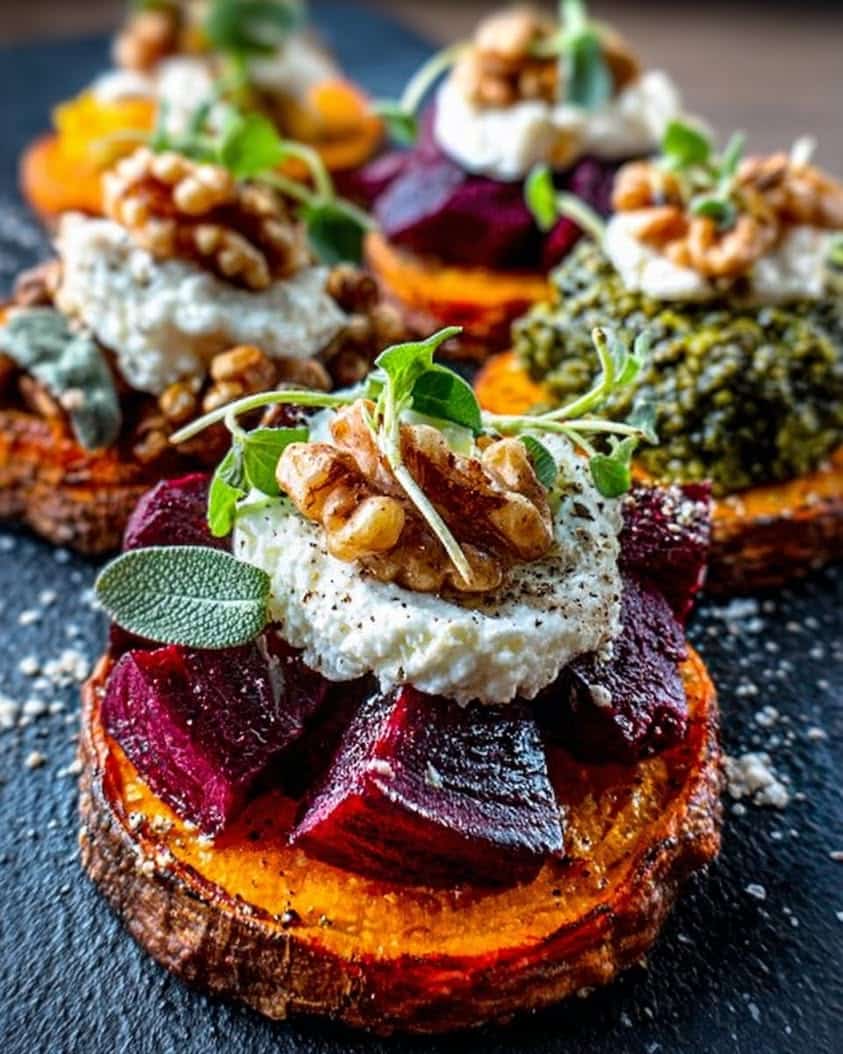
Caramelized Sweet Potato Rounds with Burrata, Roasted Beets & Walnut Sage Pesto: An Elegant Vegetarian Masterpiece
Imagine a dish that captures the essence of autumn on a single plate, where creamy burrata meets roasted sweet potatoes and beets in a symphony of texture and flavor. This stunning vegetarian appetizer or side dish transforms humble root vegetables into an elegant culinary experience that will impress even the most discerning guests. The combination of earthy, sweet, and savory elements creates a perfect balance that feels both rustic and refined, making it ideal for everything from casual dinners to holiday feasts.
The magic of this recipe lies in its contrasting textures and flavors. Caramelized sweet potato rounds provide a sturdy, slightly crisp base with their natural sugars intensified by roasting. Meanwhile, the roasted beets contribute an earthy sweetness and vibrant color that complements the orange hues of the sweet potatoes. Ultimately, the star of the show emerges as the luxurious burrata cheese, whose cool, creamy center provides a delightful contrast to the warm roasted vegetables.
This dish represents the perfect marriage of convenience and sophistication. While the components require some preparation, the result looks and tastes like it came from a professional kitchen. The walnut sage pesto adds a final flourish of nutty, herbaceous flavor that ties everything together beautifully. Whether you are seeking an impressive meatless main course or a standout side dish, this recipe delivers on every level with its stunning visual appeal and complex flavor profile.
Quick Recipe Highlights
- Flavor Profile: This dish offers a sophisticated balance of sweet from the caramelized vegetables, rich creaminess from the burrata, and savory, herbaceous notes from the walnut sage pesto. The combination creates a complex taste experience that evolves with each bite, starting with sweetness, moving through earthiness, and finishing with a nutty, aromatic finish.
- Texture: You will experience multiple textural contrasts, including the firm yet tender caramelized sweet potato rounds, the slightly firmer roasted beets, the luxurious creaminess of the burrata, and the coarse, crunchy consistency of the walnut sage pesto. These varying textures create an exciting mouthfeel that keeps each bite interesting and satisfying.
- Aroma: As this dish comes together, your kitchen will fill with the warm, comforting scent of roasting root vegetables, the earthy fragrance of fresh sage, and the toasty aroma of walnuts. When you break into the burrata, its fresh, milky scent adds another layer to the aromatic experience, making the dish as pleasing to the nose as it is to the palate.
- Visual Appeal: The vibrant colors create a stunning presentation, with bright orange sweet potato rounds, deep magenta beets, snowy white burrata, and emerald green pesto creating a beautiful contrast on the plate. This dish looks particularly impressive when arranged in an alternating pattern or artfully stacked, making it perfect for photographing and sharing on social media.
- Skill Level Needed: This recipe requires intermediate kitchen skills, including vegetable roasting, pesto preparation, and careful assembly. While not overly complicated, it does involve coordinating multiple components and achieving the proper caramelization on the sweet potatoes. Home cooks with some experience will find the process straightforward and rewarding.
- Special Equipment: You will need a baking sheet, parchment paper, a food processor or blender for the pesto, and a sharp knife for slicing vegetables. A mandoline can help achieve uniformly thin sweet potato rounds, but it is not essential if you have good knife skills.
Recipe Overview
- Difficulty Level: We classify this recipe as intermediate because it involves coordinating multiple components that require different cooking techniques and timing. The sweet potatoes need precise slicing and roasting to achieve proper caramelization without burning, while the pesto demands careful balancing of flavors and textures. Additionally, assembling the final dish requires attention to presentation to create the visually stunning result that makes this recipe special.
- Category: This versatile dish functions beautifully as either an elegant vegetarian appetizer or a substantial side dish. It can anchor a meatless meal when served in larger portions or complement roasted meats, poultry, or fish as a side. The recipe also works wonderfully as part of a holiday spread or special occasion menu where visual impact matters.
- Cuisine: This recipe draws inspiration from modern American farm-to-table cooking with clear Italian influences, particularly through the use of burrata and pesto. The approach celebrates seasonal, rustic ingredients while employing contemporary plating techniques. The combination reflects today’s culinary landscape where traditional boundaries blur in favor of flavor-driven creations.
- Cost: The ingredients for this recipe fall into the moderate price range, with burrata typically being the most expensive component. Sweet potatoes and beets offer excellent value, while walnuts and fresh sage represent reasonable investments. Overall, the dish provides restaurant-quality presentation and flavor at a fraction of the cost you would pay dining out.
- Season: This recipe shines brightest during autumn and winter when root vegetables reach their peak sweetness and freshness. However, it works well year-round thanks to the consistent availability of its core ingredients. During spring and summer, you can adapt it by incorporating fresh herbs or seasonal garnishes to lighten its character.
- Occasion: This dish excels at dinner parties, holiday gatherings, date nights, and any event where you want to impress with beautiful, flavorful food. It makes an excellent contribution to potlucks since it travels well and maintains its integrity at room temperature. Furthermore, it serves as a spectacular meatless option for vegetarian guests without requiring separate meal preparation.
Why You’ll Love This Caramelized Sweet Potato Rounds Recipe
First and foremost, the taste and texture combination will absolutely delight your palate. The natural sweetness of the caramelized sweet potatoes creates a perfect foundation for the earthy roasted beets, while the creamy burrata provides a luxurious contrast that feels indulgent yet balanced. Meanwhile, the walnut sage pesto introduces savory, nutty, and herbaceous notes that tie all the elements together beautifully. Each component maintains its distinct character while complementing the others, resulting in a harmonious flavor experience that keeps you coming back for another bite.
From a practical perspective, this recipe offers tremendous convenience despite its impressive appearance. You can prepare several components in advance, making final assembly quick and stress-free when serving guests. The roasting process requires minimal hands-on time, allowing you to focus on other meal preparations or simply relax. Additionally, the ingredients remain accessible year-round at most grocery stores, eliminating the need for special shopping trips or hard-to-find items.
Nutritionally, this dish delivers substantial benefits through its whole-food ingredients. Sweet potatoes provide excellent sources of beta-carotene, fiber, and vitamins, while beets contribute antioxidants, folate, and manganese. Walnuts offer heart-healthy fats and protein, and the olive oil in the pesto provides additional beneficial fats. Together, these ingredients create a nutrient-dense dish that satisfies both your taste buds and your body’s needs.
For entertaining, this recipe provides exceptional social value with its stunning visual appeal and conversation-starting qualities. Guests will marvel at the beautiful presentation and sophisticated flavor combinations, making it a fantastic centerpiece for any gathering. The dish accommodates various dietary preferences naturally, appealing to vegetarians and meat-eaters alike. Moreover, it demonstrates culinary skill and care without requiring professional training or excessive effort.
Finally, this recipe represents outstanding cost-effectiveness compared to similar restaurant dishes. The ingredients provide excellent value, particularly when purchased in season, and the final result rivals what you would pay significantly more for at upscale establishments. The recipe scales easily for larger groups without compromising quality, making it budget-friendly for entertaining. Ultimately, you receive gourmet results using accessible ingredients and straightforward techniques.
Historical Background and Cultural Significance
The individual components of this dish have deep historical roots across different culinary traditions. Sweet potatoes originated in Central or South America over 5,000 years ago and spread globally through exploration and trade. Beets have ancient Mediterranean origins, with both their roots and greens consumed for centuries. Burrata, however, represents a more recent innovation, developed in twentieth-century Italy as a way to utilize cheese-making remnants creatively. The combination of these elements reflects modern culinary trends that honor traditional ingredients while creating new, innovative pairings.
Culturally, this recipe speaks to contemporary dining preferences that value both visual appeal and nutritional benefits. The emphasis on plant-forward eating connects to growing health and environmental consciousness, while the inclusion of luxurious burrata satisfies the desire for indulgence. The pesto, with its Italian heritage, adds a touch of European sophistication to the humble root vegetables, creating a cross-cultural culinary experience that feels both familiar and novel.
The evolution of this recipe mirrors broader food trends that celebrate seasonal, locally-sourced ingredients prepared with technical precision. The caramelization technique enhances natural sugars in the vegetables, a approach popularized by the farm-to-table movement. Meanwhile, the use of burrata represents the ongoing popularity of artisanal cheeses in home cooking. The walnut sage pesto demonstrates how traditional preparations continue to inspire new variations using different nuts and herbs.
Regional variations of this concept appear across different culinary traditions that pair roasted vegetables with creamy elements and savory sauces. In the American South, sweet potatoes often feature in casseroles with marshmallows or pecans. Mediterranean cuisine frequently combines roasted vegetables with yogurt-based sauces or tahini. Italian cooking traditionally pairs burrata with tomatoes or grilled vegetables. This recipe brings together these diverse influences into a cohesive, modern presentation that respects its ingredients’ origins while creating something uniquely contemporary.
Ingredient Deep Dive
Sweet potatoes form the foundation of this dish, providing both structural base and natural sweetness. Historically, sweet potatoes have been cultivated for thousands of years, with evidence of domestication in Peru dating back to 8000 BC. They traveled to Europe with Columbus and later became a staple in the American South. Nutritionally, they excel as sources of beta-carotene, vitamin C, potassium, and fiber. When selecting sweet potatoes, look for firm specimens with smooth, unblemished skins and consistent coloring. Store them in a cool, dark, well-ventilated place for up to two weeks, but never refrigerate raw sweet potatoes as cold temperatures can alter their texture and flavor. For substitutions, regular potatoes or winter squash can work, though they will provide different flavor profiles.
Burrata cheese serves as the luxurious creamy element that elevates this dish from simple to spectacular. This Italian cheese originated in the early twentieth century in the Apulia region as a way to use up the scraps from mozzarella production. The name “burrata” means “buttered” in Italian, referring to its rich, soft interior. Nutritionally, it provides protein, calcium, and phosphorus, though it is higher in fat than many other cheeses. When selecting burrata, look for packages with the cheese fully submerged in whey or water, which indicates freshness. Always check the expiration date and choose the farthest date possible. Store burrata in its liquid in the refrigerator and consume within a day or two of purchase. For substitutions, fresh mozzarella, buffalo mozzarella, or even a high-quality ricotta can work, though they will provide different textural experiences.
Beets contribute earthy sweetness and vibrant color to this composition. Their cultivation dates back to ancient times in the Mediterranean region, with both the roots and greens consumed historically. The Romans used beet roots medicinally, while other cultures valued them primarily as a food source. Nutritionally, beets offer folate, manganese, potassium, iron, and vitamin C, along with unique antioxidants called betalains that provide their distinctive color. When selecting beets, choose small to medium specimens with smooth, firm skins and vibrant greens still attached if possible. Store beets unwashed in the refrigerator, separating the greens if attached to prevent moisture loss. For substitutions, roasted carrots or parsnips can provide similar earthy sweetness, though with different color profiles.
Walnuts form the base of the pesto, providing richness and texture. Walnuts rank among the oldest tree foods known to humans, with evidence of consumption dating back to 7000 BC. They hold cultural significance in many traditions, from ancient Rome where they were considered food for the gods to Persian culture where they symbolized wealth and intellect. Nutritionally, walnuts excel as sources of omega-3 fatty acids, antioxidants, and various vitamins and minerals. When selecting walnuts, look for plump, light-colored kernels without dark spots or shriveling. Store walnuts in an airtight container in the refrigerator or freezer to prevent rancidity due to their high oil content. For substitutions, pecans, almonds, or pine nuts can work well in the pesto, each contributing different flavor characteristics.
Fresh sage brings aromatic, savory notes to the pesto that complement the sweet vegetables perfectly. This herb has a long history of culinary and medicinal use dating back to ancient Roman times, where it was considered a sacred herb with healing properties. The name “sage” derives from the Latin word “salvare,” meaning “to save” or “to heal.” Nutritionally, sage provides vitamin K, various antioxidants, and anti-inflammatory compounds. When selecting fresh sage, look for vibrant, unblemished leaves with a strong fragrance and silvery-green color. Store sage wrapped in slightly damp paper towels in a plastic bag in the refrigerator. For substitutions, fresh thyme or rosemary can work, though they will impart different flavor profiles to the pesto.
Common Mistakes to Avoid
- Cutting sweet potato rounds unevenly leads to inconsistent cooking, with some pieces burning while others remain undercooked. Always use a sharp knife and take time to create uniformly thick slices, approximately 1/4 to 1/2 inch thick. Alternatively, consider using a mandoline slicer for perfect consistency, which ensures even caramelization and cooking timing.
- Overcrowding the baking sheet prevents proper caramelization and creates steamed rather than roasted vegetables. Arrange the sweet potato rounds in a single layer with space between them to allow hot air circulation. Use two baking sheets if necessary, and rotate them halfway through cooking for even browning and optimal texture development.
- Using stale walnuts results in a bitter, off-tasting pesto that can ruin the entire dish. Always taste your walnuts before using them, and store them properly in the refrigerator or freezer to maintain freshness. If your walnuts taste sharp or unpleasant, replace them with fresh ones to ensure the pesto has a clean, nutty flavor.
- Overprocessing the pesto creates a paste-like texture rather than maintaining the desirable coarse consistency. Pulse the ingredients in your food processor just until combined, leaving some texture for visual appeal and mouthfeel. The pesto should have a rustic, slightly chunky character that provides contrast to the creamy components.
- Serving the dish with cold burrata straight from the refrigerator diminishes its creamy texture and mutes its flavor. Remove burrata from the refrigerator about 30 minutes before serving to allow it to come closer to room temperature. This simple step significantly enhances its luxurious mouthfeel and allows its delicate flavor to shine.
- Underseasoning the individual components results in a bland final dish despite quality ingredients. Season each element properly throughout the process, tasting as you go. Remember that the sweet potatoes, beets, and pesto all need adequate seasoning to create a balanced final composition where no single element tastes flat.
- Rushing the roasting process prevents the vegetables from developing their full sweetness and complex flavors. Roast the vegetables until they show deep caramelization and tender texture, even if it takes slightly longer than the recipe suggests. Proper roasting transforms the vegetables’ natural sugars, creating the foundational flavor profile of the dish.
- Neglecting to reserve pasta water or olive oil for adjusting pesto consistency can leave you with a too-thick sauce. The pesto should drizzle nicely over the assembled dish, so have extra olive oil available to thin it if necessary. Proper consistency ensures the pesto distributes evenly and integrates with the other components.
Essential Techniques
Proper vegetable roasting represents the most critical technique in this recipe, transforming raw roots into sweet, caramelized delights. The process involves high heat, adequate space on the baking sheet, and patience to achieve deep browning without burning. Roasting concentrates the vegetables’ natural sugars through the Maillard reaction, creating complex flavors and appealing textures. To master this technique, ensure your oven is fully preheated, use parchment paper to prevent sticking, and avoid overcrowding the pan. Common pitfalls include under-roasting, which leaves vegetables tough and lacking flavor, and over-roasting, which creates bitter, burnt notes. Visual cues for success include golden-brown edges, slightly shrunken appearance, and tender texture when pierced with a fork.
Creating balanced pesto requires understanding how to layer flavors and textures effectively. Traditional pesto relies on the emulsion of oil, nuts, cheese, and herbs, but this walnut sage variation follows a similar principle. The technique involves toasting nuts to enhance their flavor, properly processing ingredients to achieve the desired consistency, and balancing the elements for harmonious taste. To master pesto-making, toast walnuts until fragrant but not burnt, use a food processor for control, and add oil gradually while processing. Common mistakes include over-toasting nuts, creating bitterness, and over-processing, which makes the pesto too smooth. Successful pesto should have a coarse texture, vibrant color, and balanced flavor where no single ingredient dominates.
Caramelizing sweet potatoes demands specific attention to cutting technique, temperature control, and timing. Unlike quick stovetop caramelization, oven caramelization occurs more slowly, allowing the sweet potatoes’ natural sugars to concentrate and brown. The technique involves slicing rounds evenly, coating them adequately with oil, and roasting at the right temperature for sufficient time. To master this process, use a sharp knife for uniform slices, toss rounds thoroughly with oil to promote even browning, and resist the temptation to stir them too frequently during roasting. Common errors include slicing rounds too thick, which prevents proper cooking, or too thin, which leads to burning. Perfectly caramelized sweet potatoes should show golden-brown spots, have slightly crisp edges, and offer tender interiors.
Pro Tips for Perfect Caramelized Sweet Potato Rounds
First, invest in an oven thermometer to ensure accurate temperature reading, as oven calibration issues can significantly impact roasting results. Sweet potatoes require consistent, properly calibrated heat to caramelize properly without burning. Additionally, rotate your baking sheets halfway through cooking to account for hot spots in your oven, ensuring even browning across all pieces.
Consider roasting your own beets instead of using pre-cooked varieties for superior flavor and texture. Fresh roasted beets have deeper, earthier flavor and better structural integrity than vacuum-sealed options. Simply wrap whole, unpeeled beets in foil and roast until tender when pierced with a knife, then slip off the skins once cooled slightly.
Toast your walnuts for the pesto to enhance their nutty flavor and improve texture. Spread raw walnuts in a single layer on a baking sheet and toast at 350°F for 8-10 minutes, watching carefully to prevent burning. The toasting process deepens their flavor profile and makes them crisper for better pesto texture.
Compose your platter strategically by starting with a base of overlapping sweet potato rounds, scattering beets intentionally for color distribution, and placing torn burrata pieces attractively. Drizzle pesto artfully rather than dumping it, and consider reserving some whole sage leaves for garnish. This attention to presentation elevates the dish from simple to spectacular.
Season each component individually throughout the preparation process rather than relying solely on final seasoning. Salt the sweet potatoes before roasting, season the beets if roasting them yourself, and taste the pesto for proper seasoning before assembling. This layered seasoning approach creates depth of flavor that simple final salting cannot achieve.
Allow the assembled dish to rest for 5-10 minutes before serving to let the flavors meld and the burrata soften slightly from the warmth of the vegetables. This brief resting period allows the pesto to permeate the other components while the burrata achieves the perfect creamy consistency for serving.
Variations and Adaptations
Regional variations can transform this dish to reflect different culinary traditions while maintaining its core concept. For a Mediterranean twist, substitute the walnut sage pesto with a sun-dried tomato and basil pesto, and add Kalamata olives and crumbled feta. For a French-inspired version, use herbes de Provence instead of sage and add caramelized shallots to the composition. Asian influences might include a miso-sesame pesto with ginger and substitute the burrata with silken tofu for a vegan option. These regional adaptations demonstrate the recipe’s versatility while introducing new flavor profiles that maintain the original’s balance of sweet, creamy, and savory elements.
Seasonal adaptations allow this dish to shine year-round with appropriate ingredient adjustments. During spring, incorporate fresh peas, asparagus tips, and mint in the pesto for a lighter character. Summer variations might feature grilled rather than roasted sweet potatoes and add fresh corn and basil. Autumn remains the ideal season for the original recipe, while winter adaptations could include roasted Brussels sprouts or parsnips alongside or instead of the beets. These seasonal modifications keep the dish feeling fresh and appropriate regardless of the time of year while taking advantage of peak seasonal produce.
Dietary modifications make this recipe accessible to various eating preferences and restrictions. For vegan adaptation, substitute the burrata with cashew cheese or avocado and use nutritional yeast instead of Parmesan in the pesto. Gluten-free needs require no changes as the recipe naturally contains no gluten. For nut allergies, replace walnuts in the pesto with sunflower or pumpkin seeds. Low-carb versions might feature larger beet portions and reduced sweet potato quantities, while keto adaptations could use radishes instead of sweet potatoes and increase the high-fat components like pesto and cheese.
Flavor variations can dramatically change the character of the dish while maintaining its structural integrity. Consider adding spice with chili flakes to the sweet potatoes before roasting or incorporating harissa into the pesto. Smoky variations might include smoked paprika on the vegetables or using smoked salt in the pesto. For brighter profiles, add lemon zest to the pesto or include orange segments in the final assembly. Umami enhancements could include mushroom powder in the seasoning or adding truffle oil to the finished dish. These flavor modifications allow you to customize the recipe to your personal taste preferences or specific menu needs.
Serving and Presentation Guide
Plating techniques significantly impact the visual appeal and eating experience of this dish. For individual servings, arrange three sweet potato rounds slightly overlapping on each plate, then top with beets, burrata, and pesto. For family-style presentation, create a beautiful pattern on a large platter with concentric circles of sweet potato rounds, scattered beets, torn burrata, and drizzled pesto. Consider color distribution carefully, ensuring the vibrant red beets and green pesto create visual interest across the entire presentation. The goal is to create a composition that looks artful yet natural, with careful attention to negative space and component placement.
Garnishing ideas can elevate the presentation from beautiful to breathtaking. Fresh whole sage leaves, lightly fried until crisp, make an elegant garnish that reinforces the pesto’s flavor. Toasted walnut halves or pieces provide textural contrast and visual cue to the pesto ingredients. Microgreens or edible flowers add sophistication and freshness, particularly for spring and summer variations. A final drizzle of high-quality olive oil or balsamic glaze creates professional-looking finishing touches. Remember that garnishes should complement rather than overwhelm the dish, both visually and flavor-wise, enhancing what is already present.
Traditional accompaniments might include crusty bread to soak up the pesto and burrata remnants, a simple green salad to provide freshness contrast, or roasted meats for a more substantial meal. Modern serving suggestions might feature this dish as part of a vegetarian tasting menu, as a starter before pasta, or as the centerpiece of a grazing board with other vegetable preparations. Consider the overall menu balance when planning accompaniments, ensuring they complement rather than compete with the dish’s sophisticated flavor profile.
Wine and Beverage Pairing
Wine pairings should complement the dish’s sweet, earthy, and creamy elements without overwhelming its delicate balance. A crisp, acidic white wine like Sauvignon Blanc cuts through the richness of the burrata and pesto while complementing the earthy notes. For red wine lovers, a light Pinot Noir with its red fruit notes and earthiness harmonizes beautifully with the roasted vegetables. Orange wines, with their complexity and tannic structure, provide an interesting pairing that stands up to the multiple flavor components. Ultimately, the best wine pairing depends on which element you want to highlight, with whites emphasizing freshness and reds complementing earthiness.
Non-alcoholic alternatives can provide equally sophisticated pairing experiences. Sparkling water with a twist of lemon or lime cleanses the palate between bites of the rich components. Herbal teas like sage or rosemary infusions echo the pesto’s herbal notes without competing flavors. Craft sodas with botanical elements, such as ginger or elderflower, provide sweetness that complements the caramelized vegetables. For something more substantial, a creamy cashew or oat milk-based beverage can mirror the burrata’s richness while providing a neutral flavor backdrop.
Coffee and tea pairings work surprisingly well with this dish, particularly for brunch or lunch servings. Light roast coffees with bright acidity complement the sweet potatoes without overwhelming the other components. Earthy teas like pu-erh or roasted barley tea mirror the beets’ earthiness, while floral teas like jasmine provide contrast to the savory elements. Consider serving temperature carefully, with iced options for warm weather and hot beverages for cooler occasions. The key to successful coffee and tea pairing lies in matching intensity, with lighter preparations generally working better than strong, bold varieties.
Storage and Shelf Life
Storage methods vary by component, with each element having different requirements for maintaining quality. Store assembled dishes immediately in the refrigerator, though the components will soften over time. For best results, store sweet potato rounds, beets, burrata, and pesto separately in airtight containers. The sweet potatoes and beets will keep for 3-4 days refrigerated, while pesto lasts 5-7 days when covered with a thin layer of olive oil to prevent oxidation. Burrata should be consumed within 1-2 days of opening for optimal freshness and texture.
Temperature requirements are crucial for food safety and quality maintenance. All components except the pesto require refrigeration at 40°F or below. The pesto can be stored at room temperature for several hours during serving but should be refrigerated for longer storage. Never leave the assembled dish at room temperature for more than two hours due to the dairy content in the burrata. When transporting the dish, keep it chilled until ready to serve, particularly in warm weather.
Container recommendations include glass containers with tight-fitting lids for the roasted vegetables and pesto, as they don’t absorb odors or flavors. For the burrata, keep it in its original packaging or submerged in fresh water in an airtight container. When storing the assembled dish, use a shallow container to allow even cooling and prevent condensation from making the components soggy. Always label containers with dates to track freshness and ensure timely consumption.
Make Ahead Strategies
Prep timeline can significantly reduce stress when serving this dish for entertaining. Up to three days ahead, roast the beets and sweet potatoes, then store them separately in the refrigerator. One to two days ahead, prepare the pesto and store it with a protective layer of olive oil. On the day of serving, remove components from the refrigerator about an hour before assembly to take the chill off, then compose the platter just before serving. This staggered approach spreads the work while ensuring optimal freshness and texture in the final presentation.
Storage between steps requires attention to maintain each component’s quality. Cool roasted vegetables completely before refrigerating to prevent condensation and sogginess. Store pesto in the smallest possible container with minimal air space, then float a thin layer of olive oil on top to prevent discoloration. Keep burrata in its original packaging until ready to use, and only tear it just before assembly to maintain its fresh, creamy texture. Proper storage between preparation stages ensures that make-ahead convenience doesn’t compromise the final dish’s quality.
Scaling Instructions
Halving the recipe works beautifully for smaller gatherings or couples. Use one medium sweet potato, one small beet, and a single burrata ball. The pesto recipe halves easily, but consider making the full batch since it stores well and has other uses. Cooking times may decrease slightly with smaller quantities, so check for doneness a few minutes early. Presentation remains important even at smaller scale, so take care with plating to maintain the visual appeal that makes this dish special.
Doubling or tripling the recipe requires practical considerations for successful execution. Use multiple baking sheets for the vegetables, rotating them between oven racks halfway through cooking. Consider roasting vegetables in batches if oven space is limited, though this extends prep time. For the pesto, you may need to make multiple batches unless you have a very large food processor. When assembling large quantities, create multiple platters rather than one enormous presentation, which becomes difficult to serve. Scaling up works well for this recipe, though it requires advance planning and adequate equipment.
Nutritional Deep Dive
Macro breakdown reveals a balanced profile with complex carbohydrates from the vegetables, healthy fats from the olive oil, walnuts, and burrata, and moderate protein primarily from the cheese and nuts. A single serving provides approximately 350-400 calories, with roughly 45% from carbohydrates, 40% from fat, and 15% from protein. The specific breakdown varies based on portion sizes and exact ingredients used, but the dish naturally provides sustained energy release thanks to the fiber-rich vegetables and balanced macronutrient distribution.
Micronutrient analysis shows exceptional vitamin A content from the sweet potatoes, along with significant vitamin C, manganese, and potassium from the combined ingredients. The beets contribute folate and iron, while the walnuts provide important minerals like copper and magnesium. The olive oil in the pesto offers vitamin E, and the burrata provides calcium and phosphorus. This diverse micronutrient profile supports various bodily functions, from vision and immune health to bone strength and antioxidant protection.
Dietary Adaptations
Gluten-free adaptation requires no changes as the recipe naturally contains no gluten-containing ingredients. However, always check labels on prepared ingredients like pesto if using store-bought versions, as some may contain hidden gluten. For complete assurance, prepare all components from scratch using whole foods, which guarantees the dish remains safely gluten-free while maximizing flavor and nutritional benefits.
Dairy-free adaptation involves replacing the burrata with vegan alternatives and adjusting the pesto. For the creamy element, consider cashew cheese, avocado slices, or vegan mozzarella-style products. In the pesto, omit the Parmesan cheese or substitute with nutritional yeast for a similar savory note. These changes create a plant-based version that maintains the original’s textural contrasts and flavor balance while accommodating dairy restrictions.
Vegan adaptation combines the dairy-free modifications with attention to other animal products. Replace burrata with vegan alternatives, use nutritional yeast in the pesto instead of Parmesan, and ensure all other ingredients meet vegan standards. The resulting dish provides the same visual appeal and textural experience while aligning with vegan dietary principles. The natural sweetness of the vegetables and savoriness of the pesto create satisfaction without animal products.
Troubleshooting Guide
Texture issues commonly arise from improper roasting techniques or component preparation. If sweet potatoes remain tough, they likely need longer roasting time at proper temperature. If they become mushy, they may be cut too thin or overcrowded on the baking sheet. Soggy vegetables often result from insufficient cooling before storage, which creates condensation. To remedy texture problems, adjust roasting time and temperature, ensure proper spacing on baking sheets, and always cool components completely before refrigerating.
Flavor balance problems can diminish an otherwise well-executed dish. If the overall taste seems bland, the likely culprit is insufficient seasoning throughout the preparation process. If bitterness dominates, the walnuts may be over-toasted or past freshness. If the dish tastes too sweet, consider reducing sweet potato portion or increasing savory elements in the pesto. To correct flavor issues, taste each component individually before assembly and adjust seasoning accordingly, remembering that cold temperatures mute flavors.
Recipe Success Stories
Community feedback consistently highlights this recipe’s impressive presentation and surprising simplicity. Many home cooks report receiving compliments from guests who assume the dish came from a professional kitchen. Several have shared photographs of their beautiful platters on social media, often noting how the vibrant colors photograph exceptionally well. The recipe has become a favorite for special occasions, with multiple users mentioning it has earned a permanent place in their holiday rotation due to its reliability and crowd-pleasing qualities.
Variation successes demonstrate the recipe’s adaptability to different tastes and ingredient availability. One cook substituted delicata squash for the sweet potatoes with excellent results, while another used hazelnuts instead of walnuts in the pesto. Several vegetarian families have shared how this dish has become a mealtime favorite, with children particularly enjoying the sweet potatoes and creamy burrata. These adaptation stories illustrate how the recipe serves as a template for creativity while maintaining its core appeal.
Frequently Asked Questions
Can I make this recipe with regular potatoes instead of sweet potatoes? Yes, regular potatoes can work, though the flavor profile will change significantly. Yukon Gold or russet potatoes provide a more neutral base that allows the other components to shine differently. The cooking time may need adjustment depending on the potato variety, and you will lose the natural sweetness that balances the savory elements in the original recipe.
How far in advance can I assemble the entire dish? For optimal texture and flavor, assemble the dish no more than 30 minutes before serving. The components can be prepared ahead and stored separately, but once assembled, the sweet potatoes may soften from the pesto and burrata moisture. If you must assemble earlier, keep components separate until the last possible moment for the best eating experience.
Can I use store-bought pesto to save time? While homemade pesto provides superior flavor, quality store-bought pesto can work in a pinch. Look for refrigerated rather than shelf-stable versions, and consider brands with minimal preservatives. You may need to thin store-bought pesto with additional olive oil to achieve the proper drizzling consistency, and taste it before using to ensure it complements the other components.
What if I cannot find burrata? Fresh mozzarella makes the best substitute for burrata, though it lacks the creamy center. For a closer approximation, combine fresh mozzarella with a small amount of ricotta or mascarpone. Another option involves using buffalo mozzarella, which has higher moisture content and richer flavor than standard fresh mozzarella, though the textural experience will differ from true burrata.
Can I roast the beets and sweet potatoes together? While possible, roasting them separately yields better results due to their different moisture contents and cooking times. Beets typically take longer to roast than sweet potato rounds, and their moisture can affect the caramelization process. If you must roast them together, use separate areas of the baking sheet and be prepared for potentially
Print
Caramelized Sweet Potato Rounds with Burrata, Roasted Beets & Walnut Sage Pesto
Description
A vibrant, elegant dish featuring caramelized sweet potato rounds topped with creamy burrata, earthy roasted beets, and a nutty walnut sage pesto.
Ingredients
For the Crust:
- 2 large sweet potatoes, sliced into 1/2-inch rounds
- 2 medium beets, peeled and diced
- 1 ball burrata cheese
- 1 cup walnuts, toasted
- 1/4 cup fresh sage leaves
- 1/4 cup olive oil, plus more for roasting
- 2 cloves garlic
- 1 tbsp maple syrup
- Salt and black pepper to taste
- Balsamic glaze for drizzling
Instructions
1. Prepare the Crust:
- Preheat oven to 400°F. Toss sweet potato rounds and diced beets with olive oil, salt, and pepper. Arrange on a baking sheet and roast for 25-30 minutes, flipping halfway, until tender and caramelized.
- While vegetables roast, prepare pesto: In a food processor, combine toasted walnuts, sage, garlic, and olive oil. Blend until smooth, then season with salt and pepper.
- Arrange roasted sweet potato rounds on a serving platter. Top with torn burrata, roasted beets, and dollops of walnut sage pesto.
- Drizzle with balsamic glaze and serve warm.
Notes
You can customize the seasonings to taste.

I’m Shaykee—born in Morocco, seasoned across continents. From airplane galleys to home kitchens, I share the flavors and stories that shaped my journey.