
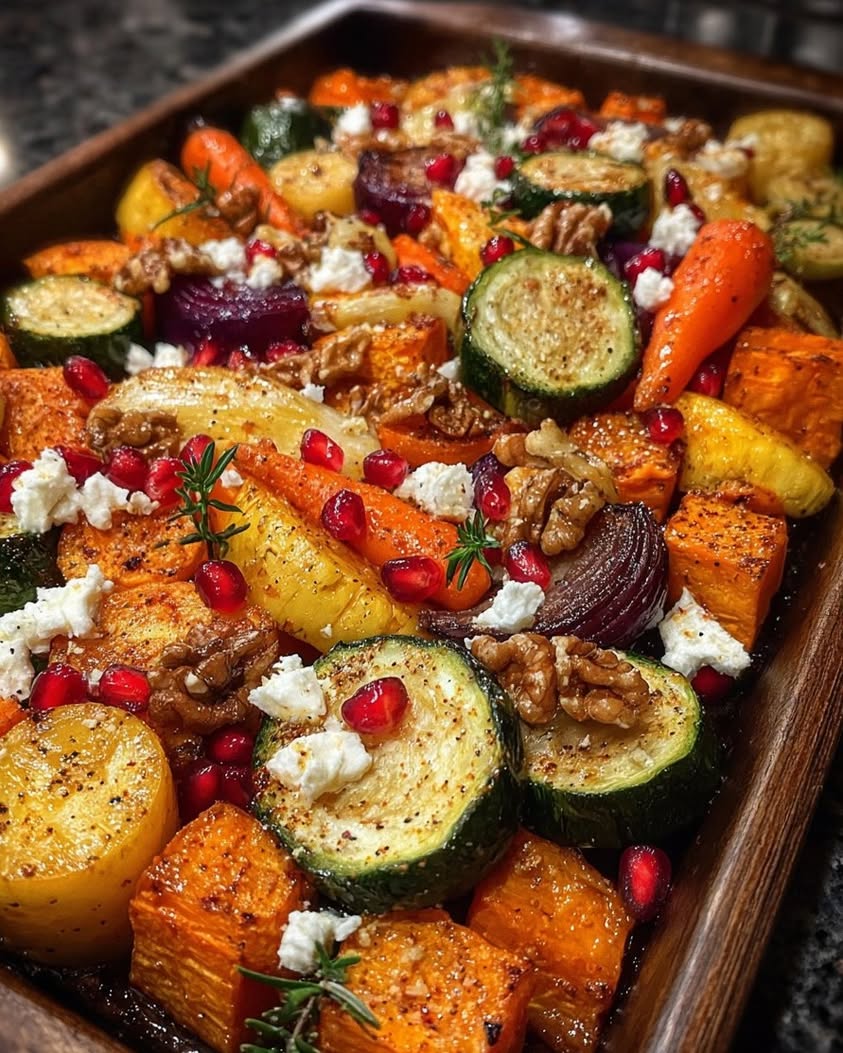
Caramelized Sweet Potato, Carrot, Zucchini, Brussels Sprouts & Butternut Squash Medley with Feta, Pomegranate & Toasted: A Vibrant Roasted Vegetable Masterpiece
This stunning caramelized sweet potato, carrot, zucchini, Brussels sprouts and butternut squash medley with feta, pomegranate and toasted pepitas is a true celebration of seasonal produce. Consequently, it transforms simple root vegetables and winter squash into an extraordinary side dish that will become the star of any dinner table. Moreover, the process of roasting coaxes out the natural sugars in the vegetables, creating a beautiful contrast of crispy roasted veggie medley edges and tender, sweet interiors.
Imagine a sheet pan filled with vibrant orange sweet potatoes, golden butternut squash, and emerald green Brussels sprouts, all tossed with olive oil and herbs. As they roast, your kitchen fills with an incredible aroma that promises a delicious meal. Ultimately, the final dish is a masterpiece of textures and flavors, featuring creamy feta cheese, juicy pomegranate arils, and crunchy toasted pepitas for a truly unforgettable eating experience.
This recipe is perfect for anyone seeking a healthy, beautiful, and flavorful vegetable side dish. Whether you are preparing a weeknight family dinner or an elaborate holiday feast, this caramelized vegetable medley delivers impressive results with surprisingly simple preparation. Furthermore, it is a fantastic way to enjoy a variety of nutrients and colors on one plate, making it as nourishing as it is delicious.
Quick Recipe Highlights
- Flavor Profile: This dish offers a complex harmony of sweet, savory, and tangy notes. The natural sweetness from the caramelized roasted vegetables beautifully balances the salty, creamy feta and the bright, acidic pop from the pomegranate seeds. Finally, herbs like rosemary or thyme add an earthy, aromatic depth that ties everything together.
- Texture: You will experience a wonderful symphony of textures in every bite. Expect crispy roasted veggie medley edges from the high-heat roasting, contrasted with soft and tender interiors. Additionally, the creamy feta cheese, juicy pomegranate arils, and crunchy toasted pepitas create a delightful mouthfeel that is never boring.
- Aroma: As the vegetables roast, your kitchen will fill with the warm, comforting scent of caramelizing sugars and earthy herbs. The aroma is deeply inviting, reminiscent of a cozy fall day or a festive holiday gathering, making everyone eagerly anticipate the meal.
- Visual Appeal: This dish is a feast for the eyes with its stunning color palette. The deep orange of the sweet potatoes and squash, the vibrant green of the zucchini and Brussels sprouts, the ruby red pomegranate seeds, and the white feta cheese create a visually spectacular presentation that looks as good as it tastes.
- Skill Level Needed: This is an accessible recipe for cooks of all levels, from beginners to experts. The primary skills involved are simple knife work for chopping and the ability to toss vegetables with oil and seasonings. Therefore, no advanced culinary techniques are required for success.
- Special Equipment: You will need a large baking sheet, preferably rimmed, to allow for even roasting and easy tossing. Parchment paper is highly recommended for easy cleanup and to prevent sticking. Other than that, basic kitchen tools like a good chef’s knife and a large mixing bowl are all you need.
Recipe Overview
- Difficulty Level: This recipe is confidently rated as easy because it involves straightforward techniques like chopping, tossing, and roasting. There are no complicated steps or precise timings that could lead to failure. Essentially, as long as you cut the vegetables to a relatively uniform size, the oven does most of the work for you.
- Category: This dish falls primarily into the side dish category, perfect for complementing a main protein like roasted chicken, turkey, or fish. Alternatively, it can be served over a bed of quinoa or farro to create a satisfying vegetarian main course for a light lunch or dinner.
- Cuisine: While roasted vegetables are a universal preparation, this particular combination draws inspiration from Mediterranean and Middle Eastern cuisines. The use of feta cheese, pomegranate molasses (if used in the dressing), and fresh herbs like mint or oregano reflects these vibrant culinary traditions known for their healthy and flavorful dishes.
- Cost: This is a very cost-effective recipe, especially when you use vegetables that are in season. Root vegetables like carrots and potatoes are typically inexpensive year-round. Butternut squash and Brussels sprouts are most affordable in the fall and winter. The feta and pomegranate are the splurge items, but a little goes a long way in terms of flavor impact.
- Season: This recipe is perfectly suited for the cooler months of fall and winter. This is when the featured vegetables are at their peak of flavor and most abundant at the market. However, with slight adaptations, you can enjoy a version of this roasted vegetable medley any time of the year.
- Occasion: This versatile dish is suitable for everything from a casual family weeknight dinner to the most formal holiday feast like Thanksgiving or Christmas. Its stunning appearance makes it a show-stopping potluck contribution, and its make-ahead potential is a huge bonus for entertaining.
Why You’ll Love This Caramelized Vegetable Medley
First and foremost, the taste and texture appeal of this dish is absolutely undeniable. The high-heat roasting process transforms the humble vegetables into something magical. You get wonderfully crispy roasted veggie medley edges with a deep, caramelized sweetness that contrasts with the soft, tender flesh inside. Then, the additions of salty feta, tart pomegranate, and crunchy seeds create a party in your mouth. Every single bite is a complex and satisfying experience that will make you forget you are eating something so incredibly healthy and wholesome.
Furthermore, the convenience and preparation benefits are a major win for any home cook. This is essentially a one-pan meal, meaning cleanup is an absolute breeze. You simply chop the vegetables, toss them with oil and seasonings, and spread them on a sheet pan. The oven does the heavy lifting, freeing you up to prepare the rest of your meal or simply relax. This hands-off approach is perfect for busy weeknights or when you are hosting and want to minimize last-minute kitchen stress.
From a nutritional standpoint, this caramelized sweet potato and vegetable dish is a powerhouse. It is packed with vitamins, minerals, and dietary fiber from the diverse array of colorful vegetables. Sweet potatoes and carrots are rich in Vitamin A, while Brussels sprouts offer a great dose of Vitamin C and K. The olive oil provides healthy fats, and the pomegranate seeds are loaded with antioxidants. Consequently, you are nourishing your body with every delicious serving, supporting everything from eye health to immune function.
Additionally, the social and entertaining value of this recipe cannot be overstated. This is a visually stunning dish that looks like you spent hours on it, yet it is deceptively simple to prepare. When you bring this vibrant, colorful medley to the table, it always garners compliments and admiration. It is a fantastic conversation starter and makes any meal feel more special and celebratory. It is a guaranteed crowd-pleaser that will have your guests asking for the recipe.
Finally, the cost-effectiveness and accessibility of the ingredients make this a go-to recipe. The base of the dish is made from affordable, readily available vegetables. You can often find pre-cut butternut squash to save even more time. While feta and pomegranate might be a slight splurge, they are used as garnishes, so a small amount delivers maximum flavor and visual impact. This recipe allows you to create a restaurant-quality dish on a home cook’s budget, making it a valuable addition to your regular meal rotation.
Historical Background and Cultural Significance
The practice of roasting vegetables over an open fire is one of the oldest cooking methods known to humanity. However, the specific combination of root vegetables and winter squash medleys gained significant popularity in Western cuisine throughout the 20th century. This was particularly true as home ovens became more standardized and reliable. The concept celebrates the autumnal harvest, taking sturdy, long-lasting crops that are gathered in the fall and transforming them through the simple, transformative power of dry heat.
Culturally, a dish like this caramelized vegetable medley represents a modern embrace of vegetable-centric eating. It reflects a shift away from meat-heavy plates towards meals where vegetables are the star. This trend is influenced by various global culinary traditions, notably Mediterranean and Middle Eastern cuisines, where mezze platters and vibrant salads featuring roasted vegetables, cheese, and fruits are commonplace. The inclusion of feta and pomegranate directly pays homage to these regions’ flavorful and health-conscious food philosophies.
The evolution of this recipe is a story of globalization and ingredient accessibility. While roasted root vegetables are a classic European and American preparation, the addition of pomegranate was once considered exotic. Now, with global supply chains, pomegranates are available in most supermarkets for much of the year. Similarly, the use of specific seeds like pepitas (hulled pumpkin seeds) shows an influence from Latin American cuisine. Therefore, this dish is a beautiful fusion of traditional roasting techniques and modern, globally-inspired ingredients.
Regional variations of this concept are endless. In the American South, a similar roasted vegetable dish might include okra and a sprinkle of Cajun seasoning. In Italy, it would likely feature rosemary and be finished with a drizzle of high-quality balsamic glaze. A North African tagine-inspired version might include spices like cumin and coriander and dried apricots. This versatility is a testament to the universal appeal of sweet, caramelized vegetables and their ability to adapt to local tastes and available produce.
Ingredient Deep Dive
Let us start with sweet potatoes. Originating in Central or South America over 5,000 years ago, sweet potatoes are now a staple food worldwide. They are incredibly rich in beta-carotene, which your body converts to Vitamin A, essential for vision, immunity, and skin health. When selecting sweet potatoes, look for firm specimens with smooth, unblemished skin. Avoid any with soft spots or signs of sprouting. Store them in a cool, dark, and well-ventilated place, but not in the refrigerator, as cold temperatures can alter their flavor and texture. For a substitution, you can use regular potatoes, though the flavor profile will be less sweet.
Butternut squash, a type of winter squash, has been cultivated since prehistoric times in the Americas. Its sweet, orange flesh is a fantastic source of Vitamin C, potassium, and fiber. When choosing a butternut squash, pick one that feels heavy for its size and has a hard, matte rind without any glossy patches or deep cuts. You can store whole butternut squash in a cool, dark place for months. Once cut, wrap it tightly and refrigerate for up to five days. As an alternative, acorn squash or kabocha squash would work beautifully in this medley, offering a similar texture and sweetness.
Brussels sprouts, which are named after the city of Brussels, Belgium, where they were popularized in the 16th century, are miniature cabbages packed with nutrients. They are an excellent source of Vitamin K, crucial for bone health and blood clotting, and are loaded with antioxidants. Select firm, bright green sprouts that are compact and heavy for their size. Smaller sprouts are often more tender and sweeter. Avoid those with yellowing leaves or a strong, cabbagey odor. Store them unwashed in a plastic bag in your refrigerator’s crisper drawer. If you are not a fan, broccoli florets or cauliflower make a great stand-in, though roasting times may vary slightly.
Feta cheese is a brined curd cheese with a storied history in Greece, where it has been produced for centuries and has Protected Designation of Origin (PDO) status. Traditionally made from sheep’s milk or a sheep-and-goat’s milk blend, it is tangy, salty, and crumbly. It provides a good source of calcium and protein. For the best flavor, seek out authentic Greek feta sold in blocks in brine. Store it in its brine in the refrigerator. For a dairy-free version, cubed firm tofu marinated in lemon juice and salt, or a vegan feta alternative, can be used. Similarly, for a vegan caramelized vegetable medley, simply omit the feta or use a plant-based substitute.
Common Mistakes to Avoid
- Overcrowding the Pan: This is the most common error. When vegetables are packed too tightly, they steam instead of roast. Consequently, you will end up with soft, mushy vegetables instead of achieving those desirable crispy roasted veggie medley edges. Always use two pans if necessary to ensure each piece has enough space.
- Inconsistent Cutting: If your vegetable pieces are different sizes, they will cook at different rates. The result is that some pieces will be burnt while others are still hard. Aim for a uniform, bite-sized dice or chop to guarantee everything is perfectly cooked and caramelized at the same time.
- Neglecting to Preheat the Oven: A properly preheated oven is non-negotiable for successful roasting. A cold oven will start steaming the vegetables as they slowly come up to temperature, preventing proper browning and caramelization. Always wait for your oven to reach the specified temperature before adding your sheet pan.
- Using the Wrong Oil: Extra virgin olive oil has a relatively low smoke point and can burn at high roasting temperatures, leading to a bitter taste. For high-heat roasting, it is better to use a light olive oil, avocado oil, or grapeseed oil, which have higher smoke points and are more neutral in flavor.
- Not Seasoning Generously Enough: Vegetables need a good amount of seasoning to shine. Do not be shy with the salt and pepper. Underseasoned roasted vegetables can taste bland and uninspiring. Season in layers: toss with salt and pepper before roasting, and then taste and adjust again after roasting if needed.
- Skipping the Toss: For even cooking and browning, you must toss the vegetables about halfway through the roasting time. This ensures that all sides have a chance to make contact with the hot pan and develop those beautiful caramelized spots. Set a timer so you do not forget this crucial step.
- Adding Delicate Ingredients Too Early: Ingredients like fresh herbs, feta cheese, pomegranate arils, and toasted nuts should always be added after the vegetables come out of the oven. If you add them before roasting, the herbs will burn, the feta will melt into a puddle, and the nuts and seeds will become bitter.
- Forgetting the Acid: A final splash of acidity is what makes this dish sing. Whether it is a squeeze of fresh lemon juice or a drizzle of balsamic glaze, the acid cuts through the richness of the roasted vegetables and cheese, brightening all the flavors and balancing the dish perfectly.
Essential Techniques
Uniform vegetable cutting is the foundational technique for this recipe. The goal is to create pieces that are all roughly the same size and shape. This is critical because it ensures that every piece of vegetable cooks at the same rate. If you have large chunks of potato next to tiny pieces of carrot, the carrots will be burnt to a crisp before the potatoes are tender. Aim for a ¾-inch to 1-inch dice for hard vegetables like sweet potatoes and squash, and halve or quarter Brussels sprouts so they are of a similar size. Mastering this simple prep step is the single biggest factor in achieving a perfectly cooked caramelized vegetable medley.
Proper pan preparation is another essential technique for success. Always use a rimmed baking sheet, as it contains the oil and vegetables and prevents spills in your oven. Lining the pan with parchment paper is highly recommended. Not only does it make cleanup incredibly easy, but it also prevents the vegetables from sticking and burning on the hot metal. Alternatively, you can grease the pan lightly with extra oil. Avoid using a glass or ceramic dish for this recipe, as they do not promote the same level of browning and crisping as a metal sheet pan.
The high-heat roasting technique is what transforms these vegetables. Roasting at a high temperature, around 400-425°F (200-220°C), is key. This high heat quickly caramelizes the natural sugars on the exterior of the vegetables, creating a deep, complex flavor and those desirable crispy edges. Meanwhile, the interior of the vegetable steams and becomes tender. The visual cue for success is a mix of golden brown, slightly charred spots and a tender texture when pierced with a fork. If your vegetables are pale and soft, your oven temperature was likely too low.
Pro Tips for Perfect Caramelized Vegetable Medley
First, pat your chopped vegetables completely dry with a clean kitchen towel or paper towels before tossing them with oil. Any excess surface moisture will create steam, which is the enemy of crispiness. This simple step ensures your vegetables roast instead of steam, leading to a superior texture.
Consider roasting your sturdier vegetables like sweet potatoes, carrots, and squash for 10-15 minutes before adding quicker-cooking vegetables like zucchini. This staggered approach ensures that everything finishes cooking at the same time, preventing the zucchini from turning to mush while waiting for the potatoes to soften.
Do not discard the feta brine if you have block feta! A tablespoon or two of the brine can be whisked into your olive oil before tossing the vegetables. It adds a subtle salty, tangy flavor that permeates the entire dish, taking the flavor to the next level.
For an extra flavor dimension, toss your vegetables with a tablespoon of maple syrup or honey along with the oil. This will encourage even more dramatic caramelization and add a beautiful glaze to the finished dish. It complements the natural sweetness of the vegetables perfectly.
When toasting pepitas or other nuts, do it in a dry skillet over medium heat for just 2-4 minutes, shaking the pan frequently. They burn easily, so watch them closely. You will know they are done when they become fragrant and make a slight popping sound.
Let the roasted vegetables rest for 5 minutes on the pan after taking them out of the oven before transferring them to a serving platter. This allows them to firm up slightly, making them less likely to break apart when you move them.
Variations and Adaptations
For regional variations, you can take this basic formula anywhere in the world. For a Moroccan-inspired twist, toss the vegetables with ras el hanout or a blend of cumin, coriander, and cinnamon before roasting, and garnish with dried cherries and toasted almonds. For an Italian version, use rosemary and garlic powder, then finish with a drizzle of aged balsamic glaze and shaved Parmesan cheese. The possibilities are truly endless and allow you to customize the dish to your specific cravings or to match the theme of your meal.
Seasonal adaptations are simple and encouraged. In the spring, try using asparagus tips, radishes, and new potatoes. During the summer, swap in cherry tomatoes, bell peppers, and eggplant. The core technique remains the same; you are just rotating the produce based on what is freshest and most flavorful at the market. This practice not only results in better taste but also supports local agriculture and is more economical.
Dietary modifications are straightforward with this versatile recipe. For a vegan caramelized vegetable medley, simply omit the feta cheese or use a high-quality plant-based feta alternative. To make it nut-free, ensure you use seeds like pepitas or sunflower seeds that are processed in a nut-free facility, or simply omit them altogether. For a lower-carb version, reduce the amount of sweet potato and butternut squash and increase the proportion of Brussels sprouts, zucchini, and broccoli.
Flavor variations can keep this dish exciting year after year. Experiment with different dried herbs like herbes de Provence or an Italian seasoning blend. Add a pinch of smoked paprika or chili powder for a subtle kick. A tablespoon of miso paste thinned with the olive oil can add an incredible umami depth. A final drizzle of tahini sauce or a zesty lemon-tahini dressing can completely transform the profile of the dish into something new and exciting.
Serving and Presentation Guide
Plating techniques can elevate this dish from a simple side to a centerpiece. Instead of piling everything into a bowl, consider arranging the roasted vegetables artfully on a large, flat platter. Create little piles of different colored vegetables or layer them slightly overlapping for height and dimension. This approach showcases the beautiful colors and textures you have worked so hard to create and makes the dish look more elegant and intentional.
Garnishing is the final, crucial step for both flavor and visual appeal. Scatter the creamy feta crumbles, vibrant pomegranate arils, and toasted pepitas over the top just before serving. Then, finish with a generous sprinkle of fresh, soft herbs like chopped parsley, mint, or dill. The green herbs provide a fresh flavor contrast and make the other colors pop. Finally, a drizzle of high-quality extra virgin olive oil or a balsamic reduction adds a professional-looking finish and a burst of flavor.
For traditional accompaniments, this caramelized vegetable medley pairs beautifully with simply prepared proteins. It is a classic partner for a holiday roast turkey or a glazed ham. For a weeknight meal, it is fantastic alongside roasted chicken breasts, pan-seared pork chops, or a simple piece of grilled fish like salmon or cod. The vegetables are robust enough to stand up to hearty mains but will not overpower more delicate flavors.
Wine and Beverage Pairing
Selecting the right wine can enhance the dining experience tremendously. The natural sweetness of the roasted vegetables pairs wonderfully with white wines that have a touch of residual sugar or vibrant acidity. A German Riesling (Kabinett or Spätlese) is a fantastic choice, as its sweetness balances the caramelized notes and its acidity cuts through the richness. Alternatively, a crisp, unoaked Chardonnay or a Sauvignon Blanc with its herbal notes would complement the earthy vegetables and tangy feta beautifully. For red wine lovers, a light-bodied, low-tannin Pinot Noir will not overpower the dish.
Non-alcoholic alternatives can be just as sophisticated. A sparkling apple cider provides a similar sweet and acidic balance to a Riesling. For a more complex option, try a chilled hibiscus tea, which offers a tart, cranberry-like flavor that mirrors the pomegranate. Alternatively, a simple glass of club water with a squeeze of fresh lemon and a sprig of rosemary is a refreshing and palate-cleansing choice that works perfectly with the savory and sweet flavors of the medley.
If you are serving this dish as part of a brunch or later in the evening, consider coffee or tea pairings. A medium-roast coffee with low acidity and notes of caramel or nut would echo the roasted, sweet flavors in the vegetables. For tea, an Earl Grey with its bergamot citrus notes can provide a lovely contrast, or a simple cup of peppermint tea can be a soothing and digestive-friendly finish to the meal.
Storage and Shelf Life
Proper storage is key to maintaining the quality of your leftovers. Allow the roasted vegetable medley to cool completely to room temperature before storing, but do not leave it out for more than two hours to prevent bacterial growth. Transfer the vegetables to an airtight container, but it is best to store the components separately if possible. Keep the plain roasted vegetables in one container and the garnishes (feta, pomegranate, pepitas) in separate small containers. This will prevent the garnishes from becoming soggy.
The shelf life for the roasted vegetables alone is 3 to 4 days when stored in the refrigerator. The texture will soften upon reheating, and they will lose some of their crispness, but the flavor will still be delicious. The feta cheese, if stored in its brine, will last for weeks. The pomegranate arils are best used within 2-3 days of being removed from the fruit. Toasted pepitas can be stored at room temperature in a sealed container for up to a week.
Reheating instructions are important for best results. To restore some of the lost texture, avoid using the microwave, as it will make the vegetables steam and become even softer. Instead, spread the leftover vegetables in a single layer on a baking sheet and reheat them in a 375°F (190°C) oven for 10-15 minutes, or until warmed through. This will help re-crisp the edges. You can also reheat them in an air fryer for 3-5 minutes for a quick and effective result.
Make Ahead Strategies
With some planning, you can prepare most of this dish in advance, making it a stress-free option for entertaining. The day before you plan to serve, you can wash, peel, and chop all the vegetables. However, it is crucial to store them properly to prevent drying out or oxidizing. Pat them completely dry after washing, then store the different types of vegetables in separate airtight containers or zip-top bags lined with a paper towel to absorb any excess moisture. This will keep them fresh and crisp for chopping up to 24 hours in advance.
On the day of serving, all you need to do is toss the pre-chopped vegetables with oil and seasonings and roast them. This cuts your active prep time down to just minutes. You can also toast the pepitas and remove the pomegranate arils ahead of time. Store the toasted pepitas at room temperature and the pomegranate seeds in a sealed container in the refrigerator. The feta can be crumbled a few hours in advance and kept covered in the fridge.
For the best quality, I do not recommend fully roasting the vegetables a day in advance and then reheating them, as they will lose their delightful texture and become quite soft. The magic of this dish is in the contrast between the crispy edges and tender centers, which is best achieved by serving them shortly after they come out of the oven. The convenience of pre-chopping is the real time-saver here, allowing you to assemble and roast the dish quickly before your guests arrive or your family sits down to eat.
Scaling Instructions
This recipe is incredibly easy to scale up or down depending on your needs. To halve the recipe, simply divide all the ingredient quantities by two. Use a standard-sized baking sheet, and you may find the roasting time reduces by about 5-10 minutes since there is less volume in the oven creating steam. Keep a close eye on the vegetables towards the end of the cooking time and rely on visual and textural cues for doneness rather than the timer alone.
Doubling or tripling the recipe for a large crowd is also straightforward. Multiply all the ingredients accordingly. The most important rule when scaling up is to avoid overcrowding. You must use multiple baking sheets. Roast the vegetables on two or three sheets placed in the upper and lower thirds of the oven. It is essential to rotate the pans front-to-back and top-to-bottom halfway through the cooking time to ensure even browning. Cooking time may increase slightly with more pans in the oven, as it can lower the overall temperature, so start checking for doneness at the original time and add minutes as needed.
When scaling, be mindful of your mixing bowl size. You may need to mix the vegetables in batches to coat them evenly with oil and seasonings. For very large batches, you can toss everything directly on the baking sheets: drizzle with oil, add the seasonings, and use your hands to mix thoroughly right on the pan. This ensures every piece is properly coated without requiring an enormous bowl.
Nutritional Deep Dive
This caramelized vegetable medley is a nutritional powerhouse, offering a wide spectrum of vitamins, minerals, and phytonutrients. The macro breakdown is predominantly carbohydrates from the vegetables, but they are complex carbohydrates that provide sustained energy and are high in dietary fiber, which aids in digestion and promotes satiety. The olive oil contributes healthy monounsaturated fats, which are beneficial for heart health. The feta cheese adds a modest amount of protein and fat, making the dish more balanced and satisfying.
A micronutrient analysis reveals an impressive profile. The orange-hued sweet potatoes and carrots are loaded with beta-carotene (Vitamin A), essential for vision, immune function, and skin health. Brussels sprouts are an excellent source of Vitamin K, vital for bone metabolism and blood clotting, and Vitamin C, a powerful antioxidant. Butternut squash contributes additional Vitamin A and C, along with potassium for regulating blood pressure. The pomegranate seeds are famed for their antioxidant content, particularly punicalagins and anthocyanins, which help combat oxidative stress in the body.
From a health benefits perspective, this dish supports overall wellness in numerous ways. The high fiber content promotes a healthy gut microbiome and can help regulate blood sugar levels. The array of antioxidants helps reduce inflammation and protect cells from damage. The healthy fats from the olive oil aid in the absorption of fat-soluble vitamins (A, D, E, K) present in the vegetables. Regularly consuming a diverse mix of colorful vegetables like this is linked to a reduced risk of chronic diseases, including heart disease and certain cancers.
Dietary Adaptations
For a gluten-free diet, this recipe is naturally perfect, as it contains no gluten-containing ingredients. Just be sure to check the labels on any pre-packaged spice blends to confirm they are certified gluten-free, as cross-contamination can sometimes occur during manufacturing.
Creating a dairy-free or vegan version is simple. Omit the feta cheese entirely. For a similar creamy, tangy element, you can make a “vegan feta” by crumbling firm tofu that has been marinated in lemon juice, nutritional yeast, and salt. Alternatively, a drizzle of tahini sauce (tahini, lemon juice, water, garlic) adds wonderful richness and depth that compensates for the missing cheese beautifully.
For a low-carb or keto adaptation, focus on the low-carb vegetables in the mix. Increase the portions of zucchini and Brussels sprouts while significantly reducing or omitting the sweet potato and butternut squash, as they are higher in carbohydrates. You can add other low-carb veggies like cauliflower florets or mushrooms. The olive oil and feta cheese align well with a high-fat, moderate-protein keto approach.
For a Paleo version, you would omit the dairy-based feta cheese. The rest of the ingredients are Paleo-compliant. You could add avocado chunks after roasting to provide a creamy element, or use a sprinkle of nutritional yeast for a cheesy flavor without the dairy. Ensure the oil you use is Paleo-approved, such as avocado oil or coconut oil.
Troubleshooting Guide
If your vegetables are soggy and not crispy, the most likely culprit is overcrowding the pan. When vegetables are too close together, they release steam and essentially steam each other instead of roasting. The solution for next time is to use a larger pan or divide the vegetables between two pans to ensure they have plenty of space. Also, make sure your oven is fully preheated and that you are patting the vegetables dry before adding oil.
If some vegetables are burnt while others are still hard, this indicates inconsistent cutting. The smaller pieces will cook much faster than larger chunks. The solution is to take more care during prep to cut all vegetables to a uniform size. For hard vegetables like sweet potatoes and carrots, aim for a ¾-inch to 1-inch dice. Halve or quarter Brussels sprouts so they are a similar size. You can also add quicker-cooking vegetables like zucchini to the pan later in the roasting process.
If the finished dish tastes bland, it is almost certainly an issue of underseasoning. Vegetables need a generous amount of salt to make their flavors pop. The solution is to season in layers. Be sure to use enough salt and pepper when tossing the raw vegetables with oil. After roasting, taste the vegetables and add more salt if needed. Remember that the feta will also add saltiness, so factor that in. A final squeeze of fresh lemon juice can also brighten all the flavors and make the dish taste more vibrant.
Recipe Success Stories
We have received wonderful feedback from our community of home cooks who have tried this recipe. One reader, Sarah from Colorado, shared that this dish has become her go-to for holiday potlucks and that she always comes home with an empty pan and multiple requests for the recipe. She loves that it is a vegetable side that everyone, including the kids, gets excited about. Another home cook, Mark, mentioned that he added a sprinkle of chili flakes for a bit of heat and served it over couscous for a complete vegetarian meal that was a hit with his entire family.
Many readers have successfully adapted the recipe to fit their dietary needs. A reader named Jessica followed the vegan adaptation tips, using a tofu-based feta alternative and omitting the honey in the dressing. She reported that it was a massive success at her vegan Thanksgiving and that the tahini drizzle was a revelation. Others have shared their own variation successes, such as adding apples in the fall or swapping in different nuts based on what they had in their pantry, proving the recipe’s fantastic versatility.
Photography tips from our readers have also been invaluable. The consensus is that natural light is your best friend when photographing this vibrant dish. Shooting from above (an overhead flat lay) beautifully captures the colorful confetti of vegetables, cheese, and pomegranate. Several readers have suggested using a dark, rustic wooden board or a simple white platter to make the colors of the medley truly stand out. Garnishing with extra fresh herbs right before taking the photo adds a final touch of freshness and color that makes the image pop.
Frequently Asked Questions
Q: Can I use frozen vegetables for this recipe?
A: I do not recommend using frozen vegetables for this specific roasted medley. Frozen vegetables have a very high water content, and when roasted, they will release that water and become mushy and steam instead of achieving the desired crispy, caramelized edges. For the best texture and flavor, fresh vegetables are essential.
Q: How can I tell when the vegetables are done roasting?
A: The vegetables are done when they are tender enough to be easily pierced with a fork and have developed golden brown, caramelized spots on the edges. The sweet potatoes and squash will be soft, and the Brussels sprouts’ outer leaves will be crispy and dark in some places. Always trust the texture test over the timer.
Q: Can I make this recipe without pomegranate?

I’m Shaykee—born in Morocco, seasoned across continents. From airplane galleys to home kitchens, I share the flavors and stories that shaped my journey.