
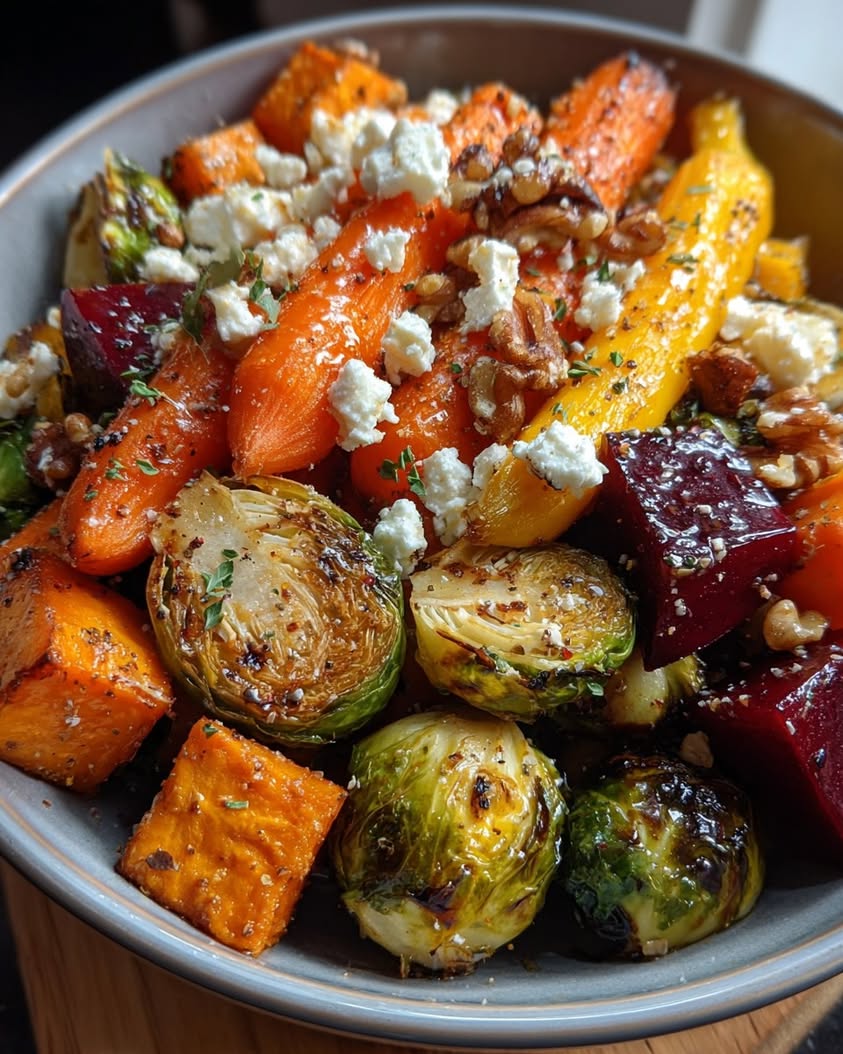
Caramelized Veggie Medley with Sweet Potato, Squash & Beet, Topped with Feta, Walnuts & Hot Honey. A perfect sweet, savory & crunchy side dish!
Picture a sheet pan overflowing with the most vibrant colors of the harvest. This caramelized veggie medley is a true celebration of autumn on a plate. Furthermore, it transforms humble root vegetables and hearty squash into a spectacular side dish that steals the show at any dinner table. The magic happens in the oven, where high heat coaxes out the natural sugars, creating crispy, caramelized edges and tender, flavorful interiors.
This recipe is a masterclass in balancing flavors and textures. You get the earthy sweetness of roasted beets and carrots, the creamy heartiness of butternut squash and sweet potato, and the delightful, slightly bitter char of Brussels sprouts. Ultimately, everything gets tossed in a simple, savory seasoning before roasting to perfection. The final crowning glory is a generous scattering of tangy feta, crunchy toasted walnuts, and a decadent drizzle of spicy hot honey that ties every single element together.
Whether you are preparing a cozy family dinner or hosting a festive holiday feast, this dish delivers impressive results with surprisingly simple effort. It is a versatile, nutrient-packed recipe that appeals to vegetarians and meat-lovers alike. In fact, it often becomes the most requested item on the menu, proving that healthy sides can be the star of the meal.
Quick Recipe Highlights
- Flavor Profile: This dish is a symphony of sweet and savory notes. The natural sugars in the vegetables caramelize beautifully, creating a deep, rich base. Consequently, the salty feta and the sweet-heat of the honey glaze provide a perfect counterpoint that excites the palate.
- Texture: Expect a wonderful contrast in every bite. The roasted vegetables offer a mix of crispy, almost chip-like exteriors and soft, creamy centers. Meanwhile, the toasted walnuts add a crucial element of crunch, and the feta provides little pockets of creamy, crumbly texture.
- Aroma: As this medley roasts, your kitchen will fill with an irresistible, warm fragrance. You will smell the nutty caramelization of the veggies, the savory hint of garlic and herbs, and finally, the sweet scent of honey mingling with the toasting walnuts.
- Visual Appeal: This is a feast for the eyes. The plate boasts a stunning array of colors: deep ruby red from the beets, vibrant orange from the squash and carrot, golden brown from the sweet potato, and emerald green from the Brussels sprouts. The white feta and brown walnuts create beautiful visual texture.
- Skill Level Needed: This is a beginner-friendly recipe. The primary skill is knife work for chopping vegetables evenly. Otherwise, the process is straightforward: toss, roast, and assemble. It is an excellent recipe for building confidence in the kitchen.
- Special Equipment: You will need a large, rimmed baking sheet (or two) to allow the vegetables to roast, not steam. Parchment paper is highly recommended for easy cleanup. A sturdy chef’s knife and cutting board are essential for prepping the hearty vegetables safely.
Recipe Overview
- Difficulty Level: We rate this recipe as “Easy.” The steps are simple and sequential. Most of the work is hands-off roasting time. The key to success is cutting the vegetables to a uniform size for even cooking. Even novice cooks can achieve restaurant-quality results with this forgiving method.
- Category: This dish fits perfectly into several categories. Primarily, it is a spectacular vegetarian side dish. Additionally, it can serve as a hearty main course for a light lunch when served over a bed of grains like quinoa or farro. It is also an ideal potluck or holiday contribution.
- Cuisine: This recipe draws inspiration from modern American farm-to-table cuisine, which celebrates seasonal, local produce. The use of feta nods to Mediterranean flavors, while the hot honey adds a contemporary, trendy twist that has become popular across various culinary styles.
- Cost: This is a very cost-effective dish, especially in the fall and winter when these vegetables are in peak season. Root vegetables and squash are typically budget-friendly. Feta, walnuts, and honey are pantry staples that can be used in many other recipes, making this a smart economic choice for feeding a crowd.
- Season: This is the ultimate fall and winter recipe. These vegetables are at their sweetest and most abundant during the cooler months. The warm, roasted flavors are inherently comforting when the weather turns cold. That said, you can find good-quality versions of these veggies year-round to make this dish anytime.
- Occasion: This medley is incredibly versatile for different events. It is elegant enough for Thanksgiving, Christmas, or a dinner party. Simultaneously, it is simple enough for a weeknight family meal. It also travels well for potlucks and makes excellent leftovers, increasing its utility for any occasion.
Why You’ll Love This Recipe
First and foremost, the taste is absolutely unforgettable. This caramelized veggie medley hits every note on your tongue. You experience the initial sweetness from the roasted roots, followed by the savory, umami depth from the caramelization. Then, the salty feta cuts through, and the hot honey delivers a gentle, warming spice that lingers pleasantly. It is a complex flavor profile that feels both gourmet and deeply satisfying. Every component has a purpose, and together they create a dish that is far greater than the sum of its parts.
From a convenience standpoint, this recipe is a weeknight hero disguised as a holiday showstopper. The preparation is largely “chop and drop.” Once the vegetables are on the sheet pan, the oven does the heavy lifting. This gives you time to prepare the rest of your meal, set the table, or simply relax. Moreover, it uses just one or two sheet pans, meaning cleanup is minimal. The make-ahead potential is also a huge benefit; you can roast the vegetables ahead of time and simply reheat them before adding the fresh toppings.
Nutritionally, this dish is a powerhouse. It is packed with fiber, vitamins, and antioxidants from its rainbow of vegetables. Sweet potatoes and carrots are rich in beta-carotene. Brussels sprouts are a great source of Vitamin C and K. Beets contain nitrates that can support heart health. The walnuts add healthy fats and plant-based protein, while the feta provides calcium. Using olive oil and honey as the primary “sauces” keeps the added sugars and unhealthy fats to a minimum, making this a genuinely wholesome choice.
For entertaining, this caramelized veggie medley is a guaranteed crowd-pleaser. Its stunning visual appeal makes it a centerpiece on any buffet. It caters to vegetarians and those with gluten-free needs effortlessly. The familiar ingredients are approachable, yet the final combination feels special and thoughtfully prepared. Guests will always ask for the recipe, and you will love being able to share how simple it truly is to create such an impressive dish.
Finally, this recipe is wonderfully accessible and adaptable. The ingredients are easy to find at any grocery store. If you cannot find butternut squash, use more sweet potato. Out of walnuts? Try pecans or almonds. Don’t like spice? Use regular honey. This flexibility means you can always whip up a version of this dish with what you have on hand. It teaches foundational roasting techniques that you can apply to countless other vegetable combinations, making it a valuable addition to your cooking repertoire.
Historical Background and Cultural Significance
The practice of roasting root vegetables is ancient, stemming from cooking over open fires. Every culture with a cold season has a tradition of preserving and cooking hardy storage crops like beets, carrots, and tubers. In Europe, roasted root veggie medleys were peasant food, a way to make inexpensive, long-lasting ingredients delicious and filling. In the Americas, indigenous peoples cultivated squash, sweet potatoes, and other native tubers, often roasting them in the embers of a fire. This recipe is a modern fusion of these old-world and new-world traditions.
The cultural significance lies in its celebration of the harvest. Dishes centered on roasted autumn vegetables are staples of harvest festivals like Thanksgiving in North America and similar celebrations worldwide. They symbolize abundance, nourishment, and the transition into winter. The act of sharing a platter of colorful, communal food is a universal gesture of hospitality and togetherness, making this dish perfect for gatherings that focus on gratitude and connection.
The recipe has evolved significantly with globalization and modern culinary trends. The addition of feta cheese introduces a Mediterranean element, reflecting the popularity of Greek and Middle Eastern cuisines. The use of hot honey is a very contemporary twist, a trend that gained momentum in the last decade from the American culinary scene, particularly from pizza and fried chicken shops. This evolution shows how traditional comfort food can be updated with new flavors to stay exciting and relevant.
Regional variations of this concept are endless. In the Mediterranean, a similar mix might include eggplant and zucchini with oregano and lemon. In Nordic countries, you might find parsnips and rutabagas with dill. The Southern United States might add a sprinkle of smoked paprika. Our version, with its specific blend of Brussels sprouts, sweet potato, butternut squash, carrot, and beet, is a particularly colorful and nutrient-dense interpretation that reflects today’s focus on eating a “rainbow” of vegetables for optimal health.
Ingredient Deep Dive
Brussels Sprouts: Once a maligned vegetable, Brussels sprouts have undergone a culinary renaissance thanks to the understanding that high-heat roasting is their best preparation. This method caramelizes their natural sugars and creates crispy leaves, banishing the boiled bitterness of the past. Nutritionally, they are superstars, packed with vitamins C and K, fiber, and antioxidants. Look for firm, bright green sprouts with tightly packed leaves. Store them in an open bag in the refrigerator’s crisper drawer. For a twist, try shredding them for a different texture.
Sweet Potato & Butternut Squash: These orange-hued vegetables are the sweet, creamy heart of the medley. Sweet potatoes, native to the Americas, are rich in beta-carotene, vitamin A, and fiber. Butternut squash, with its long history in Central and South America, offers similar nutrients with a slightly nuttier flavor. When selecting, choose firm, heavy-for-their-size specimens without soft spots. They can be stored in a cool, dark place for weeks. For a time-saver, many grocery stores sell pre-cubed butternut squash.
Carrot & Beet: Carrots and beets are classic root vegetables with incredible staying power. Carrots add a familiar sweetness and are loaded with beta-carotene. Beets provide a stunning color contrast and an earthy, mineral-rich flavor, along with compounds that may help lower blood pressure. To prevent the beets from staining everything pink, you can toss and roast them in a separate corner of the pan or on their own piece of parchment. For easier peeling, roast beets whole in foil, then slip the skins off after cooling.
Feta Cheese: Feta, a brined curd cheese from Greece, brings a essential salty, tangy punch that balances the vegetables’ sweetness. Made primarily from sheep’s milk (sometimes with goat’s milk), it has a crumbly texture and bold flavor. For the best quality, look for feta sold in blocks immersed in brine. Pre-crumbled feta often contains anti-caking agents that can affect texture. For a dairy-free version, a creamy vegan “feta” made from almonds or tofu works well, or simply omit it.
Walnuts & Hot Honey: Walnuts add the crucial crunchy element and healthy fats, including omega-3s. Toasting them is non-negotiable; it deepens their flavor and improves texture. Hot honey is the modern magic touch. It is simply honey infused with chili peppers, creating a sweet-spicy syrup. You can buy it pre-made or easily create your own by warming honey with a pinch of red pepper flakes or a drizzle of chili crisp. This combination of nutty crunch and spicy-sweet glaze is what elevates the dish from simple to sublime.
Common Mistakes to Avoid
- Crowding the Pan: This is the most common error. If the vegetables are piled on top of each other, they will steam instead of roast. You need space for moisture to evaporate so the edges can caramelize and crisp. Always use a large enough pan or divide between two pans.
- Uneven Vegetable Sizes: Chopping vegetables into different sizes leads to uneven cooking. Smaller pieces will burn before larger ones are tender. Aim for a consistent ¾-inch to 1-inch dice for the squash, potato, and beet. Halve or quarter Brussels sprouts so they are roughly the same size.
- Neglecting to Dry Vegetables: If you wash your vegetables and do not dry them thoroughly, the excess water will create steam on the pan. Pat Brussels sprouts and any washed veggies completely dry with a kitchen towel before tossing them in oil.
- Skipping the Preheat: Putting vegetables into a cold oven drastically changes the cooking process. A properly preheated oven (at least 400°F) is essential for that initial blast of heat that kicks off the caramelization process and prevents soggy results.
- Forgetting to Season Generously: Vegetables need ample seasoning. Do not be shy with the salt, pepper, and garlic powder. Seasoning before roasting allows the flavors to penetrate as the vegetables cook, building a flavorful foundation.
- Not Tossing Halfway Through: Roasting without turning or tossing means one side gets over-caramelized or burnt while the other side steams. Gently stir and flip the vegetables halfway through the roasting time to ensure all sides get beautifully browned.
- Adding Toppings Too Early: Adding cheese, nuts, or honey before or during roasting will cause them to burn or melt away. These are finishing elements meant to be added after the vegetables come out of the oven, preserving their distinct textures and flavors.
- Using Raw, Untoasted Walnuts: Raw walnuts can have a slightly bitter, tannic flavor. Toasting them in a dry pan or in the oven for a few minutes wakes up their oils, making them fragrant, crunchy, and far more delicious.
Essential Techniques
Uniform Chopping: Consistent sizing is the single most important technique for perfect roasted vegetables. It ensures everything finishes cooking at the same time. Use a sharp chef’s knife and aim for pieces around 1-inch in size. For Brussels sprouts, cut larger ones in quarters and smaller ones in half to equalize them. For hard squash and sweet potatoes, create a flat surface by cutting off a side, then proceed to cube safely.
High-Heat Roasting: Roasting at a high temperature (400°F-425°F) is crucial. This method quickly caramelizes the natural sugars on the surface of the vegetables, creating complex, sweet, and savory flavors and a desirable crispy texture. Conversely, a lower temperature will simply bake them, resulting in softer, less flavorful veggies without those delicious browned bits.
Proper Pan Dressing: Tossing the vegetables correctly matters. Use enough oil to coat every piece lightly but thoroughly—this conducts the heat and promotes browning. Season the vegetables in the bowl before spreading them on the pan to ensure even distribution of salt and spices. A large mixing bowl gives you the space to toss everything well without making a mess.
Toasting Nuts: Toasting nuts is a simple but transformative step. Place raw walnuts in a single layer in a dry skillet over medium-low heat. Shake the pan frequently until they become fragrant and lightly browned, usually 3-5 minutes. Alternatively, you can toast them on a separate small sheet pan in the oven during the last few minutes of the vegetables’ cooking time. Watch them closely, as they can burn quickly.
Pro Tips for Perfect Caramelized Veggie Medley
First, for the crispiest Brussels sprouts, trim the stem and remove any loose outer leaves. Then, cut them in half from top to bottom. The flat surface will have maximum contact with the hot pan, leading to superior browning and caramelization.
Second, consider roasting the beets separately if you are concerned about color bleeding. While the pink hue is beautiful, roasting beets on their own small piece of parchment prevents them from staining the other vegetables, keeping the carrot and squash colors more vibrant.
Third, do not discard the loose leaves from the Brussels sprouts. Toss them in oil and salt and spread them on the pan. They will roast into delicious, crispy chips that make a wonderful garnish or snack.
Fourth, let the roasted vegetables rest for 5 minutes after coming out of the oven before adding the cheese. This allows their internal steam to release slightly, preventing the feta from melting into a gooey mess and keeping its crumbly texture intact.
Fifth, make your own hot honey easily. Gently warm ¼ cup of honey in a microwave or saucepan with ½ teaspoon of red pepper flakes or a teaspoon of your favorite hot sauce. Let it infuse for 10 minutes, then drizzle. You can control the spice level perfectly.
Sixth, for an extra flavor dimension, add fresh herbs as a final garnish. Chopped fresh rosemary or thyme tossed in with the oil before roasting is classic. Alternatively, fresh parsley, dill, or chives sprinkled on top after plating add a bright, fresh note.
Variations and Adaptations
Regional Variations: To give this dish a Mediterranean twist, swap the seasoning for dried oregano and lemon zest before roasting, and finish with Kalamata olives and fresh mint alongside the feta. For a Moroccan-inspired version, use spices like cumin, coriander, and cinnamon, and top with pomegranate seeds and a drizzle of tahini sauce instead of hot honey.
Seasonal Adaptations: In spring, try asparagus, radishes, and new potatoes. For summer, zucchini, bell peppers, and cherry tomatoes work beautifully, though they roast faster. Adjust cooking times based on the vegetable’s water content—summer veggies may need less time to avoid becoming mushy.
Dietary Modifications: For a vegan version, omit the feta or use a plant-based alternative. A sprinkle of nutritional yeast can add a cheesy, umami flavor. Ensure your hot honey is vegan (some honey processing isn’t considered vegan) or use maple syrup infused with chili. For a nut-free dish, substitute toasted pumpkin seeds (pepitas) or sunflower seeds for the walnuts.
Flavor Variations: Experiment with different seasoning blends. Smoked paprika adds a deep, smoky note. Curry powder transforms it into an entirely different, aromatic dish. A balsamic glaze drizzle at the end can replace the hot honey for a tangy-sweet finish. Grated Parmesan or crumbled goat cheese can stand in for the feta.
Serving and Presentation Guide
Plating is key to showcasing this beautiful dish. Transfer the warm roasted vegetables to a large, shallow serving platter or a wide bowl. Scatter the crumbled feta and toasted walnuts evenly over the top. Drizzle the hot honey in a zig-zag pattern across the entire platter, allowing it to pool slightly in the crevices. This method ensures every serving gets a bit of each component.
For individual servings, use a ring mold to create a neat, vertical stack of the vegetable medley in the center of each plate. Lean a few Brussels sprout halves against the stack for height. Place small piles of feta and walnuts around the base, and artistically drizzle the honey over and around the plate. A final sprinkle of flaky sea salt and a few microgreens add a professional, finished touch.
This medley pairs traditionally with roasted or grilled meats like chicken, turkey, pork chops, or steak. For a vegetarian feast, serve it alongside a hearty grain pilaf, like wild rice or pearl couscous, and a simple green salad. It also makes a fantastic topping for a fall-inspired salad with mixed greens and a apple cider vinaigrette.
Wine and Beverage Pairing
The sweet, savory, and slightly spicy notes of this dish call for wines with good acidity and some fruitiness. A dry Riesling or Gewürztraminer complements the sweetness and handles the spice beautifully. For red wine lovers, a lighter-bodied Pinot Noir with its red fruit notes and low tannins won’t overpower the vegetables. A rosé, especially a drier style, can be a perfect middle-ground pairing year-round.
For non-alcoholic options, sparkling apple cider is a classic fall pairing that mirrors the dish’s sweetness. A ginger beer or spicy ginger ale can play off the heat in the honey. Alternatively, a tart and refreshing homemade lemonade or iced herbal tea, like mint or chamomile, can cleanse the palate between bites of the rich, roasted vegetables.
Storage and Shelf Life
Store leftover veggie medley in an airtight container in the refrigerator for up to 4 days. It is best to store the components separately if possible: keep the plain roasted vegetables in one container, and the feta, walnuts, and honey in their own containers. This prevents the walnuts from getting soggy and the feta from dissolving.
Reheat the roasted vegetables in a 350°F oven for 10-15 minutes or in an air fryer for 5-7 minutes until re-crisped and heated through. The microwave will work in a pinch but will make them soft. Always add the fresh toppings—cold feta, room-temperature walnuts, and a new drizzle of honey—after reheating for the best texture and flavor experience.
This dish does not freeze well due to the high water content of the vegetables and the dairy component. Freezing and thawing will result in a mushy, watery texture. It is best enjoyed fresh or refrigerated for a few days.
Make Ahead Strategies
You can significantly cut down on day-of prep by preparing components in advance. Up to two days ahead, wash, peel, and chop all the vegetables. Store them in separate airtight containers or resealable bags in the refrigerator. The walnuts can be toasted and stored at room temperature. The hot honey can be prepared and kept in a jar.
On the day you plan to serve, simply toss the pre-chopped vegetables with oil and seasoning and roast. This streamlines the process to about 10 minutes of active time. You can also fully roast the vegetables 1-2 hours before serving. Let them cool, then reheat on a sheet pan in a 375°F oven for 10-12 minutes to refresh their warmth and crispness before adding toppings.
Scaling Instructions
This recipe scales very easily. To halve it, simply use half of each ingredient. Use one standard sheet pan. The roasting time may decrease slightly, so start checking for doneness around the 30-minute mark. To double or triple for a crowd, double or triple all ingredients. You will absolutely need to use multiple sheet pans and rotate them (top to bottom, front to back) halfway through cooking to ensure even roasting. The total time may increase by 5-10 minutes due to the increased volume in the oven.
Nutritional Deep Dive
This caramelized veggie medley is a nutrient-dense choice. It is rich in complex carbohydrates and fiber from the array of vegetables, providing sustained energy and promoting digestive health. The olive oil and walnuts contribute heart-healthy monounsaturated and polyunsaturated fats. The feta adds protein and calcium. The dish is naturally gluten-free and vegetarian.
Key micronutrients abound: Vitamin A (from sweet potato, squash, carrot), Vitamin C (Brussels sprouts), Vitamin K (Brussels sprouts, beet greens if used), potassium, and iron. The colorful pigments indicate a high level of antioxidants, which help combat inflammation. For those watching calories, you can slightly reduce the amount of olive oil or cheese, though these fats are important for nutrient absorption and satiety.
Dietary Adaptations
Gluten-Free: This recipe is naturally gluten-free. Just ensure any pre-made spice blends or hot honey you purchase are certified gluten-free, as cross-contamination can sometimes occur.
Dairy-Free/Vegan: Omit the feta cheese. For a creamy, tangy element, make a vegan “feta” from crumbled firm tofu marinated in lemon juice, nutritional yeast, and salt. Alternatively, a drizzle of tahini sauce (tahini, lemon, water, garlic) adds richness. Use maple syrup infused with chili instead of honey.
Low-Carb/Keto: Focus on the lower-carb vegetables: increase the Brussels sprouts and reduce or omit the sweet potato, carrot, and butternut squash. Beets are moderately high in carbs, so use them sparingly. The walnuts, olive oil, and cheese are excellent keto-friendly fats.
Paleo: Omit the feta cheese and ensure your hot honey is pure, with no additives. The rest of the ingredients are paleo-compliant, making this a fantastic side for a paleo lifestyle.
Troubleshooting Guide
Vegetables are Soggy: This is almost always due to overcrowding the pan or not using a hot enough oven. Ensure pieces are spread in a single layer with space between them. Preheat your oven fully and consider using the convection setting if you have it, which improves air circulation and browning.
Vegetables are Burning: If the edges are charring before the centers are tender, your oven temperature may be too high, or your vegetable pieces may be too small. Check your oven’s accuracy with a thermometer. Next time, cut vegetables slightly larger. You can also toss them more frequently during roasting.
Lack of Flavor: Underseasoning is the culprit. Vegetables need more salt than you might think. Season aggressively before roasting. Also, ensure your spices (like garlic powder) are fresh, as they lose potency over time. The finishing salt and acid from the feta are also crucial flavor layers.
Beets Staining Everything: If you want to keep the other vegetables from turning pink, roast the beet cubes on a separate, small piece of parchment paper on the same pan, or in their own small oven-safe dish. You can mix them in after roasting if desired.
Frequently Asked Questions
Can I use different vegetables? Absolutely. The method works for any sturdy vegetable. Try parsnips, turnips, cauliflower, or red onion. Adjust roasting times based on density and size.
How do I prevent the honey from making everything sticky? Drizzle it just before serving. If you add it too early, it can cause the vegetables to steam and stick together. A light, decorative drizzle is more effective than a heavy pour.
Can I make this without nuts? Yes. For a nut-free version, substitute with toasted seeds like pumpkin seeds (pepitas) or sunflower seeds for a similar crunchy texture.
Is it necessary to peel the sweet potato and squash? It is recommended for the best texture, as the skins can be tough. However, if they are organic and well-scrubbed, you can leave the skins on for extra fiber and nutrients.
My feta melted into a gooey mess. What happened? You likely added it while the vegetables were piping hot. Let the roasted veggies cool for 5 minutes on the pan before transferring to a platter and adding the cheese. Crumbled feta should be cool or room temperature.
Can I use frozen vegetables? It is not recommended for this recipe. Frozen vegetables release too much water when roasting, preventing proper caramelization and leading to a steamed, soggy result.
What’s the best way to cut a butternut squash safely? First, slice off the top and bottom to create stable ends. Peel it with a sturdy vegetable peeler. Cut it in half where the neck meets the bulb. Cube the neck, then scoop seeds from the bulb and cube the flesh.
How can I tell when the vegetables are done? They should be tender enough to easily pierce with a fork, and the edges should be caramelized and browned. The Brussels sprouts’ outer leaves may be dark and crispy, which is desirable.
Additional Resources
To expand your roasted vegetable repertoire, explore recipes for other seasonal medleys. A spring mix with asparagus, peas, and radishes, or a summer sheet pan with peppers, corn, and zucchini. Learning the fundamentals of how different vegetables roast will make you a more versatile cook.
For technique guides, look into knife skills tutorials to improve your speed and safety with chopping hard squash and root vegetables. Understanding your oven’s hot spots and how to use convection settings can also elevate your roasting game significantly.
If you love the sweet-and-savory combination here, try applying it to other dishes. Use the same hot honey drizzle on roasted carrots, a cheese board, or even fried chicken. The concept of balancing roasted vegetables with a cheese, a crunch, and a glaze is a template for endless delicious creations.
PrintCaramelized Brussels Sprouts, Sweet Potato, Butternut Squash, Carrot & Beet Medley with Feta, Toasted Walnuts & Hot Honey
Description
A vibrant roasted vegetable medley with caramelized edges, topped with creamy feta, crunchy walnuts, and a drizzle of spicy-sweet hot honey.
Ingredients
For the Crust:
- 1 lb Brussels sprouts, trimmed and halved
- 1 large sweet potato, peeled and cubed
- 1 small butternut squash, peeled and cubed
- 2 large carrots, peeled and sliced
- 2 medium beets, peeled and cubed
- 3 tbsp olive oil
- 1 tsp smoked paprika
- 1 tsp garlic powder
- Salt and black pepper to taste
- 1/2 cup crumbled feta cheese
- 1/2 cup walnuts, toasted
- 1/4 cup honey
- 1/2 tsp red pepper flakes
Instructions
1. Prepare the Crust:
- Preheat oven to 400°F (200°C). Line two baking sheets with parchment paper.
- In a large bowl, toss Brussels sprouts, sweet potato, butternut squash, carrots, and beets with olive oil, smoked paprika, garlic powder, salt, and pepper until evenly coated.
- Spread vegetables in a single layer on the baking sheets. Roast for 25-30 minutes, stirring halfway, until tender and caramelized.
- While vegetables roast, combine honey and red pepper flakes in a small saucepan. Warm over low heat for 2-3 minutes, then set aside.
- Toast walnuts in a dry skillet over medium heat for 3-4 minutes, stirring until fragrant. Let cool slightly.
- Transfer roasted vegetables to a serving platter. Top with crumbled feta and toasted walnuts. Drizzle with hot honey just before serving.
Notes
You can customize the seasonings to taste.

I’m Shaykee—born in Morocco, seasoned across continents. From airplane galleys to home kitchens, I share the flavors and stories that shaped my journey.