
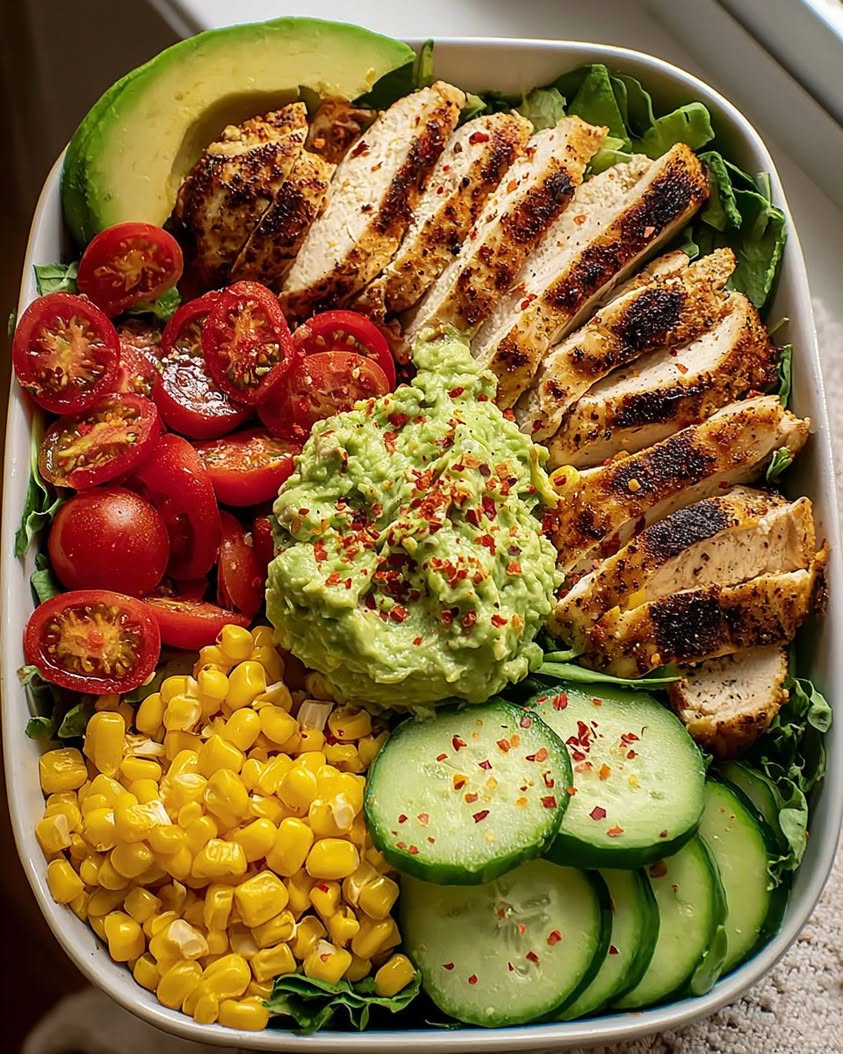
Charred Chicken & Avocado Power Salad Bowl: Your Ultimate Fuel for the Day
Grilled chicken meets creamy avocado in this high-protein power bowl! Packed with fresh veggies and a zesty lime dressing, this Charred Chicken & Avocado Power Salad Bowl is the ultimate answer to your healthy lunch or dinner dilemma. Consequently, it delivers a perfect balance of lean protein, healthy fats, and complex carbohydrates in one vibrant, satisfying dish. This recipe is designed to fuel your body and delight your taste buds without requiring hours in the kitchen.
Imagine biting into juicy, slightly smoky chicken paired with the cool, creamy texture of ripe avocado. Furthermore, the sweet pop of corn and the crisp freshness of romaine lettuce create a delightful contrast. Ultimately, this power bowl is more than just a salad; it’s a complete, nutrient-dense meal that will keep you energized for hours. Whether you are meal prepping for the week or need a quick dinner solution, this bowl is a reliable and delicious choice.
The magic of this Charred Chicken & Avocado Power Salad Bowl lies in its simplicity and bold flavors. For instance, a quick marinade infuses the chicken with garlic and lime, while the char from a hot grill or pan adds incredible depth. Meanwhile, the creamy avocado and tangy dressing tie all the components together beautifully. As a result, you get a restaurant-quality meal that is effortlessly prepared at home, proving that healthy eating can be both exciting and deeply satisfying.
Quick Recipe Highlights
- Flavor Profile: This Charred Chicken & Avocado Power Salad Bowl offers a bright and zesty flavor experience. The marinade and dressing, featuring fresh lime juice and cilantro, provide a tangy citrus kick. Additionally, the charred chicken adds a subtle, savory smokiness that perfectly complements the creamy avocado.
- Texture: You will enjoy a fantastic mix of textures in every bite. Specifically, the chicken is tender and juicy, while the avocado is luxuriously creamy. Meanwhile, the romaine lettuce and corn offer a satisfying crunch, creating a truly dynamic mouthfeel.
- Aroma: The aroma is incredibly fresh and inviting. As the chicken cooks, the scent of garlic and char fills the kitchen. Subsequently, the fresh cilantro and lime in the dressing release a bright, herbaceous fragrance that promises a flavorful meal.
- Visual Appeal: This power bowl is a feast for the eyes with its vibrant color palette. The green avocado and lettuce, golden corn, and beautifully seared chicken create a stunning presentation. Therefore, it is as Instagram-worthy as it is delicious.
- Skill Level Needed: This is an accessible recipe for cooks of all levels. Basically, it involves straightforward techniques like chopping vegetables, making a simple dressing, and grilling or pan-searing chicken. Consequently, even beginner home cooks can achieve excellent results with confidence.
- Special Equipment: You only need basic kitchen tools. A sharp knife, cutting board, mixing bowls, and a grill pan or standard skillet are sufficient. Alternatively, an outdoor grill will work wonderfully for achieving that classic charred flavor on the chicken.
Recipe Overview
- Difficulty Level: This Charred Chicken & Avocado Power Salad Bowl is rated easy for several reasons. First, the ingredient list is simple and composed of whole foods. Second, the steps are sequential and logical, with no complicated techniques. Finally, most components can be prepared simultaneously, making the total active time very manageable for a weeknight.
- Category: This recipe falls squarely into the categories of healthy lunch and dinner. It is also an excellent candidate for weekly meal prep. Moreover, it fits perfectly into a balanced diet focused on high-protein, nutrient-rich meals that support an active lifestyle.
- Cuisine: While not tied to one specific tradition, this bowl draws inspiration from fresh, modern American cuisine with clear influences from California and Mexican flavors. The use of avocado, lime, cilantro, and charred protein reflects a contemporary, health-conscious approach to eating that celebrates bold, clean tastes.
- Cost: This is a very cost-effective meal to prepare. Chicken breast, romaine, and corn are typically affordable staples. Avocado can vary in price, but one fruit is enough for two servings. Overall, you can create this restaurant-style power bowl for a fraction of the cost of eating out.
- Season: This Charred Chicken & Avocado Power Salad Bowl is truly a year-round recipe. However, it shines brightest in the spring and summer months when fresh corn and herbs are at their peak. Conversely, its bright flavors can also provide a welcome lift during colder months when you crave something fresh and energizing.
- Occasion: It is incredibly versatile for different occasions. It makes a fantastic quick family dinner, an impressive yet easy lunch for guests, or a portable meal prep option for the office. Furthermore, it is light enough for lunch but substantial enough to serve as a satisfying dinner.
Why You’ll Love This Recipe
You will adore the taste and texture appeal of this Charred Chicken & Avocado Power Salad Bowl. Each component is thoughtfully chosen to create a harmonious eating experience. The charred chicken delivers a savory, umami-rich base, while the creamy avocado mellows the dish with its rich fat content. Simultaneously, the crisp lettuce and sweet corn add necessary freshness and crunch. Every forkful is a balanced mix of smoky, tangy, creamy, and crisp sensations that never become boring or monotonous.
The convenience and preparation benefits are another major reason to love this recipe. From start to finish, you can have a complete, gourmet-quality meal on the table in about thirty minutes. The steps are simple and mostly involve assembly after the chicken is cooked. This efficiency makes it a perfect solution for busy weeknights when you want something healthy but lack the time or energy for complex cooking. Moreover, the entire bowl comes together in one main mixing bowl, minimizing cleanup.
Nutritional advantages are at the core of this power bowl’s design. The chicken breast provides a lean, high-quality protein source essential for muscle repair and satiety. Avocado contributes heart-healthy monounsaturated fats and fiber, which help regulate blood sugar and keep you full. Romaine lettuce and corn add vitamins, minerals, and additional fiber. Consequently, this meal supports sustained energy levels, promotes digestive health, and fits beautifully into a balanced diet focused on whole foods.
The social and entertaining value of this dish should not be underestimated. It presents beautifully, making it ideal for serving to friends or family. You can easily double or triple the recipe to feed a crowd. Additionally, because the components are served in a bowl, it feels modern and customizable. Guests can appreciate the vibrant colors and layers, making it a conversation starter that proves healthy food can be exciting and aesthetically pleasing.
Finally, the cost-effectiveness and accessibility of the ingredients make this a practical staple. You likely have many of the dressing ingredients like olive oil, lime, and garlic in your pantry already. Chicken breast, lettuce, and corn are grocery store staples available year-round. By preparing this Charred Chicken & Avocado Power Salad Bowl at home, you save significantly compared to buying a similar meal at a restaurant or specialty cafe. This accessibility ensures you can enjoy a delicious, power-packed meal anytime without breaking the bank.
Historical Background and Cultural Significance
The concept of the “power bowl” or “Buddha bowl” is a relatively modern culinary phenomenon, gaining massive popularity in the last decade alongside the wellness and fitness movements. These bowls are designed as complete, balanced meals served in a single dish, emphasizing whole grains, lean proteins, and abundant vegetables. The Charred Chicken & Avocado Power Salad Bowl is a direct descendant of this trend, focusing on high-protein, low-carb ingredients to fuel active lifestyles. Its creation is less about ancient tradition and more about contemporary nutritional science and the desire for convenient, photogenic, and health-supportive meals.
Culturally, this bowl represents a fusion of influences, primarily from North American health culture and flavors from Latin American cuisine. The use of avocado, lime, and cilantro is deeply rooted in Mexican culinary traditions, where these ingredients are staples. The method of charring or grilling meat is a universal cooking technique, but it holds particular significance in American backyard barbecue culture. Therefore, this recipe sits at a delicious crossroads, blending the fresh, zesty profiles of one cuisine with the protein-focused, meal-prep mentality of modern American eating habits.
The evolution of this specific recipe mirrors the broader evolution of the salad from a side dish to a main course. Historically, salads were often simple greens served before or alongside a protein. The “main course salad” concept, popularized in the latter half of the 20th century, paved the way for hearty bowls like this one. The addition of substantial elements like a full chicken breast and a whole avocado transforms it from a light starter into a sustaining meal. This evolution responds to a growing demand for lunches and dinners that are simultaneously light, fresh, and completely satisfying.
Regional variations of this concept are endless, which speaks to its adaptable foundation. In the Southwest United States, you might find black beans, roasted poblano peppers, and a chipotle dressing added to the bowl. A West Coast version could include quinoa, kale, and a tahini-based dressing. In Mexico, a similar preparation might be served as “tinga” or part of a larger spread with tortillas. The core principles of charred protein, creamy avocado, fresh vegetables, and a bright dressing remain constant, but the supporting cast changes based on local ingredients and culinary preferences, making the Charred Chicken & Avocado Power Salad Bowl a truly global citizen.
Ingredient Deep Dive
Chicken Breast: Chicken breast is a lean, versatile protein source central to this Charred Chicken & Avocado Power Salad Bowl. Culturally, it’s a staple in diets worldwide due to its mild flavor and adaptability. Nutritionally, it’s an excellent source of complete protein, niacin, selenium, and vitamin B6, which are crucial for metabolism and immune function. For the best results, select plump, evenly-sized breasts. To ensure tenderness, avoid overcooking; use a meat thermometer to reach an internal temperature of 165°F. For storage, keep raw chicken in the coldest part of your refrigerator and use within 1-2 days, or freeze for longer storage. For substitutions, boneless chicken thighs offer more flavor and moisture, or you can use grilled shrimp, tofu, or chickpeas for a different protein.
Avocado: The avocado brings essential creaminess and healthy fats to this power bowl. Historically native to south-central Mexico, it has been cultivated for thousands of years. It is packed with monounsaturated fats (great for heart health), fiber, potassium, and vitamins C, E, and K. To select a perfect avocado, gently press near the stem; it should yield slightly to gentle pressure. For storage, ripen hard avocados at room temperature in a paper bag. Once cut, sprinkle with lime juice and store in an airtight container in the fridge. If you need a substitution, a ripe, mashed chickpea mixture with olive oil or a dollop of Greek yogurt can provide a similar creamy texture, though the flavor profile will change.
Romaine Lettuce: Romaine lettuce provides the fresh, crisp base for the bowl. It has been consumed since ancient Egyptian times and is known for its sturdy leaves and mild flavor. It is a good source of vitamins A and K, folate, and provides hydration and fiber. Choose heads with crisp, vibrant green leaves and avoid any with brown spots or wilting. To store, wrap unwashed romaine in a paper towel and place in a plastic bag in the refrigerator’s crisper drawer. Wash and spin dry just before using. For a variation, you can substitute with chopped kale (massaged first), butter lettuce, or a mix of spring greens, though each will alter the texture and flavor slightly.
Corn: Sweet corn adds a pop of color, sweetness, and pleasant crunch. A staple food originating in Mesoamerica, it is a good source of fiber, antioxidants like lutein, and provides energy through complex carbohydrates. For this recipe, fresh corn cut from the cob, thawed frozen corn, or well-drained canned corn all work well. If using fresh, a quick blanch in boiling water for 2-3 minutes enhances its sweetness. Store fresh corn in the husk in the refrigerator and use within a few days. For a substitution, try black beans for a protein-fiber boost, diced red bell pepper for crunch without the sweetness, or edamame for a different texture and plant-based protein.
Cilantro & Lime Dressing: This dressing is the flavor engine of the bowl, providing acidity, freshness, and herbaceous notes. Cilantro, used extensively in Latin American, Asian, and Middle Eastern cuisines, can have a polarizing flavor due to genetic factors. Lime juice offers vitamin C and bright acidity. Together with olive oil (healthy fats), garlic (antioxidants), and salt, they create an emulsified dressing that coats every ingredient. Use fresh lime juice, not bottled, for the best flavor. Fresh cilantro should be bright green with no yellowing. Store leftover dressing in the fridge for up to 3 days. For a substitution, try parsley if you dislike cilantro, or use lemon juice in a pinch, though it will impart a different citrus note.
Common Mistakes to Avoid
- Overcooking the Chicken: This is the most common pitfall. Overcooked chicken breast becomes dry and tough. To avoid this, use a meat thermometer and remove the chicken from heat when it reaches 160-165°F, as it will continue to cook slightly while resting. Pound thicker breasts to an even thickness for uniform cooking.
- Using Unripe Avocado: A hard, unripe avocado will lack the necessary creamy texture and rich flavor. Plan ahead by purchasing avocados a few days before you need them. To speed ripening, place them in a paper bag with a banana or apple. The perfect avocado yields slightly to gentle pressure.
- Soggy Lettuce: Adding dressing to the entire bowl too far in advance or not drying washed lettuce thoroughly will make your salad soggy. Always spin or pat lettuce completely dry after washing. Alternatively, dress the bowl components individually or serve the dressing on the side, especially for meal prep.
- Not Letting the Chicken Rest: Slicing chicken immediately after cooking causes all the precious juices to run out onto the cutting board, leaving the meat dry. Always let the chicken rest for at least 5-10 minutes after cooking. This allows the juices to redistribute throughout the meat, ensuring every bite is moist.
- Skimping on Seasoning: Underseasoned chicken or dressing results in a bland bowl. Be generous with salt and pepper in the chicken marinade. Taste your dressing and adjust the seasoning before tossing. Remember, the seasoning needs to carry through all the other fresh ingredients.
- Using Bottled Lime Juice: The fresh, bright flavor of this dressing is non-negotiable. Bottled lime juice often contains preservatives and lacks the vibrant acidity of fresh fruit. Always juice fresh limes for the best flavor profile in your Charred Chicken & Avocado Power Salad Bowl.
- Not Getting a Good Sear on the Chicken: A pale, steamed chicken breast lacks the flavor depth that “charred” implies. Ensure your pan or grill is very hot before adding the chicken. Do not move it for the first few minutes to allow a proper crust to form. This Maillard reaction creates complex, savory flavors.
- Dicing the Avocado Too Early: Avocado oxidizes and turns brown quickly when exposed to air. To maintain its vibrant green color, dice the avocado just before assembling the bowls. A squeeze of lime juice over the diced avocado also helps slow the browning process.
Essential Techniques
How to Achieve a Perfect Char on Chicken: This technique is crucial for developing deep, savory flavor in your Charred Chicken & Avocado Power Salad Bowl. First, ensure your chicken is dry by patting it thoroughly with paper towels; moisture steams the meat instead of searing it. Next, preheat your grill pan, skillet, or outdoor grill to medium-high heat until it’s very hot. A drop of water should sizzle and evaporate instantly. Lightly oil the chicken, not the pan, to prevent excessive smoke. Place the chicken in the pan and do not move it for 4-5 minutes to allow a proper crust to form. You should hear a steady sizzle. Flip only when it releases easily from the cooking surface. The visual cue for success is a dark golden-brown crust with visible grill marks if using a grill pan.
How to Make an Emulsified Vinaigrette: A properly emulsified dressing clings to every ingredient instead of pooling at the bottom of the bowl. The key is to slowly combine the oil with the acidic component while agitating vigorously. For this lime-cilantro dressing, whisk the lime juice, minced garlic, and salt together in a bowl until the salt dissolves. Then, while whisking constantly, slowly drizzle in the olive oil in a thin, steady stream. This gradual incorporation allows the oil to break into tiny droplets suspended in the acid, creating a temporarily unified mixture. For an even more stable emulsion, you can blend all ingredients except the oil in a blender, then slowly add the oil with the blender running. The dressing should look slightly creamy and opaque, not separated.
How to Properly Rest Cooked Meat: Resting is a non-negotiable step for juicy chicken. When meat cooks, its muscle fibers tighten and push juices toward the center. Cutting immediately releases those juices onto your plate. Resting allows the fibers to relax and reabsorb the moisture throughout the entire piece of meat. After cooking, transfer the chicken to a clean cutting board or plate. Loosely tent it with aluminum foil to keep it warm without continuing to cook it from trapped steam. Let it rest for 5-10 minutes, depending on thickness. The internal temperature will actually rise a few degrees during this time (carryover cooking), so you can remove it from heat at around 160°F. When you slice it, you’ll see the difference: moist, tender meat throughout.
Pro Tips for Perfect Charred Chicken & Avocado Power Salad Bowl
For the juiciest chicken, brine the breasts for 30 minutes before cooking. A simple brine of 4 cups water and 1/4 cup salt will season the meat deeply and help it retain moisture during the high-heat cooking process. Just be sure to pat it very dry before applying oil and seasoning.
Massage your dressing into the romaine lettuce first. This ensures every leaf gets lightly coated and seasoned, preventing bland bites. Then, add the other components on top to maintain their distinct textures.
If meal prepping, store components separately. Keep the dressed lettuce, chicken, corn, and diced avocado in individual containers. Assemble just before eating to avoid sogginess and keep the avocado fresh and green.
Add an extra layer of texture with a crunchy topping. Sprinkle the finished bowl with toasted pepitas (pumpkin seeds), sunflower seeds, or crumbled tortilla chips just before serving for an added dimension of crunch.
Warm your corn slightly before adding it to the bowl. A quick 30-second sauté in the hot pan after removing the chicken enhances its natural sweetness and makes the salad more cohesive in temperature.
Use the residual heat in your pan to warm tortillas. If serving alongside, place whole wheat or corn tortillas in the warm (off-heat) pan for a minute each side for a perfect accompaniment.
For maximum flavor, marinate the chicken for longer. If you have time, let the chicken sit in the lime juice, oil, and garlic mixture for up to 2 hours in the refrigerator. This deeper marination will result in even more tender and flavorful meat.
Double the dressing recipe. Having extra on hand is great for drizzling over leftovers or using as a marinade for other proteins later in the week. It stores well in the fridge for several days.
Variations and Adaptations
For regional variations, consider a Southwest twist by adding black beans, roasted poblano peppers, crumbled cotija cheese, and a chipotle-lime dressing. A Mediterranean version could feature cherry tomatoes, cucumber, kalamata olives, feta cheese, and a lemon-oregano vinaigrette instead. An Asian-inspired bowl might include shredded cabbage, edamame, shredded carrots, and a ginger-sesame dressing, swapping the chicken for a teriyaki glaze.
Seasonal adaptations keep this bowl exciting year-round. In summer, use fresh grilled corn and heirloom cherry tomatoes. For fall, add roasted sweet potato cubes and dried cranberries with a maple-Dijon vinaigrette. In winter, incorporate roasted Brussels sprouts or broccoli and a warm bacon vinaigrette. Spring invites the addition of fresh peas, asparagus, and radishes.
Dietary modifications are straightforward. For a gluten-free version, ensure all packaged ingredients like corn are certified GF. To make it dairy-free, it already is, but avoid adding cheese. For a vegan adaptation, replace the chicken with seasoned, baked chickpeas or crispy tofu and use agave instead of honey if sweetening the dressing. A keto or low-carb version would omit the corn and increase the avocado and chicken portions, adding other low-carb veggies like zucchini or mushrooms.
Flavor variations can come from changing the dressing or marinade. Try a creamy avocado-cilantro dressing by blending half an avocado with the lime and cilantro. A spicy mango-lime dressing adds tropical sweetness and heat. For an herby twist, use a chimichurri sauce as both the marinade and the dressing. A tahini-lemon dressing offers a rich, nutty alternative that pairs wonderfully with the charred chicken.
Texture modifications can cater to personal preference. For more creaminess, add a dollop of Greek yogurt or goat cheese crumbles. For added crunch, include toasted nuts, seeds, or jicama sticks. To make it more substantial, add a base of cooked quinoa, brown rice, or farro underneath the lettuce. For a softer texture, use butter lettuce or spinach instead of romaine.
Presentation alternatives can elevate the dish for entertaining. Serve the components deconstructed on a large platter for a DIY bowl bar. For individual servings, use wide, shallow bowls to showcase the layers. For a more elegant plating, slice the chicken and fan it over a neatly arranged bed of lettuce and other ingredients, drizzling the dressing artistically around the plate.
Serving and Presentation Guide
Plating techniques start with your choice of vessel. A wide, shallow bowl is ideal as it allows you to see all the beautiful components. Begin with a base of the dressed romaine lettuce, creating a slight well in the center. Neatly arrange the sliced charred chicken, diced avocado, and corn in distinct sections or piles around the bowl. This organized approach is visually appealing and allows the eater to appreciate each ingredient individually before mixing.
Garnishing ideas add the final touch of color and flavor. A generous sprinkle of fresh chopped cilantro or parsley is essential. A lime wedge on the side invites diners to add an extra burst of acidity. For color and spice, add a sprinkle of red pepper flakes or a few thin slices of fresh jalapeño. A light drizzle of extra virgin olive oil or a final pinch of flaky sea salt over the avocado can also enhance the presentation and taste.
Traditional accompaniments for a bowl like this are simple. Warm corn or flour tortillas on the side are perfect for making mini wraps with the salad contents. A side of black beans or pinto beans would complement the flavors and add more fiber. For a restaurant-style touch, serve with a small cup of tortilla soup or a simple tomato salsa.
Modern serving suggestions might include turning it into a wrap by piling all the ingredients into a large whole-wheat tortilla. Alternatively, for a low-carb option, serve the entire salad mixture in a hollowed-out bell pepper or over a baked sweet potato. For a party, consider serving the components in separate containers for a build-your-own-bowl station, which is interactive and fun for guests.
Temperature considerations are key for the best experience. The chicken should be served warm or at room temperature, never cold straight from the fridge, as this can mute its flavor and make the fat seem congealed. The lettuce, corn, and avocado should be cool and fresh. The contrast between the warm chicken and the cool, crisp vegetables is part of the sensory appeal of this Charred Chicken & Avocado Power Salad Bowl.
Portion control tips are built into the recipe, which is designed for two generous servings. To adjust, a standard serving of protein is about the size of a deck of cards (3-4 oz cooked). Half an avocado per person provides healthy fats without overdoing calories. The lettuce and corn volumes can be increased if you want a larger, more voluminous salad without significantly increasing the calorie density, making it easy to tailor to your hunger levels.
Wine and Beverage Pairing
Wine pairings should complement the bright, fresh, and slightly smoky flavors of the bowl. A Sauvignon Blanc, particularly from New Zealand, is an excellent choice with its crisp acidity and notes of citrus and fresh-cut grass that echo the lime and cilantro. A dry Rosé, with its berry notes and refreshing quality, also pairs beautifully, especially in warmer weather. For red wine lovers, a light-bodied, low-tannin Pinot Noir can work well if served slightly chilled, as its red fruit flavors won’t overpower the chicken and will complement the char.
Non-alcoholic alternatives can be just as sophisticated. A sparkling water with a squeeze of fresh lime and a few muddled cucumber slices is incredibly refreshing. Iced herbal teas, like hibiscus or mint, offer complexity without caffeine. For a more substantial option, a virgin mojito or a cucumber-mint cooler mirrors the herbal and citrus notes in the salad dressing perfectly.
Coffee and tea pairings are more suited if this is served as a lunch. A light, citrusy green tea or a white tea would complement the meal without overwhelming it. If serving for dinner, an after-meal espresso or a cup of chamomile tea would be a soothing finish. Generally, the bright acidity of the dish doesn’t pair as naturally with coffee, so it’s better to consider those beverages separately.
Temperature considerations for beverages are important. All suggested drinks should be served well-chilled, except for the optional after-dinner tea or coffee. The crisp, cool nature of a white wine, rosé, or sparkling water contrasts pleasantly with the warm chicken and enhances the salad’s refreshing qualities. Avoid serving lukewarm beverages, as they will dull the overall dining experience.
Serving suggestions include presenting the wine or sparkling water in elegant stemware to elevate a simple weeknight meal. For non-alcoholic options, use a tall glass with plenty of ice and a decorative straw or herb garnish. Always offer a lime wedge on the side of water glasses to allow guests to customize their drink to match the salad’s flavor profile, creating a cohesive and thoughtful meal presentation.
Storage and Shelf Life
Storage methods must account for the different components to maximize freshness. Store fully assembled bowls in the refrigerator for up to 1 day, but note the avocado will brown and the lettuce may wilt. For optimal results, store components separately in airtight containers: cooked chicken, dressed lettuce, corn, and diced avocado (with lime juice). The dressing can be stored in a small jar. Properly stored, cooked chicken lasts 3-4 days, dressed lettuce 1-2 days, and corn 3-5 days.
Temperature requirements are strictly refrigeration at or below 40°F for all components after preparation. Never leave the assembled salad or its ingredients at room temperature for more than 2 hours, as the combination of protein and fresh produce can become a breeding ground for bacteria. Always chill cooked chicken within one hour of cooking.
Container recommendations are key. Use glass or BPA-free plastic containers with tight-fitting lids. For the avocado, a small container where it can sit in a single layer is best. Consider a divided container or bento box for meal prep to keep items separate until you’re ready to eat. This prevents cross-contamination of flavors and textures and is the secret to successful make-ahead salads.
Signs of spoilage include an off or sour smell from the chicken, a slimy texture on the lettuce or chicken, and significant browning or mushy texture on the avocado beyond surface oxidation. If the corn smells fermented or the dressing appears cloudy or separated in an unusual way, it’s best to discard it. When in doubt, throw it out to avoid foodborne illness.
Reheating instructions apply only to the chicken. Reheat gently to avoid drying it out. The best method is in a skillet over medium-low heat with a splash of water or broth, covered, until just warmed through. You can also use a microwave at 50% power in 30-second intervals. Do not reheat the lettuce, avocado, or corn; add them cold to the reheated chicken.
Freezing guidelines are limited for this recipe. Cooked, plain chicken breast freezes well for up to 3 months. Thaw in the refrigerator overnight before reheating. Do not freeze the assembled salad, lettuce, avocado, or the dressing with fresh herbs, as they will deteriorate in texture and flavor upon thawing, becoming watery and limp.
Make Ahead Strategies
Prep timeline can streamline your week. Two days ahead, cook and slice the chicken, then store it in its container. One day ahead, wash, dry, and chop the romaine; store it in a container lined with a paper towel. Make the dressing and store it in a jar. The morning of or right before serving, dice the avocado and assemble the corn. This staged approach spreads the work out and makes assembly a 5-minute task.
Storage between steps is crucial for quality. As mentioned, keep everything in separate, labeled containers. For the chicken, let it cool completely before covering and refrigerating to prevent condensation, which can make the surface soggy. For the lettuce, the paper towel absorbs excess moisture, preventing premature wilting. Shake the dressing well before each use as it may separate.
Quality impact assessment is important when making ahead. The chicken may lose a slight amount of juiciness but will still be flavorful. The lettuce, if properly dried and stored, will remain crisp. The avocado is the only component that must be done last-minute to preserve color and texture. The dressing’s flavor often improves as the garlic infuses, so making it ahead is beneficial.
Assembly tips for make-ahead meals: If taking this for lunch, pack the dressed lettuce at the bottom of a large container. Layer the corn and chicken next. Place the diced avocado in a small separate container or at the very top, sealed against air. Keep the extra dressing in another small container. At mealtime, add the avocado, drizzle with extra dressing if desired, and mix.
Reheating guidelines for prepped components: If you prefer warm chicken, reheat it separately using the gentle methods described earlier before adding it to the cold salad. Do not microwave the entire assembled bowl, as this will wilt the lettuce and cook the avocado. The contrast of temperatures is part of the design, but the chicken can be enjoyed warm or cold based on preference.
Fresh element additions are your secret weapon. Even with advanced prep, always add a final garnish of fresh cilantro and a squeeze of lime right before eating. This brightens all the flavors and makes the meal taste freshly made, reviving any components that may have mellowed in the fridge overnight.
Scaling Instructions
Halving the recipe is simple for a single serving. Use one small chicken breast (or half a large one), half an avocado, one cup of lettuce, and a quarter cup of corn. Prepare the dressing as written, but you will have leftover dressing, which can be used on other salads. Cooking times for the chicken will be slightly reduced due to the smaller size, so monitor it closely with a thermometer.
Doubling or tripling the recipe for a crowd requires minor adjustments. Use a larger skillet or cook the chicken in batches to avoid overcrowding, which steams the meat instead of searing it. You can also roast multiple chicken breasts on a sheet pan in a 400°F oven for 20-25 minutes. Multiply all other ingredients proportionally. Mix the dressing in a large jar or blender to ensure it emulsifies properly in a larger volume.
Equipment adjustments may be necessary when scaling. For a double batch, a large mixing bowl for the lettuce and a 12-inch skillet are sufficient. For tripling or more, consider using two skillets simultaneously or the sheet pan method. Ensure you have a large enough vessel to toss the lettuce with dressing if mixing it all together, or plan to dress individual servings.
Timing modifications are minimal when scaling up. The prep time for chopping vegetables will increase linearly. The chicken cook time may increase if cooking in batches; allow the pan to reheat fully between batches. For efficiency, prep all vegetables while the first batch of chicken cooks. The total hands-on time won’t double, as many tasks can be done concurrently.
Storage considerations become more important with larger batches. If not serving immediately, store the scaled-up components in several smaller containers rather than one enormous one. This prevents the weight of the food from crushing the more delicate ingredients at the bottom and makes it easier to retrieve portions throughout the week without disturbing the entire batch.
Nutritional Deep Dive
Macro breakdown for one serving of this Charred Chicken & Avocado Power Salad Bowl is approximately: 35 grams of high-quality protein from the chicken, 25 grams of healthy fats primarily from the avocado and olive oil, and 15 grams of carbohydrates from the corn and vegetables. This balance supports muscle maintenance, provides sustained energy from fats and complex carbs, and keeps you satiated for hours. The fiber content from the avocado, lettuce, and corn aids digestion and helps regulate blood sugar response.
Micronutrient analysis reveals a wealth of vitamins and minerals. The chicken provides B vitamins, particularly B6 and niacin, essential for energy metabolism. Avocado is rich in vitamin K, folate, and potassium, which supports heart health and fluid balance. Romaine lettuce contributes vitamin A (from beta-carotene) for eye health and vitamin K for bone health. Corn adds antioxidants like lutein and zeaxanthin, which are beneficial for eye health. The lime juice provides a boost of vitamin C, enhancing iron absorption from the chicken.

I’m Shaykee—born in Morocco, seasoned across continents. From airplane galleys to home kitchens, I share the flavors and stories that shaped my journey.